InFiné have been extending their reach with a clutch of interesting digital compilations of late, including Club InFiné and InFiné Rewind 2024.
The French label is largely known for its experimental strands, but they have a far musical reach – as this cosmopolitan ambient collection shows.
What’s the music like?
The mix immediately reaches its goals through the soft beats of Murcof and the beautiful sounds of Brian Eno refracted through the piano of Bruce Brubaker, whose take on Music For Airports 2/1 will soothe any fevered brow. The same can be said for Vanessa Wagner’s piano, Struggle For Pleasure viewed through the hazy viewfinder of GAS.
There are some long form ambient epics here too, in the form of Gaspar Claus with the slightly disquieting Inside, and an epic take on Carl Craig’s At Les from Abul Mogard. Elsewhere Loscil takes the slowly oscillating piano of Murcof x Wagner’s Avril 14th (Aphex Twin), opening it out in timeless widescreen. The track leads seamlessly into Cubenx’s Human Dilemma.
Does it all work?
It does indeed, especially when experienced as a 13-track whole. As a bonus, if you visit the compilation’s Bandcamp page you get helpful biographies of all the ambiently inclined InFiné composers and musicians.
Is it recommended?
Very much so. InFiné know exactly what they’re doing with this compilation, providing aural balm whenever the listener needs it.
Silver Y is the name under which Sicilian instrumentalist and vocalist Laura Caviglia operates.
In The Depths is a concept album ending in death, but its message is more one of meditation than of darkness. In the words of the press release, it “revolves around the theme of identity loss (Rest Home, Shadow, Self), explores the various stages of coma (Stupor, Sopor) and culminates in death (In The Depths). The closing track, Nam Myoho Renge Kyo, was conceived as a sort of prayer inspired by the Buddhist mantra of the same name.”
Laura describes it as a way of finding peace beyond suffering, an “alternation of light and darkness that, if truly understood, can be experienced as complete light”.
What’s the music like?
In The Depths was written with three analogue synthesizers, drum machine and MIDI keyboard – so has its roots strongly in electronic music.
Yet with the addition of Caviglia’s vocals it becomes something very powerful and striking, taking a healthy influence from the likes of Cocteau Twins and even more uptempo Massive Attack to complement its subject matter.
As Caviglia says, the light ultimately wins through, but to do this a certain amount of strife has to be experienced. Stupor has impressive presence, but Sopor becomes a twisted, large-scale torch song, an impressive achievement indeed.
In The Depths has a moody beauty before the stately grandeur of the finale, Nam Myoho Renge Kyo, provides a moment to gaze upon the stars.
Does it all work?
It does – Silver Y goes deep but comes up with the answers too.
Is it recommended?
Yes – a less beat-driven affair than some previous releases on Bytes, but a compelling one that ends ultimately in a peaceful triumph.
For fans of… Cocteau Twins, Massive Attack, Lush, Spiritualized
There have been many significant first performances at the English Music Festival’s opening concert over the years and this year sees the BBC Concert Orchestra give the much-anticipated World Première of the Symphony no.2by Stanley Bate (1911-1959); another outstanding student from the Royal College of Music, whose teachers included Ralph Vaughan Williams, R.O. Morris, Gordon Jacob, and Arthur Benjamin.
Stanley Bate’s prolific but vastly neglected output is overdue for re-evaluation and his works although being gradually recorded have yet to find a place in the concert hall. Symphony no.2 op.20 was completed in the spring of 1939, but the work appears to have been withdrawn by the composer without ever having achieved a performance.
Bate’s wife and fellow-composer, Peggy Glanville-Hicks, claimed her husband wrote a dozen or more symphonies and thirty or so piano sonatas. Often writing ‘en voyage’, Bate’s idiom can be dramatic and turbulent contrasting with interludes of exuberance, beauty and lyricism.
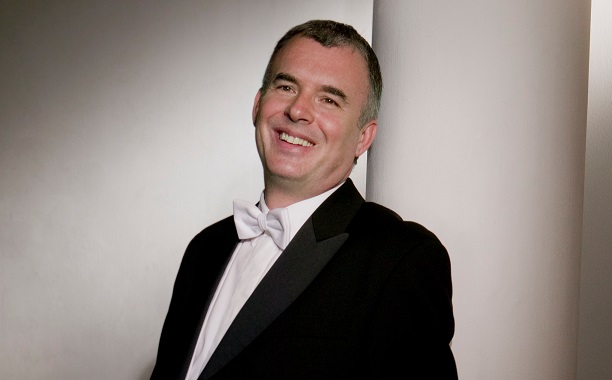
Anyone who knows Martin Yates’ recordings for Dutton will be familiar with the composer’s work. “Stanley Bate’s Symphony no.2 is, I think, going to be a revelation”, says Martin Yates. “He clearly was influenced by other composers working at the time, but he really did achieve something remarkable and individual with some of his works including this symphony. From the opening it explodes with tension. It is going to be incredible to hear it for the first time as it bursts into the world!”
Dedicated “To Mstislav Rostropovich with admiration and gratitude”, Arthur Bliss’ Cello Concerto is scored for small orchestra with the addition of harp and celesta. Heroic in character with ‘Quixotic’ flourishes and a soulful slow movement; according to Bliss, “There are no problems for the listener – only for the soloist!”
“The Arthur Bliss Cello Concerto is the most wonderfully crafted work, and I can’t understand its neglect”, says Martin Yates. “I know there is a lot of music that one could say that about, but Bliss really was a consummate musician and this concerto, written very late in his life, has a real lightness, yet depth that is utterly captivating and profound. It has a devastatingly difficult solo part with beautifully balanced orchestrations for a Mozart sized orchestras with the addition of a Celeste.”
The two works are performed alongside Ralph Vaughan Williams’ ‘trombone piece’, his Heroic Elegy and Triumphal Epilogue; a student work dating from 1901, which drew praise from his teacher Stanford who, according to the composer’s wife Adeline, chose the title for the piece. It remained unheard until a revival by the recording label, Dutton. Works by Delius and Alwyn complete the programme.
FURTHER INFORMATION AND HOW TO BOOK
Tickets are on sale from the website and by means of a postal booking form. Tickets for individual concerts will also be available at the door, subject to availability. Full Festival and Day Passes are also available. Programme and booking information is available on the EMF website
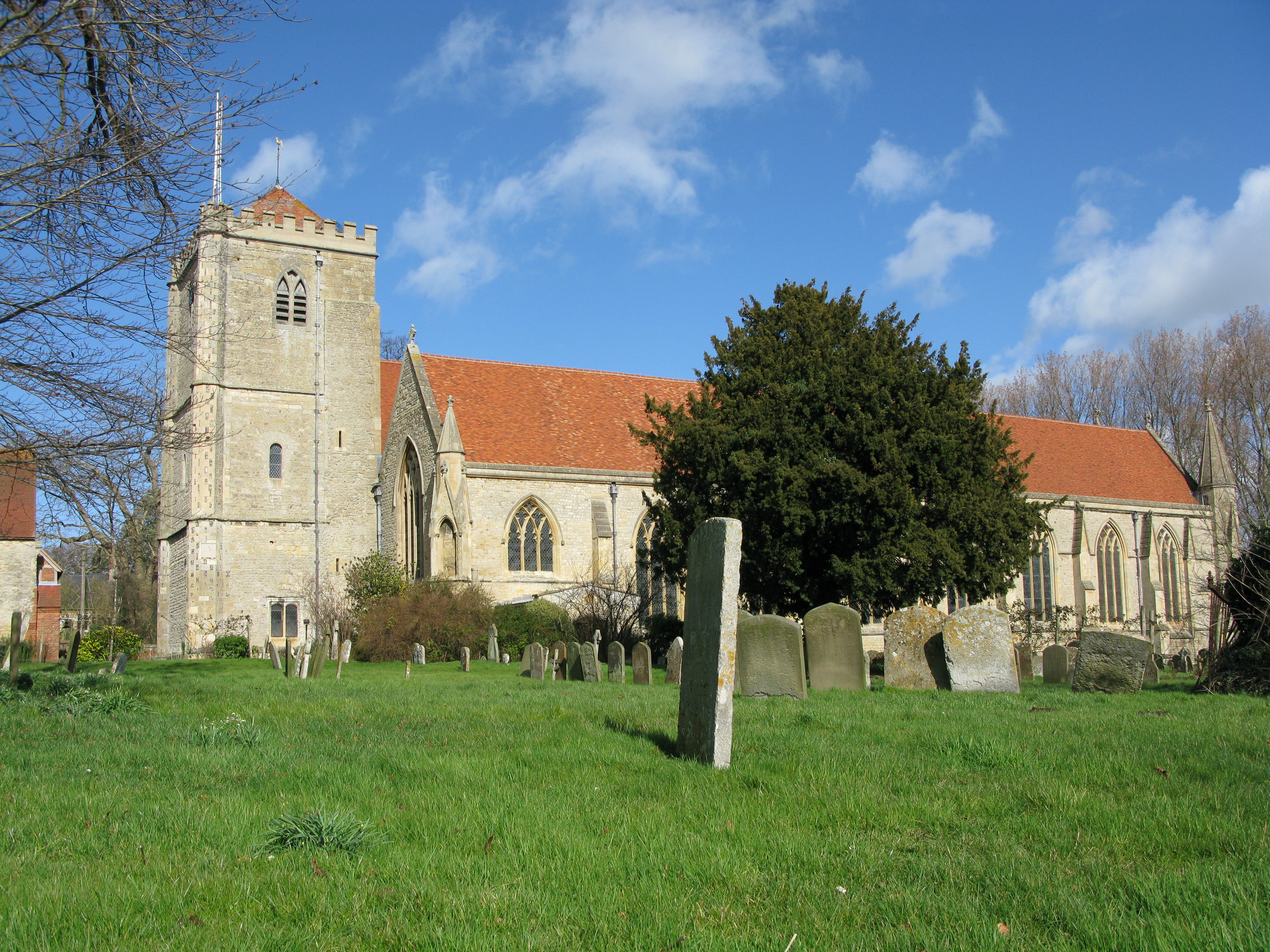
Dorchester Abbey (above) is the venue for the duration of the long weekend with talks taking place in the Village Hall as well as a Festival Lunch (pre-booking required). A dedicated mini-bus shuttle operates to/from Didcot Parkway rail station – bookings should be made via the website on publication of the timetable.
FRIDAY 23 MAY 2025 19:30 Dorchester Abbey, Oxfordshire ENGLISH MUSIC FESTIVAL OPENING CONCERT William Alwyn: The Innumerable Dance: An English Overture Frederick Delius: The Walk to the Paradise Garden Sir Arthur Bliss: Cello Concerto Ralph Vaughan Williams: Heroic Elegy and Triumphal Epilogue Stanley Bate: Symphony no.2 (World Premiere) BBC Concert Orchestra Martin Yates (conductor) Raphael Wallfisch (cello)
John and Paul: A Love Story in Songs by Ian Leslie Faber & Faber 2025 (hardback 432 pages, ISBN: 978-0571376117)
Reviewed by John Earls
To write a book about The Beatles these days must be something of a challenge. What’s left to say? Who are you saying it to? How can you make it original?
With John & Paul: A Love Story in SongsIan Leslie has pulled it off with considerable aplomb. Looking at the relationship between John Lennon and Paul McCartney, The Beatles’ prolific and exceptional songwriters, and telling it through 43 songs (mostly Beatles but some solo songs too) he has produced a stand-out book that is both erudite and engaging.
There is no question that Leslie is a Beatles fan (he wrote the excellent 64 Reasons To Celebrate Paul McCartneyin 2020) and this explains the warmth and affection that comes through. But this is no hagiography.
Leslie challenges the enduring perception of Lennon as the radical rock’n’roller activist wit and McCartney as the cute, charming balladeer and, whilst acknowledging that there is some truth in these personas, “you only have to change the angle of view by an inch or so to see them very differently”.
The main focus is the unique relationship between Lennon and McCartney and its twists and turns. This includes the almost telepathic connection as well as the junctures. There is also the quite literal physical closeness that existed between them at times and its importance in their creative process – I lost count of the number of times the phrase “eyeball to eyeball” appears.
The book charts the story of The Beatles from Lennon and McCartney’s first meeting as teenagers in July 1957, through the graft of the Hamburg residencies and The Cavern in Liverpool, to the stratospheric levels of popularity in the 1960s, the acrimonious split in the 1970s (this had its own ebbs and flows) and the pursuit of solo paths. Leslie is particularly insightful on The Beatles’ visit to the Maharishi Mahesh Yogi’s ashram in India in February 1968, not just in terms of what happened during the visit itself but also in respect of its subsequent repercussions.
But this is not only a great book about The Beatles and the group’s two key protagonists, it’s a great book about modern music and its development. For example, in the chapter on We Can Work It Out Leslie signals how the famous Abbey Road recording studios, like all the major recording studios at the time, “had been run like a factory, the aim being to maximise output, with producers, engineers and arrangers trained to work at speed. Studio time was booked in blocks of three hours, deemed enough time to record a single and its B-side. These strictures were now relaxed for the Beatles, who were allowed to use the studio as an R&D department rather than just a manufacturing facility”.
The 43 song chapters mean that the book is in easily digestible chunks but the chronology means that they flow smoothly and coherently. Some of the chapters go into the specific song in some detail including its construction, whilst in other chapters the song itself only gets a couple of paragraphs but provides a hook to give context to the developing story.
Leslie has a wonderful way with words. Take these descriptions of McCartney’s singing, be it with lyrics – “he rolls around in word-sounds like a cat in a pool of sunshine” or without – “[Paul] floats on a wordless falsetto, hovering like a thing with feathers”. His writing about particular songs can also be perceptive and moving. Two paragraphs on Hey Jude are a case in point. I won’t reproduce them here but you will find them on page 253.
John & Paul: A Love Story in Songs will inevitably send readers back to the music (all 43 songs are available on an excellent Spotify playlist here). This will entail not just going back to old favourites but also trips of rediscovery (almost literally in my case of Revolver’s psychedelic Tomorrow Never Knows).
This is a story about one of the most remarkable bands in modern music and the extraordinary, yet in other ways quite ordinary, people at its centre. And it is indeed also a story of love.
John Earls is Director of Research at Unite the Union. He tweets / updates his ‘X’ content at @john_earls
For more information on the book and to explore purchase options, visit the Faber website
This day marks the anniversary of the premieres of two Haydn symphonies, from the group of 14 known as the ‘London’ symphonies.
The two works in question are the Symphony no.97 in C major, and the last of Haydn’s symphonies, the one known as the ‘London’ symphony – no.104. Both can be heard below: