Unknown's avatar

About Arcana

My name is Ben Hogwood, editor of the Arcana music site (arcana.fm)

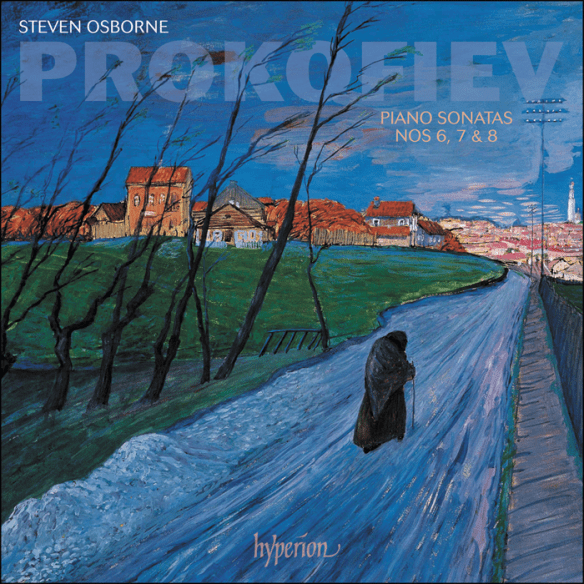
On record – Steven Osborne: Prokofiev: Piano Sonatas nos. 6-8

Steven Osborne (piano)

Prokofiev
Piano Sonatas: no.6 in A minor Op.82 (1940), no.7 in B flat major Op.83 (1942), no.8 in B flat major Op.84 (1944)

Hyperion CDA68298 [74’21”]

Producer Steven Johns
Engineer David Hinitt

Recorded February 2019, St Silas the Martyr, Kentish Town, London

Written by Ben Hogwood

What’s the story?

Steven Osborne has been an advocate of Sergei Prokofiev’s piano music for a number of years now, receiving rave reviews for his performances of the sonatas in particular. This release has therefore been keenly awaited for some time, as Osborne takes on the composer’s so-called ‘war trilogy’.

Prokofiev himself did not label the pieces in this way, but he did work on them simultaneously between 1939 and 1944, as the full horror of the Second World War became apparent. While the composer’s public facing side was preoccupied with writing music of which Stalin could not disapprove, the Piano Sonatas are more private works, the composer left with his real thoughts alone at the piano.

Prokofiev himself gave the premiere of the Sixth Sonata in 1940, after which the following two works were left in the considerable hands of Sviatoslav Richter (1943) and Emil Gilels (1944). Each premiere was given in Moscow.

What’s the music like?

While the Piano Sonata no.7 is found in concert relatively often on account of its virtuosity and dramatic impact, the two around it are lesser spotted companions. They are however two of the composer’s most substantial and meaningful works. The Seventh itself is restless, like a cat on a hot tin roof in the fast outer movements, but pausing for deep and soulful reflection in the second.

The Piano Sonata no.6 has a great depth of feeling. Its first movement presents a caustic but memorable main theme, while the second, a scherzo, is equal parts dry humour and studied, chromatic reflection. A waltz follows, its long and delicate melodies reminding us of Prokofiev as a composer for the stage, before the finale brings forward an extraordinary theme, quick and quiet initially but building to a close of formidable power.

Meanwhile the Piano Sonata no.8, while retaining the key of the seventh, is a very different beast. Prokofiev’s most substantial work for solo piano, it has much longer musical phrases and appears to portray the composer’s innermost thoughts.

Does it all work?

Wholeheartedly. Osborne has the measure of Prokofiev’s music, producing a devastating combination of virtuosity and deep-set feeling.

In the Piano Sonata no.6 there is no doubt of the force of the composer’s emotion, his despair and anger at the unfolding conflict tampered by music of a much softer touch. The abrasive start, major and minor chords clashing, tells you all you need to hear, yet perhaps even more striking are the quieter passages, which Osborne plays with pointed delicacy, the ticking sound in the first movement drawing the listener in, and the ripples of lyricism in the third presenting a compelling scene. Yet there is great resolve here, which comes to the fore in the finale, Osborne driving forward with the main theme but lowering the temperature considerably with a haunting reappearance of the main tune from the first movement.

The Seventh Sonata is terrific, played right on the edge of the cliff but again with keen dramatic instinct. The first movement dances around its central key of B flat major with edgy impatience. Osborne’s dynamic range is hugely impressive, ranging from intimate asides to the clanging percussive passages Prokofiev loves to use. Turning inwards for the slow movement, he goes deep into some of Prokofiev’s most moving music for piano, the lilting contour of the left hand at the start building to a powerful apex in the middle. The third movement Toccata is gone in a flash, driving incessantly forward, grimly determined as though looking to escape its pursuers but trampling on them by the end!

Despite these impressive achievements Osborne’s Eighth Sonata is the crowning glory of this set. He allows the ruminative first movement plenty of time to air its thoughts, Prokofiev in contemplative mood for an unusually concentrated stretch, before the more abrasive thoughts of the previous sonatas bubble to the surface.

The second movement offers a chance for repose, its relatively gentle demeanour helped by a triple time lilt that Osborne paces attractively. The finale brings renewed energy, a valedictory air around both its first theme and the commanding central section, which the pianist takes by the scruff of the neck, leading to a barnstorming closing page.

Hyperion’s sound is ideal, Osborne placed in excellent digital perspective but with plenty of room for Prokofiev’s very biggest sound. There is a huge dynamic range in this music and thankfully we get the best of all worlds.

Is it recommended?

Absolutely. These sonatas have had some fine recordings over the years, and Osborne’s join those right at the top of the digital list. An outstanding achievement from all involved.

Listen and Buy

You can listen to clips from this disc and purchase a copy at the Hyperion website here
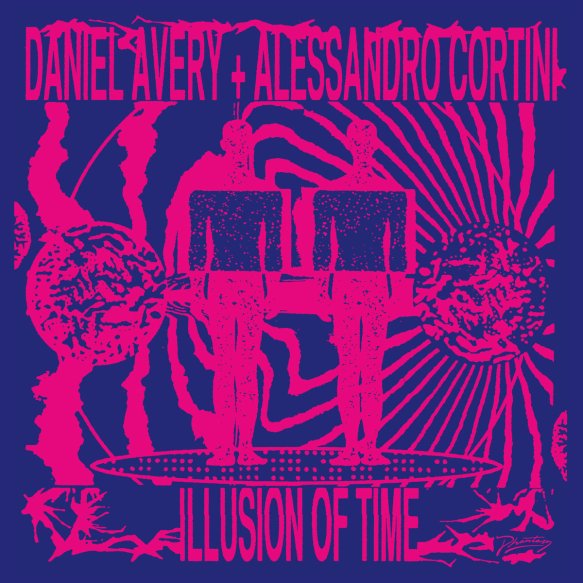
Switched On – Daniel Avery & Alessandro Cortini: Illusion of Time (Phantasy)

reviewed by Ben Hogwood

What’s the story?

Daniel Avery and the Nine Inch Nails’ Alessandro Cortini began working together in 2017 with the remotely-achieved collaboration Sun Draw Water, a limited release whose promise hinted heavily at greater things to come.

They completed Illusion of Time a year later when both were touring with the Nine Inch Nails themselves. Since then Avery has delivered Drone Logic, one of 2018’s finest electronic albums, and Cortini has also excelled in a solo capacity with Volume Massimo, clearing the decks for the release of this 45-minute work.

What’s the music like?

Illusion of Time is all about atmosphere, and the ability to press pause on life itself, achieved through an often fascinating blend of analogue electronics and atmospherics. The description from the promotional material of ‘quietly powerful’ is very accurate, and is achieved without any use of drums or percussion.

While that implies much less emphasis on rhythm, Avery and Cortini use textures, pitch and slowly drawn out melodies to create considerable tension and release. The likes of Enter Exit, an expansive track on a bed of white noise, or the first track Sun, emerging through a crackle of white noise and atmospherics, embody this. They alternate slowly between pitches, with indistinct sounds passing across the stereo picture. The title track then gets a more definitive loop that oscillates at an easy pace.

Inside The Ruins is ominous, to these ears at least painting a picture of oppressive history within a decrepit building. It may stand still but there are dark shadows and unseen hazards at hand. By complete contrast, At First Sight has a wonderful depth to surround its soft-centred loop. This steady pulse is the closest Illusion of Time gets to percussion, the bass notes marking time beneath thick swirls of ambience and a piercing melody of otherworldly beauty.

Water, the longest piece of music, is literally a deep dive, dark hues of blue and purple coming to mind as the music gains wonderful depth. It runs seamlessly into Stills, a coda based on a single, warm chord with a foamy crescendo that sinks back to nothing.

Does it all work?

Yes. Time spent listening closely to this album brings the most rewards, for Avery and Cortini are masters of their craft, carefully selecting their blend of sounds to describe the unseen subject matter. Their music is ultimately calming, but with frissons of danger and darkness around the edges.

Is it recommended?

Yes. Illusion of Time is a fascinating meeting of minds, which ends up being the ideal collaboration in the sense that we end up with an equally divided – and united – musical approach. It may fall into the category of ‘ambient’, but with descriptive picture painting and ever-shifting sounds it has a great deal of depth too.

Stream

Buy

Switched On – The Orb: Abolition of the Royal Familia (Cooking Vinyl)

reviewed by Ben Hogwood

What’s the story?

The Orb need no introduction of course, being long familiar to admirers of ambient music since 1988. Theirs is an ever-changing line-up, orbiting the one constant of the equation, Dr Alex Paterson, and on this, their 17th studio album, Michael Rendall is elevated to the top table. He joins Paterson at the controls for a record including a number of starry guest turns.

Regular collaborators Steve Hillage and Miquette Giraudy (aka System 7) and Youth appear, alongside Roger Eno, David Harrow of On-U Sound, and – this being The Orb – a four legged friend, the Paterson pooch Ruby.

The album takes as its lead the royal family’s nod to the East India Company and its opium trade – both an inspiration and a protest against a movement causing two wars between India and China in the 18th and 19th centuries.

What’s the music like?

Lovely. There is little sense of explicit protest, and the guests all fit in to the overall mood seamlessly. The Orb have a very happy knack for matching quantity with quality, and even though it is barely a year since their last outing, Abolition of the Royal Familia sounds fresh and very much at ease in its own company.

At 77 minutes it’s a good stretch, but that gives the listener even more room to drift in and out of focus if required. Working together as Paterson and Rendall do means the door is never closed to a variety of styles and, very happily, humour too.

The speed with which Daze slips into a comfortable groove might surprise, a lead on which House of Narcotics and Hawk King build with their chugging beats. The latter displays The Orb’s familiar ambient house credentials as well as paying affectionate tribute to one of their most famous fans.

Gradually the tracks pan out and we experience more horizontal musical thoughts. Spacious intros provide warmth on a Californian scale, the listener allowed to bathe in consonant harmonies that drift back and forward like the ebbing of the tide. Shape Shifters (In Two Parts) goes further, adding a dreamy trumpet solo from 17-year old Oli Cripps, who Paterson met in his local record shop.

Also easing into the long form bracket is The Weekend It Rained Forever, a spacey, piano-led number towards the end, proving the ideal foil for the clattering breakbeats of The Queen Of Hearts preceding it.

Happily the band’s trademark collage of samples will make you smile, despite the inevitable rejection of a Prince Charles number. “We are WNBC”, begins Afros, Afghans and Angels, “the West Norwood Broadcasting Corporation. Streaming live to you whoever, wherever and whatever you are.” Yet a surprising and devastating payoff is saved for the finish. “Stay in your homes, do not attempt to contact loved ones or attorneys”, runs the key refrain of Slave Till U Die No Matter What U Buy, the Jello Biafra homage unintentionally marking itself out as an isolation anthem for our time.

Does it all work?

Yes. It is arguably too long, but with music like this duration is much less of an issue, especially with plenty going on around the perimeter on headphones. Certainly seasoned Orb followers will not see it as a problem. It could also be argued that Abolition of the Royal Familia does not introduce anything particularly new – again, not a problem, since The Orb always know how to reach those ambient parts few others can reach.

Is it recommended?

Yes. Abolition of the Royal Familia falls seamlessly into line alongside the recent additions to The Orb’s cannon, and has many moments of genuine bliss. It is like a sonic warm bath at either end of a trying day.

Stream and Buy

Buy

Gianandrea Noseda conducts the London Symphony Chorus and Orchestra in Verdi’s Requiem

Tonight’s recommendation for online musical fulfillment comes in the form of Verdi’s Requiem. This can be viewed on the London Symphony Orchestra’s YouTube channel, with principal guest conductor Gianandrea Noseda leading a performance with soloists Erika Grimaldi (soprano), Daniela Barcellona (mezzo-soprano), Francesco Meli (tenor) and Michele Pertusi (baritone). The London Symphony Chorus, prepared by their director Simon Halsey, provide the choral fireworks.

The performance began at 7pm BST but you can still watch the whole work from the start below:

2020 Beethoven: The Story So Far

As you may well know, Arcana is undertaking a Beethoven listening project this year, in celebration of the 250th year since his birth.

We are approaching Beethoven by way of composers and teachers that had an influence on his output – J.S. Bach, son C.P.E., Handel and teachers Albrechtsberger and Salieri. We have also had a quick look at the Mannheim school of composers who helped the forms of the symphony and sonata to spread their wings.

We will shortly hear from Haydn and Mozart, then a quick look at Clementi – who Beethoven held in very high regard – before a guide to the music of 1770, the year of Beethoven’s birth. Then – finally – we will start on the music of Beethoven himself.

Arcana have several exciting interviews in the bag to help us with our discovery of Beethoven. Pianist Angela Hewitt has given some pearls of wisdom on the Piano Sonatas, while this morning Cyprien Katsaris held court as he talked of his upcoming Beethoven Odyssey. Many discoveries were made! We will also hear from cellist Steven Isserlis, who has offered his thoughts on the Cello Sonatas.

It has been a relatively slow start – but expect the tempo to rise considerably over the coming months! Meanwhile here are clips from one of Hewitt’s discs for Hyperion on the Piano Sonatas, including the wonderful opening pages of the Pastoral: