Today’s nudge in the direction of an online concerts brings us to Living Room Live.
This is an exciting new initiative from a group of musicians keen to make a difference to those in isolation, led by violinist Tamsin Waley-Cohen and her composer sister Freya, together with pianist George Fu, consultant Daniel Ross and viola player Ann Beilby.
Living Room Live started just two months back but is already hosting three concerts a week through Facebook live, each concert starting at 6pm BST.
This week you can catch Zoë Martlew‘s cabaret alter-ego Nefari on Monday 18 May, then up and coming cellist Laura van der Heijden playing Bach‘s wonderful Solo Cello Suite no.4 on Wednesday 20 May. Meanwhile Friday’s concert, from violinist Amalia Hall, will feature the virtuosity of Ysaÿe, channelled through two sonatas for solo violin.
All concerts can be viewed in real time and in catch-up mode through Living Room Live’s Facebook page here
PEANUTS (c) United Feature Syndicate Inc. Drawn by Charles M. Schulz
I’m ready – as I’ll ever be! – to start listening to Beethoven’s music from start to finish.
This is Arcana’s 2020 Beethoven project, where we are taking on the task of listening to everything the composer wrote that exists in recorded form. The object of the exercise has always been to explore the full output of one of my favourite composers, and to share it with you, the reader. It will continue to be that way, with the help of fellow listeners – such as you! – and musicians, too.
If you want to get involved, we’d love you to. All you need to do is send a message to editor@arcana.fm and I’ll send you a Beethoven piece to listen to. You can get to know it and let us know what you think.
I can’t help but feel a bit daunted by this task. So much has been written about Beethoven’s works in the past, more eloquently than I could hope to achieve here. So why another attempt at Everest? The reason is simple – because Beethoven is a favourite composer, a changer of the game in so many different forms of music. In these times especially there is more room than ever for the music that we love. Before we begin, then, here are a few thoughts and a bit of housekeeping for the curious.
The aim – as much as possible – is to listen to Beethoven’s compositions in the order in which they were composed. There is a good deal of confusion around this, as they were not always published in the same order – so there will be moments where we jump about between the numbers of Beethoven’s catalogue in an illogical order. I don’t want to get too bogged down in this area though!
There are also works, such as the Piano Concerto no.2, that Beethoven composed over a number of years. In this case it was between 1788 and 1801 – so we’ll pick it up in 1801, the year it was published.
There are so many available versions of some of Beethoven’s works that we cannot possibly cover them all in this sitting. I will try however to include old and new, modern instruments and ‘historical’ – that is, the instruments and especially pianos that Beethoven might have been more familiar with. We will enjoy a few sidewalks, too – such as Liszt’s transcriptions of the nine symphonies, and a few pop songs based on Beethoven’s music.
There will also – we hope! – be time to appraise Beethoven’s colleagues and contemporaries too – less familiar names like Cramer, Ries, Spohr and Czerny deserve their moments in the sun, as do some of the better-known composers such as Hummel and Weber. This is all to try and give a flavour of the musical climate of the time.
Speaking of climate, some of the pictures used will reflect artists of the time such as Caspar Friedrich – and there will be room to explore the Beethoven cartoons of Charles M. Schulz as well as paintings from Andy Warhol and Gustav Klimt.
This week we will start with the 9 Variations on a March by Dressler for piano, completed by the young composer before his teens in 1782. It will be the start of quite a voyage of discovery!
It may have been a while since we last heard from Swedish duo I Break Horses, but they have used the time productively, despite several obstacles in their way.
Principle songwriter and singer Maria Lindén was working in cinematic accompaniments to her own favourite films when she realised the instrumentals were well on the way to becoming the basis for a new I Break Horses album.
The band’s plans were thwarted, however, by crashed hardware – two years of work lost – and collaborations that didn’t quite work, meaning Warnings took a while to break cover. It does however include the fruits of Lindén’s film scoring, with three instrumental interludes to complement the broad canvas of the songs.
What’s the music like?
The first since 2014’s well received Chiaroscuro, Warnings is another winner – and draws on the styles used in that long player. The band are at ease working in larger song structures, and as the epic nine-minute opening track Turn unfolds in its deceptively languid triple time there is an exquisite tension between the well-crafted production and Lindén’s glacial vocals.
The musical secret to their success lies in the heart-shifting changes of harmony that plumb the emotional depths. The macabre I’ll Be The Death Of You has these in abundance, despite its premonition, while Baby You Have Travelled For Miles Without Love In Your Eyes also moves in mysterious ways, the slow and stately shifts in harmony matched by a full bodied percussion section. Lindén’s vocals here are a little reminiscent of Lana del Rey, while the production often brings Cocteau Twins to mind – and label mates Beach House, whose producer Chris Coady is utilised here.
Elsewhere the glittering synths and quickfire drums of Neon Lights rush by, in complete contrast to the stately vocals, while Death Engine is a thing of wonder. Again utilising a big drum track, and enough reverb for an aircraft hangar, it has beautiful vocals to fit its grand designs, but moves up a level when a softly undulating riff emerges just over halfway through.
The instrumental interludes are short mood pieces, the last one leading to a similarly short coda, Depression Tourist a block of vocoded thoughts to sign off on.
Does it all work?
Yes. Although I Break Horses have an established way of writing it is very distinctive, so they are far from one-trick ponies. There is a lot of emotion here, too, despite the sometimes deadpan nature of Lindén’s vocals. She holds a note with husky beauty, part of the overall sound which the listener can easily dive into. Final track Depression Tourist feels tagged on, but by then the album has already made its impact.
Is it recommended?
It is. Warnings may be a deeply serious, even moody album – but it is an ultimately uplifting one too. Despite its ominous titles and subject matter the dreamscapes this pair can create leave the listener in elevation.
The RSNO’s Friday Night Club is proving to be a popular series – and tonight’s instalment looks set to provide just the tonic needed to start the weekend. Conducted by Peter Oundjian, the orchestra return to Beethoven in a concert given at their home venue, the Glasgow Royal Concert Hall, in 2016.
The vocal soloists are soprano Marita Sølberg, mezzo-soprano Renata Pokupić, tenor Ben Johnson and bass-baritone Stephan Loges, with the RSNO Chorus joining for the exultant choral finale.
You can watch the on the orchestra’s website here, or join on Facebookhere
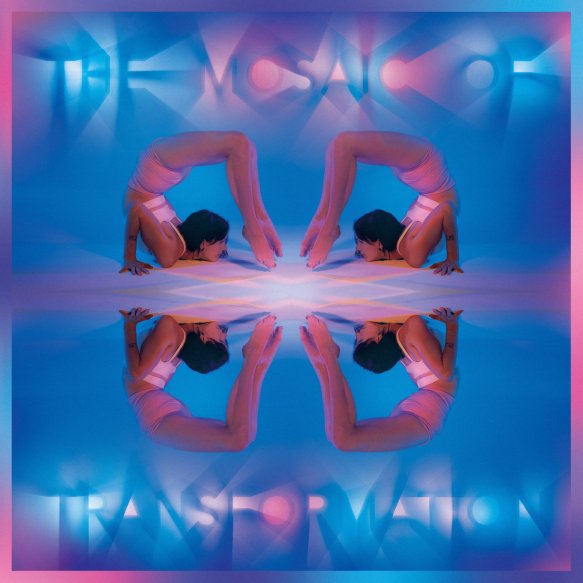
It is tempting to put forward the idea that what the musical world needs right now is a new album from t Kaitlyn Aurelia Smith. That is because the music she has made up until now is not just a comfort for anxious times but it offers real, meaningful positivity from within. Recognising that potential, Ghostly International have proceeded with the album release rather than defer it, meaning that while Smith’s tour with Caribou may be cancelled the album she would be promoting is still with us.
Her previous release, Tides, was free of beats, and much of the rhythmic profile of The Mosaic Of Transformation is constructed without explicit use of bass drums. Yet it is an album of movement, exploring the relationship between sound and colour, and our own physical beings. She has a great wealth of knowledge and experience in this area, making music specifically designed to ‘fit’ our life experiences in a way that enhances them.
What’s the music like?
The Mosaic Of Transformation is light on its feet much of the time, but that does not make it insubstantial. Quite the opposite, for in tracks like Expanding Electricity, the ten and a half minute closing track on the album, Smith has put together sound collages of a deep and lasting beauty and also of a surprising density. If music were colour – which it often is of course – there would be deep blues and purples in this track especially, beginning with sonorous low register strings but curving upwards through the spectrum. When her multitracked voice proclaims, ‘I feel it, can you feel it expanding?’, the celebration of electrical power is wholeheartedly complete.
This love of electricity – without which very little of our music could be heard! – is felt throughout the album, where brighter pastel shades make themselves known. Carrying Gravity is another substantial track that develops instinctively and with a keen structural command. It has a luminous glow, especially as the textures thin out towards the end.
Some of the harmonic language Smith uses has an Oriental feel, which is either implied or more directly referenced – and the busy exchanges of The Steady Heart bring this through to the front. It is subtly apparent as the album gurgles into life through Unbraiding Boundless Energy Within Boundaries, while Remembering uses block chords and Smith’s distinctive layered vocals. After the initial relative stillness Understanding Body Messages stays true to its title with snippets of musical code passing along the line, conveying positive energy.
The beats are more gainfully employed in The Steady Heart, which has multi-layered vocals at its core – but everything is inevitably pointed to the closing, epic ode to electrical power.
Does it all work?
Yes – and the more you listen to The Mosaic Of Transformation, the more it has to offer. Smith’s layering technique is a sonic delight, because each visit to the music reveals previously hidden workings, subtle melodic touches and crossrhythms, all done with a light craftswoman’s touch. As the last sounds of Expanding Electricity subside, a lasting warmth is left behind.
Is it recommended?
Yes – and the more you listen to The Mosaic Of Transformation, the more it has to offer. Smith’s layering technique is a sonic delight, and each visit to the music reveals previously hidden workings, subtle melodic touches and crossrhythms, all done with a light craftswoman’s touch. As the last sounds of Expanding Electricity subside, a lasting warmth is left behind.