Unknown's avatar

About Arcana

My name is Ben Hogwood, editor of the Arcana music site (arcana.fm)

On Record – Parry Karp, BBC National Orchestra of Wales – Bloch: Schelomo & Suite (Signum Classics)

Ernest Bloch
Schelomo (1918)
Suite for Viola and Orchestra (1919; arr. Rejtő/Baller, 1969)

Parry Karp (cello), BBC National Orchestra of Wales / Kenneth Woods

Signum Classics SIGCD932 [60’58”]
Producer Phil Rowlands Engineer Andrew Smilie

Recorded 29-30 July 2024 at BBC Hoddinott Hall, Wales Millennium Centre, Cardiff

Reviewed by Richard Whitehouse

What’s the story?

Signum Classics issues its first release devoted to Ernest Bloch (1880-1959), comprising what is his best-known work alongside a piece that receives its first recording in a version for cello and orchestra – making for a representative introduction to this now under-appreciated figure.

What’s the music like?

Considered in his lifetime to be on a par with such contemporaries as Bartók and Stravinsky, Bloch duly suffered that almost inevitable falling off of reputation from which his music has never quite recovered, but almost all his major works have now been recorded and often on several occasions. Among his sizable output, those with a concertante element are especially notable for their redefining the relationship between soloist and orchestra as holds good for the present works, written as they were either side of the composer’s emigration to the USA.

Its title might translate as Solomon, but Schelomo is by no means a portrait of the Biblical monarch nor is the solo part merely a ‘translation’ of lines from Ecclesiastes such as Bloch had initially intended to set. This ‘Hebraic Rhapsody’ is the last and most representative, if not necessarily the finest, of his Jewish Cycle, its three contrasting sections amounting to a concerto (or maybe a Konzertstück) in terms of their encompassing a gradually cumulative ‘exposition’, then an impulsively tense ‘development’ whose impassioned climax subsides into a ‘reprise’ which takes in a musing accompanied cadenza prior to the starkly fatalistic close. Parry Karp is a perceptive interpreter – one who never over-emphasizes its eloquence or rhetorical overkill, while rendering the piece as a cohesive and an audibly unified whole.

Conceived for viola and piano, the Suite was orchestrated soon afterward then arranged for cello a half-century on by cellist Gábor Rejtő and pianist Adolph Baller. The layout, though not so integrated as to make it a concerto, is none the less striking. Its lengthy initial Lento (originally entitled ‘In the Jungle’) pits soloist against orchestra in a fantasia-like evolution that finds effective contrast in an alternately capricious and ruminative Allegro ironico, then the songfulness of an equally compact Lento; its searching inwardness pointedly dispelled by the lively and playful Molto vivo which brings about an affirmative conclusion. Karp is fully attuned to its understated charm and Kenneth Woods, who directed the likely premiere of this version in 2008, secures playing of sensitivity and imagination from the BBC NOW.

Does it all work?

Almost always. As his introductory note makes plain, Karp has been an enthusiastic advocate for this music throughout his career and there is no doubting the extent of his commitment in either piece. Schelomo remains Bloch’s most recorded work such that those who have any one of Gregor Piatigorsky (Testament), Pierre Fournier (DG), Mstislav Rostropovich (Warner) or, more recently, Sol Gabetta (Sony) can rest content; yet this newcomer is worth a place on any shortlist and a first recording of the Suite in this guise makes the release self-recommending.

Is it recommended?

It is. Balance between cello and orchestra could not be bettered in the spacious yet analytical ambience of Hoddinott Hall, while Woods contributes his customary insightful observations. Aficionados and newcomers alike will find much to delight and absorb them on this release.

Listen / Buy

You can read more about this release and explore purchase options at the Signum Records website. Click on the names to read more about cellist Perry Karp, the BBC National Orchestra of Wales and conductor Kenneth Woods, and for the Ernest Bloch Society

Published post no.2,585 – Friday 4 July 2025
The Borrowers – Emerson, Lake & Palmer: Knife-Edge

What tune does it use?

The first movement of the Sinfonietta, by Leoš Janáček (born on this day in 1854):

The Sinfonietta is a thrilling orchestral work, begun with a powerful brass fanfare but containing five incident-packed movements.

How does it work?

The main melody of the first movement Fanfare is the basis for Emerson, Lake & Palmer’s song, but in his keyboard part Keith Emerson refers to other parts of the work.

Then, on his solo from 2’40”, Emerson departs from Janáček’s blueprint with a characteristically incisive solo, backed by a virtuosic drum track. From 3’25” the style broadens to include explicit references to J.S. Bach, the Allemande of his French Suite no.1 in D minor:

What else is new?

You can hear the whole of the Sinfonietta below, in a thrilling performance from the Vienna Philharmonic Orchestra under Sir Charles Mackerras, in a recording made in 1980:

Published post no.2,584 – Thursday 3 July 2025

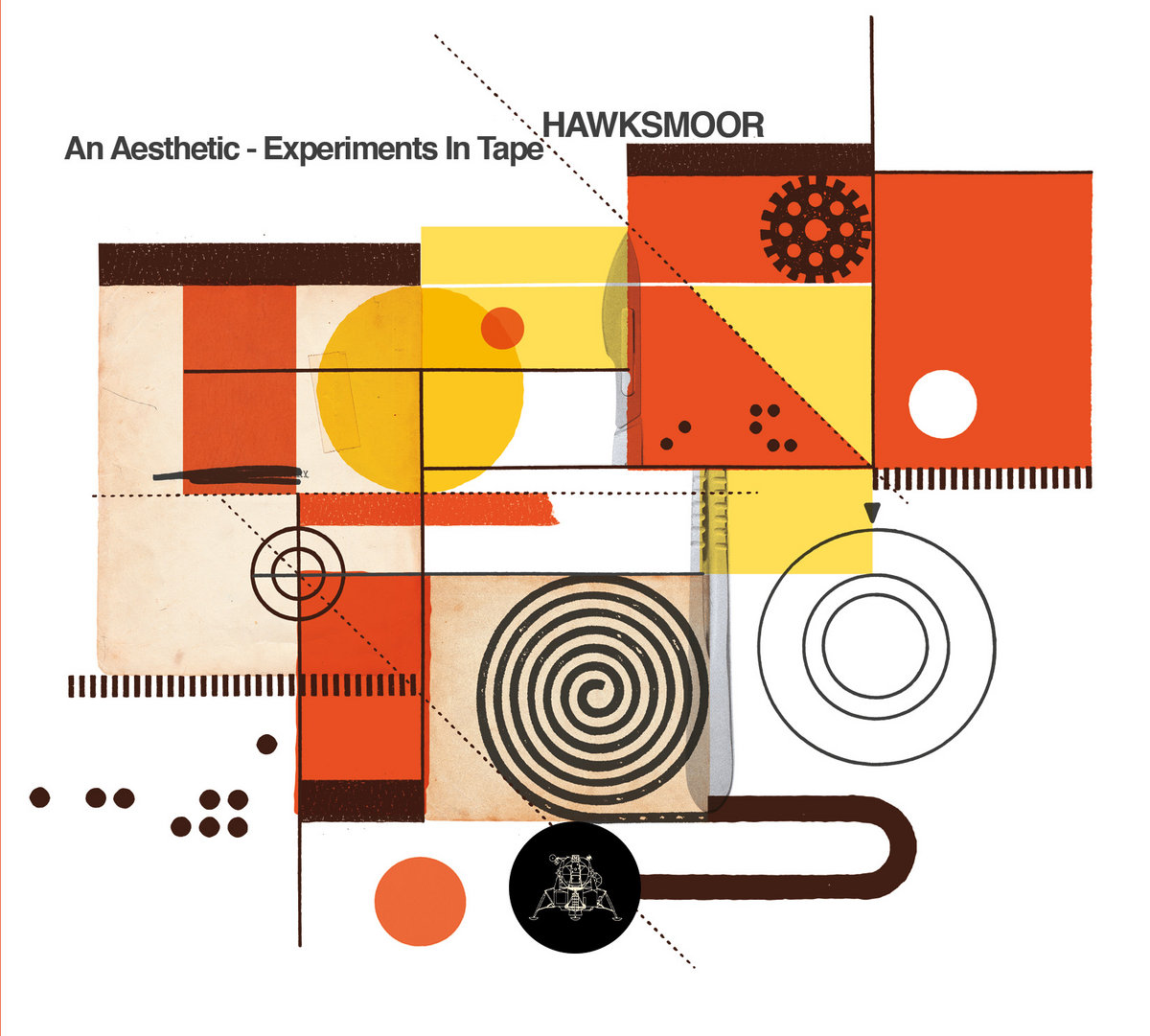
Switched On – Hawksmoor – An Aesthetic – Experiments In Tape (Lunar Module)

by Ben Hogwood

What’s the story?

To quote the Bandcamp guide for this release, “James McKeown is a Bristol-based musician known for his innovative approach to music production and sound design. With a passion for combining modular synths with layers of live bass, guitars and experimental techniques, McKeown has carved out a niche in the electronic music scene, captivating audiences with his unique sonic explorations.”

An Aesthetic is a series of ten pieces taking the concept of hauntology further than before, and “into a liminal space of sonic saturation”. This is done through layering the wow, flutter and warble of tape artefacts, creating a unique sonic landscape.

This, then, is music for blank tape – but in a thoroughly intriguing compositional process, released on Lunar Module, the new Castles in Space CD imprint.

What’s the music like?

As the above implies, otherworldly and haunting. This is music to accompany a film where all is not quite as it seems, and where images suddenly rear up in front of the camera. That at least is what is threatened by Aesthetic II, whose bright tones are compromised by a claustrophobic atmosphere.

Aesthetic III is both oppressive and weirdly comforting, a wall of sound that feels like a massive duvet round the ears by the end, while Aesthetic VII is more ominous still. Aesthetic V crackles but settles into one of the most ambient tracks of the ten. Aesthetic VIII is the longest of all, the D-120 of the selection (for TDK fans!), and a wobbly but winsome track, with a rather beautiful chord progression that recurs at regular intervals. Aesthetic IX has the broadest melody, almost a spiritual in its plaintive quality, while the concluding Aesthetic X is a satisfying exploration of the bass range.

Does it all work?

It does – the ten pieces form a kind of suite that can be easily experienced in one sitting, and the lack of digital correction is appealing.

Is it recommended?

It is. An Aesthetic is a fascinating set of collages and inventive sound pieces that fit well together, creating an atmospheric whole. Not for all moods, that is for sure, but a consistently rewarding listen.

For fans of… Flying Saucer Attack, Pram, Bvdub, My Bloody Valentine

Listen / Buy

Published post no.2,583 – Wednesday 2 July 2025

Playlist – Erik Satie

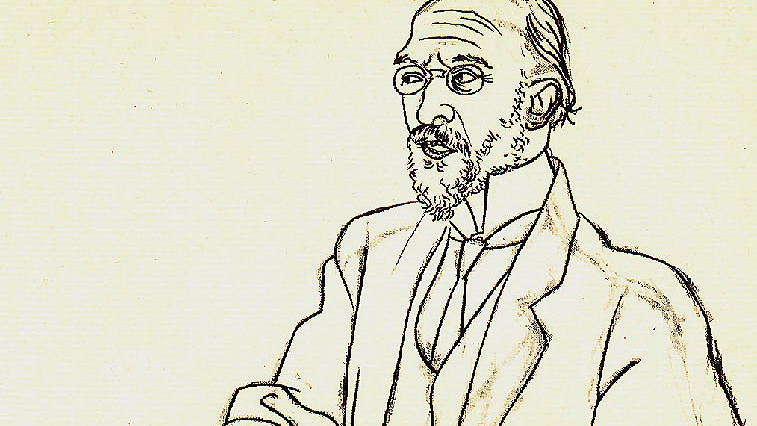
by Ben Hogwood Picture: Erik Satie, by Pablo Picasso

Today marks the death of one of the most innovative 20th century composers, Erik Satie.

Satie was well ahead of his time…to the extent that even now, one hundred years on, some of his music gives the appearance of being fresh off the page. And indeed, there is some ‘new’ music to enjoy from his pen, as pianist Alexandre Tharaud has recently collated an album of Satie Discoveries, to be reviewed shortly on this site.

Satie’s music has proved incredibly versatile, and his most popular pieces are heard every day – not just on classical music radio, but as part of relaxing playlists and TV soundtracks. It is certainly fair to say that if you enjoy the music of Einaudi, Nils Frahm, Olafur Arnalds and the like, each of them would credit Satie as a lasting influence.

Here are some of his best-known pieces, with the Gymnopédies and Gnossiennes for piano proving some of his most minimal yet most memorable compositions. To counter those, it helps to have something of the more modern Satie – the Three Pieces in the Shape of a Pear, and two orchestral ballets – Relâche and Parade. Listen carefully to the latter and you will hear a tune that sounds remarkably like the theme to Postman Pat! You can access the playlist on Tidal here:

https://tidal.com/playlist/686328ca-aabf-490e-82fe-affc52d9a4b3

Published post no.2,581 – Tuesday 1 July 2025

Arcana at the opera: Fidelio @ Garsington Opera

Beethoven’s Fidelio, Garsington Opera at Wormsley, Stokenchurch, UK | Pictured: Robert Murray (Florestan); Sally Matthews (Leonore) | Image © Julian Guidera 2025

Fidelio (1804-5, rev. 1814)

Music by Ludwig van Beethoven
Libretto by Joseph Sonnleithner and Georg Friedrich Treitschke, after Jean-Nicolas Bouilly
Sung in German with English surtitles

Leonore, disguised as Fidelio – Sally Matthews (soprano), Florestan, her imprisoned husband – Robert Murray (tenor), Don Pizzarro, prison governor – Musa Ngqungwana (bass-baritone), Rocco, gaoler – Jonathan Lemalu (bass-baritone), Marzelline, his daughter – Isabelle Peters (soprano), Jacquino, prison warder – Oliver Johnston (tenor), Don Fernando, king’s minister – Richard Burkhard (baritone), First Prisoner – Alfred Mitchell (tenor), Second Prisoner – Wonsick Oh (bass)

John Cox (original director), Jamie Manton (revival director), Gary McCann (designer), Ben Pickersgill (lighting)

Garsington Opera Chorus, The English Concert / Douglas Boyd

Garsington Opera, Wormsley
Friday 27 June 2025

review by Richard Whitehouse Photos by (c) Julian Guidera

Few operas have been subject to matters of time and place as has Fidelio. Beethoven’s sole opera, by his own admission, caused him the greatest difficulty among all his works to ‘get right’ and, even today, it can all too easily emerge as a compromise between what had been intended and what (conceptually at least) was feasible. All credit, then, to Garsington Opera for this revival which not only avoided the likely pitfalls first time around but has improved with age – in short, a production that amply conveys the essence of this flawed masterpiece.

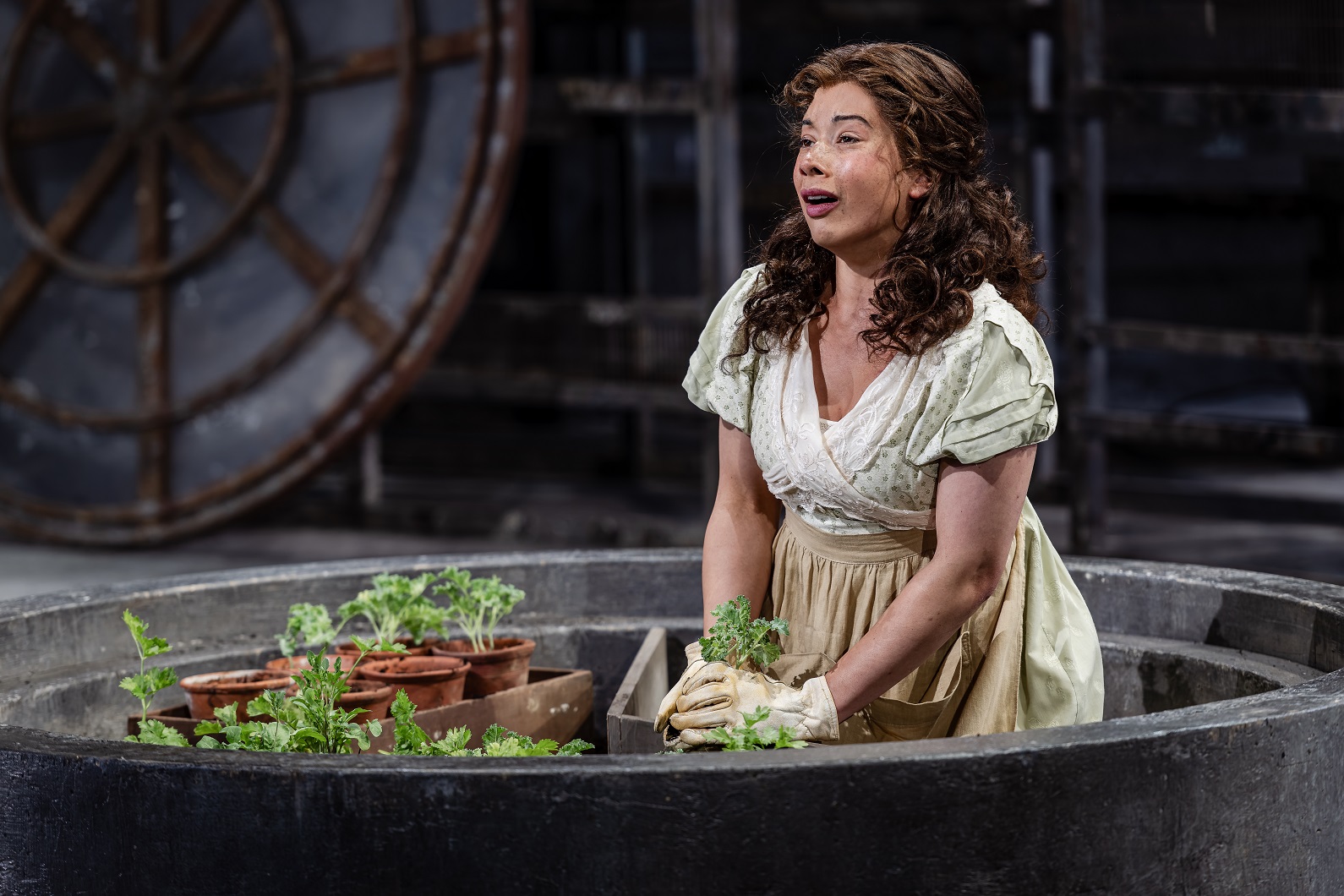
Beethoven’s Fidelio, Garsington Opera at Wormsley, Stokenchurch, UK | Pictured: Isabelle Peters (Marzelline) | Image © Julian Guidera 2025

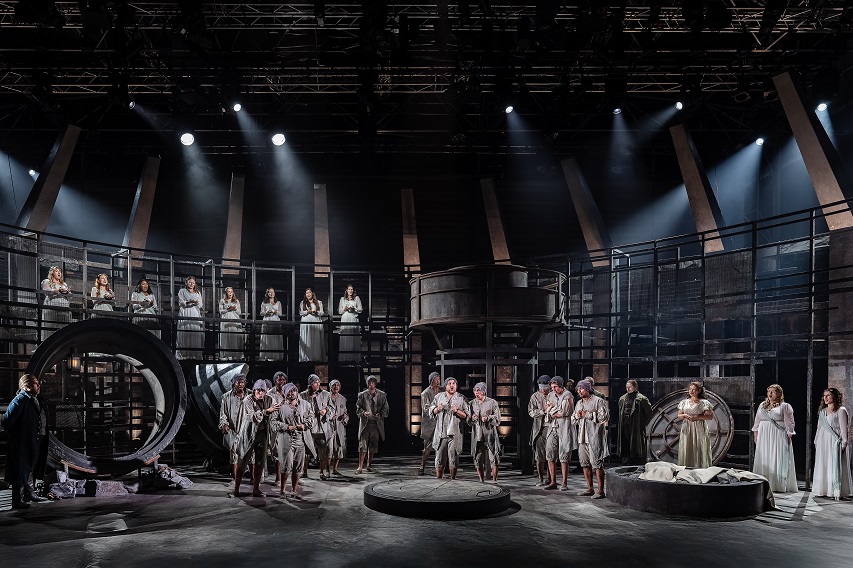
That original staging had been directed by John Cox, whose productions are rarely less than durable and with such as his 1973 Capriccio or his 1975 The Rake’s Progress being close to definitive. For this second revival, Jamie Manton has streamlined the basic concept such that everything which takes place can be envisaged from the outset and hence ensures consistency across the production as a whole. He is abetted by Gary McCann’s designs, their monochrome stylings imparting a grim uniformity which could not be more fitting given that this drama is played out around and inside a prison. In particular, the hole front-of-stage from out of which the prisoners emerge and into which Florestan is to be committed is a device made elemental merely by its presence, while the final scene avoids the agitprop from an earlier era in favour of a straightforward tying-up of narrative loose-ends the more affecting for its understatement. Effective without being intrusive, Ben Pickersgill’s lighting enhances the changing moods of an opera which takes in domestic comedy and visceral drama prior to its heroic denouement.

Beethoven’s Fidelio, Garsington Opera at Wormsley, Stokenchurch, UK | Pictured: Garsington Opera Chorus | Image © Julian Guidera 2025

Vocally the opening night was a little uneven without there any real disappointments. If Sally Matthews initially sounded a little inhibited in the title-role, this most probably reflected its ambivalent nature rather than any lack of expressive focus; certainly, her commitment in the ‘Abscheulicher…Komm Hoffnung’ aria such as defines her emotional persona was absolute, as was her seizing hold of that climactic quartet to which the entire drama has been heading. Sounding as well as looking his part, Robert Murray avoided the rhetorical overkill that too often mars portrayals of Florestan – his mingled vulnerability and fatalism maintained right through to the duet ‘O namenlose Freude’ whose eliding of elation and doubt intensified its emotive force whatever its actual length, though without pre-empting what is still to come.

Beethoven’s Fidelio, Garsington Opera at Wormsley, Stokenchurch, UK | Pictured: Musa Ngqungwana (Don Pizarro); Richard Burkhard (Don Fernando) | Image © Julian Guidera 2025

As Don Pizarro, Musa Ngqungwana was imposing in presence and thoughtful in approach – his lack of histrionics preferable in a role which too often descends into caricature. That said, he was upstaged in their duet ‘Jetzt, Alter, jetzt hat es Eile!’ by Jonathan Lemalu who was in his element as Rocco; materialist aspiration outweighed by the humanity invested into a role where comedy rapidly gives way to pathos. Marzelline and Jaquino may have but little to do after the first scene, but Isabelle Peters was eloquence itself in her aria ‘O war ich schon mit dir vereint’ while Oliver Johnston veered engagingly between eagerness and consternation. Richard Burkhard made for an authoritative if never portentous Don Fernando, while Alfred Mitchell and Wonsick Oh afforded touching cameos during a memorable ‘Prisoners’ chorus’.

Beethoven’s Fidelio, Garsington Opera at Wormsley, Stokenchurch, UK | Pictured: Jonathan Lemalu (Rocco); Isabelle Peters (Marzelline); Garsington Opera Chorus | Image © Julian Guidera 2025

Nor was the Garsington Opera Chorus to be found wanting as a whole in its contribution to the finales of each act – the first as moving in its pallor, infused with radiance, as the second was in the unfettered joyousness which offset any risk of that final scene becoming merely a celebratory tableau. The English Concert sounded rarely less then characterful, even though humid conditions likely explained some occasionally approximate intonation – happily not in Rachel Chaplin’s scintillating oboe obligato which shadows Florestan’s aria ‘In des Lebens Frühlingstagen’ as if an extension of his character. Douglas Boyd directed with assurance an opera with which he has long been familiar, his tempos unexceptionally right and always at the service of the opera. The author Michael Oliver was surely correct in his observation that the Leonore original is superior in theatrical terms to the Fidelio revision, yet this latter was nothing if not cohesive through Boyd’s astute dovetailing of individual numbers, as between speech and music, so that any seeming discontinuities were made more apparent than real.

Some 211 years after the successful launch of its final version and Fidelio remains an opera acutely sensitive to political context and polemical intent. Beethoven himself was, of course, partly responsible for this but subsequent generations have sought, often recklessly, to foist their own preoccupations onto his music so as to distort or even negate its essence. There was no risk of that happening here thanks to the balanced objectivity of this production but also to its conviction that the composer’s guiding vision is, and always will be, its own justification.

Fidelio runs until 22 July 2025 – and for further information and performances, visit the Garsington Opera website

Published post no.2,581 – Monday 30 June 2025