
Unknown's avatar

About Arcana

My name is Ben Hogwood, editor of the Arcana music site (arcana.fm)

JACK Quartet – Xenakis day at the Wigmore Hall

jack-quartet

JACK Quartet [(Christoper Otto, Austin Wulliman (violins), John Pickford Richards (viola), Jay Campbell (cello)]

Saturday, 25 February 2017, Wigmore Hall

Written by Ben Hogwood

Xenakis Ergma (1994), Embellie (1981), Mikka (1971), Kottos (1977), Hunem-Iduhey (1996), ST/4-1, 080262 (1956-62)

As part of its enterprising commitment to contemporary music, the Wigmore Hall ‘composer days’ are key, giving audiences a chance either to try something new or to further an admiration of an established figure.

Xenakis day, honouring the Greek composer, architect, civil engineer and burgeoning computer programmer Iannis Xenakis, concentrated on his works for strings on a small scale. The lunchtime concert, an hour in length but packed with six intriguingly titled pieces, showed just how adventurous Xenakis was in stretching the boundaries of the instruments he wrote for.

That said, the opening Ergma was a little more conventional in its grouping of the conventional string quartet – two violins, viola and cello. However it stipulated they should concentrate on chords containing the major seventh (nearly a perfect octave but not quite) and this created music of ear-bending tension. The JACK Quartet played with great freedom but also keen virtuosity, responding like athletes that had been set a physical challenge. Xenakis’ powerful and often confrontational sound world had been set.

The contrasting solo pieces that followed were effectively programmed, showing the great lengths Xenakis went to in finding new and interesting sounds for familiar instruments. Embellie, a substantial piece for solo viola, was brilliantly played by John Pickford Richards, who found unexpected if brief moments of contemplation amongst the abrasive chords he was asked to play. The use of microtones – notes in between the conventional twelve of a conventional Western scale – created once again the unique brand of tension Xenakis’ music holds.

Following this was the elusive Mikka – elusive because Christopher Otto’s violin line slid all over the place restlessly, like a fast moving fish evading capture. The sounds were genuinely funny at times, possibly not an intention of the composer but again showing how original sounds from familiar sources can get a reaction, whether a laugh or a frown. Both reactions were clear here!

The cello had its moment too, in the form of the brilliantly played Kottos, Jay Campbell at the absolute peak of his technical craft. This was the most accessible piece, using harmonics and a technique of bowing the actual bridge of the instrument itself to create eerie sounds. Xenakis uses sustained drones on the instrument, and these effectively accompanied the melodies, and they took on a religious connotation in their profile. Later on, folk tunes came to the fore and the energy of the piece built, Campbell finishing with a flourish.

The brief and rather caustic march Hunem-Iduhey (its title a reverse of the name Yehudi Menuhin) was an obstinate aside, before we heard one of the first pieces written as the result of a computer program. ST/4-1, 080262 – a deliberately non-catchy title – was ‘written’ after Xenakis mastered a program on what was thought to be the only IBM computer available in France. Scored for string quartet, the piece was filled with randomly generated incident to begin with, as though the computer had been trying too hard to fill in every possible outcome from the four instruments, but as the piece progressed the music became more spacious and easier to digest. There was no sense of ‘home’ here particularly, save some repeated, bell-like notes plucked by Austin Wulliman’s second violin, but that gave the listener a feeling of distance from the music itself, making an appreciation of the performance the main reaction.

There was abundant proof in this concert that Xenakis was one of the most original composers of the second half of last century, and as an introduction to his music it was perfectly weighted. There is a sense that we have not yet fully appreciated the Greek composer’s genius and originality, partly due to the confrontational nature of his music, but it was great to have it brought to the fore here. The JACK Quartet performed athletically and passionately, and it made a lasting impact.

Wigmore Mondays – Van Kuijk Quartet: Schubert & Ravel

van-kuijk-quartetVan Kuijk Quartet [Nicolas Van Kuijk, Sylvain Favre-Bulle (violins), Emmanuel François (viola), François Robin (cello)]
Schubert String Quartet in E flat major D87 (1813)

Ravel String Quartet in F major (1902-3)

Listen to the BBC broadcast here

Written by Ben Hogwood

There are a great many young string quartets on the concert circuit, but from this evidence the Van Kuijk Quartet, winners of the 2015 Wigmore Hall International String Quartet Competition, are among the finest.

Formed in Paris, the quartet are members of the BBC Radio 3 New Generation Scheme, which gives them a regular platform at some of the UK’s finest venues. For their Wigmore Hall lunchtime debut they brought Schubert and Ravel to life with playing of enthusiasm, wit and panache.

Starting with early Schubert was a good move. Even by his sixteenth birthday the composer had racked up nine string quartets, and for his tenth he drew heavily on the ability to write charming and humourous music.

The Van Kuijk Quartet brought into that fully, enjoying the abundance of good tunes from the outset (1:54 on the broadcast link) while also relishing the bursts of energy and snappy rhythms felt in the second movement scherzo (12:50). This they countered with a darker, contrasting theme. The Adagio (15:11) was affectionately played, while the finale, marked Allegro (from 21:45) threw back the curtains and drew parallels with the energy of Beethoven’s early string quartets, written twelve years before.

Ravel’s single published String Quartet has claims to be the most popular of all in the form. Even though it is heard a lot, the Van Kuijk Quartet gave it fresh impetus here, setting the springlike mood with the opening phrase (from 32:22). The second theme was not so successful, for despite the beauty of the tune itself from violin and viola the cello was very low in the mix. The second movement sprang forward though (41:49), with its distinctive, vigorous pizzicato (plucking).

By contrast the slow movement was a dreamy lullaby (49:03), especially enjoyable for the muted viola tone played so beautifully by Emmanuel François. And so to the finale (58:42), misunderstood by its dedicatee Fauré but full of energy here, each syncopation and complexity of harmony revealed by a quartet playing in complete unity.

To complete an excellent concert the Van Kuijk Quartet gave an arrangement of Les Chemins de l’amour, a song by Poulenc, as their encore.

Further listening

The Van Kuijk Quartet have recently released an album of Mozart String Quartets, which can be heard on Spotify and previewed on YouTube below:

For more Ravel, this superb album from Chantal Juillet, Truls Mørk and Pascal Rogé includes pieces for violin and piano alongside the vibrant Sonata for Violin and Cello:

Mercury KX – a new classical label

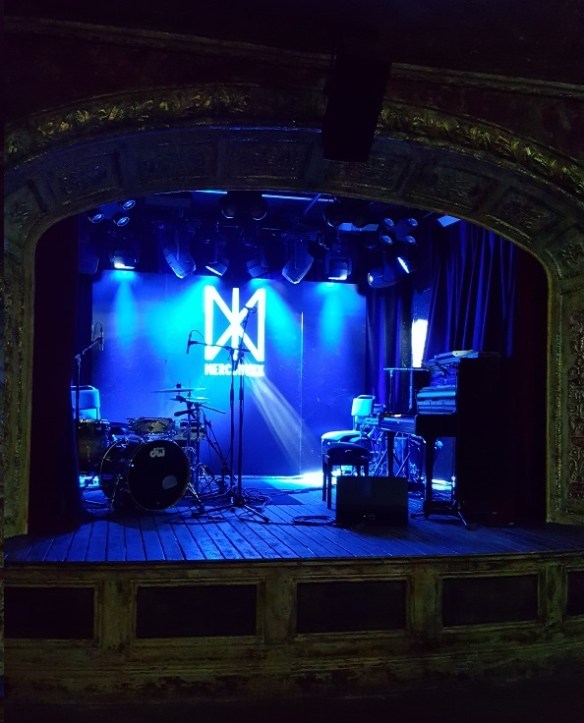
omeara Mercury KX launch night, Omeara, 20 February 2017. Featuring Lambert, Solomon Grey and Sebastian Plano
Written by Ben Hogwood

The launch of a new record label is a rare thing indeed, especially when powered, as Mercury KX is, by a major company such as Universal.

So it was that the planets aligned with Mercury on a Monday night in South London. The Omeara club was the setting for the launch of a label which is set to become home for artists where classical and electronic music can meet and do business without any constraints. A bit like this website, we hope!

Inevitably people want to put a name on this form of music, and ‘post-classical’ was the term chosen during a spirited discussion between journalist Sean Adams and the label’s new acts Solomon Grey and Ólafur Arnalds. Yet the conclusion of the artists was that they wanted to avoid genre labels, enjoying the music for what it is.

lambert

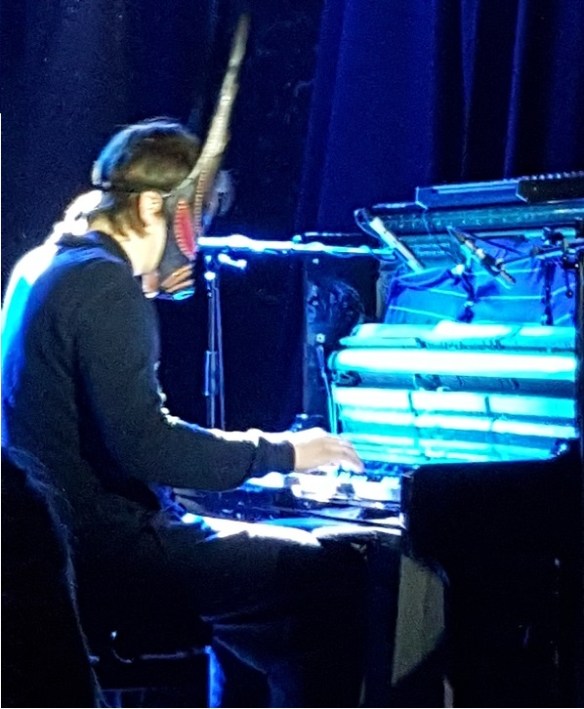
Given the new signings for Mercury KX, that was easy. Firstly we enjoyed Lambert, a German duo adorned in tall and rather imposing Sardinian masks. Their stage dress heightened the dramatic impact already created by the rumbling of piano and percussion. The piano was opened up so we could see the workings and appreciate the mottled effect of the hammers, dampened in the quieter music and perfectly twinned with the blue light. When the music got faster, though, the percussive drive was irresistible.

Arnalds, whose distinctive music underpins each of the three series of Broadchurch, then gave interesting insights into his studio and methods of composition, ahead of the return of the drama on ITV next week. The confines of TV work can be stimulating for a composer, he said, a theme endorsed by label mates Solomon Grey. The duo have recently completed a score for the BBC drama The Last Post, due in the autumn. Their music uses field recordings and, in the brief episode we heard, has an appealing and almost psychedelic brightness in keeping with the video below.

Finally Sebastian Plano teamed up with the 12 Ensemble for a string-drenched meditation lasting around 20 minutes, led alternately by his soaring, song like cello playing and graceful piano. Plano had an appealing manner onstage, letting his music do the talking but allowing his cello to sing right at the top of its range, enjoying the beautiful harmonic progressions he had formed.

sebastian-plano-12-ensemble

There was a real buzz around the club, and Mercury KX will no doubt be pleased at the reaction to their new artists and music. They are definitely on to something, for classical and electronic music are enjoying their collision course at the moment. Certainly the likes of Max Richter, Arnalds and Nils Frahm, to give just a few obvious examples, are writing emotive music of lasting beauty. The only potential downside is that a reliance on slow harmonies and the use of strings and piano will be brought forward at the expense of more distinctive melodies and rhythms.

It will be interesting to see if Mercury KX allow for these possibilities. They have banked some fine music already, and the label looks set to touch hearts and minds with its musical explorations in the coming years.

John Adams Earbox – A 70th Birthday Tribute

john-adams

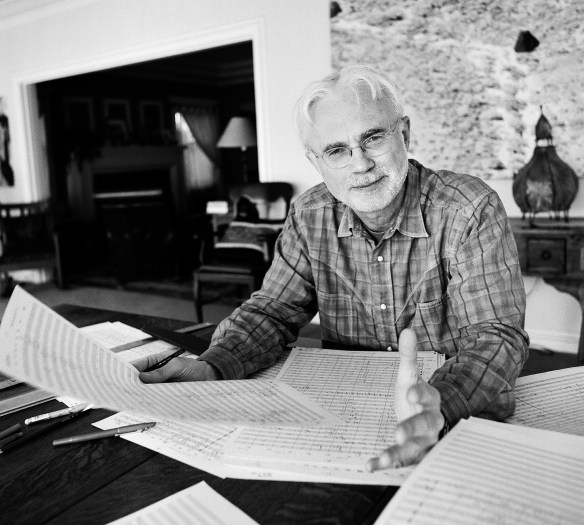
John Adams (photo (c) Margaretta Mitchell)

by Ben Hogwood

Those minimalists – they certainly have some staying power! The holy trinity of this much-loved form of music – Steve Reich, Philip Glass and John Adams – have notched up 230 years on the planet between them. Reich and Glass, both 80, have had their moment in the spotlight, so it’s now the turn of youngster Adams – a mere 70 years old today – to shine.

Like Steve Reich, he works in a style where the musical ideas get progressively developed, whereas Glass – in his later years at least – is much more repetitive. Like Glass, however, Adams has written more for the stage, completing several large-scale operas. He is also capable of scaling down, with string quartets and piano pieces also part of his output.

Here, then, are ten pieces of Adams, selected from personal experience in order of discovery, with the aim of getting the feet tapping and the mind racing!

Short Ride In A Fast Machine (1986)

Probably the best known of Adams’ pieces, this is a tour de force for orchestra – and apparently a nightmare to conduct in terms of getting the rhythms clear! Thrills and spills await…

El Dorado (1991)

This is the piece where the influence of Sibelius in John Adams’ music really shines through. El Dorado is one of his very best ‘through composed’ pieces – that is it relies much more on development than repetition. Both movements start mysteriously, with murmurings throughout the orchestra, but gradually generate an impressive power when moving towards their closing section, especially in the case of the second, Soledades.

To appreciate the full impact you definitely need to hear the whole piece.

Shaker Loops (1978)

Shaker Loops appeared in a definitive Philips recording from the San Francisco Symphony and Edo de Waart in 1986. It works equally well in its original scoring for seven string players, one per part. Once the shimmers – aka ‘Shakers’, start the mind is instantly transported.

John’s Book Of Alleged Dances (1994)

An attractive, slightly bluesy set of dances where it feels like Adams is having fun, together with the Kronos Quartet, who commissioned it.

Harmonium (1980)

Make sure the room is quiet and the neighbours have gone out. Turn the stereo right up, and lose yourself to the opening moments of Harmonium, where voices and instruments blend in to one.

This is a truly magical piece that demonstrates Adams’ ability to write for large vocal and orchestral forces:

Slonimsky’s Earbox (1996)

A terrific concert opener this, punchy and upbeat from the off – with plenty of percussive intent, not to mention the swirling harps and busy woodwind and string lines. One of Adam’s most energetic works, it is written in tribute to Nicolas Slonimsky, a composer and critic who had ‘wit and hyper-energetic activity’ – hence the mood of the piece!

Lollapalooza (1995)

Jazz plays an intriguing if sometimes understated part in Adams’ music, but in Lollapalooza braying brass and woodwind instruments and syncopations are much in evidence. The piece is actually based on the rhythm made by the word, ‘loll-a-pal-ooz-a’, and develops with rolling timpani:

Doctor Atomic (2005)

Never one to shy away from controversial topics, Adams wrote an opera based on the creation of the atomic bomb, and more specifically on its creator, J.Robert Oppenheimer. He also documented the effect on the workers and the region where the bomb was tested, Los Alamos.

The end of the first act includes an aria, Batter my heart, sung by Oppenheimer and setting the words of John Donne. It arrives on the eve of the text explosion. Adams said to New Yorker critic Alex Ross, “That music just sort of fluttered down and landed on my desk one day. Part of me said, ‘No, you can’t do that,’ and the other half said, ‘That’s it, go ahead and do it.’ Afterward, I realized the reason it was right. Naming the site after a John Donne sonnet was itself an archaic gesture. Oppenheimer was always referring back to ancient things, summing up his state through very dignified forms.”

It is worth reading this when you listen to the powerful music! Adams made a Symphony of the opera, attached to the Spotify playlist.

City Noir (2009)

“City Noir is a symphony inspired by the peculiar ambience and mood of Los Angeles ‘noir’ films, especially those produced in the late forties and early fifties”, writes Adams. “My music is an homage not necessarily to the film music of that period but rather to the overall aesthetic of the era. This symphony becomes the third in a triptych of orchestral works that have as their theme the California experience, its landscape and its culture.

The two previous are The Dharma at Big Sur (also commissioned by the Los Angeles Philharmonic) and El Dorado (commissioned by the San Francisco Symphony).”

Below is the third of its three movements, Boulevard Night powerful and surging:

El Nino (2001)

One of Adams’ most successful stage productions, El Nino is classed as an ‘opera-oratorio’ that tells the Christmas story. Once again Peter Sellers was the stage collaborator, including film and dance in the production. Here is an excerpt with the stellar cast, including Dawn Upshaw, Lorraine Hunt Lieberson and Willard White:

Wigmore Mondays – Kathryn Rudge & James Baillieu: English song

kathryn-rudge

Kathryn Rudge (mezzo-soprano), Gary Pomeroy (viola) & James Baillieu (piano, below)

Howells Come sing and dance (1927)

Quilter Go, lovely rose (1922), Now sleeps the crimson petal (1897), Music, when soft voices die (1926)

William Charles Denis Browne To Gratiana, dancing and singing (1913)

Howells Peacock Pie Op.33 (1919)

Ivor Gurney Sleep (1914); Most holy night (1920); The Fields are full (pub. 1928); By a bierside (1916)

Bridge Three songs with viola [Far, far from each other; Where is it that our soul doth go?; Music when soft voices die] (1903-06)

Listen to the BBC broadcast here

Written by Ben Hogwood

Kathryn Rudge has a special affinity with English song, and in particular the music of Herbert Howells. I remember an especially moving account of his most famous song King David at the Wigmore Hall a few years back, and here she and pianist James Baillieu enjoyed the open-air sonorities of his song Come sing and dance (from 1:26 on the broadcast).

Howells is one of several English composers who excelled in the form of song, but who are not heard often in concert programs, so it was gratifying to see these two BBC Radio 3 New Generation Artists trying something different.

Roger Quilter was the most celebrated song composer of the five here, and the selection of three of his most famous songs was lovingly performed. Go, lovely rose (from 6:02), Now sleeps the crimson petal (9:08) an Music, when soft voices die (11:38) all showed off his melodic craft and subtly rapturous word settings, not to mention flowing piano accompaniment that was superbly played by Baillieu.

Most striking of all those here was the biggest rarity, a song by William Denis Browne, who was killed in the First World War. He left a tiny output of music, dying at the age of 27, and this song – To Gratiana dancing and singing (from 13:47) – left a lasting impression with its strong melody and bold, grand piano part.

james-baillieu-clive-bardaAfter the war English composers were attracted to the simple poetry of Walter de la Mare, and Howells delivered a short, six-part song cycle Peacock Pie, setting verses for children. Here it was oddly enchanting, especially the story of Tired Tim (19:37), who took an age to get up the stairs, the strangely charming figure of Mrs MacQueen or the lumbering profile of The dunce (25:35), a kind of march gone wrong. Rudge could perhaps have used more variety in her portrayal of the characters here, but Howells’ invention and distinctive harmonies shone through, especially in the magical Full Moon (26:45).

On to the tragic figure of Ivor Gurney, much of whose output remains unpublished after his tragically early move to the asylum. The quartet of songs here were dramatic in the extreme though – a resigned Sleep (30:51), a protective Most Holy Night (33:50) the heady, summer stillness of The fields are full (39:49) – vividly caught by both performers – and finally the terrible truth of By a bierside. Written in the trenches in France, its coda (43:20) sings of how ‘it is most grand to die’. This was the loudest and most painful music of the concert, but Baillieu’s response was magical, subtly moving the music through the keys to reach a less painful finish.

Finally we heard songs by Britten’s teacher and friend Frank Bridge, a masterful viola player who wrote his own instrument into these three songs, written between 1903 and 1906. In this performance they were highly charged, and could perhaps have done with more light and shade from singer and viola, but these minor gripes were outdone by the enjoyment of Bridge’s turbulent writing in Far, far from each other (47:10), the resignation of Where is it that our soul doth go? (from 51:00) and finally the warmer heart of Music, when soft voices die (54:45).

As an encore Rudge and Baillieu chose perfectly, opting for Alan Robert Murray’s song I’ll walk beside you (58:33), uncannily sharing a wish for a better, more inclusive world.

Further listening

Kathryn Rudge and James Baillieu made their debut album as a partnership for Champs Hill Records in 2014 – and it complements the songs in this concert perfectly.