As part of Arcana’s celebration of the cello this year, here is BBC Young Musician 2016 Sheku Kanneh-Mason, playing Tom Hodge‘s new arrangement of Leonard Cohen‘s Hallelujah:
Sheku played the arrangement at last night’s BAFTA ceremony, marking the passing of so many from the film industry in 2016.
Decca have just released a new EP by their new cellist that contains two more reflective song arrangements, Fauré’s Après un rêve and Bloch’s Abodah
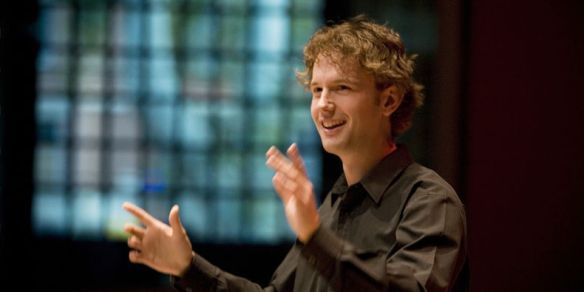
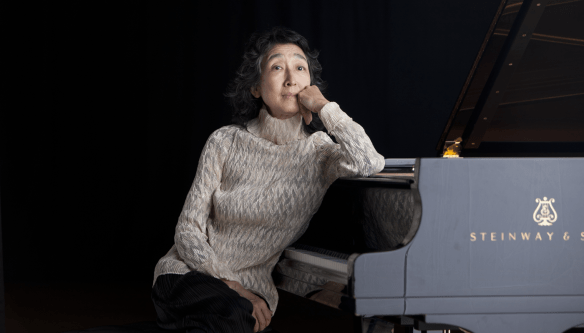
Jörg Widmann (clarinet, above – photo by Marco Borggreve) & Mitsuko Uchida (piano, below)
Wigmore Hall, Thursday 9th February, 2017
Brahms Clarinet Sonata in F minor Op.120/1 (1894)
Berg 4 Pieces for Clarinet and Piano Op. 5 (1913)
Widmann Fantasie for solo clarinet (1993)
Schubert Impromptu in C minor D899/1 (1827)
Widmann Sonatina facile (2016, UK première)
Schumann 3 Fantasiestücke Op.73 (1849)
Written by Ben Hogwood
The sound made by the clarinet is surely one of the most beautiful in classical music.
Yet, as Jörg Widmann reminded a packed Wigmore Hall when playing his Fantasie for solo clarinet, the instrument’s qualities extend far and wide. Widmann explored multiphonics – playing more than one note at once – and also used the clarinet to evoke a lilting Alpine dance, some outrageous Gershwin-style slides and baleful, shy asides as though he was the only performer in the room.
Widmann has been chosen as the Wigmore Hall’s Composer in Residence for 2017-18. It is a chance to appreciate his versatility, for clarinet pieces are one side of a substantial catalogue. He has written for solo piano, but although Mitsuko Uchida’s UK premiere performance of the Sonata facile was superbly characterised, it was not as successful musically. Widmann takes Mozart’s Piano Sonata in C major, K545, as a starting point, but he effectively screws up the pages of the work, distorting and fragmenting so that they did not quite add up to a meaningful whole.
Far more purposeful was Uchida’s performance of Schubert’s first published Impromptu, where we explored the composer’s very heart through an interpretation that had the hall on the edge of their seats. The repetitive march theme was darkly coloured, but the transition from minor key to major brought brilliant shafts of light under Uchida’s quick fingers.
When the two musicians played together the results were electric. In spite of a mobile phone that rang for more than a minute, and a hearing aid that shrilled in close proximity to the pitch of Widmann’s clarinet, their Brahms was beautifully poised. The Clarinet Sonata in F minor Op.120/1 is a late, nocturnal treasure, its tension giving way to an autumnal glow in exchanges between the instruments that behave as though they are old friends. This performance caught that intimacy, especially in the slow movement, and enjoyed the dance of the finale with a spring in its step.
Schumann’s 3 Fantasiestücke faired similarly, closing the program wreathed in smiles, despite the occasional furrowed brow in the first piece. Here the interaction was again on the most intimate of scales, Widmann’s control exquisite in the slower music and matched by Uchida’s voicing of the individual parts.
Even better was the duo’s performance of Berg’s 4 Pieces for Clarinet and Piano, a relatively early publication from 1913 that explores the outer limits of tonality. The mysterious second piece had an extraordinary inner tension, fully released in a flurry of notes, while the last piece, also slow, hung on the air for an age.
Widmann’s control here was almost superhuman, and although he admitted to being out of breath after the Schumann, he and Uchida gave a substantial encore by the 14-year old Mendelssohn. The graceful second movement from his Clarinet Sonata sounded like the work of a much older man, and was lovingly played.
Yvonne Howard (mezzo-soprano, Sāvitri), Robert Murray (tenor, Satyavān), James Rutherford (baritone, Death), CBSO Youth Chorus, City of Birmingham Symphony Orchestra / Nicholas Collon (above)
Holst Sāvitri, H96 (1909); The Planets, H125 (1916)
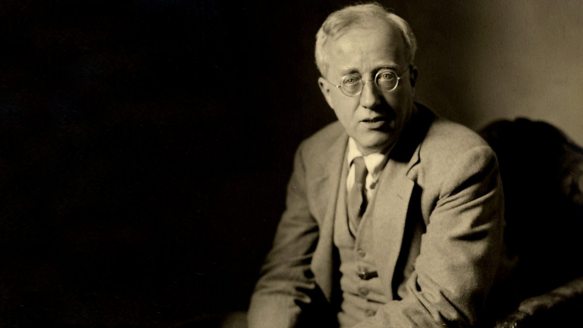
Gustav Holst (1874-1934)
Written by Richard Whitehouse
Cheltenham-born Gustav Holst enjoyed a close relationship with the City of Birmingham Symphony right from its inception, so it was good to see a concert being devoted to his music as part of The Spirit of England series running through to the orchestra’s centenary in 2020.
The elapsing of 108 years has not dulled the innovative qualities of Sāvitri, Holst’s one-act opera with which he made a decisive move from the Wagnerian opulence of his earlier music (not least the three-act opera Sita, still awaiting complete performance), towards the lean and often introspective expression of his maturity. Just over half-an-hour in length, it explores the time-honoured operatic themes of love and redemption as a means of transcending death – all rendered from a curious amalgam of Vedic teaching and Socialist thinking wholly of its time yet no less influential for being so. In addition, the scoring for just three woodwinds and nine strings, along with (wordless) offstage female voices, blazed the trail for later generations of British opera. No Sāvitri = no Britten chamber-operas and no Maxwell Davies music-theatre.
First heard in Birmingham 63 years ago, Sāvitri was given by the CBSO in 2004 and 2008. Then, as now, James Rutherford took the role of Death – his forceful yet ultimately humane assumption complementing the title-role, in which Yvonne Howard (replacing an indisposed Sarah Connolly) responded with fearlessness but also compassion; Robert Murray likewise conveying the heroic vulnerability of Satyavān as he succumbs to then escapes death via the intercession of Sāvitri. Choral and instrumental forces responded ably to Nicholas Collon’s direction, using the spatial possibilities of Symphony Hall’s acoustic to telling effect, but it was a pity that dimmed house-lights made it impossible to follow the succinct yet detailed libretto which was otherwise not always audible. Maybe surtitles could have been provided?
It would be an unlikely all-Holst concert as did not feature The Planets, which duly followed the interval. Collon presided over a performance which, while it offered few revelations, still did justice to the power and originality of this music. Mars evinced a brooding implacability through to those seismic closing bars, then Venus brought eloquence without sentimentality and a solace that was never cloying. Mercury was nimble and quick-witted, not least in the hectic approach to its close, and the only partial disappointment (as so often in this work) was Jupiter, whose outer sections were a shade unsubtle rhythmically, the indelible melody at its centre haltingly paced.
Saturn went much better – Collon alive to the gaunt solemnity of its opening pages and the monumental climax, the final section effortlessly combining radiance and resignation. Nor was there any lack of impetuousity in the goings-on of Uranus, the martial episode reaching a heady culmination (its organ glissando finely integrated into the texture) and wrathful final climax not pre-empting the stillness around it.
Following-on without pause, Neptune rounded-off this reading with a fitting evocation of the ethereal – the CBSO Youth Chorus now placed high in the Symphony Hall auditorium so its role was wholly audible yet, in keeping with Holst’s conception, poised on the intangible.
For more information on future CBSO concerts head to their website
Gould Piano Trio [l-r Lucy Gould (violin), Benjamin Frith (piano), Alice Neary (cello)]
Wigmore Hall, Tuesday 31st January, 2017
Schubert Notturno in E flat, D897 (c1826); Piano Trio No. 1 in B flat, D899 (c1826-7); Piano Trio No. 2 in E flat, D929 (1827)
Franz Schubert (1797-1828)
Written by Richard Whitehouse
That the Gould Piano Trio shared its 25th anniversary with Schubert’s 220th birthday made it all but inevitable that these musicians marked the event with a recital of his music. The exact order of the piano trios may be debatable, but what is never in doubt is their stature on a level with those other chamber works – the final String Quartet and the String Quintet – as among the crowning achievements of the composer’s last years. Equally evident were those subtle but pronounced contrasts in form and expression between works written just months apart.
If the B flat Trio is indeed the earlier of the two, this is reflected in its looking back – albeit obliquely – to the more relaxed manner of Schubert’s music up to 1820. Not that there is any lack of gravitas in this music – witness the stealthy momentum accrued in the initial Allegro’s eventful development, impressively maintained here; in contrast to those tenser emotions of the E Flat Trio’s Allegro with its more angular themes and combative development, whose intensifying reprise then agitated coda might have been realized here with greater impetus.
Arguably the highlights in both these performances were the Andante slow movements. In that of the B flat, the Gould searched out the music’s bittersweet eloquence (here, surely, the way in which this work’s ostensible backward glances should be understood) as also its more tensile evolution. While the ensemble never lost focus during the slow movement of the E flat Trio, where an unassuming Swedish song is transformed over the course of one of Schubert’s journeys into uncertainty, there could have been a more graphic sense of the ominous towards its outcome.
It is in the two scherzos where Schubert’s antecedents are most evident. The Classical poise and lucidity in that of the B flat Trio is audibly that of Mozart, overtly so in that of its suave trio, though in this instance the Gould was more successful in its teasing out the equivocal asides of the E flat Trio’s third movement – its ‘scherzando’ marking, with all the edginess that implies, yielding a Beethovenian intent that was amply brought out here. In such music, moreover, is Schubert heard at his most provocative and hence at his most contemporary.
The brace of finales brought these contrasted pieces, and their (for the most part) contrasted interpretations, to their head. The outwardly clear-cut rondo of the B flat Trio unfolded with its deft eliding into unexpected keys drawn into a powerful sense of resolve. If ensemble here was notably more secure than in the finale of the E flat Trio, rendering what is formally the most intricate and expressively the most inclusive among all these movements would be a tall order for any group, and there was little doubting the Gould’s insight over its diverse course.
Including the teenage composer’s Sonatensatz as an encore would likely have been gratuitous in context, though it made sense to open the evening with the Notturno written alongside the two mature trios and was most likely a rejected slow movement for the B flat. With its soulful melodic content and energetic central section, it could be a forerunner of the slow movement for the String Quintet – a reminder that nothing went to waste during Schubert’s feverish final months, with that striving quality once again to the fore in what was another fine performance.
For more information on the Gould Piano Trio visit their website
For his follow-up to the extraordinarily successful SLEEP, Max Richter turns his attentions to the works of Virginia Woolf. He has been working on a Royal Ballet production with Wayne McGregor, and this full length album documents his responses to Woolf’s novels.
The resultant soundtrack features Woolf’s own text, read by Sarah Sutcliffe, Gillian Anderson and the author herself, her only surviving recording, where she reads Craftsmanship to the eerie backing of Big Ben. Anderson reads her suicide note, a deeply felt letter to her husband to which Richter responds with the extended meditation Tuesday.
What’s the music like?
Richter shows his versatility as a composer throughout this album, drawing on his legacy as an electronic composer but showing also how he continues to effectively exploit analogue instruments.
The music for Mrs Dalloway is incredibly intimate and has a small-scale setting to go with it. Utterances like Words and In the garden are simplicity itself and are subtly scored, while War anthem features a resonant cello, beautifully played by Hila Karni, that soars in the spirit of John Tavener.
Orlando contains a varied selection of shorter pieces. Morphology has a lovely, open texture, and like a few of the numbers here it would have been nice for the music to have longer to open out and present itself fully. Perhaps because of the constraints of the director, some of Richter’s music adopts more of a sketch form here.
That is emphatically not the case for the final, heartrending Tuesday, Richter’s response to the suicide note that makes up the whole of the Waves section. It is a powerful meditation, deliberately written to connect with Zen Buddhism, and comes close to Hans Zimmer’s music for Interstellar in mood. Richter’s musical development is subtle, the elegiac motif generating a deep and lasting power that leads to a final, exhausted coda.
Mostly, and it presents Richter as a multifaceted composer who can work on the small scale of chamber music but also a larger orchestral stage. Tuesday is a really impressive piece of work, showing how he can command the attention of an audience over a longer structure – which SLEEP did of course, but in a very different way!
The music for Mrs Dalloway is very simple – too much at times – but at its best is also deeply effective. The sensitive use of speech around the music is effective.
Is it recommended?
Yes. Not always the cheeriest album, Three Worlds does nonetheless become both a restful and emotionally powerful piece of meditation, a heartfelt response to the works of one of Britain’s finest 20th century novelists.



 Far more purposeful was Uchida’s performance of Schubert’s first published Impromptu, where we explored the composer’s very heart through an interpretation that had the hall on the edge of their seats. The repetitive march theme was darkly coloured, but the transition from minor key to major brought brilliant shafts of light under Uchida’s quick fingers.