Unknown's avatar

About Arcana

My name is Ben Hogwood, editor of the Arcana music site (arcana.fm)

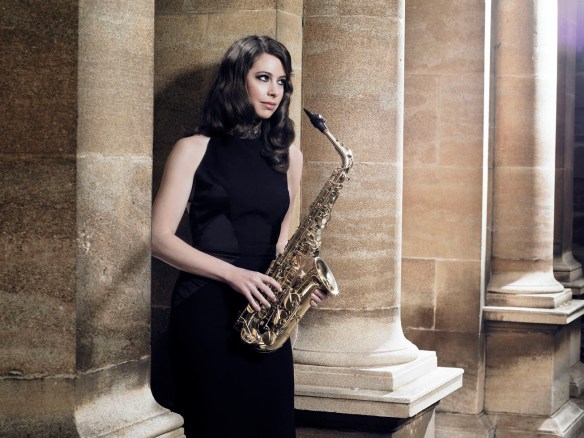
Amy Dickson – the music of Philip Glass and how she had to redefine her breathing

amy_dickson_225_ret

To mark the 80th birthday of Philip Glass this week, saxophonist Amy Dickson has expressed her love of the composer’s music through an album released for Sony Classical. The record – simply titled Glass – includes two important arrangements highlighting the flexibility of the composer’s music, and showing how well it transcribes for Dickson’s instrument.

In this interview with Arcana she talks about how the arrangements were made, how she had to develop a whole new form of breathing for the recording, and how Take A Breath, her campaign for primary school children, has touched thousands around the world.

As always, to start with, Arcana raised the traditional question:

Can you remember your first encounters with classical music?

I’m not sure I can! I do remember starting on the piano when I was two, and having music lessons early on. Pieces of piano music still take me back to early childhood. My fondest memory is being drawn in by a cassette that we used to listen to in my mum’s car. I would be absolutely rapt while we listened and then we would press rewind and listen over again. The piece I remember most was Andalucía by Ernesto Lecuona. I learned to play it on the piano after my mum went to great lengths to find the score of it.

How did you develop a love of the saxophone?

There was a great teacher, Melinda Atkins, who isn’t that much older than me. I had lessons with her from the age of six. It was just meant to be, she was absolutely amazing for me, and the chances were so slim of something like that happening. We looked at a lot of different styles of music, she was really cool about jazz and classical, and never made me think there was anything I couldn’t do. I was her student in Sydney until I went to the Royal College of Music at the age of 18.

I played in jazz bands through my childhood years, and I had the widest range of musical influences you could imagine! I played piano classically, harpsichord in music from the Baroque, while for the saxophone it was so wide ranging. I feel very lucky to have had great teachers, and they have inspired me to have no boundaries. They helped me learn whatever I could, and I also have had parents who are very keen to give me opportunities. I am eternally grateful for that.

Has that approach carried with you to your recording career?

Yes. I definitely had no idea before it about a grand plan. I work from year to year and like to record whatever I feel particularly passionate about. I have recorded some really diverse repertoire so far, and I have no idea where I will be in five or so years – and I don’t really want to know either! I love playing with new and different people all the time, and that’s so interesting. There is no set path as a classical saxophonist, the only way to go is to be open.

What attracted you to the music of Philip Glass?

I feel very emotionally pulled towards it. When I first heard the Violin Concerto I fell in love with it. It was all to do with a place where I was in my life, and it tugged at my heartstrings. I thought about transcribing it, and that was ridiculous in a sense because there was nowhere to breathe! That was when I learned how to circular breathe.

The pieces from The Hours are particularly beautiful too – Morning Passages is lyrical and a complete piece in itself, and is remarkably complete for a film score. The Violin Sonata is similar to the concerto in terms of structure and content. I immediately felt as strong a pill to this as I did to the concerto, but it’s harder than anything I have ever played. Technically it’s tricky, but the element of stamina required is something else – there really is nowhere to breathe, nowhere with a beat’s rest. Since learning how to circular breathe I have dealt with that, but it really is playing constantly for around 25 minutes.

What is circular breathing, and how did you learn it?

While you’re breathing out, you sniff in through your nose and put more air into your lungs. You manipulate the back of your throat to put air into your cheeks, so then you release the air and sniff in again.

It’s a question of separating the muscle groups so that you can manipulate them. I knew a few people who did something similar, but I decided I wanted to play the concerto, and I set aside 20 minutes a day to learn how to circular breathe.

It took around two weeks, and was like learning a new life skill! It turned out to be the first steps, and it was six months until I felt I could really do it while I was playing, as the sound could be disrupted. If you can separate your lip muscles from your cheek muscles, it is much more instinctive now, but I still have to think carefully about it.
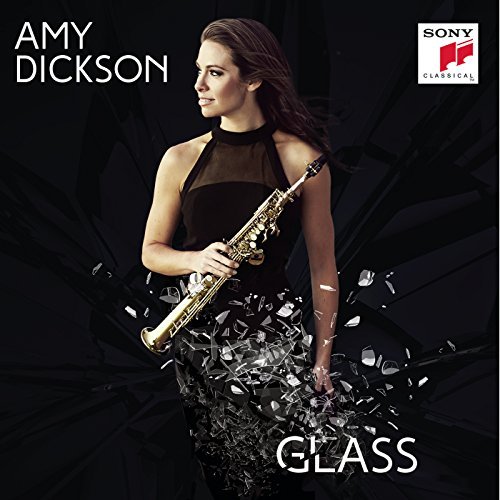
amy-dickson-glassWhat has the reception been like to your Glass recordings, and have you heard from Glass himself?

It’s been amazing. I got a message from Sony this morning to say that overnight the video had reached one million hits on YouTube. Philip has been very pleased with it too. Generally he doesn’t let other people touch his music.

Had you heard his previous work for saxophone before starting on this?

I got to know the Façades when I was doing the first transcription. I think the best way to get to know a composer is to listen to as much of their music as possible.

What was the inspiration for the ‘Take A Breath’ campaign?

The focus is to teach children to breathe well, but it stems from playing the Glass and teaching myself to breathe again as an adult.

I have spoken to experts about this and realised that children develop bad habits as they get older. As we get older, so much of our lives could be improved by breathing better. I was going into schools with the Children & The Arts charity, and we noticed that the kids would run and run around the playground, and could then calm themselves down if they took a breath and could breathe properly.

If I had been taught that as a child I would have benefited greatly! Over time with the kids we have developed a saxophone playing elephant – Ellie – that they can relate to. The children called her that, and they would pretend to have a trunk that they would breathe air into. They would breathe through it and it would put air in their tummies. All through the exercises we imagined they were playing a note on the saxophone.

elephant-poster

It’s amazing seeing children remembering these exercises and being mesmerised by them. Some of the children said how it had helped them when they had fallen over, taking their ‘elephant breath’. It’s about having a tool for emotional resilience too. It was amazing seeing these little people doing elephant breaths before exams.

Could you recommend a piece of Philip Glass that you wouldn’t normally play?

There is a violin piece that I have been particularly drawn to – the Chaconne from the Partita for Solo Violin.

Finally, what does classical music mean to you personally?

That’s really difficult! (Amy pauses) What is classical music? I think the term is difficult, I say I’m a classical saxophonist but I don’t play classical music – I see that as being music from between 1750 and 1820.

If you look at classical music it’s difficult to define. I reckon that in fifty years’ time they might call some of the pop music of the 1970s and 1980s classical music. We’ll have to wait and see!

Amy Dickson’s Glass is out now. For more information you can head to her website, where the Take A Breath campaign can also be found
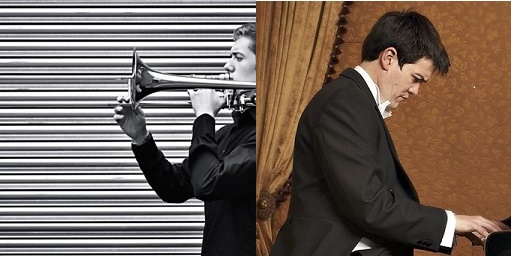
Wigmore Mondays – Peter Moore & James Baillieu: Trombone showpieces

peter-moore

Peter Moore & James Baillieu: Trombone showpieces

James Maynard Urban Variations (2016, world première)

Schumann Fantasiestücke Op. 73 (1849)

Axel Jørgensen Romance Op. 21 (publ.1921)

Duparc La vie antérieure (1884)

Rachmaninov Cello Sonata in G minor Op. 19 (3rd movt, Andante) (1901)

Hindemith Trombone Sonata (1941)

Arthur Pryor Annie Laurie (early 1900s)

Listen to the BBC broadcast here

Written by Ben Hogwood

Peter Moore is a remarkable talent.

Winner of the BBC Young Musician of the Year crown at the age of 12, co-principal trombone of the London Symphony Orchestra at 18 and now one of the BBC Radio 3 New Generation Artists, he looks set for a long and lasting career at the top, if this superb recital is anything to go by.

The same can be said for partner in crime James Baillieu, a pianist of great sensitivity and style, whose musicality and technique mark him out as a very fine accompanist – using that term with the knowledge that it is not a secondary role!

The recital, a rare chance to experience the trombone in a solo capacity, was full of thrills and spills. Moore began with a flourish, the enjoyable Urban Variations of fellow trombonist James Maynard an evocation of three different cities – Berlin (from 1:42 on the broadcast), London (a calm St John’s Wood park at 3:10) and the bustle of New York (8:13)

Then Moore explored more romantic repertoire in straight transcriptions of three Fantasy Pieces by Schumann (10:59), a song by Duparc (26:13) and the slow movement of Rachmaninov’s Cello Sonata (30:55), with an original piece from the Danish composer Axel Jørgensen added for good measure.

The Schumann was a tricky one for both performers to balance. It was superbly played but at the back of the hall the piano was a way back in the balance at times. The Duparc and Rachmaninov fared very well, an inspired pairing that proved a great showcase for Moore’s breadth of tone, while the Jorgensen (from 21:00) was a bright piece, dappled with sunshine.

The coup de grace, though, was a brilliant performance of Hindemith’s Trombone Sonata (from 38:25). Rarely heard in the concert hall these days, the composer’s music gets an unfair deal. Moore and Baillieu showed us why this is wrong, with plenty of humour, grace and a gritty resilience, the latter quality due in part to the work’s composition in 1941, around the Second World War. Both players performed heroically, whether it was Baillieu catching the rhythmic drive of the music, or Moore moving between technical trickery and sudden if brief lyrical asides. The third movement, wonderfully described as a Swashbuckler’s Song, found Moore at his outspoken best.

The two followed with a work by Sousa’s go-to trombone man, Arthur Pryor (from 48:50). Annie Laurie, an air and variations on the traditional Scottish tune, was a winning performance, the audience alternately gasping at Moore’s technique or laughing at some of the outrageous and funny musical statements. The encore, which was inevitable after a concert of such good quality, was an arrangement of Charlie Chaplin’s Smile (54:38)

If brass playing is your thing, I would urge you to catch Peter Moore live – and soon!

Further listening

The music played by Peter Moore and James Baillieu is included in the Spotify playlist below.

Ten Pieces of Glass – An 80th Birthday Tribute to Philip Glass

glass

Today is the 80th birthday of one of the biggest composers of the ‘minimalist’ movement in music. Philip Glass, together with Steve Reich, Terry Riley and John Adams, has exerted considerable influence on today’s electronic music artists, and it’s easy to forget just how pioneering his works, the early ones in particular, still are.

Within classical music circles there is a large group of people who think Glass has got lucky, and that his music is little more than repeated arpeggios that don’t really go anywhere. From personal experience I can see why some of the material in the more recent works gets tarred with that particular brush, but I also think that if you look in the right parts of Glass’s massive compositional output there are many treasures to be found.

Steve Reich might be regarded as the more trendy composer, being referenced by pop acts as an influence with great regularity. Yet while he worked recently with Radiohead material in Radio Rewrite, giving him extra credibility, let’s not forget Glass completed three symphonies based on themes by David Bowie and Brian Eno.

Granted, Reich is probably more progressive in his musical thinking, and is certainly more economic with his musical material, but to assume his music is ‘better’ is to misunderstand Glass. There is definitely room for both! So to shout the corner of Reich’s former business partner – the two ran a removal business in the 1970s – here are my Ten Pieces of Glass, given in the order in which I discovered them:


Company (1983)

When I first heard the celebrated Kronos Quartet recording of this, Company – Glass’s String Quartet no.2 – it was the first time I had encountered the composer’s music. It had a lasting effect, for despite its incredible simplicity Company contains moving harmonic progressions and propulsive music that somehow serves as a soothing balm. All four movements are untitled, their only indication a metronome marking, but that only adds to the simplicity, and when the opening begins it is as though Glass has turned his attention back several centuries.

Dances nos.1-5 (1980)

When I first listened to this I remember my mother calling up the stairs to check my CD player wasn’t malfunctioning! Dance no.1 is a confrontational listen but in the best possible way, hurling joyful notes at its listener without ceasing. It is a strange but rather wonderful ritual:

Dance no.4, meanwhile, visits another world entirely, and once heard on the church organ is unlikely to be forgotten. The recording I have in mind is that by Christopher Bowers-Broadbent, recorded in great splendour by ECM, though the original from the composer himself is very fine too.

The arpeggios are pure Glass, but once the circular harmonic progression begins the listener is invited on a flight of fancy that gets ever more powerful as it moves on:

Powaqqatsi (1988)

In contrast the music Glass’s score for the film Powaqqatsi goes straight for the jugular as soon as it begins. Serra Pelada, the opening salvo, has a rush of saxophones and rocking children’s voices, a real thrill for the senses from start to finish:

Koyaanisqatsi (1983)

One of the film scores that got Glass his name as a composer for the big screen was his music for Francis Ford Coppola’s Koyaanisqatsi in 1983. The soundtrack is one of those ‘once heard, never forgotten’ moments, the slow-moving organ and subterranean bass voice combining to make a sonorous yet otherworldly sound.

Metamorphosis One from Solo Piano (1988)

This piece is simplicity itself – no doubt one of the reasons you’re just as likely to hear it in Café Nero as anywhere else. There are three very basic strands to the music – the stern opening chords, then an oscillating arpeggio, then a statement from the right hand that takes a slightly unexpected harmonic twist. It’s that twist that sets Glass apart and gives the music its uncertain air.

Early keyboard Music

Glass’s early work has absolutely no frills, as the titles prove. Music in Contrary Motion, Two Pages and Mad Rush – all contain music of the utmost simplicity, with notes running in sequence or against each other. And yet the energy conjured up here is remarkable, and as the pieces continue a trance can fall over the listener. Steffen Schleiermacher’s recordings of these are highly recommended, but in their absence here is an alternative arrangement of Two Pages (1968):

Symphony no.3 (1995)

The most concise of Glass’s eleven works in the form, the Third Symphony tones down the excesses of the Second to offer a piece for 19 stringed instruments that is a remarkable work of economy.

Different sides of the string orchestra talk to each other, exchanging ideas over an impressive dynamic range – the second movement could be lifted from a Shostakovich scherzo. It is, like Company, music that talks with the utmost simplicity to leave a lasting impression:

Satyagraha (1979)

Some time ago, English National Opera delivered a winning setting of Glass’s opera about Mahatma Gandhi. The crucial element in their success was the use of remarkable visual props to complement the colourful, trance-like music. Not only that, the staging confirmed that Glass’s music is so much more than Western classical – it searches out other customs, religions and cultures on its path.

Very little happens in the plot of Satyagraha but that’s not really the point, for as the music unfolds this becomes a surprisingly stirring statement and tribute to the work of Gandhi. Repetitious it may be, but again with each statement of his material Glass focuses the listener’s mind on only one thing.

Symphony no.7, ‘Toltec’ (2005)

Some of the classical world get a bit annoyed that Glass calls these works ‘symphonies’, as though they are not deserving of the title. Yet works like the Toltec symphony, performed at the BBC Proms back in 2009, prove that whatever label you put on it, this is a deeply meaningful and powerful piece of work. Glass’s ‘Choral’ symphony has music of grace and power that moves surprisingly close to the world of Bruckner in its tactful use of silence.

(not available on Spotify)

Escape from The Hours (2002)

This proves that Glass is not all boundless energy and fast-moving arpeggios. On the playlist, Amy Dickson’s soulful saxophone is the icing on the cake on this haunting piece of music – yet further proof that Glass can write film music with lasting appeal.

ECMA showcase – Pacific Quartet Vienna at the Wigmore Hall

pacific-quartet

Pacific Quartet Vienna (Yuta Takase, Eszter Major (violins), Chin-Ting Huang (viola), Sarah Weilenmann (cello))

Mozart String Quartet in D minor, K421 (1783)

Schumann String Quartet in A major Op.41/3 (1842)

Wigmore Hall; Saturday January 28, 2017

Flying in the face of Brexit, the European Chamber Music Academy is a body established in 2004 by the Alban Berg Quartet founder Hatto Beyerle.

It provides training for flourishing chamber ensembles, and here gave a showcase for the Pacific Quartet of Vienna, a chance for them to play at the hallowed Wigmore Hall for the first time.

There was much to admire. A nicely balanced program of Mozart and Schumann began with one of the six quartets the former composer wrote and dedicated to Haydn. The D minor is the darkest quartet of the six, exploring more oblique harmonies and melodies than the composer normally would. The quartet gave a nicely poised performance, the obdurate and slightly gruff outer movements punctuated by flashes of light. The slow movement was light and beautifully floated, as though they were performing an aria, while the trio section of the stern minuet took the weight away completely, a note of mischief added to the duets between leader Yuta Takase and violist Chin-Ting Huang.

For the Schumann the quartet had a noticeably warmer sound, and they bought joy to one of the composer’s happiest utterances, written in the wake of his marriage to Clara. The lyrical first movement and romantic third were affectionately played, Huang giving maximum expression to the melodies. The scherzo was fun but eventually paled in the shadow of the finale, which gets obsessed with a ten note motif to the point of distraction. Here it cropped up with amusing regularity, the intervening sections deliberately contrasted with it so that it felt like home.

This was an impressive first Wigmore outing for the quartet, who clearly enjoyed the experience and the music they brought with them. I would wager it won’t be the last!

You can read more about forthcoming ECMA events at their website, while further information about the Pacific Quartet Vienna can be found by clicking here

On record: A Winged Victory For The Sullen – Iris (Erased Tapes)

winged-victory-for-the-sullen

Summary

For their third album A Winged Victory For The Sullen, the duo of Adam Bryanbaum Wiltzie and Dustin O’Halloran, have turned to film. Given the deeply atmospheric music of their first two extended works this was perhaps an inevitable move, though was made at the suggestion of Iris director Jailil Lespert, who had discovered their music online.

The film Iris is a remake of Hideo Nakata’s mysterious thriller Chaos, and speaks of unexpected sightings and unexplained appearances. Ideal, you would think, for a moody soundtrack laden with menace.

What’s the music like?

The Prologue sets the brooding scene and establishes the duo’s sound, a combination of beautifully scored strings and subtly used electronics. The slowly oscillating harp and long chords set a wary atmosphere, which by the time of Retour Au Champs De Mars arrives has spilled over into outright threat.

There are no obvious melodies in this music, but as you listen more the harmonic movements become ever more inevitable, the conviction of the music increasingly strong. Galerie is especially effective, the sheen of strings broken by a striking, mottled piano, while in Le Renversement there is the effect of distant gunfire, a chilling effect over static held notes.

Does it all work?

Yes. The music is very slow moving, so is not ideal for every listening situation, but the quality of writing for strings and the ability to paint dark pictures make Iris an increasingly compelling listen.

The combination of subtly used modular synths and the strings is an effective one, especially on bigger sound systems, and the music has enough about it for each part of the soundtrack to stand on its own.

Is it recommended?

Yes. Once again A Winged Victory For The Sullen show their ability to create unique and rather eerie sound worlds, and while some might find their approach a bit too dark and foreboding, there is always a shaft of light to pierce the relative gloom.

Ben Hogwood

Listen on Spotify