Unknown's avatar

About Arcana

My name is Ben Hogwood, editor of the Arcana music site (arcana.fm)

Wigmore Mondays – Roderick Williams & Roger Vignoles in French art-song

Roderick Williams & Roger Vignoles – French Art Song

Fauré Mirages, Op 113 (1919)

Caplet Cinq ballades françaises de Paul Fort (1919-20)

Honegger Petits cours de morale (1941)

Poulenc Deux poèmes de Guillaume Apollinaire (1938); Parisiana (1954)

Listen to the BBC broadcast here

Written by Ben Hogwood

How heartening to have such an inventive hour-long recital of French art-song for a Monday lunchtime. In choosing a programme mostly comprising rarely performed works Roderick Williams and Roger Vignoles demonstrated both the depth of the genre and the rich variety of source texts on which the composers drew.

For this concert we had the intriguing combination of late Fauré, bright Caplet, silly Honegger and typically heart-on-sleeve Poulenc, and both baritone and pianist applied themselves to each with great enthusiasm and character. No stone was left unturned as they strove to bring the texts to life, helped as they were by some wildly differing moods of interpretation.

Late Fauré has a uniquely timeless approach, and the essentially slow Mirages are no exception. The composer’s last song cycle, it is a quartet of settings from the collection of the same name by Renée de Brimont. Williams and Vignoles inhabited a still world, especially in the remarkable passage in Reflets dans l’eau (Reflections in the water) (beginning 4:44 on the radio broadcast), the song almost stopping completely, seemingly in the middle of the lake, for sustained contemplation (from 8:08)

Still more affecting was Danseuse (Dancer), a haunting closing song that vividly portrays the languid movements of the dancer. With his single melodic line in the right hand Vignoles had the lilt just right, as did Williams in his controlled singing.

The Caplet cycle of Paul Fort setting was an altogether different story. André Caplet was a close friend of Debussy, and did a lot of work for him on editions and such. Debussy comes through to some of the harmonies and sleights of hand, but Caplet’s own style makes itself known and is fascinating. Here Vignoles was exceptional in his setting of the five scenes, with some incredibly tricky piano parts made to sound comparatively easy. The start of Cloche d’aube (Tolling dawn) (from 18:09) was a sparkling, brightly lit piano part, complemented by Williams’ sonorous tones.

Notre chaumière en Yveline (Our cottage in Yveline), the third song (from 23:38), was even more striking, falling over itself in rapture, while the glissando of the piano and soaring vocal of Songe d’une nuit d’été (A Midsummer Night’s Dream) (from 26:07) continued the rapt mood of the recently married composer and his domestic bliss. Only the final song, L’adieu en barque (Farewell from a boat) struck a note of caution with the refracted bell ringing conveyed so vividly by Vignoles.

The Honegger songs (from 34:46) were little picture postcards, lasting just over four minutes in total. Described as ‘a short course in morality’, they were written with some striking if rather odd observations by Jean Giraudoux, four of which centred on locations in the UK. Each one, given a woman’s name, had a certain charm – the wandering Jeanne, a rather brusque Adèle (35:25), the heady scents of Cècile (36:11), a strident Irène (37:03) and finally Rosemonde (37:48). Williams and Vignoles clearly enjoyed them, and were on sparkling form throughout.

Finally music by Poulenc, one of the great French songwriters, was given exemplary performances. We heard 2 poems by Guillaume Apollinaire, the colourful Dans le jardin d’Anna (In Anna’s Garden) (40:16), the increasingly bothered Allons plus vite (Move Along) (43:35) and the two Max Jacob poems making up Parisiana (Jouer du bugle (Playing the cornet)) from 46:44 and the short but riotous Vous n’écrivez plus? (You do not write any longer?) (48:15). Both performers were again wreathed in smiles as they enjoyed Poulenc’s direct emotional approach, and then, as a bonus, we had a reflective encore in the form of La Grenouillère (The Froggery).

Even Vignoles was silently singing along at this point, the two finding a strong bond in this little known but richly rewarding box of treats.

Further listening

One of my favourite discs of French song is from the baritone François le Roux, joined by a crack team of French soloists under Charles Dutoit. It includes Poulenc’s Le bal masqué and Le Bestiare cycles, along with the Rapsodie nègre:

Oberon Symphony Orchestra : Mahler Symphony 4 with Anousheh Bromfield

oberon-symphony

Anousheh Bromfield (soprano), Oberon Symphony Orchestra / Samuel Draper (above)

St James’s, Sussex Gardens, London. Saturday 21st January, 2017

Mozart Vorrei spiegarvi, oh Dio!, K418 (1783); Ah sie in ciel, benigne stele, K538 (1788); Nehmt meinen Dank, K383 (1782)

Mahler Symphony No.4 in G (1892; 1899-1900)

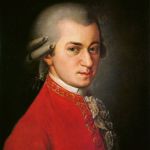
L-R Wolfgang Amadeus Mozart (1756-1791); Gustav Mahler (1860-1911)

Written by Richard Whitehouse

The Oberon Symphony Orchestra continued its season with this pertinent juxtaposition of Mozart and Mahler. The second half was devoted to the latter composer’s Fourth Symphony, in a performance that brought out a great deal of its ethereal rapture as also its oblique irony.

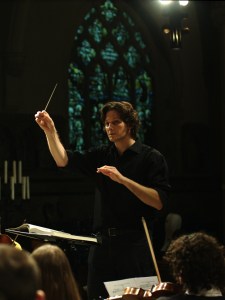
Opting for a steady though never sluggish underlying tempo for the first movement, Samuel Draper (below) made much of this music’s constant eliding between affection and agitation; the latter quality to the fore during a development that built stealthily and incrementally toward its (in context) visceral climax, with the ensuing textural fragmentation then resumption of the main theme in media res tellingly done. Nor was there any lack of eloquence in the Oberon strings’ response to the blissful final pages, before a heady accelerando into the resolute closing bars.

The second movement upped the ironic ante accordingly. Draper knitted together its sardonic scherzo and ruminative trio sections with no mean subtlety, while also emphasizing the aura of malevolence – this latter abetted by leader Matt Bain’s adept switching between violins as tuned normally as well as a tone higher. No less pleasing was Draper’s unaffected approach to portamento – an expressive device only belatedly reintroduced but that, when handled so unobtrusively, adds greatly to the cohesion of this music whatever its emotional disjuncture.

If the adagio was marginally less well integrated in terms of its overall follow-through, there was little doubt as to the poise of Draper’s conception across these variations on contrasted themes in what is arguably Mahler’s most Beethovenian movement. If the slowly emerging angst seemed overtly reined-in, moreover, the breath-taking sense of the coda opening-out onto new expressive vistas was palpably conveyed; the music that follows evincing a highly personal take on the essence of serenity which was – and has remained – unique to Mahler.

Following on (rightly) attacca, the finale needs to lighten the prevailing mood without that unworldliness seeming trivial. In which respect this account succeeded admirably, whatever the occasional failings in ensemble. It helped to have a soloist who, in Anousheh Bromfield, had the measure of the vocal writing’s pert insouciance and often edgy naivete. The lengthy orchestral introduction into the final verse had an ideal lilting motion, with the closing bars not so much tapering-off into nothingness as making toward a point of unwavering stillness.

samuel-draperBefore the interval, Bromfield joined the orchestra for a selection of Mozart concert arias     as complementary as it was unexpected. There was no want of technical finesse in Vorrei spiegarvi, oh Dio! or Ah sie in ciel, benigne stele, though the greatest delights came with a rare outing for Nehmt meinen Dank which incidentally pointed up the unfettered melodic appeal common to Mozart’s settings in German. In each of these pieces, moreover, Draper and his players provided accompaniment of a poise and elegance necessary for this music.
Overall, another fine showing for the Oberon Symphony Orchestra – which returns on April 29th with a further notable first: the UK premiere of Enescu’s Fourth Symphony as realized by the late Pascal Bentoiu, together with shorter orchestral pieces from Bartók and Schubert.

Further information at the Oberon Symphony Orchestra website

On record: Johannes Malfatti – Surge (Glacial Movements)

johannes-malfatti

Summary

Johannes Malfatti is striking out on his own. Having worked as a member of Ensemble, where he has recorded for One Little Indian and worked with Björk among others, this is his first solo venture.

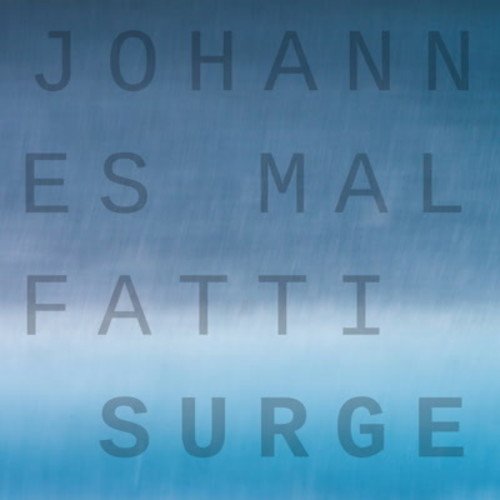
Surge is a description of slow-moving natural phenomena in sound, an observation that most of these processes in the natural world – glaciers, tectonic plates, icebergs and the like – move incredibly slowly.

What’s the music like?

Surge is a single block of sound and music lasting just under an hour. In keeping with several Glacial Movement releases it feels cold, from the early spray of white noise to the closing fade of the last big chord.

As befits his objective Malfatti makes his music move at an incredibly slow tempo, but as it proceeds it builds up power and a surprising depth of emotion. This happens through a huge block of almost completely static music that slowly progresses into audible rage from around five minutes in and keeps moving.

It is the start of a broadly structured canvas where the music ebbs and flows with progressively more powerful chords. By the end the textures have progressed to an incredibly thick block of sound that the listener can dive into, before the movement slows completely and the music fades away.

Does it all work?

Yes. Best heard on headphones, Surge is a powerful expanse that I found I appreciated more with repeated listening. It slows the brain down while engaging the mind with a vivid picture of deep blues and icy greys (for me at least!), moving from darkness to light and back again.

Writing music this slow is a brave move, but the risk pays handsome dividends here.

Is it recommended?

Very much so  – but make sure you have an hour to enjoy it, as Surge only works in a complete listen.

Ben Hogwood

Listen on Spotify

On record: IN-IS: Seven Days (BDi Music Ltd)

in-is

Summary

Sheridan Tongue has always written music for others. In the course of writing music for film, TV and adverts he has earned himself a number of plaudits, not least a BAFTA nomination for Best Original Music on the acclaimed BBC drama Spooks. His work with Robert Plant, Blur and Beverley Knight – among many others – has given him pop sensibilities to go with his prowess as an arranger and orchestrator.

Seven Days has a personal story, though the listener is invited to discover it for themselves. On his blog Tongue indicates how it hit him during the recording session that he was finally making music for himself.

What’s the music like?

Extremely well crafted, and shot through with deep feeling. Tongue’s writing for strings produces some beautiful sounds and chords, but crucially he has the melodies to go with them too.

Scarlette In Love is a good example, with its richly toned cello solo, sounding more than a little like an ITV drama theme – Broadchurch, perhaps, while the opening title track is brilliantly constructed, working a memorable and subtly powerful loop to mesmeric effect with resonant violins. The closing Chorale Wo Soll Ich Fliehen Hin is an eerie update of Bach to muted string orchestra, extending its cold and icy tendrils around a melancholy line for violas.

The mood of Seven Days is essentially one of contemplation, but Tongue adds the light and shade of personal experience to create something much more meaningful.

Does it all work?

Yes. The voice of experience works well here, and although Seven Days is a relatively short listen it is a beautifully written and executed piece of work.

Is it recommended?

Yes. There are a lot of composers writing in this form, which reflects just how popular music for small orchestra or strings can be, with or without classical influences. Seven Days falls squarely between the two forms, and Sheridan Tongue’s craft, application and melodic gifts ensure he is up there with the best writers in his field.

Ben Hogwood

Listen on Spotify

On record: Zimmermann: Symphony in One Movement (Wergo)

zimmermann

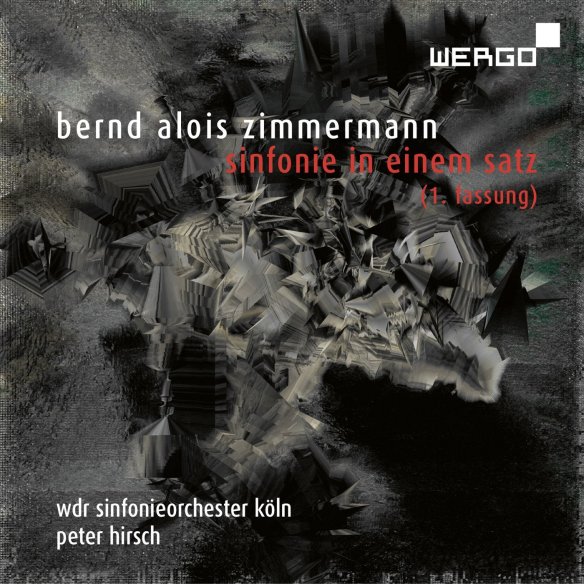
Zimmermann: Symphony in One Movement (1951), Giostra Genovese (1962), Concerto for Strings (1948), Musique pour les soupers du Roi Ubu (1966)

WDR Symphony Orchestra Cologne / Peter Hirsch

Summary

Wergo continues its long-term edition devoted to Bernd Alois Zimmermann (1918-70) with this collection of orchestral pieces spanning the greater part of his composing. This is the third such release under the direction of Peter Hirsch – who, as with Zimmermann, hails from Cologne.

What’s the music like?

As varied as Zimmermann’s output when taken overall. Earliest is the Concerto for Strings, derived from a string trio of four years before and whose trenchant ‘Introduction’, plangent ‘Aria’ and incisive ‘Finale’ evince the expected influences of Bartók and Hindemith but also Karl Amadeus Hartmann – conscience of German music during the Third Reich and mentor to numerous post-war composers.

Among the most striking of Zimmermann’s earlier works, the Symphony in One Movement is heard in the 1951 original which, less cohesive than the 1953 revision (transitions tend to be overly rhetorical), impresses with its emotional intensity and visceral organ writing. Coldly received at its premiere, the music’s expressionist manner can now be heard as ahead of rather than behind its time – any formal imperfections arising from recklessness rather than uncertainty of purpose (as in the original version of Varèse’s Amériques when compared to its revision). The composer’s observation that this work ends at the point where symphonic evolution might usually commence never felt more apposite.

The remaining two pieces are closely intertwined conceptually. Zimmermann had previously arranged selections of ‘early’ music for radio broadcast, but with Giostra Genovese he took dances by Susato, Byrd and Gibbons then transformed them to ironic, alienated and even threatening effect. A portent to similar, more self-conscious, stylistic practices by Schnittke and Maxwell Davies, it was later withdrawn and reworked as Musique pour les soupers du Roi Ubu – the ‘Ballet noir’ such as marks the climax of the composer’s ever more fraught relationship to music from the past.

Here those initial dances are overlaid with quotations of other composers and given a serrated edge in scoring for wind and percussion. The blackly humorous scenario sees the personnel of a liberal arts academy humiliated then executed at the hands of Alfred Jarry’s loutish ruler; a back-handed response to Berlin’s Akademie der Künste that had recently elected him a member, not least the final ‘Marche du décervellage’ with its collision of Wagner, Berlioz and Stockhausen in an apotheosis of unsparing violence.

Does it all work?

Yes, with the proviso Zimmermann’s music is increasingly not about stylistic integration or expressive poise. His concept of the ‘spherical plurality of time’, much in evidence here, may be difficult to explain yet is easy to comprehend through the visceral medium of his music.

Is it recommended?

Indeed. Those who respond to these works might consider widening their listening context with the String Trio (as recorded by Trio Berlin on Wergo) and revised version of Symphony in One Movement (an incendiary live account by Witold Lutosławski on Berlin Classics, or no less authoritative one by Günter Wand on Hänssler Profil). The present disc finds Hirsch securing a committed response from the forces of Cologne Radio Symphony, vividly recorded, as well as penning an informative booklet note. Those new to Zimmermann should start here.

Richard Whitehouse

Further information at https://en.schott-music.com/shop/autoren/bernd-alois-zimmermann