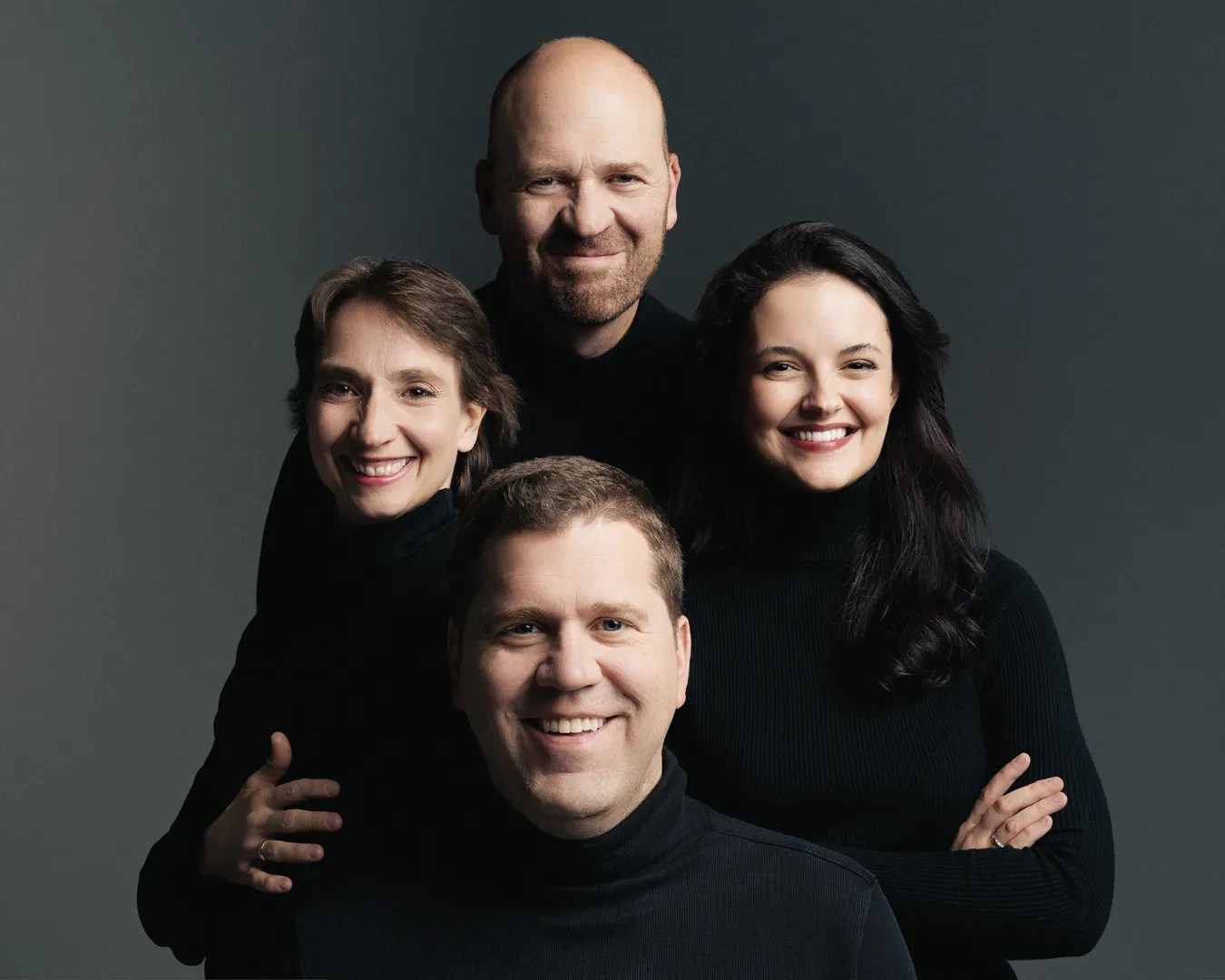
bEva-Maria Hartmann (soprano); cEmma Johnson, dPeter Cigleris (clarinets); dDerek Hannigan (bass clarinet); cRaphael Wallfisch (cello); dWill Duerden, dLevi Andreassen, dDaniil Margulis (double basses); cJohn Lenehan, bCornelis Witthoefft (pianos); aTippett Quartet (John Mills, Jeremy Isaac, violins; Lydia Lowndes-Northcott, viola; Božidar Vukotić, cello)
Robert Simpson
String Quartet in D major (1945)a
Songs – Trocknet nicht!b; The Cherry Tree (both c1942)b
Clarinet Trio (1967)c
Quintet for Clarinet, Bass Clarinet and Three Double Basses (1981)d
Toccata Classics TOCC0701 [70’59’’]
English/German texts & English translation included
Producer / Engineer Michael Ponder
Recorded c3 June 2021 & d20 November 2023 at St George’s, Pinner View, London; a7 February 2023 at Studio TQHQ, Ruislip; b12 August 2024 at Lehmann Studios, Stuttgart
Released in January 2025
Reviewed by Richard Whitehouse
What’s the story?
Toccata Classics issues the first of two releases intended to ‘plug the gaps’ in the survey of Robert Simpson’s chamber music recorded by Hyperion in the 1980s and 1990s, featuring mainly younger musicians who demonstrate keen understanding of this composer’s idiom.
What’s the music like?
Although hardly a cohesive collection as such, this album provides an alternative overview across the greater part of Simpson’s output. Nothing here could be considered inessential, while one of these pieces most likely ranks among his finest compositions from any period.
Composed (and duly accepted) as an examination exercise for Simpson’s Batchelor degree at Durham, the String Quartet in D thereafter remained unpublished and unheard until this recording. At just over 20 minutes, the modest dimensions belie its formal deftness and its expressive subtlety – a trenchant initial Allegro followed by an Adagio where Haydnesque wit makes way for Beethovenian profundity, an ingratiating Allegretto closer to intermezzo than scherzo then a final Presto of an exhilaration effortlessly sustained through to its close.
Simpson was always uneasy with the setting of texts (his two published choral works solve this issue in different though equally ingenious way), but these early settings of Goethe and Housman suggest a distinctive and, moreover, convincing approach which could well have become more so had he persevered. Interestingly, both have an almost confessional quality that the composer, still in his early twenties, might have felt better conveyed in instrumental terms. Something that can never be known for sure, but the attraction of these songs remains.
The late 1960s found Simpson writing two major chamber works with clarinet. The Clarinet Quintet has long been regarded among his finest works, but the slightly earlier Clarinet Trio has seldom been heard and is something of a revelation. From its spellbinding introduction, the initial Allegro makes a virtue of abrupt contrast between impulsiveness and remoteness, with the slow movement a fugitive if searching interlude making the final Allegro the more unequivocal as this builds to a powerful apotheosis offset by the otherness of its closing bars.
Simpson afficionados will be familiar with the Quintet for Clarinet, Bass Clarinet and String Trio (Hyperion CDA66626), though maybe not the original incarnation with its three double basses. In fact the musical content sounds, for the most part, better suited to those arresting sonorities – not least the ethereal chorale-like texture of an opening Adagio which, after the mounting energy of a central Allegro, is infused with appreciably greater eloquence on its return and sees the whole work to an ending the more inevitable for its deep-seated repose.
Does it all work?
Pretty much throughout. The present accounts lack little in overall conviction, nor does the sound lack anything in clarity or perspective, while the annotations by Matthew Taylor are as informative as might be expected from one for whom Simpson was a significant mentor.
Is it recommended?
Yes, with the follow-up (Sonata for Two Pianos and Brass Quintet) duly awaited. Incidentally, Taylor recorded the Flute Concerto (with Susan Milan) and Variations and Fugue on a Theme of Bach for the Simpson centenary in 2021 but which is yet to be released. Maybe this year?
Listen / Buy
You can hear excerpts from the album and explore purchase options at the Toccata Classics website
Published post no.2,768 – Thursday 15 January 2026