Eight years after Blue Maqams, Anouar Brahem returns with a poignant project, titled after a line of verse by poet Mahmoud Darwish, which asks “Where should the birds fly, after the last sky?” Graceful chamber pieces for oud, cello, piano and bass subtly address the metaphysical question and its broad resonances in a troubled time. While drawing upon the traditional modes of Arab music, Brahem has consistently sought to engage with the wider world, too, and found inspiration in many sources from different cultures.
Bassist Dave Holland and pianist Django Bates are again part of the Tunisian oud master’s international quartet, joined now by cellist Anja Lechner. Brahem’s rapport with Holland – first established on the Thimar album of 1998 – is meanwhile legendary. “Dave’s playing gives me wings,” Anouar has said, an observation that materializes repeatedly across the record. Django Bates’ piano, an important supportive force throughout, contributes swirling solos.
The album marks the first time that Anouar has included a cellist in his group music. Anja Lechner, a leading voice in the recording, has long been conversant with Brahem’s compositions and included them in her own recitals. The cello is given the first and last statements here. After the Last Sky was recorded at Lugano’s Auditorio Stelio Molo RSI in May 2024, and produced by Manfred Eicher. The album is issued as the Brahem quartet embarks on a European tour with concerts in France, Germany, the Netherlands, Switzerland and Belgium.
Watch the title track below:
You can discover more about the album and explore purchase options at the ECM Records website
“If we’re dancing on the brink then we might as well make sure that the music is great.”
So reads the alarming and rather compelling sentence emphasising the point of Daniel Brandt’s Without Us album. Brandt began the record as an impassioned response to what he terms “the helplessness of the individual in the climate crisis and the apparent need to take radical global action to change the trajectory of the current threat of a climate disaster.”
What’s the music like?
Given the theme, it is not a surprise to report that Daniel Brandt’s music on Without Us is far from comfortable. He often veers between extremes, looking for comfort on one side while on the other realising that there is so little time left, it needs to be filled with music of the utmost urgency.
Paradise O.D. recognises this, taking shape quickly with a primal base to its bare rhythm and stripped back texture. Resistance follows the same outline, though under an ominous, synthesized cloud. Lucid does not stay true to its name, forms twisted beyond recognition as though wilting in a hot desert of inflamed temperatures. The fact Brandt wrote a good deal of this album in the Joshua Tree in California only adds to the atmosphere. PNK is a disquieting experience, with a lot of industrial activity taking place at a quick pace but with no apparent end goal other than to make people move quickly:
Yet there are moments of pure beauty to be found, too. Steady is an airy kickback, with some lovely open air textures given a freewheeling beat for company, while Soft Rains offers a comforting heat haze.
Does it all work?
Yes – on a brave and undeniably powerful album, Daniel Brandt hits the spot far more often than not.
Is it recommended?
It is. This is recognisably the work of a player from Brandt Brauer Frick, but Daniel Brandt has turned his beat making to serious means on this powerful piece of work. The importance of the dance is still there, but with the clock ticking there is an almost irresistible urgency to this music.
For fans of… Brandt Brauer Frick, Philip Glass, The Field, Pantha du Prince
Today marks 50 years since the passing of Sir Arthur Bliss, one of the most important composers in recent British musical history.
The Arthur Bliss Society sum up his contribution as “one of the most important figures in British musical life from the early 1920s (when he was regarded as an enfant terrible) through to his later years and his tenure of the office of Master of the Queen’s Music from 1953, following Sir Arnold Bax”.
If you are a regular Arcana reader you will have read about recent performances of A Colour Symphony, one of his most popular orchestral works, and also a revival for his masterful Temporal Variations, recorded by the BBC Philharmonic Orchestra and John Wilson for later this anniversary year.
For now, here is a Tidal playlist taking excerpts from some of Bliss’s most important works, as well as including the two orchestral works noted above:
To read about further concerts in Bliss’s anniversary year, you can visit the Arthur Bliss Society website – where you will find more information about the pieces above.
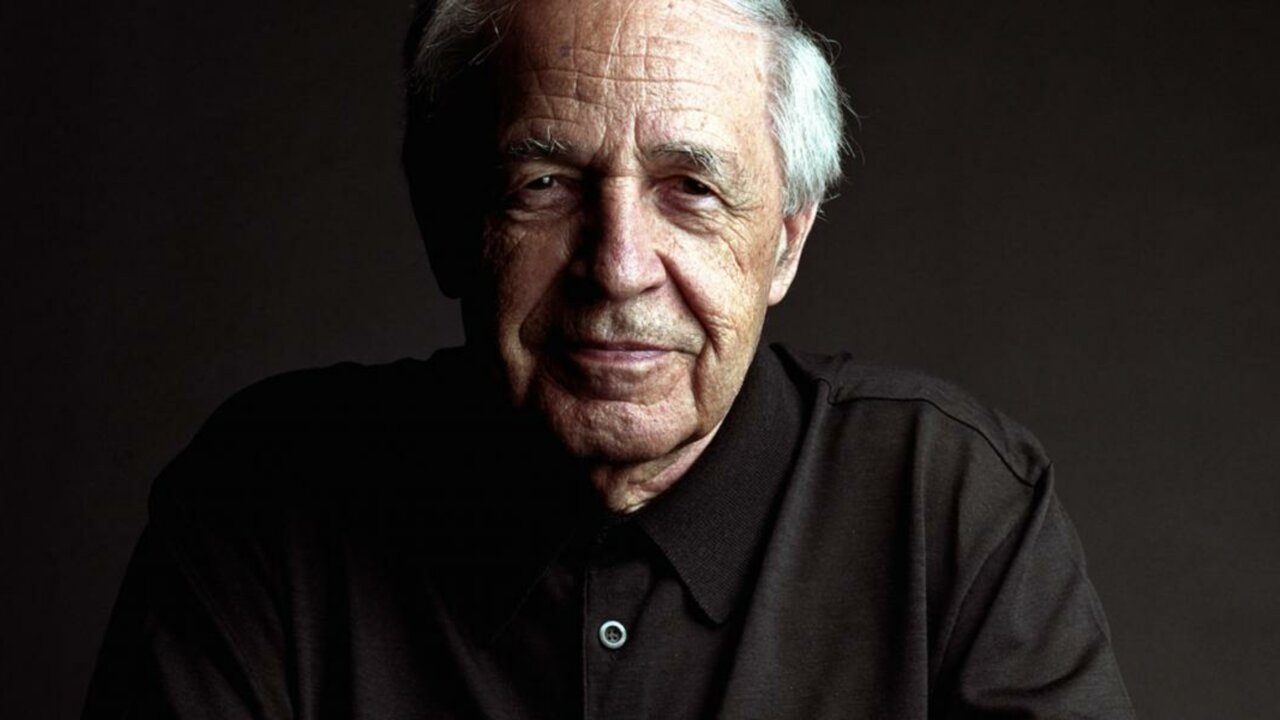
Today marks the centenary of the birth of composer and conductor Pierre Boulez, a towering figure in 20th century classical music.
There are so many recordings conducted by Boulez that I thought it best to share a playlist centred on memories of concerts I saw him conduct, largely from the 1990s and 2000s.
My first encounter with him was a rare appearance with the City of Birmingham Symphony Orchestra at the Royal Festival Hall. There he conducted Bartók’s Piano Concerto no.1 with customary clarity, soloist Krystian Zimerman delivering a memorable performance of percussive drive as he does here. On the second half of the concert was Stravinsky’s Petrushka, well-represented here by Boulez’s recording for DG in Cleveland.
Another South Bank visit in the 1990s brought an unusual appearance for Schoenberg’s monodrama Erwartung, sung memorably by soprano Jessye Norman. I remember vividly several visits to the Barbican to see Boulez conduct the London Symphony Orchestra in the 1990s, and one performance that particularly stands in the memory was that of Ravel’s Valses nobles et sentimentales, a colourful yet brisk performance that danced with a glint in its eye.
One other eyeopener, which I will never forget, was Boulez conducting Prokofiev’s Scythian Suite at the Barbican – a work he never recorded. Simultaneously on the bill was Szymanowski’s Violin Concerto no.1. Here was a composer Boulez seemingly re-evaluated later in his life, recording the concerto with violinist Christian Tetzlaff for DG.
From the recorded side I have included Maurizio Pollini’s pioneering account of Boulez’s own Piano Sonata no.2, a challenging piece that I must admit I have not yet conquered – but whose importance is clear.
To finish, my favourite Boulez recording, which finds him back in Cleveland conducting Debussy’s Nocturnes, a recording notable for its ideal pacing, beautiful colouring and immaculate rhythmic direction.
You can listen to this selection on Tidal by clicking on the playlist link below:
John Cale (vocals, keyboards, guitar), Dustin Boyer (lead guitar/samples), Joey Maramba (bass guitar), Alex Thomas (drums, synths)
Royal Festival Hall, London Friday 21 March 2025
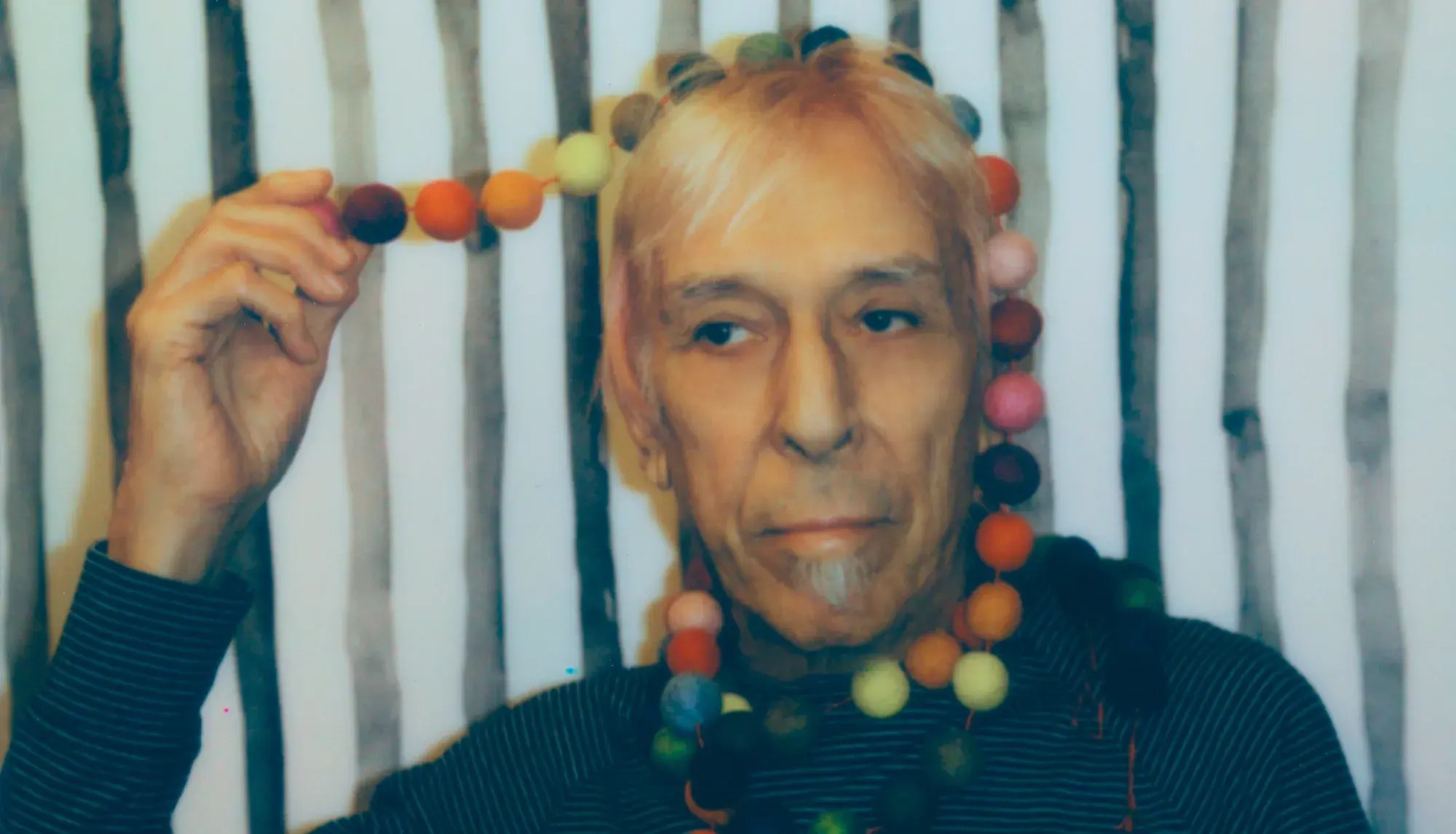
Reviewed by Richard Whitehouse Picture (c) Madeline McManus
It feels reassuring to know, whatever else may be happening, that John Cale is still making music as only he can. Tonight saw him return to the Royal Festival Hall, the scene of some memorable gigs over the past four decades, during the course of his POPtical Illusion Tour.
A tour where his trusty viola has been absent found Cale playing guitar on just the opening track, the sardonically catchy Shark-Shark, before he took his place behind keyboards for the remainder. An album which does not so much defy time as channel it his way, last year’s POPtical Illusion was understandably much in evidence with the deadpan levity of Setting Fires, the unalloyed sassiness of Davies and Wales or the ominous edginess of Company Commander all featured. A further number, unheard until making it onto the setlist just last month, the imperious and intense Long Way Out Of Pain is evidently one of those 50 or so songs which, created during lockdown, has still to find an official release and leads one to hope Cale’s recent productivity in terms of studio albums will continue for some while yet.
Tonight’s set ranged thoughtfully across the greater part of Cale’s output. From 2023’s Mercy, (happily a valediction no more) came the stark Out Your Window with Cale’s voice thrown into stark relief against the fugitive backing vocals. Otherwise, it was back to 1996’s Walking on Locusts for the eloquent Set Me Free, surely among the most affecting songs from that or any other decade, then 1989’s Words for the Dying for the deceptively carefree treatment of Dylan Thomas’ Do Not Go Gentle Into That Good Night which emerged unscathed shorn of its classical stylings. What seemed an overly diffuse number heard on 1979’s Sabotage/Live, Captain Hook became a gripping band workout centred on Cale’s bitingly accusatory lyric, while 1980’s baleful Rosegarden Funeral Of Sores remains the ultimate B-side from hell.
Nor was Cale’s classic singer-songwriter era overlooked – 1975’s Helen of Troy represented by the glancing pathos of My Maria, that same year’s Slow Dazzle by his world-weary take on the Elvis standard Heartbreak Hotel that ever since has accompanied him through thick and thin, and from 1974’s Fear the hard-driving Barracuda which has never sounded more power-pop than now. From 1973’s Paris 1919, The Endless Plain Of Fortune here swapped pathos for pertness in what is among the most interventionist and intriguing of Cale rethinks.
Cale was heard within a band that has largely stayed intact since his return to active gigging – with the inventive lead of Dustin Boyer, resonant underpinning of bassist Joey Maramba and forceful impetus of drummer Alex Thomas. These proved the collective soul of discretion in Frozen Warnings, most confiding number from Nico’s 1968 The Marble Index where Cale honed his formidable skills as a producer and an oasis of intimacy prior to Villa Albani from 1984’s Caribbean Sunset whose new-wave knowingness afforded the expected rounding-off.
More surprising was their no-show for the Velvet Underground 1967 classic Waiting For The Man, a regular encore during this tour. That said, Cale’s departure with ‘‘We’ll see you again soon I hope’’ suggested we may have not seen the last of him on stage. Don’t stop now John! Support was provided by Tom McRae, whose songs had caught the attention of both Cale and Bowie three decades ago. Voice and guitar enhanced by subtle atmospherics, his set suggested his dozen studio albums and almost as many live releases should be worth exploring at leisure.
John Cale and his band played: Shark-Shark, Captain Hook, The Endless Plain of Fortune, Heartbreak Hotel, Setting Fires, Davies and Wales, Rosegarden Funeral of Sores, Set Me Free, My Maria, Do Not Go Gentle Into That Good Night, Company Commander, Out Your Window, Long Way Out Of Pain, Frozen Warnings, Barracuda, Villa Albani



 Arcana.fm