Unknown's avatar

About Arcana

My name is Ben Hogwood, editor of the Arcana music site (arcana.fm)

Arcana @ 10… Musical moments: Loscil

As part of Arcana’s 10th birthday celebrations, we invited our readers to contribute with some of their ‘watershed’ musical moments from the last 10 years.

Editor Ben Hogwood, after much consideration, has chosen a piece of immersive ambience from the Pacific coast.

“Getting to know new music is one of life’s joys – but it does bring with it a danger that the listener does not return to their successes as often as they might or should do. When I was thinking through my musical highlights from the last 10 years it was difficult to bring one specific artist or event to mind. There have been several from my work elsewhere, writing for musicOMH – discovering Bruce Hornsby’s new direction, or following the music of Erland Cooper and its Orcadian connections. Western classical music has provided some memorable moments too, few more so than Sir Simon Rattle conducting Mahler at the BBC Proms.

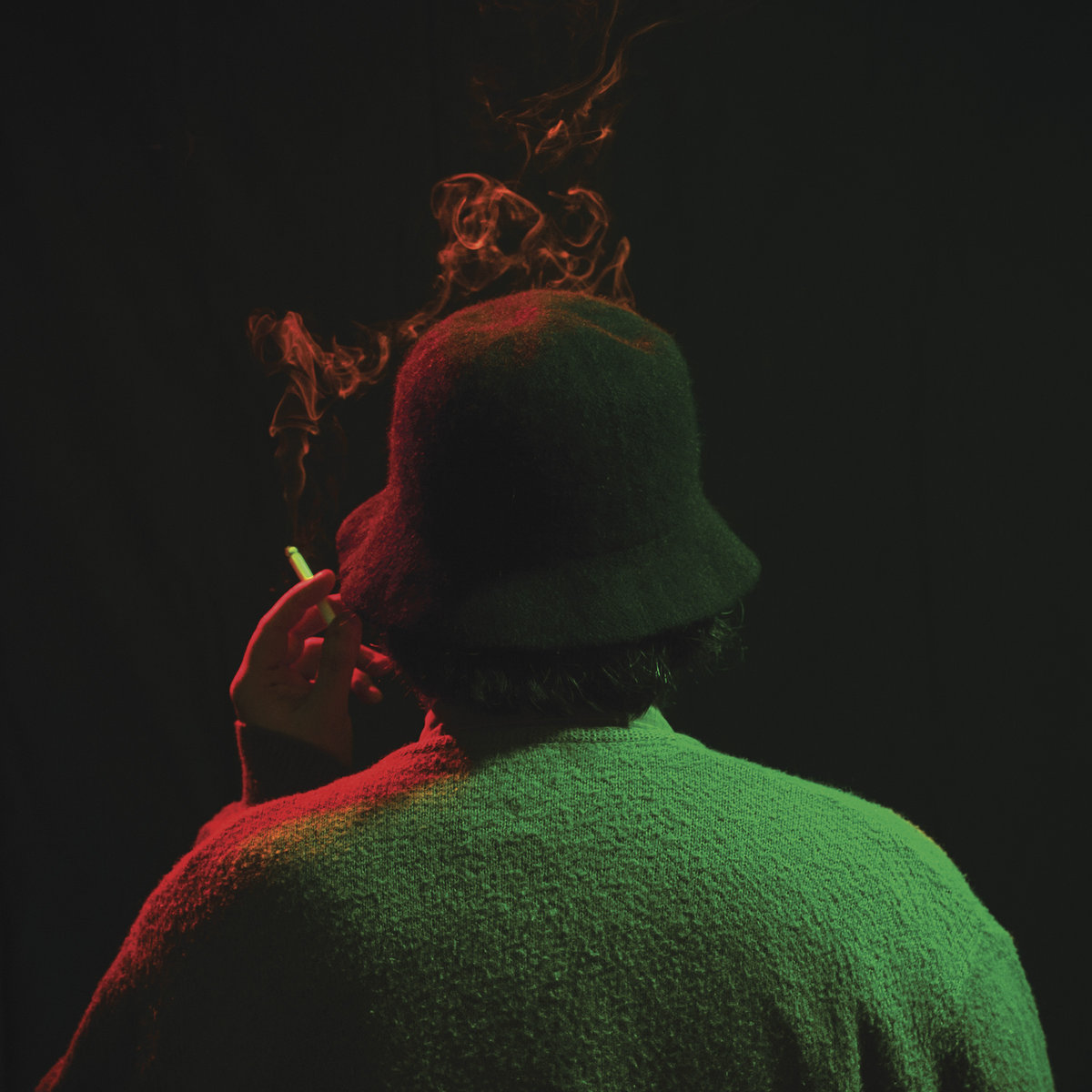
Yet the one I settled on for Arcana’s 10th anniversary is a thread running through the site’s whole decade, my love of the extraordinary music of Loscil. This is the alias used by Scott Morgan, a Canadian who lives in Vancouver, British Columbia – and whose music is like none other.

Perhaps it’s the fact I have been to Vancouver on several occasions, visiting relatives, that I feel such a strong connection to Loscil’s music. But there is something primal about it that really tugs not just at the heart but at the very fibre of our being, a connection formed between music and the earth. It is the deepest ambience you can imagine in music, an extraordinary achievement when you examine the relatively simple tools used in its construction.

The best example for this is the third section of the Equivalents album from 2019 – a timeless wonder that is deep as the ocean, as wide as the sky. There are clouds on the horizon, and the music paints all these and more in its extraordinary span.

In a memorable interview for Arcana, Scott summed it up. “There is a way of using the creative process and the creation of music to express that which you can’t express in other ways, and that’s what ends up coming out a lot of the time.” Later he noted, “a lot of my work accidentally plays with the spectrum between the natural world and the industrial world…ultimately I think I’m after some sort of balance of what it is to be human, and what it is to be human inside of this natural world we live in.”

I saw Scott perform this music live, at Rich Mix in the heart of Shoreditch – and it was only seconds before we were transported away. In my head I was stood on a beach at the far west of Vancouver Island, experiencing the weather with all its primal force.

You can listen to the album on Tidal below:

Published post no.2,439 – Saturday 8 February 2025

In concert – Isabelle Faust, CBSO / Kazuki Yamada: Akio Yashiro: Symphony, Shostakovich: Violin Concerto no.2 & Bartók Dance Suite

Isabelle Faust (violin, above), City of Birmingham Symphony Orchestra / Kazuki Yamada (below)

Bartók Dance Suite BB86a (1923)
Shostakovich Violin Concerto no.2 in C sharp minor Op.129 (1967)
Yashiro Symphony for Large Orchestra (1958) [UK Premiere]

Symphony Hall, Birmingham
Wednesday 5 February 2025

Reviewed by Richard Whitehouse Picture of Isabelle Faust (c) Felix Broede

It may not have been a popular programme, but tonight’s concert by the City of Birmingham Symphony Orchestra drew a pretty decent attendance in music clearly to the liking of music director Kazuki Yamada, who duly gave of his best for what proved a memorable evening.

Often seen as a breakthrough work in terms of its fusing indigenous musical expression with Western formal conceits, Bartók’s Dance Suite makes an ideal concert-opener. At its best in the rhythmic propulsion or harmonic astringency of the second and third dances, the present account felt a touch inhibited elsewhere; Yamada making overmuch of rhetorical pauses that should motivate rather than impede ongoing momentum. Not that this precluded a forthright response from the CBSO, pianist James Keefe making the most of his time in the spotlight.

Although not now the rarity it once was, Shostakovich’s Second Violin Concerto will always lag behind its predecessor as to performance. Coming near the outset of its composer’s final decade, its inwardness and austerity belie its technical difficulties – though these latter were rarely an issue for Isabelle Faust, who kept the initial Moderato on a tight if never inflexible rein so its demonstrative outbursts and speculative asides were more than usually integrated. Even finer was the central Lento, muted anguish finding potent contrast with plangent solo passages, and a closing contribution from horn player Elspeth Dutch of subdued pathos. Nor was the final Allegro an anti-climax, Faust drawn into engaging confrontation with timpani and tom-tom then heading to a denouement with more than a touch of desperation in its hilarity.

Inquiring listeners may have encountered a recording in Naxos’s Japanese Classics series of a Symphony by Akio Yashiro (1929-76). One of the first group of Japanese composers to study in Europe after the Second World War, his limited yet vital output witnesses a determined and distinctive attempt to fuse certain native elements with the more radical aspects of timbre and texture stemming from the West. Messiaen (with whom he studied) is audible in the fastidious harmonies of this work’s Lento that, building from pensive melodies on flute and cor anglais into a threnody of real emotional power, is its undoubted highlight. Otherwise, the music feels more akin to that of André Jolivet (whose three symphonies deserve revival) in its abundant orchestral colour and predilection for rhythmic ostinatos that galvanize the musical argument.

Such is evident in the implacable unfolding of a Prelude whose motivic ideas secure a more purposeful accord in the ensuing Scherzo, while the finale draws upon the slow movement’s intensity as it expands over successive waves of activity to an impetuous Allegro of no mean velocity prior to a seismic, even brutal peroration. Whatever its intermittent lack of subtlety and cohesion, Yashiro’s Symphony remains an imposing musical edifice such as makes one regret that the composer never managed to pen its successor during his subsequent 18 years.

It certainly found the CBSO at its collective best, so making one hope that Yamada (above) might yet schedule pieces by such as Toshiro Mayuzumi or Sadao Bekku. His next concert has a rather more familiar symphony by Tchaikovsky in the orchestra’s annual Benevolent Fund Concert.

For details on the 2024-25 season A Season of Joy, head to the City of Birmingham Symphony Orchestra website. Click on the names to read more about violinist Isabelle Faust and the CBSO chief conductor Kazuki Yamada, and also the composer Akio Yashiro’s symphony

Published post no.2,438 – Friday 7 February 2025

Arcana @ 10… Musical moments: Jim O’Rourke’s Simple Songs

As part of Arcana’s 10th birthday celebrations, we invited our readers to contribute with some of their ‘watershed’ musical moments from the last 10 years.

Clive Murrell writes:

I saw your e-mail and had to message you back with an album that I listen to regularly which was actually released ten years ago this May!

It’s the sublime Simple Songs by Jim O’Rourke.

I know that he’s pretty much turned his back on the more mainstream music he was making, but I think it’s a fantastical piece of work just like the rest of his back catalogue.

Not only did he frequent the ranks of Sonic Youth, but he also lived in Croydon for a while!

You can listen to Simple Songs on Tidal below:

Published post no.2,435 – Thursday 6 February 2025

Arcana @ 10… Musical moments: Sebastian Rochford & Kit Downes – A Short Diary

Sebastian Rochford & Kit Downes @ Kings Place. Photo (c) John Earls

As part of Arcana’s 10th birthday celebrations, we invited our readers to contribute with some of their ‘watershed’ musical moments from the last 10 years.

Regular contributor John Earls writes:

A Short Diary consists of seven short piano pieces composed by Sebastian Rochford in memory of his father, the poet and academic Gerard Rochford, who died in 2019. An eighth piece was composed by his father. It is a profound and moving expression of loss. Rochford’s drumming combines beautifully with Kit Downes‘ piano playing.

When I heard it my own father had a few months before been diagnosed with Alzheimer’s disease (I am still a co-carer for him). This has been both an uplifting and consoling collection for me.

In January 2024 I saw Rochford and Downes perform the album at Kings Place, London and wrote about it for Arcana here

John Earls is Director of Research at Unite the Union. He posts on Bluesky and tweets / updates his ‘X’ content at @john_earls

You can listen to the album on Tidal below:

Published post no.2,434 – Wednesday 6 February 2025

In concert – Elizaveta Ivanova, BBC Symphony Orchestra / Vinay Parmeswaran @ Maida Vale: Carlos Simon, Ibert Flute Concerto & Prokofiev Seventh Symphony

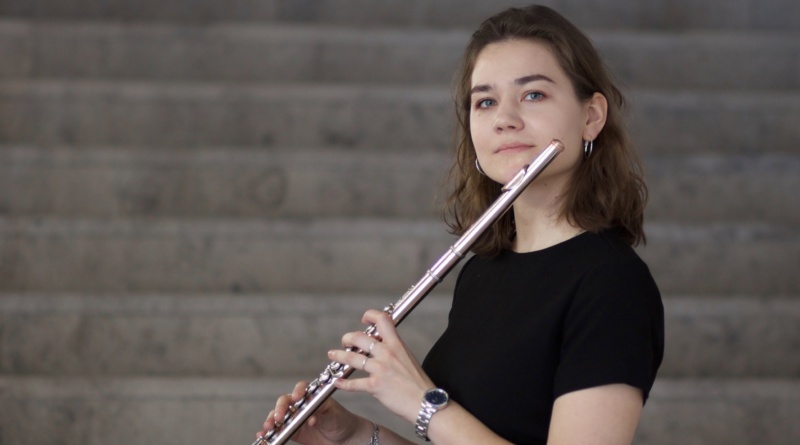
Elizaveta Ivanova (flute, below), BBC Symphony Orchestra / Vinay Parameswaran (above)

Carlos Simon Fate Now Conquers (2020)
Ibert Flute Concerto (1932-33)
Prokofiev Symphony no.7 in C# minor Op.131 (1952)

Studio 1, BBC Maida Vale Studios, London
Tuesday 4 February 2025 (2:30pm)

by Ben Hogwood Photo of Vinay Parameswaran (c) Roger Mastroianni, courtesy of The Cleveland Orchestra

For this concert linking seventh symphonies, the BBC Symphony Orchestra made their first public appearance with conductor Vinay Parmeswaran.

They began with music from Vienna via America, Carlos Simon effectively remixing the second movement of Beethoven’s Symphony no.7 and applying some fresh paint of his own. The piece was inspired by an entry Beethoven made into his journal in 1815, and takes its lead from “the beautifully fluid harmonic structure” of the symphony’s second movement, Simon composing “musical gestures that are representative of the unpredictable ways of fate”. Though Beethoven’s structure could still be glimpsed, it was viewed through music incorporating the language of Sibelius, Copland and John Adams to create a relatively familiar but ultimately thrilling orchestral vista. Simon’s development of the material was enjoyable to witness, though the sudden end felt underpowered in context. Nonetheless, here is a composer to investigate further.

Ibert’s Flute Concerto is one of the instrument’s calling cards from the 20th century, though is heard in concert rather less than it could be. Here it was performed by Elizaveta Ivanova, a flautist recently recruited to the BBC New Generation Artists programme and making her first appearance with the BBC Symphony Orchestra. She brought to the piece a welcome freshness, rising to the challenge of Ibert’s virtuoso solo part while including stylish phrasing and thoughtful dialogue with the orchestra. The graceful second movement Andante is the emotional centre of the concerto, and recalls the equivalent movement in Ravel’s Piano Concerto in G major in its beauty and softer-hearted sentiments. This was in vivid contrast to the outer movements, whose syncopations took the music closer to New York rather than Paris, Ibert’s cosmopolitan style enjoyed by the reduced BBC SO forces as much as by the athletic soloist. A fine performance, and a welcome revival for a composer whose colourful orchestral music and abundant melodies are a tonic.

Melodies, bittersweet or otherwise, are at the core of Prokofiev’s late Symphony no.7, written the year before his death. In a short interview section Parmeswaran implied the work was ‘softer’ than its predecessors, but there were no shrinking violets to be found as the second movement reached a juddering conclusion. Here Prokofiev’s attempts to write a competition winner, simultaneously pleasing Stalin, were affected by his own personal angst, for he was living in poverty at the time.

The weighty bass of the first movement and graceful cello theme of the third movement, marked Andante espressivo, were indicators of the emotional range of the symphony, but the biggest tune, heard from the full orchestra, was the second theme of the first movement, a soaring and winsome melody that returns to crown the final movement. Under Parmeswaran’s affectionate direction it was beautifully judged, though he was careful to ensure the final word in the symphony carried equal impact, the strange ticking of the percussion indicating the creeping passage of time. The symphony ended as it should, its smiling countenance compromised by a frown.

Listen

This concert was recorded for future broadcast on BBC Radio 3. A link will appear here when that becomes available.

Published post no.2,433 – Wednesday 5 February 2025