Canadian label Definitive goes back a long way in house music. Founded in 1992 by John Acquaviva, Richie Hawtin, and Karl Kowalski, it has now been looking back via a series of ‘Classics’ EPs, and a Disco House for All compilation. The Definitive Selection is another journey into the catalogue, described as “a perfectly ageless collection of floor-friendly house grooves that make a maximal impact from minimal elements”.
Acquaviva has curated the selection, with a fresh set of edits to knit together nicely.
What’s the music like?
There are some house music gems here, and Acquaviva clearly had a lot of fun pulling them together.
Right from the start, House For All by Blunted Dummies has a spring in its step in Acquaviva’s remix, while Omega Man‘s Freejack gets a really good percussive workout. Future Legend‘s The Music has a really good combination of rolling bass, cool keys and treble percussion, while Metal Detector has a lot of fun with flicks and bleeps in Eduardo Rossell‘s remix.
There are a couple of nagging riffs about, the Ring Tone remaster of Acquaviva’s own At Midnight and Chuck Phulasole‘s Manik Sax both making their mark. The latter goes off on a really satisfying freestyle tip.
Does it all work?
It does – though a couple of those nagging treble riffs are definitely better in a club than on headphones!
Is it recommended?
It is indeed – quality house music reflecting just how durable the genre has been. Well worth a visit.
Sean Shibe (guitar), BBC Philharmonic Orchestra / Anja Bihlmaier
Richard Strauss Tod und Verklärung Op.24 (1888-89) Simpson ZEBRA (or, 2-3-74: The Divine Invasion of Philip K. Dick) (2025) [BBC commission: World premiere] Berlioz Symphonie fantastique Op.14 (1829-30)
Royal Albert Hall, London Tuesday 22nd July 2025
Reviewed by Richard Whitehouse Photos (c) BBC / Mark Allan
The current BBC Proms season features several high-profile premieres, not the least of them being tonight’s from Liverpool-born clarinettist and composer Mark Simpson, remembered at these concerts for his orchestral fanfare sparks launching 2012’s Last Night in no uncertain terms.
On one level, ZEBRA (or, 2-3-74: The Divine Invasion of Philip K. Dick) is a straightforward three-movement concerto following the customary formal trajectory. No work that draws its inspiration from one of Sci-Fi’s most distinctive authors could be deemed predictable and so it proved with this musical representation of an epiphany which, experienced in his mid-40s, pervaded his thinking until his untimely death. Whether or not possessing divine overtones, it duly provided an imaginative context for the present work as it unfolds from a combative and even assaultive opening movement, through a mostly ruminative yet sometimes restive elegy, into a finale whose rapidly accruing energy surges towards an apotheosis of theatrical overkill – the ‘Zebra’ of the title as demonstrative as it remained elusive a presence during Dick’s life.
Music whose virtuosity summoned an orchestral response to match – the BBC Philharmonic Orchestra responding with alacrity to Simpson’s often febrile textures and translucent sonorities under the assured guidance of Anja Bihlmaier. Ultimately, of course, this was Sean Shibe’s show – his magnetic presence and mastery of electric guitar making it a notable addition to a genre still lacking in worthwhile contributions. His encore of a dreamily disembodied soundscape might even have been paying oblique homage to the great, happily not so late Robert Fripp.
On another level, Simpson’s concerto chimed ideally with the likely concept of this concert. One that commenced with an unexceptionally fine account of Richard Strauss’s Tod und Verklärung, Bihlmaier characterizing its more inward episodes with affecting poignancy as compensated for a lack of implacability in its early stages or a slightly underwhelming affirmation toward its close. Rarely in doubt was the direction in which this composer’s metaphysical musings were headed, even if the outcome was a performance no more than the sum of its best parts.
Berlioz pursued a rather less elevated ‘death and transfiguration’ in his Symphonie fantastique, but an approach with which Bihlmaier seemed more fully in accord. The lengthy introduction of Rêveries – Passions was eloquently delineated, and if the main portion of this movement (without exposition repeat) was overly self-contained, it elided naturally into Un bal with its ingratiating waltz offset by passages of despondency and elation. The highlight was a Scène aux champs which unfolded seamlessly from its plangent cor anglais solo, through mounting agitation, near catastrophe then uneasy resignation, to its mesmeric ending made more so by undulating timpani chords. After this, Marche au supplice (with first-half repeat) built with ominous tread to a climax almost graphic in its depiction of the ‘hero’ condemned to death.
An outburst of applause suggested many had not anticipated the orgy to come, but Bihlmaier responded with a Songe d’une nuit du Sabbat that, if lacking the ultimate drama, set the seal on an engaging performance with the BBC Philharmonic at something like its collective best.
You can listen back to this Prom concert on BBC Sounds until Sunday 12 October.
On this day in 1757, the composer Domenico Scarlatti died in Madrid.
Taking the baton from his father Alessandro Scarlatti, Domenico was a prolific composer wrote no fewer than 550 keyboard sonatas, an unparalleled output that has a fascinating variety, looking forward to Beethoven and even beyond. Here is a great example with which to end the day, from a very fine album devoted to the composer by French-Canadian pianist Anne Quéffelec
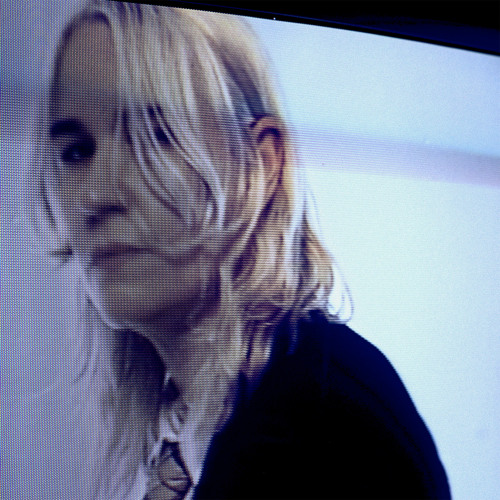
London-based, Australian-born producer, songwriter and DJ, HAAi (aka Teneil Throssell) has shared the latest track from her eagerly anticipated new album – HUMANiSE – out on 10 October 2025 via Mute on limited edition clear double gatefold vinyl and limited-edition CD in eco card packaging.
The new album – an immense evolution from her acclaimed debut – reckons with what it is to be human in an increasingly digital world, as AI threatens to eclipse everything and our screens separate us from each other.
You can listen to Hey! below:
Talking about the new track, Teneil explains, “‘Hey!’ is dedicated to the unmatched human connection we feel on the dance floor. The repeated lyrics “can’t live without you” is a nod to my love for the club and the people in it.”
Hey is an immensely likeable track, with an immediacy born of the dance floor and a direct style with repetition of voices that intersects a little with Caribou’s more minimal work.
The press release continues: In all of her work, Teneil has always sought to conquer new frontiers in electronic music, and on the new album, she’s drilling deeper into the grid to deliver an ambitious and thrilling epic: embodying a sonic step up, exploring the sweet spot between machine-led dystopia and emotion-filled utopia. “Throughout the album, I kept thinking about a machine with a human heart,” she says. Where previously she’s been hidden by a laptop, or obscured behind the decks, more recently she was, “inspired to return to my songwriting roots and use my voice more in my own music.”“Throughout the album, I kept thinking about a machine with a human heart,” she says. Vocals are front and centre, stunningly delicate and giving a newfound dimension to her kinetic productions. “It took a long time to get there, it’s such a vulnerable thing to do,” she continues, “but for this album, it was important for me to allow this ‘human heart’ to be front and centre.”
The human heart has another focus on the album: unity and community. HAAi explains, “Even though HUMANiSE is about how the world is starting to change beyond our control, it’s important to keep a sense of togetherness and hope.” These ideas of community and a sense of belonging is of utmost importance, and she has returned to work with friends including Jon Hopkins, Alexis Taylor from Hot Chip, singer Obi Franky and rapper KAM-BU, artist Kaiden Ford, as well as poet James Massiah, who guests on ‘All That Falls Apart’, and two choirs: TRANS VOICES with choir leader ILĀ and a gospel choir led by Wendi Rose. But this is no clique, the community she surrounds herself with is inclusive, with ample space for the listener on a journey where you are suspended in dreamlike euphoria, drawing the most human part of you to the surface – the part where nothing matters more than family, friends, and togetherness.
HUMANiSE is out on 10 October 2025 via Mute on limited edition clear double gatefold vinyl and limited edition CD in eco card packaging. You can pre-order here
Timothy Ridout (viola), Orchestra of Opera North / Tom Fetherstonhaugh
Vaughan Williams The Wasps – Overture (1909) Bliss (orch. Wilby) Viola Concerto, B68a (1933, orch. 2023) Coleridge-Taylor Solemn Prelude in B minor, Op. 40 (1899) Elgar Variations on an Original Theme, Op. 36 ‘Enigma’ (1898-99)
Ripon Cathedral Saturday 19 July 2025
Reviewed by Richard Whitehouse Photos (c) Jonas Cradock
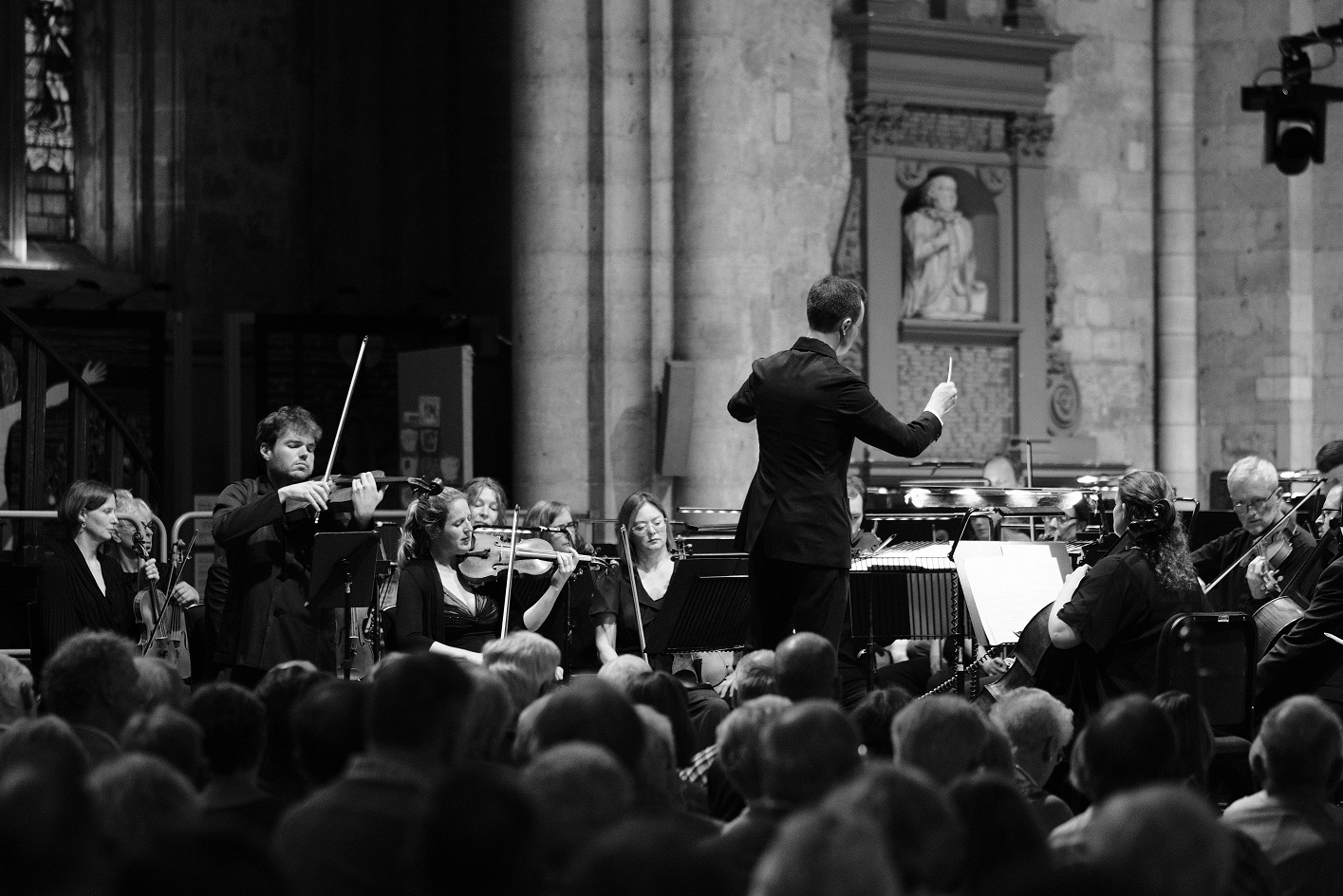
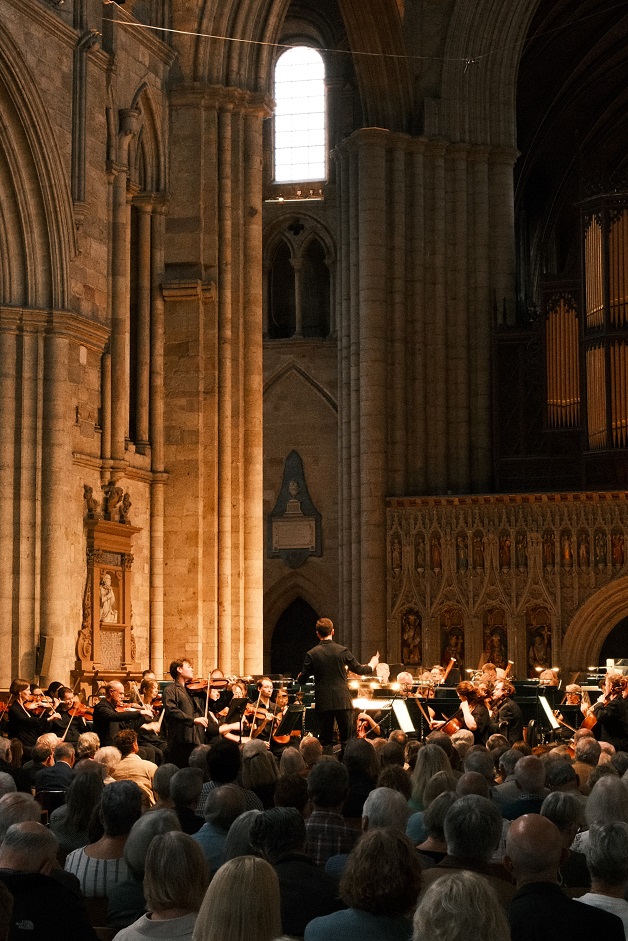
With a variety of activities throughout its region, the Ryedale Festival is now well established among the most wide-ranging of such events 45 years since its inauguration and this evening’s concert showcased the Orchestra of Opera North in the impressive setting of Ripon Cathedral.
The all-British programme centred on the first hearing for a Viola Concerto that Arthur Bliss had always intended to create out of his sonata for that instrument, but has only recently been carried out by Philip Wilby. A former professor of composition at Leeds University, Wilby is best known for his choral and organ music but as was duly confirmed, is an able orchestrator with a keen appreciation of Bliss’ idiom. Hence the successful launch of a piece that deserves to assume its place within the still-limited repertoire of concertante works for this instrument.
That it exists at all was no doubt through the prompting of Lionel Tertis, for whom Bliss wrote his Viola Sonata some 20 years after a single-movement Violin Sonata (never played publicly during his lifetime) as was his only other such duo. Formally it is among his most innovative pieces, the skewed sonata design of its initial Moderato exuding a restive and even impulsive eloquence as responded well to an orchestration which resembles more the intimacy of Bliss’ late Cello Concerto than the full-blooded fervour of his earlier such works for piano or violin.
The ensuing Andante is Bliss at his most personal – its darkly ruminative progress building to an anguished culmination made the more so in this context, before subsiding into the fugitive unease from which it had emerged. There follows a propulsive Molto allegro modelled on the rhythmic syncopation of the Furiant, a scherzo-cum-finale climaxing with a powerful cadenza here forcefully partnered by timpani. After which, the Coda poignantly surveys all that went before in a sustained Andante maestoso as brings about an apotheosis of plangent resignation.
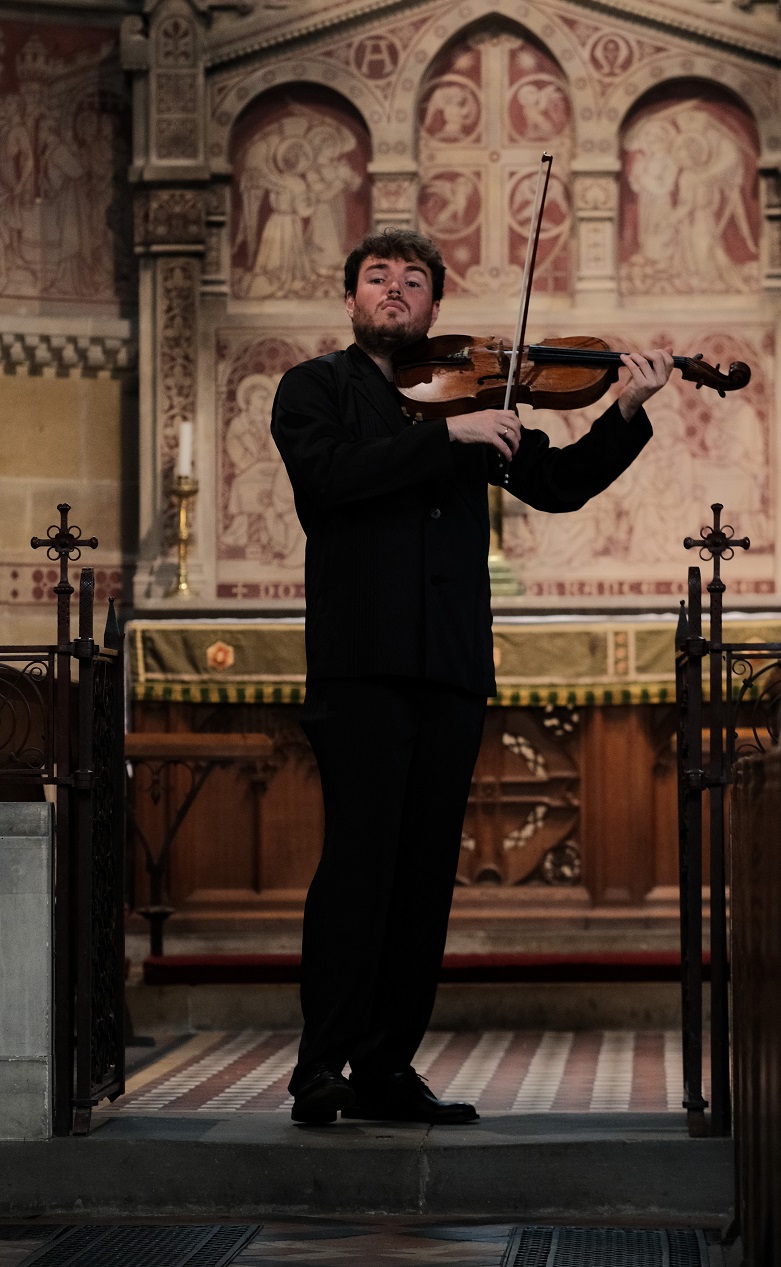
At around 27 minutes, Bliss’s Viola Concerto is equal in its scale as in its expressive reach to comparable works by Hindemith and Walton, so credit to Timothy Ridout (above, among the leading younger violists) that its essence was so tangibly conveyed. Nor was the OON found wanting under the assured direction of Tom Fetherstonhaugh, heard here in an ambience where detail lacked only the final degree of definition. Hopefully a recording will follow of what is likely to be the most important performance scheduled in this 50th anniversary-year of Bliss’ death.
The first half had begun in sparking fashion with the overture Vaughan Williams wrote as part of incidental music for a Cambridge University production of Aristophanes’ satire The Wasps, its incisiveness not precluding an open-hearted response to the ineffable melody at its centre.
A very different proposition duly launched the second half. Solemn Prelude is a characteristic statement by Samuel Coleridge-Taylor that did not merit the total neglect after its premiere at Worcester Cathedral; further hearings only made possible with the score’s belated relocation at the British Library so new parts could be made. Fusing Elgarian nobility with Brucknerian grandeur, any risk of portentousness was countered with an expressive immediacy abetted by Fetherstonhaugh’s flexible control over pace so that a welcome spontaneity came to the fore.
It certainly made an ideal entrée into the ‘Enigma’ Variations. Performances of Elgar’s earliest masterpiece now seem more frequent than ever, and tonight’s had much to commend it. Never fazed by the expansiveness of this acoustic, Fetherstonhaugh opted for mainly swift tempi as might easily have caused blurring in those faster variations had it not been for his scrupulous balance of detail. Elsewhere there was no lack of emotional input, not least during variations VIII-X with the wistfulness of ‘W.N.’ then deftness of ‘Dorabella’ framing a ‘Nimrod’ whose fervour was the greater for its relative urgency. Nor was the ‘E.D.U.’ finale lacking in panache as it brought the whole sequence to a conclusion of ringing affirmation, though it was maybe a pity that this building’s impressive organ could not have been utilized for the closing bars.
What was hardly in doubt was the response that this account received from the near-capacity audience, making one anticipate more such events at Ripon Cathedral in future editions of the Ryedale Festival, as it continues assiduously to promote the cultural life of North Yorkshire.