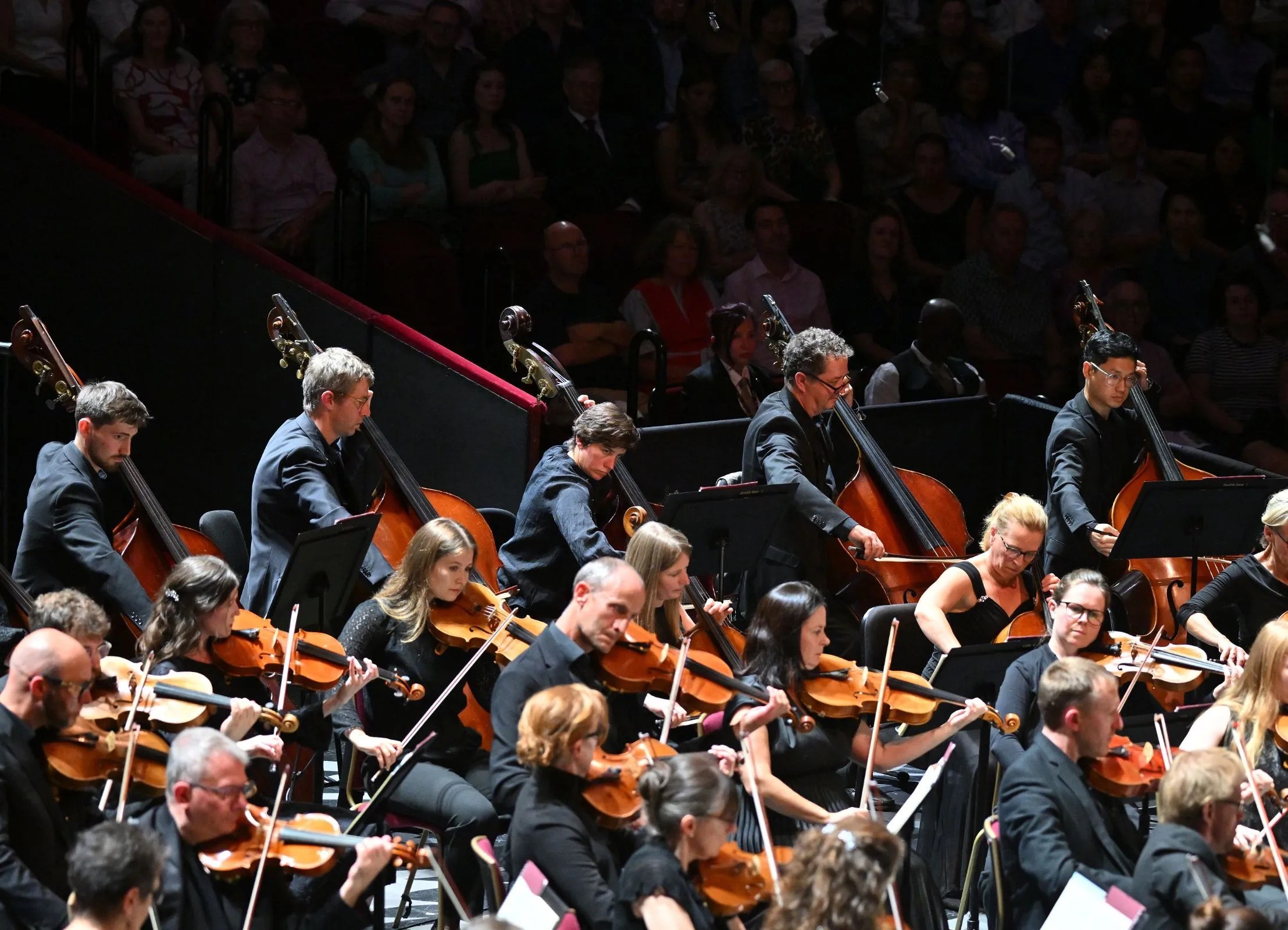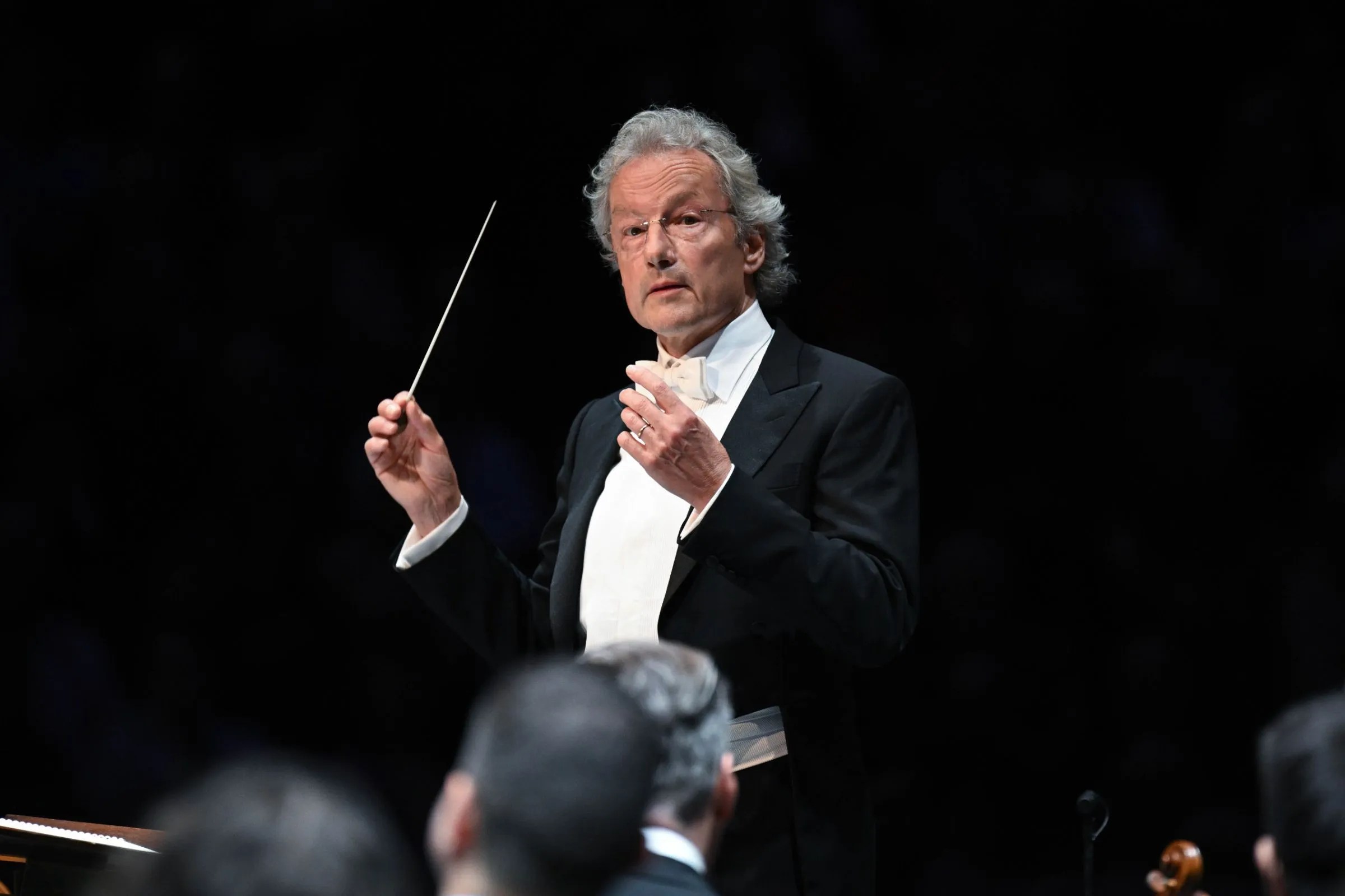
In concert – Vienna Philharmonic Orchestra / Franz Welser-Möst @ BBC Proms: Mozart & Tchaikovsky

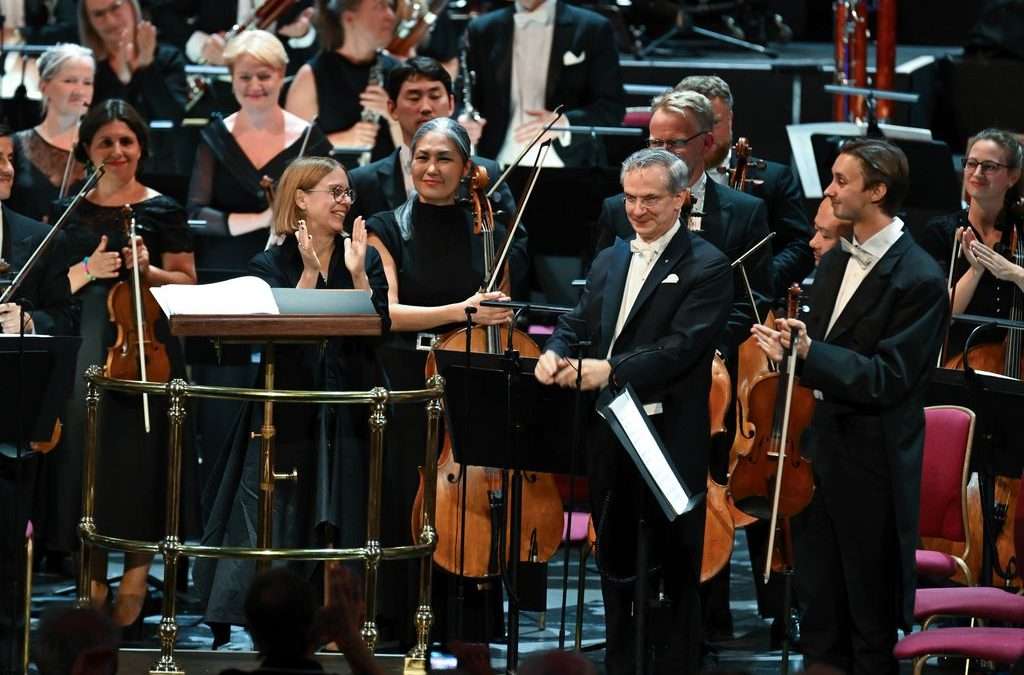
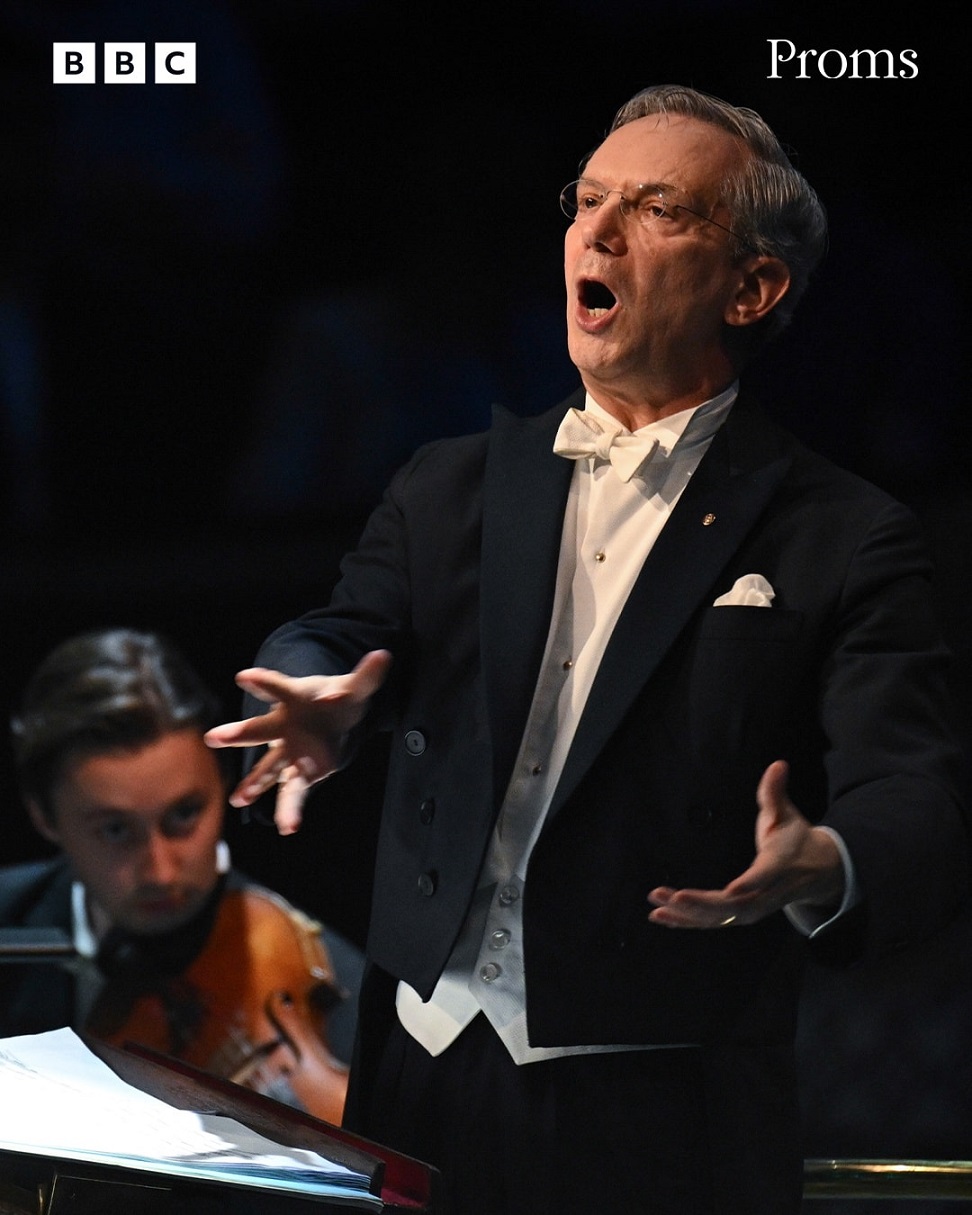
Vienna Philharmonic Orchestra / Franz Welser-Möst (above)

Mozart Symphony no.38 in D major K504 ‘Prague’ (1786)
Tchaikovsky Symphony no.6 in B minor Op.74 ‘Pathétique’ (1893)

Royal Albert Hall, London
Tuesday 9 September 2025

Reviewed by Ben Hogwood Photos (c) BBC / Chris Christodoulou

The music of Mozart is the lifeblood of the Vienna Philharmonic Orchestra, so to describe their performance of the composer’s Prague symphony as routine is to say that everything was present and completely idiomatic.

Completed in Vienna, the Prague deserves to be mentioned with the last three symphonies as among Mozart’s greatest. In the hands of guest conductor Franz Welser-Möst, its phrases were stylishly turned, violins silky-smooth but keeping clear of full fat over-indulgence. This performance drew the audience in, with a chamber orchestra sound that acquired more beef when needed in the first movement, which had appropriate drama, or the boisterous passages of the finale. The woodwind were superb throughout.

Most intriguing was the Andante, a thoughtful repose whose chromatic melodies were lovingly shaped, while the central section was notable for its autumnal frissons whenever the music headed for a minor key. Meanwhile the faster music was imbued with the spirit of the dance, a performance carefully considered but let off the leash when appropriate.
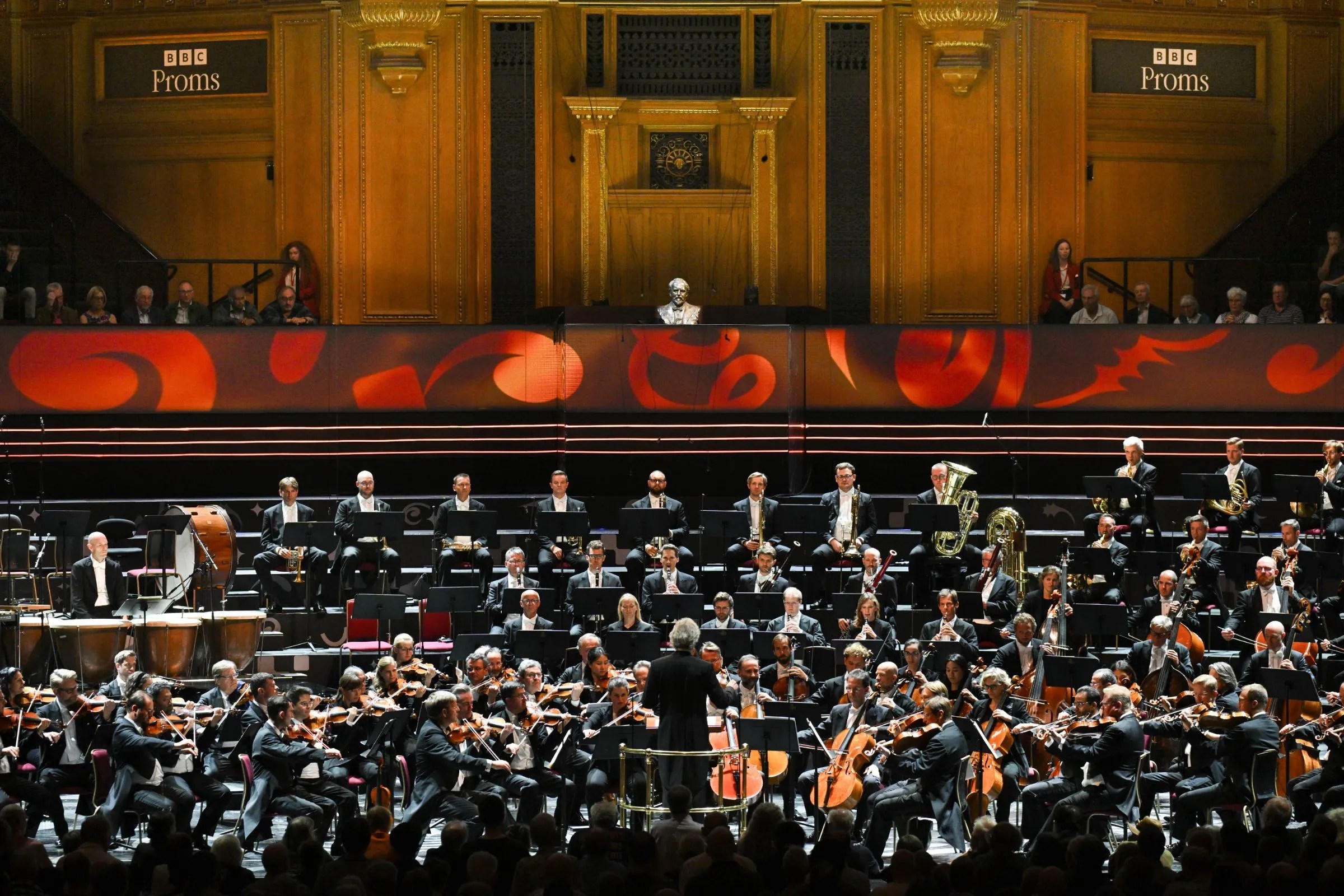
Tchaikovsky’s Pathétique symphony took a while to get going, revealing the composer’s own Mozartian influence in the process. Initially the first movement felt underpowered, its sense of dread kept to a minimum and the second theme kept within itself – though that did mean a particularly beautiful clarinet solo from Matthias Schorn. This turned out to be an effective interpretative ploy on the part of Welser-Möst, for the impact of the stormy section was heightened, the orchestra suddenly playing hell for leather.

The 5/4 metre of the second movement was persuasively realised, the lilt of its dance compromised by unexpected syncopations, alternating between charming and disturbing. By this point the Proms audience notably rapt in their attention, and still between movements.

The scherzo felt Viennese yet acquired a manic need to please more in keeping with Mahler – not encouraged as much by Welser-Möst as previous Vienna Philharmonic incumbents (Herbert von Karajan, for example) but effective, nonetheless. It all set up the devastating pathos of the finale, taken relatively smooth and never lingering, but still uncommonly moving. Double basses were appropriately knotty, while the effect of the stopped horns, playing low and loud, was genuinely chilling. The fabled gong stroke, on the light side, was still a telling moment in the hall, as was the silence following the last note, Welser-Möst giving us over a minute to consider the masterpiece we had just heard. After that, there could be no encore.

Franz Welser-Möst is a subtle conductor who over the years has developed a close relationship with his charges in Cleveland and Vienna particularly. His poised approach brings optimum virtuosity and watertight ensemble, to which can be added artistic approaches with a great deal to commend them. In this case both Mozart and Tchaikovsky were the beneficiaries.

You can listen back to this Prom concert on BBC Sounds until Sunday 12 October.

Click to read more about the BBC Proms

Published post no.2,653 – Wednesday 10 September 2025
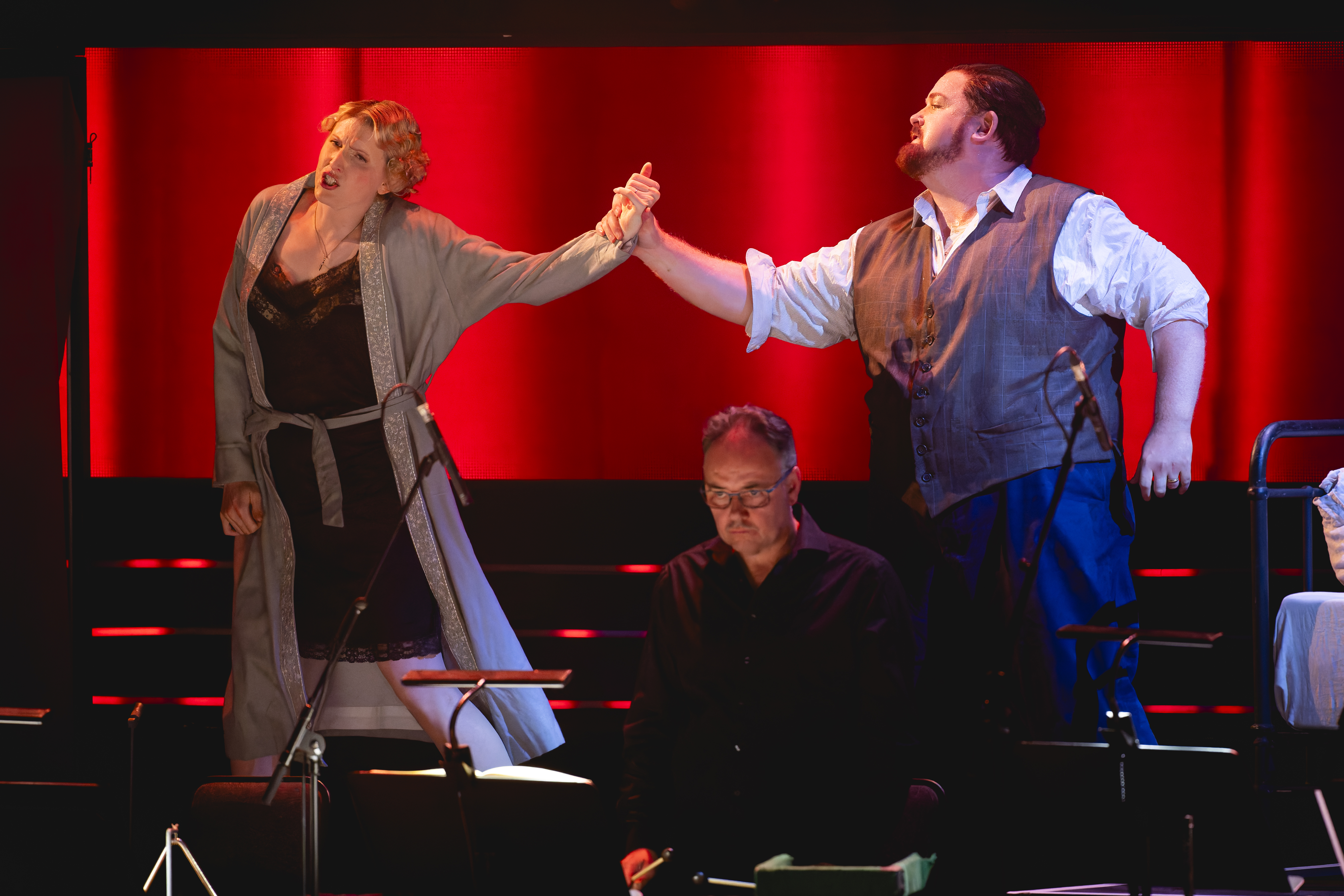
In concert – English National Opera @ BBC Proms: Shostakovich’s Lady Macbeth of Mtsensk

Lady Macbeth of Mtsensk Op.29 (1932-33)

Opera in Four Acts (Nine Scenes)
Music by Dmitri Shostakovich
Libretto by Alaxander Preys and the composer after the novella by Nikolai Leskov
English translation by David Poutney
Semi-staged performance, sung in English with English surtitles

Katerina – Amanda Majeski (soprano); Boris/Ghost of Boris – Brindley Sherratt (bass); Zinovy – John Findon (tenor); Mill-hand/Priest – Thomas Mole (baritone); Sergey – Nicky Spence (tenor); Aksinya/Convict – Ava Dodd (soprano); Shabby Peasant – Ronald Samm (tenor); Steward – Alaric Green (baritone); Police Sergeant – Chuma Sijeqa (baritone); Teacher – William Morgan (tenor); Old Convict – Sir Willard White (bass-baritone); Sonyetka – Niamh O’Sullivan (mezzo-soprano)

BBC Singers, Chorus of English National Opera, Brass Section of English National Opera, BBC Philharmonic Orchestra / John Storgårds

Ruth Knight (director)

Royal Albert Hall, London
Monday 1 September 2025

Reviewed by Richard Whitehouse Photos (c) BBC / Andy Paradise

In this 50th anniversary year of Shostakovich’s death it made sense for the Proms to schedule Lady Macbeth of Mtsensk, his second and final completed opera, in a performance reminding one of English National Opera’s commitment to this work stretching back almost four decades.

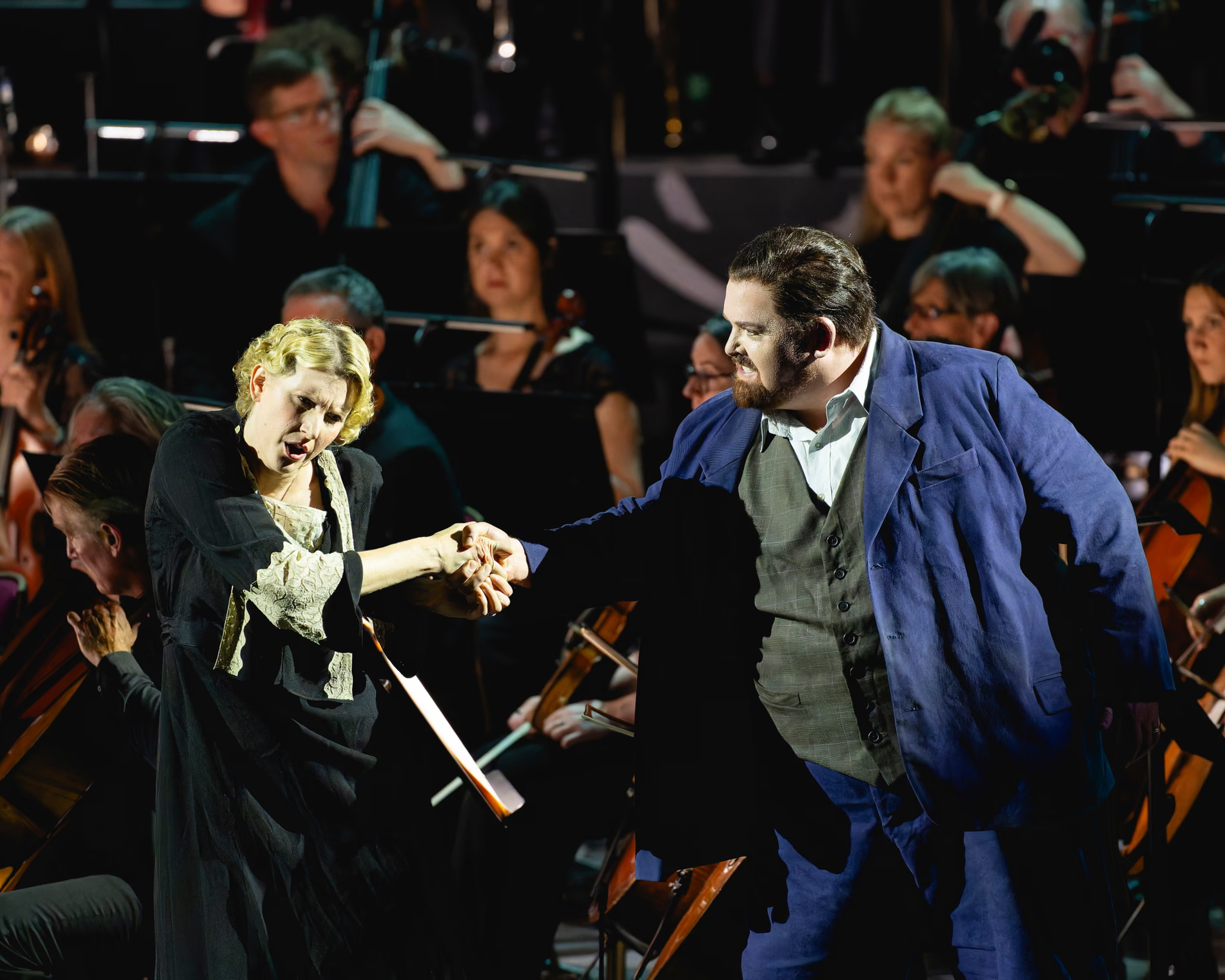
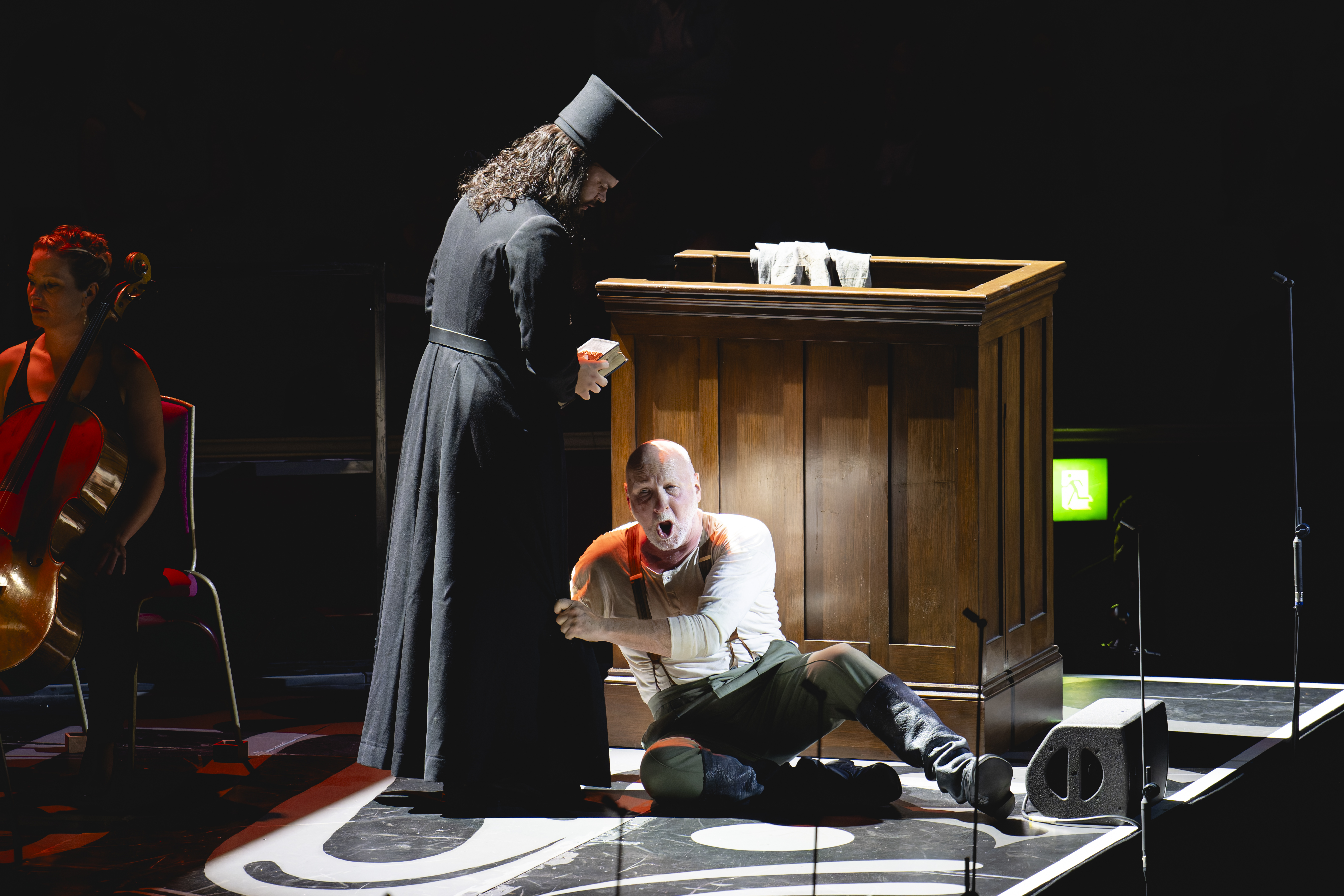
In scenic terms, the semi-staging directed by Ruth Knight was little more than a gloss on what was heard. Its framing device of the heroine in the witness box now seems a tired device that served little purpose, and the emergence of a bed at rear of the platform as a focus for sexual activity had surely passed its sell-by date at the end of the David Poutney era. More effective was the use of lighting to accentuate dramatic highpoints; incidentally reminding one such a procedure had come of age around the time that Shostakovich’s opera first appeared on stage.

Vocally this was a mixed bag. No-one could accuse Amanda Majeski of lacking presence or, moreover, eloquence in her assumption of the title-role, yet her emotional aloofness made her seem not so much distinct as overly detached from the wretched circumstances all around her. Brindley Sharatt was a shoo-in for Boris, his boorishness yet evincing a cunning intelligence who easily held the stage – not least his latter ‘ghost’ incarnation. Nicky Spence was vocally assured but dramatically two-dimensional as Sergey and, as Zinovy, John Findon resembled more a provincial critic than a merchant, though Thomas Mole made a lively contribution as a dipsomaniac Priest with Chuma Sijeqa uproarious as the Police Sergeant. His cameo as an Old Convict found Sir Willard White in gratifyingly fine voice near the end of his eighth decade.

Smaller roles were generally well taken, not least Ava Dodd’s hapless Aksinya and Niamh O’ Sullivan’s scheming Sonyetka, while the ENO Chorus lacked little in forcefulness or clarity of diction, though this latter might have been felt a drawback given the frequent contrivance of Poutney’s translation – which has not aged well. Otherwise, this was very much the BBC Philharmonic Orchestra and John Storgårds’s show. Having impressed with Shostakovich symphonies over recent seasons, the latter had a sure grasp of this opera’s dramatic unfolding and paced it accordingly. No stranger to this composer’s music, his orchestra was as responsive to the seismic climaxes (suitably abetted by ENO brass) as to passages of mesmeric introspection which, in many respects, prefigure the composer Shostakovich was increasingly to become.

It has often been claimed that, had his fortunes not reversed so dramatically as on that fateful evening of 26th January 1936, Shostakovich would have continued upon his path as an opera composer. Yet there is a nagging sense that, whatever its theatrical potency, Lady Macbeth of Mtsensk is intrinsically no more than the sum of its best parts. Leaving aside the intermittent success of his and Alexander Freys’ remodelling of Nikolai Leskov’s ‘shabby little shocker’, dramatic characterization frequently seems to have been laminated onto its musical context.

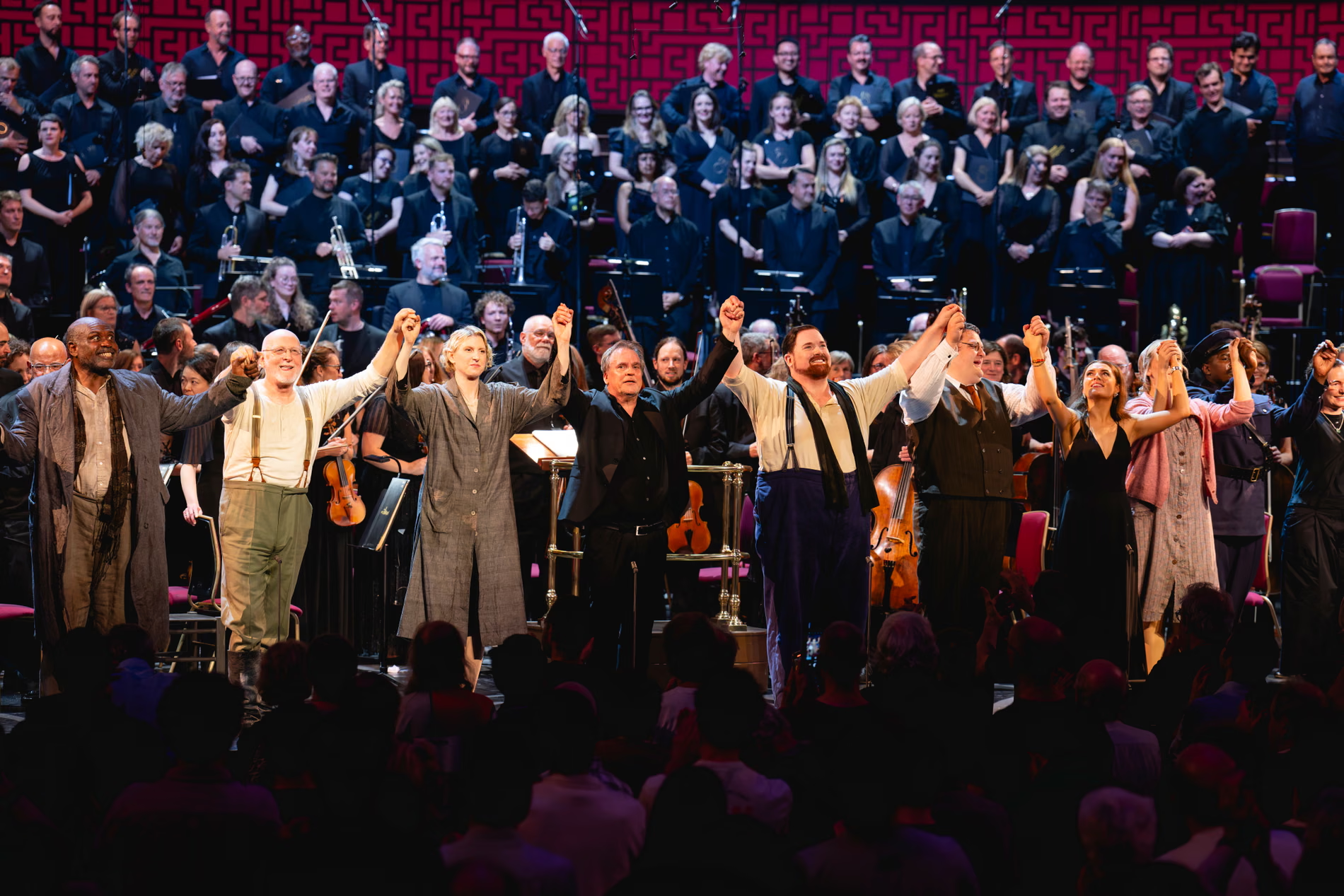
If tonight’s performance never entirely banished these thoughts, it certainly gave this opera its head in what was a memorable night for orchestra, conductor and, for the ENO contingent, an impressive bowing-out as it prepares for the next phase of its existence – based in Manchester.

Click on the names to read more about soprano Amanda Majeski, director Ruth Knight, the BBC Philharmonic Orchestra and chief conductor John Storgårds. Click also for more on composer Dmitri Shostakovich, the BBC Proms and English National Opera

Published post no.2,645 – Tuesday 2 September 2025

In concert – Soloists, Danish National Concert Choir & Symphony Orchestra / Fabio Luisi @ BBC Proms: Beethoven 9th Symphony, Bent Sørensen & Anna Clyne

Clara Cecile Thomsen (soprano), Jasmin White (contralto), Issachah Savage (tenor), Adam Palka (bass), Danish National Concert Choir, Danish National Symphony Orchestra / Fabio Luisi

Bent Sørensen Evening Land (2017)
Anna Clyne The Years (2021)
Beethoven Symphony no.9 in D minor Op.125 ‘Choral’ (1811-24)

Royal Albert Hall, London
Thursday 21 August 2025

Reviewed by Ben Hogwood Photos (c) BBC / Chris Christodoulou, Ben Hogwood (soloists)

Celebrating their centenary this year, the Danish National Symphony Orchestra and chief conductor Fabio Luisi led us from the quiet of evening to the blazing light of a sunny morning in the course of this concert.

The challenge facing any concert programmer containing Beethoven’s Choral Symphony is how to lead up to it. This Prom approached from a contemporary angle, beginning in near silence with Bent Sørensen’s contemplative Evening Land. The Danish composer’s imaginative orchestration was key to the success of his picture painting, beautifully rendered by Luisi, as was the threadbare violin solo with which leader Christina Åstrand began. Childhood reminiscences of the Danish island Zealand took place in the half-light, contrasting with visions of nocturnal Manhattan that came through in bursts of technicolour, honouring Leonard Bernstein. Making a lasting impression, however, was the beautiful oboe solo from Kristine Vestergaard that marked the illness and subsequent passing of Sørensen’s father.

Having eavesdropped on this intimate opening piece, the Danish National Concert Choir rose for Anna Clyne’s musical account of the Covid pandemic – already consigned to history, it seems. Few people would like to revisit those days in a concert experience, but Clyne’s message – channelling the text of Stephanie Fleischmann – was one of underlying resilience. The choir began in stasis, occupying an added note chord which somehow drew parallels with the Björk song Possibly Maybe for this correspondent, before the piece flourished. A dreamlike mood was enhanced by a pure, almost complete lack of vibrato from both choir and orchestra, while the harmonic language drew strong parallels with the latter stages of Holst’s suite The PlanetsSaturn and Neptune in particular. An autumnal chill was evident in spite of increasingly frenetic activity in the orchestra, and the piece ended in an uneasy acceptance of events passed, rather like our own emergence from lockdown.

Beethoven’s Ninth Symphony is the ultimate hymn to freedom, though it does of course go through a titanic struggle before that release, in the form of Schiller’s Ode To Joy, can be attained. Luisi led us through the dark, pre-twilight moments in an account notable for its poise and guile. Using relatively fast speeds, the first movement took a little while to light the touch paper, but once ignited the music powered forward with increasing determination. The scherzo was quick, quite matter of fact with its timpani interventions, and balanced by a bucolic trio where the wind kept pace heroically with Luisi’s quick baton. Their attractive textures and warm melodic phrasing were a key feature of both this and the Adagio, again on the quick side, but managing its fanfare interventions impeccably.

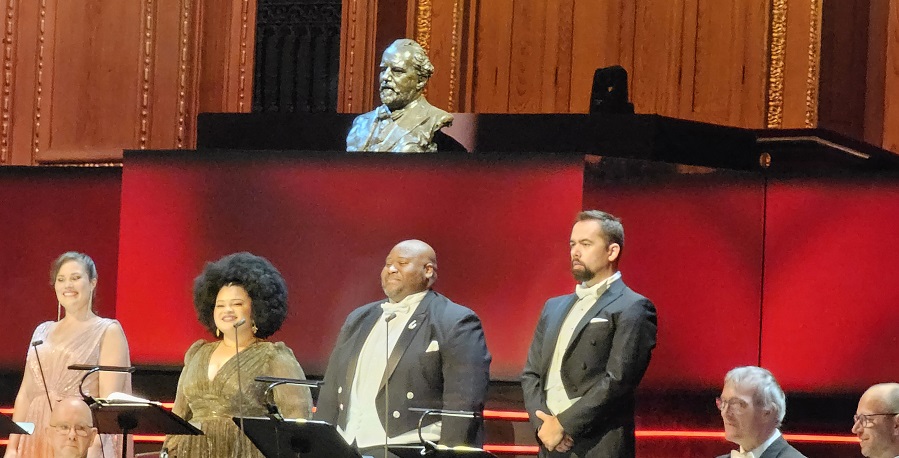
Left to right: Clara Cecile Thomsen (soprano), Jasmin White (contralto), Issachah Savage (tenor), Adam Palka (bass), beneath the bust of Sir Henry Wood @ BBC Proms

And so to the finale, with a memorable exposition for the Ode to Joy theme from sotto voce cellos and basses, the Royal Albert Hall hushed in anticipation. The choral passages were suitably exultant, the 75-strong choir drilled to perfection if cooler in temperature than the orchestra. The four soloists (above) were led by impressive bass Adam Palka, whose authoritative recitative “O Freunde, nicht diese Töne!” was a highlight, and while the quartet’s ensemble pieces wavered a little in tuning the sense of release and elation was keenly felt and clearly relished. The smile on the face of the music spread to the audience in the exhilarating closing bars as the orchestra took flight, completing an impeccably controlled interpretation on the part of Luisi that came to the boil at just the right time.

You can listen back to this Prom concert on BBC Sounds until Sunday 12 October.

Click to read more about the BBC Proms

Published post no.2,634 – Friday 22 August 2025

In concert – Estonian Philharmonic Chamber Choir / Tõnu Kaljuste @ BBC Proms: Arvo Pärt at 90

Annika Lõhmus, Yena Choi (sopranos), Toomas Tohert (tenor), Geir Luht (bass), Estonian Philharmonic Chamber Choir, Kadri Toomoja (organ) / Tõnu Kaljuste

Arvo Pärt Da pacem Domine (2004/6); Veni creator (2006); Magnificat (1989); The Deer’s Cry (2007); Für Jan van Eyck (2020) (UK premiere)
Galina Grigorjeva Svyatki – ‘Spring is Coming’ (2004)
Rachmaninov All Night Vigil (Vespers) Op.37 (1915): Slava v vyshnikh Bogu; Bogoroditse Devo
J.S. Bach Motet: Ich lasse dich nicht, BWV Anh.159 (1713)
Arvo Pärt Peace upon you, Jerusalem (2002); De profundis (1980)
Tormis Curse upon Iron (1972, rev. 1991)
Arvo Pärt Vater unser (2005/11); encore: Estonian Lullaby (2002)

Royal Albert Hall, London
Thursday 31 July 2025 (late night)

Reviewed by Ben Hogwood Photos (c) BBC / Chris Christodoulou

The music of Arvo Pärt is ideal for the special atmosphere of a late-night Prom. Yet this was no ordinary concert, being a celebration of the Estonian composer’s forthcoming 90th birthday in September, given by his close friend and collaborator Tõnu Kaljuste, conducting the Estonian Philharmonic Chamber Choir.

This combination of performers have been mainstays of the Pärt discography, forming a celebrated partnership with the ECM label that began with the landmark Tabula Rasa album of 1984, a cornerstone for Pärt’s critical and commercial success.

Pärt is often referred to as a ‘holy minimalist’, to which the response should be that his music is not ‘wholly minimal’. The substantial orchestral works attest to that, though here we heard much slighter but equally meaningful pieces for choir, most given unaccompanied by the 25-strong Estonian ensemble. The Proms audience were commendably quiet, leaning in to appreciate both the delicacy and crystal purity of the voices. The program was well-thought, realising the expressive potential of Pärt’s music alongside that of Bach, Rachmaninov and fellow Estonians, Veljo Tormis and Galina Grigorjeva.

The solemn Da pacem Domine and open-air Veni creator made an ideal opening couplet, the choir projecting with striking clarity rather than volume. For silence, too, plays a critical role in Pärt’s music, and Kaljuste ensured the spaces between the notes were every bit as expressive.

The Magnificat revealed its hidden power, while The Deer’s Cry was perfectly phrased, Pärt’s lilting cadences casting a spell. Für Jan Van Eyck, setting the text of the Agnus Dei, found the ideal balance between the reduced choir and Royal Albert Hall organ, where Kadri Toomoja had the ideal registration. Peace Upon You, Jerusalem, for female voices, contrasted silence with brightly voiced choral statements, while the solemn De profundis, for male voices, began from a small cell, maintaining rapt concentration while punctuated by organ and percussion.

Galina Grigorjeva’s Svyatki was a beautiful meditation, led by the heavenly voice of soprano Yena Choi, her voice with a remarkable bell-like clarity. Bach’s motet, previously attributed to his son Johann Christian, was impeccably voiced and phrased, but while the two excerpts from Rachmaninov’s All-Night Vigil were arguably less successful, they reflected a familiarity with listening to big choirs perform this music, rather than the subtleties of a chamber choir. Purity proved ample compensation for volume here.

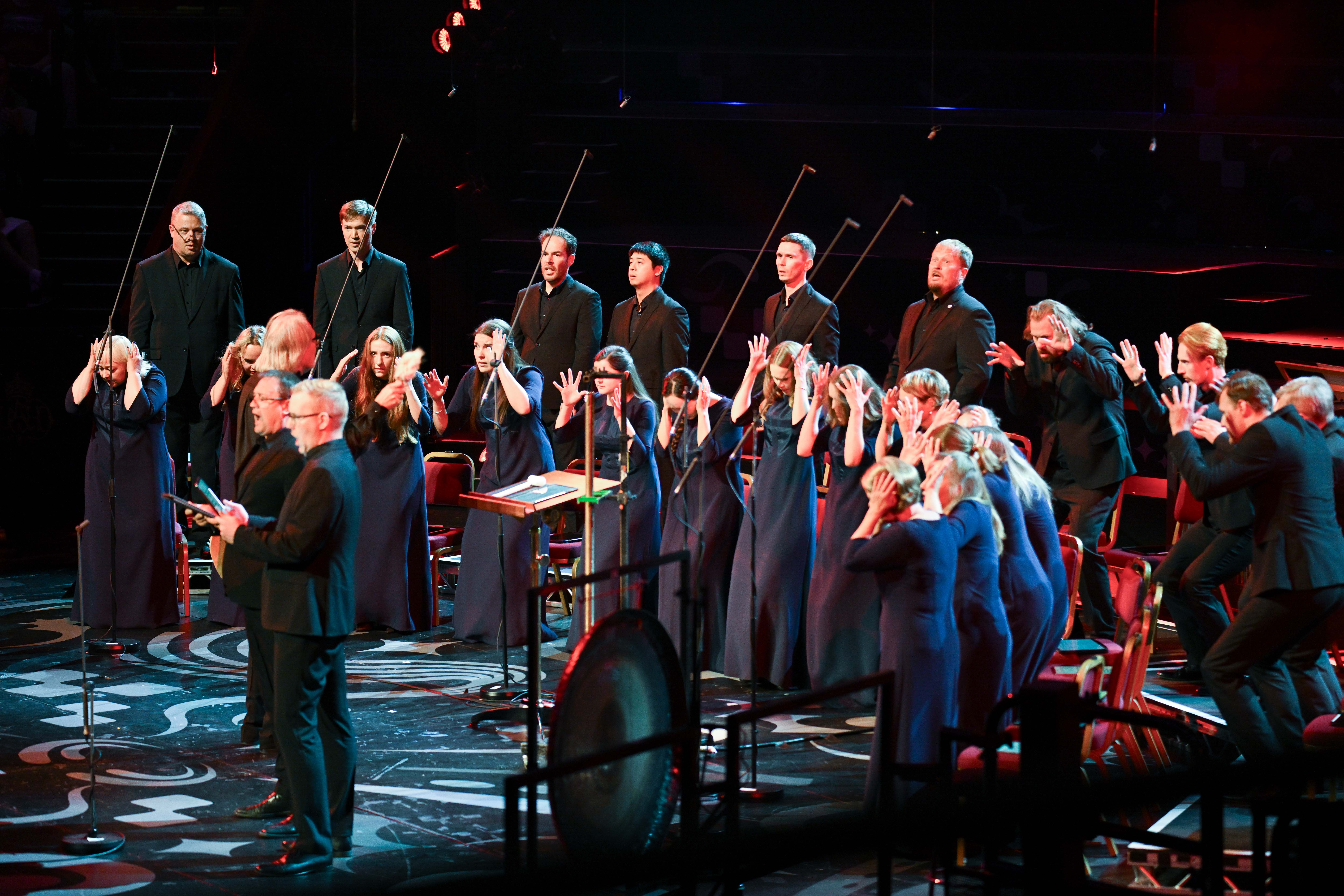
This was emphatically not the case in Curse upon Iron, a remarkable setting from Veljo Tormis, of words from the Finnish national epic, the Kalevala, translated into Estonian. Describing the horrors of war, it sends a chill down the spine right from the primal call to arms of the shaman drum, struck by Kaljuste himself, then from the restrained urgency of the choir, like a coiled spring. While listening it was impossible not to think of the current plight of Ukraine and by extension in fear for the Baltic states, especially as Tormis’ writing was brought to a horrific climax. This was realised through the elemental power of tenor Toomas Tohert, bass Geir Luht and the choir, turning from side to side with watchful dread but then erupting in barely concealed anger. It was a remarkable performance, which will live long in the memory.

After this emotionally shattering encounter, the balm of Vater unser, Pärt’s German setting of The Lord’s Prayer for Pope Benedict, was just what was needed, its simplicity all the more affecting for what went before. As an encore, Kaljuste found just the right complement in the choir and piano version of Estonian Lullaby, its pauses near the end the musical equivalent of drooping eyelids. It was a most effective end to a special concert, Arvo Pärt’s musical essence distilled for a most appreciative audience.

You can listen back to this Prom concert on BBC Sounds until Sunday 12 October.

Click to read more about the BBC Proms

Published post no.2,608 – Sunday 27 July 2025

In concert – BBC Scottish SO / Ryan Wigglesworth @ BBC Proms: Birtwistle Earth Dances & Beethoven ‘Eroica’ Symphony

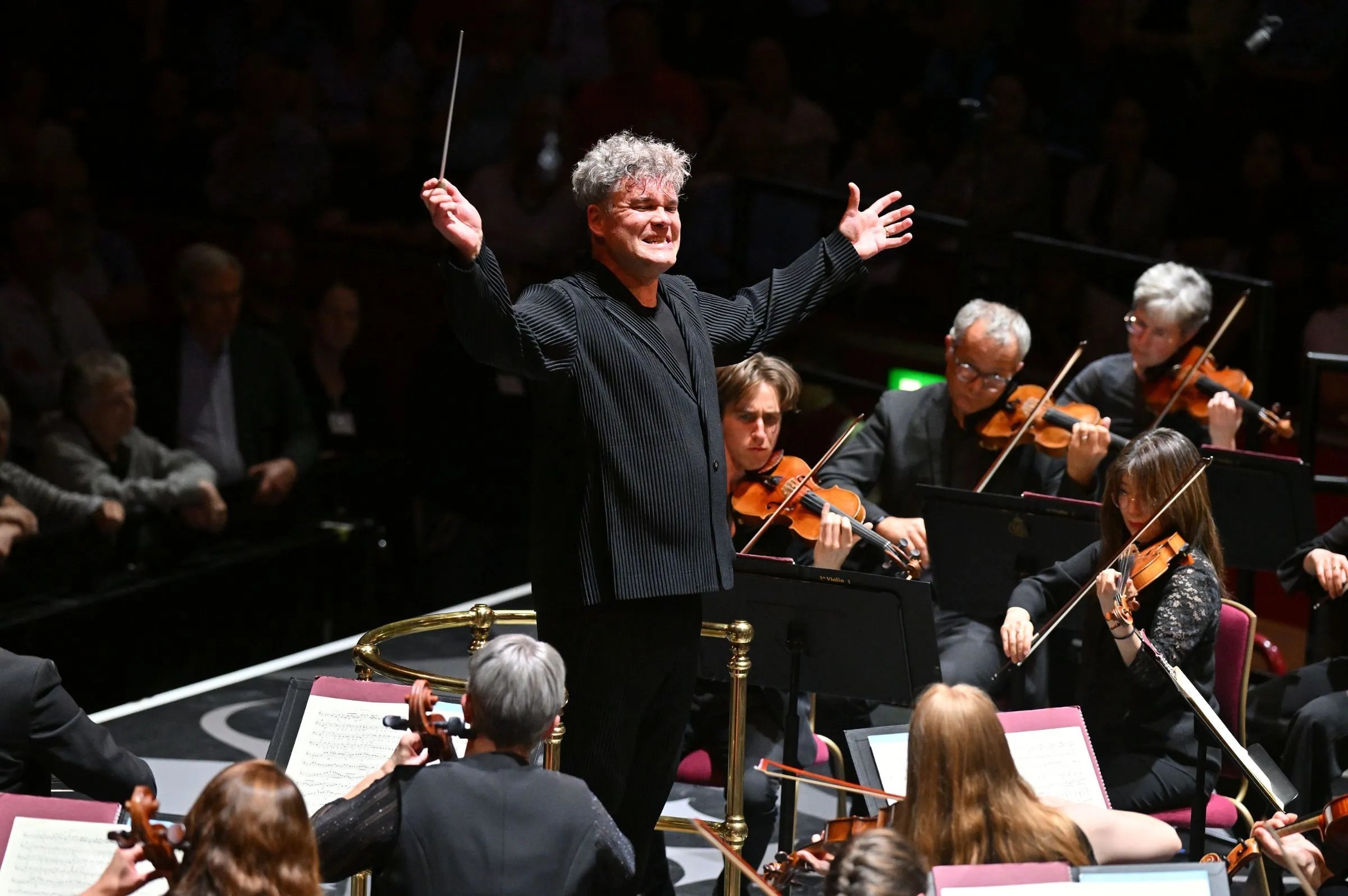
BBC Scottish Symphony Orchestra / Ryan Wigglesworth (above)

Birtwistle Earth Dances (1985-6)
Beethoven Symphony no.3 in E flat major Op.55 ‘Eroica’ (1802-4)

Royal Albert Hall, London
Monday 28 July 2025

Reviewed by Richard Whitehouse Photos (c) BBC / Mark Allan

The emphasis on Ryan Wigglesworth’s activities may have changed during recent years, but this is certainly no hardship when his conducting of so broad a repertoire is as convincing as in his brace of concerts from this year’s Proms with the BBC Scottish Symphony Orchestra.

Performed three times at the Proms during its first decade of existence, Sir Harrison Birtwistle’s Earth Dances tonight reappeared after 31 years. Much may have changed over that time (not least the passing of the composer), though this piece remains a sure highpoint of his output as of British music from the period. Premiered by the late Peter Eötvös before being taken up by Christoph von Dohnányi, Peter Boulez and Simon Rattle, it has now found an ideal advocate in Wigglesworth who surely gets to the heart of this particular matter like no-one before him.

Essentially this is about finding a balance between the facets of its title – those often densely arrayed yet always sharply differentiated strata of the orchestral texture, allied to a rhythmic fluidity which keeps the music moving forward even during its most intricate passages. Not an easy task such as previous exponents have conveyed with varying degrees of success, but Wigglesworth had the work’s measure from the beginning. Rather than a set of more or less complex episodes that follow on sequentially, what came across was a series of interrelated layers fused in an audible process of continual variation – one, moreover, in constant motion to a point at which it did not so much end as disperse into silence. Almost four decades after its premiere, Earth Dances has now emerged as that multi-faceted masterpiece it always was.

It likely took at least as long for the Eroica to be rendered, rather than merely recognized, as such – which could be a factor with their being juxtaposed in the same concert. Whatever the case, it made for judicious programming with Wigglesworth and the BBCSSO rising to their comparable challenges. First performed at these concerts 129 years ago then subsequently in almost every season, Beethoven’s Third Symphony is a testing assignment conceptually and interpretatively – as was not shirked by this involving though often understated performance.

An understatement evident in the opening Allegro, with its subtly modified exposition repeat, the more involving for rendering this movement as an unbroken while cumulative continuity through to an affirmative if not wantonly triumphal coda. Even finer was the Marcia funèbre, its steady undertow flexible enough to accommodate the lilting counter-theme as well as the intensifying fugato at its centre on route to a conclusion the more affecting for its emotional deftness. Nor was this latter quality absent from a Scherzo whose shimmering outer sections found ideal contrast in the trio, its incisive part-writing for three horns buoyantly articulated. The Finale was all of a piece with what went before, its variations on the ‘Prometheus’ theme enticingly characterized but with a keen underlying momentum toward the joyous apotheosis. While no single account of so trail-blazing a work could possibly convey all the answers, this was impressive in its formal focus and expressive balance as saw the symphony whole. Make no mistake, Ryan Wigglesworth now numbers among the finest conductors of his generation.

You can listen back to this Prom concert on BBC Sounds until Sunday 12 October – or listen to recommended recordings of the two works from the Cleveland Orchestra on Tidal here

Click on the artist names to read more about the BBC Scottish Symphony Orchestra and their chief conductor Ryan Wigglesworth. Click also for more on the BBC Proms

Published post no.2,613 – Friday 1 August 2025