Arcana at the BBC Proms – Soloists, Epiphoni Consort, BBC Symphony Chorus & Orchestra / Nil Venditti: Respighi & Rossini

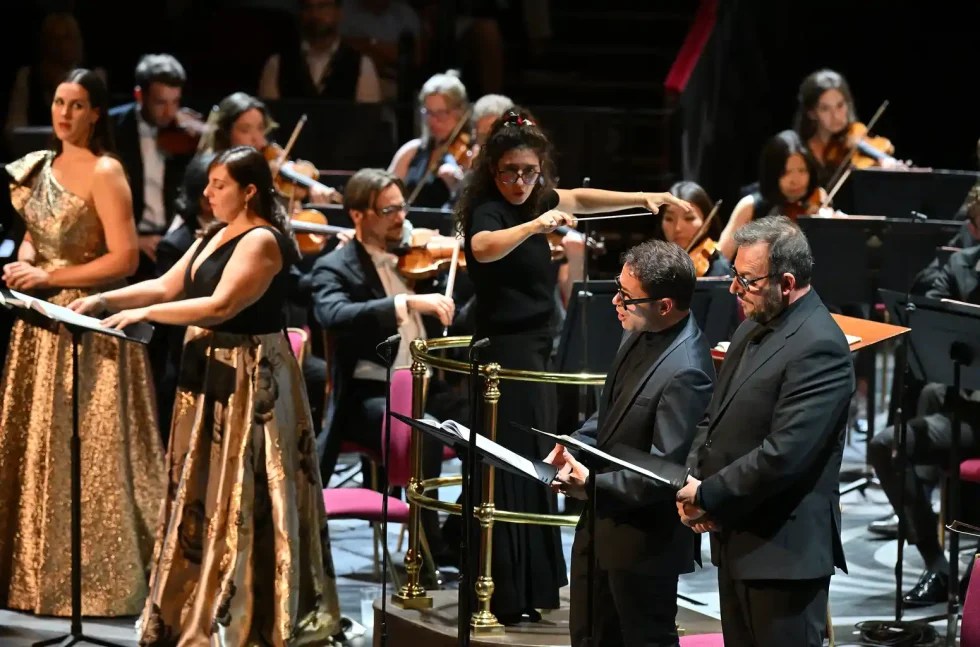
Federica Lombardi (soprano), Chiara Amarù (mezzo-soprano), Dave Monaco (tenor), Nicola Ulivieri (bass), Epiphoni Consort, BBC Symphony Chorus and Orchestra / Nil Venditti

Respighi Church Windows (Vetrate di chiesa) (1925-26)
Rossini Stabat Mater (1831-1841)

Royal Albert Hall, London
Friday 7 August 2026

Reviewed by Ben Hogwood Photos (c) BBC / Mark Allan

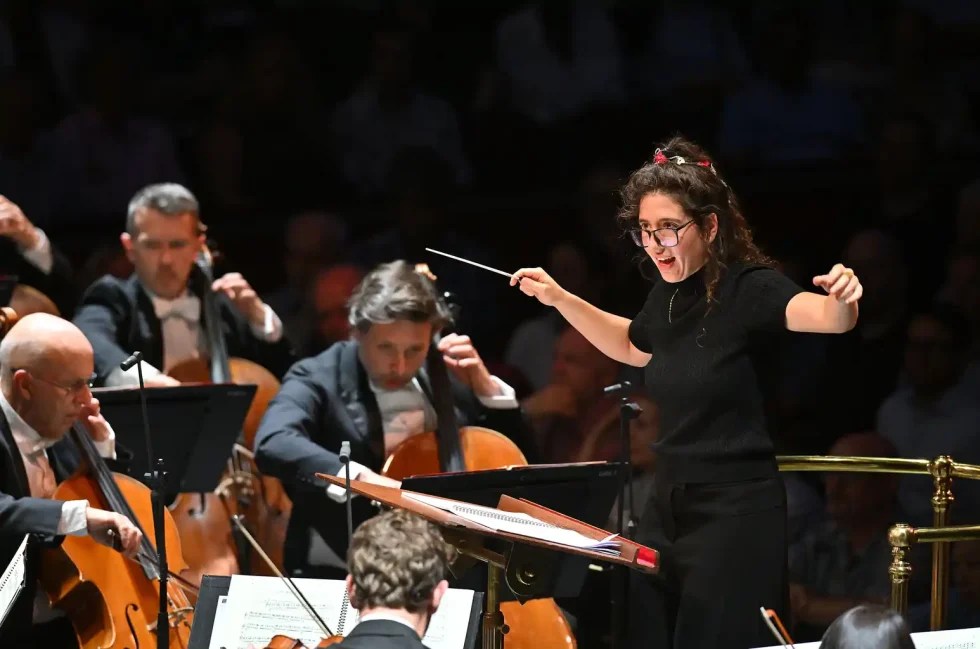
Friday night is Italian night at the BBC Proms, it would seem. Two weeks after John Wilson’s blistering account of Respighi’s Roman Trilogy, we had a sequel of sorts headed by Italian-Turkish conductor Nil Venditti, marshalling a double bill from Respighi and Rossini, a composer he much admired.

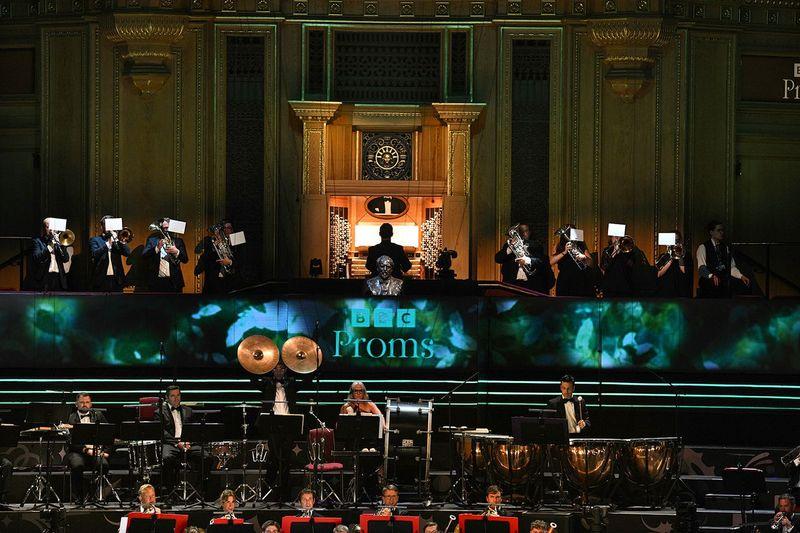
As we heard two weeks back, Respighi was no shrinking violet when writing for orchestra, a point reemphasised by this first Proms performance of Church Windows. This is the sort of orchestral music on which the Royal Albert Hall thrives – descriptive, colourful, bold, brash in places but beautifully controlled in others. One of these moments was Adam Lee’s clarinet solo, exquisitely spun.

Less obviously demonstrative than the Roman poems, Church Windows nonetheless softened the heart with its invocations of Gregorian chants and chorales, woven into Respighi’s writing. Not all were successful in performance, the horn theme of San Michele Arcangelo taking a while to align with Venditti’s tempo, but this movement grew into a tumultuous finish, the tam-tam describing Satan’s fall from heaven. A tender account of Il mattutino di Santa Chiara (The Matins of St Clare) found the BBC SO woodwind on fine form, but the finale, San Gregorio Magno (St Gregory the Great) carried all before it, Richard Pearce’s barnstorming organ solo briefly smothering the orchestra before a brilliantly manoeuvred climax. Once again, the ears were ringing, and while this may not have registered so highly on the Richter scale, it was nonetheless a qualified triumph.

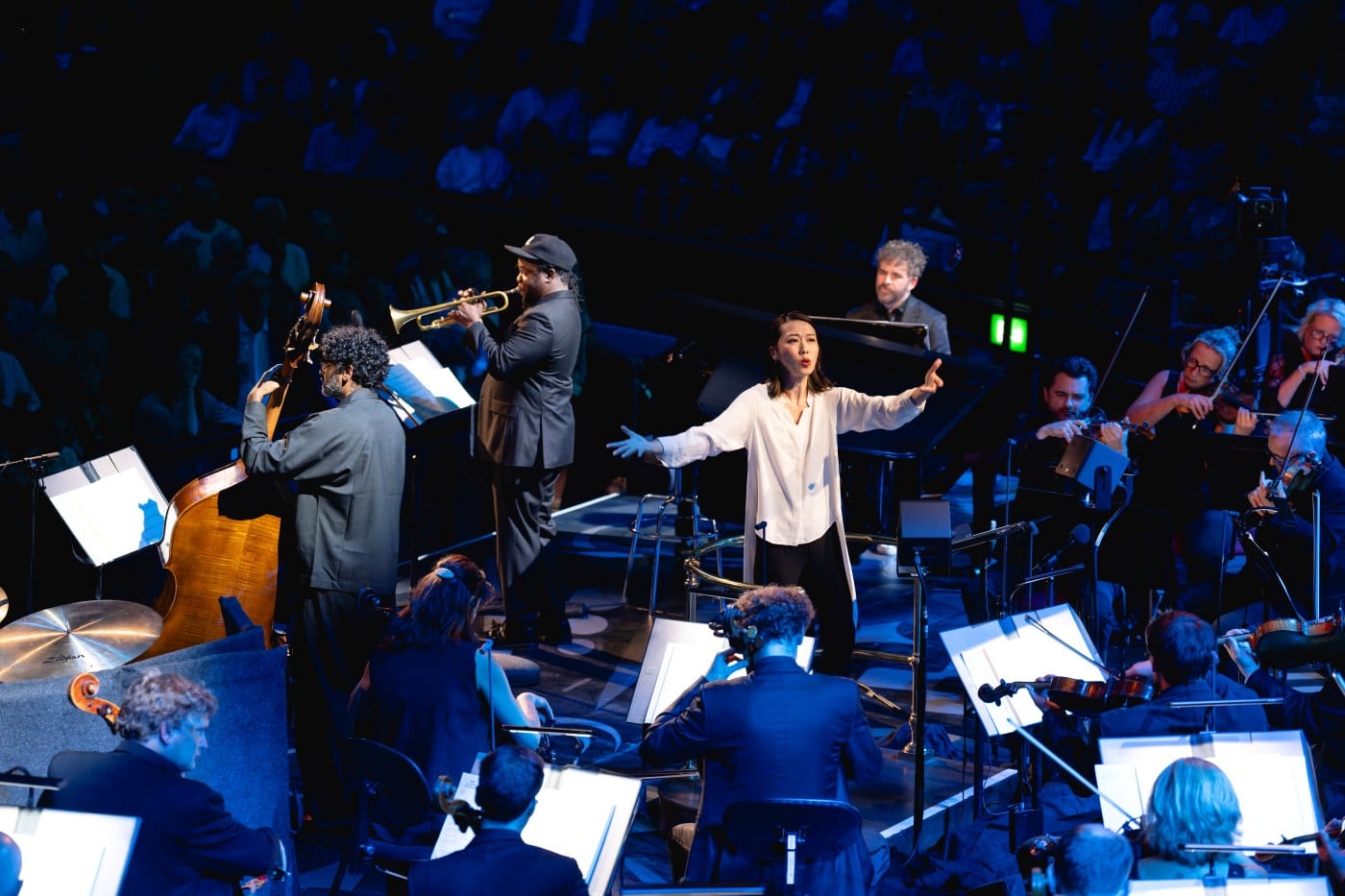
Rossini’s Stabat Mater is similarly unconventional. Its long gestation period would suggest a creative block, but the final composition, finished after a decade, is a profound utterance. Venditti kept things moving here, and with an evident love for the piece, from the solemn choral intoning of the Stabat mater dolorosa itself, through the sequence of arias which found the soloists taking a little while to adjust to the acoustic of the hall. A healthy balance was found, though bass Nicola Ulivieri, a commanding presence, was appreciably louder than his three colleagues – each of whom were dramatic in their responses to the text. Tenor Dave Monaco nailed his top notes with impressive precision in the Cujus animam gementem, soprano Federica Lombardi was bright and commendably unforced with the chorus throughout Inflammatus et accensus, while mezzo-soprano Chiara Amarù shone in the Fac, ut portem Christi mortem.

Yet the real stars of this performance were the London-based Epiphoni Consort, making their Proms debut, and the BBC Symphony Chorus, both extremely well drilled and of one voice. The antiphonal exchanges of ‘Paradisi gloria’ in the Quando corpus morietur section were memorable, but the crowning glory was the ‘Amen’ finale, where Rossini – and the charismatic Venditti – let loose in the thrilling tour de force of powerful counterpoint. A special mention for timpanist Antoine Bedewi, too, whose role throughout was critical. This was the choir’s to bring home, however, and they delivered with style and panache, convincing audience and listeners of Rossini’s original inspiration and dramatic instinct. A refreshingly different Prom, and how good to hear two less familiar but deserving works in performances that made them shine.

You can listen to this Proms concert on BBC Sounds until the end of September 2026.

Published post no.2,977 – Saturday 8 August 2026

Arcana at the BBC Proms – Louise Alder, London Philharmonic Orchestra / Edward Gardner: From the Alps to the Auvergne

Louise Alder (soprano), London Philharmonic Orchestra / Edward Gardner

Tjøgersen Between Trees (2021)
Canteloube from Chants d’Auvergne (1923-55): La pastoura als camps; La delaïssádo; Deux bourrées; Lou coucut; Baïlèro
Richard Strauss Eine Alpensinfonie Op.64 (1911-15)

Royal Albert Hall, London
Monday 27 July 2026

Reviewed by Ben Hogwood Photos (c) BBC / Chris Christodoulou

The music for this invigorating Prom drew us outdoors, to Norwegian woods, the fields of Auvergne and the mountains of the Alps – all brought to us in glorious technicolour by an orchestra on top of their game.

The Norwegian forest was first, a 360 degree view turning the Royal Albert Hall itself into a vast canopy. Kristine Tjøgersen’s Between Trees was full of sonic invention, an intriguing portrait by turns humorous, ominous, light, heavy, happy and sad. The instrumental effects (water in the brass instruments, ‘prepared’ harp and strings) would have been gimmicky in the wrong hands, but Tjøgersen clearly knows her way around a symphony orchestra and ensured all were used to the greater good.

The creak of a branch, the snap of a twig and even the underground workings of fungi and insect life – all were vividly evoked, to the point of wondering if the casing around the organ was even swaying in the light wind! Every rustle had a purpose, pointed towards the more conventional passages for horn quartet and strings in the closing pages, where unexpectedly sharp points of emotion lay in wait. Tjørgersen, who was in the audience, begins a three-year residence with the Oslo Philharmonic Orchestra next season. On this evidence hers is a striking, individual voice, a composer to follow closely.

Canteloube is a rare visitor to the Proms on account of his small output, heavily weighted towards his crowd-pleasing Chants d’Auvergne. These settings of traditional Auvergnian folksongs for soprano and orchestra are largely pastoral affairs, descriptively bringing their shepherds and birds to life. It proved impossible to listen, however, without a strong pull of sympathy for those suffering at the hands of the fires in France, a feeling heightened by the sorrowful La delaïssádo (The Abandoned Shepherdess). The part was inhabited with great feeling by soprano Louise Alder, supported by meltingly beautiful solos from cor anglais (Sue Böhling) and oboe (Ian Hardwick).

By contrast the bright La pastoura als camps (The Shepherdess in the Pasture) revelled in the open air, while the Deux bourrées danced lightly, the second (Lo calhé) especially, the quail a worrisome presence as it protected its nest. Lou coucut (The Cuckoo) was funny, heightened by Alder’s side glances to the audience, but inevitably the showstopper was Baïlèro, the shepherd’s song drawing an exquisite tone from the soprano and the supporting London Philharmonic Orchestra woodwind.

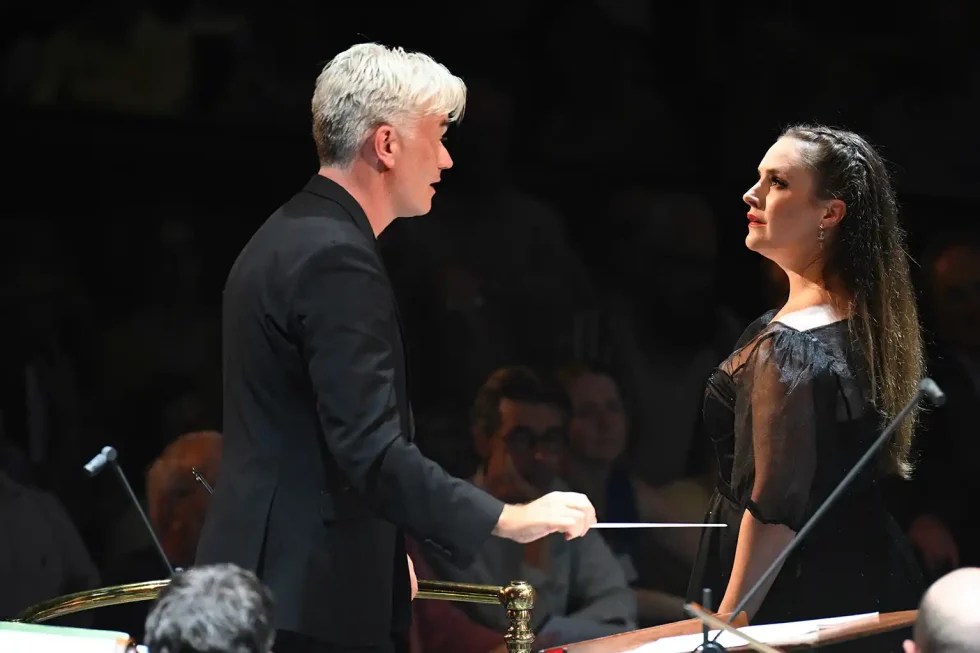
Donning our crampons after the interval, we joined Edward Gardner in an ascent he knows well, scaling the peak of Richard Strauss’s Eine Alpensinfonie, a piece both he and the LPO have captured on record. Familiarity in this case brought a tight structural grasp of the arching structure, whose 22 sections lasted 48 minutes – a relatively quick interpretation. Some of the sections did indeed move a little too quickly, the ascent taken by quick mountaineers, but the vistas on display were stunning in their sound quality.

The brass in particular excelled, trombones (led by Mark Templeton), trumpets (Tom Nielsen), tubas (Lee Tsarmaklis) and horns, both onstage (John Ryan) and off (Annemarie Federle), the latter expertly marshalled in the gallery by conductor Wilson Ng, who successfully accounted for the sonic delay.

Meanwhile the percussion took the brunt of the Thunderstorm, the wind machines whirring as timpani rolled and struck with ever greater danger, the mountain revealing its dark side. As an orchestral sound painter, Strauss is almost without equal, and his gifts were shown off repeatedly as Gardner showed us the waterfall, flowery meadows, mountain pasture and glacier in glorious technicolour. The LPO woodwind were crystal clear in the rarefied air, the burnished strings enjoying the rich melodies and cadences. Balancing everything was Richard Gowers on the Albert Hall organ, his church solo ideally rendered as the magical coda approached, setting us back on the arena floor where this extended musical paragraph began.

You can listen to this Proms concert on BBC Sounds until the end of September 2026. Meanwhile you can click on the link to access Richard Strauss’s Eine Alpensinfonie as recorded by the London Philharmonic Orchestra and Edward Gardner

Published post no.2,961 – Tuesday 28 July 2026

Arcana at the BBC Proms – John Wilson conducts Respighi’s Roman Trilogy

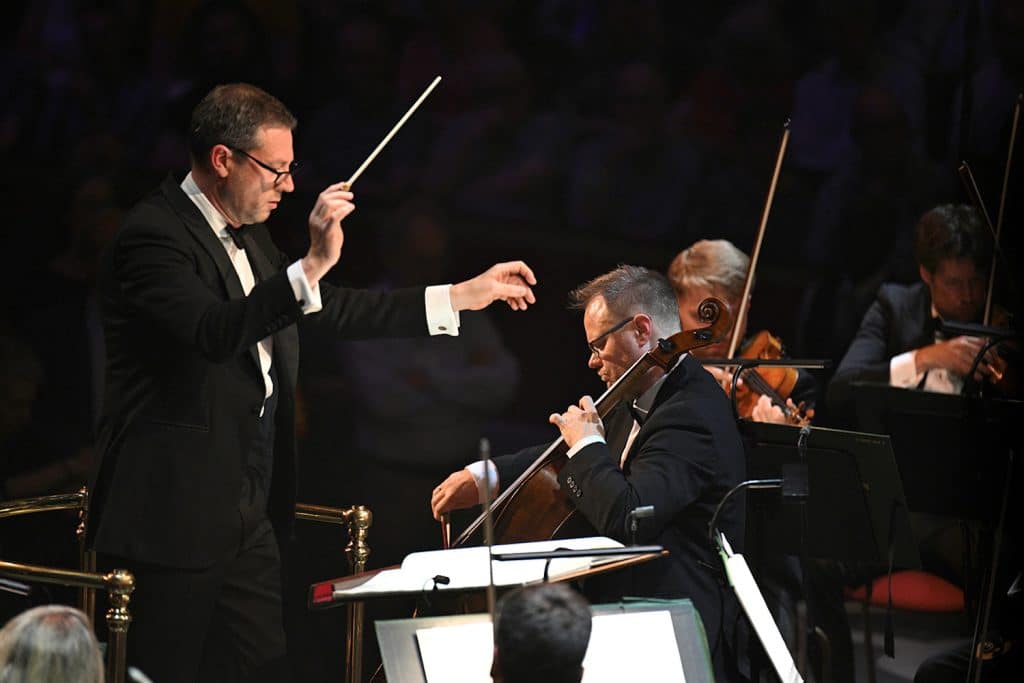
Jonathan Aasgaard (cello), Sinfonia of London / John Wilson

Verdi Overture: La forza del destino (1861-2, revised 1869)
Walton Cello Concerto (1955-56)
Respighi Feste romane (Roman Festivals) (1928); Fontane di Roma (Fountains of Rome) (1915-16); Pini di Roma (Pines of Rome) (1923-4)

Royal Albert Hall, London
Friday 24 July 2026

Reviewed by Ben Hogwood Photos (c) BBC / Chris Christodoulou

On a sultry Friday evening at the BBC Proms it was entirely appropriate for John Wilson and the Sinfonia of London to relocate their audience to the heat of Italy.

Verdi’s overture to La forza del destino was the curtain raiser, beautifully phrased and with its ‘fate’ theme brilliantly delivered by the strings. The lyrical counterpart – recognizable from certain beer adverts – simply floated on air.

Walton’s Cello Concerto was similarly airborne, though this is a very different work, written while the composer was living on Ischia, in the Bay of Naples. The opening bars, though precise, were shrouded in mystery, the ticking chords from the orchestra striking an unease from which it took soloist Jonathan Aasgaard a while to emerge. The cello’s opening melody, one of Walton’s finest, was initially tentative but subsequent reappearances gave it more conviction, the orchestra providing exquisitely shaded support.

Aasgard has recorded the work with the Sinfonia of London, whose cello section he leads, and the established togetherness with the orchestra was a clear asset. As the faster music evolved, there was a singularity of voice, though not the extravert approach of some performances, the anxieties in Walton’s music remaining. These were ultimately banished by a lyrical third movement, then a terrific cadenza and some lively exchanges between soloist and orchestra, though even here the closing bars were left with an open-ended question. A compelling performance, nonetheless – and one to revisit.

To say Respighi throws open the doors and windows when writing for orchestra would be an understatement. It is rare to encounter works of such colour and characterisation, secured through an experienced hand whose training with Rimsky-Korsakov and Martucci yielded a bold and often extravagant style. Coarse, too, on occasion, as Wilson and his charges illustrated with the beginning of Roman Festivals.

The first of a triptych written by Respighi in homage to his home city, the festivals are not for the shrinking violet, with Christian martyrs thrown to the lions even before the end of the first movement. The loud music was suitably dramatic but there was reverence and restraint in the quiet passages, where we could have been in the depths of the Colosseum itself. Here there was extraordinary control, a quality not always associated with Respighi but one which served him well here. Jubilee was terrific, as was the cut and thrust of The October Festival, and it is a credit to Wilson that the most uneven piece of the triptych was brought off with conviction, its finale reminding us of Stravinsky’s influence on the composer.

This is also evident in Fountains of Rome, but the riot of colour that found the orchestral virtuosos in their element is purely of Respighi’s hand. The wind and brass excelled through the undulations of The Fountain of Valle Giulia at dawn, with beautiful solos from oboe (Fergus McCready) and horn (Christopher Parkes), while Respighi’s lavish illustrations of the Triton and Trevi fountains were rendered with equal parts care and extravagance. The latter rose to full-bodied splendour as an ideal balance was struck between organ (Richard Hills) and orchestra. Delicacy was however once again evident in The Fountain of the Villa Medici, Wilson’s eye for detail highlighting the twinkling edges of Respighi’s wonderful part writing.

And so to the biggest crowd pleaser, the Pines of Rome, whose opening flourish in the Pines of the Villa Borghese set the tone in glorious technicolour. The murky, dusty humidity of the Pines near a catacomb was vividly portrayed, the solemn utterance of its Gregorian chant growing to an awesome climax of poise and power. Pianist Ben Dawson was superb in the rippling textures of The Pines of the Janiculum Hill, as was the baleful clarinet of Chris Richards. The movement ended memorably with the recording of the nightingale, with which Respighi transfixed his audience from a gramophone back in 1924. Over a century on, it once again held the Albert Hall in its grasp. From the depths emerged the final march, The Pines of the Via Appia. This was the night’s crowning glory, a long and brilliantly managed crescendo that somehow kept getting louder, 130 players giving their all in a thunderous and exultant finish to raise the roof.

This moment alone was worth the admission, but there was a final treat in the form of Rossini, the final galop from his overture to William Tell, entirely appropriate and given with evident pleasure. For this is what John Wilson and the Sinfonia of London are all about, their pure enjoyment of music translated into performances of rare distinction and character. No wonder the house was full, the cheers long and loud – we all knew we had seen one of the standout moments of this year’s Proms festival.

You can watch this Prom on the BBC iPlayer, or listen to it on BBC Sounds until the end of September 2026. Meanwhile you can click on the links to access the Roman Trilogy in recorded form from the Sinfonia of London and John Wilson, and Jonathan Aasgaard’s recording of Walton’s Cello Concerto with the same orchestra

Published post no.2,959 – Sunday 26 July 2026

BBC Proms 2026 – The First Night

by Ben Hogwood Photo (c) Chris Christodoulou

The 2026 edition of the BBC Proms is underway! With a Transatlantic first night, the BBC Symphony Chorus and BBC Symphony Orchestra under Dalia Stasevska were joined by pianist Yunchan Lim for a special performance of Ravel‘s Piano Concerto.

Flanking this were two pieces celebrating America’s 250th ‘birthday’, Copland‘s Fanfare for the Common Man and Gershwin‘s An American in Paris, while French-British composer Josephine Stephenson was the ideal choice to write a first night premiere, That the sunrise not leave us unmoved.

Wrapping up the night was a rare performance of Finzi‘s For St Cecilia, a choral work of typical mystery and elegance but one that deserved its rare moment in the sun. Choral and orchestral forces then gave an encore of the Oasis song Wonderwall, acknowledging the England team’s prowess in the World Cup. A red card for its choice, I’m afraid – and a shame to have Finzi’s contribution immediately overshadowed in this way. Wonderwall is a great song, but felt miscast here.

Enough of my griping, though – as we should acknowledge many people enjoyed the inclusion, and the night as a whole was a celebratory indication of what we can expect to indulge in over the next eight weeks. Truly something for everyone.

You can watch the First Night of the Proms on the BBC iPlayer

In concert – Vienna Philharmonic Orchestra / Franz Welser-Möst @ BBC Proms: Mozart & Tchaikovsky

Vienna Philharmonic Orchestra / Franz Welser-Möst (above)

Mozart Symphony no.38 in D major K504 ‘Prague’ (1786)
Tchaikovsky Symphony no.6 in B minor Op.74 ‘Pathétique’ (1893)

Royal Albert Hall, London
Tuesday 9 September 2025

Reviewed by Ben Hogwood Photos (c) BBC / Chris Christodoulou

The music of Mozart is the lifeblood of the Vienna Philharmonic Orchestra, so to describe their performance of the composer’s Prague symphony as routine is to say that everything was present and completely idiomatic.

Completed in Vienna, the Prague deserves to be mentioned with the last three symphonies as among Mozart’s greatest. In the hands of guest conductor Franz Welser-Möst, its phrases were stylishly turned, violins silky-smooth but keeping clear of full fat over-indulgence. This performance drew the audience in, with a chamber orchestra sound that acquired more beef when needed in the first movement, which had appropriate drama, or the boisterous passages of the finale. The woodwind were superb throughout.

Most intriguing was the Andante, a thoughtful repose whose chromatic melodies were lovingly shaped, while the central section was notable for its autumnal frissons whenever the music headed for a minor key. Meanwhile the faster music was imbued with the spirit of the dance, a performance carefully considered but let off the leash when appropriate.

Tchaikovsky’s Pathétique symphony took a while to get going, revealing the composer’s own Mozartian influence in the process. Initially the first movement felt underpowered, its sense of dread kept to a minimum and the second theme kept within itself – though that did mean a particularly beautiful clarinet solo from Matthias Schorn. This turned out to be an effective interpretative ploy on the part of Welser-Möst, for the impact of the stormy section was heightened, the orchestra suddenly playing hell for leather.

The 5/4 metre of the second movement was persuasively realised, the lilt of its dance compromised by unexpected syncopations, alternating between charming and disturbing. By this point the Proms audience notably rapt in their attention, and still between movements.

The scherzo felt Viennese yet acquired a manic need to please more in keeping with Mahler – not encouraged as much by Welser-Möst as previous Vienna Philharmonic incumbents (Herbert von Karajan, for example) but effective, nonetheless. It all set up the devastating pathos of the finale, taken relatively smooth and never lingering, but still uncommonly moving. Double basses were appropriately knotty, while the effect of the stopped horns, playing low and loud, was genuinely chilling. The fabled gong stroke, on the light side, was still a telling moment in the hall, as was the silence following the last note, Welser-Möst giving us over a minute to consider the masterpiece we had just heard. After that, there could be no encore.

Franz Welser-Möst is a subtle conductor who over the years has developed a close relationship with his charges in Cleveland and Vienna particularly. His poised approach brings optimum virtuosity and watertight ensemble, to which can be added artistic approaches with a great deal to commend them. In this case both Mozart and Tchaikovsky were the beneficiaries.

You can listen back to this Prom concert on BBC Sounds until Sunday 12 October.

Click to read more about the BBC Proms

Published post no.2,653 – Wednesday 10 September 2025