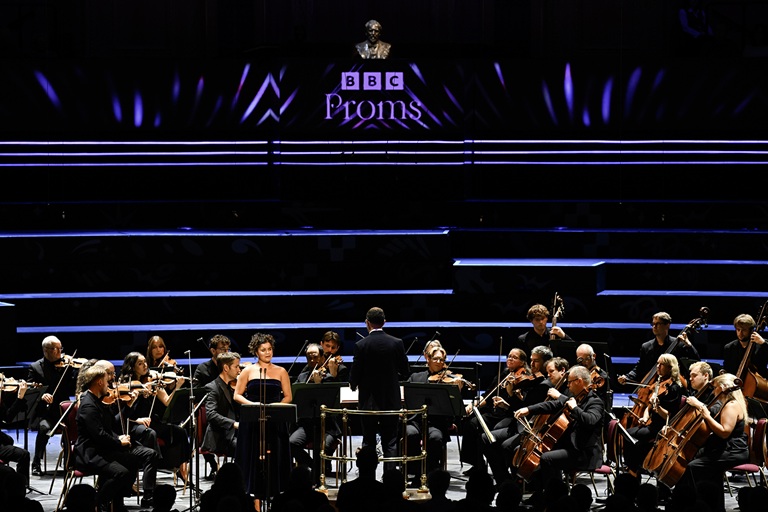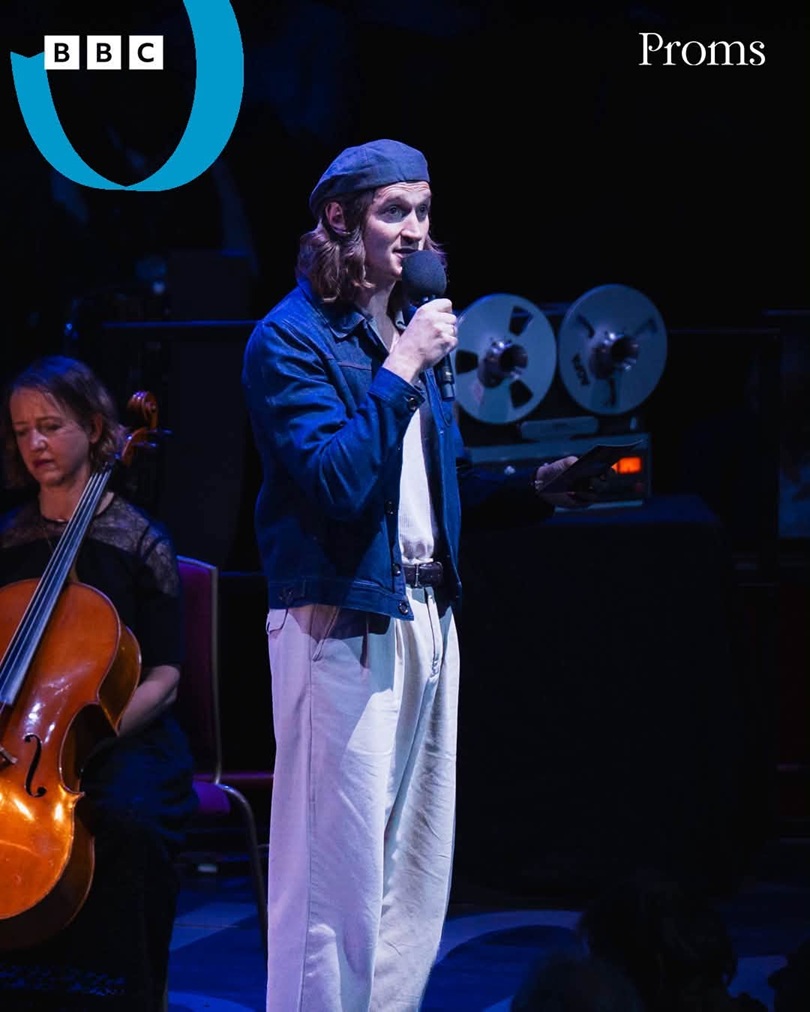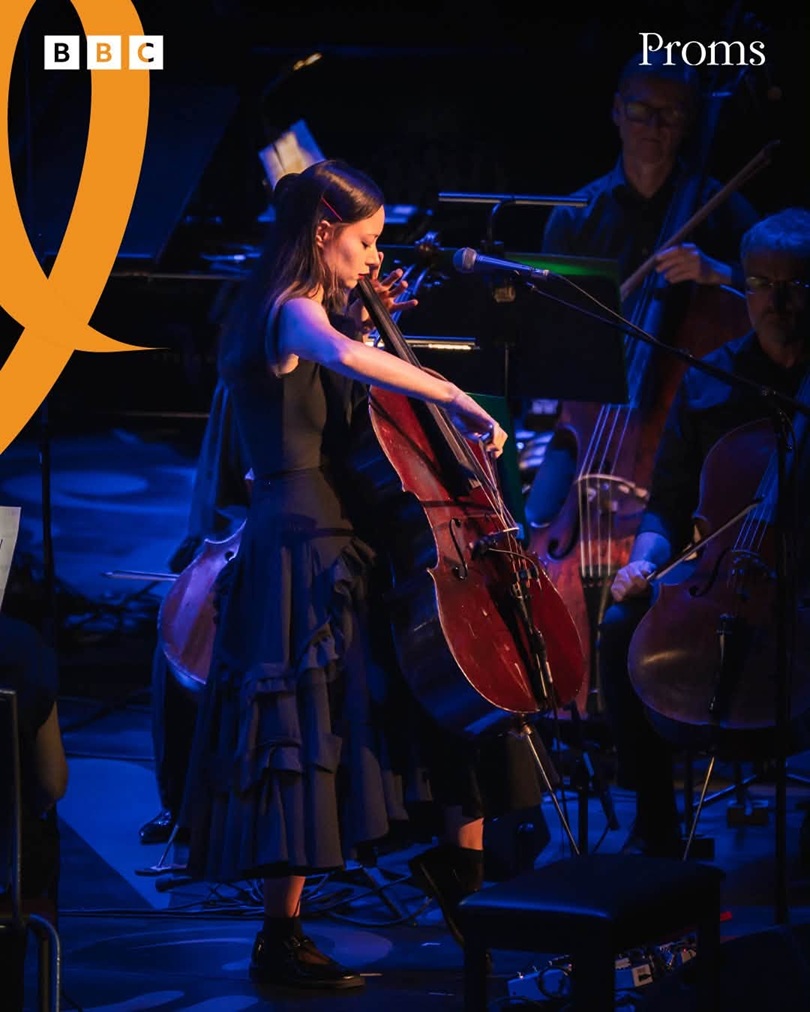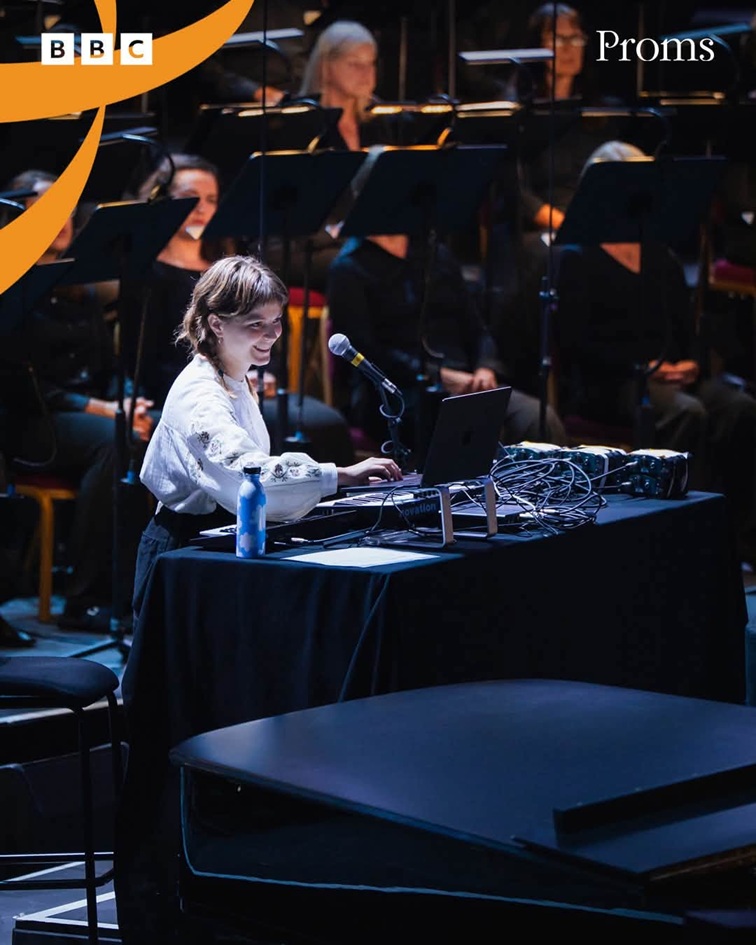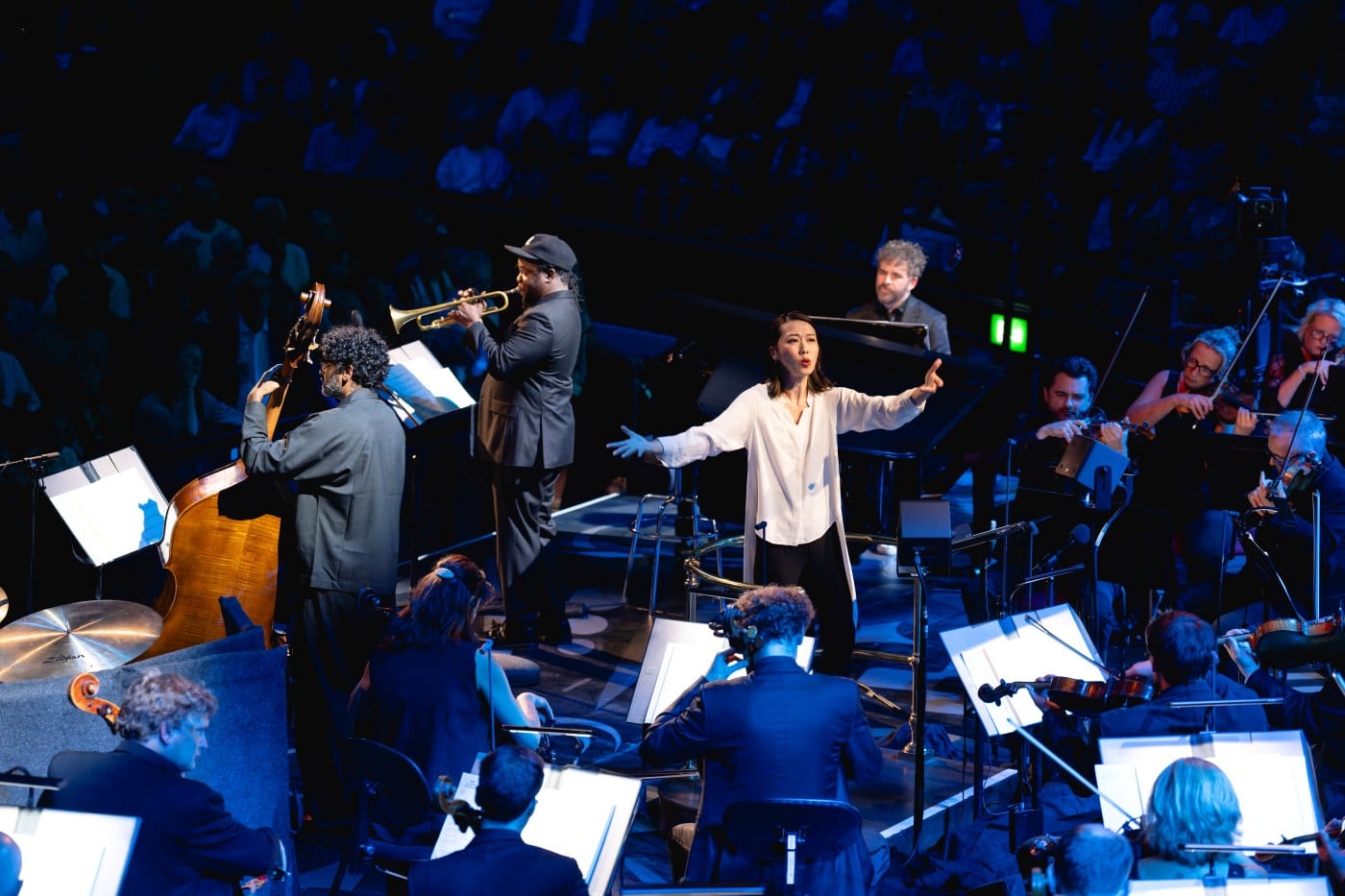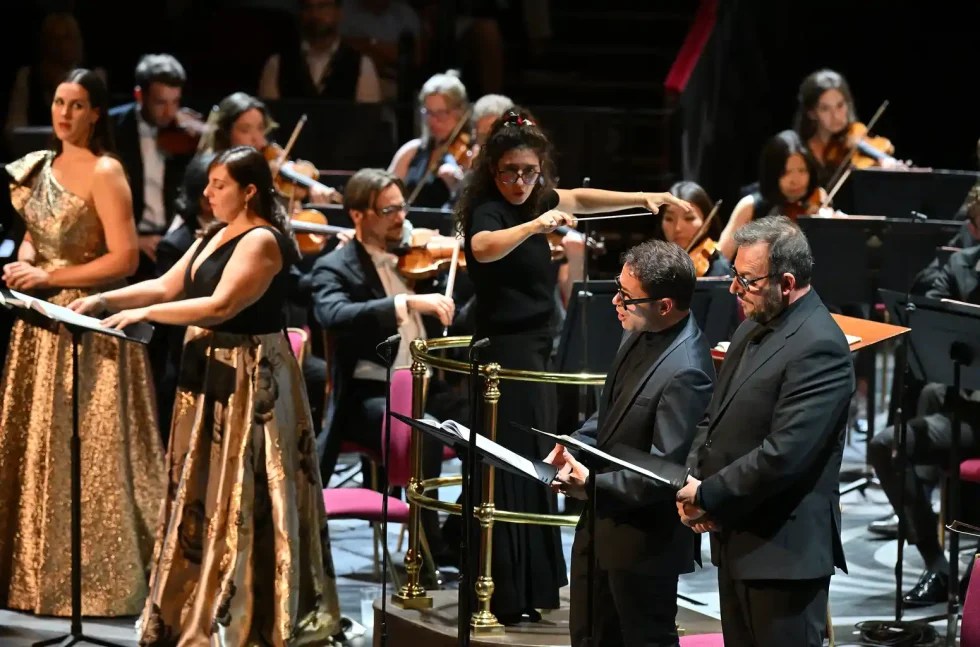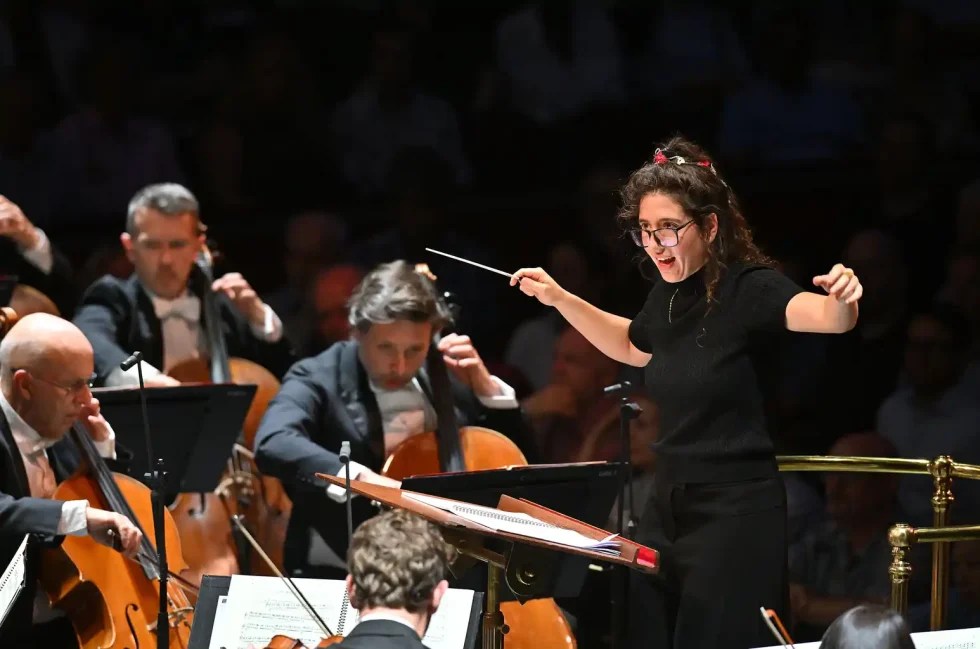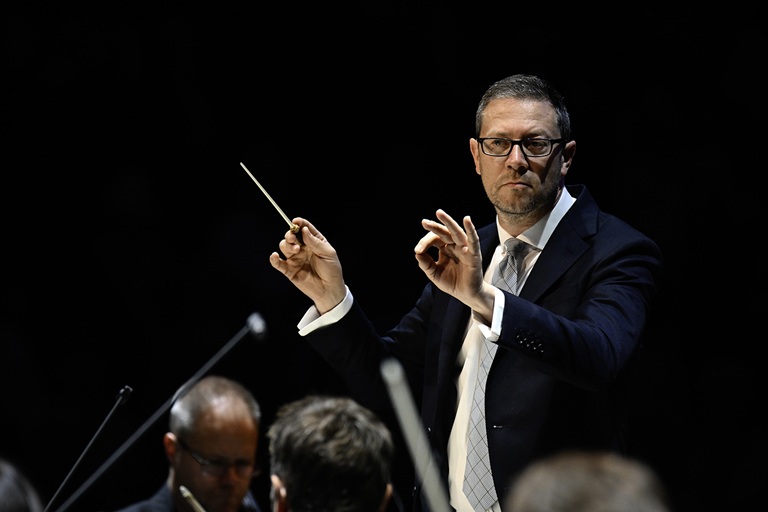
In concert – Hugh Cutting, Irish Baroque Orchestra / Peter Whelan @ Wigmore Hall

Hugh Cutting (countertenor), Irish Baroque Orchestra (Peter Whelan, director)

Programme including pieces by Mozart, Gluck, Johann Christian Bach, Johann Christian Fischer, Tommaso Giordani and Thomas Arne. Full repertoire list at the bottom of this review

Wigmore Hall, London, 9 March 2026

by John Earls. Photo credits John Earls

Giusto Ferdinando Tenducci (c. 1735-90) may not be a name on many people’s lips but he was something of a superstar in his day (his portrait was painted by Gainsborough twice). The Siena-born soprano castrato (who were the pop stars of their time) was not just a successful singer but his celebrity also featured a colourful life that included spells in a debtors’ prison and a scandal involving him marrying his teenage singing pupil Dorothea (Dora) Maunsell – the couple met in Dublin in Ireland but eloped to Cork, where he was also jailed for a time (the marriage was later annulled).

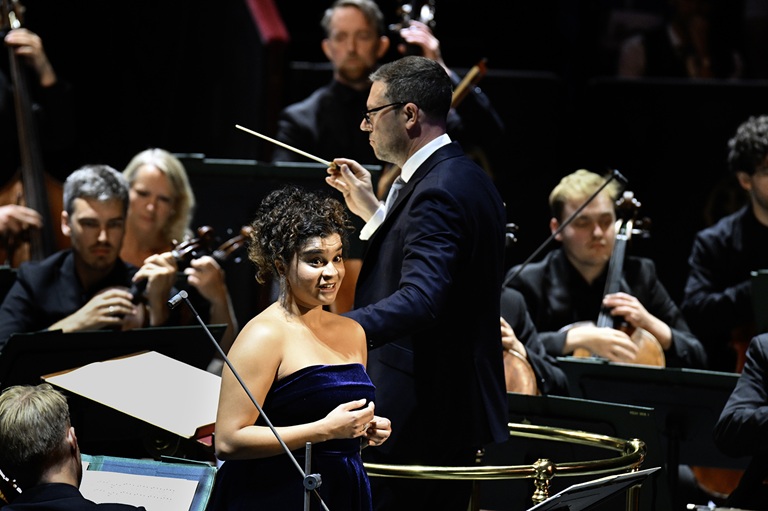
This concert explored the world and music of Tenducci and his time in Ireland (he spent the early part of his career touring Italian and German cities and came to prominence in London and Ireland in the late 1750s and early 1760s). The Irish Baroque Orchestra released the album The Trials of Tenducci: A Castrato in Ireland (Linn Records) in 2021 and a number of its pieces featured tonight, although there were some compositions too. On the album the singer is Irish mezzo-soprano Tara Erraught. Tonight’s singer was British countertenor Hugh Cutting, a BBC New Generation Artist (2022–24) and the first countertenor to win the Kathleen Ferrier Award. Cutting impressed me as Arsace in English National Opera’s recent surrealist production of Handel’s Partenope, and he made a very strong impact in this performance.

In a nice scene setter, the concert began with Mozart’s Symphony no. 1 which the composer wrote when he was just eight years old, about the time when Tenducci met him in England in 1764. The first set also included two arias from Mozart’s third opera Mitridate: re di Ponto: Già dagli occhi and Venga pur Minacci (which closed the first half) seeing Cutting give rein to his strong stage presence and in the latter, an, at times, literally pointed delivery.

The rest of the first set featured Thomas Arne’s Vengeance, O come inspire me! from Alfred (a forceful opener from Cutting with lively, bright accompaniment from the orchestra) and Water parted from the sea from Artaxerxes (which ran for some 33 performances in Dublin in 1765-66), delivered with clarity by Cutting (not so much the audience member who coughed loudly at the end).

Another first set highlight was the orchestra’s performance of Johann Christian Fischer’s Gramachree Molly with variations from the Oboe Concerto No. 7 which spotlighted some gorgeously expressive and fluent oboe playing by Emma Black.

The young Mozart’s Symphony no. 4 opened the second half followed by three pieces from Gluck’s opera Orfeo ed Euridice. Here the orchestra was in full command for Dance of the Furies with the two horn players holding their instrument’s bells upright for maximum impact. Cutting’s singing on Ahimè! dove trascorsi! and Che farò senza Euridice? was clear and passionate.

There then followed a piece where the orchestra absolutely shined. Tommaso Giordani’s The Celebrated Overture and Irish Medley to The Island of Saints saw Emma Black working oboe magic again, beautifully accompanied by plucked strings, for Shepherds I Have Lost My Love. The Irish Medley was given a joyous performance of its selection of Irish folk melodies featuring some fantastic fiddle playing. It was rewarded with rapturous applause – a perfect early Saint Patrick’s Day celebration. There was more Giordani of a different sort next with Caro mio ben, with Cutting’s vocals hanging confidently and elegantly.

Johann Christian Bach’s Vo solcando un mar crudele from Artaserse W.G 1 was a crisp, rousing finale giving full expression to Cutting’s virtuosity. A repeat of Caro mio ben served as an encore and was even more glorious than the first time round.

This was a mesmerising evening with a wonderful programme that highlighted that baroque music in Ireland goes further than the celebrated premiere of Handel’s Messiah in Dublin in 1742. Hugh Cutting and the Irish Baroque Orchestra are an outstanding combination. I hope there is more to come.

Hugh Cutting and the Irish Baroque Orchestra performed the following repertoire:

Mozart Symphony No. 1 in E flat major K16
Arne Vengeance, O come inspire me! from Alfred
Mozart Già dagli occhi from Mitridate, re di Ponto
Johann Christian Fischer Gramachree Molly with variations from Oboe Concerto No. 7
Arne Water parted from the sea from Artaxerxes
Mozart Venga pur Minacci from Mitridate, re di Ponto; Symphony No. 4 in D major K19
Gluck Dance of the Furies; Ahimè! dove trascorsi!; Che farò senza Euridice? from Orfeo ed Euridice
Giordani The Celebrated Overture and Irish Medley to The Island of Saints; Caro mio ben;
Johann Christian Bach Vo solcando un mar crudele from Artaserse W.G 1

John Earls is Director of Research at Unite the Union and posts at @johnearls.bsky.social on Bluesky and @john_earls on X. You can subscribe (free) to his Hanging Out a Window Substack column here: https://johnearls.substack.com/

Published post no.2,825 – Tuesday 10 March 2026

In Concert – Carolin Widmann, CBSO / Tianyi Lu: Habibi, Korngold & Prokofiev

Carolin Widmann (violin, below), City of Birmingham Symphony Orchestra / Tianyi Lu

Habibi Zhiân (2023)
Korngold Violin Concerto in D major Op.35 (1945)
Prokofiev Symphony no.5 in B flat major Op.100 (1944)

Symphony Hall, Birmingham
Wednesday 25 February 2026, 2:15pm

Reviewed by Richard Whitehouse Picture of Tianyi Lu (c) Marco Borggreve

This afternoon’s concert saw the City of Birmingham Symphony Orchestra in action with the Chinese-born New Zealand conductor Tianyi Lu, and a programme that prefaced established works from the mid-20th century with a recent piece by an Iranian-born Canadian composer.

Its title translating not only as ‘Life’ in Kurdish but as ‘indignant’ or ‘formidable’ in Persian, Iman Habibi’s Zhiân takes its cue from Iranian government repression in response to protests after the death of Mahsa Amini in police custody. Although not directly programmatic, there is a discernible trajectory from the initial explosion of violence, through a sequence of more ambivalent yet increasingly consoling episodes – during which solo instruments (notably the oboe) come into focus, towards a culmination of unalloyed fervour. Such a statement could easily have descended into overkill, but Habibi gauges its progress with audible sureness of intent; abetted here by the conviction of the CBSO’s response. Little heard as yet in the UK, Habibi is clearly a composer with something worth saying and the means by which to say it.

Those with longer memories may remember when Korngold’s Violin Concerto was far from being the concert staple it is today, its uninhibited romanticism held in check by orchestration as fastidious as it is sophisticated along with a formal concision that ensures this work never outstays its welcome. It was such a balance between effusiveness and discipline which came across most clearly in Carolin Widmann’s playing, by turns tensile and expressive so that the music retained its focus throughout. Even she could not quite prevent the finale from veering towards bathos, as Korngold’s otherwise judicious recourse to earlier film-scores rather gets the better of him, yet as its uproarious closing bars surged onwards, there was little doubting the sheer effectiveness of this work taken as a whole or of Widmann’s ease when realizing it.

The stage was set for a memorable performance of Prokofiev’s Fifth Symphony which, in the event, was no more than decent. Not that this was because of technical failings, yet the initial Andante never quite recovered from a sluggish opening such that the strenuous development was unduly hectoring then the climactic restatement of the main theme sounded turgid rather than implacable. The scherzo’s central phase had appealing insouciance, but its outer sections lacked impetus with little emphasis on the ‘marcato’ designation to ensure the necessary edge.

The ensuing Adagio was the sure highlight, Lu’s preference for leisurely tempos and gradual accumulation of tension coming into its own not least with a seismic climax which subsided towards a coda of melting pathos. The finale opened enticingly, but progress here was again undermined by a lack of momentum; without which, its ostensibly genial themes never took flight. This was most evident with a denouement, among the most hair-raising in symphonic literature, whose seeming matter-of-factness rather left the whole work hanging in abeyance.

A pity so relatively lacklustre an interpretation ended David Powell’s final concert as CBSO sub-principal cello. Your reviewer remembers his engaging presence from four decades ago, and is glad an overt dislike of Mahler did not end his 45-year tenure almost before it began.

To read more about the CBSO’s 2025/26 season, visit the CBSO website. Click on the names for more on conductor Tianyi Lu, violinist Carolin Widmann and composer Iman Habibi

Published post no.2,812 – Saturday 28 February 2026

In Concert – Marianne Crebassa, The Mozartists / Ian Page @ Wigmore Hall: Mozart & Haydn

Marianna Crebassa (mezzo-soprano), The Mozartists / Ian Page

Mozart Lucio Silla K135 (1772): Dunque sperar poss’io…Il tenero momento
Haydn Symphony no.34 in D minor Hob.I:34 (1765)
Mozart Idomeneo K366 (1781): Ah! qual gelido orror; La clemenza di Tito K621 (1791): Parto, parto; Lucio Silla K135: Ah! se morir mi chiama; Le nozze di Figaro K492 (1786): Voi che sapete che cosa e amor
Haydn Symphony no.26 in D minor ‘Lamentatione’ (1768)
Mozart La clemenza di Tito K621: Deh, per questo istante solo

Wigmore Hall, London
Thursday 26 February

Reviewed by Ben Hogwood Photo (c) The Mozartists

It was a matter of time before Marianne Crebassa and Ian Page appeared together on the same stage. Indeed, as Page confided in the pre-concert talk, the French mezzo-soprano was top of his ‘wanted’ list for performing with his band, The Mozartists. With dates aligned, the pair constructed a typically stimulating programme.

Page’s eye for historical and orchestral detail proved the ideal foil for Crebassa’s characterisation of four operatic characters from early, middle and late in Mozart’s career, with each role written for castrato singers. Supporting these operatic excerpts were two symphonic examples from Haydn’s ‘Sturm und Drang’ period.

Diving straight in at the deep end, Crebassa embraced the many twists and turns of the 10-minute epic Dunque sperar poss’io…Il tenero momento, from Mozart’s teenage opera Lucio Silla. Her lower range notes were sumptuously delivered with impeccable poise, while Crebassa’s upper range was thrilling in the exposed virtuoso passages, delivered with a flash of the eye and a smile.

‘Enjoyment’ was a key word for this concert, as players, conductor and singer alike shared musical asides with obvious pleasure – not always the case in the concert hall! Some of the biggest smiles were reserved for Crebassa’s coy account of Voi che sapete, from Le Nozze di Figaro, subtle but winsome. Meanwhile the tragic Ah! qual gelido orror, from Idomeneo, had the appropriate gravitas and a weighty orchestral tone to match. A second aria from Lucio Silla, Ah! se morir mi chiama, was given with exceptional voice control and attention to detail from Page, including tasteful harpsichord continuo from Steven Devine.

Crebassa also triumphed in two arias from Mozart’s final opera La clemenza di Tito, hailed by Page as a long-underrated masterpiece. In Parto, parto her accomplice was basset clarinettist Emily Worthington, taking the part of Mozart’s friend (and Clarinet Quintet dedicatee) Anton Stadler. Player and singer engaged in a compelling sequence of musical cat and mouse, Worthington projecting well from the back of the stage. Meanwhile Deh, per questo istante solo found Crebassa drawing the audience in with its dynamic contrasts, high on drama. As a considerable bonus she gave a serene account of Qui d’amor from Handel’s Ariodante as an encore.

Complementing the Mozart selection were two examples of Haydn’s invention from early on in his tenure as Director of Music at Esterházy. Both D minor works share a weighty tone, and the earlier work, Symphony no.34, began with a heavy heart. The sparse tone of the orchestra was a stark contrast to the Mozart, only briefly relenting as the first movement developed its ideas. Even when D major appeared as the key of the resulting Allegro the music still bristled with anxiety, expressed through the violin tremolos. The Minuet and Trio – with lovely tone from oboists James Eastaway and Rachel Chaplin – eased the strain with brighter tones, as did the finale, in spite of its brief minor key recollections.

One of few Haydn symphonies to receive a nickname from the composer himself, Symphony no.26, the ‘Lamentatione’, took us to church in an interpretation reaching profound emotional depths. Page and the Mozartists moved from the brio of the lean first movement to rapt concentration in the second, where the music has a similar gait to the chorale of J.S. Bach’s famous cantata Wachet auf, ruft uns die Stimme. Page gave the phrasing appropriate room for contemplation. Haydn’s wit and invention made a welcome reappearance beneath the surface tension of the Minuet and was expressly felt in the syncopated trio, where oboes and horns excelled.

This was a memorable evening of music making, captured by microphones – presumably for broadcast on BBC Radio 3 or recording. Either way, a memento is well worth seeking out!

You can listen to the music from this concert in a Tidal playlist, including some of Marianne Crebassa’s own Mozart recordings made for the Erato label.

Published post no.2,811 – Friday 27 February 2026

In Concert – Sir Stephen Hough, Soloists, CBSO Chorus, City of Birmingham Symphony Orchestra / Omer Meir Wellber: Beethoven & Haydn

Sir Stephen Hough (piano, below), Lauren Urquhart (soprano), Georgia Mae Ellis (mezzo-soprano), Luis Gomes (tenor), Alexander Grassauer (bass), CBSO Chorus (above), City of Birmingham Symphony Orchestra / Omer Meir Wellber (conductor & harpsichord/director)

Beethoven (/Hough) Piano Concerto no.3 in C minor Op.37 (1800, rev. 1803)
Haydn Missa in Angustiis, Hob.XXII/11 (‘Nelson Mass’) (1798)

Symphony Hall, Birmingham
Thursday 19 February 2026

Reviewed by Richard Whitehouse

That tonight’s concert from the City of Birmingham Symphony Orchestra featured music by Beethoven and Haydn might have been indicative of a straight-ahead or mainstream concert but, as things turned out, neither programme nor music-making could be deemed predictable.

Sir Stephen Hough has no doubt played Beethoven’s Third Concerto many times with, moreover, his take on the outer movements not far removed from his much-praised Hyperion recording. The initial Allegro was lithe and impetuous if at times a touch hectoring (and Matthew Hardy was uncharacteristically reticent in that spellbinding passage after the cadenza), with the final Rondo treading a fine line between humour and irony at its most distinctive in the modulatory transition to the main theme, or that improvisatory solo flourish prior to the nonchalant coda.

Interest naturally centred on the slow movement – a Largo designated Con gran espressione in its ‘re-imagining’ by Hough (above). Itself part of a project instigated by this evening’s conductor, Omer Meir Wellber, to re-examine works in the core repertoire, this duly retains Beethoven’s instrumentation but renders the main theme, introduced by the soloist, as a hushed chorale for strings which pervades what follows. All well and good had that chorale become more than a static backdrop, against which Hough’s welter of skittish figuration sounded overly confined to the upper register. Neither was the climactic return of the first movement’s principal theme other than an affectation, nor the upsurge leading directly into the finale without contrivance. One respected Hough’s following of his muse, even if the outcome felt less than convincing.

Having not unreasonably given Hough the benefit of any doubt, the audience was nonplussed with his encore – the last of Schoenberg’s Six Little Pieces that, written after Mahler’s funeral on 17th June 1911, yields a rapt eloquence even at less than the ‘very slow’ tempo prescribed.

As searching products of his late maturity, the six ‘name day’ Masses that Haydn wrote around the turn of the 19th century remain too little heard at orchestral concerts; save for the ‘Nelson Mass’ whose actual title, Mass in Troubled Times, makes explicit the cultural turmoil from of which it arose. This must also have occasioned its unyielding orchestration with trumpets and timpani but no woodwind, plus a dextrous continuo part allotted here to harpsichord and from which Wellber directed with a sure sense of where this most combative of masses was headed.

Vocally the solo writing favours soprano and bass, with Alexander Grassauer making the most of his mellifluous contributions and those of Lauren Urquhart impassioned yet tonally uneven in more animated passages. Georgia Mae Ellis and Luis Gomes handled their secondary roles with real finesse, while chorus-master David Young drew a laudable response from the CBSO Chorus (arrayed on stage with what might be felt the choral equivalent of ‘free bowing’). Taut and incisive, the epithet ‘symphonic’ as applied to this work can rarely have been so apposite.

The performance certainly set the seal on a concert which rightly encouraged a reassessment of both works and, by so doing, underlined Wellber’s own interpretative convictions. Having last appeared with the CBSO almost six years before, his return should be so long in coming.

To read more about the CBSO’s 2025/26 season, visit the CBSO website. Click on the names for more on conductor Omar Meir Wellber, pianist Sir Stephen Hough and soloists Lauren Urquhart, Georgia Mae Ellis, Luis Gomes and Alexander Grassauer.

Published post no.2,804 – Friday 20 February 2026

In Concert – Natalya Romaniw, CBSO / Eduardo Strausser: Shekhar, Richard Strauss & Brahms

Natalya Romaniw (soprano, below), City of Birmingham Symphony Orchestra / Eduardo Strausser (above)

Shekhar Lumina (2020) [UK Premiere]
Richard Strauss Vier letzte Lieder (1948)
Brahms Symphony no.4 in E minor Op.98 (1884-5)

Symphony Hall, Birmingham
Wednesday 4 February 2026

Reviewed by Richard Whitehouse Pictures (c) Rodrigo Levy (Eduardo Strausser), Frances Marshall (Natalya Romaniw)

Eduardo Strausser has been welcome visitor to the City of Birmingham Symphony Orchestra on several earlier occasions (see elsewhere on this website), with this afternoon’s programme demonstrating a keen ear for his juxtaposing of contemporary music and established classics.

Equally well-established as an instrumentalist and multi-media artist, Nina Shekhar (b.1995) is an Indian-American with a substantial output to her credit – not least Lumina. Premiered in Los Angeles and subsequently heard across the United States, its eventful 12 minutes explore what she has described as ‘‘… the spectrum of light and dark and the murkiness in between’’. The incremental emergence of sound and texture brings Ligeti’s 1960s pieces to mind, while the build-up of its central phase towards a culmination of palpable emotional fervour is both adeptly managed and powerfully sustained, before the gradual return to its inward origin. The present performance left little doubt as to Strausser’s belief in this music, even if that opening stage would have benefitted from a more attentive response by some of those in the audience.

Richard Strauss’s Four Last Songs is too frequently encountered in concert these days, so that it takes something special to make one reflect anew on its achievement as among the greatest of musical swansongs. This account got off to rather an inauspicious start – Natalya Romaniw overwrought in the vernal deftness of Frühling, not aided by overly opaque textures – though it subsequently came into its own. Arguably the most perfectly realized of all orchestral songs, September found an enticing balance between joy and resignation, while if leader Jonathan Martindale’s solo in Beim Schlafengehen was not quite flawless, it eschewed sentimentality to a (surprisingly?) rare degree. Im Abendrot rounded off the performance with Romaniw’s eloquent retreat into an orchestral backdrop which itself faded into serene and rapt fulfilment.

If by no means his final work, Brahms’s Fourth Symphony surely marks the onset of his final creative period. In its overtly austere sound-world and an abundance of hymn-like or chorale-inflected themes, it is also the most Bachian of his orchestral works but Strausser was right to offset this aspect against that surging emotion as underlies even the most speculative passages of its opening movement. The coda built methodically yet not a little impulsively towards an apotheosis as dramatic as anything by this most Classically inclined of Romantic composers.

After this, the Andante emerged in all its autumnal warmth and expressive poignancy – if not the most perfectly realized Brahms slow movement then surely the most profound. Bracingly energetic if never headlong, the scherzo prepared unerringly for the finale – the effectiveness of its passacaglia format having on occasion been questioned, while conveniently overlooking that parallel sonata-form dynamism such as galvanizes this movement on its intended course. Suffice to add that the closing pages felt as inevitable as any performance in recent memory.

Overall, a fine showing for the CBSO – notably its woodwind and brass – and Strausser, who will hopefully return soon. The orchestra is heard later this month with Omar Meir Wellber in a no less stimulating programme of Beethoven’s Third Piano Concerto with Haydn’s ‘Nelson’ Mass.

To read more about the CBSO’s 2025/26 season, visit the CBSO website. Click on the names for more on conductor Eduardo Strausser soprano Natalya Romaniw and composer Nina Shekhar

Published post no.2,791 – Saturday 7 February 2026