In concert – Benjamin Grosvenor, CBSO / Marta Gardolińska: Mozart, Beethoven, Fanny Mendelssohn & Felix Mendelssohn

marta-gardolinska

Mozart Die Zauberflöte K620: Overture (1791)
Beethoven
Piano Concerto no.1 in C major Op.15 (1795, rev. 1800)
Fanny Mendelssohn
Overture in C major (1832)
Mendelssohn
Symphony no.4 in A major Op.90 ‘Italian’ (1833)

Benjamin Grosvenor (piano), City of Birmingham Symphony Orchestra / Marta Gardolińska

Symphony Hall, Birmingham
Wednesday 3 November 2021 (2.15pm)

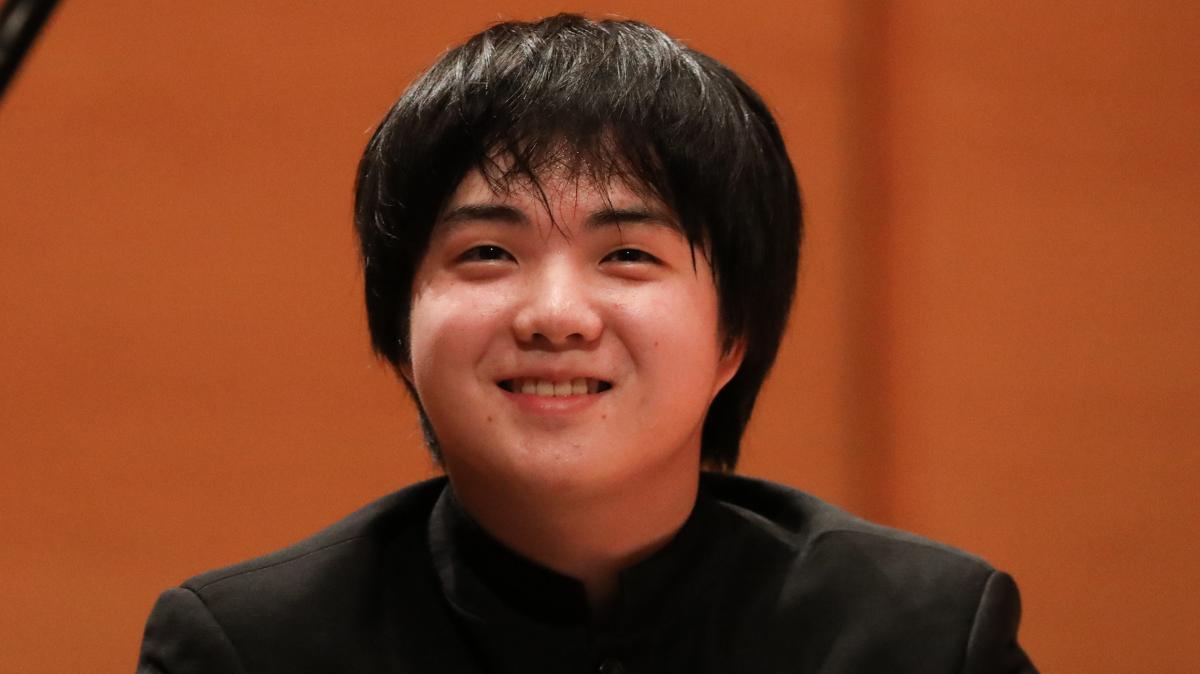
Written by Richard Whitehouse. Picture of Benjamin Grosvenor (c) Andrej Grilc

Those having heard Gustavo Dudamel’s recent Ives cycle will know of Marta Gardolińska’s role in the success of the Fourth Symphony, with her similarly methodical attention to detail being evident in this afternoon’s concert with the City of Birmingham Symphony Orchestra.

An avowedly Classical concert it may have been, but an artfully programmed one. Certainly, it was refreshing these days to hear the introduction of Mozart’s Overture to The Magic Flute given with this degree of gravitas, followed by a purposeful take on the main allegro such as brought out the music’s verve along with an onward striving apposite given its indebtedness to the ideals of the Enlightenment. The CBSO itself sounded wholly enthused in what was as purposeful and as immediate an account of this piece as it can have given in recent seasons.

It also prepared admirably for Beethoven’s First Piano Concerto with Benjamin Grosvenor (above). The latter has often sounded unduly self-effacing in the concerto repertoire, but this work fits his temperament to a tee – not least its initial Allegro, whose alternating of bravura with more equivocal expression included an electrifying transition to the reprise then nonchalant take on what is the second (c1805), shortest and contextually most satisfying of the composer’s three cadenzas. Neither was there any lack of eloquence in a Largo such as ranks among the most affecting of Beethoven’s earlier slow movements, while a headlong if never hectic tempo for the final Rondo enabled Grosvenor to instil his last entry with a poise as made the orchestral payoff the more conclusive. A fine performance which inevitably brought the house down.

Grosvenor returned for an affecting encore of Danza de la Moza Donosa – second of three Danzas Argentinas by Alberto Ginastera (maybe Grosvenor will investigate one or other of his piano concertos one day?). There was further unfamiliar fare after the interval, with an Overture by Fanny Mendelssohn. Her only completed orchestral work, its formal cohesion and technical finesse indicate what might have been possible under different circumstances, not least when Gardolińska drew such committed and characterful playing from the CBSO.

There cannot have been a time when Felix Mendelssohn’s Italian Symphony was unpopular in Birmingham and so it proved here. As has become customary, Gardolińska (rightly) observed the first movement’s exposition repeat, with its substantial lead-in, in what was otherwise an unexceptionally fine account of this opening Allegro. More individuality came through in the Andante, not least with its quirkily understated interplay between pedantry and pathos, while the intermezzo was more than usually arresting for the distinction made between its elegant outer sections and a trenchant, often combative trio. The ensuing Saltarello rounded off this performance in bracing fashion – those rhythmic contrasts between its main and second ‘tarantella’ themes vividly brought out on the way to a conclusion of no-nonsense finality.

This appealing programme was enthusiastically received by the fullest house the CBSO had enjoyed since live music-making resumed. Symphony Hall will hopefully be as well attended this Saturday, when Mirga Gražinytė-Tyla returns for the commemorative A Covid Requiem.

Further information on the CBSO’s current season can be found at the orchestra’s website. For more on Marta Gardolińska, click here – and for more on Benjamin Grosvenor, head to the pianist’s website

CBSO players perform the Allegretto from Fanny Mendelssohn’s String Quartet in E flat here:

In concert – CBSO Youth Orchestra plays Shostakovich with Michael Seal

michael-seal-bcsoyo

Howard Argentum (2017)
Britten
Diversions Op.21 (1940, rev. 1954)
Shostakovich
Symphony no.10 in E minor Op.93 (1953)

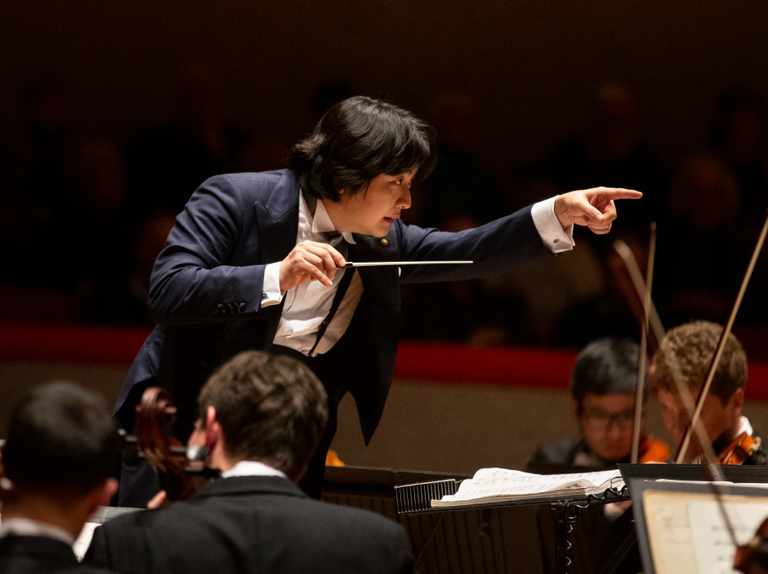
Nicholas McCarthy (piano, below), CBSO Youth Orchestra / Michael Seal (above)

Symphony Hall, Birmingham
Sunday 31 October 2021 (3pm)

Written by Richard Whitehouse

It seems quite a while since the CBSO Youth Orchestra was last in action – this afternoon’s concert playing to its strengths with a programme as featured respectively early and mature works from Britten and Shostakovich, while beginning with a recent piece by Dani Howard.

Now in her late twenties, Howard is one among several British composers who have come to prominence in the past five years. Written to commemorate the silver-wedding anniversary of two close friends, the appropriately named Argentum is in a lineage of curtain-raisers by such as John Adams or Michael Torke – drawing audibly yet productively on such post-minimalist traits in music whose unbridled animation subsides towards a mid-point stasis, before rapidly regaining its previous energy over the course of a build-up to the pointedly affirmative close.

The CBSOYO evidently enjoyed making its acquaintance, then seemed no less attuned to the eclecticism pursued by Britten in his Diversions. Written for Paul Wittgenstein, who had lost his right-arm in the First World War, it takes the form of 12 variations on a theme announced by the orchestra whose faux-portentousness determines what follows. Prokofiev is the main influence (Britten could not have known his left-hand Fourth Concerto, written for but never played by Wittgenstein and unheard until the 1950s) on music of an inventiveness and verve admirably conveyed here by Nicholas McCarthy; his characterizing of each variation astutely gauged through to a scintillating ‘Toccata’ cadenza, with Michael Seal similarly judicious in the mock-solemnity of the ‘Adagio’ then a final ‘Tarantella’ of suitably uproarious humour.

Over his years as Associate Conductor of the CBSO, Seal has gained a formidable reputation in symphonic repertoire, with his account of Shostakovich’s Tenth Symphony never less than satisfying in its long-term cohesion. Not least the opening Moderato, unfolding at an almost unbroken pulse with the stark main theme powerfully wrought and its successor lacking only a degree of irony. The central development exuded palpable impetus and while the climactic arrival of the reprise could have been even more shattering, the wind-down into the musing coda was ideally judged. Taken at a swift if never headlong tempo, the Scherzo was suitably graphic in its evoking of violence (whether, or not, a ‘portrait’ of Stalin is beside the point), then the ensuing Allegretto was poised unerringly between slow movement and intermezzo.

This most intriguing portion of the work again lacked little in insight – with due credit to first horn Alex Hocknull for coming through, almost unscathed, in one of the lengthiest and most testing solos of the orchestral literature. A pity that Seal did not head straight into the finale, but his handling of its Andante introduction astutely mingled pathos with anticipation – the main Allegro itself pivoting between nonchalance and defiance through to a conclusion in which any thought of triumph over adversity was – rightly- withheld until the closing bars.

All in all, a gripping performance of a symphonic masterpiece and a fine demonstration of the CBSO Youth Orchestra’s collective prowess. The CBSO returns this Wednesday for Mozart and Mendelssohn frère et soeur, with Benjamin Grosvenor in Beethoven’s First Concerto.

Further information on the CBSO’s current season can be found at the orchestra’s website. For more on Michael Seal, click here – and for more on pianist Nicholas McCarthy, click here

In concert – Guildhall Chamber Orchestra / Joshua Weilerstein: Music by Andrzej & Roxanna Panufnik, Still & Copland

Joshua Weilerstein 58_credit Sim Canetty-Clark (2)

Heather Brooks (harp), Guildhall Chamber Orchestra / Joshua Weilerstein

Andrzej Panufnik Harmony (1989)
Roxanna Panufnik
Powers & Dominions (2001)
Still
Mother and Child (1943) [UK premiere]
Copland
Appalachian Spring: Suite (1943/5)

Milton Hall, London
Wednesday 27 October 2021

Written by Richard Whitehouse; picture of Joshua Weilerstein by Sam Canetty-Clarke

The Guildhall Chamber Orchestra was heard this evening at its regular base in a programme where works by father and daughter either side of the Millennium complemented music from American composers enjoying their greatest success in the run-up to the Second World War.

A pity that Harmony has remained among the lesser known of Andrzej Panufnik’s works, as this ‘Poem for Chamber Orchestra’ encapsulates traits that define his mature output. Scored for pairs of woodwinds and a group of strings (the size variable according to forces available) placed stereophonically, its 18 minutes effect the gradual coming-together of various textural, harmonic, rhythmic and melodic possibilities in what – unusually for this composer – is less a symmetrical (let alone palindromic) form than a cumulative design unfolding from the most speculative exchanges to sustained outpouring. Commemorating both the 75th anniversary of the composer’s birth and the 25th anniversary of his marriage, it exemplifies those concerns for long-term formal and expressive integration as are achieved here with seamless cohesion.

It received a reading of real commitment by the Guildhall CO under the attentive direction of Joshua Weilerstein (who will hopefully tackle some of the Panufnik symphonies in future), joined by Heather Brooks for Powers & Dominions by Roxanna Panufnik. A composer who has often expressed a love for the instrument, this ‘Concertino for Harp and Orchestra’ falls into two contrasted parts. Enigmatically duly emerges from speculative gestures to take on increasing emotional intensity as melodic elements derived from two of the Psalms come to the fore, while Sinisterly brings a bracing confrontation with the vibraphone and orchestral harp that climaxes in a wide-ranging cadenza then heads into a haunting recessional. Heather Brooks proved an adept and sensitive soloist for one of this composer’s more durable works.

Weilerstein was surely right in his introductory remarks to suggest that William Grant Still’s Mother and Child was tonight receiving its first hearing in the UK. Arranged from the second movement of this composer’s Suite for Violin and Piano and taking inspiration from Sargent Johnson’s eponymous sculpture, its 10 minutes weave diaphanous textures around a melody with overtones of a spiritual and which – as often with this composer – yields an appealing profile. It could yet prove a worthwhile addition to the roster of American works for strings.

The Suite from Copland’s ballet Appalachian Spring may need no such introduction, but it remains a testing assignment which the Guildhall CO tackled with increasing confidence. As a rule it was the more animated episodes that came off best, Weilerstein securing playing of no mean verve and rhythmic definition such as propelled the music forward as a cumulative entity. If the culminating Variations on a Shaker Hymn seemed a little too blatant in overall expression, the ensuing postlude struck a resonance through the sensitivity of its realization.

It certainly made for a fitting conclusion to this concert, and one in which the qualities of the Guildhall CO’s playing were enhanced by the consistency of Weilerstein’s insights across a varied and demanding programme. Hopefully they will be back working together before long.

For further information on the Guildhall current season head to their website. For more Joshua Weilerstein head here

In concert – Sarah Beth Briggs, English Symphony Orchestra / Kenneth Woods: Mozart in Cheltenham

sarah-beth-briggs

Sarah Beth Briggs (piano, above), English Symphony Orchestra / Kenneth Woods

Sawyers The Valley of Vision (2017)
Mozart
Piano Concerto no.22 in E flat major K482 (1785)
Beethoven
Symphony no.6 in F major Op.68 ‘Pastoral’ (1808)

Town Hall, Cheltenham
Monday 25 October 2021

Written by Richard Whitehouse; picture of Sarah Beth Briggs by Carolyn Mendelsohn

Tonight’s concert found the English Symphony Orchestra at the Town Hall in Cheltenham, a building of Victorian opulence with an expansive while (surprisingly?) immediate acoustic to match, in a programme featuring classics of their respective media by Mozart and Beethoven.

First, though, a welcome revival for The Valley of Vision – the tone poem by Philip Sawyers that surveys the environs around Shoreham, Kent as were immortalized in the visionary early landscapes of Samuel Palmer. Although the composer had identified five continuous sections, the probing intensity of this music makes for a seamless unfolding which was to the fore in a superbly focussed account as directed by Kenneth Woods (who recently premiered Sawyers’ Fifth Symphony at the Colorado Mahler Festival). No less tangible was the control over this music’s momentum, extending through to a climactic faster section before soon regaining its initial pensiveness. In its subtly evocative aura and persuasive handling of tonality, moreover, this piece can rank with the most significant British orchestral works of the past two decades.

From the six piano concertos that Mozart wrote for his subscription concerts during the mid-1780s, the Twenty-Second is likely the least often heard. A pity, when its relatively expansive form and unpredictability of content are striking even in the context of this most exploratory phase from the composer’s output. Certainly, it is a piece of which Sarah Beth Briggs had the measure – whether in the forceful impetus of its opening Allegro, winsome interplay between soloist and woodwind in the central Andante (arguably the most eloquent among Mozart’s sets of variations) or blithe unfolding of a final Rondo afforded greater pathos by the ‘harmonien’ episode whose interposing was an inspired departure. Nor were Dennis Matthews’s succinct and artfully integrated cadenzas other than an enhancement of what was a fine performance.

Not that there was there anything routine about Beethoven’s Pastoral following the interval, a worthy successor to those performances of the Fifth and Seventh Symphonies that Woods and the ESO have given in recent concerts. Thus, a purposeful though never inflexible take on the opening movement left sufficient room to characterize its reflective asides, with the ‘Scene by the brook’ even more engrossing through its homogeneity of texture and seamless continuity; the closing bird-calls elegantly phrased and enticingly integrated into the whole.

Too rapid a tempo for the scherzo left Woods with insufficient room to point up contrasts in motion with its trio sections, but the Thunderstorm was finely rendered as an extended introduction into the finale – this Shepherd’s Song emerging as the formal and emotional culmination in all respects. Not the least of these strengths was an inevitability of progress – here maintained right through to a coda of serene poise and, in the process, underlining the degree to which any vestige of self has been sublimated into the enveloping cosmic dance.

An absorbing performance as made one look forward to further Beethoven symphonies from this source. Woods and ESO are in Worcester at the weekend with two concerts as part of the Autumn Elgar Festival, the first featuring the masterly Elegy for Strings by Harold Truscott.

Further information on the ESO’s current season can be found at their website. For more on composer Philip Sawyers, visit his website here, while more on pianist Sarah Beth Briggs can be found at her website

In concert – Jess Gillam, CBSO / Jaume Santoja Espinós: Jess Gillam’s American Roadtrip

Jess-Gillam

Gershwin Cuban Overture (1932)
Villa-Lobos
Fantasia for Saxophone W490 (1948)
Copland
Danzón cubano (1942)
Milhaud
Scaramouche Op.165c (1937/9)
Copland
Appalachian Spring – Suite (1944/5)
Barber
Symphony No. 1, Op. 9 (1935-6, rev, 1942-3)

Jess Gillam (saxophones, above), City of Birmingham Symphony Orchestra / Jaume Santoja Espinós (below)

Symphony Hall, Birmingham
Wednesday 20 October 2021

Written by Richard Whitehouse

This evening’s concert by the City of Birmingham Symphony Orchestra took a break from ‘standard’ repertoire to focus on music by composers either American or with an American focus, in a programme which rung the changes to often vibrant and always appealing effect.

A familiar radio presence, Jess Gillam has already encouraged renewed interest in the music for classical saxophone, as her contributions amply demonstrated. Little heard in his lifetime, the Fantasia by Villa-Lobos is among those more modest creations of a composer known for his (over-reaching) ambition – its three short movements drawing animated and ruminative responses from the soloist enhanced by a restrained orchestration. Swapping soprano for the alto instrument, Gillam returned for Milhaud’s Scaramouche which was no less engaging in this arrangement than the original for two pianos; whether in its incisive opening movement, soulful central interlude or its final Brazileira which could hardly fail to provoke a response from orchestra and audience – the latter evidently appreciative of such an infectious display.

The CBSO captured the spirit of both pieces, thanks not least to former assistant conductor Jaume Santoja Espinós, who had opened the concert with Gershwin’s Cuban Overture – the percussion-clad exuberance of its outer sections a telling foil to the haunting pathos of those canonic textures at its centre. Copland’s Danzón Cubano can seem irritating in its rhythmic over-insistence, but Espinós brought an unsuspected wit and subtlety to this amalgam of coy nonchalance with an orchestration recalling Stravinsky’s forays into ‘crossover’ at this time.

Latin-American traits made way for those of a Europeanized East Coast after the interval, Espinós directing the suite from Copland’s Appalachian Spring with a cohesion as brought out expressive contrasts between the various sections without these becoming too episodic. The idealization inherent in this ‘Ballet for Martha’ can hardly be gainsaid, yet the chaste eloquence of its musical content came through no less affectingly – not least as the familiar ‘Variations on a Shaker Hymn’ subsided into the serene inevitability of the final evocation.

The highlight was a welcome revival for Barber’s First Symphony, whose continuous design marries Sibelian formal precision with that unabashed emotionalism closer to Russian music from this period, with a cumulative impact to its four-in-one trajectory which was palpably in evidence. From the stark foreboding with which it begins, through the relentless impetus of its ‘scherzo’ and consoling poise of its ‘slow movement’ (felicitous oboe playing by Emmet Byrne), to the inexorable force of its closing passacaglia, this was a performance to savour.

An eventful evening, then, and was more to come with a post-concert informal performance from the quintet El Ultimo Tango, familiar from its several recordings and here providing a 30-minute overview of Astor Piazzolla for what was a – necessarily – belated tribute in the year of his centenary. Those wanting a longer selection can hear this group at CBSO Centre next February, while the CBSO returns next week for a programme of mainly French music from conductor Kevin John Edusei with Kirill Gerstein in both of Ravel’s piano concertos.

Further information on the CBSO’s current season can be found at the orchestra’s website. For more on Jess Gillam, click here – and for more on El Ultimo Tango, here. For more information on Jaume Santoja Espinós, head to the conductor’s website