In concert – Baiba Skride, CBSO / Andrew Gourlay: Rossini, Mozart, Berlioz & Prokofiev

Rossini Guillaume Tell – Overture (1829)
Mozart
Violin Concerto no.5 in A major K219 (1775)
Berlioz
Le carnaval romain, Op.9 (1844)
Prokofiev
Romeo and Juliet – Suite no.2 Op.64ter (1936)

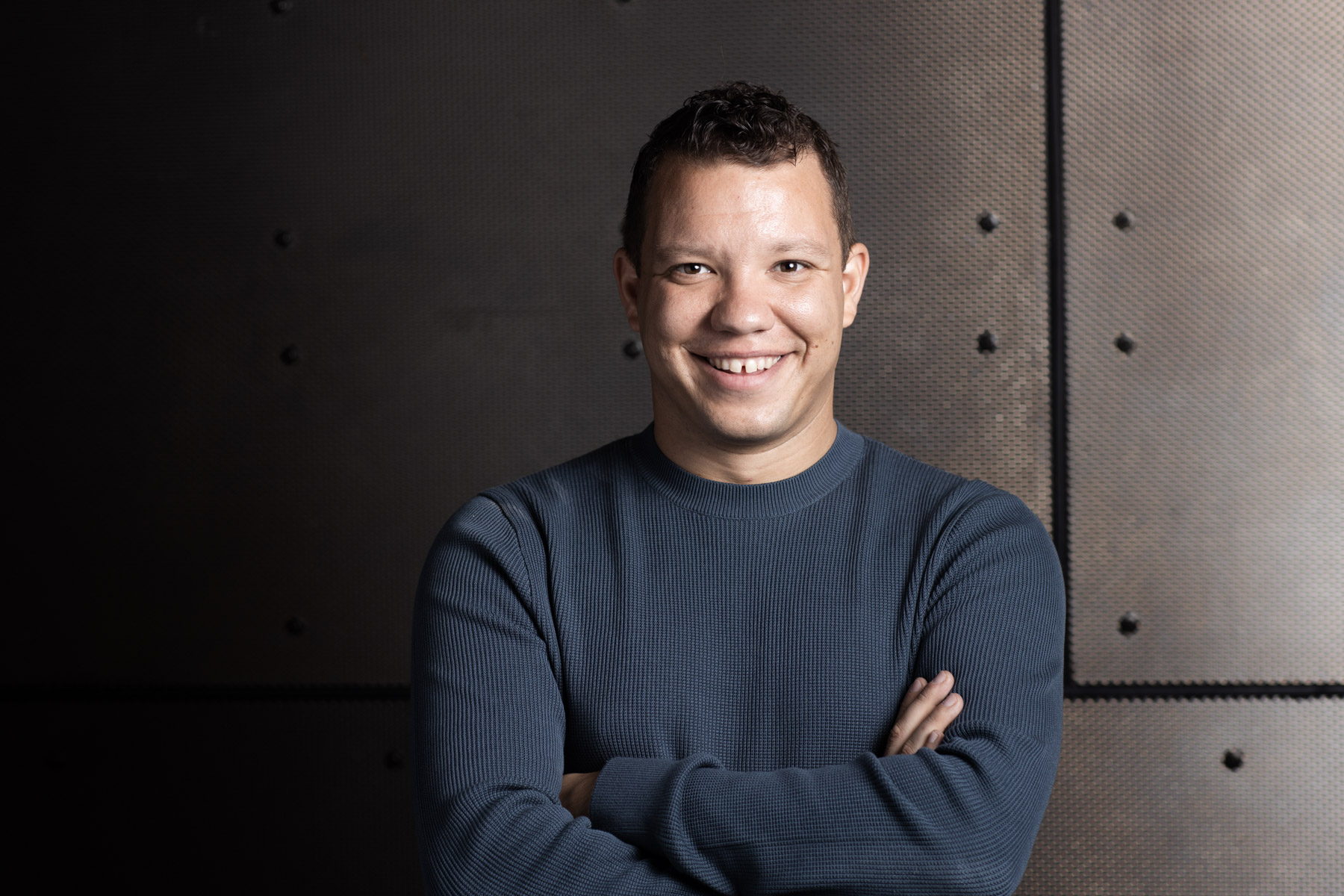
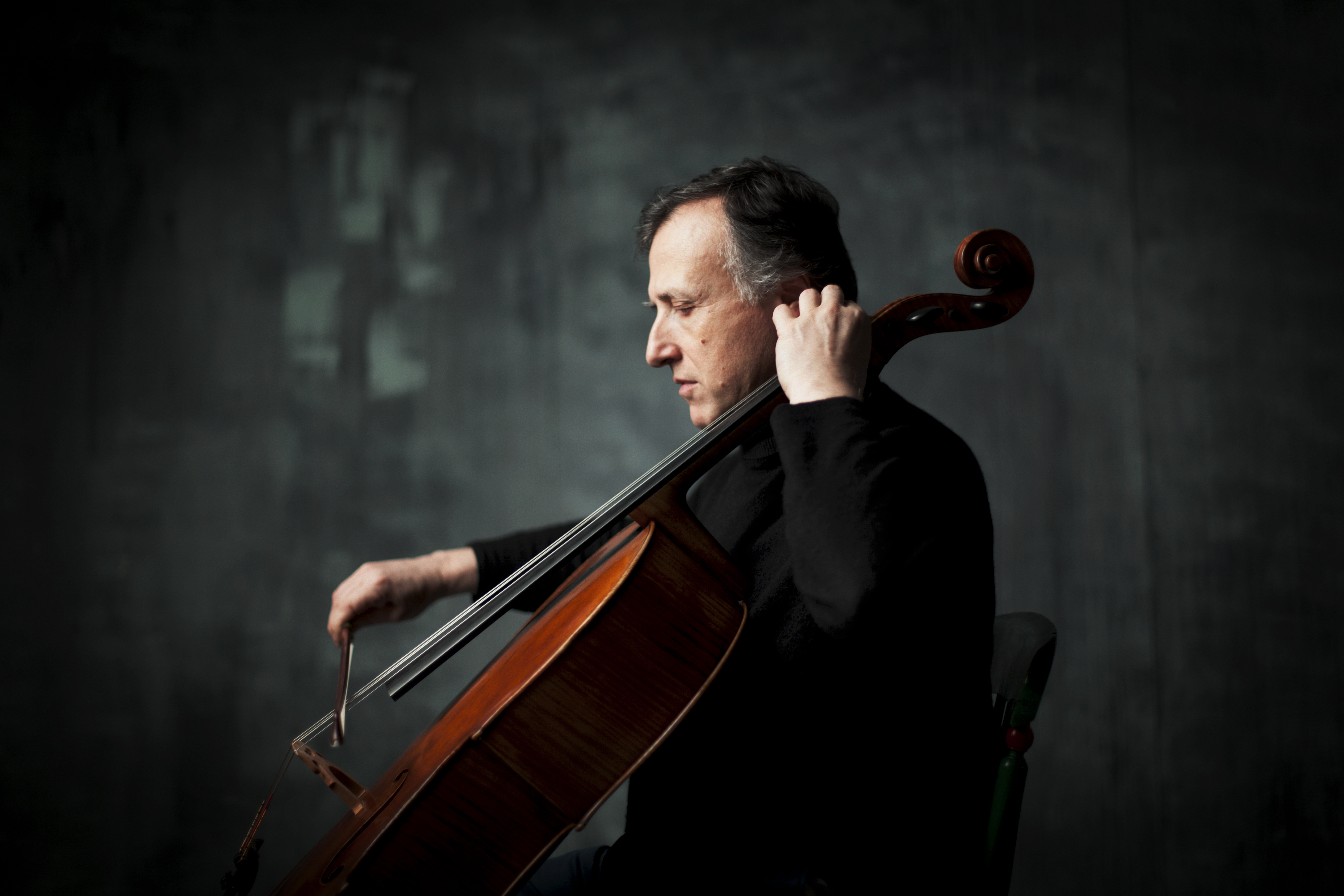
Baiba Skride (violin, below), City of Birmingham Symphony Orchestra / Andrew Gourlay (above)

Symphony Hall, Birmingham
Wednesday 13 October 2021, 2pm

Written by Richard Whitehouse; Picture of Andrew Gourlay (c) Kaupo Kikkas, Baiba Skride (c) Marco Borggreve

This afternoon’s concert by the City of Birmingham Symphony Orchestra saw an unexpected but welcome return from Andrew Gourlay (replacing an indisposed François Leleux) for this diverse programme as worked much better as a concert than it might have appeared on paper.

Its fame as a novelty item in cartoons et al can easily obscure the innovative qualities of the Overture to William Tell, last and most ambitious of Rossini’s operas, in terms of its eliding between curtain-raiser and symphonic poem; which latter aspect Gourlay emphasized in this evocative but cohesive account – whether in the ruminative calm of its opening section with the CBSO cellos eloquently fronted by Eduardo Vassallo, a scrupulously controlled ‘storm’ episode, a not unduly mawkish ‘lullaby’ then a closing galop free from Hollywood overkill.

Mozart was barely out of his teens on writing his Fifth Violin Concerto, if not the finest then certainly the most eventful of his cycle through such as the soloist’s alluring first entry in the opening Allegro with music not directly related to either of the main themes and rendered by Baiba Skride with real finesse. Equally successful was her succinct yet ideally proportioned cadenza prior to its close; after which, the Adagio had elegance without excessive sweetness. In the final Rondeau, others may have made more of that contrast between graceful lyricism and the robust humour of its central section’s stylized Turkishness, but Skride brought these into complete accord and, with Gourlay securing limpid playing from a scaled-down CBSO, this was a persuasive performance of music whose felicities can easily be taken for granted.

Formerly ubiquitous as a concert-opener, Berlioz’s Roman Carnival – the inspired recycling of music from his opera Benvenuto Cellini – launched the second half to striking effect. If the soulful introduction took a little time to settle (doubtless occasioned by a soon extinguished onstage rebellion before Gourlay’s return), what ensued was not lacking rhythmic elan or that scintillating interplay of orchestral timbres as was Berlioz’s gift to the orchestra. Effecting a tangible crescendo into the blazing peroration, Gourlay undoubtedly saved the best until last.

Ad hoc selections from Prokofiev’s Romeo and Juliet rarely provide a satisfying second half, making one of three suites the composer extracted from his ballet the more viable option. Of these the Second Suite is the best overview, and this account quickly found its stride with a visceral take on the music which opens Act Three, the grinding progress of Montagues and Capulets proving no less forceful. Juliet as a young girl exuded the right insouciance and pathos, as did Friar Laurence that of earnest authority. The lithe Dance made a telling foil to Romeo and Juliet before parting, its fraught rapture potently conveyed here, then Dance of the girls with lilies made for an appealingly wistful entrée into Romeo at Juliet’s grave with its searing anguish that only gradually subsides into expectant calm towards the close.

Gourlay had previously directed a fine account of Rachmaninov’s Third Symphony with this orchestra and the Prokofiev confirmed his prowess in Russian music. The CBSO, meanwhile, returns next Wednesday for a varied American programme with the saxophonist Jess Gillam.

Further information on the CBSO’s current season can be found at the orchestra’s website. For more on Baiba Skride, click here – and for more information on Andrew Gourlay, head to the conductor’s website

In concert – James Ehnes, CBSO / Finnegan Downie Dear: Cassandra Miller, Britten & Beethoven

©Frank-Bloedhorn-finnegan-downie-dear

Miller La Donna (2021) [UK premiere]
Britten
Violin Concerto in D minor Op.15 (1938-9)
Beethoven
Symphony no.6 in F major Op.68 ‘Pastoral’ (1807-08)

James Ehnes (violin), City of Birmingham Symphony Orchestra / Finnegan Downie Dear (above)

Symphony Hall, Birmingham
Wednesday 6 October 2021

Written by Richard Whitehouse; Picture of Frankie Downie Dear (c) Frank Bloedhorn

Tonight’s concert by the City of Birmingham Symphony Orchestra saw a first appearance with British conductor Finnegan Downie Dear, winner of the 2020 Mahler Competition in Bamberg, and a first hearing in the UK for an orchestral piece by the Canadian composer Cassandra Miller.

Currently based in London, where she is Professor of Composition at the Guildhall, Miller’s output has often drawn on pre-existing sources as are then integrated into the work at hand. Such is the case with La Donna, premiered at Barcelona earlier this year, where a group of Genoese male voices singing La Partenza da Parigi (as recorded by the redoubtable Alan Lomax in 1954) is channelled into music of intensive polyphonic activity and topped by a falsetto melodic line – the eponymous La donna. This builds to an apex as intricate in its texture as it is immediate in expression, then gradually subsides in a resonance of suffused elation. Such was the impression left by this performance, Downie Dear drawing sustained amplitude from relatively modest forces in a visceral demonstration of tension and release.

A time there was when Britten’s Violin Concerto enjoyed only a modest presence in British concert halls, though recent years have seen it taken up by leading soloists from around the world. Its edgy yet intense lyricism has a persuasive exponent in James Ehnes (above), who brought out the restless emotion of the initial Moderato – the five-note motto underlining the context of war and unrest from which it emerged. The Vivace’s rhythmic velocity and sardonic tone were no less evident, a tensile reading of the cadenza pointing up its thematic function and leading inevitably into the final Passacaglia. After a superbly shaped orchestral introduction, Ehnes characterized its variations with mounting intensity to a powerfully wrought climax – the final pages exuding a fatalistic eloquence no less affecting now than eight decades ago.

Perhaps this music’s rapt equivocation explains why it has often been programmed in recent seasons with Beethoven’s Pastoral. While by no means revelatory, the present account gave a good indication of Downie Dear’s abilities – not least his emphasis on rhythmic articulation during what was a relatively swift traversal of the opening Allegro, along with his fastidious attention to dynamics as brought the requisite focus and lucidity to the Scene by the Brook with its warmly enveloping string textures and its bird-calls deftly inflected towards the close.

The final three movements unfolded in much the same vein – the peasants lithe if arguably a little too well-behaved in their merrymaking and the thunderstorm forceful if not electrifying in response, though with a seamless diminuendo of volume and energy going into the finale. Without drawing the ultimate gravitas from its interplay of rondo and variation procedures, Downie Dear guided it surely and attentively to a ruminative coda – Beethoven transcending the incipient era of musical romanticism through the (deliberate) absence of any defining ego.

This evening’s programme is repeated tomorrow afternoon – with the Miller being replaced by Mozart’s Idomeneo overture – while the CBSO returns next week for Rossini, Berlioz, and Prokofiev under François Leleux, along with Baiba Skride in Mozart’s Fifth Violin Concerto.

Further information on the CBSO’s current season can be found at the orchestra’s website. For more on Cassandra Miller, click here – and for more information on Finnegan Downie Dear, head to the conductor’s website

In concert – Alexander Sitkovetsky, English Symphony Orchestra / Kenneth Woods: Beethoven in Hereford

alexander-sitkovetsky

Alexander Sitkovetsky (violin, above), English Symphony Orchestra / Kenneth Woods

Mendelssohn Symphony no.4 in A major Op.90 ‘Italian’ (1833 rev.1834)
Carwithen arr. Woods
: Lento for Strings (1945 arr. 2020)
Beethoven
Violin Concerto in D major Op.61 (1806)

St. Peter’s Church, Hereford
Sunday 26 July 2021 (3.30pm) (Concert reviewed online via ESO Digital)

Written by Richard Whitehouse

For this first concert in its 2021/22 season, the English Symphony Orchestra was heard at St. Peter’s Church, Hereford in a concert combining familiar classics with an arrangement of the kind that has been a hallmark of its programming under principal conductor Kenneth Woods.

The piece in question was a Lento for Strings that began as the slow movement of the First Quartet by Doreen Carwithen. Although she left a notable output of concert and film music, Carwithen (1922-2003) is remembered mainly through her association with William Alwyn – being his amanuensis from 1961 and second wife from 1975 for the final decade of his life. At the time of this quartet, she was a promising composer in her own right, as confirmed by Woods’s adaptation of the slow movement so that its prevailing intimacy and introspection lose none of their acuity. The ESO played it with requisite poise and finesse, not least those plangent solos for viola and violin that were eloquently rendered here by Matt Maguire and Kate Suthers, thereby resulting in an atmospheric miniature which warrants frequent revival.

Mendelssohn was just a year older when he completed his Italian symphony, long among his most popular works even if heard a mere handful of times then withheld from publication in his lifetime. Maybe the touristic nature of its conception or its unlikely tonal trajectory (A to A minor) created issues he was unable to resolve, but in creating this symphonic suite he had unconsciously set a precedent. Woods undoubtedly had its measure – whether in an Allegro (exposition repeat included) whose joyousness did not exclude more combative energy from its development and coda, an Andante whose journeying pilgrims were evoked with no little pathos, an intermezzo deftly revisiting the wide-eyed enchantment of the composer’s youth, or a finale whose interplay of saltarello and tarantella rhythms surged on to a decisive close.

Beethoven’s Violin Concerto is one of a select few in its genre whose weight and substance justifies its occupying the whole second half. Alexander Sitkovetsky responded accordingly – the opening movement long-breathed but sustaining itself at least until the latter stages of the development, when a sense of expectancy rather failed to materialize. Momentum picked up thereafter, not least during a finely projected account of the (Kreisler) cadenza whose tensile rhetoric subsequently made the orchestra’s heartfelt re-entry in the coda seem more telling.

The highlight of this performance came with the Larghetto, slower than is often now the case but its sequence of variations melding into each other with seamless elegance, with a rapport between soloist and conductor at its most tangible in the theme’s hushed reiteration prior to a spirited transition into the Rondo. This did not lack for impetus, and if Sitkovetsky was most perceptive in the intervening episodes, the anticipation generated as the main theme steals in on the approach to the final tutti carried through to the nonchalant pay-off of the closing bars. An appealing and enjoyable concert in which, moreover, the ESO sounded not at all fazed by the vagaries of the acoustic. It continues its current schedule on October 10th with music by Mendelssohn, Mozart and Schubert – plus a mystery piece ‘‘to be announced on the night’’!

Further information on the ESO’s next concert can be found at their website. For more on Doreen Carwithen, visit the MusicWeb International page here

In concert – Dame Sarah Connolly, CBSO / Gustavo Gimeno: Humperdinck, Chausson & Tchaikovsky

gustavo-gimeno

Humperdinck Hänsel und Gretel – Prelude (1891-2)
Chausson
Poème de l’amour et de la mer Op.19 (1882-92)
Tchaikovsky
Symphony no.6 in B minor Op.74 ‘Pathétique’ (1893)

Dame Sarah Connolly (mezzo-soprano, below), City of Birmingham Symphony Orchestra / Gustavo Gimeno

Symphony Hall, Birmingham
Thursday 23 September 2021

Written by Richard Whitehouse

This afternoon’s programme (repeated from yesterday) by the City of Birmingham Symphony Orchestra saw a welcome reappearance from Dame Sarah Connolly for a relatively rare hearing, at least in the UK, of Ernest Chausson’s probable masterpiece Poème de l’amour et de la mer.

Often described as a song-cycle, Poème is closer to a scena with its unfolding over two large parts separated by an orchestral interlude. Drawing on texts by Maurice Bouchor, these evoke what is ostensibly the protagonist’s ill-fated affair but whose deeper resonance suggests more that disillusion afforded when revisiting the past. Such a trajectory could easily have resulted in indulgence or even self-pity, avoided through Chausson’s unerring formal control over his subject-matter as well as a thematic resourcefulness sustained across the near half-hour span.

Following in a distinguished lineage of mezzos (among them Dame Janet Baker), Connolly brought out the playfulness of La fleur des eaux as it conveys the burgeoning of love against a heady seascape – doubt only creeping in towards the close as the passing of a year is contemplated. This is represented by the Interlude in which first appears a theme dominant by the close, and while the opening of La mort de l’amour brings a renewed anticipation of arrival, the anguish occasioned by forgetfulness is transmuted into a brooding fatalism – the composer drawing on an earlier song for this sombre final stage. Connolly’s eloquence came into its own here, abetted by a soulful response from cellist Eduardo Vassallo among an orchestral response abounding in soloistic finesse. A powerful reading of a still underestimated piece.

Chausson lived a further six years after its premiere in 1893, whereas Tchaikovsky lived just nine days after the premiere that year of his Pathétique before his still-contested demise. Here again, there was no undue emoting thanks to Gustavo Gimeno’s firm grip over the complex formal and emotional trajectory of the first movement – not least its explosive development culminating in an anguished yet also consoling reprise. The ensuing intermezzo had charm but also a purposeful underlying tread – not least in its wistful trio, then the scherzo amassed no mean impetus through to an explosive second half whose orchestral response evinced no mean virtuosity. Heading straight into the finale, Gimeno sustained expressive tension right through to the closing bars as here faded into a silence born of resignation rather than defeat.

The close of that year brought the premiere of Humperdinck’s ‘fairy-tale’ opera Hänsel und Gretel – then, as now, the work by which this undervalued composer is best remembered and whose prelude encapsulates the essence, though not the totality, of the drama while proving equally effective as a concert-overture. Gimeno paced this unerringly, thereby allowing its animated central phase to merge unobtrusively out of then back into the confiding warmth either side. At least one major work written in 1893 can be said to have a ‘happy ending’.

Next week’s concert brings pieces from very different eras – Brahms’s First Symphony and Rachmaninov’s Third Piano Concerto being preceded by another of the CBSO’s Centenary Commissions, an evidently celebratory overture by Mark-Anthony Turnage called Go For It.

For more information on next week’s concert, click here for tickets. You can find information on the new CBSO season here, and for more on Symphonic Sessions click here

In concert – Carolyn Sampson, Anna Lapwood, CBSO Chorus, CBSO / Kazuki Yamada – Poulenc Gloria & Saint-Saëns ‘Organ’ Symphony

Yamada_Kazuki_5142_c_Zuzanna_Specjal

Tchaikovsky Solemn Overture ‘The Year 1812’ Op.49 (1880)
Poulenc
Gloria FP177 (1959)
Fauré
Messe Basse IGF50 (1881 rev.1906)
Saint-Saëns
Symphony no.3 in C minor Op.78 ‘Organ’ (1886)

Carolyn Sampson (soprano), Anna Lapwood (organ), CBSO Youth Chorus (Julian Wilkins, director), CBSO Chorus, City of Birmingham Symphony Orchestra / Kazuki Yamada (above)

Symphony Hall, Birmingham
Thursday 16 September 2021

Written by Richard Whitehouse
Photo credits Zuzanna Specjal (Kazuki Yamada), Marco Borggreve (Carolyn Sampson), Kirsten McTernan/BBC (Anna Lapwood)

It was no doubt coincidental that this opening concert of the City of Birmingham Symphony Orchestra’s new season was typical of those programmes which one-time chief conductor Louis Frémaux gave with this orchestra during the mid-1970s, in its featuring two of his French specialities.

Back then, Poulenc’s Gloria could still be regarded as contemporary music, though its adept borrowing from the Stravinsky textbook married to the French composer’s insouciant brand of expressivity is arguably more widely accepted now than in that often style-conscious era. It duly responded to Kazuki Yamada’s keen impetus in the opening Gloria then the bracing syncopation of Laudamus te or a joyously animated Domine Fili. Carolyn Sampson (above) was an elegantly detached soloist in Domine Deus, opening-out emotionally in the Agnus Dei whose inward ecstasy was unerringly conveyed. Yamada elided deftly between the surging energy then calm resignation of the final Qui sedes; here, as throughout, the CBSO Chorus bringing supplicatory warmth to music it has been associated with almost since its founding.

Saint-Saëns’s Organ Symphony was a familiar item at CBSO concerts during the Frémaux era and one that the present-day orchestra tackled with no less alacrity. Yamada was clearly (and rightly) intent on stressing its symphonic cohesion – drawing ominous expectancy from the first half’s Adagio introduction then securing a powerful momentum in the main Allegro, before the organ’s hushed entry for a chastely eloquent slow movement. There was no lack of incisiveness or humour in the second half’s scherzo, not least its scintillating passagework for piano duet, but also purposeful intent as segued directly into the finale with its indelible main theme and its methodical build-up to an electrifying peroration. Here, too, Anna Lapwood’s (below) subtle choice of registration underlined motivic resourcefulness more than gestural brilliance.

In between these works, opening the second half, Fauré’s Messe Basse enjoyed relatively rare revival (at least in the concert hall). Initially a collaboration with André Messager, Fauré later essayed a complete setting of what is a Missa brevis (thus omitting the Gloria and Credo) for female voices and which sounds no less apposite when rendered, as here, by young singers. The CBSO Youth Choir summoned a poised detachment under the assured guidance of Julian Wilkins, abetted by Lapwood’s thoughtful accompaniment in this modest yet appealing piece.

One aspect of this programme that Frémaux would not have opted for was to commence with Tchaikovsky’s 1812, though few would surely dissent given the all-round focus of Yamada’s conception. Not least when the CBSO Chorus added its yearning tones to the opening section, returning towards the close for an emotive rendering of ‘God Save the Tsar’ to cap an already resplendent apotheosis. Tubular bells and Mahler-type mallet more than compensated for the absence of canon et al when this piece is trotted out at the end of a ‘greatest hits’ assemblage.

It was indeed fortuitous that Yamada open this season given his recent appointment as Chief Conductor of the CBSO from April 2023. He returns in due course, while next week brings Sarah Connolly for a rare hearing for Chausson’s rapturous Poème de l’amour et de la mer.

This concert will be repeated on Saturday 18 September at Symphony Hall – click here for tickets. You can find information on the new CBSO season here, while for more on Kazuki Yamada you can visit the conductor’s website