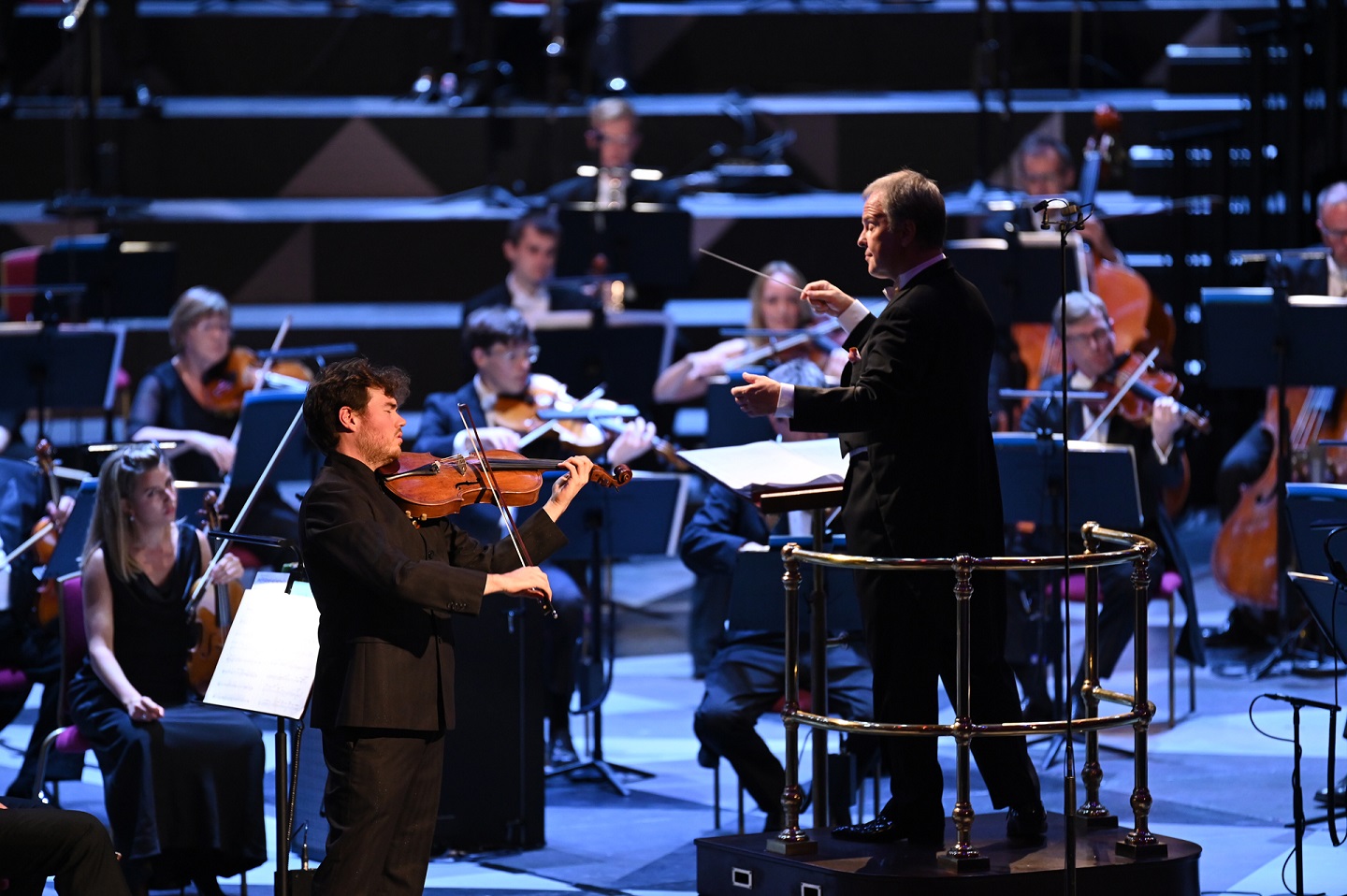
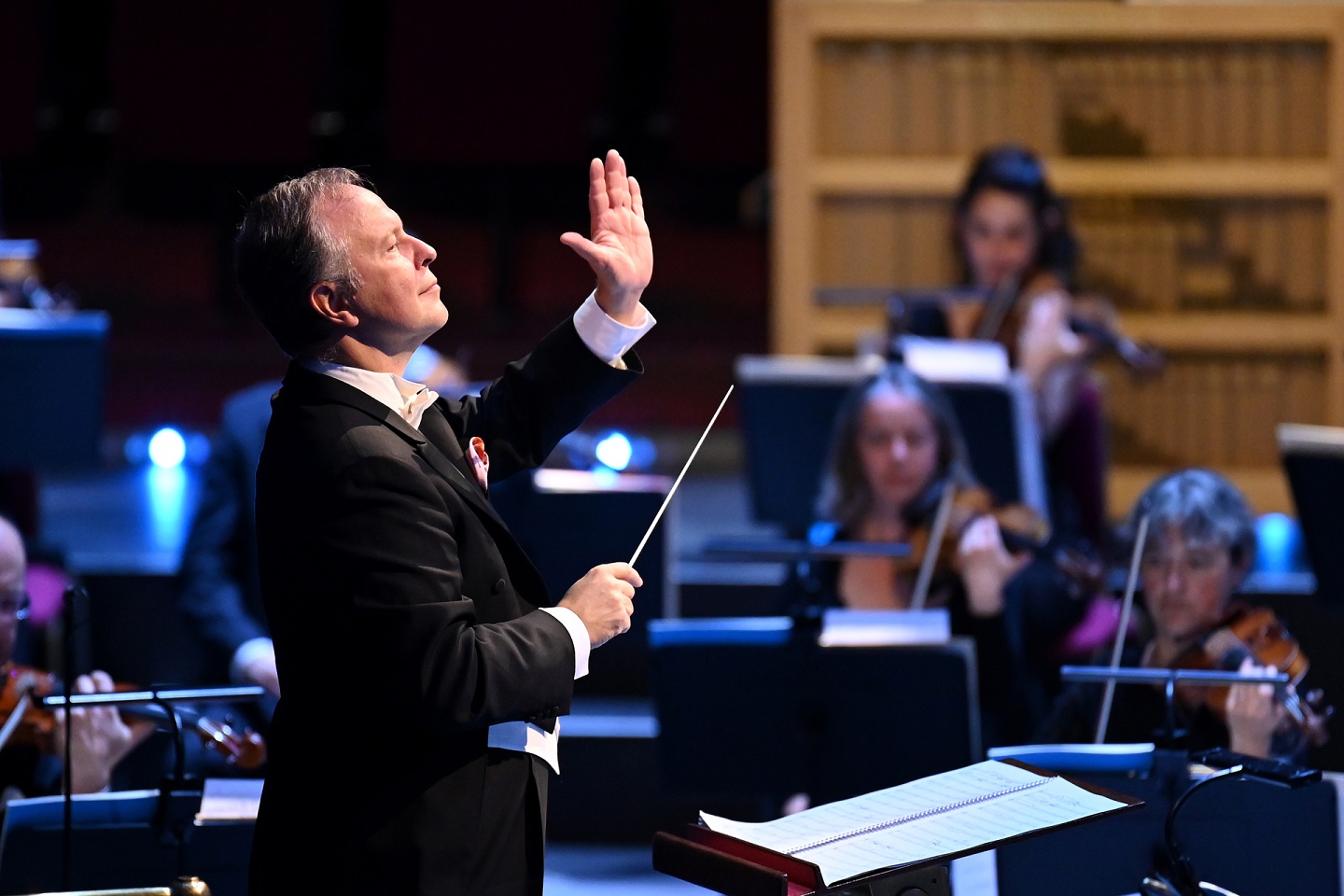
In concert – Carolyn Sampson, Anna Lapwood, CBSO Chorus, CBSO / Kazuki Yamada – Poulenc Gloria & Saint-Saëns ‘Organ’ Symphony

Yamada_Kazuki_5142_c_Zuzanna_Specjal

Tchaikovsky Solemn Overture ‘The Year 1812’ Op.49 (1880)
Poulenc
Gloria FP177 (1959)
Fauré
Messe Basse IGF50 (1881 rev.1906)
Saint-Saëns
Symphony no.3 in C minor Op.78 ‘Organ’ (1886)

Carolyn Sampson (soprano), Anna Lapwood (organ), CBSO Youth Chorus (Julian Wilkins, director), CBSO Chorus, City of Birmingham Symphony Orchestra / Kazuki Yamada (above)

Symphony Hall, Birmingham
Thursday 16 September 2021

Written by Richard Whitehouse
Photo credits Zuzanna Specjal (Kazuki Yamada), Marco Borggreve (Carolyn Sampson), Kirsten McTernan/BBC (Anna Lapwood)

It was no doubt coincidental that this opening concert of the City of Birmingham Symphony Orchestra’s new season was typical of those programmes which one-time chief conductor Louis Frémaux gave with this orchestra during the mid-1970s, in its featuring two of his French specialities.

Back then, Poulenc’s Gloria could still be regarded as contemporary music, though its adept borrowing from the Stravinsky textbook married to the French composer’s insouciant brand of expressivity is arguably more widely accepted now than in that often style-conscious era. It duly responded to Kazuki Yamada’s keen impetus in the opening Gloria then the bracing syncopation of Laudamus te or a joyously animated Domine Fili. Carolyn Sampson (above) was an elegantly detached soloist in Domine Deus, opening-out emotionally in the Agnus Dei whose inward ecstasy was unerringly conveyed. Yamada elided deftly between the surging energy then calm resignation of the final Qui sedes; here, as throughout, the CBSO Chorus bringing supplicatory warmth to music it has been associated with almost since its founding.

Saint-Saëns’s Organ Symphony was a familiar item at CBSO concerts during the Frémaux era and one that the present-day orchestra tackled with no less alacrity. Yamada was clearly (and rightly) intent on stressing its symphonic cohesion – drawing ominous expectancy from the first half’s Adagio introduction then securing a powerful momentum in the main Allegro, before the organ’s hushed entry for a chastely eloquent slow movement. There was no lack of incisiveness or humour in the second half’s scherzo, not least its scintillating passagework for piano duet, but also purposeful intent as segued directly into the finale with its indelible main theme and its methodical build-up to an electrifying peroration. Here, too, Anna Lapwood’s (below) subtle choice of registration underlined motivic resourcefulness more than gestural brilliance.

In between these works, opening the second half, Fauré’s Messe Basse enjoyed relatively rare revival (at least in the concert hall). Initially a collaboration with André Messager, Fauré later essayed a complete setting of what is a Missa brevis (thus omitting the Gloria and Credo) for female voices and which sounds no less apposite when rendered, as here, by young singers. The CBSO Youth Choir summoned a poised detachment under the assured guidance of Julian Wilkins, abetted by Lapwood’s thoughtful accompaniment in this modest yet appealing piece.

One aspect of this programme that Frémaux would not have opted for was to commence with Tchaikovsky’s 1812, though few would surely dissent given the all-round focus of Yamada’s conception. Not least when the CBSO Chorus added its yearning tones to the opening section, returning towards the close for an emotive rendering of ‘God Save the Tsar’ to cap an already resplendent apotheosis. Tubular bells and Mahler-type mallet more than compensated for the absence of canon et al when this piece is trotted out at the end of a ‘greatest hits’ assemblage.

It was indeed fortuitous that Yamada open this season given his recent appointment as Chief Conductor of the CBSO from April 2023. He returns in due course, while next week brings Sarah Connolly for a rare hearing for Chausson’s rapturous Poème de l’amour et de la mer.

This concert will be repeated on Saturday 18 September at Symphony Hall – click here for tickets. You can find information on the new CBSO season here, while for more on Kazuki Yamada you can visit the conductor’s website
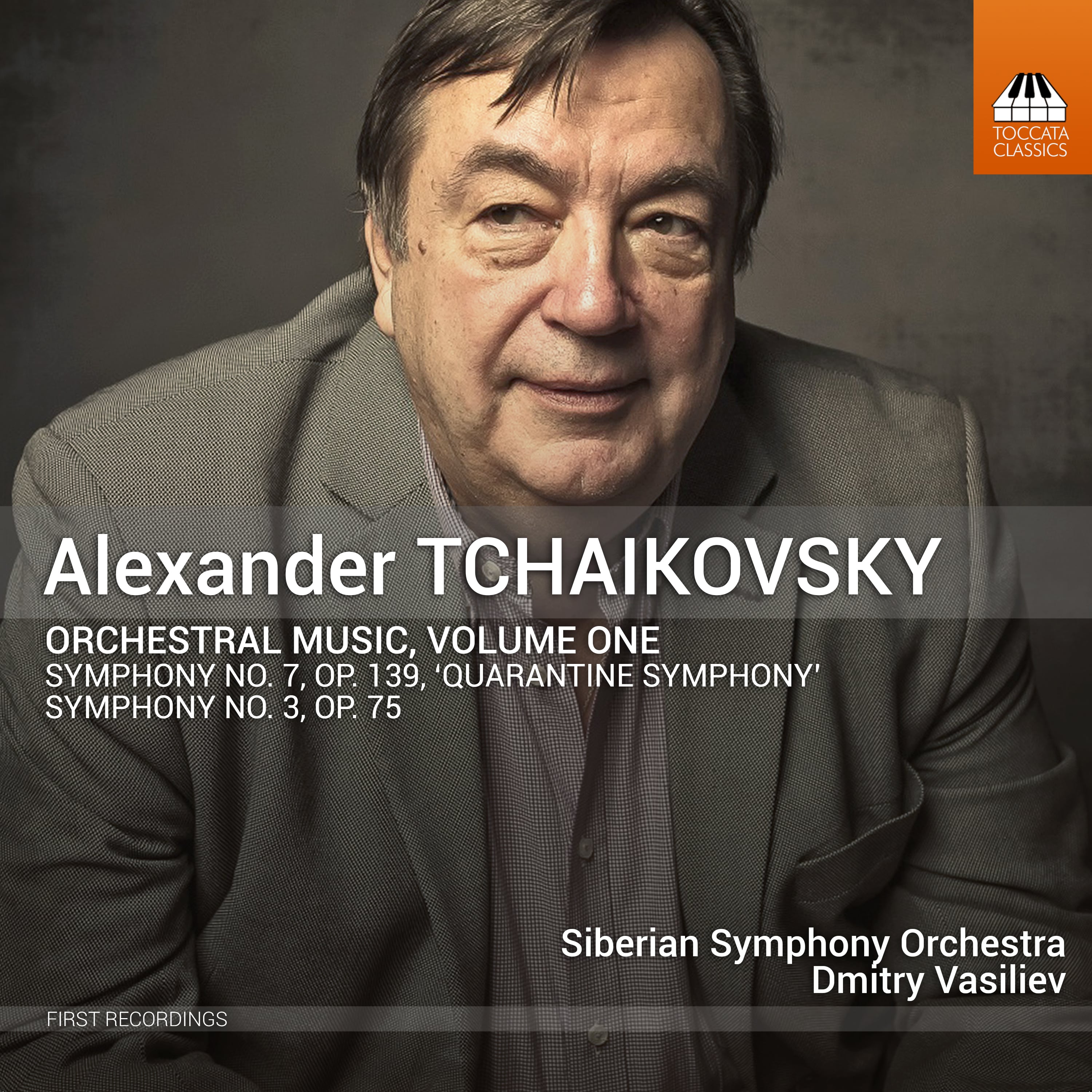
On record – Alexander Tchaikovsky: Orchestral Music Volume One (Siberian Symphony Orchestra / Dmitry Vasiliev) (Toccata Classics)

alexander-tchaikovsky

Alexander Tchaikovsky
Symphony no.3 Op.75 (1995-2002)
Symphony no.7 Op.139 ‘Quarantine Symphony’ (2020)

Siberian Symphony Orchestra / Dmitry Vasiliev

Toccata Classics TOCC0587 [60’12”]

Producer Vadim Dedik
Engineer Adaq Kahn

Recorded in live performances: 19 May 2019 (Symphony no.3), 20 September 2020 (Symphony no.7) at Philharmonic Hall, Omsk

Written by Richard Whitehouse

What’s the story?

Toccata Classics continues to investigate those paths lesser trod with this first instalment of symphonies by Alexander Tchaikovsky, likely the leading composer of the older generation in Russia, whose music is directly and audibly in the lineage of his geographical forebears.

What’s the music like?

Born in Moscow in 1946, Alexander Tchaikovsky is a nephew of composer and pianist Boris – but, in contrast to the latter’s selective output, has built an extensive catalogue featuring 14 operas (in addition to operettas and musicals) and three ballets, alongside numerous concertos and (to date) seven symphonies that frequently evince an illustrative or at least programmatic aspect. This is borne out in music highly evocative in import if without loss of that formal or expressive focus needed to sustain the two, wholly different, abstract arguments pursued here.

With its lengthy gestation and opulent instrumentation, the Third Symphony is a key work in the composer’s output. Its minimalist aspects occasioned more by Nielsen or Prokofiev than any post-war figure, the initial Allegro opens stealthily as its main theme gradually comes to the fore – tension increasing through a series of dissonant outbursts towards a massive climax across the orchestra that subsides into a sombre close. The central Allegro molto is described as ‘‘essentially a sequence of waltzes’’, which indicates its motion but not its stark emotional contrasts and violent denouement. It remains for the final Andante, proceeding without pause, to attempt a reconciliation; its furtive gestures opening-out onto a sustained expression whose restive and volatile content does not pre-empt the inexorability of the waltz music at the close.

Its title referring to the COVID-19 pandemic that occasioned its compact design and smaller forces (strings with percussion and piano), the Seventh Symphony comprises two movements. The first of these alternates between a plaintive Andante and trenchant Allegro molto, which latter gradually comes to the fore in a conclusion of unbridled abandon. Almost twice as long, the Adagio unfolds on the lines of a ‘prelude and fugue’ – the initial section sustaining a rapt eloquence that is intensified after the strings’ airy ascent and the commencement of the fugue in its methodical while deeply felt progress towards a fervent close. It is worth noting that the composer himself contracted the virus soon after completing this work – and which duly led to his missing the premiere in Omsk – but from which he has fortunately made a full recovery.

Does it all work?

For the most part, yes. This is music governed by the impulses as brought it to fruition, such that its underlying logic can be difficult to discern even on repeated hearings, while ensuring that a sense of destination – and arrival thereat – is never absent. The playing of the Siberian Symphony Orchestra is up to the standards of earlier releases for this label, Dmitry Vasiliev bringing a discipline and cumulative momentum to the often lengthy individual movements. There is little evidence of audience ‘presence’ in what are designated as live performances.

Is it recommended?

Indeed. The sound conveys the impact of these symphonies (the Third in particular) with no lack of immediacy, and there are insightful notes by pianist and composer Jonathan Powell. Hopefully more volumes of Alexander Tchaikovsky’s orchestral music will be forthcoming.

Listen

Buy

You can discover more about this release at the Toccata Classics website, where you can also purchase the recording. You can read more about Alexander Tchaikovsky here, and more about conductor Dmitry Vasiliev here

BBC Proms – Pierre-Laurent Aimard, Mahler Chamber Orchestra / Sir George Benjamin : Knussen, Ravel & Benjamin
george-benjaminPierre-Laurent Aimard (piano), Mahler Chamber Orchestra / Sir George Benjamin

Knussen The Way to Castle Yonder Op.21a (1988-90)
Purcell
(transc. Benjamin) Three Consorts (1680) [World premiere]
Ravel
Piano Concerto in G major (1929-31)
Benjamin
Concerto for Orchestra (2021) [BBC co-commission: World premiere]

Royal Albert Hall, London
Monday 30 August 2021

Written by Richard Whitehouse; pictures BBC / Chris Christodoulou

The cancellation of last year’s Proms meant the loss of several pieces by George Benjamin in recognition of his 60th birthday. Tonight’s concert, featuring the Mahler Chamber Orchestra with whom this composer-conductor has often collaborated, provided something of a redress.

The programme (its hour-long duration not unreasonably given without interval) began with The Way to Castle Yonder, a brief yet potent ‘potpourri’ from Oliver Knussen’s second opera Higglety Pigglety Pop! as amply conveys the aura of winsome yet ominous playfulness that suffuses the larger work. While they enjoyed a 40-year friendship, Benjamin’s own aesthetic is appreciably removed from that of the older composer so that a detachment, even aloofness was evident – without, however, detracting from this music’s always deceptive whimsicality.

Transcriptions of Renaissance and Baroque sources have been a mainstay of post-war British music, Three Consorts following an established pattern with Benjamin’s take on these Purcell miniatures underlining their intricate textures and piquant harmonies. The (to quote Benjamin) ‘‘visionary moment of harmonic stasis near the middle’’ of In nomine 1 went for little, with the ‘‘mesmerising intersection of line and harmony’ in Fantasia 7 effecting a Stravinskian objectivity, but the understated humour of Fantasia upon One Note was tellingly delineated.

Pierre-Laurent Aimard then joined Benjamin and the MCO in a performance of Ravel’s Piano Concerto in G major that, though it had precision and refinement in abundance, was almost entirely lacking in the qualities that define this music’s essential persona. The opening Allegramente evinced a desiccated manner with such as the blues-inflected coyness of its transitions or the heart-stopping stasis prior to the reprise of the second theme going for little, while the central Adagio took on an all-enveloping inertia as it unfolded – the inward rapture of its expressive apex then the pathos of its ensuing cor anglais dialogue all too enervated in their repose. The closing Presto drew an incisive response from pianist and orchestra alike, but here again any sense of this music’s more provocative demeanour was absent from the prevailing stolidity.

Aimard returned for an animated reading of Benjamin’s early Relativity Rag which provided an admirable entree into the world premiere of the latter’s Concerto for Orchestra. Unfolding as a continuous span (a pause just past its mid-point may be structurally meaningful) across a little over 15 minutes, this is typical of Benjamin’s recent music in its systematic – but rarely predictable – formal trajectory and alluring emotional reticence. The various instruments are highlighted singly or in groups in what becomes an intensifying progression, albeit without a tangible momentum, to a climax which brings first violins to the fore, before subsiding into a close of serene equivocation. Superbly realized by the MCO, for whom it was written, this is a thoughtful addition to a genre in which ‘display’ has all too readily become the watchword.

One final thought – at his untimely death, Oliver Knussen had several large-scale orchestral works in progress and maybe even nearing completion. Might it not still be feasible to bring at least one of the pieces to performance? The UK music scene would be all the richer for it.

You can find more information on the BBC Proms at the festival’s homepage. Click on the composer’s names for more information on Sir George Benjamin, and on the performers’ names for more information on Pierre-Laurent Aimard and the Mahler Chamber Orchestra.

BBC Proms – Patricia Kopatchinskaja, Folktone, BBC SSO / Ilan Volkov: Bartók Roots

Patkop Konzerthaus artist in Residence serie

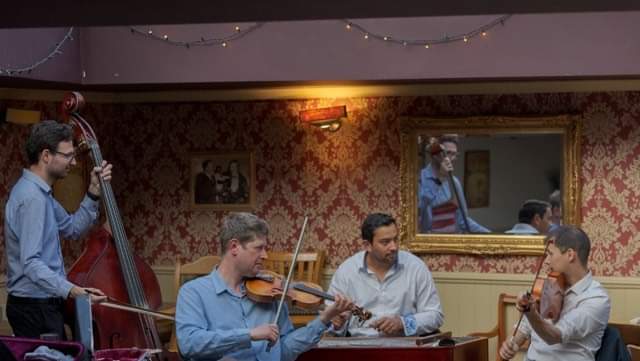
Folktone [below – Adam Römer (violin), Tamás Ferencz (violas, percussion, dance), János Kállai (dulcimer), András Lovászi (double bass)]
Patricia Kopatchinskaja (violin), BBC Scottish Symphony Orchestra / Ilan Volkov

Traditional Hungarian folk music
Bartók
Violin Concerto no.2 BB117 (1937-8)
Traditional
 Hungarian folk music
Bartók
Suite no.2 BB40 (1905-7, rev. 1920 & ’43)

Royal Albert Hall, London
Saturday 28 August 2021

Written by Richard Whitehouse; picture of Ilan Volkov by Astrid Ackermann

This evening’s Prom may have seen the BBC Scottish Symphony Orchestra’s chief conductor Thomas Dausgaard replaced by its principal guest Ilan Volkov, but the ‘Bartók Roots’ concept remained unchanged so as to provide a fascinating and instructive overview of the interface between folk and art music.

Each Bartók piece was preceded by a selection of (mainly) dances courtesy of the band Folktone (led by Adam Römer, familiar as section-leader violist with the City of Birmingham Symphony Orchestra). It was hardly a surprise that Patricia Kopatchinskaja, making her belated Proms debut, should have joined this enterprising quartet to make even more explicit the process whereby Bartók translated those folk melodies directly into the thematic content of his mature compositions – the seamless transition of one to the other doubtless giving Proms listeners pause for thought.

No performance by Kopatchinskaja could be described as routine, as it proved with Bartók’s Second Violin Concerto – less an interpretation than recreation of this greatest from a ‘golden age’ of such works, not least for the way it integrates formal rigour with that spontaneity of emotion emblematic of its composer. While there was no mistaking the all-round correlation between the outer Allegros, the means by which Kopatchinskaja emphasized this without loss of subtlety or expressive nuance underlined just how each of these movements reflects then transforms the other. Volkov secured playing of due sensitivity and poise from the BBCSSO – here and in an Andante whose variations on one of Bartók’s most disarming melodies was never more affecting than when this returns, only to evanesce into silence towards its close.

Kopatchinskaja herself returned for an apposite encore of Ligeti’s early Ballad and Dance in partnership with orchestra-leader Laura Samuel, the BBCSSO then joining-in with a repeat of the second piece. A further selection of folk pieces followed the interval, and prior to the performance of the Second Suite – among several early orchestral works by Bartók that are seldom revived but which throw a fascinating light on his evolution. If less amenable to the pointing up of its derivations from folk sources, the putative connections are no less evident.

At just over 30 minutes and scored for relatively reduced forces, this piece catches Bartók on either side of his initiation into collecting then absorbing of folk material. Such glimpses that emerge during the first three movements tend to be brushed aside by recurrences of that late-Romantic ethos stretching back via Strauss and Wagner to Liszt – hence the genial urbanity of the initial Serenata, rhythmic energy of the ensuing Allegro diabolico with its intensive fugal workout (this movement being the only piece its composer ever conducted in public), rhapsodic progress of the Scena della Puszta with its ruminative preamble for bass clarinet or new expressive vistas of the Per finire as it elides between folk melodies and voluptuous harmonies through to a close the more provisional for its having set out on a new beginning.

The BBCSSO recently recorded this work with Dausgaard (Onyx), but the present rendition with Volkov was no less idiomatic and maybe even more responsive to the chameleon-like aspect of its stylistic remit. It certainly ended this Prom in appealingly understated fashion.

You can find more information on the BBC Proms at the festival’s homepage. Click on the performers’ names for more information on Folktone and Patricia Kopatchinskaja, while for more information on the BBC Scottish Symphony Orchestra’s most recent Bartók release on Onyx Classics click here

BBC Proms – Timothy Ridout, BBC SO / Oramo: Arnold, Walton, Foulds & Bray

BBCSO_Oramo_Ridout_09_CR.Chris Christodoulou

Timothy Ridout (viola), BBC Symphony Orchestra / Sakari Oramo

Foulds Le cabaret Op.72a (1921) [Proms premiere]
Walton
Viola Concerto (1928-9, rev. 1961)
Bray
 Where Icebergs Dance Away (2021) [UK premiere]
Arnold
Symphony no.5 Op.74 (1960-61) [Proms premiere]

Royal Albert Hall, London
Friday 27 August 2021

Written by Richard Whitehouse; pictures BBC / Chris Christodoulou

Sakari Oramo tonight returned to the Proms for the first of two concerts as chief conductor of the BBC Symphony Orchestra, in a typically wide-ranging programme of British music as commenced with the overture La cabaret that John Foulds penned as incidental music before it became an autonomous item. For all its vaudevillian aura and unabashed razzmatazz, this ‘Overture to a French Comedy’ throws in numerous stylistic curveballs to point up its intent such as Oramo, given an advocacy of this composer stretching back over two decades, underlined with relish.

Although Walton’s music of the 1920s evinces a not dissimilar extroversion, a very different aspect of the composer is evident in his Viola Concerto – heard this evening in its revision for reduced forces but a notable role for harp. It also brought a Proms debut for Timothy Ridout, his burnished tone and unfaltering intonation much in evidence in the first movement with its smouldering pathos and brief if volatile flights of fancy (qualities which suggest Prokofiev’s First Violin Concerto as the most likely model) that were carefully integrated into the whole.

The central Vivo was the undoubted highlight of this performance – Ridout’s passagework unflagging even at the tempo indicated by the revision, not least in those syncopated asides that amply delineate the spirit of the times. By contrast, the finale began reticently then only gradually intensified towards a climactic tutti that brought out the best in the BBCSO; after which, Ridout’s take on the coda made it seem almost parenthetical in its overt rumination, while rounding off the whole work with appropriate inevitability and unforced eloquence.

After the interval, a first hearing in the UK for Where Icebergs Dance Away – the most recent orchestral piece by Charlotte Bray, whose Cello Concerto was a highlight of the 2016 season. Inspired by the icy landscapes encountered on a visit to Greenland, this brief yet atmospheric piece – a faster central episode placing the relative stasis on either side into meaningful relief – suggested qualities of greater organic growth and emotional intensification which deserved to be expounded on a larger scale, while never feeling underdeveloped in the present context.

It may have taken six decades to appear at the Proms, but Sir Malcolm Arnold‘s Fifth Symphony – if not the finest of his cycle, is surely its most representative by dint of those confrontational extremes which, in the opening Tempestuoso alone, pit acerbic irony against expressive angst as threaten to overwhelm the movement’s formal logic. That it failed to do so was testament to Oramo’s acuity in keeping this music’s seeming excesses within relative proportion – not least in the violent irresolution of the closing pages, with their stark withdrawal into silence.

Featuring one of Arnold’s most potent melodies, the Andante brought a rapt response by the BBCSO strings and if Oramo drew less than the ultimate terror from the central climax, the transition to the pensive second theme then return to the initial melody were breathtakingly achieved. Neither was there any lack of malevolence or sardonic humour in the scherzo – its energy carrying over into a finale that was paced superbly to a climactic restatement of the Andante‘s melody and its collapse into nothingness. A fitting close to an impressive reading.

You can find more information on the BBC Proms at the festival’s homepage. Click on the composer’s names for more information on Charlotte Bray and Sir Malcolm Arnold, while for more on Timothy Ridout click here