Oberon Symphony Orchestra – UK premiere of Enescu’s Fourth Symphony

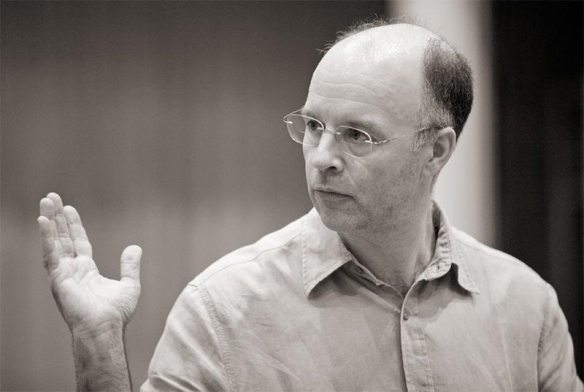
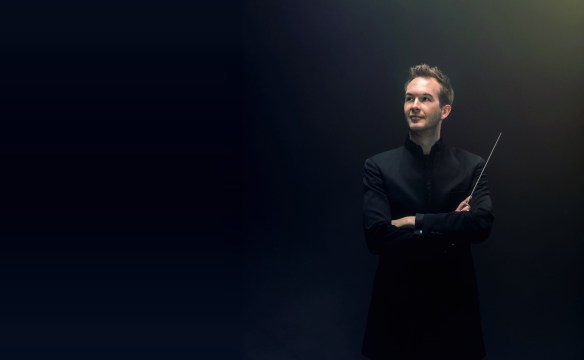
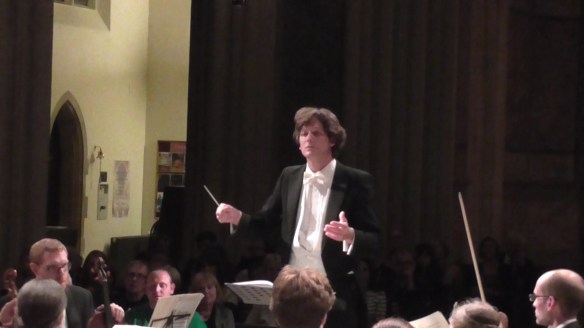
Richard Whitehouse on a major British premiere given by the Oberon Symphony Orchestra and their conductor Samuel Draper (above)

St James’s, Sussex Gardens, London on Saturday 29 April 2017

Mahler Blumine (1884)

Bartók Romanian Folk Dances, BB76 (1917)

Schubert, realized Newbould Symphony No. 10 in D, D936A (1828) – Andante

Enescu Symphony No. 4 in E minor (1934, orchestration completed Bentoiu) UK premiere

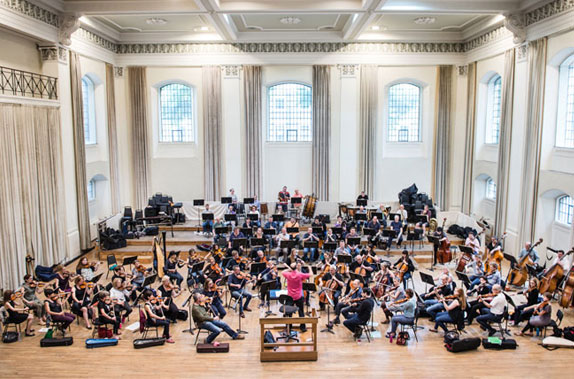
Tonight’s concert from the Oberon Symphony featured a British premiere (the second from this orchestra) in the Fourth Symphony by Enescu. Written largely during 1933-4, this was left in abeyance with only the first movement and the start of its successor orchestrated. That the work was structurally complete enabled the composer and musicologist Pascal Bentoiu (who would have turned 90 this month) to prepare this in 1996 for performance; since when, there have been several more hearings in Romania and Germany but not until now in the UK.

Compared to the opulence of its two predecessors, the Fourth Symphony is audibly a product of the inter-war years. Playing for around 33 minutes, its three movements evince traits from Bartók and Stravinsky, but there is little overtly neo-classical about a content which features some of the most emotionally charged music Enescu wrote. Much of this impact is achieved by opening-out the nominal formal designs in a process of continuous variation that extends across the piece, and resulting in a ‘tragedy to triumph’ trajectory beholden to no precedent.

It was that sense of music in perpetual evolution that came over strongly in this performance. Adopting a trenchant yet never inflexible tempo for the opening Allegro, Samuel Draper duly brought out the drama and pensiveness of its main themes, then found no mean eloquence in the climactic stages prior to a brutal descent into silence. From here emerges a fusion of slow movement and intermezzo that unfolds uncertainly but never aimlessly across a landscape of echoes and allusions; an intensifying processional Draper controlled superbly while ensuring the melismatic solo writing was accorded necessary expressive space. There was a palpable expectancy conveyed as the finale hovered into view; this free rondo evolving as if a ‘stretto’ of mounting activity to a coda whose affirmation is informed by evidently bitter experience.

It was just such an ambiguity that came across so tangibly here, Draper maintaining seamless momentum throughout this movement’s formal complexity and textural intricacy as found its fulfilment in the tonal resolution of the closing bars with their implacable final chord. This set the seal on a reading of real conviction and insight, in which the Oberon SO has rarely played better, that communicated itself readily to the enthusiastic audience. The UK may have had to wait over two decades to hear this work live, yet its essential worth was more than vindicated.

The first half prepared well for the Enescu with a trio of contrasted pieces whose juxtaposition itself offered food for thought. Starting as incidental music then briefly finding a home in his First Symphony, Mahler’s Blumine had a wistfulness and poise to the fore here, then Bartók’s Romanian Folk Dances elided keenly between incisiveness and elegance. Schubert’s ‘Tenth Symphony’ is one of music’s great might-have-been’s, the Mahlerian overtones of its central Andante made explicit in Brian Newbould’s realization as in Draper’s sensitive interpretation.

An impressive showing, then, for the Oberon Symphony as it approaches five years of making music. And, with the Fourth Symphonies of Brahms and Vaughan Williams scheduled for the next two concerts, its future programming promises to be no less ambitious and resourceful.

Further information can be found at the orchestra’s website
Live review – CBSO with Oliver Janes & Andrew Gourlay: Strauss, Copland & Rachmaninov

Oliver Janes (clarinet), City of Birmingham Symphony Orchestra / Andrew Gourlay (above)

Symphony Hall, Birmingham. Thursday 6th April, 2017

Richard Strauss Don Juan Op.20 (1888)

Copland Clarinet Concerto (1948)

Rachmaninov Symphony no.3 in A minor Op. 44 (1936)

Written by Richard Whitehouse

An ear infection meant that Mirga Gražinytė-Tyla had to withdraw from this concert, which provided a welcome opportunity for Andrew Gourlay (now into his second season as Music Director of the orchestra in Valladolid) to make his debut at Symphony Hall with the CBSO.

A pity the Fourth Suite from the ballet The Golden Key by Mieczysław Weinberg had to be dropped from the programme, but that will hopefully be rescheduled (and if Gražinytė-Tyla could tackle one of this composer’s symphonies as his 2019 centenary approaches, then so much the better). Instead, Gourlay directed an account of Strauss’s Don Juan which, while it rather failed to ignite in the earlier stages, evinced some suitably enticing playing during the amorous central episode and then a rousing culmination prior to those fatalistic closing bars.

Hardly a natural complement to Copland’s Clarinet Concerto, but the latter piece works well in a variety of contexts. It also provided an impressive showcase for Oliver Janes, now into his third season as principal clarinet of this orchestra and a player whose elegant while never unduly soft-grained tone was admirably suited to the first movement, with its limpid backing for strings and harp. Janes tackled the central cadenza with no less security – necessarily so as, in addition to its technical virtuosity, it functions as a formal and expressive ‘bridge’ into the second movement. This latter, substituting piano for harp and focusing on the jazz idioms often to the fore in Copland, was a little too reined-in over much of its course with the final pages failing to lift off, though there was never any doubting Janes’s identity with the piece.

The highlight of the concert came after the interval with a perceptive and involving account of Rachmaninov’s Third Symphony. Although it lags well behind its predecessor in terms of performance, this piece has moved from the periphery of the repertoire as earlier tendencies to dismiss it as a rerun of past glories have yielded to a recognition of just how subtly while effectively it overhauls the composer’s thinking for the inter-war period. Not for nothing was Nikolay Medtner alarmed by what he heard as the ‘modernization’ of Rachmaninov’s idiom.

In terms of textural balance and formal continuity it poses more problems than any other of Rachmaninov’s orchestral works, but Gourlay was never fazed by these potential pitfalls. The unworldly ‘motto’ launching the first movement was hauntingly rendered, and the only error in what followed was the omission of an exposition repeat necessary to balance an extensive development whose crisis-riven denouement was acutely realized here.

Neither did Gourlay misjudge the integration of slow movement and scherzo in what follows – the outcome being a developing variation as seamless as it was affecting. If the finale then unfolded at slightly too relaxed a pace, this enabled Gourlay to characterize detail in as resourcefully orchestrated a movement as Rachmaninov ever penned – with the closing accelerando vividly brought off.

A convincing take, then, on this engaging symphony and a fine marker for Gourlay to have laid down in what should prove an ongoing association with this orchestra. Those unable to attend Saturday’s repeat can hear it being broadcast by BBC Radio 3 on Tuesday 18th April.

For more information on future CBSO concerts head to their website

Live review – Răzvan Suma & Rebeca Omordia: Do you like British Music?

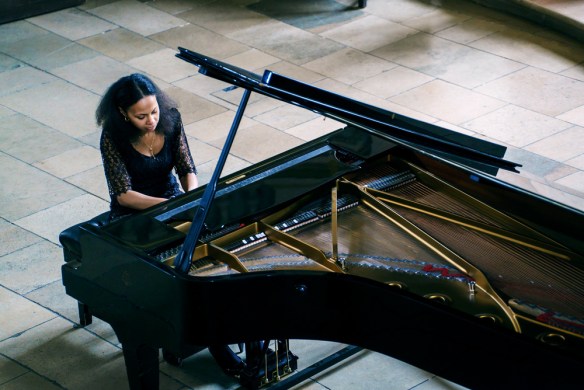
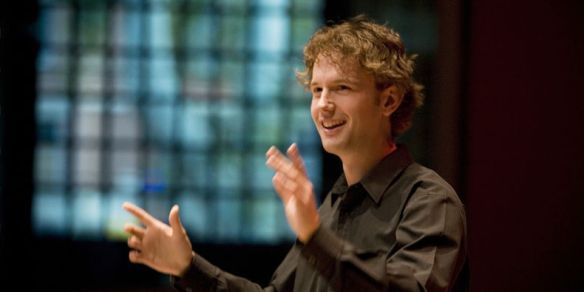
Răzvan Suma (cello, above – photo credit Adrian Stoicoviciu), Rebeca Omordia (piano, below)

Romanian Cultural Institute, London, Thursday 9th March, 2017

Delius Romance (1896); Ireland Cello Sonata in G minor (1923); Elgar Salut d’amour, Op.12 (1888); Venables Elegy, Op.2 (1980); Matthew Walker Fast Music, Op.158 (2016); Enescu Allegro in F minor (1897); Lloyd Webber Nocturne (1948); Bridge Scherzetto, H19 (1902)

Written by Richard Whitehouse

It is not often musicians get the chance to tour unusual repertoire, though Răzvan Suma and Rebeca Omordia have been doing just so with a recital of mainly British music which tonight arrived at the Romanian Cultural Institute as part of its enterprising Enescu Concert Season.

Playing continuously for just over an hour, their choice of music made for a varied as well as cohesive programme. Opening with the discreet charm of Delius’s early Romance, its echoes of Grieg and Massenet not precluding a more personal expression, the duo continued with an account of Ireland’s Cello Sonata that was a world away from the sombre introspection most often associated with this composer’s chamber output. After a taut and impulsive take on the initial Moderato, the slow movement exuded an anxiety that motivated the expected fatalism, then a finale whose tensile progress resulted in a peroration of unusual eloquence and resolve. Certainly, Ireland’s music only stands to benefit from such a forthright approach, and it is to be hoped that Suma’s and Omordia’s advocacy will continue long beyond their present tour.

After an elegant if not too indulgent reading of Elgar’s Salut d’amour, the duo played pieces by two contemporary figures. If Ian Venables is best known for a substantial contribution to English art-song, his chamber music is not insignificant and this early Elegy gave notice of an immersion in the ‘British tradition’ never insular or derivative. Keen to offset the inward tendencies of this repertoire, Robert Matthew Walker penned Fast Music as a toccata which veers engagingly between the incisive and ironic on its way to a decidedly nonchalant close.
The performers’ Romanian lineage was acknowledged with a propulsive account of Enescu’s Allegro in F minor that seems to have been a ‘dry run’ for the opening movement of his First Cello Sonata. The suave second theme is almost identical and while the stormy main theme of this piece is a little short-winded, and its development lacks focus compared to that of the sonata, the impetus sustained here is demonstrably greater than is found in its more rhapsodic and discursive successor. Such, at least, was the impression left by this persuasive rendering.

The recital concluded with two further miniatures by English composers. Rediscovered only after his death, the Nocturne by William Lloyd Webber evinces an appealing soulfulness the greater for its brevity: to which the early Scherzetto (also relocated posthumously) by Bridge provided a telling foil in its capricious humour and flights of fancy. It certainly made for an appropriate ending to this well-conceived and superbly executed programme; one, moreover, that is eminently worth catching at one of the subsequent appearances by this impressive duo.

Further information about these artists and their current UK tour can be found at website and website

Live review – CBSO with Nicholas Collon: Savitri & The Planets

nicholas-collon

Yvonne Howard (mezzo-soprano, Sāvitri), Robert Murray (tenor, Satyavān), James Rutherford (baritone, Death), CBSO Youth Chorus, City of Birmingham Symphony Orchestra / Nicholas Collon (above)

Symphony Hall, Birmingham. Wednesday 8th February, 2017

Holst Sāvitri, H96 (1909); The Planets, H125 (1916)

holst

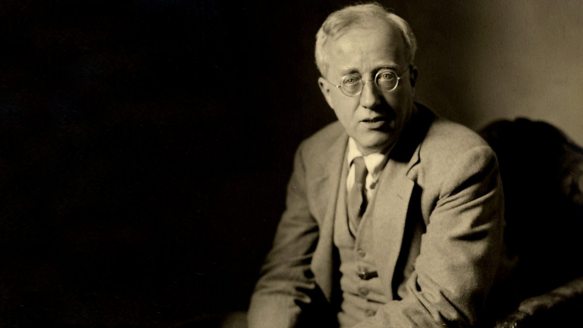
Gustav Holst (1874-1934)

Written by Richard Whitehouse

Cheltenham-born Gustav Holst enjoyed a close relationship with the City of Birmingham Symphony right from its inception, so it was good to see a concert being devoted to his music as part of The Spirit of England series running through to the orchestra’s centenary in 2020.

The elapsing of 108 years has not dulled the innovative qualities of Sāvitri, Holst’s one-act opera with which he made a decisive move from the Wagnerian opulence of his earlier music (not least the three-act opera Sita, still awaiting complete performance), towards the lean and often introspective expression of his maturity. Just over half-an-hour in length, it explores the time-honoured operatic themes of love and redemption as a means of transcending death – all rendered from a curious amalgam of Vedic teaching and Socialist thinking wholly of its time yet no less influential for being so. In addition, the scoring for just three woodwinds and nine strings, along with (wordless) offstage female voices, blazed the trail for later generations of British opera. No Sāvitri = no Britten chamber-operas and no Maxwell Davies music-theatre.

First heard in Birmingham 63 years ago, Sāvitri was given by the CBSO in 2004 and 2008. Then, as now, James Rutherford took the role of Death – his forceful yet ultimately humane assumption complementing the title-role, in which Yvonne Howard (replacing an indisposed Sarah Connolly) responded with fearlessness but also compassion; Robert Murray likewise conveying the heroic vulnerability of Satyavān as he succumbs to then escapes death via the intercession of Sāvitri. Choral and instrumental forces responded ably to Nicholas Collon’s direction, using the spatial possibilities of Symphony Hall’s acoustic to telling effect, but it was a pity that dimmed house-lights made it impossible to follow the succinct yet detailed libretto which was otherwise not always audible. Maybe surtitles could have been provided?

It would be an unlikely all-Holst concert as did not feature The Planets, which duly followed the interval. Collon presided over a performance which, while it offered few revelations, still did justice to the power and originality of this music. Mars evinced a brooding implacability through to those seismic closing bars, then Venus brought eloquence without sentimentality and a solace that was never cloying. Mercury was nimble and quick-witted, not least in the hectic approach to its close, and the only partial disappointment (as so often in this work) was Jupiter, whose outer sections were a shade unsubtle rhythmically, the indelible melody at its centre haltingly paced.

Saturn went much better – Collon alive to the gaunt solemnity of its opening pages and the monumental climax, the final section effortlessly combining radiance and resignation. Nor was there any lack of impetuousity in the goings-on of Uranus, the martial episode reaching a heady culmination (its organ glissando finely integrated into the texture) and wrathful final climax not pre-empting the stillness around it.

Following-on without pause, Neptune rounded-off this reading with a fitting evocation of the ethereal – the CBSO Youth Chorus now placed high in the Symphony Hall auditorium so its role was wholly audible yet, in keeping with Holst’s conception, poised on the intangible.

For more information on future CBSO concerts head to their website

Oberon Symphony Orchestra : Mahler Symphony 4 with Anousheh Bromfield

oberon-symphony

Anousheh Bromfield (soprano), Oberon Symphony Orchestra / Samuel Draper (above)

St James’s, Sussex Gardens, London. Saturday 21st January, 2017

Mozart Vorrei spiegarvi, oh Dio!, K418 (1783); Ah sie in ciel, benigne stele, K538 (1788); Nehmt meinen Dank, K383 (1782)

Mahler Symphony No.4 in G (1892; 1899-1900)

L-R Wolfgang Amadeus Mozart (1756-1791); Gustav Mahler (1860-1911)

Written by Richard Whitehouse

The Oberon Symphony Orchestra continued its season with this pertinent juxtaposition of Mozart and Mahler. The second half was devoted to the latter composer’s Fourth Symphony, in a performance that brought out a great deal of its ethereal rapture as also its oblique irony.

Opting for a steady though never sluggish underlying tempo for the first movement, Samuel Draper (below) made much of this music’s constant eliding between affection and agitation; the latter quality to the fore during a development that built stealthily and incrementally toward its (in context) visceral climax, with the ensuing textural fragmentation then resumption of the main theme in media res tellingly done. Nor was there any lack of eloquence in the Oberon strings’ response to the blissful final pages, before a heady accelerando into the resolute closing bars.

The second movement upped the ironic ante accordingly. Draper knitted together its sardonic scherzo and ruminative trio sections with no mean subtlety, while also emphasizing the aura of malevolence – this latter abetted by leader Matt Bain’s adept switching between violins as tuned normally as well as a tone higher. No less pleasing was Draper’s unaffected approach to portamento – an expressive device only belatedly reintroduced but that, when handled so unobtrusively, adds greatly to the cohesion of this music whatever its emotional disjuncture.

If the adagio was marginally less well integrated in terms of its overall follow-through, there was little doubt as to the poise of Draper’s conception across these variations on contrasted themes in what is arguably Mahler’s most Beethovenian movement. If the slowly emerging angst seemed overtly reined-in, moreover, the breath-taking sense of the coda opening-out onto new expressive vistas was palpably conveyed; the music that follows evincing a highly personal take on the essence of serenity which was – and has remained – unique to Mahler.

Following on (rightly) attacca, the finale needs to lighten the prevailing mood without that unworldliness seeming trivial. In which respect this account succeeded admirably, whatever the occasional failings in ensemble. It helped to have a soloist who, in Anousheh Bromfield, had the measure of the vocal writing’s pert insouciance and often edgy naivete. The lengthy orchestral introduction into the final verse had an ideal lilting motion, with the closing bars not so much tapering-off into nothingness as making toward a point of unwavering stillness.

samuel-draperBefore the interval, Bromfield joined the orchestra for a selection of Mozart concert arias     as complementary as it was unexpected. There was no want of technical finesse in Vorrei spiegarvi, oh Dio! or Ah sie in ciel, benigne stele, though the greatest delights came with a rare outing for Nehmt meinen Dank which incidentally pointed up the unfettered melodic appeal common to Mozart’s settings in German. In each of these pieces, moreover, Draper and his players provided accompaniment of a poise and elegance necessary for this music.

Overall, another fine showing for the Oberon Symphony Orchestra – which returns on April 29th with a further notable first: the UK premiere of Enescu’s Fourth Symphony as realized by the late Pascal Bentoiu, together with shorter orchestral pieces from Bartók and Schubert.

Further information at the Oberon Symphony Orchestra website