Under the Surface at the Proms – British composers

Prom 26, 5 August 2015 – BBC National Orchestra of Wales / Tadaaki Otaka at the Royal Albert Hall

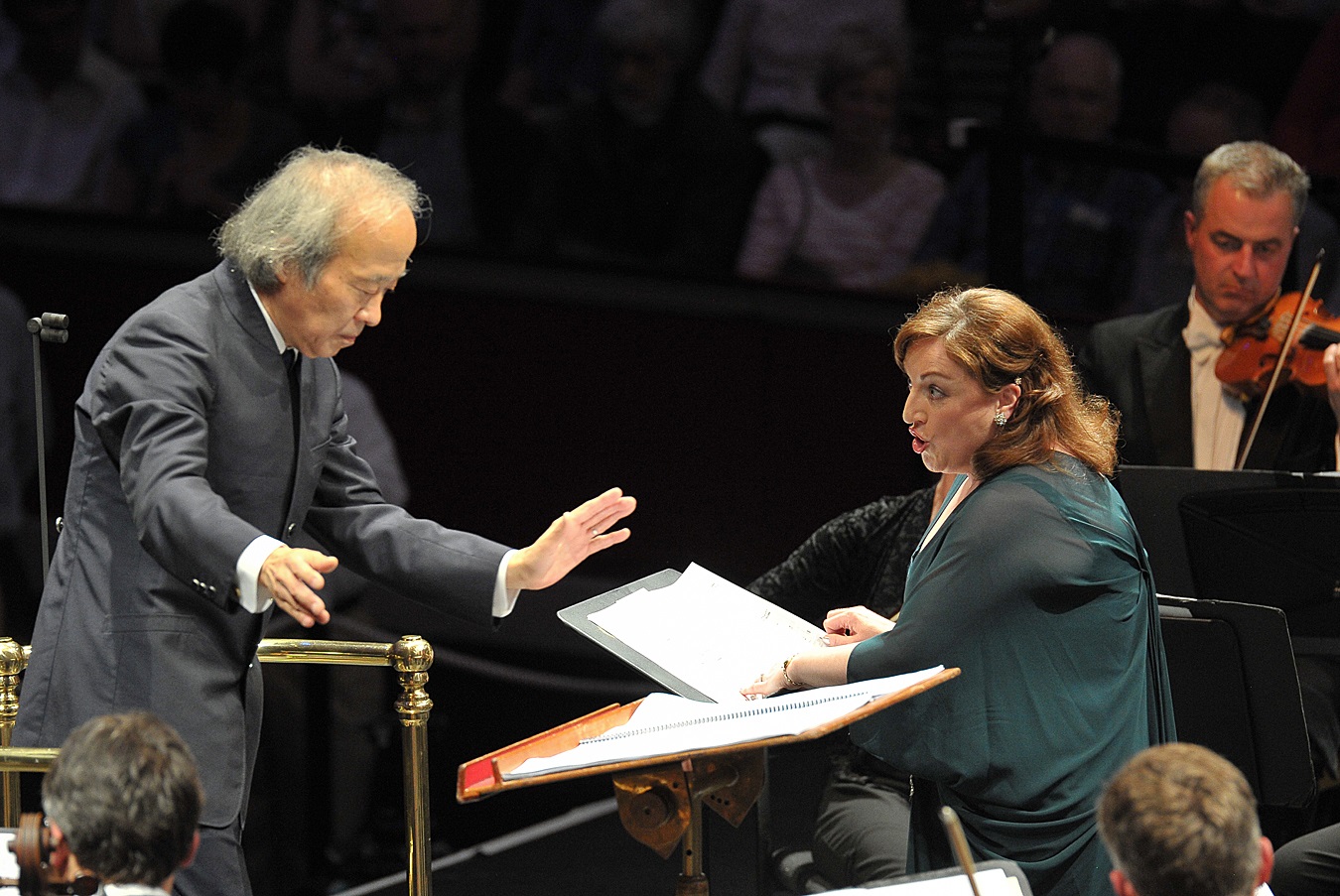
ailish-tynan-tadaaki-otaka

Ailish Tynan and Tadaaki Otaka performing Grace Williams’ Fairest of Stars at the BBC Proms Picture (c) Chris Christodoulou

Only the BBC Proms could come up with a night like this, a programme of partially or wholly neglected British music flattering not only the composers but the BBC National Orchestra of Wales, who had clearly invested a lot of rehearsal time.

Their greatest triumph came last, the Symphony no.2 of William Walton, written in 1957 but receiving only its fourth ever performance at the festival and its first since 1996. Walton’s First gets all the glory in his symphonic output, and understandably so – it’s bold, has strength of character, some terrific tunes and bright orchestral colours. Yet the Second deserves far more, as conductor Tadaaki Otaka showed us here:

http://www.bbc.co.uk/programmes/p02yxs45/player

Although it is a much more anxious and questioning piece it is tightly structured, its melodies unusual but somehow memorable too. The first movement tune has a steep incline to its melody but remains in the head, and certainly did so after this performance, beautifully coloured as it was with orchestral piano and glockenspiel. The second movement had softer colours but was equally worrisome, while Walton, thumbing his nose at ‘serial’ composers who had opted out of tonality, uses all twelve tones in his theme for the finale, in a tuneful sense. Here they were hammered home in orchestral unison, and the climax of the work was hugely impressive.

Earlier we heard some better known works from Walton – a bracing Spitfire Prelude and Fugue – and Elgar, his first orchestral work the Froissart Overture, played with a smile on its face.

Then it was over to do two very different Williams. Ralph Vaughan Williams completed his Concerto accademico, for violin and string orchestra, in 1925. It pays explicit homage to Bach but not in the way Stravinsky and co liked to do at the time. The composer saw this as a much more tuneful exercise, using folk-based material in the process. Listen here:

http://www.bbc.co.uk/programmes/p02yxlqh/player

Despite a good performance the piece remains a curiosity. The first movement was dogged and rather foursquare, the music pressing on rather grimly, so it was left to the second movement to bring what felt like more genuine emotion, bringing to mind the slow movement of Bach’s Brandenburg Concerto no.1 as it did so. Chloë Hanslip, the excellent soloist, was rich in tone both here and in the finale, which reverted to brisk music but in a much more accessible way this time, with a soft-hearted closing section. This was, for me, not the composer’s best.

Grace Williams, a Welsh composer who was a pupil of Vaughan Williams, is not heard much in the concert hall – but Fairest of Stars, for soprano voice and orchestra, suggested she should be. Her writing for the voice was elevated by Ailish Tynan, who looked ready to burst into song as soon as she appeared on stage. Tynan’s voice was the perfect foil for this music, soaring above the clouds brought by the orchestra, and although the words were not always abundantly clear because of the thicker scoring, very much in the Richard Strauss vein, their sentiment was. The top ‘C’ Tynan hit before the end had to be heard to be believed, the crowning glory of the concert’s first half. Listen to the piece here:

http://www.bbc.co.uk/programmes/p02yxqzy/player

The last few years have seen the Proms bring a number of major but neglected British works in from the cold – we have had music by Moeran, Alwyn, Havergal Brian and Howells to name just a few – and it is heartening to see them continuing that tradition. This night was a great success; let’s hope many more will follow.

There will be more Under the Surface features as the Proms progress, exploring lesser known pieces and composers at the festival
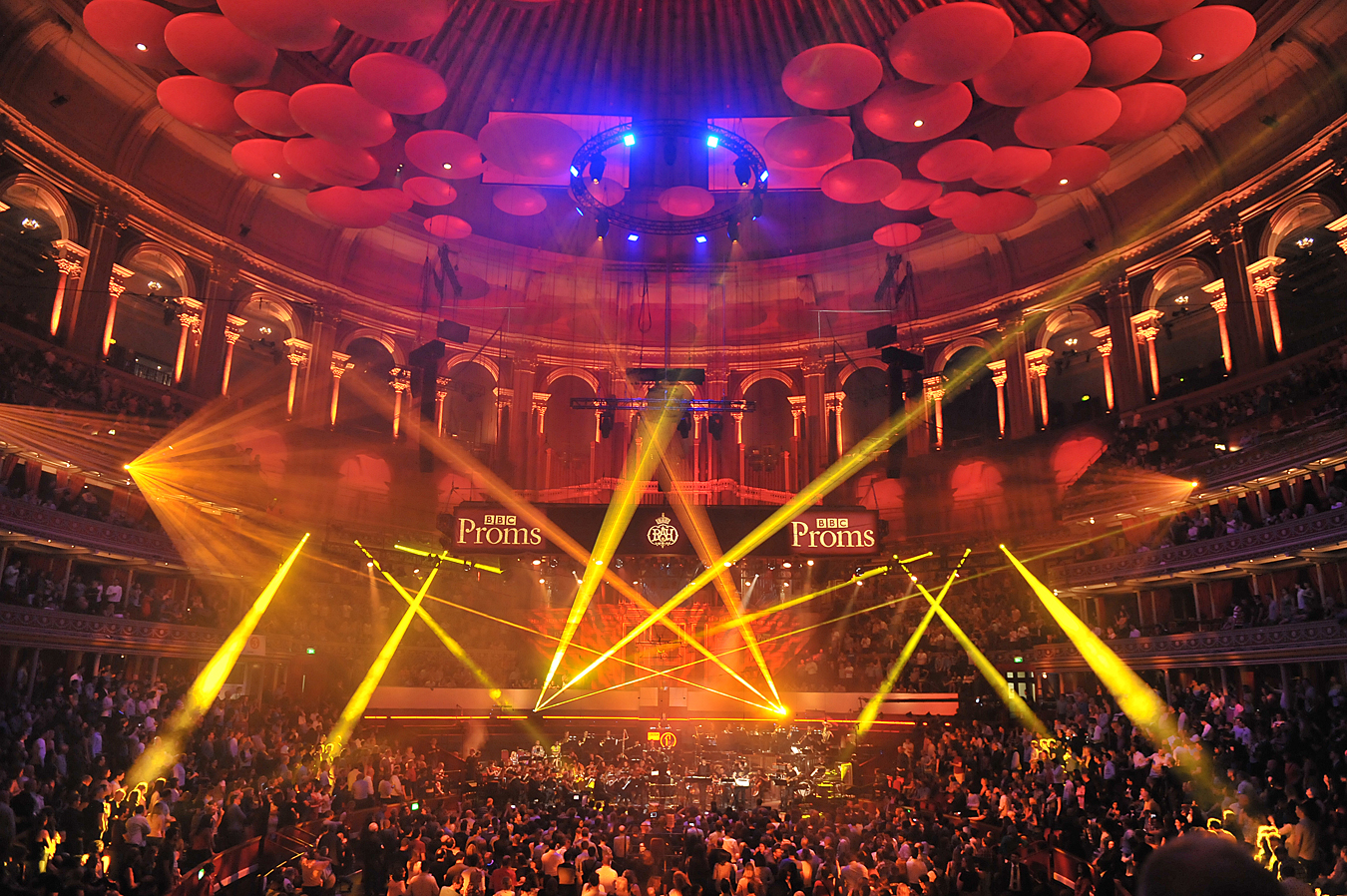
Radio 1 Ibiza Prom with Pete Tong

Prom 16: Late Night With … BBC Radio 1: The Ibiza Prom with Pete Tong

pete-tong

Pete Tong

The choice of Pete Tong to present an Ibiza-themed Prom created a fair bit of controversy in the last few weeks, but the decision paid off handsomely in what was effectively a Proms Essential Mix, with almost all the parts played by live instruments.

[Watch here: http://bbc.in/1JxeD63]

Keen listeners to dance and classical music – and there are a number! – will know the gap between the two is not as great as it might seem. A tune like Derrick May’s Strings of Life, for instance, could comfortably sit alongside a piece of Steve Reich – while Moby’s Porcelain would not be out of place if followed by a piece by Erik Satie.

Both songs were part of this set, a cleverly designed montage of 23 tracks that majored on arrangements made by Jules Buckley for the Heritage Orchestra. These were not ordinary arrangements either, including a sousaphone and a bass flute in the mix! They were not wholly successful in the hall itself, either, but have a lot more detail when heard on the radio – the Royal Albert Hall not being built for club music! Naturally the bass dominated – as it probably should in dance music – and some of the mid-range detail, on which Buckley had clearly laboured – was difficult to pick up.

jules-buckley
Jules Buckley at the Ibiza Prom. Picture (c) Chris Christodoulou

This was not a deal breaker, mind, for a high spirited beginning with Fatboy Slim’s Right Here, Right Now was perfectly judged, and set the tone. The only problem – for me at any rate – was trying to tell my brain that this was a Prom where dancing was not only permitted but actively encouraged, as the below picture shows!

ibiza-prom
The Royal Albert Hall in the Ibiza Prom Picture (c) Chris Christodoulou

The set moved between orchestra-dominated action and guest appearances from Ella Eyre and John Newman, who both acquitted themselves admirably. Eyre has a terrific voice, which she lent to Inner City’s Good Life and her own hit with Rudimental, Waiting All Night. Newman also has past with Rudimental, and his Feel The Love was warmly felt, before a closing cover of The Source feat. Candi Staton’s You Got The Love.

My only two personal regrets were that someone had not tried to arrange Josh Wink’s Higher State of Consciousness – a true Ibiza classic – or, from the blissful end of the spectrum, Groove Armada’s At The River. Those are quibbles, though, for the night was a roaring success, climaxing with the brilliant Café del Mar by Energy 52.

Over the next few days I will publish some links to songs played in the course of the Prom, linking them to classical music – so that you can hopefully see how connections can be drawn between the forms. Safe to say, though, that this particular Prom crossed a few bridges and opened several doors!


Proms guide and review: Prokofiev Piano Concertos

Prom 14, 28 July 2015 – BBC Symphony Orchestra / Sir Andrew Davis at the Royal Albert Hall

prokofiev-piano-concertos

Pianists Sergei Babayan, Alexei Volodin and Daniil Trifonov take a bow alongside conductor Valery Gergiev after their performance of all five Prokofiev Piano Concertos with the London Symphony Orchestra at the Royal Albert Hall on Tuesday 28 July. Photo: Chris Christodoulou

With Leif Ove Andsnes finishing his cycle of Beethoven’s five piano concertos the previous night, it seemed an odd decision by the Proms to embark on another cycle of five from one composer, all in a single night. Yet Valery Gergiev, the London Symphony Orchestra and a trio of fiendishly talented Russian pianists proved us doubters couldn’t have been more wrong.

Prokofiev’s piano concertos vary greatly in popularity, so much so that nos. 4 & 5 were receiving their first Proms performances – incredible for works now 83 years old! They embody the composer’s relative economy, his refusal to take himself too seriously and his use of the piano not just as a purveyor of bittersweet melody but as a percussive instrument too.

We began with the impudent Piano Concerto no.1, an often outrageous piece prone to bouts of cheeky sarcasm and unexpected charm:

http://www.bbc.co.uk/programmes/p02y9wqh/player
Prokofiev: Piano Concerto no.1 in D flat major, Op.10 (1912) 16 minutes

Daniil Trifonov played this piece superbly, exaggerating Prokofiev’s mischievous nature in a way the composer would surely have enjoyed. Gergiev too reminded us why he remains a peerless conductor in this repertoire, coaxing previously unheard detail and colour from the orchestra. If you listen to the clip above, you will agree it is a relative riot from start to finish!

http://www.bbc.co.uk/programmes/p02y9x3n/player
Prokofiev: Piano Concerto no.2 in G minor, Op.16 (1913) 31 minutes

This detail could be heard again in the cool, luminous slow sections of the Piano Concerto no.2, where Sergei Babayan lulled us into a false sense of security with a sombre opening section. Gradually – like Rachmaninov in his Piano Concerto no.2 before him – Prokofiev moved through the gears, the climax a titanic cadenza (a showy solo episode, cue to follow) that Babayan – Trifonov’s teacher, incidentally – played majestically, bringing goose bumps when the bright lights of the orchestra returned.

The Second is a contrary piece, following these bold romantic gestures with a grotesque second movement march owing much to Musorsgky (cue to follow), before a more elegiac third movement and a finale that gathers itself for showy virtuosity again, shown in the terrific closing pages. The house was brought down once again!

http://www.bbc.co.uk/programmes/p02y9xf1/player
Prokofiev: Piano Concerto no.3 in C major, Op.26 (1921) 30 minutes

Trifonov returned to make it three cracking performances out of three with a sparkling account of the Third, revelling in the different characters Prokofiev uses for the central Theme & Variations (cue to follow). The sleights of hand in the outer movements were dizzying, the pianist a study of concentration as his quick fingers deceived the eye. Gergiev again found insight to the colours of the second movement that normally evade the ear.

http://www.bbc.co.uk/programmes/p02y9xyz/player
Prokofiev: Piano Concerto no.4 in B flat major, Op.53 (1931) 22 minutes

And so into the relative unknown for the Fourth, a work commissioned by the fearsome left handed pianist Paul Wittgenstein – and ultimately rejected. His dissatisfaction relegated the piece to an also ran in Prokofiev’s output, but as Alexei Volodin proved here, that tag is undeserved.

This holds especially for the slow movement, which points towards the composer’s ballets, particularly Romeo and Juliet, which was close at hand in 1931. Indeed a forebear of the music for Juliet the Young Girl can be heard in the fourth movement, which scampered off the leash in this performance before disappearing in a puff of air.

http://www.bbc.co.uk/programmes/p02y9yd5/player
Prokofiev: Piano Concerto no.5 in G major, Op.55 (1932) 22 minutes

Sergei Babayan returned for an imposing performance of the Fifth and final concerto, a convincing account that made a mockery of the work’s non-appearance at the Royal Albert Hall. With melodic lines that dipped low before leaping up high he was never still, rising to the technical challenges while applying a lightness of touch needed to dilute the heavier, percussive moments.

Once again Gergiev and the London Symphony Orchestra, whose stamina was especially praiseworthy, propelled the third movement like a machine testing its upper speed limit, while again the slow movement – this time placed four of five – drew a lump to the throat before Prokofiev characteristically girded himself for an emphatic finish.

On the face of it this could have been an ill-judged experiment, especially with the two least-known works placed last. But the audience and social media reaction proved it to be anything but, for the listeners thoroughly enjoyed this colourful and often theatrical riot of ever-changing moods. While the piano will no doubt have needed some tender loving care at the end of it, Prokofiev’s invigorating music emerged defiant.

Under the Surface at the Proms – Delius and Nielsen

Prom 7, 22 July 2015 – BBC Symphony Orchestra / Sir Andrew Davis at the Royal Albert Hall

in-a-summer-garden

Delius’ garden in Grez-Sur-Loing, France Picture part of a collection at the website

Delius In a Summer Garden (1908)

http://www.bbc.co.uk/programmes/p02xv4kx/player

Is there a less fashionable British composer than Delius?

Not where the BBC Proms are concerned, it would seem – as right from the start the composer’s music has not done particularly well at the festival in the last 50 years. That poor form is exemplified by In a Summer Garden, written about Delius’ garden in Grez-Sur-Loing, France. The piece, receiving its first performance at the Proms since Sir Charles Groves brought it to the festival in 1977, was revived here under Delian specialist Sir Andrew Davis.

Delius’ mastery lies in his orchestration and harmony, with sultry added notes and hazy, impressionistic textures that evoke the laziness of a summer day. Woodwind add bird calls, and lazy melodies flit around the orchestra, before rising to an apex. This performance is as good as any you could wish for, and Davis conducted it with great affection.

Nielsen Clarinet Concerto (1928) with soloist Mark Simpson

http://www.bbc.co.uk/programmes/p02xv6cj/player

Not surprisingly, Nielsen’s Clarinet Concerto is a very different animal to the Delius. One of the composer’s last published works, it was the second in a sequence he was planning to write for members of the Copenhagen Wind Quintet – but sadly due to ill health he did not get as far as oboe, horn or bassoon.

Cast in three movements, the piece takes on a very private demeanour at times, the clarinet asked to play very quietly. This was where Mark Simpson came into his own, with exemplary control and poise that he held right up to the end, despite the necessities of breathing!

In the faster music Nielsen often brings to mind the music of Shostakovich, and the snare drum assumes a prominent role, frequently interrupting the soloist with its own thoughts. David Hockings, the resident BBC Symphony Orchestra percussionist, was on superb form here, and his rat-a-tat traded blows with the clarinet as the outer movements zipped along. On occasion, especially at the start, Simpson could have been louder still – but in his defence the Royal Albert Hall is not the easiest acoustic to work with for such a piece!

There will be more Under the Surface features as the Proms progress, exploring lesser known pieces and composers at the festival

A classical day in Tallinn, Estonia – with the Pille Lill Music Fund

A day in Tallinn, 26 April 2015

tallinn-from-baltic

Tallinn skyline, viewed from the Baltic Sea

I haven’t mentioned this on Arcana before, but my day job is as Classical Repertoire Specialist with PPL (Phonographic Performance Ltd), working to ensure performers and record companies get properly paid for the public performance and broadcast of their recordings.

This job – which I am incredibly fortunate to have – leads me to different European destinations once a year as part of the IAMA Conference (the International Artist Managers’ Association). Here I meet classical artist managers, orchestra representatives and more in a chance to ensure their performers are registered with PPL and are receiving their monies.

This year the IAMA Conference was in Helsinki (see the previous entries on Lahti and the Sibelius house at Ainola) but as a considerable bonus we had a day in Tallinn, hosted by the Pille Lill Music Fund

Here we had an insight into Estonia’s extraordinary concentration of talented classical performers – both new and established – as well as a fascinating tour of medieval Tallinn, which comes highly recommended!

The Estonia National Symphony Orchestra and their artistic director and principal conductor Neeme Järvi are based at the Estonia Concert Hall in Tallinn, where our visit began. The hall, a really attractive expanse suitable both for orchestral and chamber concerts, was the venue for a showcase of five up and coming Estonian classical acts the Music Fund looks after.

While all were impressive the standout performer, by a whisker, was Irina Zahharenkova, the unassuming but extremely musical pianist. I use ‘musical’ as a term because whether in solo Chopin or accompanying trumpeter Neeme Ots in a tango by Piazzolla, she had a great instinct for knowing when to hold back slightly or when to push on. Her Chopin – the second half of the Piano Sonata no.3 – was technically assured and deeply felt. Ots himself was also very convincing in the swing applied to Shchedrin’s Imitating Albeniz and Piazzolla’s Oblivion.

Cellist Andreas Lend lived up to his billing as one of Estonia’s rising classical music stars, leading a confident and convincing performance of the little known Suite for Solo Cello by Gaspar Cassadó, a piece from the mid-1920s taking its lead from the Debussy sonata. Lend, a member of the Estonian National Symphony Orchestra until recently, played with a most attractive sound.

We also heard two singers. Soprano Arete Teemets lent wonderful clarity to an aria from Rameau’s Dardanus and a fulsome tone in a Rossini aria, where her accompanist, Ralf Taal, provided subtle humour and excellent definition to a crowded piano part. He also accompanied baritone Atlan Karp, whose rounded tones gave Aleko’s Cavatina from Rachmaninov’s Aleko great depth, before a bracing aria from Verdi’s Otello. Karp has a subtle but commanding stage presence lending authority to a formidable baritone voice.

First – and by a shade the most entertaining – were Hortus Musicus, Tallinn’s medieval past played out on stage in costume in front of us. I swear I could hear early house music at times in their set, but there was so much character, enthusiasm and technical accomplishment the group were a wonder to behold.

tallinn-town-hall

Tallinn Town Hall

Yet even this did not come close to our next musical experience, at the Tallinn Town Hall, where we were wowed by the Estonian Philharmonic Chamber Choir. It is no exaggeration to say I have never heard singing quite like it – and am unlikely to hear a better choir anywhere soon! Dressed in the Estonian colours of black and blue they put every fibre of their collective being into the music, singing the music of their countryman Cyrillus Kreek (1889-1962). His Psalm 104 was so beautifully sung, resolving into a chord of complete purity. We then had the considerable bonus of two short choral pieces from Arvo Pärt and Veljo Tormis, again sung with complete affinity with both text and music.

It was a day, then, to wonder at the sights of medieval Tallinn, but also to appreciate the raw talent within Estonian classical music at this time – and the just enthusiasm with which it is promoted. They have a lot of talent at their disposal!

-Ben Hogwood, with many thanks to the Pille Lill Music Fund for their hospitality and generosity