Live review – CBSO / Riccardo Minasi: Haydn & Mozart

Oliver Janes (clarinet), Nikolaj Henriques (bassoon), City of Birmingham Symphony Orchestra / Riccardo Minasi (above)

Symphony Hall, Birmingham
Wednesday 27 November 2019

Haydn Symphony no.88 in G major (1787)
Richard Strauss Duet-Concertino (1946)
Beethoven Coriolan Overture (1806)
Mozart Symphony no.39 in E flat major K543 (1788)

Written by Ben Hogwood

What a refreshing concert for a dank November evening. This was a slightly stripped back version of the City of Birmingham Symphony Orchestra, with their guest conductor Riccardo Minasi overseeing energetic accounts of Haydn and Mozart, a high octane Beethoven overture and a youthful take on the music of an elderly Richard Strauss.

The Haydn first, in the form of a strongly characterised account of his Symphony no.88, premiered in Paris in 1787. We still take Haydn’s astonishing output of 104 published symphonies for granted, for while they make effective concert openers they are full of invention, wit, and – especially in this case – drama.

After a poised first movement, Minasi lovingly shaping the phrases with tasteful rubato, the second movement Largo was laid bare as a strongly emotive utterance with dark twists and turns, interventions from brass and timpani sounding powerful warning notes. By contrast the Minuet was a light hearted dance, its trio section employing bagpipe-like drone effects that anticipate the Brahms Serenades. Minasi and the players clearly love this music, and their effervescence carried over into the finale, the conductor dancing on the podium as upper and lower strings egged each other on.

Richard Strauss was looking intently at the Classical period when he wrote his penultimate orchestral work at the age of 83. The Duett-Concertino is an unusual piece, bringing forward clarinet and bassoon soloists to shine in front of a decorative chamber orchestra. This is recognisably late music in its assured and economical treatment of form, and in some unexpectedly spicy harmonic twists, but the soloists captured its ‘Indian summer’ profile.

Oliver Janes and Nikolaj Henriques were superb, plucked from the orchestra and fully enjoying their moment in the spotlight in front of their colleagues, who responded with rustic string accompaniment and beautifully rendered harp (Katherine Thomas). Janes’ clarinet tone was delightful, with Henriques’ bassoon cajoling and prompting in response. Both came into their own with some dazzling acrobatics in the finale. The light hearted approach spilled over into a brilliantly designed encore, a selection of Mozart themes arranged for the two solo instruments to often comic effect.

The second half began with high theatre, an account of Beethoven‘s Coriolan overture that crackled with atmosphere and descriptive content. The opening chords bore the effect of powerful slamming doors, such was the crisp ensemble, and as the overture gradually opened up so did a vivid response to Heinrich von Collin’s tale. As the story unfolded there was no doubt on its tragic ending, and here Minasi’s management of the quiet string dynamics looked forward to equivalent drama in the first movement of Mahler’s Resurrection symphony.

Even in the context of this concert the best was saved for last in an account of Mozart‘s Symphony no.39 that positively fizzed with good spirits. When he composed the piece in 1788 Mozart was writing without commission, a relative rarity for him, and this was the first of three symphonic works that were to redefine the form, effectively preparing the way for Beethoven and Schubert.

The atmosphere crackled in a fulsome introduction to the first movement, which took on a waltz-like form, Minasi’s prowess as an opera conductor clear for all to see through his dramatic instincts and more tasteful rubato. The slow movement was perfectly judged, initially and deceptively straightforward but with stern interventions from the woodwind. These highlighted the lyricism of the main subject, once again beautifully phrased. A warmly coloured Minuet followed before the finale sprang out of the traps, violins easily handling the considerable demands placed on them in rushing scales and rapid string crossing. Minasi was if anything even more energetic than he had been at the start of the concert, prompting the wonderful syncopations and interplay of Mozart’s inspiration which were brought right to the front.

So good was this concert it was a shame when we entered the closing bars of the symphony, but we did so with great positivity, Mozart – and Minasi – inspiring us through their wonderful craft.

Further listening

You can listen to the music from this concert on the Spotify playlist below, made up of some leading recordings of the works played.
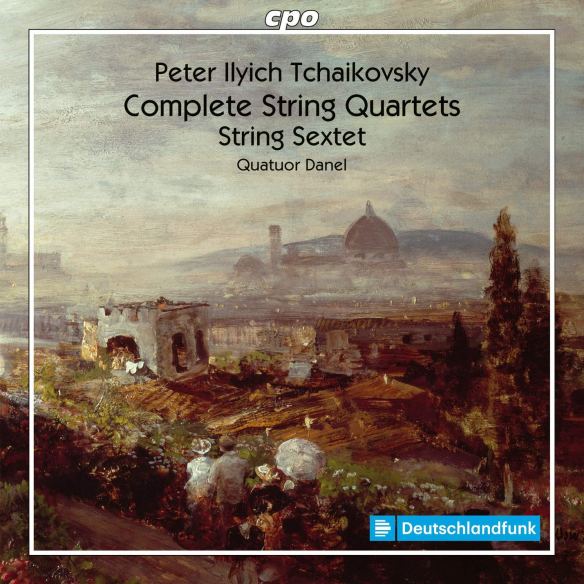
On record – Quatuor Danel: Tchaikovsky – Complete String Quartets & Souvenir de Florence (CPO)

Quatuor Danel [Marc Danel & Gilles Millet (violins), Vlad Bogdanas (viola), Yovan Markovitch (cello)], Vladimír Bukač (viola)*, Petr Prause (cello)*

Tchaikovsky
String Quartet no.1 in D major Op.11 (1871)
String Quartet no.2 in F major Op.22 (1873-4)
String Quartet movement in B flat major (1865)
String Quartet no.3 in E flat minor Op.30 (1876)
String Sextet in D minor Op.70, ‘Souvenir de Florence’ (1890)*

Written by Ben Hogwood

What’s the story?

This is a very welcome release from the Quatuor Danel. Having already given us complete cycles of Weinberg and Shostakovich – a total of 32 string quartets – they extend their reach back to Tchaikovsky and the first major quartet cycle in Russian music. There are two discs which include the three published quartets, the quartet movement and Souvenir de Florence, the composer’s String Sextet.

What’s the music like?

Following these pieces is a very interesting way of charting Tchaikovksy’s development as a composer.

The String Quartet no.1 in D major gives evidence of his major early influences, with Mozart and Mendelssohn in evidence. It also contains as its second movement the Andante cantabile, removed and arranged for string orchestra and very popular as a standalone piece for reflection.

The String Quartet no.2 in F major is weightier, with a more overtly Romantic musical language as Tchaikovsky shows more obvious emotion in his writing. The String Quartet no.3 is unusually cast in E flat minor, not a key string players regard with great affection, but one which offers very effective, dark colouring in an elegiac work.

The cycle is nicely positioned at regular intervals in the composer’s career, predated by a Quartet Movement in B flat major from the mid-1860s and capped by the String Sextet, Souvenir de Florence, from 1890, written while the composer was working in the Italian city.

Does it all work?

Yes. These are excellent performances from a quartet clearly attuned to Russian chamber music. They enjoy the graceful music with which the String Quartet no.1 starts, gliding forward with poise and elegance. As the development of the ideas gathers pace and intensity, so the quartet become more animated, convincingly driving through to the final bars. The Andante Cantabile is fresh and free of indulgence, its central dance offsetting the thoughtful main material. The Scherzo has plenty of cut and thrust, plus an enjoyable, bubbly trio, while the finale is in a similar vein but sunnier, enjoying the major key and some glorious melodies from Marc Danel’s violin.

Once fully in to gear, the String Quartet no.2 has an exuberant first movement. It is a high voltage performance, occasionally brimming over with its high spirits, but with a nicely judged and serene close. The quartet enjoy the rustic sounds of this work, particularly evident when Tchaikovsky uses open fifths in the lower parts, and they get admirable clarity from the big textures in the middle of the Andante.

The String Quartet no.3 receives a telling performance, getting right to the heart of Tchaikovsky’s thoughts. Sombre and thoughtful in its introduction, the first movement soon has admirable depth, the transition to the faster music ideally judged. The quartet relish Tchaikovsky’s fulsome writing but also the deeply soulful character of the movement’s second theme. The Scherzo is light on its feet, enjoying the exchanges from the top of the first violin to the bottom of the cello and back again, while the muted start to the third movement is particularly intense, deeply telling in its sorrowful and respectful closing pages. The finale largely shakes off these shackles but for a brief reference to the mood of the third.

As a useful postscript the Quartet Movement has a quiet and mysterious beginning, and it is not initially obvious where the work is going but then it blooms into a full structured movement, using the influence of Schubert and Mendelssohn to strong effect.

Finally a spirited account of the Souvenir de Florence, busy and upfront from the start, with plenty of energy from the six players – but with time too to enjoy both the softer second theme of the first movement and the lovely slow movement, where the cello line blooms beautifully. The shimmering central section here has plenty of drama, then the sound becomes earthy as the cello line returns. Textures are occasionally stretched in the third movement but the finale has a dramatic sense of urgency as well as a lovingly dispatched, broadly phrased second theme bringing brief parallels to the composer’s fantasy overture Romeo and Juliet. After this the sextet secure a thoroughly emphatic and affirming finish.

The big challenge with these works is getting the melodies to sing through the full textures with which Tchaikovsky writes, but the Quatuor Danel achieve the right balance throughout these excellent versions.

The elegance of the first quartet is immediately appealing, as is the red blooded cut and thrust of the second and the deeply emotive third, the best performance here. Having the Quartet Movement and an excellent account of Souvenir de Florence is the icing on the cake.

Is it recommended?

Yes. There is formidable competition in these pieces from the Borodin String Quartet, in company with Genrikh Talalyan and Mstislav Rostropovich for the Souvenir de Florence, and also from the Gabrieli and Chilingirian Quartets.

Yet despite these the Quatuor Danel offer an excellent modern alternative, with excellent performances and recording all round. It’s time for Tchaikovsky’s string quartets to come in from the cold.

Listen

Buy

You can listen to clips from the Quatuor Danel’s Tchaikovsky cycle and purchase a copy at the Presto website here

Live review – Jeremy Denk, CBSO / Gustavo Gimeno: Beethoven & Stravinsky

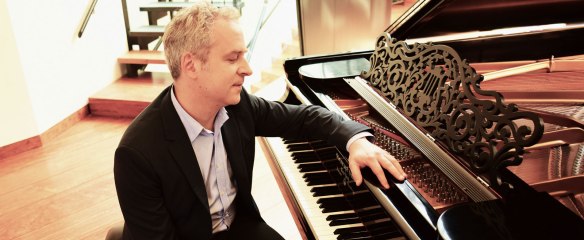
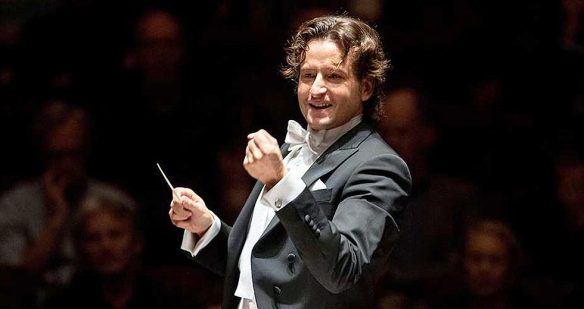
Jeremy Denk (piano, below), City of Birmingham Symphony Orchestra / Gustavo Gimeno (above)

Symphony Hall, Birmingham
Wednesday 20 November 2019 (2.15pm)

Beethoven
Egmont Op.84 – Overture (1810)
Piano Concerto no.3 in C minor Op.37 (1800, rev. 1803)
Stravinsky
Petrushka (1911, rev. 1947)

Written by Richard Whitehouse

Beethoven and Stravinsky might not be felt natural bedfellows (whatever the latter claimed in later life), but this afternoon’s concert with the City of Birmingham Symphony Orchestra and fast-rising conductor Gustavo Gimeno was evidently intent on demonstrating otherwise. The overture from Beethoven‘s music for Goethe’s play Egmont duly launched the programme in imposing fashion, Gimeno securing a trenchant while slightly inflexible response across the main Allegro, with no lack of rhythmic definition as held good during an incisive peroration.

If his Third Piano Concerto finds Beethoven more overtly indebted to Classical precedent, its palpable emotional breadth is a clear pointer to what lay ahead. As soloist, Jeremy Denk had the measure of the opening movement’s often abrupt alternation between imperiousness and intimacy – not least a probing take on the development with those eloquent woodwind contributions. If the cadenza was a shade too volatile in its later stages, the fateful emergence of the coda (timpani and strings) was suitably rapt in its intensity. Raptness was equally the watchword of the central Largo, Denk pointing up the stark contrast of his E flat entry then duetting blissfully with bassoon and flute in its transition to the main theme, but as the coda (seemingly) evanesces into silence a greater dynamic subtlety would have been welcome.

Interestingly, Denk supplied this in abundance at that mesmeric point in the finale when the rondo theme ventures into the major as if to goad the music back to the prevailing C minor. Elsewhere, this was an impetuous and assured account which reached its culmination with a heady solo transition into a coda that dispersed preceding tensions through its unchecked ebullience. Denk returned for an unlikely yet appealing encore – a paraphrase (his own?) on the Pilgrims’ Chorus from Wagner‘s Tannhauser as rapidly evolved into a full-blown rag.

Few British orchestras can have performed Stravinsky‘s early ballets with the frequency and consistency of the CBSO, which is not to suggest Gimeno was other than his own man in this reading of Petrushka – heard in its streamlined 1947 revision rather than the texturally more imaginative 1911 original (which this past nine decades the orchestra has only played under Pierre Boulez). Certainly the revision’s tendency to encourage a headlong and even ruthless approach was evident in an overly regimented take on the Russian Dance, the scene-setting that precedes it audibly lacking atmosphere, but thankfully not the central tableaux depicting Petrushka and the Blackamoor – the former as nervous and agitated as the latter was moody and, not least following the arrival of the Ballerina, ominous in its smouldering sexuality.

No less impressive were the surrounding evocations of the Shrovetide Fair – the latter with its various set-pieces vividly and tellingly characterized, on route to the sudden reappearance of the main protagonists then Petrushka’s death and ghostly apparition for what remain some of the composer’s most affecting pages. The stentorian trumpet writing was fearlessly delivered, and if those concluding pizzicato chords might have been more unanimous, it only marginally detracted from the conviction of what was a well conceived and finely executed performance.

This performance will be repeated at Symphony Hall, Birmingham, on Saturday 23 November at 7pm. For more details head to the CBSO website

Live review – Clara Mouriz, CBSO / Jaume Santonja Espinos: Rimsky-Korsakov, Montsalvatge, Falla & Prokofiev

Clara Mouriz (mezzo-soprano, below), City of Birmingham Symphony Orchestra / Jaume Santonja Espinos (above)

Symphony Hall, Birmingham
Wednesday 13 November 2019

Rimsky-Korsakov Capriccio Espagnol Op.34 (1887)
Montsalvatge Cinco canciones negras (1945, orch. 1949)
De Falla El sombrero de tres picos (Suites 1 & 2) (1919)
Prokofiev Symphony no.7 in C sharp minor Op.131 (1952)

Written by Richard Whitehouse
Photo credit (Clara Mouriz) JM Bielsa

Now into his second season as assistant conductor with the City of Birmingham Symphony Orchestra, Jaume Santonja Espinos has already made his mark so that tonight’s programme of his own choosing saw a juxtaposition of Russian and Spanish music equally to the orchestra’s liking. Certainly they pitched head first into Rimsky-Korsakov‘s Capriccio Espagnol, its ‘Alborada’ sections accordingly boisterous with the ‘Variazioni’ not lacking eloquence, then the bracing contrasts of the final ‘Fandango’ building gradually while inexorably to an effervescent close.

A pity Xavier Montsalvatge (1912-2002) is not more widely known, his stylistic amalgam of French impressionist with Spanish-cum-Latinate qualities appealing without being anodyne. Provocation is hardly lacking in his Canciones negras – its resourceful orchestral garb duly pointing up the fraught nostalgia of Cuba in a piano and smouldering sexuality as underpins Habanera rhythm, which aspect takes a more sinister turn in The Dandy as itself contrasts with the plaintiveness of Lullaby for a little black boy, before the verbal onomatopoeia of ‘Negro Song’ brings a visceral close. Clara Mouriz was in her element throughout one of the few Spanish song-cycles to have entered the repertoire, making one hope she and Santonja Espinos might tackle Roberto Gerhard‘s bewitching Cancionero de Pedrell before too long.

A swift return to the platform enabled Mouriz to add vocal enticements to the opening of de Falla‘s The Three Cornered Hat, both suites from which were heard this evening. The rather piecemeal first of these is dominated by the Dance of the Miller’s Wife, suitably suave and sensuous, while the three pieces that comprise the Second Suite (a CBSO staple in decades past) were judiciously characterized; the langour of the Neighbour’s Dance followed by the propulsion of the Miller’s Dance; then the heady denouement of the Final Dance enabling Santonja Espinos to secure playing both stylish and subtle on route to a scintillating close. Programming de Falla’s Love the Magician would have given the estimable Mouriz rather more to do, yet no-one hearing the present selection was likely to have felt short-changed.

The decidedly un-Spanish restraint of Prokofiev’s Seventh Symphony risked seeming anti-climactic after the interval, though this performance more than had its measure. The opening Moderato exemplified that ambiguity between wistfulness and resignation lying at the heart of this composer’s last major work, with the ensuing Allegretto a waltz-sequence of teasing understatement prior to its uproarious coda. Even better was the Andante, its variations on a theme of disarming simplicity affectingly rendered – after which, the final Vivace lacked that last degree of irony for its playfulness to feel more than dutiful. The return of the first movement’s big tune was powerfully despatched but, even with the original quiet ending, the closing bars were too matter-of-fact for their inherent pathos to come through unabated.

Even so, a thoughtful account of a piece as yields its depths but gradually. Santonja Espinos’s concerts with the CBSO are worth the anticipation: should he wish to include more Spanish music, the fiftieth anniversary of Gerhard’s death next year would be worth commemorating.

Listen

You can listen to a playlist of the music featured in this concert on Spotify below, including the recording made by Clara Mouriz herself with the BBC Philharmonic Orchestra and Juanjo Mena:

Wigmore Mondays – Joanna MacGregor: Birds, Grounds, Chaconnes

Joanna MacGregor (above)

Wigmore Hall, Monday 11 November 2019 (lunchtime)

You can listen to this concert on the BBC Sounds app here (opens in a new window)

Review and guide by Ben Hogwood

Joanna MacGregor is a remarkably versatile pianist – and from this evidence at the Wigmore Hall, she is an artist who enjoys her music making as much as ever.

It would seem she was given free rein for this hour of music – and was certainly free as a bird in the opening selection of wing-themed pieces. Returning to earth for ‘Grounds’ – pieces of music with set, short structures in the bass – she was equally effusive, as well as ‘Chaconnes’, which are similar to ‘Grounds’ but based more on chord sequences than explicit basslines.

The 400 years or so of music started with a flourish. Rameau had a great ability to portray nature in music, and his Le rappel des oiseaux (The call of the birds) was a delight in its interaction between the hands. His contemporary, François Couperin, was represented by a strongly characterised Les fauvétes plaintives (The plaintive warblers), where MacGregor enjoyed the ornamentation of the right hand. That led to an arrangement of fellow countryman Messiaen’s Le merle noir (The black robin), originally for flute and piano but responding well here to its reduction, with quick fire block chords. Rameau’s portrait of La poule (The Hen) was brilliant, the clucking and strutting of the bird all too enjoyably evident.

Janáček’s piano music has an otherworldly quality of stark intimacy, and it does not get anywhere near the amount of recognition it deserves in the concert hall these days. Joanna MacGregor started her next segment of bird-themed pieces with the evocative piece The barn owl has not flown away. Taken from the first book of the Czech composer’s collection On an Overgrown Path, its haunting motifs fixed the listener in a gaze rather like the owl itself.

Birtwistle’s brief Oockooing Bird was next, a slightly mysterious creature in this performance, before a piano arrangement of Hossein Alizadeh’s Call of the Birds, normally heard in its original version for the duduk (an Armenian woodwind instrument) and the shurangiz (an Iranian member of the lute family). MacGregor is so good at inhabiting the authentic language of these pieces, and she did so here in concentrated fasion.

For the ‘Grounds’ section, who better to start with than Purcell? He was a natural with supposedly constricted forms like this, and the Ground in C minor teemed with activity in MacGregor’s hands, the right hand figures dancing attractively, The piece prepared the way nicely for Philip Glass’s repetitive but meditative Prophecies, arranged from his music to Koyaanisqatsi. This film soundtrack contains some of the composer’s finest music, and MacGregor showed how well it transcribes for piano, building to a bold and emphatic finish.

For the final section we moved onto ‘Chaconnes’, and looked back to the 16th century for the earliest piece in the program. Yet Byrd’s First Pavane still sounds modern in piano guise – Glenn Gould certainly thought so – and Joanna MacGregor gave an extremely spirited and buoyant account. Glass appeared once more – this time the interlude Knee Play no.4 from his opera Einstein on the Beach – before the substantial Chaconne in F minor from Pachelbel, heard here on the piano instead of its ‘home’ instrument, the organ.

How refreshing not to hear the composer’s Canon, much-loved as it is – for Pachelbel is much more than merely a composer of that particular piece. MacGregor found the profound emotional centre, darkly coloured in the minor key – and with that came an impressive inner resolve.

For an encore we were introduced to the eleventh composer of the day through a spirited account of the Passacaglia from Handel’s Harpsichord Suite no.7 in G minor. It contained all the enthusiasm and melodic definition that made this hour in the company of Joanna MacGregor such a joy.

Repertoire

This concert contained the following music (with timings on the BBC Sounds broadcast in brackets):

Rameau Le rappel des osieaux (pub. 1724) (2:21)
François Couperin Les fauvétes plaintives (pub. 1722) (5:27)
Messiaen Le merle noir (1951/1985) (9:05)
Rameau La poule (pub. 1729) (11:02)
Janáček The barn owl has not flown away (from On an Overgrown Path, Book 1) (1900-11) (15:36)
Birtwistle Oockooing Bird (2000) (19:39)
Hossein Alizadeh Call of the Birds (2003) (22:08)
Purcell (1659-1695) Ground in C minor Z221 (unknown) (27:31)
Glass Prophecies (from Koyaanisqatsi) (1982) (30:34)
Byrd First Pavane (from My Ladye Nevells Booke) (pub. 1591) (36:25)
Glass arr. Paul Barnes Knee Play No 4 (from Einstein on the Beach, from Trilogy Sonata) (1976) (40:44)
Pachelbel (1653-1706) Chaconne in F minor (unknown) (44:19)
Encore
Handel Passacaglia from Harpsichord Suite no.7 in G minor (52:33)

Further listening

Joanna MacGregor has yet to record most of the music in this concert, but the following playlist contains most of the music listed above:

Portrayals of birds in classical music are far reaching, but few managed them better than Haydn in the 18th century. His Symphony no.83 in G minor, La Poule (The Hen) begins this playlist containing 100 minutes of bird-themed music. It includes Respighi’s exotic suite The Birds, Stravinsky’s The Nightingale and – perhaps inevitably – Vaughan Williams’ timeless The Lark Ascending:

For the most recommendable version of Janáček’s complete piano music, here is Rudolf Firkušný in both books of the evocative pieces On An Overgrown Path, ideal listening for this time of year:

For a good onward example of Joanna MacGregor’s art on the solo piano, her 2003 album Play is highly recommended, taking an open approach similar to this concert: