Live review – Soloists, CBSO and Chorus / Kazuki Yamada – Mendelssohn’s Elijah

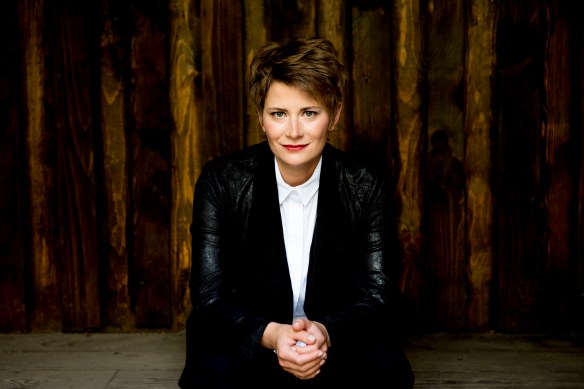
Keri Fuge (soprano), Karen Cargill (mezzo-soprano), Robert Murray (tenor), Matthew Brook (baritone), CBSO Chorus, City of Birmingham Symphony Orchestra / Kazuki Yamada (above)

Symphony Hall, Birmingham
Thursday 7 November 2019

Mendelssohn
Elijah Op.70 (1846)

Written by Richard Whitehouse

Although 173 years have passed since it first echoed around the Town Hall, Mendelssohn’s oratorio Elijah remains synonymous with Birmingham’s cultural tradition. Performances may be fewer than in its 19th-century heyday but there have been memorable ones – not least that in 1989 with Raphael Frühbeck de Burgos, for whom this piece was a speciality – and tonight saw a memorable account by the City of Birmingham Symphony Orchestra‘s principal guest conductor Kazuki Yamada, who duly banished any notions of this being a mid-Victorian period piece.

Whatever his failings on a broader aesthetic level, Mendelssohn was nothing if not creatively pragmatic when it came to a big occasion, and Elijah accordingly fulfilled its remit. Whereas the composer’s earlier oratorio St Paul had given notice of his abiding interest in the Passions of Bach, here he drew on the exemplar of those biblical epics through which Handel shaped English musical taste over the ensuing 150 years; enhanced by the rhythmic poise of Mozart and the harmonic subtleties of Beethoven to result in music wholly representative of its era.

Structured in two parts of almost equal duration, Elijah charts the trials of its eponymous hero as he draws the Israelites away from the pagan enticements of Baal and back to the true faith before himself ascending on a fiery chariot to Heaven. Julius Schubring‘s text (as sung in the idiomatic translation by William Bartholomew) fashions out of Kings and associated biblical sources a framework whose emotional rhetoric is balanced by a keen underlying momentum and unfailing sense of when to open-out the narrative to allow for more intimate expression.

The score implies eight soloists, but the four on hand (the brief role of ‘The Boy’ affectingly taken by chorus soprano Ella McNamee) proved more than able. As Elijah, Matthew Brook conveyed the anguish and the ecstasy of his part with unwavering assurance, while Robert Murray overcame initial strain to give commanding portrayals of his advocate Obadiah and detractor Ahab. Keri Fuge brought due pathos to the Widow, with Karen Cargill eloquent as the Angel – having stolen the show as the Queen who vents her wrath in unequivocal terms.

As with most of its forerunners, of course, Elijah is defined by a choral contribution in which the CBSO Chorus was not found wanting. Having recently sung the work with Yamada (and these soloists) in Monte Carlo, it conveyed the anger and supplication of the forsaken People with audible conviction, while being no less assured in those intricate choral items by which Mendelssohn frames and punctuates the drama. If choral numbers were appreciably less than the composer might have expected, then this was undoubtedly a case of less equalling more.

Neither should there have been any surprise as to the degree of Yamada’s identity with this music. Japan has produced notable exponents of Mendelssohn’s oratorios, with the present conductor evidently following in their wake. If those choruses ending each half summoned not quite the intensity evinced by Frühbeck all those years ago, the clarity and incisiveness he drew from both chorus and orchestra was hardly to be gainsaid – so setting the seal on a memorable reading of a work sure to wear its Birmingham credentials well into the future.

Listen

(Ben Hogwood writes…) Among the many available versions of Mendelssohn’s great oratorio, sadly none of these appear to yet include the City of Birmingham Symphony Orchestra – though one wonders if an extension to their Mendelssohn in Birmingham series will be forthcoming under Edward Gardner.

Spotify does however have a recent recording of Elijah from the Gabrieli Consort & Players under the direction of Paul McCreesh, with Robert Murray once again in the roles of Obadiah and Ahab. The organ itself was recorded in Birmingham Town Hall:

Wigmore Mondays – The Cardinall’s Musick / Andrew Carwood: The Gunpowder plot

The Cardinall’s Musick (above) / Andrew Carwood (below)

Wigmore Hall, Monday 4 November 2019 (lunchtime)

You can listen to this concert on the BBC Sounds app here (opens in a new window)

Review and guide by Ben Hogwood

The year is 2420. London’s concert hall in the City is celebrating its 200th anniversary with a concert of music devoted to Brexit. There are songs and instrumental pieces looking to recreate the chaos of the time.

Sound fanciful? Not entirely – especially when you cast an eye over this fascinating concert from the Cardinall’s Musick and Andrew Carwood, which was all about the attempt to end the reign of King James I by Guy Fawkes and his associates in 1605.

Carwood assembled an intriguing programme of music from well-known composers of the day – Gibbons, Byrd, Tomkins and Weelkes – and those not so well known in Thomas Greaves, John Hilton, Michael East and Richard Allison. The ensemble performed groups of sacred and secular music from the time by the composers, ranging from big eight-part masterpieces by Byrd and Gibbons to miniature odes to tobacco from Michael East.

There were some unexpectedly poignant moments as the concert progressed, and funny ones too, but the group began with one of the best-known anthems from the era in Orlando GibbonsO clap your hands (2:20). The interweaving parts were beautifully realised under Carwood’s clear direction.

The conductor (above) then gave the first of several informative and entertaining guides to both the historical period and the repertoire. Thomas Greaves’ five-part welcome song in honour of James, England receive the rightful king (9:55) led to Thomas Tomkins’ thoughtful O God, the proud are risen against me (11:59). Written in eight parts, this was a barely concealed railing against the leaders of the plot to overthrow the king and government, with some spicy dissonances clearly inflected by the sopranos.
John Hilton’s As there be three blue beans (15:39) was unexpectedly mischievous, a three-part round brilliantly sung by altos Patrick Craig and David Gould, and tenor Benjamin Durrant. It finished by marking the existence of three universities in England – Cambridge, Oxford and James.

Also in this group was William Byrd’s majestic The eagle’s force (17:44), which benefited from the clarity of the altos’ singing, and Michael East’s ode O metaphysical tobacco (20:07). King James I hated tobacco – and eventually had its ambassador Sir Walter Raleigh executed to appease Spain – but many in society loved this new discovery (as they do 415 years on!) There was no evidence of gravelly voices in this performance!

A piece of really impressive heft followed, Byrd’s anthem Deus venerunt gentes (24:03), described by Carwood as ‘symphonic’. A setting of Psalm 78, it is said to be the psalm martyrs would say on their approach to death, to receive forgiveness – and was used by the composer here as a lament for his fellow composer Thomas Campion. By nature it is a serious piece, and its stately progression was ideally paced by the group here, offering time for reflection during its 13 minutes. The lower registers of Byrd’s writing, especially around the 30:25 mark, were immaculately observed and set the downbeat mood, which followed the text impeccably.


King James I

The next selection of music looked at England in the aftermath of the Guy Fawkes plot. After another helpful introduction from Carwood we heard a prayer for the posterity of the king, Richard Allison’s O Lord bow down, a reverential number (39:37), followed by Thomas Tomkins’ request to the Lord for protection, The hills stand about Jerusalem (43:43), where the two sopranos and tenor dovetailed exquisitely. Following the same theme, Thomas Weelkes’ sobering O Lord God Almighty had explicit mentions for the royal family and their security (46:08), once again showing how little has changed in the preceding 400 years.

Finally another great Byrd piece in the shape of the eight-part wonder Ad Dominum cum tribularer (50:36), one with a stark message not just for the country post-gunpowder plot but for the world today: “I speak peace to them and they clamour for war”. A setting of Psalm 120, it is unsurprisingly a work of sombre beginnings, with a couple of spicy dissonances, but it grew in strength and conviction in this performance, which was ideally paced and realised.

Repertoire

The Cardinall’s Musick are the following singers, conducted by Andrew Carwood:

Laura Oldfield, Cecilia Osmond (sopranos), Patrick Craig, David Gould (altos), Benjamin Durrant, Nicholas Todd (tenors), Robert Evans, James Birchall (basses)

This concert contained the following music (with timings on the BBC Sounds broadcast in brackets):

Gibbons O clap your hands (2:20)
Greaves England receive the rightful king (9:55)
Tomkins O God, the proud are risen against me (11:59)
Hilton As there be three blue beans (15:39)
Byrd The eagle’s force (17:44)
East O metaphysical tobacco (20:07)
Byrd Deus venerunt gentes (24:03)
Allison O Lord bow down (39:37)
Tomkins The hills stand about Jerusalem (43:43)
Weelkes O Lord God Almighty (46:08)
Byrd Ad Dominum cum tribularer (50:36)

Further listening

Unfortunately some of the music heard in this concert is not available on Spotify, but the below playlist contains the music that could be found in available versions:

The Cardinall’s Musick have made a number of highly acclaimed recordings of the music of William Byrd. Two are available to hear on Spotify, recorded in the 1990s for the ASV label and featuring the eight part works heard in the concert. They are the Cantiones Sacrae

…and the Propers for the Nativity

On a completely different tip is this playlist of music suitable for fireworks! It includes works by Stravinsky and Debussy, but begins with the perennial Handel favourite Music for the Royal Fireworks, conducted by the recently departed Raymond Leppard:

Live review – Renaud Capuçon, CBSO / Anja Bihlmaier: Dvořák, Ravel, Chausson & Bizet

Renaud Capuçon (violin), City of Birmingham Symphony Orchestra / Anja Bihlmaier

Symphony Hall, Birmingham
Wednesday 30 October 2019 (2.15pm)

Bizet arr. Hoffman Carmen Suite no.2 (1887)
Chausson Poeme Op.25 (1896)
Ravel Tzigane (1924)
Dvořák Symphony no.7 in D minor Op.70 (1885)

Written by Richard Whitehouse

This afternoon concert by the City of Birmingham Symphony Orchestra brought a welcome appearance from German conductor Anja Bihlmaier, presiding over an unlikely yet appealing programme as juxtaposed French and Russian music of the late 19th and early 20th centuries.

Bizet‘s Carmen has maintained its hold on the operatic repertoire such that individual items are seldom encountered in concert other than as encores. As arranged by Fritz Hoffmann, this Second Suite astutely alternates entr’actes with vocal numbers. Thus the purposeful Marche des contrebandiers (akin to an offcut from Elgar’s Wand of Youth) precedes the smouldering Habanera, then a Nocturne which is Micaela’s third act aria with its vocal line transferred to violin and soulfully rendered by guest leader Tamas Kocsis. That of the evergreen Chanson du toreador is similarly heard on trumpet, which instrument is duly partnered by flutes in the infectious La garde montante, before wind instruments variously come to the fore during the Danse boheme which rounded off the present selection in appropriately exhilarating fashion.

Renaud Capuçon then joined the orchestra for an unlikely coupling of concertante pieces that is highly effective in concert. It may have been inspired by a Turgenev story, but Chausson‘s Poème is an autonomous entity whose rhapsodic impulses are balanced by formal rigour and an organic evolution as elides between the introspective and ecstatic – a trajectory conveyed with due eloquence by Capuçon, his fastidious tonal shading deftly reinforced by Bihlmaier’s nuanced direction. What is so often an elusive work left a powerful and enduring impression.

As, albeit in its rather more demonstrative way, did Ravel‘s Tzigane. Effectively the result of a bet with violinist Jelly d’Aranyi that this composer could come up with a rhapsody inspired by Hungarian gypsy music, the piece wears its Lisztian antecedents lightly while pointing the way toward the similarly conceived rhapsodies of Bartók. Capuçon teased out the high-drama of its unaccompanied initial section, then – with harpist Alma Klemm – made a breath-taking transition into its heady medley of gypsy-inflected themes prior to the rousing final flourish.

After the interval, Dvořák’s Seventh Symphony came almost as a corrective in its seriousness of purpose and powerful formal logic. Bihlmaier directed a performance as left no doubt as to such qualities, at its best in a thoughtful while never staid account of the slow movement – its brief yet elated climax ideally judged – then a scherzo whose underlying furiant rhythm was suffused with Brahmsian trenchancy (one reason this piece displeased the anti-Dvořák faction decades hence). Not that there was much lacking with the outer movements, though the coda of the initial Allegro was a little too deadpan for its ominousness fully to register, and that of the finale felt too reined-in emotionally; those granitic cadential chords marginally failing to clinch what is surely the most fatalistic of any major-key ending in the symphonic repertoire.

Even so, this was a finely realized account of a work as can all too often misfire. Bihlmaier will hopefully return before long: next week, the CBSO’s principal guest conductor Kazuki Yamada directs a performance of Mendelssohn‘s Elijah, premiered in this city 173 years ago.

On record – Matthew Whiteside: Entangled

Written by Ben Hogwood

What’s the story?

Entangled is the second album release of Glasgow-based composer Matthew Whiteside. Taking its name from the centrepiece, Whiteside’s Quartet no.4, it is his follow-up to 2015’s Dichroic Light, and adds a further two new quartets.

Entangled itself was commissioned by the Institute of Physics in 2017 for string quartet, electronics and film, as a work dedicated to Whiteside’s great uncle, John Stewart Bell. It explores the proof of ‘quantum entanglement’, where particles are entangled in a ‘spooky’ way.

The substantial Quartet no.5 takes a predominantly slow outlook, while Quartet no.6, which begins the disc, could almost be said to exist without tempo.

What’s the music like?

Entangled is a pretty apt description for the music in this quartet, which is equal parts analogue and digital. The acoustic sounds are treated with studio trickery, the listener’s perspective on headphones cleverly manipulated as the sounds move between foreground and middle ground.

We travel through three movements, entitled Waves, Spooky Action and Spinning, all accurate descriptions for the music within, which contains jagged melodic gestures and writing that veers between fragmentation and long, sweeping notes. There is drama aplenty for Spooky Action in particular, more than appropriate for this time of year, while Spinning disorientates the listener with its sudden loss of a clear tonal base. The experience is quite unnerving all round.

Quartet no.5 also has three movements, none titled, and the structure is heavily weighted towards the first movement, which is almost twice the length of the other two combined. It features a pronounced cello tone buzzing like a fly, the other three instruments expanding out from this drone-like figure. Whiteside uses quarter tones that help bring consonant and dissonant harmonies in and out of phase. The second movement is lighter and more elusive, fading into the middle distance above a lightly plucked dance figure from the cello, while the finale employs a more explicit drone, adding overtones and micro adjustments to create music of tension and imminent peril.

Quartet no.6, which begins the disc, was the last work written and was in part inspired by wind chimes and a particular view Whiteside experienced in Tallinn. It is in effect a folk-inflected drone, played on multiple stops by the strings to make it sound rather like a squeezebox. It is very much a ‘less is more’ piece, setting a rarefied atmosphere and floating some way above the ground thanks to its almost complete lack of bass. A Celtic flavour can be discerned on its wings.

Sitting between the quartets are two bite-sized Responses of three minutes each. These are electroacoustic pieces that work as effective bridges. Response One is a time out from the string quartet texture doubling as an ambient repose, while Response Two is more explicitly connected to Quartet no.4, warping its output and conjuring some intriguing sounds.

Does it all work?

Entangled is an effective piece of work. Whiteside’s writing for quartet takes its lead in part from Bartók and can on occasion draw too much, but it also looks beyond the medium to electronic means, securing a contemporary sound that is strongly communicative.

The structure of the album is effective too, the Responses well placed. Emotionally the three works inhabit very different places, with Quartet no.6 the most immediate and Quartet no.4 the most directly challenging.

The Aurea Quartet give superb technical performances, and give no.6 in particular the ideal weight to help it float on the wind. The recording stresses the leaner textures of the strings, but this aids Whiteside’s music.

Is it recommended?

Yes. It is refreshing to encounter a composer making albums with new classical music in this way, for when used imaginatively the format still has much to give. Entangled also works when interpreted as different shades of brightness. I thought of no.6 as the bright light, no.4 as the dark and no.5 as a deep pastel shade, with a kind of chalky blue in the middle. Try it and see what you think!

Based on the Responses, it would also be interesting to hear more of Whiteside’s electronic work.

Listen

Read

You can read about the workings behind Matthew Whiteside’s Entangled on his website here. The commentary is as much about the mechanics – and occasional frustrations – of self-releasing an album, while giving insights into the creation and recording of the music behind.

Buy

Wigmore Mondays – Jean Guihen Queyras & Alexandre Tharaud play Debussy, Poulenc, Marais & Bach

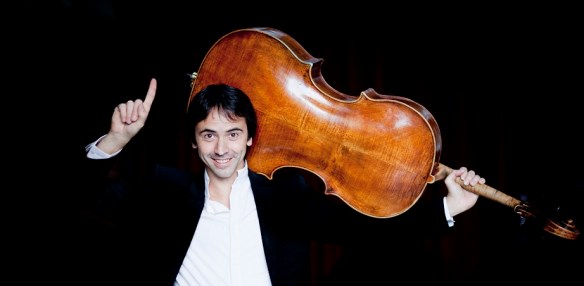
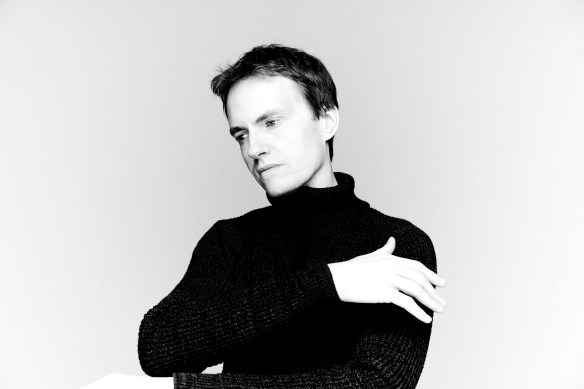
Jean Guihen Queyras (cello, above), Alexandre Tharaud (piano, below)

Wigmore Hall, Monday 28 October 2019 (lunchtime)

You can listen to this concert on the BBC Sounds app here (opens in a new window)

Review and guide by Ben Hogwood
Photo credits Marco Borggreve

Who could possibly be better suited for this concert among today’s musicians than cellist Jean Guihen Queyras and pianist Alexandre Tharaud? The long-established pairing constructed a hugely enjoyable programme of dance-based music for the combination, from two composers who were still writing for the viola da gamba to two writing for the modern cello but harking back to that older era.

The viola da gamba was on its way out when J.S. Bach and Marin Marais wrote their respective pieces for it. They did not know at the time, but it was about to lose its popularity to the cello, which – with one less string and eventually a spike for the player to hold it in – gradually took over.

Bach’s sonata, for viola da gamba and harpsichord, is equally rewarding when played by cello and piano as here, with great sensitivity and a lyrical line to the melodies from Queyras. The first movement Adagio (1:43 on the broadcast link) was beautifully weighted, as was the quicker but equally graceful Allegro (3:18). Both players found the deeper emotion of the Andante (7:06), Bach moving into the key of B minor for some aria-like soul searching. The final movement Allegro (11:03) was a delight, the benefit of an established musical partnership clear to see and with nicely judged ornamentation from Tharaud.

Marais wrote extensively for the lower end of the stringed instrument family, and his Pieces de viole contain music that is as challenging for the players as it is rewarding for the audience. This three-movement suite, arranged for the modern cello by Christian Döbereiner, contained a slower Prélude (16:53) and Sarabande grave (25:33) that Queyras and Tharaud played eloquently, the cellist finding wonderful clarity in his higher range. These shorter movements framed the main act, several variations on the popular tune La Folia titled Couplets sur Les Folies d’Espagne (19:11), which, while apparently played without repeats, is where we had the real fireworks. There was terrific playing from both and a heightened sense of drama ran throughout.

Poulenc originally wrote his Suite Française for orchestra in 1935 as part of a ballet score, but it proved equally effective in a piano arrangement made later that year. This version for cello and piano was made in 1953, for performance by the composer with French cellist Pierre Fournier. Based on the music of 16th century composer Claude Gervaise, it is a charming suite of seven dance movements looking back some four hundred years, merging the musical language of that time with Poulenc’s perky writing and crunchy harmonies. It was brilliantly realised here.

The seven dance pieces are as follows: a lively Bransle de Bourgogne (30:13), a consoling Pavane (31:40), then a cheeky Petite marche militaire (34:00). The suite continues with an eerie Complainte, the cello in its highest register (35:17), then a largely reflective Bransle de Champagne (36:26), graceful Sicilienne (38:10) and ceremonial Carillon (39:29)

Debussy’s Cello Sonata (43:07) is one of the cornerstones of the cello repertoire, a late masterpiece with clear instructions that the pianist should ‘not fight the cello, but accompany it’. At its centre is a remarkable, forward looking second movement with an improvisatory air and extended episodes for pizzicato (plucked) cello.

This was a terrific performance, Tharaud starting off with a forthright opening statement but responding with great care to the nuances of Queyras and his beautifully shaded tone. The pair caught Debussy’s moods – his bold statements but also the furtive corners of the piece, which sometimes feels like it is hiding in the undergrowth on a hot summer evening.

Both elements were clear in the first movement, and also in the second (47:15), a Sérénade where Debussy’s fragments were all joined together. Queyras had the perfect range of pizzicato colours, but also the clarity of tone right at the top of the register. Tharaud complemented him with the ideal lack of sustain on the stumbling piano figurations and the weight of his responses.

All the while this music was headed for the quickfire finale (50:33), which in its short bursts of melody had charm, worry and glorious colour in equal measure, never quite letting go completely until the final bars and Queyras’ authoritative statement.

As a generous encore the pair complemented the Debussy with Rodion Shchedrin’s entertaining In the style of Albéniz (55:28), not dissimilar to the second movement of the Sonata in its evocative tones but more outrageous in its melodies and harmonies. Queyras and Tharaud set it up brilliantly to cap a memorable recital.

Repertoire

This concert contained the following music (with timings on the BBC Sounds broadcast in brackets):

J.S. Bach Viola da gamba Sonata no.2 in D major BWV1028 (before 1741) (1:43)
Marais (1656-1728) Suite in D minor: Prelude (16:53), Couplets sur Les Folies d’Espagne (19:11), Sarabande (25:33)
Poulenc Suite française (1935, arr. 1953) (30:13)
Debussy Cello Sonata in D minor (1915) (43:07)
Encore – Shchedrin In the style of Albéniz (1973)

Further listening

You can listen to the music heard in this concert on Spotify below, including Queyras and Tharaud in the works by Poulenc and Debussy:

Poulenc also wrote a Cello Sonata, which forms part of an album with works for cello and piano with works by Debussy, delivered by the Queyras and Tharaud pairing here:

As this concert illustrated, French composers were particularly skilled at taking inspiration from the Baroque and Classical periods of classical music (from c1650 to 1800). The playlist below enjoys some of the best examples, headed by Ravel’s Le Tombeau de Couperin but also including works by Fauré, Debussy and Poulenc: