In concert – Martin Fröst & Roland Pöntinen at Wigmore Hall

Martin Fröst (clarinet), Roland Pöntinen (piano)

Wigmore Hall, Monday 16 December 2019

Review and guide by Ben Hogwood

A concert that was relatively short on music but extremely high on musicianship and virtuosity. Martin Fröst is one of the finest clarinettists at work today, and fellow-Swede Roland Pöntinen, with whom he has enjoyed a musical partnership for 25 years, is an extremely highly respected pianist either in a solo capacity or here as a chamber music ally. Both delighted their young Wigmore Hall audience – yes, that can be a thing at this venue’s concerts! – who were on their feet at the end.

The two gave us ‘French Beauties and Swedish Beasts’, a concert based on their first disc for BIS made 25 years ago. The beauties were first, in the shape of Debussy and Poulenc. The former’s Première rapsodie was written as a competition piece for the Paris Conservatoire, and later orchestrated in a form revealing its stylistic parallels with the composer’s ballet Jeux. There was a balletic feel to this interpretation too, Fröst’s languorous tone complemented by the stop-start rhythms of Pöntinen’s piano part. Initially the music was happy to indulge in its warm, lush surroundings but gradually it grew more agitated until Fröst’s final, bluesy solo.

Poulenc’s Clarinet Sonata, a late work, is dedicated to the composer Arthur Honegger and received its first performance in the hands of no less a duo than Benny Goodman and Leonard Bernstein. It is difficult to imagine a better account than here, with Fröst’s tone in the quieter and reflective passages simply sublime, layered with emotion. This was complemented by a sparky finale, where the music flew out of the gate like a horse let into an open field. The performers finished each other’s musical sentences in a performance of wit, charm and sensitivity.

The first of the ‘Swedish Beasts’ followed, a piece from Anders Hillborg written for the partnership before his breakthrough work, the Clarinet Concerto which Fröst recorded some seven years later. This was a piece of two extremes, flitting between reflective slow phrases and sharp retorts where the clarinet used the outer limits of its register. It was effective and a concentrated piece showing off Fröst’s technical prowess.

The second Swedish Beast was much more benign, but Roland Pöntinen’s own Mercury Dream showed an affinity with the blues. Nocturnal New York seemed to be its focus, especially in the easily paced piano introduction and postlude, but when Fröst joined the music became more animated.

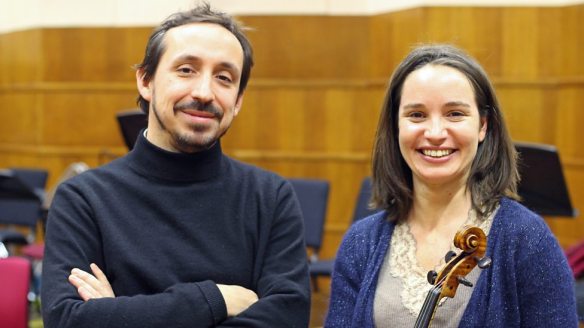
Prior to that the pianist (above) gave us two substantial chunks from Ravel’s Miroirs. His account of Une barque sur l’océan was highly pictorial, and his Alborada del gracioso had swagger, even if some of the initial phrases were clipped. Pöntinen has not yet recorded Ravel and it would be interesting to set alongside his many BIS recordings of earlier music.

The partnership finished with Chausson’s Andante and Allegro, a discovery from the composer’s Bayreuth period in his mid-twenties, before Wagner’s spell exerted itself on his music. This was an enjoyable piece, full of melodic grace in the flowing Andante before turning slightly darker for the passionate Allegro.

We had two superb encores from the duo, playing pieces Fröst has previously given with orchestra. BrahmsHungarian Dance no.1 in G minor surged forward passionately, while Göran Fröst, the clarinettist’s brother, contributed the hugely entertaining Klezmer Dance no.2, full of good tunes and musical banter between clarinet and piano. Given the technical expertise on show, the standing ovation that followed was inevitable.

Repertoire

This concert contained the following music:

Debussy Première rapsodie (1909-10)
Poulenc Clarinet Sonata (1962)
Hillborg Tampere Raw (1991)
Ravel Miroirs: Une barque sur l’océan; Alborada del gracioso (1904-5)
Pöntinen Mercury Dream (1994)
Chausson Andante and Allegro (1881)

Encores
Brahms Hungarian Dance no.1 in G minor ()
Göran Fröst Klezmer Dance no.2

Further listening

You can hear the music from this concert on the Spotify playlist below:

You can hear the album French Beauties and Swedish Beasts in its entirety on Spotify below. Alongside the items from this concert it includes the rather wonderful Saint-Saëns Clarinet Sonata:

Meanwhile Anders Hillborg’s Clarinet Concerto Peacock Tales’ written for Fröst, can be heard in its premiere recording here:

In concert – Peter Donohoe, London Philharmonic Orchestra / Vladimir Jurowski: Foulds ‘Dynamic Triptych’ & Shostakovich Symphony no.11

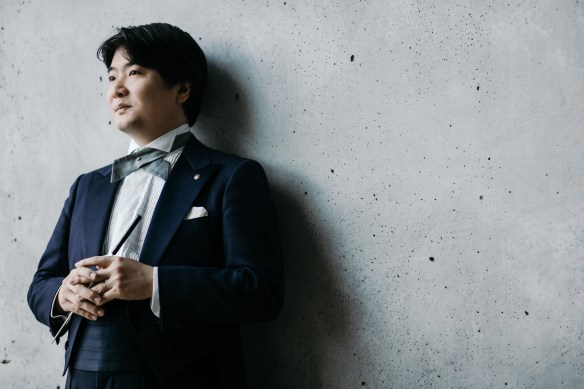
Peter Donohoe (piano), London Philharmonic Orchestra / Vladimir Jurowski (above)

Royal Festival Hall, Southbank Centre, London
Wednesday 11 December 2019

Foulds Dynamic Triptych (1929)
Shostakovich Symphony no.11 in G minor Op.103 The Year 1905 (1957)

You can listen to this concert on the BBC Sounds app here, though you may wish to skip the interval of Shostakovich’s String Quartet no.8 for continuity.

Reviewed by Ben Hogwood

The London Philharmonic Orchestra’s Isle of Noises series has attracted – for me at least – some unfair criticism in recent days of the works included in its remit. Granted, the choices are all English, but the composers look beyond these shores with a willingness seemingly out of kilter with the current political climate.

John Foulds is a case in point; a composer who spent the final five years of his life in India before a tragic early death to cholera. Not only did he live in India but he actively explored its musical systems, looking to see how he could incorporate his discoveries and influences into the framework of classical music.

The Dynamic Triptych is a striking example of successful integration. Completed in 1929, its musical language is well beyond its years. In the first movement Foulds becomes obsessed with a modal scale, repeating it over and over rather like Scriabin would do with towers of chords based on intervals of a fourth. The task of playing the modal scales often fell in this performance to the muscular piano part, played with great authority by Peter Donohoe (above). The pianist has spent a great deal of time with this work, recording it with Sakari Oramo and the CBSO in 2006. He led a highly spirited performance, yet despite his brilliant passagework and percussive interventions in the fast music the soul of the work lay in the slow movement.

Here the strings’ quarter tones, beautifully played, brought added mystery to the picture when dressed with evocative percussion, adding to music already in the grip of a poignant sense of loss. Piano and orchestra regrouped for a finale that galloped ahead, Foulds letting the music off the leash to explore more far-flung tonal areas, before a silvery waltz theme was introduced to complement the quickstep. Both fused for a bold and dramatic finale, capping a well-received performance. This was forward looking music of English origin, and not in a 12-tone style either! The LPO should be praised for its inclusion and Vladimir Jurowski, who conducted with characteristic sensitivity, will hopefully explore more of Foulds’ colourful scores in the future.

The colours vanished dramatically after the interval for the opening pages of Shostakovich’s Symphony no.11. This performance took on added poignancy with a dedication from Jurowski to Mariss Jansons, sadly departed the previous weekend at the age of 76. Jansons was guest conductor of the London Philharmonic Orchestra from 1992 to 1997, and he grew up in St Petersburg, on close personal terms with Shostakovich. The Eleventh Symphony, depicting the slaughter of protestors in the city as part of the Russian Revolution in January 1905, could not have been closer to home.

What a performance it was. For an hour we barely moved as Shostakovich’s first-hand account of the action took hold in vivid, cinematic detail. The icy Palace Square of the city could not have been colder in Jurowski’s hands, with ominous timpani rolls signalling tragedy all too early on. When it came, in the second movement, the massacre was delivered by music of uncompromising and stunning power, the proud brass chorale ultimately shut down by deafening percussion before the door slammed shut. Suddenly the square was silent, save for the strings’ icy tendrils which extended once again towards the audience, noticeably holding its collective breath.

The London Philharmonic were absolutely superb. With 22 cellos and basses playing as one, digging in to the ice as though their lives depended on it, the performance was on sure foundations, above which we had special woodwind contributions, with cor anglais (Sue Bohling) and bass clarinet (Paul Richards) just two of several exceptional solos. The percussionists, a vital cog in the Shostakovich machine, judged their contributions ideally too, with sharp snare drum retorts complemented by rolling bass drum and gong.

Still the tension remained, through an elegiac slow movement where the violas’ melody could not have been more poignantly played by David Quiggle and his section. The dedication to Jansons felt most intense here, and the players were given due acknowledgement by Jurowski in their well-deserved curtain call. Yet despite the deeply personal aspect of the performance there were even sharper parallels with the political climate of today, reminding listeners of the protests in Hong Kong and the forthcoming UK election, not to mention the disinformation, code and discrimination that permeate today’s society at every turn.

This account lived and breathed all of those dreadful things, and as the performance reached its shattering climax with tolling bells, Shostakovich was communicating with ever more piercing clarity. It may not be his most accomplished symphony but the Eleventh is one of his most descriptive and emotive. As Jurowski held the score aloft afterwards it was clear he felt the same – and I for one left reeling at the impact of a memorable performance.

Further listening

This Spotify playlist gives recordings of the Eleventh Symphony from Mariss Jansons himself, conducting the Philadelphia Orchestra, and Peter Donohoe with the CBSO under Sakari Oramo in the John Foulds Dynamic Triptych:

You can read a tribute to Mariss Jansons on the London Philharmonic Orchestra website

Wigmore Mondays – Nicolas Angelich plays Bach / Busoni, Brahms & Beethoven

Nicolas Angelich (piano)

Wigmore Hall, Monday 9 December 2019 (lunchtime)

You can listen to this concert on the BBC Sounds app here (opens in a new window)

Review and guide by Ben Hogwood

A concert of the three ‘B’s, all of them greats of keyboard literature – with a fourth, Busoni, added for good measure.

J.S. Bach and Busoni make a winning combination, the Italian 20th century composer having discovered a strong affinity with his ‘ancestor’s’ work in transcribing his organ and harpsichord works for piano. These were always done in a reverent way, and the famous Advent chorale prelude Nun komm, der Heiden Heiland (Now come, Saviour of the heathens) is no exception. Nicolas Angelich ensured all was still before beginning this account, and once started he left plenty of room for musical thought and variation of tempo and phrasing. Although at times it was a little too mannered, it was a nicely gauged start to the concert.

Angelich continued without a break into Brahms 7 Fantasien, hailed by Clara Schumann as ‘a true source of enjoyment, everything, poetry, passion, rapture, intimacy, full of the most marvellous effects’. The seven pieces work well as a whole, with three Capriccios placed 1, 3 and 7 in the group, interspersed with four Intermezzi. The relatively ambiguous labels mean Brahms has plenty of freedom for expression, and beyond the Capriccios being faster and stormy, and the Intermezzi slower, intimate and experimental, there is little to confine his work.

The performances here were well-informed, Angelich having recorded these works for Virgin Classics back in 2006. The first Capriccio in D minor (9:51) exhibits power and authority, with the composer’s beloved triplet rhythms in evidence, and is complemented by the first Intermezzo in A minor (12:11), one of several moments where Brahms’ thoughts turn wholly inwards – apart from the slightly sunnier middle section. The third piece, a Capriccio in G minor (16:23) has arpeggios tumbling downwards, and has a central section anticipating the tonal area (E) of the three Intermezzi to come. These are the fourth piece in E major (19:23), full of subtle but noticeable questioning in its melody, and the longest piece of the set. It is followed by the thoughtful fifth piece in E minor (23:59) and a sixth, mostly chordal piece back in E major (26:56) which quickly moves away from its harmonic base. Finally the power and passion returns for the seventh piece, a Capriccio in D minor (30:21). Brahms again is in his favourite two-against-three rhythmic figuration, and this signs off the set in the major key with some aplomb in Angelich’s performance.

Fantasy is also a theme for Beethoven’s most famous piano work, his Moonlight Sonata. In truth this piece sits between a fantasy and a sonata (hence the composer’s subtitle, Sonata quasi fantasia), and the first movement, though static in the profile of its arpeggios, is pure and magical imagery, Beethoven intentionally or not evoking moonlight over Lake Lucerne as perceived by his friend, the poet Ludwig Rellstab.

Angelich brought the stillness of the moment to the Wigmore Hall (35:30), reflective and deep in a reverie, only rousing slightly for a Scherzo of relatively downbeat thoughts (41:35). Those sentiments were well and truly blown away by the Finale (44:12), the only one of the three movements written in true ‘sonata form’ by Beethoven. This was a terrifically played account, carefully thought through and played with feeling rather than a need for technical prowess – though that was present too.

Angelich returned to late Brahms for his encore, the Intermezzo in E flat major Op.117/1 (54:02) Another late work, this one is based on an old Scottish ballad, Lady Anne Bothwell’s Lament – and brought the mood and chronology of the concert full circle.

Repertoire

This concert contained the following music (with timings on the BBC Sounds broadcast in brackets):

J.S. Bach arr. Busoni Nun komm, der Heiden Heiland BWV 659 (c1748, arr.1898) (4:36)
Brahms 7 Fantasien Op.116 (1892) (9:51)
Beethoven Piano Sonata no.14 in C sharp minor Op.27/2 ‘Moonlight’ (1802) (35:30)
Encore: Brahms Intermezzo in E flat major Op.117/1 (1892) (54:02)

Further listening

The music from this concert can be heard in leading available versions on Spotify below. These include Angelich’s recording of the Brahms pieces, with Murray Perahia playing the Bach / Busoni and Beethoven:

Angelich can be heard in a double album of late Brahms that includes the composer’s piano pieces published as Op.117-119. They hold a unique place in the piano repertoire, written by Brahms in the knowledge that his compositional career was nearly over and looking forward to innovations by composers such as Mahler, Berg and Schoenberg:

Busoni’s transcriptions of Bach organ works repay further exploration, especially at this time of year. This album from Kun-Woo Paik brings together some of the more famous examples, including the Toccata, Adagio and Fugue:

Beethoven’s 32 Piano Sonatas remain one of the wonders of his output, but even a listen to the four published after the Moonlight sonata reveal a composer striking out for new shores. The Piano Sonata no.15 in D major Op.28, known as the Pastoral, is similarly magical – before the group of three works published as Op.31 reveal humour in the first, stormy Romanticism in the second (nicknamed The Tempest) and an openness of expression in the beautiful third. The playlist below brings together leading recordings from Emil Gilels:

Live review – Hannah Hipp, CBSO / François Leleux: Mendelssohn & Berlioz

Hannah Hipp (mezzo-soprano), City of Birmingham Symphony Orchestra / François Leleux (conductor/oboe)

Town Hall, Birmingham
Wednesday 4 December 2019

Mendelssohn Overture to A Midsummer Night’s Dream Op.21 (1826)
Berlioz Les Nuits d’été, Op. 7 (1840/1, orch. 1856)
Mendelssohn arr. Tarkmann Five Songs Without Words (arr. 2009)
Mendelssohn Symphony no.3 in A minor Op.56 ‘Scottish’ (1829-31, 1841/2)

Written by Richard Whitehouse
Photo credits François Leleux: © HR/Thomas Kost; Hannah Hipp: Matthew Plummer

No doubt about it – Mendelssohn is still a prime attraction in Birmingham, the near-capacity audience for last month’s Elijah at Symphony Hall matched by that at Town Hall for tonight’s programme in which the City of Birmingham Symphony Orchestra was conducted by François Leleux.

Oboists turned conductors have a formidable precedent in Heinz Holliger, but even he cannot often have directed from his instrument as did Leleux when, commencing the second half, he presided over a selection of Mendelssohn Songs Without Words in an appealing arrangement by Andreas Tarkmann. Lauded in their day only to be patronized by subsequent generations, the pieces retain a melodic appeal exemplified by Venetian Goldola Song as its centrepiece. Switching adeptly between playing and directing, Leleux certainly relished them to the full.

Prior to the interval, he had partnered mezzo Hannah Hipp (above) in Berlioz‘s Les nuits d’été. Often considered the first orchestral song-cycle, these six songs to texts by Theophile Gautier were only belatedly orchestrated and are linked more by shared expression then any overt thematic links. Nor are they easily encompassed by one singer, but Hipp tackled their highly distinct tessitura with some confidence – moving seamlessly from the whimsy of Villanelle, via the distanced eloquence of La Spectre de la rose to the enfolding inertia of Sur les lagunes; then from the stark anguish of Absence, via the poetic fatalism of Au cimetière, to the impulsive anticipation of L’ile inconnue. For his part, Leleux ensured that those diaphanous and subtly differentiated orchestral textures audibly underpinned the often heady emotional sentiments.

Pieces from Mendelssohn’s earlier and later maturity framed this concert. The overture to A Midsummer Night’s Dream remains a teenage masterpiece by any standards, not least for its evocation of the spirit-world to whose quicksilver elegance the CBSO did ample justice. If the more demonstrative passages sounded a little too generalized in expression, there was no lack of projection overall or doubt as to Leleux’s welding of these elements into an integrated whole. Only the forward ambience of the refurbished Town Hall prevented a true pianissimo.

Dynamic niceties are less of an issue with the Scottish Symphony, its lengthy gestation likely indicating a summative intention on the part of the composer. The first movement’s resigned introduction was superbly rendered, though the ensuing Allegro lacked focus in its trenchant development and surging coda. Not over-driven as often can be, the Scherzo exuded humour alongside its incisiveness, while the Adagio had both grace and suppleness to offset any risk of earnestness or stolidity. Nor did the finale want for energy or purpose, and if Leleux was more insightful during its hesitant transition than the triumphal apotheosis that follows, there was no doubting the underlying conclusiveness with which it rounded off this most inclusive and ambitious of Mendelssohn’s orchestral works – to the evident delight of those present.

A well balanced and immensely enjoyable concert, then, which further attests to the rapport that Leleux enjoys with these musicians. The CBSO is back in Symphony Hall next Thursday for another of the orchestra’s Centenary Commissions alongside music by Elgar and Brahms.

Further listening

With the exception of the Songs Without Words arrangements, the music in this concert can be heard on the Spotify playlist below. This includes recent recordings of the Mendelssohn pieces by the CBSO themselves, conducted by Edward Gardner:

For further information on the orchestra’s next concert, under their chief conductor Mirga Gražinytė-Tyla, click here

On record – Rupert Marshall-Luck: Soul (TUTL)

Rupert Marshall-Luck (violin)

Baek Afturundirgero
Blak Alvarann; Bohmerlands Dronning
Debess Variations
Rasmussen Echoes of the Past

TUTL FHR90 [52’25”]

Producer Rupert Marshall-Luck
Engineer Theodor Kapnas

Recorded 2-3 April 2019

Written by Richard Whitehouse

What’s the story?

The violinist Rupert Marshall-Luck takes time out from his extensive commitment to British music (and no less extensive schedule for the EM Records label) for this revealing collection of unaccompanied pieces by composers who were born or are resident in the Faroe Islands.

What’s the music like?

Although a self-governing region of Denmark across more than seven decades, classical or art music was slow in taking root in the Faroes, its music-making almost entirely vocal until the 1960s. As with its northerly neighbour Iceland, the creative scene has subsequently been transformed to the extent that these islands currently enjoy a profile out of all proportion to their population in terms of its range and diversity. Soul may only scratch the surface of this musical wealth, but it also underlines the potential of what might appear a restricted medium.

This disc sets off unequivocally with Echoes of the Past by Sunleif Rasmussen (b1961), an eventful sequence of episodes such as makes full use of the violin’s potential for heightened expression and meaningful display; all the while given focus by a trajectory as unfolds from combative unease towards a searching if tenuous repose. Quite a contrast with Variations for Solo Violin by Edvard Nyholm Debess (b1960), its traditional Faroese hymn-tune providing the basis for six variations which draw on a range of textural and emotional shading, without losing sight of the intrinsic character of the theme before its affecting return. More discursive in its content is Afturundirgero by Kari Baek (b1950), evoking a seascape in which turbulent cross-currents are vividly conveyed through harmonic clashes by turns soulful and astringent.

The remaining two pieces are both by Kristian Black (b1947), born in Denmark but resident over many years in Torshavn where he has been a prime mover in the emergence as well as dissemination of Faroese classical music – not least via his enterprising label TUTL Records. Inspired by a ballad about the Danish queen, Bohmerlands Dronning unfolds as a rhapsody in which various aspects of the ballad can be heard to permeate the content and influence the direction of what is eloquent and ultimately fatalistic music. Blak’s Alvarann also takes its cue from a Faroese ballad, though here progress is audibly more quixotic as the violin charts a course from subdued anticipation, via the steady accumulation of energy, to an impetuous culmination whose unbridled virtuosity leaves no mean drama and even anguish in its wake.

Does it all work?

Yes, not least in that these five pieces amount to a programme the sum of which is greater than its parts and which – given the relatively short playing-time – is best experienced as a whole. A tribute, then, to the resourcefulness of the composers as well as to Marshall-Luck, who renders each work with that combination of interpretative insight and technical finesse familiar from his performances and recordings of British music. More pieces for violin solo, or with piano accompaniment, would be worth encountering – maybe as a follow-up disc?

Is it recommended?

Indeed. The Faroes are a nexus of creativity within the European cultural framework, as this disc makes plain.

Readers can check out the Summartonar Festival of Contemporary Music here, and the TUTL website by clicking here

Stream

Buy

For more information on Rupert Marshall-Luck and on this release, visit his artist website