Wigmore Mondays: Javier Perianes plays Chopin, Debussy & Falla

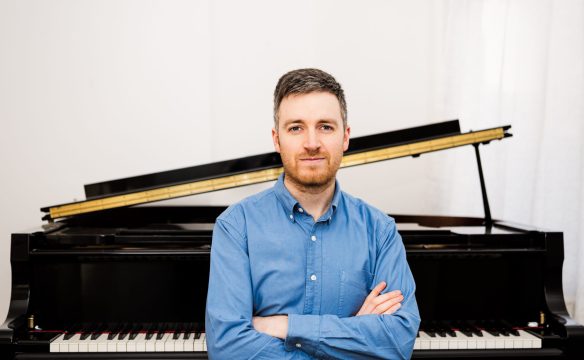
Javier Perianes (piano, above)

Chopin Prelude in C Op.28/1 (1839) (1:44-2:25 on the broadcast link below)
Debussy Danseuses de Delphes (Préludes Book 1) (1909) (2:30-5:45)
Chopin Berceuse (1843-4) (5:50-10:38)
Debussy Clair de lune (Suite Bergamasque) (1890) (10:39-15:44)
Debussy Les sons et les parfums tournent dans l’air du soir (Préludes, Book 1) (1910) (15:57-19:36)
Chopin Ballade No 4 (1842-3) (19:44-30:51)
Debussy La puerta del vino (Préludes Book 2) (1913) (32:47-36:15); La sérénade interrompue (Préludes Book 1) (1910) (36:18-39:02)
Falla Fantasia baetica (1919) 39:05-51:16

Wigmore Hall, London; Monday 9 April 2018

You can listen to the BBC Radio 3 broadcast by clicking here

Written by Ben Hogwood

The Debussy centenary has brought out some imaginative programmes from performers, and the inspiration for this BBC Radio 3 Lunchtime Concert from the Wigmore Hall lay in one of Javier Perianes‘ earlier recital discs. He played much of the music in an unbroken stream, giving a lovely continuity to the music making while linking the composers too.

Debussy loved Chopin, describing him as ‘the greatest of us all, for through the piano alone he discovered everything’. Comparing the first published preludes by the composers was intriguing, the urgency of the Chopin (1:44 on the broadcast link above) countered by the sultry, easily paced Danseuses de Delphes (2:30). Chopin’s Berceuse (5:50) and the famous Clair de Lune from Debussy’s Suite Bergamasque (10:39) share the same key of D flat major, and here the join between the two was exquisitely close. In the Berceuse the boat, having initially started out on a millpond, ran into some pretty gusty weather, while the dance of the moonlight on the water in the Debussy was allowed to take its time to ripple.

The following Les sons et les parfums tournent dans l’air du soir (15:57) was deeply atmospheric, shot through with mystery – but then Perianes turned to a powerful and very fluid account of the Ballade no.4, (19:44) passionately played and emphatically signing off the concert’s first sequence.

The second sequence was more noticeably modern, its musical language shifting forwards. La puerta del vino (32:47) crackled with tension, an insistent Habanera rhythm becoming the lynchpin for a rich vein of improvisatory work up top, while the humour of La sérénade interrompue (36:18) was brilliantly caught, with its stop-start gait and Spanish flair.

The latter quality was fully in evidence for an assertive and exciting Fantasia baetica (39:05), Manuel de Falla‘s biggest work for solo piano. This was packed with big dance crossrhythms, powerful musical statements and substantial added note harmonies. There were some very striking moments such as the big, bell-like melody from 49:13, which seems to be an attempt on the part of the piano to imitate the guitar, and Perianes swept all before him to an all-encompassing finish.

For the encore Perianes turned our glances sideways to another of Debussy’s close if less likely influences, the composer Edvard Grieg, whose piano music is still massively underrated. The Notturno (52:21) chosen by today’s pianist was beautifully judged and vividly pictorial.

Further listening

You can listen to the music played in this concert on the Spotify playlist below:
London Symphony Orchestra / François-Xavier Roth: Half-Six Fix – Stravinsky & Debussy

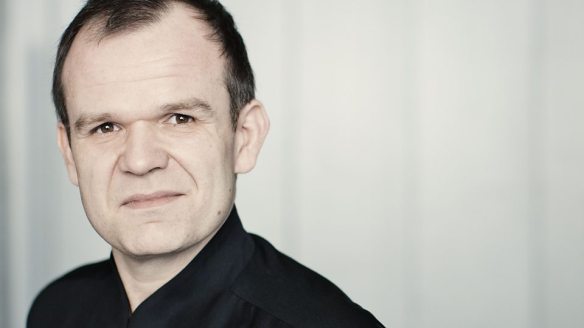
London Symphony OrchestraFrançois-Xavier Roth (above)

Half-Six Fix

Stravinsky Le chant du rossignol (1917)

Debussy La Mer (1903-1905)

Barbican Hall, London; Wednesday 28 March 2018

Written by Ben Hogwood

The London Symphony Orchestra’s new Half-Six Fix initiative went ‘live’ with this Stravinsky / Debussy double header; a concert full of colour and mutual appreciation for two of the 20th century giants.

A more relaxed approach was immediately evident on arrival at the Barbican for the early evening hour of music. Downloading the EnCue app gave audience members a stream of content at their disposal, with comprehensive notes on the two pieces as well as artwork and cues for the performances themselves.

Interestingly during the concert I did not witness anybody using their phone in this way – which in a sense was encouraging, for everyone was in thrall to the performers themselves. The other major disadvantage with reading concert notes on a mobile phone is the distraction of notifications from elsewhere. Surely one of the great advantages of live music is that it takes you to a special place away from everyday life! That said, the resources available do also give the option for reading between pieces, and were of a high quality to make them fully worthwhile.

Our compere for the evening was François-Xavier Roth and he was the ideal host, introducing the pieces with a nice line in respect and humour. The use of musical examples with the orchestra was helpful – flautist Gareth Davies showed off Stravinsky’s Le chant du Rossignol, while it was nice to see glockenspiel and cymbals promoted to the front line so that we could appreciate Debussy’s masterly use of the orchestra in La mer.

The performances were superb. Le chant du Rossignol had rhythmic precision and musical finesse, telling the story of the nightingale and the efforts of its Japanese imitators to emulate its song in vivid, widescreen technicolour. Stravinsky’s inspiration in this piece was revealed to be very close to Petrushka, and Roth conducted a performance that brought the melodies to the front but emphasised some wonderful textures conjured up in the middle foreground. There were visuals, and fleeting glimpses of solos, but it seemed the LSO had not fully decided whether to show the orchestra in full or images derived from the piece, settling for a halfway approach which was fleetingly helpful.

Watching the orchestra was definitely enough – their standard these days is as high as ever, and if anything was even better for La mer. Clearly this is one of Roth’s first loves, and from a seat near to the orchestra you could practically feel the spray as the orchestra dived in.

Tempo choices were on the whole assertive but never at the expense of detail and expression, and when the final swell came in the third movement, Dialogue du vent et de la mer (Dialogue of the wind and the waves).

Roth is an ideal host for this sort of evening, which can be wholeheartedly recommended, a case of quality winning over quantity – and it is pitched at a level where everyone present, from the first time attendee to the hundredth, will learn something new and get a fresh perspective. A great initiative for opening the mind to classical music in a more relaxed setting.

Vilde Frang, BBC Symphony Orchestra / Sakari Oramo: Anna Clyne, Britten & Beethoven ‘Pastoral’

Vilde Frang (violin), BBC Symphony Orchestra / Sakari Oramo (above)

Clyne This Midnight Hour (2015) [London premiere]

Britten Violin Concerto, Op.15 (1939)

Beethoven Symphony No.6 in F, Op.68, ‘Pastoral’ (1808)

Barbican Hall, London; Wednesday 21 March 2018

Written by Richard Whitehouse

You can listen to the broadcast of this concert here, available until 20 April 2018

Most concerts by the BBC Symphony still feature either a world or national premiere, and tonight’s concert began with a first London outing for Anna Clyne’s This Midnight Hour. Drawing inspiration from poems by Juan Ramon Jiménez and Charles Baudelaire, this 12-minute piece duly alternates between energetic and more ruminative music in a ‘stretto’ of accumulating impetus. A pity the climactic stage loses focus in an amalgam of waltz-like flaccidness and folk-inflected jejunity – suggesting this as not one of Clyne’s better pieces.

Britten’s Violin Concerto has certainly come in from the cold over recent years. Vilde Frang was a little tentative in the initial Moderato, with its interplay of wistful lyricism and driving impetus, but the central scherzo was finely judged through to a seismic climax then dextrous cadenza leading into the finale. The earliest among Britten’s passacaglias, it makes plain his feelings over the demise of the Spanish republican movement, and Frang (below) had the measure of its sombre inwardness and high-flown rhetoric prior to a recessional of haunting eloquence.

As so often, Sakari Oramo was an astute and attentive accompanist – thereafter putting the BBCSO through its paces in a fluent and often searching account of the Pastoral Symphony. In this, as in Beethoven’s music overall, Oramo was his own man – omitting the exposition repeat in what was an incisive but never headlong reading of the first movement, followed by an Andante whose rhapsodic unfolding was accorded focus by the flexible underlying tempo and fastidious shading of string textures as has long been a hallmark of Oramo’s conducting.

The last three movements proceed continuously and if the scherzo was a little too streamlined for its verve and humour fully to register, the ‘Thunderstorm’ made for a powerful interlude before (and climactic upbeat to) the finale. As disarming melodically as it is difficult in terms of pacing, this unfolded with a sure sense of its developing variation; allied to a lilting motion which evokes a cosmic dance offered as thanks for peace in time of crisis. Maybe the closing cadence was just a touch over-emphatic, but the sense of a journey fulfilled was undeniable.

You can watch Vilde Frang talk about the Britten Violin Concerto in a BBC video here For more information on the BBC Symphony Orchestra, head to the orchestra’s homepage – and for more on their chief conductor Sakari Oramo, click here

Meanwhile you can listen to Vilde Frang’s disc of the Britten and Korngold Violin Concertos, recorded for Warner Classics, on Spotify:

Wigmore Mondays: Danny Driver plays Dreamscapes by Messiaen, Saariaho, Ligeti & Schumann

Danny Driver (piano, above – photo credit Richard Haughton)

Messiaen Prélude No 5 (Les sons impalpables du reve) (1928-9) (2:36-8:15 on the broadcast link below)

Saaraiaho Ballade (2005) (8:30-15:06)

Ligeti Étude No 6 (Automne à Varsovie) (1985) (15:29-20:37)

Schumann Kreisleriana Op.16 (1838) (23:17-59:32)

Wigmore Hall, London; Monday 26 March 2018

You can listen to the BBC Radio 3 broadcast by clicking here

Written by Ben Hogwood

A fascinating program from Danny Driver on the theme of ‘Dreamscapes’, an hour away from reality in the company of composers intent on using the piano to express new harmonies and colours.

Few 20th century composers had a greater sense of colour than Olivier Messiaen, and the vivid shades of his Prélude No.5 began the recital. Titled Les sons impalpables du reve (The Impalpable Sounds of a Dream), it was described by its composer as ‘polymodal, consisting of a blue-orange mode with a chordal ostinato and cascades of chords, and a violet-purple mode having a copper timbre. Note the pianistic writing, composed of triple notes, rapid passages in chords, canon in contrary motion, hand crossing, various staccatos, brassy louré, gem effects’. All elements to enjoy in Driver’s richly textured performance, from 2:36 on the broadcast link above – with a questioning feel to some of the harmonic phrases.

Then a relative rarity, a piano work by Kaija Saariaho, the Finnish composer whose output until now has largely concentrated on the orchestra and works for the stage. This time the composer ‘wanted to write music with a melody that grows out of the texture before descending into it again; a work that constantly shifts from a complex, multi-layered texture to concentrated single lines and back again’. From 8:30 on the broadcast you will hear the Ballade under the assured control of Driver, in a performance of great intensity that plummets back to earth at the end.

For the third of this group Driver intriguingly chose Ligeti’s Étude no.6 (15:29) – with the immediately recognisable, rarefied sound world of the composer. The fingers of the right hand worked largely in octaves here, with richly layered music supporting the descending melodies – until absolutely everything descended at the end in Driver’s powerhouse performance.

Schumann’s Kreisleriana is a group of eight pieces inspired by E.T.A. Hoffmann’s fantasy on the imaginary musician Johannes Kreisler. Each of the sections is in direct contrast to its neighbour, reflecting the character’s manic depression – with which Schumann may have felt an affinity given his own extremely variable state of mind. Certainly inspiration was at hand for this substantial work, which he completed in the space of just four days in 1838, before revisiting slightly in 1850.

Inevitably the muse of Clara Schumann, Robert’s soon-to-be-wife, is close at hand – and explains the outpouring of feeling in each of the works. The pieces vary between between dramatic, tempestuous fantasies such as the first, third and seventh numbers, and deeply personal thoughts expressed in beautiful surroundings, as in the second piece, the longest in the cycle by far.

Schumann sets up a tonal conflict, too – the fast pieces are in the minor key, and most rooted on G – nos. 3, 5, 7 & 8 fall into this category – while the slower, tender pieces (2, 4 & 6) are conceived around B flat major, G minor’s closest relative. The tension between the two, as well as an abundance of melodic material, lay at the heart of Danny Driver’s interpretation.

Driver clearly loves this music, and gave a passionate performance, enjoying the unbroken stream of inspiration in the first piece (23:17), then the repose and reflection in the second (26:14), the pianist allowing plenty of room for thought and contrast between the faster episodes in this much longer piece.

The third piece set up an excitable drama (36:36) with a commanding left hand, while the fourth responded once more with calm introspection (41:45). The fifth piece was detached in this performance, quite an edgy main idea (45:30) giving way to a more graceful centre. Appropriately the sun appeared during the sixth piece (49:18), giving a promise of the spring we are all hoping will arrive soon – and then Driver tore into the seventh piece with relish (53:32).

Any performance of Kreisleriana lives or dies by the last piece, a playful but rather haunting finale (55:56) that rises and falls like a bird on the wing. Driver caught its essence superbly here, with plenty of give and take in the tempo to give the melody its natural rise and fall. Schumann’s music is at its most exquisite here.

For an encore Driver turned full circle, bringing us back to Messiaen for another Prélude – his first, La colombe (The Dove) – a sign that birds would be his principal subject matter when writing music!

Further listening

You can listen to the music played in this concert on the Spotify playlist below – which in the absence of a version from Driver includes Alfred Brendel’s recording of Kreisleriana:

Danny Driver’s discography includes a recent landmark recording of piano concertos by women composers for Hyperion, bringing the works of Dorothy Howell, Amy Beach and Cécile Chaminade:

City of Birmingham Symphony Orchestra – Debussy Festival: Second Weekend

Symphony Hall, Birmingham; Saturday 24 & Sunday 25 March 2018

Written by Richard Whitehouse

This second weekend of the Debussy Festival featured a similar mix of orchestral, song and instrumental events, held at various venues in Birmingham in addition to Symphony Hall and extending over the broad spectrum of Debussy’s music to include several less familiar items.

Saturday evening focussed on ‘Sacred Debussy’, and opened with his prelude La Cathédrale engloutie (1910) in an orchestration by Colin Matthews faithful to its spirit. The CBSO then vacated the platform for Messiaen’s motet O sacrum convivium (1937), fervently sung by the CBSO Chorus under Simon Halsey and preceded by Bach’s Dorian Toccata and Fugue. Its methodical progress was ideally complemented by Dieu parmi nous, concluding Messiaen’s large-scale cycle La Nativité du Seigneur (1935) with a panache to which Thomas Trotter was no less responsive. Debussy’s Danse sacrée et danse profane (1904) ended the first half with an allure and poise that Suzy Wilkinson-Kawalec conveyed in full measure; CBSO assistant conductor Jonathan Bloxham securing an elegant and fastidious response from the strings.

After the interval, a rare chance to hear virtually the whole of Debussy’s incidental music for Gabriele D’Annunzio’s play La Martyre de Saint Sébastien (1911). Not, then, the 20-minute ‘symphonic fragments’ arranged by André Caplet (who also undertook much of the original orchestration) or the hour-long complete score with narration, but a 35-minute hybrid where the music for the five acts was amalgamated into a four-movement ‘choral symphony’. With its hieratic modality and austere if never merely archaic polyphony, this is arguably the most emotionally affecting of Debussy’s later works and was superbly sung by the CBSO Chorus. Sopranos Ilse Eerens and Katja Stuber were effortless in their solo parts and Mirga Graźinytė-Tyla (below) drawing an eloquent response from the CBSO. Undoubtedly a highlight of this festival.

On to Sunday and an early afternoon concert of ‘Exotic Debussy’, opening with another three Preludes (1913) – the ironic wit of Minstrels, Mussorgskian heft of La puerta del vino and the bracing humour of General Lavine – Eccentric – once again heard in orchestrations by Colin Matthews responsive more to the images being evoked than the music as conceived for piano. Bloxham led the CBSO in a spirited account of the ‘Pas de six’ from Britten’s The Prince of the Pagodas (1956), then Graźinytė-Tyla presided over two sections from Ravel’s Ma Mère l’Oye (1910) – the piquant Orientalism of Laideronette and the encroaching rapture of Le jardin féerique, both enticingly rendered yet an unsatisfying close to a rather piecemeal first half. A shame the Ravel ballet was not heard in full, as this has long been a CBSO speciality.

There was nothing piecemeal about the second half, with Graźinytė-Tyla taking charge of the CBSO Youth Orchestra for a complete rendering of Debussy’s Images. His largest orchestral work when heard complete, this is difficult to bring off as a totality though this account came close. The ominous understatement of Gigues was well conveyed despite an occasional lack of subtlety, then the central triptych that is Ibéria gave this capable and enthusiastic outfit its head in the traversal from sultry street-life, through nocturnal rumination, to festal celebration – the overall sequence being projected with verve and immediacy. Yet the closing Rondes de printemps was even more successful, its oblique evocation of rural revelry given cumulative impetus such as made for a more than usually conclusive end to this wide-ranging sequence.

The mid-afternoon ‘Tombeau de Debussy’ juxtaposed pieces from the supplement published by La Revue musicale in 1920 with commissions under BCMG’s Sound Investment Scheme. Jungeun Park’s Tombeau de Claude Debussy found violinist Alexandra Wood, cellist Ulrich Heinen and pianist Richard Uttley (above) evoking the composer’s death in darkly ironic terms, then the oblique tonality of Dukas’s La plainte, au loin, du faune … seemed as much a memorial to the creative impasse as to its passing. Highly sensitive here, Uttley was no less probing in the moody ‘Sostenuto rubato’ that Bartók incorporated into his Eight Improvisations; soprano Ruby Hughes joining him for the whimsical profundity of Satie’s setting of Lamartine in En souvenir. Sinta Wallur’s Tagore Fireflies sets three brief verses by the Indian poet in music whose ornamented vocal was complemented by the piano’s gamelan-like patterning. Wood and Heinen found requisite plangency in the first movement of Ravel’s Duo; then cellist and soprano took on engaging theatricality for Frédéric Pattar’s setting of Maeterlinck in (… de qui parlez-vous?). Uttley captured the bluesy elegance of Goossens’s Pièce, before Julian Anderson’s Tombeau united the musicians in a setting of Mallarmé’s tribute to Edgar Allen Poe whose chiselled vocal writing and guitar-like sonorities made for a provocative ending.

The early-evening programme of ‘Natural Debussy’ commenced with the arresting cameo of flautist Marie-Christine Zupancic playing Debussy’s plaintive Syrinx (1913) at the rear of the auditorium; overhead lights gradually raised on the platform from where Bloxham directed the CBSO in an engaging account of Printemps (1887). Whatever its formal inelegance and stylistic derivativeness, this two-movement piece has an insouciance and extroversion which Debussy only occasionally re-captured – enhanced by the knowing sophistication of Caplet’s orchestration a quarter-century later. Graźinytė-Tyla returned for George Benjamin’s Ringed by the Flat Horizon (1980), its evocation of desert storms rendered with a graphic immediacy and sure sense of purpose to make one regret that an unfortunate accident onstage meant the performance had to be curtailed before the close. The orchestra reassembled after a break for La Mer (1905) – emotional contrasts stressed a little too readily in ‘Jeux de vagues’, but with the outer movements bracingly projected to round off this final concert in impressive fashion.

Even on the basis of these Symphony Hall concerts, this Debussy Festival did its composer proud by conveying the sheer variety of his output and also its relevance to Western music during the century since his death. Omissions were few – of which the most significant, his full-length opera Pelléas et Mélisande, will be redressed with a concert performance on the 23rd June. For now, Graźinytė-Tyla deserves full credit for having initiated this ambitious festival: its orchestral events leaving no doubt as to the rapport between her and the CBSO.

For more information on the CBSO Debussy Festival, you can visit the event’s website