In Concert – Peter Moore, CBSO / Kazuki Yamada: Dai Fujikura & Mahler

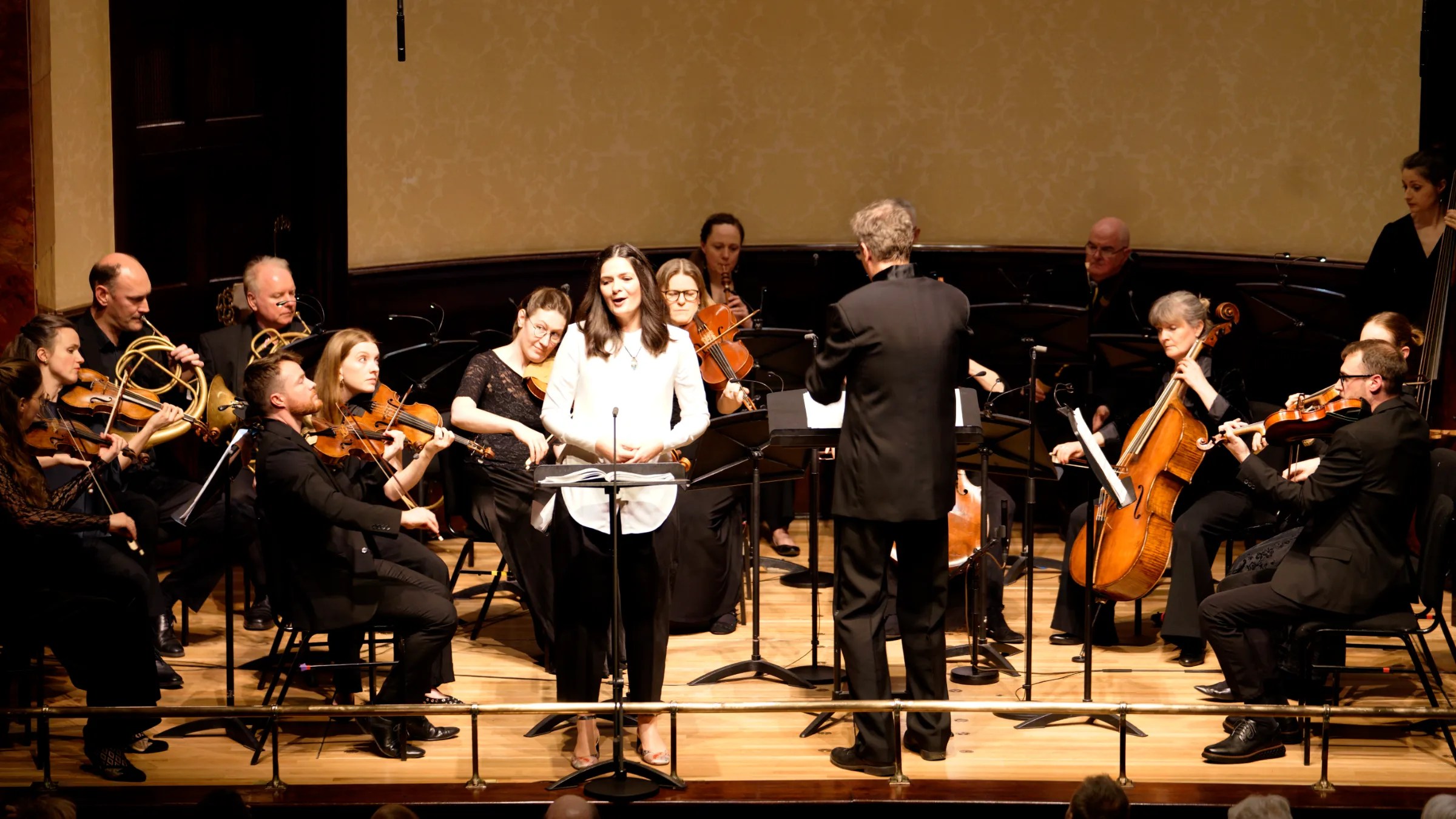
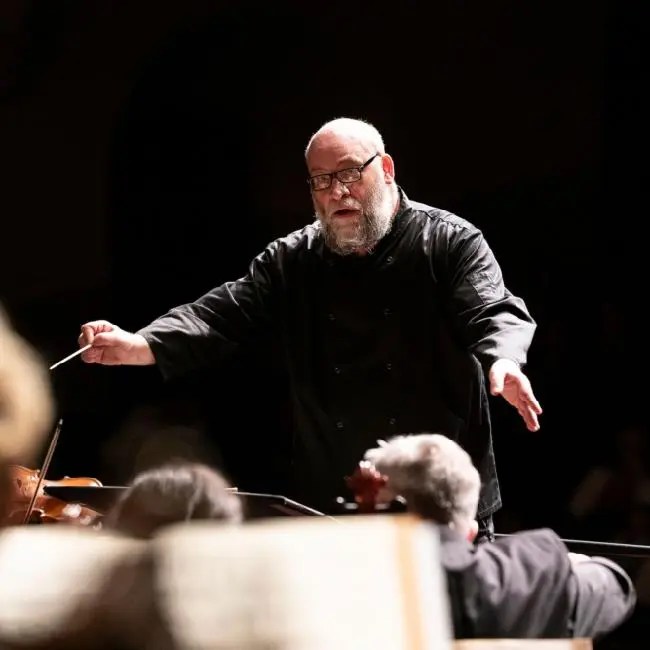
Peter Moore (trombone), City of Birmingham Symphony Orchestra / Kazuki Yamada (above)

Mahler Blumine (1884)
Fujikura Trombone Concerto ‘Vast Ocean II’ (2005/23) [UK Premiere]
Mahler Symphony no.1 in D major (1887-88, rev. 1889-98)

Symphony Hall, Birmingham
Thursday 15 January 2026

Reviewed by Richard Whitehouse Photo (c) Andrew Fox

Mahler has not been absent from the City of Birmingham Symphony Orchestra’s schedule since those halcyon years of Simon Rattle, though even he never undertook a chronological traversal of such as the orchestra’s current music director Kazuki Yamada duly commenced this evening.

Although the First Symphony was heard in its customary four-movement version as finalized for a Vienna performance in 1898, the so-called Blumine taken over from earlier incidental music and included as second movement in the earliest performances was given as an entrée to this concert. With its lilting trumpet melody – effortlessly unfolded by Holly Clark – and its aura of rapt inwardness, this elegant intermezzo was audibly out of place given the transition from symphonic poem to symphony, but it retains an appeal that was winningly evident here.

Two years ago Yamada and the CBSO gave the premiere of Wavering World by Japanese-born composer Dai Fujikura, and it was heartening to see the association continued with this first hearing in the UK for Vast Ocean II. Not so much a reworking as the reconceiving of a piece from 18 years earlier, this trombone concerto unfolded within the context of an orchestra rich in alluring sonorities yet streamlined in texture. This latter entered gradually while remaining focussed on (if never beholden to) a soloist whose role is almost that of a ‘cantus firmus’ that guides the music, through waves of increasing activity, towards a fervent culmination before a suspenseful closing evanescence. It helped to have in Peter Moore a soloist who manifestly believed in the music and contributed greatly to the impact of this memorable performance.

And so to Mahler’s First Symphony that, following on from Yamada’s accounts of the Fourth and Ninth in recent seasons, drew a suitably visceral response from conductor and orchestra. Not that this traversal was without failings: the ‘coming of spring’ in the opening pages was unerringly judged, as too the transition into its genial main theme, though this first movement rather lost focus in the mounting intensity of its final stages which felt rather rushed through. There were no provisos about a scherzo whose impetuous outer sections found ideal contrast with its ländler-informed trio of winning poise. The ensuing funeral march was equally well judged, bassist Anthony Alcock setting in motion this unlikely processional whose pathos is tinged by irony and even ambivalence before its jaunty climax then withdrawal into silence.

Launched with piercing clamour, the finale may ultimately have been no more than the sum of its parts, but the best were indeed memorable. So if the expressive second theme sounded overly generic, the approach to the central peroration was astutely handled, with the hushed recollection of earlier ideas never less than spellbinding. Nor was the stealthy build-up to the apotheosis lacking purpose, even if this latter emerged as less than majestic given Yamada’s headlong rush to those brusque closing chords. Audience response was accordingly effusive.

One person who would no doubt have wanted to be present was Andrew Clements, who died just four days earlier. A regular CBSO reviewer for the Guardian, his laconic while considered observations were always centred on the premise that music, whether in or of itself, mattered.

To read more about the CBSO’s 2025/26 season, visit the CBSO website. Click on the names for more on trombonist Peter Moore, CBSO chief conductor Kazuki Yamada and composer Dai Fujikura

Published post no.2,770 – Saturday 17 January 2026

In Concert – BBC Symphony Orchestra / Martyn Brabbins @ Maida Vale Studios: Liadov & Tchaikovsky

BBC Symphony Orchestra / Martyn Brabbins (above)

Liadov Ballade: About Olden Times Op.21b (1889)
Tchaikovsky Symphony no.1 in G minor Op.13 ‘Winter Daydreams’ (1866)

Studio 1, BBC Maida Vale Studios, London
Tuesday 13 January 2026 (2:30pm)

Reviewed by Ben Hogwood

The BBC Symphony Orchestra and Martyn Brabbins provided the ideal antidote for a dark and wet January afternoon with this winsome hour of music at the BBC Studios in Maida Vale.

They began with a rarity. It is a regret that the 19th century Russian composer Anatoly Liadov did not write more large-scale orchestral works, for his short form pieces are both evocative and colourful. The ballade About Olden Times appears to be an orchestration of a piano piece with the same name, and it captured the sentimental and soulful qualities of old Russian folksong without overdoing a heart-on-sleeve approach. The influence of Liadov’s teacher, Rimsky-Korsakov, was evident in the imaginative orchestration, and the cello section bore the palm for their rendering of the particularly beautiful opening tune.

About Olden Times was written two years after Liadov met Tchaikovsky, who by then was well-established as a symphonist and a composer for the stage. There are strong hints of this potential in Tchaikovsky’s Symphony no.1, written just after the composer graduated from St Petersburg Conservatory. Carrying the subtitle Winter Daydreams, it is an accomplished piece combining youthful vigour and freshness with impressive craftsmanship; displaying also the scene-setting abilities that would serve Tchaikovsky well in his symphonic poems.

Often interpretations of this piece look backwards towards Mendelssohn and Schumann, but Martyn Brabbins saw the work as a springboard to Tchaikovsky’s future success in opera and ballet, as well as that of a red-blooded, symphonic thinker. The first movement, Dreams of a Winter Journey, was beautifully shaded and led with poise and purpose by the BBC SO winds. There was a particularly beautiful oboe solo (thought to be from Alison Teale) for the Adagio, subtitled Land of Desolation, Land of Mists, its theme taken up with heart-melting emotion by the strings.

The untitled Scherzo was coolly played but fresh to the ear, the music warming appreciably for the Trio section where a charming waltz tune unfolded. The finale was terrific, Brabbins accentuating the contrast between its downcast introduction and the rush of positivity as Tchaikovsky transforms from minor to major key for an exultant, homeward-bound theme. The winter journey was over, with spring now in the air as Brabbins paced the final acceleration to perfection, the symphony’s bracing closing bars capping a thoroughly enjoyable hour of music.

Listen

You can hear this concert as part of Classical Live, to be broadcast on BBC Radio 3 on Monday 26 January, and available on BBC Sounds.

Published post no.2,767 – Wednesday 14 January 2026

In Concert – Cuarteto Casals @ Wigmore Hall: Bach, Shostakovich & Turina

Cuarteto Casals [Abel Tomàs, Vera Martínez-Mehner (violins), Cristina Cordero Beltrán (viola), Arnau Tomàs (cello)]

J.S. Bach Art of Fugue BWV1080: Contrapunctus 1, 4, 6 & 9 (1742, rev.1748-9)
Turina La oración del torero Op.34 (1925)
Shostakovich String Quartet no.3 in F major Op.73 (1946)

Wigmore Hall, London
Monday 12 January 2026, 1pm

Reviewed by Ben Hogwood

Cuarteto Casals began this BBC Radio 3 Lunchtime Concert with a quartet of movements from The Art of Fugue, Johann Sebastian Bach’s four-part masterpiece of musical counterpoint. The collection has that rare quality of being able to combine technical prowess and emotional substance, and these were evident right from the outset. Initially plaintive, Contrapunctus 1 grew in scope and stature, though while three of the quartet opted against vibrato cellist Arnau Tomàs did not, meaning his instrument was more rounded in tone. A convincing Contrapunctus 4 featured lively exchanges, while Contrapunctus 6 enjoyed the dotted rhythms redolent of a French ‘ouverture’. Finally Contrapunctus 9 was a light-footed dance, its slower theme commendably clear towards the end.

Vera Martínez-Mehner then swapped with Abel Tomàs to assume first violin duties for Joaquin Turina’s chamber tone poem La oración del torero. This vivid account of bullfighters praying for their lives before a fiesta was written in the wake of a scene witnessed by the composer, observng the toreadors ‘backstage’ in the chapel. Martínez-Mehner and Cristina Cordero Beltrán, perhaps unwittingly, were ironically clad in red for a performance that turned up the temperature a good 20 degrees inside the Wigmore Hall. Their highly descriptive account featured castanet evocations that were on point and searching solos that led to a radiant concluding section. Turina’s chamber music is rarely heard in the concert hall, and while this performance revealed a healthy debt to Debussy’s string quartet in particular, it showed off an attractive melodic style. On this evidence it would be rewarding to hear the composer’s string quartets and piano-based chamber music much more frequently.

The temperature cooled notably for the Shostakovich, though here again the quartet were able to use the extremes of their dynamic range. With the String Quartet no.3 closely attuned to the end of the Second World War, it was difficult not to think of telling parallels with the current situation in Russia and Ukraine, evident on every page. The songful melody of Martínez-Mehner’s opening tune cast initial warmth, but this soon dissipated, the quartet’s confidential asides drawing a notably hushed response from the Wigmore Hall audience.

Parallels with Shostakovich’s Eighth Symphony, completed just three years earlier, were revealed – the heavy-set viola tread of the second movement recalling its scherzo, while the solemn fourth movement Passacaglia, placed as in the symphony, found an equivalent emptiness, nowhere more so than in the stricken unison from viola and cello towards the end.

Yet there was hope, as the questioning finale struck a more positive tone in spite of heavy irony, and a cold dread as the Passacaglia music reappeared. The music hung in a still suspension through the coda, in only the way Shostakovich can, revealing answers that were hard to come by while peace and dread co-existed in equal measure. Silence followed, and there was understandably no encore.

Listen

You can listen to this concert on BBC Sounds, until 11 February. Meanwhile click here to listen to a playlist of the works in this concert on Tidal, with the J.S. Bach and Shostakovich recorded by the Cuarteto Casals themselves.

Published post no.2,766 – Tuesday 13 January 2026

In concert – Chaos String Quartet @ University of Birmingham: Haydn, Wallen & Bartók

Chaos String Quartet [Susanne Schäffer & Eszter Kruchió (violins), Sara Marzadori (viola), Bas Jongen (cello)]

Haydn String Quartet in E flat major Op.20/1 (1772)
Wallen Remembering 2012 (2025) [BBC commission: World premiere]
Bartók String Quartet no.3 BB93 (1927)

Elgar Concert Hall @ Bramall Music Building, University of Birmingham
Friday 12 December 2025 (1pm)

Reviewed by Richard Whitehouse

Birmingham University’s regular series of lunchtime recitals came to its close for 2025 with one postponed from earlier this year – the Chaos String Quartet (based in Vienna) being heard in a programme that played to the strengths of this most enterprising among younger ensembles.

Its warmly received debut release having featured the fifth of Haydn’s Op. 20 quartets, it was good to hear this group as persuasive in the first work from that groundbreaking set. Certainly its initial Allegro moderato found the right balance between an underlying elegance with that inquiring spirit such as informs all six of these pieces, and was duly abetted by the deceptive playfulness of its ensuing Minuet. The slow movement was as ‘sustained and affectionate’ as its marking indicates it should be, with the final Presto propelled along on its buoyant course.

There have been numerous commissions in BBC Radio 3’s ’25 for 25’ series, with this latest being by Errollyn Wallen (currently Master of the King’s Music). Howsoever its title might be interpreted, Remembering 2012 packs considerable emotion into its five-minute duration – such that the composer might consider extending it or adding further movements. It hardly needs adding that the year in question, coming mid-way between the world financial crash and Brexit, now seems harbinger of a more positive era which manifestly failed to happen.

The recital ended with a performance of Bartók’s Third Quartet which hopefully commended to those present what is the most difficult to grasp of this cycle – not least given the ingenuity of its formal design, along with its innovative if always constructive use of extended playing techniques. Having pursued a suspenseful course across its ‘Prima parte’, the Chaos ensured a visceral impact to its ‘Second parte’ before securing palpable eloquence from the former’s ‘Recapitulazione’, prior to a ‘Coda’ as carried all before it in an outburst of unbridled energy.

A memorable conclusion to an impressive recital, the Chaos returning with the Minuet from the fourth of Haydn’s Op. 20 quartets as teasing encore. Its sophomore recording scheduled early next year, hopefully this most questing ensemble will be back in the UK before long.

Published post no.2,753 – Friday 19 December 2025

For more on the Barber Lunchtime Concerts, head to the Barber Institute website, and click on the links to read more about the Chaos String Quartet and composer Errollyn Wallen

In concert – St. John’s College Choir Cambridge / Christopher Gray – Christmas Carols @ Wigmore Hall

Choir of St. John’s College Cambridge / Christopher Gray

Beamish In the stillness (2007)
Rutter There is a flower (1986)
Parsons Ave Maria (c1560)
Hassler Verbum caro factum est (1591)
Britten A Hymn to the Virgin (1930, rev. 1934)
Walton All this time (1970)
Trad/German arr. Pearsall In dulci jubilo
Hieronymus Praetorius Magnificat quinti toni (pub. 1622)
Daley Love came down at Christmas (2004)
Poston Jesus Christ the Apple Tree (1967)
Kirbye Vox in Rama (c.1620)
Anon Coventry Carol
Dove The Three Kings (2000)

Wigmore Hall, London
Monday 15 December 2025

Reviewed by Ben Hogwood

What a lovely idea to bring a concert of Christmas Carols to the last of the BBC Radio 3 Lunchtime Concerts held in the Wigmore Hall in 2025. The Choir of St. John’s College Cambridge, suitably attired, were led in a stirring yet thought-provoking programme by their conductor Christopher Gray, who have just released O Holy Night, an album of Christmas carols, on Signum Classics.

Yet much of the selection here went beyond the album’s component parts, exploring responses old and new to specific parts of the Christmas story. In a curious twist, the oldest music heard proved to be the most adventurous and emotive.

The concert began with an account of Sally Beamish’s In the stillness which was notable for its crystal clear intonation and enunciation, features the choir would display throughout the concert. John Rutter’s There is a flower fared equally well, the anthem he wrote for the choir leading with a touching treble solo, before the complexities of Robert Parsons’ masterful Ave maria were aligned in commendable phrasing. Similar qualities befell the lively exchanges of counterpoint in Hans Leo Hassler’s Verbum caro factum est, before the remarkable invention of the teenage Britten was found in A Hymn to the Virgin, music that looks simultaneously forward and backward.

The choir performed these carols in carefully arranged sequences, ideally programmed for tonality and emotive impact. Walton’s exuberant All this time began the second sequence, the choir enjoying the push-pull rhythms, after which In dulci jubilo switched on its ever-beautiful light in the darkness, casting a spell in spite of a slightly ragged second verse. The clever text setting of Hieronymus Praetorius – not the normally performed Michael! – was especially enjoyable in his Magnificat setting, before the clarity of carols from Canadian composer Eleanor Daley and Brit Elizabeth Poston was beautifully achieved. The latter’s Jesus Christ The Apple Tree was particularly moving in the simplicity with which its paragraphs end.

The mood darkened appreciably for George Kirbye’s lament Vox in Rama, the inconsolable Rachel weeping for the loss of her children in the massacre ordered by King Herod, while the Coventry Carol too sounded sombre in this company. All the more reason to end with a characterful account of Jonathan Dove’s The Three Kings, brilliantly characterised by the trebles especially.

Two encores followed – a breathless and exciting arrangement of Adam lay ybounden by Laura Sheils, then a close-harmony version of We Wish You A Merry Christmas, channelling Cole Porter to show-stopping effect. It was the musical equivalent of a mince pie with extra brandy, the ideal way to send the Wigmore Hall audience humming into the afternoon!

You can listen to the concert on BBC Sounds here, and explore the choir’s recent discography at the Signum Classics website.

Published post no.2,750 – Tuesday 16 December 2025