In concert – Tier3 Trio play Tchaikovsky – In Memory Of A Hero @ St Giles’ Cripplegate, London

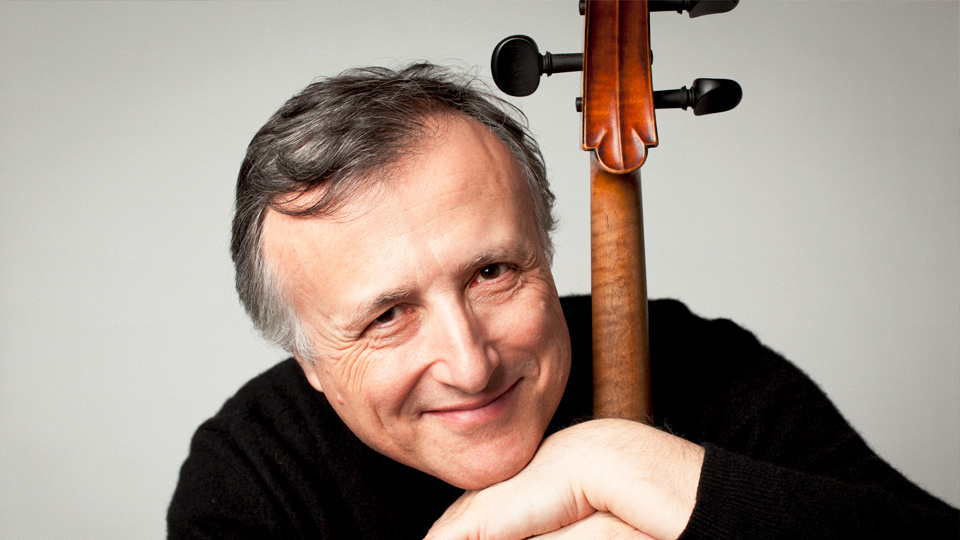
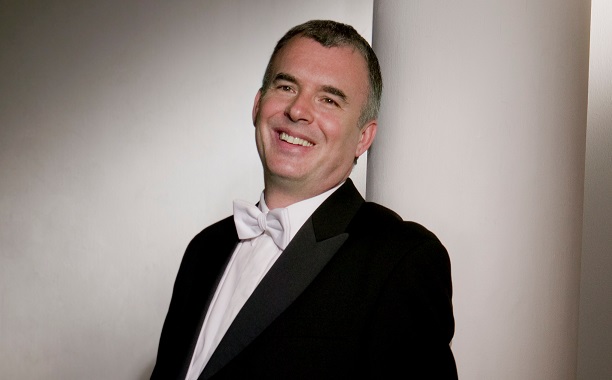
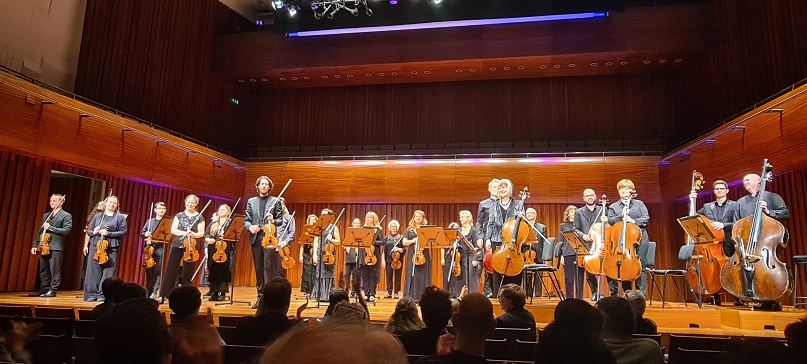
Tier3 Trio [Daniel Grimwood (piano), Joseph Wolfe (violin), Jonathan Ayling (cello)]

Tchaikovsky Piano Trio in A minor Op.50 (1881-2)

St Giles’ Cripplegate, London
Friday 9 June 2023

Reviewed by Ben Hogwood

Summer Music in City Churches is a week-long festival in London’s Square Mile, bringing a wide range of classical music to the capital’s audiences in a format that brings fond reminiscences of the much-missed City of London Festival.

For their fifth year, the City Churches concerts run under the theme Legends & Heroes, inspiring creative programmes from solo piano (Mark Bebbington’s Liszt-themed hour) through to a centenary performance of Walton’s Façade and a welcome pairing of Haydn’s Nelson Mass and Bliss’s Pastoral: Lie Strewn The White Flocks, closing the festival on Thursday 15 June.

St Giles’ Cripplegate played host to the Goliath of piano trios, the Tier3 Trio bringing us Tchaikovsky’s sole but very substantial essay in the genre. The composer had tried his hand at the format within the confines of his Piano Concerto no.2, writing the slow movement almost exclusively for violin, cello and piano. Here, he seems to go the other way, writing music for trio that sounds orchestral both in concept and sound. The piece is a sizeable memorial, the subtitle ‘À la mémoire d’un grand artiste’ a recognition of Tchaikovsky’s great friend and mentor, pianist Nikolay Rubinstein.

The challenge facing Tier3 – named after the pandemic conditions in which they were formed – was to get their sound to fill the roomy acoustic of St Giles without it losing detail, and this they commendably achieved. The balance between the instruments was ideal, thanks to Daniel Grimwood’s sensitive and clear phrasing at the keyboard, as well as careful attention to dynamic detail from violinist Joseph Wolfe and cellist Jonathan Ayling.

This is such a passionate piece that it would be easy to peak too soon, but this interpretation was borne of experience and a clear love for Tchaikovsky’s music. The sizeable first movement, clocking in at over 20 minutes, was ideally paced and compelling throughout. A sense of sorrow pervaded the soulful opening, with a profound solo from Ayling, but gradually chinks of light began to show, especially in Grimwood’s heroic second theme, block chords pealing like bells.

Despite its orchestral outbursts the trio does contain music of great tenderness, and these were found in sweetly toned violin and doleful cello, set against arpeggiated chords from Grimwood’s piano – a telling episode before the return of the main theme, radiating great sorrow.

The second and third movements effectively merge into a huge finale, Tchaikovsky presenting a Theme with 11 variations and a vast coda of boundless invention and variety. Here they kept the audience on the edge of their seats.

Early on there was brilliant virtuosity from Grimwood, the tumbling variations of the third variation giving it a balletic quality. These led into a passionate cello solo from Ayling, immediately contrasted by celesta-like sonorities from the upper range of the piano. An appropriately heroic seventh variation led to a fugue of impressive clarity and dexterity, before the figurations of the ninth variation unexpectedly conjured the vision of flowers falling onto a coffin.

A quirky tenth variation and relatively serene counterpart led us to the coda, an emphatic and exuberant theme surging forward. Here the players were at the limit but rose to the occasion magnificently, emotions close to the surface, before the final twist when the music returned to the minor key. Here there were parallels to the funeral march from Chopin’s Piano Sonata no.2 before the music gradually and respectfully subsided to silence.

This was an extremely fine performance of a piece whose impact remains considerable, an outpouring keenly conveyed to the St. Giles’ audience by players relishing the experience. As an encore Tier3 made a most imaginative and suitable choice, giving us a the fourth of Widor’s short Pieces en Trio. Titled Sérénade, it was a charming complement to the sunshine outside.

You can read more about Summer Music In City Churches at the festival website – and click on the artist name to read more about Tier3 Trio.

Online Concert: Orsino Ensemble at Wigmore Hall – Britten, Reicha & Janáček

Orsino Ensemble [Adam Walker (flute), Nicholas Daniel (oboe), Matthew Hunt (clarinet), Amy Harman (bassoon), Alec Frank-Gemmill (horn), Peter Sparks (bass clarinet)]

Britten Movement for wind sextet (1930)
Reicha Wind Quintet in E flat major Op.88/2 (1811)
Janáček Mládí (1924)

Wigmore Hall, Monday 5 June 2023 1pm

by Ben Hogwood

This attractive programme of works for wind ensemble began with a rarity.

Benjamin Britten seldom wrote for wind – a shame, since his writing for the instrumental family as soloists or in an orchestral context is remarkably assured. The Movement for Wind Sextet performed here by the Orsino Ensemble is thought to have been a response to Janáček’s Mládí – and is scored for the same forces. This account was shady and elusive to begin with, reflecting its elusive melodic and harmonic figures. There was beautiful control from Nicholas Daniel’s oboe solo before a quicker section featured some lovely ‘burbling’ sounds from the clarinets, oboe and flute pushing for the higher reaches. Ultimately this piece remains beyond reach, an intriguing if slightly frustrating sign of what might have been had Britten committed more wholeheartedly to the wind ensemble.

It made a welcome change to hear the music of Anton Reicha. Born in Bohemia in 1770, Reicha – a flautist – soon found himself leading the court orchestra in Bonn, where his musicians included a certain viola player named Beethoven. Moving on to Paris, Reicha taught at the Conservatoire, where his pupils included Berlioz, Franck and Liszt. In spite of these big-name links, his own music is not heard as often as it should be. He did however write prolifically for wind ensemble, completing 24 accomplished quintets, which are among his most-heard compositions.

The Wind Quintet in E flat major is a particularly attractive example, and received the ideal performance here. The Orsino Ensemble began with a brightly voiced Lento, with the added plus of Amy Harman’s characterful bassoon in the lower register as the ensuing Allegro began. This provided the impetus for the ensemble to exchange attractive melodies, enjoying the beautiful sonorities a wind ensemble can create. The Menuetto had a lovely lilt to its triple time, with busy inner parts to support the genial melody. The third movement also had a winsome lilt to its rhythmic profile, albeit a good deal slower – and with lovely operatic solos from oboe and clarinet. The perky last movement added humour to the mix, with some thoroughly enjoyable interplay, delivered here with virtuosity and style.

Janáček’s sound world is immediately different to those around it – as is the case with the intriguing wind sextet Mladi. Written as a ‘memoir of youth’, and composed around the same time as his masterpiece The Cunning Little Vixen, the work looks back to a childhood in Hukvaldy. Premiered in Brno in 1924, it was first performed in Britain – at the Wigmore Hall in front of the composer – in 1926.

The conflicting accounts of youth, refracted through the mind of a 70 year-old composer, are fascinating to the ear, with joyful moments tempered by unexpected, melancholic asides. There is however an underlying positivity running through the music.

The Orsino Ensemble enjoyed the raucous folk-based tunes along with the doleful asides that are such a characteristic of his work. The rich shades of colour were ideally exploited. Shadows lengthened over the second movement, depicting the composer and his mother parting at a train station. The third movement had the vigour of youth, with some sparky themes, while there was a motoric element to the last theme, generated by the horn – before more complementing aspects of joy and melancholy.

This was a very fine concert, with an encore dedicated to the recently passed Kaija Saariaho. Nicholas Daniel introduced the second of Oliver Knussen’s 3 fantasies for wind quintet, preceded by the poem How Sweet To Be A Cloud, part of the composer’s Hums and Songs of Winnie-the-Pooh. The sonorities we heard here were unexpectedly true to Saariaho’s sound world, and formed a characteristically striking memorial.

For more livestreamed concerts from the Wigmore Hall, click here

In concert – Benjamin Grosvenor, CBSO / Riccardo Minasi: Schubert, Chopin & Mozart

Benjamin Grosvenor (piano), City of Birmingham Symphony Orchestra / Riccardo Minasi

Schubert Overture in C major ‘In the Italian style’ D591 (1817)
Chopin Piano Concerto no.2 in F minor Op.21 (1830)
Mozart Symphony no.41 in C major K551 ‘Jupiter’ (1788)

Symphony Hall, Birmingham
Thursday 1 June 2023 (2.15pm)

Reviewed by Richard Whitehouse

It is not often these days to have a whole concert of music from the late Classical and early Romantic eras, but that was just what the City of Birmingham Symphony Orchestra provided this afternoon under the disciplined as well as immensely assured direction of Riccardo Minasi.

There was no mistaking the inherent classicism of Chopin’s Second (sic) Piano Concerto – not least the simmering impetus in its opening Maestoso where, after a forthright tutti, Benjamin Grosvenor rendered those main melodies with requisite poise, and the emotional eddying of its development in direct contrast to the terseness of its coda. Most memorable was a Larghetto of melting eloquence but also, in its central episode, a volatility only gradually dispelled. Here, and in the final Allegro, the almost concertante role allotted to bassoon was characterfully taken by Nikolaj Henriques – as were those brass fanfares and col legno writing for strings (was this really Chopin’s idea?) which see the latter movement on its way to a spirited close. A limpid take on Chopin’s Nocturne in C sharp minor from the same year made for an appropriate encore.

Mozart symphonies rarely conclude a programme nowadays, yet the last four are ideal for this purpose and none more than the Forty-First – by some distance the weightiest and the most physical such work prior to Beethoven’s Eroica. This was the highlight of Minasi’s recording of the final triptych (Harmonia Mundi), with the opening Allegro likewise a statement of intent in its rhythmic tensility and general bravura, though its more ambivalent asides were never downplayed. Less distinctive melodically than its two predecessors, the Andante is memorable for its expressive understatement and a subtlety – with wind and strings enfolded into a textural continuity – that accentuates its pathos. Nor was there any lack of suavity in the Menuetto, its outer sections finding ideal contrast with a trio whose pert expectancy was delectably pointed.

The final Allegro crowns this work in every respect and, here again, Minasi did not disappoint. Not that there any sense of merely ‘going through the motions’ with his inclusion of first- and second-half repeats, each of which brought added intensity to what had gone before as well as enabling the wealth of contrapuntal detail to come through as it too rarely does. For its part the CBSO more than rose to the challenge, not least in a coda whose methodical combining of this movement’s themes makes possible an apotheosis such as felt truly visceral in its affirmation.

Schubert evidently had other preoccupations when essaying his two overtures ‘in the Italian style’, both of which have fallen out of the repertoire this past half-century but which make for attractive and appealing curtain-raisers. Especially that in C major with its teasingly portentous introduction, jocular and lilting main themes, then coda which sees it through to an effervescent close. The CBSO players (woodwind in particular) audibly enjoyed making its acquaintance, and it would be a real pity were such pieces relegated to the lower reaches of today’s playlists.

Hopefully a performance such as that by Minasi will make this just a little less likely. One looks forward to his future collaboration with this orchestra, which returns next Wednesday with its chief conductor Kazuki Yamada in a programme featuring Holst, Beethoven and Rachmaninoff.

You can read all about the 2022/23 season and book tickets at the CBSO website. Click on the artist names for more information on Riccardo Minasi and Benjamin Grosvenor

In concert – Raphael Wallfisch, BBC Concert Orchestra / Martin Yates: English Music Festival opening concert

Raphael Wallfisch (cello, below), BBC Concert Orchestra / Martin Yates

Lewis A Celebratory Overture (2023) [EMF commission: World premiere]
Lloyd Webber (orch. Yates) Scenes from Childhood (c1950) [World premiere]
Moeran Cello Concerto in B minor (1945)
Alwyn Serenade for Orchestra (1932) [World premiere]
Delius Two Pieces for Small Orchestra (1911-12)
Vaughan Williams (arr. Adrian Williams) A Road All Paved with Stars (1929/2016) [Public premiere]

Dorchester Abbey, Dorchester-on-Thames
Friday 26 May 2023

Reviewed by Richard Whitehouse

The breezy ebullience of Paul Lewis’s A Celebratory Overture (redolent of Malcolm Arnold without any risk of expressive ambiguity) launched this latest English Music Festival in fine style, with its crisp and precise playing from the BBC Concert Orchestra under Martin Yates.

As so often in these concerts, world premieres were not lacking and the first brought hitherto unknown partsongs by William Lloyd Webber arranged into suite-form then orchestrated by the conductor. If the resultant Scenes from Childhood adds but little to the reputation of this not inconsiderable figure, the Prelude yields appealing poise while Serenade is a waltz of no mean suavity, then the Finale nimbly combines elements of fugue and waltz on its way to a rousing close. Worth hearing, and not least when rendered with such obvious enjoyment.

The emotional weight of this first half inevitably fell upon the Cello Concerto by E.J. Moeran. Completed in the aftermath of the Second World War, it was the composer’s first large-scale piece for his wife Peers Coetmore; her belated and often approximate recording likely having deterred others from taking it up. Not so Raphael Wallfisch (above), his belief evident from the outset of a Moderato whose confiding eloquence is not without undercurrents of unease. These latter are made explicit at the start of the Adagio, otherwise centred on one of the composer’s most affecting melodies and building with due inevitability to a cadenza whose growing animation carries over to the final Allegretto. Here a jig-like main theme denotes an Irish influence that offsets any tendency to introspection as it guides this engaging movement to a decisive close.

Quite a performance, then, which was complemented after the interval by a first hearing for the early(ish) Serenade by William Alwyn. Written while on examination duties in Australia, this undemanding piece moves from a (mostly!) tranquil Prelude, through a stealthy and by no means uninhibited Bacchanale then a serene Air which could yet find favour as a radio staple, to a Finale that, as Andrew Knowles rightly indicated in his programme note, betrays more than a hint of Czech folk-music across its insouciant and ultimately boisterous course.

Hardly an interlude, the brace of pieces by Delius fairly encapsulate the inward rapture of his maturity. Yates (above) brought just the right lilt to the dancing gait of On Hearing the First Cuckoo in Spring, while the subtle eddying of Summer Night on the River was effortlessly conveyed.

The final premiere tonight came in the guise of A Road All Paved with Stars – the ‘symphonic fantasy’ as arranged by Adrian Williams (a notable composer in his own right) from Vaughan Williams’ comic opera The Poisoned Kiss. Occasionally revived, its dramatic prolixity rather obscures its musical highpoints – emphasized here in what is both a chronological overview and cumulative paraphrase that also adds a non-symphonic orchestral work to its composer’s output. The surging emotion of those final stages could hardly leave an audience unmoved. This vivid reading concluded a memorable concert in which the Moeran was dedicated to the memory of Michal Kaznowski – who, as cellist of the Maggini Quartet and formerly section-leader at the City of Birmingham Symphony Orchestra, has left a legacy worth remembering.

To read more about the festival, visit the English Music Festival website. For information on the performers, click on the links to read more about cellist Raphael Wallfisch, conductor Martin Yates and the BBC Concert Orchestra, and for more information on composer and arranger Adrian Williams and composer Paul Lewis

In concert – Britten Sinfonia / Thomas Gould & Agata Zając @ Milton Court: Musical Everests – The Year 1953

Thomas Gould (violin/director), Miranda Dale (violin), Caroline Dearnley (cello), Britten Sinfonia / Agata Zając (Maconchy)

Corelli Concerto Grosso in F major Op.6/2 (publ. 1714)
Tippett Fantasia Concertante on a theme of Corelli (1953)
Maconchy Symphony for Double String Orchestra (1953)
Phibbs Flame and Shadow (2023)
Walton Finale from Variations on an Elizabethan Theme (1953)

Milton Court, London
Wednesday 24 May 2023

Reviewed by Ben Hogwood Pictures (c) Ben Hogwood

This typically imaginative concert devised by the Britten Sinfonia took as its starting point the events of 1953, where the United Kingdom shifted on its axis. It was of course the year in which Britain witnessed a Coronation, and in which Everest was scaled, but other than Walton’s jubilant finale to the collaborative composer project Variations on an Elizabethan Theme, no explicit musical links were made.

Instead, the Britten Sinfonia concentrated on two major works written for string orchestra in that year – one now well-known and one barely performed. The underdog, Elizabeth Maconchy’s Symphony for Double String Orchestra, made a very strong impression in this performance, brilliantly played by string players using a handwritten manuscript from 1953. The difficulty of this task necessitated a conductor, with Agata Zając joining at short notice. Hers was a dynamic presence, helping emphasise the rhythmic flair and dramatic impetus of the piece.

Maconchy’s music has often been critically coveted but is rarely heard in the concert hall – sadly an all-too familiar plight for a female composer innovating in the 20th century. Where many British composers wrote to include the countryside around them she wrote in a continental style, her music powered by fertile melodic imagination and rhythmic vitality. At times there are elements of Stravinsky and Bartók in her music but the closest parallel is Frank Bridge, with whom she shared an ability to explore the outer reaches of tonality without selling listeners short on melody.

The first movement of the Symphony grips the listener immediately, its powerful forward momentum complemented by soaring violin solos, which Thomas Gould played to perfection here. The febrile main motif bore close resemblance to Stravinsky’s Symphony in Three Movements, and Maconchy’s treatment of it was economical and engaging. Emotionally, however, the heart of the piece lay in the second movement Lento, where an eerie figure crept slowly upwards from cellos and basses, refusing to give way to the sweeter intimate melodies above. A rustic Scherzo, laden with syncopation, was followed by an equally captivating finale, initially pensive but with gathering intensity and drive. Just before the end the music broke out into a joyous country dance before returning to its more angular outlines.

The Britten Sinfonia were at the top of their game, subtly and superbly drilled by leader Gould. Each player was fully engaged, with smiles and nods of encouragement frequently passing between the team. When these qualities are natural, as they were here, a performance is elevated for the audience – and that was certainly the case for Corelli’s Concerto Grosso in F major, second in his set of twelve published as Op.6 in 1714. This opened the concert, dovetailing neatly into the work of Sir Michael Tippett, which it inspired.

Elegance and style were to the fore in the Corelli, with clean melodic lines given just a hint of vibrato for expression, and the interplay and balance between the three soloists and orchestra ideally judged. The work’s sunny countenance spilled over into the Tippett, though here the sun’s rays took on a more ecstatic quality.

The Fantasia Concertante on a theme of Corelli, also dating from 1953, is a compelling study in time travel. Tippett presents the original 18th century material unadorned, but adds his own unique musical language incrementally, so the piece becomes awash with bright colour and reaches a feverish intensity. Gould led a performance to savour, with fulsome support from fellow soloists Miranda Dale (violin) and Caroline Dearnley (cello). Together with the enhanced Sinfonia they rendered the golden textures beautifully, enhancing the elegance of the original material.

With the Tippett and Maconchy works a formidable pair either side of the interval, it says much for the London premiere of Joseph Phibbs’ new work that it was not in any way overshadowed. Though Flame and Shadow looked beyond events of 1953 for its stimulus it nonetheless bore a resemblance to the new coronation, its fresh take on music for strings revealing a busy contemporary approach.

Phibbs has an original and imaginative way with writing for strings, using audience-friendly melodic figurations but allowing them to roam harmonically, changing their perspective. The punchy rhythms of the Dance section here were a thrill, as were the combination of rapid fire and sustained open string pizzicato heard throughout the Interlude. Flame and Shadow, taking its title from a collection of verse by Sara Teasdale, was an edge of the seat piece, even to its closing Vocalise section, where a melody closely related to that found at the opening of Sibelius Symphony no.4 had a sobering effect. The contrasts of darkness and light were vivid and left a lasting impression – as indeed did the whole concert.

In twenty years of covering Britten Sinfonia concerts, and marvelling at their programming and technical prowess, this Milton Court evening confirmed their musical health to be stronger than ever. If only the same could be said for their long-term financial prospects, thrown into doubt by the withdrawal of funding in the latest Arts Council England cuts. Without the immediate publicity of similar actions levelled at English National Opera and the BBC Singers, the Britten Sinfonia have just launched their Play On fundraising campaign. The initial response has been encouraging, but it needs to raise more to secure the organisation’s future. Please do consider giving – I certainly will. This is the only way their imaginative concerts and a wealth of community-based outreach across East Anglia – where they are the only full time orchestra – can continue.

You can read all about future concerts from the ensemble at the Britten Sinfonia website. Click on the composer names to read more about Joseph Phibbs, Elizabeth Maconchy and Sir Michael Tippett – and for more details on concerts at the venue, visit the Milton Court website