Live review – Raphael Wallfisch, English Symphony Orchestra / Kenneth Woods: Meditations for Armistice Day

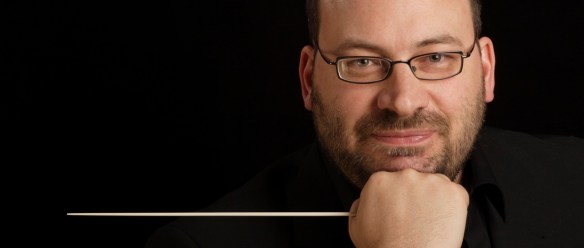
Raphael Wallfisch (cello, above), English Symphony Orchestra / Kenneth Woods

Wyastone Concert Hall, Monmouth
Sunday 8 November 2020 (online)

Adrian Williams Russells’ Elegy (2009/11)
Elgar arr. Fraser Variations on an Original Theme, Op. 36 (1899) – Variation IX, ‘Nimrod’ (1899)

Written by Richard Whitehouse

Remembering the Armistice – and just what it represents in human terms – is a regular fixture on the English Symphony Orchestra’s schedule. This year featured two pieces for strings that complemented each other well, whether in terms of their overall mood or underlying aesthetic.

Adrian Williams is contributing several works as the ESO’s current John McCabe Composer-in-Association, with Russells’ Elegy apposite in its ‘remembrance’ context as well as being a commemoration of pianist-conductor John Russell and director Ken Russell (hence the plural of the title). Audibly in a long lineage of British works for strings, the 10-minute piece moves between passages for ensemble and those where solo strings dominate with no mean subtlety and finesse, culminating in a sustained tutti that fades thoughtfully yet inevitably into silence.

Those encountering Williams’s music for the first time will hopefully have been encouraged to investigate further, and they will doubtless have responded to Elgar’s Nimrod as arranged for cello and strings by Donald Fraser (who has previously orchestrated the composer’s Piano Quintet and Sea Pictures). The result is comparable to the version of Tchaikovsky’s Andante cantabile from his String Quartet no.1 in the cellist’s discreet elaboration of a melodic line without detriment to the existing instrumental texture, and it would certainly make for an ideal encore.

This arrangement was eloquently rendered by Raphael Wallfisch, whose advocacy of British music over the years cannot be gainsaid, and the performances given added resonance by the photographs of soldiers and images from the Great War as accompanied this touching tribute.

You can watch the concert on YouTube here:

For more information on the English Symphony Orchestra you can visit their website here
In concert – ORF Vienna Radio SO / Marin Alsop: Musikprotokoll 2020 – Hidden Sounds

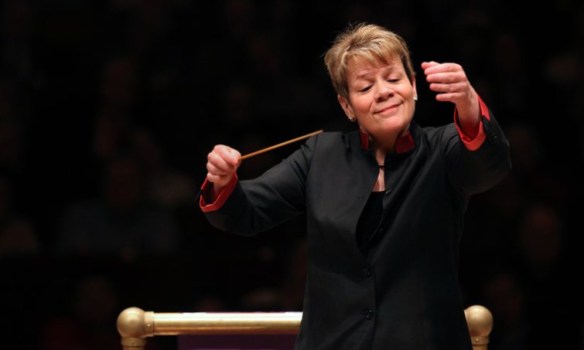
Joonas Ahonen (piano), ORF Vienna Radio Symphony Orchestra / Marin Alsop

Saariaho Chimera (2019) Austrian premiere
Maintz Piano Concerto (2014) Austrian premiere
López Disparates (2004-06) Austrian premiere

Helmut List Halle, Graz
Friday 9 October (review of the online broadcast)

Written by Richard Whitehouse

Now into its 53rd season, the Musikprotokoll festival in Graz has long been synonymous with some of Austria’s most innovative music-making, with this evening’s concert from the ORF Vienna Radio Symphony Orchestra and its current chief conductor Marin Alsop being no exception. Notable too was the sizable audience – notwithstanding the needs of social distancing – and its enthusiasm for a programme, as concise as it was uncompromising, which contained music by a younger Austrian composer and one who has been resident in that country over the past three decades.

First, though, a curtain-raiser by Kaija Saariaho – the Finnish composer who has long resided in Paris, whose output features harmonic subtlety and timbral finesse as its hallmarks. Both of these were present in Chimera – an oblique homage to Beethoven in the 250th anniversary of his birth, in which material from her earlier orchestral piece Orion was (almost) book-ended by the beginning and ending of that composer’s Second Symphony. The result was diverting if insubstantial, redolent of Berio’s re-imaginings while assuredly not outstaying its welcome.

Among the leading Austrian composers of his generation, Philipp Maintz (b1977) evidently wrote or at least began several piano concertos prior to completing the one heard tonight. He has spoken of admiration for the Ligeti and Lutosławski concertos, as well as his nonplussed regard for the Schoenberg; yet this latter soon came to mind in a piece whose four continuous movements take in a gradual accumulation of energy, followed by two contrasting intermezzi then a further and more rapid gathering of momentum toward the emphatic close. Connecting the whole are brief recitative-like passages as cede the foreground to a soloist whose dextrous pianism is otherwise embedded into the overall texture. Joonas Ahonen was an alert and agile soloist in music that requires, and received, acute coordination with orchestra and conductor.

Championed by such conductors as Michael Gielen, Peter Eötvös and Ilan Volkov, Jorge E. López (above) eschews both the gnomic intricacies of new-complexity and ironic self-regard of post-modernism in drawing resourcefully on the past for a provocative challenge to the future; not least those symphonic works as dominate his recent output. Leading into them is Disparates, described as a ‘Goya / Beethoven homage’ that draws parallels between the artist’s desolate late sketches with the composer’s equally gnomic Six Bagatelles from much the same time.

The sequence is no mere orchestration or paraphrase of piano originals. Its sepulchral textures thrown into relief by glassy asides from Stroh violin, the first piece merges reluctantly into the militaristic march-past of its successor, then on to those stark pathos and disjunctive contrasts of the two that follow. Fusing aspects of the final two bagatelles, the fifth piece veers between fraught eloquence and glowering recessional as it lurches on to an ending bereft of meaningful closure: Goya’s ominous imagery and Beethoven’s flights of fancy united in unwitting accord.

An engrossing and disquieting sequence, which yet offers a direct way into López’s singular musical ethos. The VRSO responded with verve and no little virtuosity to Alsop’s animated prompting, so rounding off what was an intriguing fixture in this always enterprising festival.

This concert can be seen and heard at the Musikprotokoll website

In concert – Gould Piano Trio @ Wigmore Hall

Gould Piano Trio [Lucy Gould (violin), Richard Lester (cello), Benjamin Frith (piano)]

Mozart Piano Trio in G major K564 (1788)
Clarke Piano Trio in E flat minor (1921)
Ravel Piano Trio in A minor (1914)

Wigmore Hall, London, 29 October 2020

Reviewed by Richard Whitehouse

This latest event in the Wigmore Hall season saw a welcome recital by the Gould Trio, now well into its third decade and whose frequent appearances at this venue have always featured music from right across the medium of the piano trio; with tonight’s programme no exception.

A medium to which Mozart came relatively late in his career, producing five such works in little more than two years. Last in this sequence, K564 has rather remained in the shadow of its predecessors; unfairly so, as motivic interplay across and between its three movements is comparable to any of his more imposing pieces of this time. Such was affirmed in a reading which brought out the muscular interplay of its Allegro, the wistful elegance of its Andante then the relaxed nonchalance of a final Allegretto as ranks among Mozart’s most endearing.

Would that Rebecca Clarke had followed up her solitary contribution; the Piano Trio belonging to a clutch of pieces that should have laid the basis for a composing career but were destined to remain the peak of her achievement. The influence of Debussy and Ravel is often cited, but the vehemence of Bartók’s music from this period is equally evident – witness the emotional volatility of the first movement (which predates the similarly conceived opening movement of the Hungarian composer’s First Violin Sonata), fraught eloquence of the central Andante then driving impetus of the final Allegro; its powerful culmination subsiding into a resigned coda whose defiant ending feels almost in spite of itself. A fine performance by an ensemble which was championing this piece well before it attained the recognition it now justly enjoys.

If Ravel’s Piano Trio has never lacked for advocacy over the century and more since it was first performed, it remains a tough challenge both technically and interpretively. The present account was perhaps a shade under-characterized in the simmering dance rhythms of the first movement, with the Scherzo’s deft syncopations similarly downplayed at least until the sheer effervescence of its closing bars. No doubts, though, as to the ensuing Passacaglia – building methodically yet irresistibly to its baleful climax before winding down into the depths of the piano, from whence the finale steals in. The latter movement has been criticized for exuding near-orchestral sonorities, but Ravel’s handling of this is astutely judged – not least in a coda whose hard-won triumph in the face of encroaching adversity was powerfully conveyed here.

It certainly made for an impressive conclusion to this recital, just the sort of programme that feels necessary at such a time as this. Hopefully, these next few weeks will bring no cessation on the part of Wigmore Hall or the Gould Trio – their activities necessary now more than ever.

This concert can be streamed again until 29 November via the YouTube link above, or through the Wigmore Hall website here

These Wigmore Hall concerts are free to view but the venue is relying on the generosity of its audience to make them possible. If you do watch the concert, please consider making a donation, either at the Wigmore Hall website or via PayPal

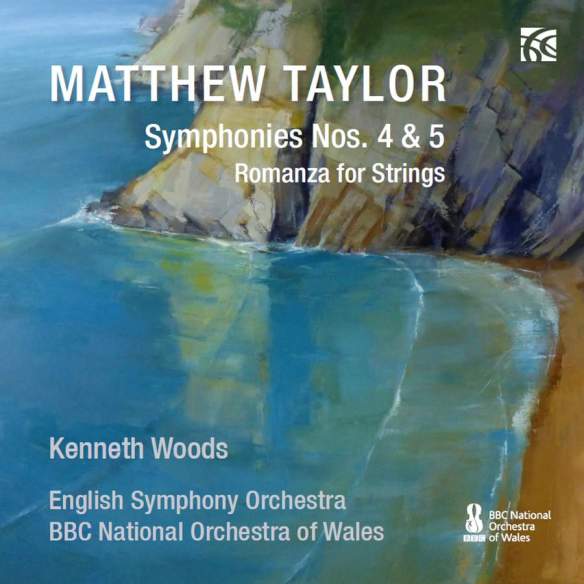
On record – Matthew Taylor: Symphonies nos.4 & 5 (BBC NOW / Woods) (Nimbus)

Matthew Taylor
Symphony no.4 Op.54 (2015-6)
Symphony no.5 Op.59 (2017-8)
Romanza for strings Op.36a (2006-7)

BBC National Orchestra of Wales (Symphonies), English Symphony Orchestra / Kenneth Woods

Nimbus Alliance NI6406 [63’56”]

Producer Simon Fox-Gál
Engineers Simon Smith, Mike Cox (Symphony no.4)

Recorded 8 June 2019 at St. Jude-on-the-Hill, London (Romanza); 14 January 2020 at Hoddinott Hall, Cardiff (Symphonies)

Written by Richard Whitehouse

What’s the story?

A new release of music by Matthew Taylor, including the Fourth and Fifth Symphonies, that means all of the composer’s works in this genre have now been commercially recorded (the First and Third on Dutton Epoch CDLX7178; the Second on Toccata Classics TOCC0175).

What’s the music like?

Symphonism goes back almost to the start of Taylor’s composing, his Sinfonia Brevis having been finished when he was 21, and symphonies have continued to appear at regular intervals across his output. Written respectively to mark the 50th anniversary of Kensington Symphony Orchestra, and as the third instalment within the English Symphony Orchestra’s 21st Century Symphony Project, these two pieces feel typical not least as regards their absolute contrasts of form and expression; while being equally unmistakable as the music of just one composer.

An in memoriam to composer John McCabe – dedicated to his widow Monica – the Fourth Symphony falls into three continuous movements. The first, marked Giubiloso, maintains its energy across distinct shifts of dynamics and activity (the evocative writing for woodwind and harp redolent of Tippett); subsiding from its impassioned climax into an Adagio where strings take the foreground in music of textural richness and emotional depth. Beginning at a decided remove from what has gone before, the Finale buffa exudes a nonchalant humour (reminiscent of Arnold), complemented by a deftly scored episode that cannily prepares for the denouement. This is purposefully controlled through to a climax that recalls the work’s opening theme before an ending as feels the more decisive for its literally coming to a halt.

Heard as an interlude between two imposing statements, the Romanza could hardly be better placed. An arrangement of the second movement of Taylor’s Sixth Quartet (Toccata Classics TOCC0144), it testifies to the suffused lyricism evident in this composer’s writing for strings.

The Fifth Symphony is only Taylor’s second such work in four movements, but its formal and expressive emphasis differs greatly. Indeed, the initial Allegro is unprecedented in his output for sheer volatility (not unlike that of Beethoven’s ‘Serioso’ Quartet), its driving impetus and explosive culmination creating a momentum which is pointedly left unfulfilled by the ensuing intermezzo-like Allegrettos. The first (a tribute to composer and teacher Cy Lloyd) is as terse and equivocal as the second (a tribute to Angela Simpson, wife of composer Robert Simpson) is poised and wistful. It thus remains for the final Adagio (a tribute to the composer’s mother Brigid) to secure that eloquent apotheosis towards which the whole work had been headed, as this moves with sustained power toward its plangent twin climaxes then on to a resigned coda.

Does it all work?

Indeed. In all three pieces, Kenneth Woods secures a dedicated response from the players so Taylor’s exacting yet practicable writing is heard to advantage, not least in acoustics whose immediacy emphasizes this music’s rapt inwardness as keenly as its untrammelled energy.

Is it recommended?

Yes, and not least for a booklet that features informative commentaries by both composer and conductor, and striking artwork by Andrea Kelland. An introductory portrait by James Francis Brown mentions Taylor as having written six symphonies: hopefully, no mere slip of the pen!

Listen & Buy

You can listen to clips from the recording and purchase, either in physical or digital form, at the Presto website

Read

You can discover more about Matthew Taylor by heading to his own website

In concert – April Fredrick, English String Orchestra / Kenneth Woods: Visions of Childhood – Following Mahler on the path to eternity

April Fredrick (soprano), Members of the English Symphony Orchestra / Kenneth Woods

Mahler arr. Stein Symphony no.4 in G major (1900) – Opening
Wagner arr. Woods Siegfried Idyll (1870)
Humperdinck arr. Woods Hänsel und Gretel (1892) – Der Kleine Sandmann; Abendsegen.
Schubert arr. Woods Die Forelle – Lied and Variations, D550/D667 (1817/19)
Mahler arr. Woods Das Irdische Leben (1892)
Schubert arr. Woods Der Tod und das Mädchen – Variations & Lied, D531/D810 (1817/24)
Mahler arr. Stein Das Himmlische Leben (1892/1900)

Wyastone Concert Hall, Monmouth
Friday 16 October (review of the online broadcast)

Written by Richard Whitehouse

The English Symphony Orchestra’s Music from Wyastone online series continued this evening with an ingenious programme centred on Childhood, as depicted in music from the latter 19th century, and featuring chamber arrangements by the orchestra’s principal conductor Kenneth Woods.

The initial bars of Mahler’s Fourth Symphony, heard in the now relatively familiar reduction by Erwin Stein, led seamlessly into Siegfried Idyll – here arranged for identical forces and so affording even greater prominence to Wagner’s felicitous writing for woodwind. In this never rushed account, Woods underlined the methodical aspect of music whose birthday association and ethereal aura rather bely its formal ingenuity. There were no qualms over instrumentation, even if the trumpet’s timely presence might have made the ecstatic climax seem even more so.

April Fredrick (whose impressive account of Strauss’s Four Last Songs in the first of these concerts is required listening) then took the stage for a medley drawn from the second act of Humperdinck’s timeless Hänsel und Gretel, trebling up as the Sandman and then both main characters in a reminder that the enchanting essence of this opera is seldom without its more ambivalent, even ominous undertones in the treatment of childhood. Moreover, this chamber reduction brought an intimacy that more closely aligned the music to its origins as a singspiel.

Of especial interest were two Schubert pieces – hardly unfamiliar in themselves, here given an unexpected while revealing guise. In the case of The Trout, this entailed interweaving the verses of the song with those variations of the fourth movement from the later piano quintet so as to make more explicit the constantly shifting emotions across what is often considered one of this composer’s most equable settings. A different procedure was adopted for Death and the Maiden, in which the slow movement of Schubert’s eponymous string quartet – its intensifying variations characterized by appealing woodwind contributions – were followed by the earlier song, heralded by the hieratic strains of harmonium, and whose mingling of anguish with resignation threw the variations’ emotional trajectory into more acute relief.

Following each of these items were songs by Mahler, the natural successor to Schubert in so many aspects of his music – not least these settings of texts from Des knaben Wunderhorn. In its pivoting between the child’s supplications and the mother’s entreaties, over the fateful strains of a ceaseless ‘treadmill’ accompaniment, The Earthly Life is one of this composer’s most evocative songs – albeit of the child’s existence running out as though grains of sand. By contrast, The Heavenly Life speaks of a child’s paradisal existence in the afterlife and if Mahler’s treatment is a good deal more complex than the words might suggest (the singer’s assessment of this on the ESO website is worth hearing), Fredrick’s judicious floating of the vocal line was integrated with Wood’s astute handling of the ensemble to good effect.

Hearing the latter piece in Stein’s reduction as finale of the Fourth Symphony served equally to bring this well-planned and thought-provoking programme full circle; one that is required listening for those yet to hear it, and with the next concert in this series keenly anticipated.

This concert can be accessed free until the end of Tuesday 22 September at the English Symphony Orchestra website

Further information about the Music from Wyastone series can be found here