Wigmore Mondays – Adam Walker, Tabea Zimmermann & Agnès Clément: Music for flute, viola and harp by Bax, Debussy & Gubaidulina

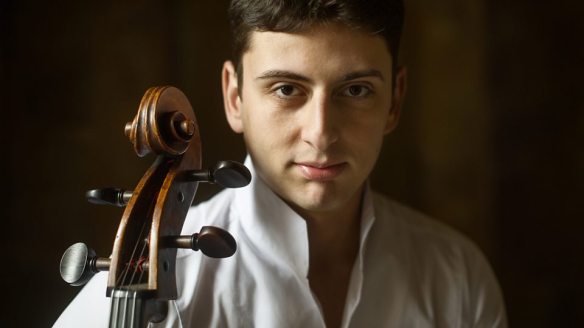
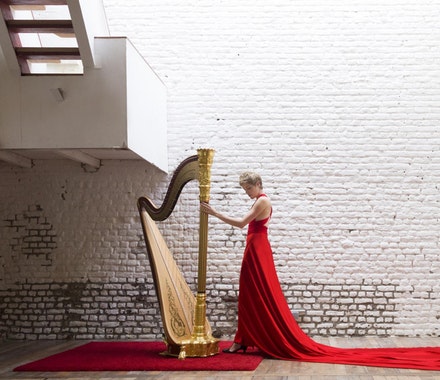
Adam Walker (flute, above), Tabea Zimmermann (viola) & Agnès Clément (harp) (both below)

Bax Elegiac Trio (1916) (1:40 – 11:15 on the broadcast link below)
Debussy Syrinx (1913) (12:47-14:28; Sonata for flute, viola and harp (1915) (17:34 – 35:44)
Stravinsky Elégie for viola (1944) (37:21-43:24)
Gubaidulina Garten Von Freuden Und Traurigkeiten (Garden of Joy and Sorrow) (1980) (45:38-1:02:34)

Wigmore Hall, London
Monday 15 April 2019

To hear the BBC broadcast through BBC Sounds, please follow this link

Photo credits: Adam Walker (c) Marco Borggreve, Agnès Clément (c) Tysje Severens

Commentary and Review by Ben Hogwood

The combination of flute, viola and harp is relatively unusual but has inspired some extremely forward-looking music since the second decade of the 20th century. Within two years of each other Bax and Debussy wrote independently for the combination, responding very differently to the potential of new and open textures.

Sir Arnold Bax was in fact the first to publish, and his Elegiac Trio immediately casts its spell through the rippling adagios of Agnès Clément’s harp (from 1:40 on the broadcast). Above this the flute of Adam Walker and viola of Tabea Zimmermann exchange airy thoughts, introspective but also free of constraint. The watery sound is beautiful and weightless, but Bax’s thoughts become more substantial. The music comes to rest in the major key, having started in the minor, with the feeling of troubles put to rest.

Of all the pieces written for solo flute, Debussy‘s Syrinx (12:47) is both the most magical and the most innovative. And yet when you listen to it there is no effort at all required, the languid lines instinctive but leading to an impressive climax. Adam Walker plays superbly here, ending in the lower register lost in thought.


Debussy’s Sonata for flute, viola and harp (from 17:34) is also a piece deserving of its description as magical, and is regarded as one of the signposts to modern 20th century music for its innovations in sound, harmony and melody. It is ideal when heard after Syrinx, as the flute begins – then the viola. As the programme booklet writer Paul Griffiths vividly observes, this first movement, marked Pastorale, takes time to pause in reflection, while demonstrating Paul Klee’s idea of ‘taking a line for a walk’. It’s elusive yet captivating.

The second movement Interlude (24:50) is graceful and a little dance like. Again the textures are beautifully open, helped by the tone quality of the three soloists, who bring to Debussy’s music that wonderful hazy warmth we associate with the composer at times. Then from 27:38 we hear a joyous tune from flute and viola together, over flowing harp, before the movement subsides to a soft end.

The Finale (31:08) is often singled out for its striking sonorities. The harp tremolo gives a rich backing for the very separate thoughts of flute and harp, one enchanting and the other relatively scratchy with the bow towards the bridge. At all times Debussy is keenly aware of the colours he wants to portray and the three players here respond superbly, bringing their close attention to sonic detail with a convincing unison.

Tabea Zimmermann then goes alone for the understated but striking Elégie of Stravinsky – striking because it is scored for solo, muted viola and sounds as though it has been imported from another civilization. It is also in two parts, so the initial idea (37:21) gives way to an austere dialogue between different ‘voices’ on the same instrument. The end recaps the mournful opening before dying away.

A world very far from the Wigmore Hall is also the destination for the unusual colours (for classical audiences at least) conjured up by Sofia Gubaidulina. East frequently meets West in her compositions, and in Garten Von Freuden Und Traurigkeiten (Garden of Joy and Sorrow) the East is most obviously present in the harp, plucking its responses to the flute’s decorations with slides of pitch. It is eerie but also compelling.

Then from around 50:15 the viola explores its harmonics – the fingers resting very lightly on the string to get a glassy sound that appears to be far-off, but which Gubaidulina uses cleverly. The flute is still the most prominent instrument, but increasingly the viola’s ‘voices of the night’ and the harp’s insistent plucking make themselves known. The music gets more animated, taking the harp right down to its lowest range – from where the flute starts a solo ‘cadenza’ (54:00)

The garden then seems to fall under its own spell, with night noises from all three instruments, until the viola plays a powerful line rising to a height. After this the music of the opening returns, with the striking harp slides again in evidence, before fading to the middle distance.

A superb performance of this piece from three friends, for whom this was their first ever concert as a trio. That would explain the wonderful spontaneity on show, for you would never have known!

Further reading and listening

The music in this concert can be heard here, including a live recording of the Gubaidulina and a legendary recording of the Debussy from the Melos Ensemble:

If Gubaidulina is a new name to your ears, then the strongest possible recommendation can be made for this recording of her Offertorium for violin and orchestra from Gidon Kremer, coupled with the Hommage à T.S. Eliot – a cycle for soprano and an octet featuring today’s viola player Tabea Zimmermann:

For more chamber music featuring the harp, this lovely collection from the Academy of St. Martin-in-the-Fields Chamber Ensemble is a treat. It includes two works by Debussy, the beautiful Introduction and Allegro by Ravel and the delightful Serenade for flute, harp and string trio by this year’s centenary composer Roussel:
Wigmore Mondays – Louis Schwizgebel, Benjamin Beilman & Narek Hakhnazaryan: Shostakovich & Mendelssohn

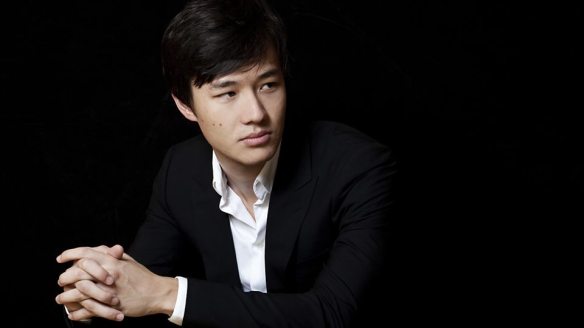
Louis Schwizgebel (piano, above), Benjamin Beilman (violin), Narek Hakhnazaryan (cello, both below)

Shostakovich Piano Trio no.1 Op.8 (1923) (from 2:14 on the broadcast link below)
Rachmaninov arr. Gayane Hakhnazaryan Vocalise Op.34/14 (1915)
Mendelssohn Piano Trio no.1 in D minor Op.49 (1839)

Wigmore Hall, London
Monday 1 April 2019

To hear the BBC broadcast through BBC Sounds, please follow this link

Commentary and Review by Ben Hogwood

A piano trio of exciting soloists gave this memorable concert at the Wigmore Hall as part of BBC Radio 3’s Lunchtime Concert series.

Pianist Louis Schwizgebel, violinist Benjamin Beilman and cellist Narek Hakhnazaryan are all making a name for themselves on their own terms, but by uniting for chamber music performances illustrate the very first principles of why this music was written.

Before their stylish performance of Mendelssohn’s Piano Trio no.1, we heard them in early Shostakovich – his first of two works in the popular form. The Piano Trio no.1 is not a typical work in the context of the composer’s full output, however – but it does show a prodigiously talented 17-year old student making formal innovations and writing heartfelt music, in this case pointing towards the work’s dedicatee, Tatyana Glivenko.

Shostakovich’s teacher Maximilian Steinberg perceived his increased ‘enthusiasm for the grotesque’, documented in Anthony Burton’s excellent notes for this concert, but looking back in the context of the composer’s full output this fascinating work revealed more of a debt to Russian romanticism than could initially be expected.

Beilman and Hakhnazaryan picked up this connection in their ardent melodies, while the steely piano of Schwizgebel gave some clues as to the source of Steinberg’s displeasure. Here though they put the seal on an outstanding account of music full of energy but with its excesses curbed through Shostakovich’s compact design. A captivating performance which is well worth experiencing from 2:14 on the broadcast link.

The inclusion of Rachmaninov’s Vocalise (from 17:50) made good sense in the context of the Shostatkovich. Made by Gayane Hakhnazaryan, mother of Narek, this arrangement illustrated the versatility of Rachmaninov’s original, more familiar to us in orchestral guise or for solo instrument with piano. Violin and cello dovetailed beautifully here, the trio managing the balance with an appropriate blend of nostalgia and poise.

Mendelssohn’s Piano Trio no.1 is perfectly suited to a recital such as this, a piece with virtuoso demands that would appeal to the soloists but also a work whose close integration brings a special intimacy to its more reflective moments. This was a terrific performance, the darker colours of the first movement established immediately in Hakhnazaryan’s heartfelt cello subject (27:02). A doleful second movement Song without words was lighter but also touching (37:04), before the twinkling right hand figures of Louis Schwizgebel led a sparkling account of the Scherzo (44:20).

The finale fused all these qualities, starting in relative seriousness and darkness (48:04) but finding bright light as the music transferred subtly but gloriously to the major key (55:16).

As an encore the Scherzo twinkled again, completing a concert notable for its fresh, enthusiastic and virtuosic qualities. Catch it if you can!

Further reading and listening

The music in this concert can be heard in the best available recordings on Spotify here:

Wigmore Mondays – Novus String Quartet play Respighi & Berg

Novus String Quartet [Jaeyoung Kim, Young-Uk Kim (violins), Kyuhyun Kim (viola), Woongwhee Moon (Violoncello)]

Respighi Quartetto dorico (1924) (2:00 – 23:53 on the broadcast link below)

Berg Lyric Suite (1926) (27:15 – 59:23)

Wigmore Hall, London
Monday 25 March 2019

To hear the BBC broadcast through BBC Sounds, please follow this link

Commentary and Review by Ben Hogwood

Listening to the Quartetto dorico is like taking a big step back in time. The opening salvo of Ottorino Respighi’s quartet from the mid-1920s is certainly arresting for its volume and scoring – only four instruments but a massive sound! – and its musical language feels imported from another age.

The young Korean ensemble capture these qualities, establishing a dream state that is maintained throughout the performance. Respighi’s quartets are rarely performed, so the BBC and Wigmore Hall should be commended for bringing this one in from the cold, adding another dimension to the 20th century string quartet.

There is an otherworldly quality to the high violin writing later on in this single-movement span, lasting over 20 minutes – and the concentration of feeling provides an intense listening experience. From 4:30 on the broadcast link the music retreats to a quieter passage led by the viola, who essentially intones another chart to the soft, restful comments of the other three. A distinctive section starts at 9:27, with an irregular pulse but a strong rhythmic profile established by the plucked cello string, which gives a dance-like feel to the melody.

At 14:15 an important section starts, the Passacaglia – which has six beats in the bar. The music here is slow moving and deeply contemplative, the first violin taking the lead with a lot of the thoughts as the harmonies stay relatively still. Gradually the higher reaches of the instruments come into play, before a dramatic series of unison sweeps bring down the curtain.

If you’re able to read music I would highly recommend following the score with the performance, as it helps you appreciate Respighi’s unique approach to writing for string quartet. The link is here

From the sacred to the profane – and affter heady music to lift us away from earth, Alban Berg’s six-movement Lyric Suite brings us right back to earthly experiences. Though publically dedicated to the composer Alexander von Zemlinsky, as it quotes from his Lyric Symphony, it is in fact a not-so-private account of his doomed affair with Hanna Fuchs-Robettin, who he met on a visit to Prague in the 1920s.

The tempo markings of the six movements are descriptive and tell the story. The first provides a good introduction to Berg’s unique way of using serial (or ‘non tonal’) music in a way that is still highly melodic and richly layered with harmonies. Marked Allegretto gioviale (from 27:15 on the broadcast), it uses all four instruments for thick textures and intense dialogue, telling the story of the start of the couple’s affair.

The second movement, marked Andante amoroso (30:43), is lighter, with more of a spring in its step as Berg profiles Hanna and her two children, with distinct musical motifs for each. The third (Allegro misterioso – Trio estatico (37:24)) gives a musically vivid account of the affair’s consummation, with feather light textures, the instruments’ bows used near the bridge to create a feverish atmosphere.

Then, as the doomed nature of the relationship makes itself evident, the music turns sourer. The fourth movement is a slow one, Adagio appassionato (40:36) – and is passionate and pretty heavy, turning to depths of desolation at the end. The second violin (44:20) quotes from the Zemlinsky Lyric Symphony, but this is eerie and displaced, with the ending at 46:38 still more remote.

The last pair of movements is devastating for Berg. It starts with a febrile affair marked Presto delirando – Tenebroso (47:13) and has crisp, jagged phrases until, as the music slows, the thoughts become more remote and despair-laden, leading to the relatively sudden end at 51:45.

Finally the Largo desolato, which really is the end of everything () These are melodies that speak of despair and desolation, the end of the tether. A brief show of spirit and resolve is made at 56:56 but this is soon overcome by the viola and second violin, before some sweeping, downwards facing melodies on the cello. The music, fully spent, peters out at 59:23, as though Berg can no longer say any more.

Like the Respighi above, there is so much going on in Berg’s Lyric Suite that it may be an advantage to follow the music itself while listening. It can be found here

The Novus String Quartet gave incredibly impressive accounts of both works, taking the physical and mental demands in their stride and keeping a consistently high standard of ensemble. They have a refreshing approach to programming, and these elements should ensure they are a top level string quartet to keep an eye on.

Further reading and listening

The music in this concert can be heard here, with the Novus Quartet’s recently released recording of the Berg Lyric Suite an added draw:

The Quartetto dorico is one of two string quartets completed by Respighi, but he also wrote the celebrated Il tramonto (Sunset) for soprano and string quartet. All three works fit very nicely onto one album, recorded by the Brodsky Quartet and the mezzo-soprano Anne Sofie von Otter:

Meanwhile Berg’s music for string quartet works extremely well in company with his colleague and fellow ‘serial’ composer Anton Webern. Berg’s rich romanticism and Webern’s incredibly concentrated approach complement each other on this Juilliard Quartet album:

One more playlist to end with – a selection of string quartets from the mid-1920s, illustrating the range of styles applied to the idiom at that time. There are some very different responses here from Janáček, Bartók, Martinů and Frank Bridge – very interesting to compare and contrast!

Wigmore Mondays – Jeremy Denk plays Bach & Schubert

Jeremy Denk (piano)

J.S. Bach Partita no.5 in G major BWV829 (1726-1730) (1:35 – 16:37)
Schubert 4 Impromptus D935 (1827) (19:16 – 54:07)

Wigmore Hall, London
Monday 18 March 2019

To hear the BBC broadcast through BBC Sounds, please follow this link

Commentary and Review by Ben Hogwood

If you know anybody who is sceptical of the music of J.S. Bach, point them in the direction of the link above, and Jeremy Denk’s account of his Partita no.5. This sparkling display of virtuosity showed beyond doubt the composer’s ability to write instinctively with humour, a playful Partita where the only regret was the pianist’s decision not to use all the written repeats applied to the dance-based movements.

The reason for this would almost certainly have been time constraints, with Denk’s wish to combine the Bach with the Four Impromptus Schubert completed in 1827, his last full year. The two made a very satisfying coupling, giving listeners in the Wigmore Hall and to BBC Radio 3’s Lunchtime Concert an hour of fluidly written and brilliantly played pieces.

The Bach first, beginning at 1:35 on the broadcast link with a lively Praeambulum, then moving almost without a break into the traditional sequence of dance movements the composer reserved for pieces such as this. With the mood defined Bach presents an elegant Allemande (3:54), a light footed Corrente (7:35) and then a slower Sarabande (8:52), which features attractive doubling of the melody.

These slower dances always present a pause for thought within Bach, an intake of breath before more dancing – which here includes a Minuetta (11:34) where Bach puts a delightful ‘two against three’ set of rhythms together, the dance stumbling attractively. It’s over all too soon unfortunately, but the straight faced Passepied (12:38) has a stately feel, before the triple-time Gigue (13:48), with its centrepiece, a fugue that Denk masters most impressively, building the momentum to a thrilling conclusion.

Angela Hewitt has spoken of how the key of G major ‘always seems to inspire Bach to write music of great radiance, joy, gentleness and technical display’ – and that is on view throughout Denk’s spring-like account. He delighted in asides to the audience throughout, letting them in on his enjoyment of the music.

The Schubert presented a very different range of emotions. Published as a set of four pieces in 1839, twelve years after composition, the Impromptus work in isolation and also as a quartet, their themes crossing over but not as rigidly as a sonata might demand. This spirit of relative freedom runs through the four pieces.

The first Impromptu, in F minor (19:16 on the link) is a substantial piece that immediately brings Beethoven to mind with its call to arms – Schubert’s contemporary having not long died. The second theme of this impromptu (20:51) is soft and hymn-like, reflective yet with strength in depth when repeated and magnified, in development. This intense passage is cleverly worked, coming back around to the relatively stern main theme at 24:25, though Denk enjoys the more optimistic strains of the major key as it soon takes over. The ‘hymn’ recurs in this key at 26:08 – but as befits the uncertainty of this music, Schubert can’t resist more harmonic movement right through to the turbulent end.

The second Impromptu (29:43) is in F minor’s ‘relative’ key, A flat major, and starts in wonderful stillness. This main theme is restated on a number of occasions, resisting any of the louder interventions trying to derail it. A central section (from 33:05) is faster and flowing, but once again takes a turn for darker waters as Schubert alternates between major and minor key. This only heightens the soft contentment of the main music when it returns at 35:17, wonderfully handled by Denk.

The third Impromptu is similarly light and shade, but this time much more in favour of brighter thoughts. From its opening (37:27) it sets out a theme very similar to a famous melody from Schubert’s Rosamunde stage music, which the composer proceeds to take as a base for several variations – just as he did in an earlier String Quartet in A minor. This unfolds beautifully – with impeccable technique from Denk, and impressive depth in the minor key fourth variation (41:44). The twinkling figure of the final variation (45:30) looks to finish the piece in high spirits, but a final statement returns us to quiet thought.

Finally the fourth Impromptu (47:49) returns us to the F minor world of the first, though here Schubert is in the mood for a dance, evoking the Hungarian cimbalom with spicy harmonies and some daring passagework for the right hand. This finishes the piece acrobatically in the run up to 54:07, a feat superbly realised by Denk here.

As a completely irreverent encore, breaking Schubert’s spell but proving a superbly entertaining sign-off, we had the Pilgrims’ Chorus from Wagner’s Tannhäuser well and truly sent through the boogie-woogie and blues wringer by Donald Lambert (from 55:55 – 58:21)

Further reading and listening

If you enjoyed Jeremy Denk’s Bach playing, there is a disc of Partitas he released back in 2011 for Azica Records. You can hear it on Spotify here:

Denk’s latest release is an intriguing exploration of music from 1300 to the present day. You can hear it here:

Meanwhile to explore more Schubert Impromptus and pieces, the peerless Alfred Brendel is strongly recommended. This album includes all the Impromptus for solo piano as well as some attractive German Dances, the elusive but compelling 6 Moments Musicaux and the darkly tinged 3 Klavierstücke:

Wigmore Mondays – Belcea Quartet: Recollections of Hans Keller


Belcea Quartet [Corina Belcea, Axel Schacher (violins), Krzysztof Chorzelski (viola), Antoine Lederlin (cello)] Photo (c) Marco Borggreve

Haydn String Quartet in D minor Op.76/2 ‘Fifths’ (1797) (4:27 – 25:22 on the broadcast link)
Britten String Quartet no.3 Op.94 (1975) (28:18 – 56:35)

Wigmore Hall, London
Monday 11 March 2019

To hear the BBC broadcast through BBC Sounds, please follow this link

Commentary and Review by Ben Hogwood

Hans Keller was one of the great musicologists and musical writers of the 20th century, and this BBC Radio 3 Lunchtime Concert at the Wigmore Hall marked the occasion of what would have been his 100th birthday.

Despite his obvious talents as a writer and analyst Keller was a divisive figure, his forthright views often creating controversy, but the notes for the program accompanying this concert reflected a deeply passionate listener who simply loved the music of Haydn and Britten.

For Keller, Haydn was ‘musical history’s greatest thematic economist’ – a point borne out by the String Quartet in D minor Op.76/2. The nicknames applied to some of Haydn’s best-loved works are evocative, even if they do relegate some more deserving works to the sidelines. The ‘Fifths’ for this quartet refer not just to the melodic intervals in the first theme of the first movement (from 4:27 on the broadcast), where Corina Belcea’s first violin took an authoritative lead in this performance, but to the second theme too.

The discourse of the first movement was extremely satisfying in this performance, the Belcea Quartet lingering on one particularly spicy chord () while providing energy and passion. The second movement Andante (11:45), more a graceful minuet than a slow movement, had some lovely moments of radiance from all four players, with a lightness of touch carrying the whole way through.

In complete contrast the Menuetto itself (17:42) wore a stern expression, dramatically poised as its canon played out between upper and lower parts. It did relent a little however for its trio section (18:58), Haydn slipping into the major key for a rustic dance. Here the Belcea Quartet judged the speeds just right, leaning on the down beat perfectly, before the gruff Minuetto theme returned (20:16).

The finale, marked Vivace assai (21:11), began with a hushed urgency, the main theme a little flighty in Corina Belcea’s hands, but by the time Haydn transported the music into the major key the quartet had an assertive grip on the performance.

Hans Keller, as captured by his wife, the artist Milein Cosman

Benjamin Britten loved the music of Haydn, declaring ‘If I feel down when I go to bed, I take a Haydn quartet with me. It’s all in there.’ His own contributions to the string quartet have proved to be long lasting, but the third – dedicated to Hans Keller who had been persisting that Britten write it – is an extraordinary piece.

Britten conceived it in five movements which might look unconventional on paper, but which translate to an extremely clever interpretation of the traditional sonata form, impressing his friend Keller greatly. However the technical achievements are not at the expense of emotion, as the Belcea Quartet showed here. The first movement, Duets (28:18) pairs second violin with viola – Axel Schacher and Krzysztof Chorzelski beginning authoritatively – before first violin and cello add their thoughts (Belcea and Antoine Lederlin in similar unity of voice).

A scabrous Ostinato movement follows (34:24), the quartet stretched to their limits by Britten’s ‘multiple stopping’ (several notes played at once on each instrument) and on the edge emotionally, but brilliantly played here.

It felt like time ceased to exist for the Solo movement (38:04), Belcea finding a radiant calm in a hall so silent that even a passing tube train could be heard underneath. This was a deeply felt but incredibly free account from the violinist, its central section like a swift on the wing with no restrictions of movement or direction until pure stillness from 42:31.

Following this the forthright Burlesque (43:38), with its elements of Shostakovich, came as something of a shock – but led inevitably into the final Recitative and Passacaglia, subtitled La Serenissima (46:23). The shafts of bright light at the opening are unmistakeably linked to Aldeburgh, and here the quartet found yet another higher plain, Britten’s last substantial work playing out his last days but taking his leave in music of great restraint and beauty.

The reassuring rising motif of the Passacaglia (from 49:22) sets a firm base, from which Britten spins a number of variations. It ends openly (56:08), on a remarkable chord – as Keller says ‘a non-end’, Britten effectively declaring ‘I’m not dead yet’. It is a calling card for his music, restraint packed with hidden emotion – and the Belcea Quartet found its heart unerringly.

Further reading and listening

For more on Britten’s String Quartet no.3, you can visit this entry on the Good Morning Britten blog – an anniversary tribute to the composer from 2013 from yours truly.

Meanwhile the music played in this concert can be heard on the Spotify playlist below, including the Belcea Quartet’s own recording of the Britten:

The six works making up Haydn’s Op.76 represent the pinnacle of his writing for string quartet, and can be heard below in one of several fine available versions, this one from the Hungarian Takács String Quartet:

Britten’s contribution to the string quartet repertoire is hardly negligible itself, mind, and Keller was in great awe of the String Quartet no.2 in particular. Here is a link to the Belcea Quartet’s recordings of that, the extrovert D major String Quartet no.1 and the youthful but assured 3 Divertimenti: