Wigmore Mondays – Quatuor Arod & Timothy Ridout play Mozart

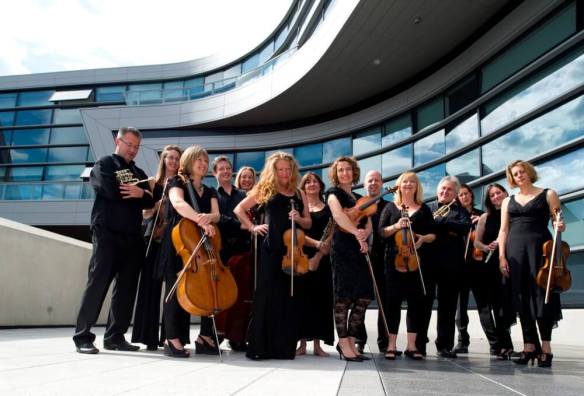
Quatuor Arod (above) [Jordan Victoria, Alexandre Vu (violins), Tanguy Parisot (viola), Samy Rachid (cello)], Timothy Ridout (viola)

Mozart
Divertimento in D major K136 (1772) (1:46-14:37 on the broadcast link below)
String Quintet in G minor K516 (1787) (17:02-50:49)

Wigmore Hall, London
Monday 25 February 2019

To hear the BBC broadcast through BBC Sounds, please follow this link

Commentary and Review by Ben Hogwood

This BBC Radio 3 Lunchtime Concert showed us Mozart young and ‘old’ – that is, a work each from his teenage years and from his fourth decade. It was given by the Quatuor Arod, a French-based quartet on the BBC New Generation Artists scheme, and their ranks were boosted by viola player Timothy Ridout, himself on the YCAT scheme.

The Arod Quartet’s performance of the Divertimento in D major K136 (from 1:46 on the broadcast) shows what a sunny piece of music this is – although it could be argued they take the first movement a bit too fast, perhaps displaying a bit too much nervous energy. Either way they play it very well and with affection, the simple theme carrying a long way.

The second movement, marked Andante (5:57), feels just right, the four parts integrating in a way that brings home the simple pleasures to be taken from playing this music together. The third movement (12:16) scurries out of the blocks with a hint of mischief, the interplay between the four taking on a more competitive edge but with the first violin of Jordan Victoria ultimately triumphant, and technically excellent.

The String Quintet in G minor K516 operates at the other end of the emotional scale, being the dark to the Divertimento’s light for much of its half hour duration. It is a magnificent piece, profound from the very first theme, where first violinist Victoria mastered the longer phrasing and the increased stretch of the melody when the second main theme of the first movement came around. The sound is very different with two violas, and the greater prominence for Mozart’s own instrument seems to have inspired him to write with especially great feeling. This is the second of four mature string quintets (there are two younger works of smaller form), and these are pieces that are substantial in their dimensions, their feeling and also their melodic invention.

While the piece does start in questioning mood (from 17:02), the five players here portrayed its nervousness while bringing shafts of light into the writing. Vibrato was sparingly used if at all, but was a stronger expressive tool as a result. The first movement’s two main themes are strikingly played, its structure clearly mastered, and the overall sound with Ridout’s viola added is very attractive.

The Minuet is normally a light hearted affair in Mozart chamber music, but here was anything but (from 27:31). Any attempts to come up with a lasting tune are broken by the sliced chords of the quintet playing together, so that what aspires to be a charming dance never has a chance to get fully into its rhythm. Some respite comes from the Trio section, where the composer will usually contrast what has gone in the Minuet. Here, from 29:22, Mozart slips from the minor key to the major for the first time, and the tension eases notably – especially in this performance where sunnier thoughts make themselves known for the first time. This, however, is short lived, for the Minuet returns in even sterner form (31:22)

The slow movement Adagio (32:43) is even more alarming than the Minuet. This is an unexpected move, for the music is in E flat major, which normally finds composers writing stronger music, and it requires the players to use their mutes the whole way through. With no vibrato from the Arod the textures are stark and the sounds lean, especially when the quintet breaks into smaller sections as it frequently does. In the middle the clouds darken further as Mozart moves into the distant keys of B flat minor (34:28) and E flat minor (38:07), where the extra viola (Timothy Ridout) makes a personal outcry of pain. There is hope however, the first violin taking us to sunnier climbs before we return to what feels like a stronger repeat of the music from the start of the movement.

The final movement (41:15) keeps the prevailing mood, slow and solemn from the outset – but then moves towards the major key, and finally shifts up a gear at 44:00 with music of much greater optimism. Let off the leash, Jordan Victoria enjoys the effervescent music he now has, and the tunes flow beautifully, the stern music of the first three movements now receding into the memory.

Further Listening

Mozart’s late chamber works contain some of the most rewarding music in all of his output. The four mature String Quintets stand at the peak of his achievements, with the work performed at this concert complemented by three other masterpieces. In their key make-up they match Mozart’s last four symphonies, and these versions by the Grumiaux Trio and guests (on CDs 2 and 3) make for a wholly satisfying listening experience:

The Quatuor Arod are relative newcomers to the recording scene – but their first disc of string quartets by Mendelssohn is a nice departure point from the Mozart played here:

Finally Mozart’s 3 Divertimenti for strings – best heard in their quartet form – give some of the most carefree classical listening you could wish to enjoy. This collection from the Hagen Quartett brings them together with the perennial favourite, Eine Kleine Nachtmusik:

Britten Sinfonia at Lunch – Bach, Janáček, Messiaen, Martinů & Edmund Finnis @ Wigmore Hall

Britten Sinfonia soloists [Thomas Gould (violin), Caroline Dearnley (cello), Emer McDonough (flute), Huw Watkins (piano)]

J.S. Bach Violin Sonata no.1 in B minor BWV1014 (1720)
Janáček Pohádka (1910)
Messiaen Le merle noir (1952)
Finnis Five Trios (world premiere tour) (2019)
Martinů Trio for flute, violin and piano (1936)

Wigmore Hall, London
Wednesday 13 February 2019

Photo credit Harry Rankin (Britten Sinfonia)

Review by Ben Hogwood

For years now Britten Sinfonia’s At Lunch series has been a steady delight, a way to discover the new and rediscover the old in chamber music. Using interesting combinations of instruments and building consistently innovative programs around them, the group offer a very accessible way in to discovering classical music’s treasures of the small scale.

This latest series, given in Norwich, Cambridge and London, is no exception, exploring 300 years of chamber music for flute, violin, cello and piano. Pianist Huw Watkins was the one constant for the whole concert, which at London’s Wigmore Hall gave off the unmistakeable aroma of spring.

Watkins and Thomas Gould began proceedings with a very tasteful account of Bach’s Violin Sonata. It is always good to hear Bach with piano accompaniment, for the music is so versatile that it suits the colours available. In a work like this particular sonata, where the piano plays much more than the role of a traditional accompanist, the textures were ideal. The violin, too, had more notes than normal thanks to Bach’s ‘double stopping’ writing, and Gould played these passages beautifully.

Janáček’s Pohádka represented quite a step forward stylistically but the transition was natural, and the fierce lyricism so often associated with the Czech composer was brought to the fore. Caroline Dearnley enjoyed the song-like passages and Watkins gave great clarity to the busy accompaniments, neither musician stinting on the intensity of Janacek’s writing as the plot of the fairy tale took hold.

The same could be said of Le merle noir, Messiaen’s only published work for flute and piano. An important work that signals his intent to accurately reproduce birdsong on traditional instruments, it is a remarkable piece – and Emer McDonough brought to it a wide range of colour. Most importantly she made it sound natural, for while the notes are all written out the intention of the piece is to sound as instinctive as possible. Again Watkins was the catalyst with some carefully voiced and wholly complementary thoughts.

Each ‘At Lunch’ concert features a new work on its world premiere tour, and the springlike atmosphere was ideal for Edmund Finnis and his Five Trios, for the conventional piano trio grouping of violin, cello and piano. Finnis finds an unusual amount of space in his music, and here his blend of quick movement over slow, drone-like figures opened out the textures very attractively.

There was very little bass in the five trios, notable for their translucence and bright textures. The first introduced softly oscillating figures, while the second spread shafts of light from spread piano chords and string harmonics. The dappled sunlight streaming through the Wigmore Hall roof was the ideal companion for the rippling textures of the third piece, but then in the fourth we enjoyed a bolder statement from the cello, its fuller sound ringing through a haze of sustained piano and glassy violin. To finish, the prayerful fifth piece completed a meditative ten minutes from a composer whose rarefied textures are well worth further investigation.

The Britten Sinfonia members closed their generous concert with Martinů’s Trio for flute, violin and piano. So prolific was the Czech composer that it is easy to overlook his achievements, particularly in the chamber music field. While it can on occasion be tricky to recall some of his melodies after the first hearing of a piece, the overall feel of his writing is uniformly positive and, in this case, capable of making the audience smile and clap spontaneously.

The third of four movements was responsible for the clapping outburst, a wonderful piece of effervescent writing betraying his Parisian location when writing it. The outer movements were a little grittier but still charmed with their syncopation, colour combinations and piquant melodies. The tender second movement was heartfelt too.

The standard of musicianship in this concert was extremely high. Particularly memorable moments include Emer McDonough’s final movement cadenza in the Martinů, where Watkins held the performance together admirably despite the tricky rhythms, the graceful playing of Thomas Gould in the Bach and Caroline Dearnley’s rich cello tone in the fourth of Edmund Dinnis’s trios, not to mention the expressive Janáček.

Once more from this source, an enlightening hour of music in an imaginative context. If you live in London or the East of England you really should catch them live soon!

Further listening

You can listen below to an interview with Edmund Finnis, talking with Dr Kate Kennedy about Five Trios ahead of the Wigmore Hall concert://embeds.audioboom.com/posts/7174837-edmund-finnis-talks-about-his-new-work-five-trios/embed/v4?eid=AQAAACp5ZVy1em0A

You can also hear a new release of Finnis’s music for orchestra here:

Meanwhile the remainder of the program is grouped together on this Spotify playlist:

Wigmore Mondays – Leila Josefowicz & John Novacek play Sibelius, Prokofiev, Knussen, Mahler and Bernd Zimmermann

Leila Josefowicz (violin), John Novacek (piano) (photo: Hiroyuki Ito for the New York Times)

Sibelius arr. Friedrich Hermann Valse triste (1903-4) (2:10-6:40)
Prokofiev Violin Sonata no.1 in F minor Op.80: 2nd movement Allegro brusco (1938-46) (6:45-13:21)
Knussen Reflection (2016) (15:17-23:44)
Mahler arr. Otto Wittenbecher Symphony no.5 in C sharp minor: 4th movement Adagietto (1901-2, arr. 1914) (25:45-34:00)
Zimmermann Sonata for violin and piano (1950) (34:51-48:11)

Wigmore Hall, London
Monday 21 January 2019

To hear the BBC broadcast through BBC Sounds, please follow this link

Commentary and Review by Ben Hogwood

On paper, this was a strange programme for an hour-long lunchtime recital at the Wigmore Hall. Yet that in itself is refreshing. Why should programming have to be conventional and fit a particular blueprint all the time? So while I may not have necessarily warmed to their choices initially, on reflection Leila Josefowicz and John Novacek gave us something different. There was a chance for those attending and listening on BBC Radio 3 to hear two very familiar pieces out of context, complemented by music such as the Zimmermann Violin Sonata that we may not have heard before.

Josefowicz and Novacek begin with a highly charged account of Valse triste (2:10 on the broadcast link), the third number from Sibelius’s Kuolema Suite. This is normally heard in the hands of a string orchestra, but the arrangement here – and the ardour with which Josefowicz plays the violin line – especially when doubled with the piano – brings a striking dimension to the piece.

It would have been lovely to hear Josefowicz and Novacek take on the whole of Prokofiev’s Violin Sonata no.1 in F minor Op.80, for this is a dramatic piece indeed with a chill to its writing that would have matched the weather outside. Sadly the second movement was all we had time for (from 6:45), and it felt disjointed outside of its familiar context, despite the passion invested in it by both performers.

Of far greater meaning was Oliver Knussen’s Reflection (15:17), one of his last completed works. Josefowicz was a close acquaintance of the composer, and he wrote his Violin Concerto of 2002 for her. The Reflection is not necessarily what you would expect, a reminder that not all reflections are calm and reflective. It begins urgently, the violin ascending before being joined by the bell-like sonorities of the piano. Some of the reflections are jagged, and most are urgent – and typically for Knussen there is a great deal of interest in the melodies and textures, a style that is compact and extremely listenable but also forward-looking. It finishes abruptly.

The excellent writer Paul Griffiths clearly had trouble finding any information on arranger Otto Wittenbecher, let alone anything to do with his version of the Adagietto from Mahler’s Symphony no.5. This famous excerpt transfers surprisingly well to the reduced forces here, helped by sumptuous tone and control from Josefowicz, whilst Novacek distils the orchestral parts into something surprisingly manageable. Played with soft affection, the main theme leaves its mark, even though the arrangement is taken at quite a quick pace.

The main work of this recital, Bernd Zimmermann’s Violin Sonata made a strong impact. In three concise movements, it manages to explore the outer realms of twelve tone writing without compromising its composer’s folk-inflected style. From the outset at 34:51 Josefowicz and Novacek carry the urgency of the piece as though it were hot in their hands. The inflections are reminiscent of Bartók but have a more jagged melodic style; the punchy percussive approach from the piano is similar however. The slow movement (39:00), is written in a 12-tone form (that is, each of the 12 pitches has to sound before it can be heard again). It is however surprisingly tonal, with its stress on the pitches of ‘C’ and ‘F sharp’ giving the music a restless base. The nocturnal scene again recalls Bartók but is resolutely Zimmermann’s own, with passionate lines from the violin. The busy third movement (44:07) revisits the mood of the first, with terse but meaningful statements from the duo.

As an encore the duo added Charlie Chaplin’s Smile (50:06) in an initially eerie, high-range arrangement made by Claus Ogermann.

Further Listening

Most of the music in this concert (with the exception of the Knussen) can be heard on the Spotify playlist below:

For further insight into Josefowicz’s clever programming, her disc with Novacek For The End Of Time provides ample evidence, bringing together works by Falla, Messiaen, Grieg and Bartók:

Preview – Mieczysław Weinberg: Between East and West (University of Manchester)

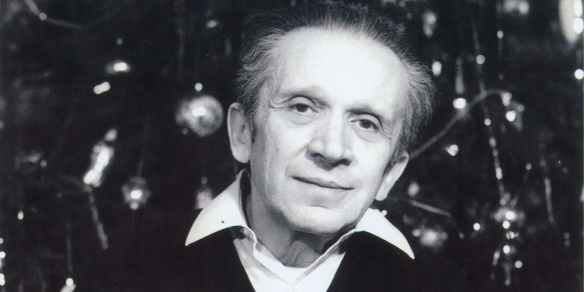
The two decades since his death have seen Polish-born Mieczysław Weinberg (1919-1996, above) belatedly acknowledged as the leading Soviet composer of the generation after Shostakovich.

The year of his centenary is being launched with a four-day conference at the University of Manchester. Co-sponsored by the British Academy and the Adam Mickiewicz Institute Institute, Warsaw, it will feature presentations from a number of Weinberg specialists.

The conference is co-convened by Prof David Fanning (University of Manchester) and Dr Michelle Assay (Universite de Paris Sorbonne), whose study of Weinberg’s music is to be published by Toccata Press later this year.

Running parallel to the conference is a cycle of Weinberg’s string quartets, given over seven lunchtime and evening concerts by the Quatuor Danel, whose complete recording of these works (for CPO) forms the centrepiece of a now extensive Weinberg discography. You can listen to the six volumes of the Quatuor Danel cycle of Weinberg quartets on Spotify. Vol. 1 is listed below:

https://open.spotify.com/album/2K4IGwTals8fngqCE9bLc5?si=8eo6oNLwQOe41o-BcD46aAAlongside two recitals of instrumental pieces and songs, the whole event provides ample confirmation of Weinberg’s significance during a time when interest in his music has never been greater.

Between East and West will be held at the Martin Harris Centre for Music and Drama, University of Manchester, starting this Thursday 24 January. Further information on the conference can be found here, while for more information on the Quatuor Danel cycle head here. Meanwhile to discover more on Weinberg himself, click on this link

Nash Ensemble – German Romantics II: Brahms, Mendelssohn & Schumann

Nash Ensemble: Ian Brown (piano), Stephanie Gonley, Michael Gurevich (violins), Lawrence Power, Timothy Ridout (violas), Adrian Brendel (cello), Graham Mitchell (double bass), Philippa Davies (flute), Richard Hosford, Marie Lloyd (clarinets), Ursula Leveaux (bassoon), Richard Watkins (horn) / Martyn Brabbins (conductor, Brahms Serenade)

Wigmore Hall, London
Saturday 12 January 2018 7.30pm

Schumann Marchenerzahlüngen Op.132 (1853)
Brahms String Quintet no.2 in G major Op.111 (1890)
Mendelssohn Song Without Words in D major Op.109 (1845)
Brahms, reconstructed Alan Boustead Serenade no.1 in D major Op.11 (1857/58)

Written by Ben Hogwood

The second of the day’s concerts in the Nash Ensemble’s German Romantics series at the Wigmore Hall presented some of the finest 19th century chamber music to come from the country, picking up where the earlier concert of music by Clara Schumann and Fanny Mendelssohn left off.

We began with late Robert Schumann, his Marchenerzahlüngen Op.132 (Fairy Tales), written for the appealing combination of clarinet, viola and piano that Mozart had pioneered in his own Kegelstatt trio of 1786. Schumann’s approach was formally less rigid, preferring to give his trio a quartet of character pieces, unlabelled in meaning but clear in tempo. Richard Hosford, Lawrence Power and Ian Brown were the perfect foil for these pieces, where the second especially stood out for its questioning harmony. The first and third pieces were songlike and romantic, while the fourth felt like one of Schumann’s celebrations of life itself. It is difficult to imagine a better performance than this one, the beauty of tone from clarinet and viola in particular a joy.

BrahmsString Quintet no.2, his last of seven chamber works for strings, is if anything even more positive and life affirming. While writing the piece in 1890 Brahms thought it would be his last work altogether, before going on to enjoy an unexpected Indian summer thanks to the inspiration of clarinettist Richard Mühlfield. The opening bars of the quintet are some of the very best in chamber music, and the tricky theme here was tackled heroically by cellist Adrian Brendel, the melody rising through the heady accompaniment of the others. The second theme of this movement was beautifully and soulfully rendered, setting the tone in the process for the second movement, an Adagio of heartfelt and profound utterance. The third movement, a silvery Intermezzo, was light on its feet while the finale recaptured the positive spirits of the first movement and pressed forward with impressive urgency. The Nash played brilliantly, communicating Brahms’ congested textures with apparent ease and enjoying the exchanges of ideas right to the end.

The second half of the concert, given to a packed Wigmore Hall, began with one of Mendelssohn’s most enjoyable trifles. His last work for cello and piano, the Song Without Words has at its heart a wonderful tune, which Adrian Brendel and Ian Brown clearly enjoyed. Brendel’s tone and forcefulness in the contrasting middle section were ideal.

This made an ideal prelude for early Brahms, the Serenade no.1. This wonderfully positive piece is usually heard in orchestral form, but here we heard Alan Boustead’s recreation of the original instrumentation of the piece, for nine solo instruments. With the combination of flute, two clarinets, bassoon, horn, violin, viola, cello and double bass, we were taken into the sound world of Beethoven’s Septet, written for a similar combination. Musically we were not far off either, and Martyn Brabbins joined the Nash Ensemble to conduct a highly spirited performance. Richard Watkins’ horn was the star of the show, projecting Brahms’s outdoorsy tunes with rustic charm, but in reality all nine players were superb, enjoying the relative lightness of texture and abundance of melody. The slow movement was placed second – not third, as the program said it would be – but this was an effective placement with some gorgeous textures. While this music was more thoughtful the Minuets and Scherzo returned us to the open air, while the Finale positively threw open the shutters for another winsome horn tune. This was Brahms at his most carefree, and Brabbins ensured the Nash Ensemble were too.

For more information on the Nash Ensemble’s German Romantics series at the Wigmore Hall visit their website

Further listening

The below Spotify playlist compiles the music used in both of the evening’s German Romantics series from the Nash Ensemble, using their recordings where possible: