Wigmore Mondays: Fatma Said sings Schumann, Mendelssohn, Poulenc & Sherif Mohie El Din with James Vaughan

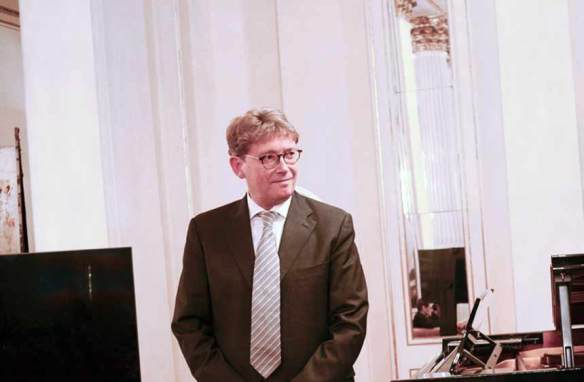
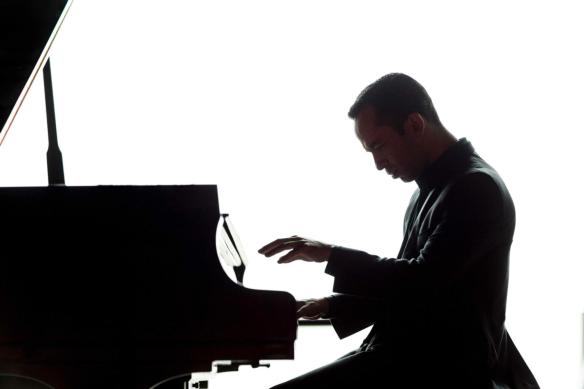
Fatma Said (soprano, above), James Vaughan (piano, below)

Schumann 6 Gesänge Op. 89 (1850); Singet nicht in Trauertönen Op.98a/7, Liebeslied Op.51/5 (both 1849), Requiem Op.90/7 (1850)
Mendelssohn Die Liebende schreibt Op.86/3 (1831), Ach, um deine feuchten Schwinge (Suleika) Op.34/4 (1837), Hexenlied Op.8/8 (1827)
Poulenc Les chemins de l’amour, from Léocadia (1940), 2 poèmes de Louis Aragon (1943)
Sherif Mohie El Din Three Poems by Amal Donqul (1989)

Wigmore Hall, London; Monday 15 January 2018

Written by Ben Hogwood

The broadcast can be heard on the BBC iPlayer by clicking here

As a demonstration of artistry, this was quite some Wigmore Hall debut for soprano Fatma Said, a BBC Radio 3 New Generation Artist. The Egyptian singer used four languages in the course of an hour, and showed an aptitude for contrasting musical styles in a cleverly constructed programme.

It was good to hear less familiar Schumann songs as a starting group (from 1:32 on the broadcast) The set of six, published as Op.89, were written in the composer’s second ‘year of song’, the productive 1850. They set words by Wilfriend von der Nenn (a pseudonym for Wilhelm Schöpf), and show off an economy and intensity of word setting, with none lasting more than two minutes.

Said caught the agitation running through Es stürmet am Abendhimmel (There are storms in the evening sky) (1:32), set up by a wonderfully turbulent introduction from the excellent James Vaughan. A flowing Heimliches Verschwinden (Stealthy departure) (3:07) led to the yearning harmonies of Herbstlied (Autumn song) (5:12), then the softer hearted Abschied vom Walde (Farewell to the forest) (7:38). Both performers threw wide the curtains for a bracing Ins Freie (Out in the open) (9:45), before Röselein, Röselein! (Rose, little rose) (11:54) began with a striking solo, setting its dreamy mood.

A group of three more Schumann songs followed, the bright and carefree Singet nicht in Trauertönen (Do not sing in mournful tones) (15:20) leading to Liebeslied (Love Song), where there was a nice rapport from both performers in the song’s ebb and flow (17:38). Requiem (19:46) had a restrained and respectful air.

Mendelssohn’s songs are less-often heard, but carry melodic invention along with often incredibly challenging piano parts! A thoughtful Die Liebende schreibt (The beloved writes) (24:55) and the more urgent Ach, um deine feuchten Schwingen (Ah, West Wind, how I envy you) (27:51) were nicely done, but the Hexenlied (Witches’ song) (30:34) was something else, the high notes nailed impressively by Said while Vaughan handled the flurry of notes with apparent ease.

The pair then turned to Poulenc, whose songs are the jewel in the crown of his musical output. We heard three brief but meaningful numbers, Les chemins de l’amour (The paths of love) (34:44) caught the efforts to stay cheerful despite the approach of World War II in 1940, while C (38:51) dealt with the immediate and horrific aftermath. Fêtes galantes (41:40) was a bit too breathless, but maybe that was the point as it raised a laugh!

Said then turned to ‘home away from home’, introducing three songs by Egyptian composer Sherif Mohie El Din, a welcome move that introduced a new sound world to the Wigmore Hall as well as showing the soprano’s clear passion for music and words of her first language.

The musical depiction of The Rain (from 44:22) was vivid and featured well-placed silences, the piano part enhancing the effect of raindrops. Could the river flow forever (46:50) had darker shading, while the final Against whom?  (49:57) was a tortuous and anguished study of feelings felt during surgery.

The performers generously gave us two encores – a further Egyptian song, Daughter of the Sultan by Gamal Abdel-Rahim (54:41) and then, after the radio went off air, Old Sir Faulk by Sir William Walton, with accompanying gestures from the soprano.

This emphasised how at home she is on the stage, and capped an extremely impressive and enjoyable recital, where a blend of musicianship and communication of the messages behind the text was always the primary goal. Both performers succeeded comfortably.

Further listening

You can listen to recorded versions of the repertoire in this concert on this Spotify playlist, apart from the Sherif Mohie Eldin songs which are not on the streaming service:

Meanwhile here is a link to the Sherif Mohie Eldin official YouTube page, including the three poems performed in the concert:

Wigmore Mondays: Isabelle van Keulen & Ronald Brautigam play Beethoven, Fauré & Szymanowski

Isabelle van Keulen (violin), Ronald Brautigam (piano)

Beethoven Sonata for piano and violin in G major Op.30/3 (1801-2) (from 1:37 on the broadcast)
Szymanowski The Fountain of Arethusa from Myths Op.30 (1915) (from 19:51)
Fauré Violin Sonata no.1 in A major Op.13 (1875-6) (from 26:34)

Wigmore Hall, London; Monday 8 January 2018

Written by Ben Hogwood

The broadcast can be heard on the BBC iPlayer by clicking here

Full marks to the Wigmore Hall for their choice of established recital partners and an invigorating program to start the 2018 BBC Radio 3 Lunchtime Concert series. Isabelle van Keulen and Ronald Brautigam were clearly brought in to blow away the January blues and dispel any ‘back to school’ feelings among the audience, and they did so with freshly minted interpretations of Beethoven, Szymanowski and Fauré.

Beethoven’s eighth published Sonata for piano and violin, the third of his Op.30 set, began the concert (from 1:37 on the broadcast link). This spring-like work flew off its perch with a flourish, and once a few minor tuning issues at the outset were settled van Keulen and Brautigam enjoyed the close-knit ensemble playing in the first movement.

The second movement, a slow Minuet (from 8:00), was delivered as a passionate song and dance, a little quicker than expected, while the third movement (from 15:00) threw open the doors once again, van Keulen enjoying its folk dance associations.

The first of Polish composer Karel Szymanowski’s 3 Myths, also Op.30, had added electricity. Heralding a new sound world for the composer, The Fountain of Arethusa began with a watery cascade of notes from Brautigam (from 19:51), matched by tensile high register playing from van Keulen, both vividly portraying the fountain but also exploiting the sensual harmonies and rich textures. Hopefully van Keulen will go on to record the composer’s works for violin and piano.

The concert finished with one of the sunniest of works for the combination. Fauré’s Violin Sonata no.1, his first work in the form, surged forwards from the outset (from 26:34), the longer melodic phrases beautifully measured on the violin, while Brautigam’s sensitivity in balancing a busy piano part was a notable achievement.

The second movement (from 35:35) introduced darker, shaded thoughts and grew to a passionate climax of real stature. The third movement Scherzo (from 41:55) was a delight, showing off the qualities that secured an encore at the work’s first performance in Paris in 1877. The finale (45:45), initially elusive, brought all these elements and more together, and finished with an impressive sweep.

There was room at the end for an appropriate encore, giving homage to centenary composer Lili Boulanger. She died in 1918, aged just 24, and her Nocturne (from 52:13 on the broadcast), beautifully shaded here, was an atmospheric example of her unfulfilled potential.

Further listening

You can listen to recorded versions of the repertoire in this concert on this Spotify playlist. Meanwhile if you enjoyed the Fauré and Szymanowski in particular, this lovely disc from Augustin Dumay and Maria João Pires shows the depth of European repertoire from the 20th century for violin and piano.

Jerusalem Chamber Music Festival Ensemble – Stravinsky, Ustvolskaya & Shostakovich

Jerusalem Chamber Music Festival Ensemble: Elena Bashkirova (piano, above), Marina Prudenskaya (soprano), Pascal Moragués (clarinet), Sergej Krylov (violin), Alexander Knyazev (cello)

Stravinsky Suite from The Soldier’s Tale (for violin, clarinet and piano) (1918-19)
Ustvolskaya Piano Sonata no.5
Shostakovich Seven Poems of Alexander Blok, Op.127 (1967)
Ustvolskaya Trio for clarinet, violin and piano (1849)
Shostakovich Piano Trio no.2 in E minor Op.67 (1944)

Wigmore Hall, London; Thursday 14 December 2017

Written by Ben Hogwood

Pianist Elena Bashkirova founded the Jerusalem Chamber Music Festival in 1998, and this celebration at the Wigmore Hall was part of a desire to continually expand the festival beyond Israel’s borders. Here we had a well-conceived program of Russian music, if a little unremitting in its darkly coloured focus.

It was especially gratifying to see the prominence given to Galina Ustvolskaya’s music. A pupil of Shostakovich, she has a small but potent legacy of works, which show a style already thinking well ahead of its time. In the first half of the concert we heard the Piano Sonata no.5, a remarkably concentrated piece of music lasting only half the 20 minutes it does on record. The suspicion was that Bashkirova did not follow some of the instructed repeats, or that her performance was simply much faster than those before it. Either way it left a powerful imprint, its refusal to budge from a central Db anchoring the music becoming a really strong musical device in spite of all the activity around it.

Arguably even more accomplished was the Trio for clarinet, violin and piano with which the concert’s second half began. This too left a lasting impression, thanks largely to the sensitivity with which Pascal Moragués and Sergej Krylov played the quiet music, and to the probing and penetrating tone of Bashkirova’s right hand. As Paul Griffiths’ booklet note pointed out, this music sounds more like late Shostakovich – but its composition date of 1949 shows just how originally Ustvolskaya was thinking.

From Shostakovich we heard two works, the late Seven Poems of Alexander Blok, Op.127, and the Piano Trio no.2 in E minor, Op.67. Both are hugely effective concert pieces, but it was the Blok poems that cut to the core at the end of the first half. Soprano Marina Prudenskaya, a late stand-in for Anna Samuil, got right to the heart of Blok’s verse, nowhere more so than in the savage destruction of Burya (The Storm). From this a wispy cello line emerged, Alexander Knyazev responding with a moving plaintive tone, after which the trio joined for the first time in accompanying Prudenskaya for the final song. It capped a tightly structured performance, the string players finding just the right tone if not always the exact intonation, while Bashkirova’s piano probed the lower reaches of the bass sound.

This was also the case in the Second Trio, which was occasionally a bit unkempt technically but which unerringly found the heart and focus of Shostakovich’s music. From the ghostly harmonics at the start, Krylov and Knyazev were clearly on the same emotional page, and with Bashkirova the three players achieved an impressive variety of volume and colour. Shostakovich’s powerplay scherzo and middle of the last movement were incredibly strong and lasting statements, but as ever with his music the greater meaning could be found in the moments of intimacy where the listener can hear a pin drop. The last movement thus became the focus of attention, music of sorrow, paranoia and anger – with just a little respite at the end.

The evening began with Stravinsky’s suite from A Soldier’s Tale, distilled into short movements for clarinet, violin and piano. Melodic and spiky, this performance was enjoyable and included just the right amount of humour, before taking a darker turn for the final Triumphal March of the Devil, where Krylov took over.

An excellent and thought provoking concert, particularly in the light of the various programmes marking the centenary of the Russian Revolution this year.

You can listen to the music from this concert on the Spotify playlist below:

Distance – Mario Brunello plays Bach, Cage & Weinberg at the National Gallery in London

The Incredulity of Saint Thomas (1502-4), by Giovanni Battista Cima da Conegliano

Mario Brunello (cello, below)

J.S. Bach Solo Cello Suite no.5, BWV1011 (c1720s)
Cage 4’33” (1952)
Weinberg Sonata for Solo Cello no.1, Op.72 (1960)

Room 61, The National Gallery, London; Thursday 7 December 2017

Written by Ben Hogwood

A rare treat indeed – the chance to witness a concert in the very heart of the National Gallery. Given by cellist Mario Brunello, the hour of music was entirely inspired by the Cima work The Incredulity of Saint Thomas, a powerful and colourful depiction of the apostle’s doubting of Christ’s resurrection.

Brunello chose three pieces to bring the work to musical life, the first of which was entirely appropriate. Cellists such as Steven Isserlis have long held a belief that the six suites for solo cello by Johann Sebastian Bach carry a parallel with the story of the crucifixion and resurrection, and in choosing the Fifth Suite Brunello picked the one most closely associated with Christ’s death. The Sarabande in particular is some of Bach’s most extraordinary music, a single line portraying in vivid detail the darkest of moments, dispensing almost entirely with obvious rhythms or harmonic movement. The solemn prelude and faster dance music tends to occupy the lower registers of the instrument, and here it found a perfect match in the rich baritone of Brunello’s 1600 Maggini cello. Meanwhile the wispy lines of the second Gavotte were especially effective, tracing invisible lines around the performing space.

The second piece was a performance of John Cage’s 4’33”, a work that will divide opinions for eternity it seems. Never failing to raise a smile or a more extreme reaction, the three movements of silence – each conducted in by Brunello, as the composer instructs – were here an effective postscript to the Bach. While inevitably there was some extraneous noise from people walking around in the gallery, and a brief solo from a vibrating phone in the middle distance, the period of reflection if anything enhanced the impact of the Bach that had gone before, whilst enabling us to focus afresh on the painting behind Brunello’s left shoulder. I did not time the ‘performance’, though it felt a lot longer than the specified duration – perhaps an indication that, in a busy city, 4’33” can be a surprising length of time.

Coming out of the silence with the Suite no.1 for solo cello by Mieczysław Weinberg was a fascinating move. Only in the last five or so years has the music of this Soviet / Polish composer gained recognition, thanks in part to Brunello’s close associate Gidon Kremer and the Kremerata Baltica. Brunello grew the first movement out of nothing to a powerful apex before dropping back to the low note where it started, while the second movement was a charming yet muted dance, played as though the real drama was being held back. And so it proved, for the final movement started with such ferocity as to knock the listener back in their seat. Three powerful bow strokes of unison ‘C’s – the same tonal centre of the Bach – brought all manner of parallels with the three hours between crucifixion and death, though the violence was also portraying Thomas’s disbelieving prods at Christ’s side.

Either way this was incredibly powerful in its realisation, Brunello making up for the occasional tuning idiosyncrasy with a forceful tone which seemed to grow ever more powerful as the range went higher. Weinberg’s music carries great meaning, given the composer’s responses to the tragedies of his personal life, and its use here with Bach and Cage put it in the best possible context. Even the weather responded in kind – when we entered the gallery it was raining, but we emerged blinking into powerful sunshine. A true darkness to light experience.

Further listening and reading

You can experience the same program from the National Gallery on this Spotify playlist, including Mario Brunello’s recording of the Bach:

Meanwhile if you are interested in more Weinberg, the release below, of chamber symphonies and the Piano Quintet, is a substantial document completed by Gidon Kremer with the ECM label:

Wigmore Mondays: Céline Moinet & Florian Uhlig – Schumann Romances for oboe and piano

Céline Moinet (oboe, above – picture Francois Sechet), Florian Uhlig (piano, below)

Schumann 3 Romances Op.94 (1849)
Nielsen 2 Fantasy Pieces Op.2 (1889)
Clara Schumann 3 Romances Op.22 (1853)
Robert Schumann 12 vierhändige Clavierstücke für kleine und grosse Kinder Op.85/12 – Abendlied (1849)
Pasculli Concerto on ‘La Favorita’ by Donizetti ()

Wigmore Hall, London; Monday 4 December 2017

Written by Ben Hogwood

The broadcast can be heard on the BBC iPlayer by clicking here

Robert Schumann was a composer equally at home in short musical forms as he was in longer constructions – but it seems his most intimate thoughts can be found in the shorter pieces, either his songs or his chamber music. Schumann’s lyrical style of writing means that pieces like the 3 Romances, written for Clara as a gift, transfer effortlessly between treble instruments such as the violin, clarinet or horn. These three, however, work best on the oboe, its tone perfectly suited to the reflective and slightly mournful outer pieces.

The two Nielsen pieces are early works, written by the composer shortly after his graduation from the Copenhagen conservatoire – a Romance and an Intermezzo in the form of a Humoreske.

Returning to Schumann, we hear an arrangement of a piano piece for children, and then three Romances by Schumann’s wife Clara. These were originally written for the violinist Joseph Joachim, but like her husband’s music they transcribe for oboe and piano with ease.

Finally a piece by Antonio Pasculli, regarded as the best oboist of his time – and one who enjoyed arranging operatic themes for the oboe in highly virtuosic pieces with piano accompaniment.

Follow the music

The times used relate to the broadcast link above.

Schumann 3 Romances Op.94 (1:34) (12 minutes)

The first piece (1:34) is lyrical but slightly downcast in its musical though, a time for reflection. The mood becomes more upward looking for the second piece (4:55), Schumann switching towards the major key for a gentle tune that he contrasts with an energetic central section (from 6:04). The third piece (8:54) begins with the bare bones of a melody, played by the oboe and piano together, with darker shades to the texture and harmony that never fully leave the music.

Nielsen 2 Fantasy Pieces Op. 2 (from 15:13) (6 minutes)

Nielsen gives the oboe a sweet melody for the first fantasy piece, a Romance (15:13) but characteristically alters the harmonic setting to throw it just a little out of kilter.

For the Intermezzo – a Humoreske – from 18:32, an impish and slightly mischievous approach makes for a charming piece, especially when the harmony moves into the major key.

Clara Schumann 3 Romances Op.22 (from 22:36) (10 minutes)

The first Romance is a genial piece that goes on to test the oboist’s control of the upper register. There is fluid interplay between the oboe and piano before the piece softens at the close. From 25:34 the second piece moves into a minor key, and once again a darker outlook. The third Romance, from 28:22, is the most expansive of the three, with flowing piano and a long legato oboe line, before Clara introduces a more playful aspect to the oboe’s lines.

Schumann Abendlied Op.85/12 (from 32:56) (2 minutes)

A short but sweet lullaby from Schumann’s Music for Children (Large and Small!), Abendlied (An Evening Song) is beautifully played.

Pasculli Concerto on La Favorita by Donizetti (36:44) (12 minutes)

A carefully considered piano introduction sets the scene, in the spirit of the best concertos, with the oboe following 40 seconds later. The slower introduction includes some extremely tricky passagework for the oboe, but also some broader melodies from Donizetti’s opera. Then after a cadenza from the oboe, the pace quickens (41:45) in a march. Now the oboe line is incredibly demanding, twisting and turning in rapid figurations in what feels like a thorough test of stamina rather than anything more musically meaningful!

Thoughts on the concert

This was quite a short recital for the Wigmore Hall lunchtime, but was beautifully played by Céline Moinet, who showed off technical prowess but more than anything a keen ear for and aptitude with the music. She inhabited Schumann’s world easily, finding the thoughtful intimacy that he pours into his shorter works, not to mention the darker side they inevitably hint at.

For the Pasculli she was really able to cast off the shadows, but here Florian Uhlig’s virtuosity and prompting were just as important, the pianist mastering some tricky runs in response to Moinet’s ever greater athletic feats. That she managed to bring across Donizetti’s operatic melodies was no mean feat, and the end was thrilling in its bravura.

Further listening and reading

You can listen to Céline Moinet and Florian Uhlig in their new album Schumann Romances, available here on Spotify:

Meanwhile Moinet’s previous disc, Meditations, brings together a lovely combination of French, Italian and German works – some original, some arranged: