Britten Sinfonia At Lunch Two: Anna Clyne’s This Lunar Beauty

britten-sinfonia

Julia Doyle (soprano), Marios Argiros (oboe), Maggie Cole (harpsichord), Jacqueline Shave, Miranda Dale (violins), Clare Finnimore (cello), Caroline Dearnley (cello)

Wigmore Hall, 20 January 2016

Written by Ben Hogwood

If you live in London or the South East of England, and fancy a bit of musical exploration, then the Britten Sinfonia’s At Lunch series comes highly recommended.

Celebrating its tenth anniversary, the enterprise promises a brand new work in every concert – and proceeds to build the whole hour of music around it, often with the shared theme of a particular instrumental or vocal combination. With programme notes for adults or schoolchildren, it is one of the most accessible lunchtime concerts you could wish to enjoy – and as well as having the obvious bonus of professional quality performances, it is completely judgement-free!

This particular concert illustrated just why the formula works so well. Taking as its theme the combination of voice, oboe and strings, the Britten Sinfonia built an intricately weaved concert taking in arias from Bach and Scarlatti cantatas as well as two very different approaches to minimalism from Arvo Pärt and Ligeti. It was fitting, then, that the final piece – the new commission from Anna Clyne, This Lunar Beauty, should bring all these strands together.

anna-clyne

Anna Clyne photo by Javier Oddo

Setting the W.H. Auden poem of the same name, Clyne has written a piece of outstanding beauty. Its calling card is a distinctive melody that seems to be sourced from medieval England, but works it in a way of which the late 1960s British folk pioneers such as Fairport Convention, Steeleye Span or Pentangle would be entirely proud.

The repetitions of the tune, given in soprano Julia Doyle’s clear tones, were subtly varied by additions and subtractions to the instrumental texture, filling up with strings or paring back so the glitter of the harpsichord could be sensed on top. This Lunar Beauty left a strong emotional impression, using its forces sensitively in new music of rare quality and depth.

Before this, Doyle leant her clear tones to three varied arias from Bach Cantatas, with oboist Marios Argiros excelling in the obbligato to the aria Tief gebückt und voller Reue. We also heard Salvatore Sciarrino’s arrangement of two arias by Alessandro Scarlatti, the first of which had a striking accompaniment of muted strings without vibrato.

The two very different approaches to minimalism were fascinating. In Arvo Pärt’s Fratres time stood suspended as the string quartet’s theme, first heard in ghostly harmonics, gradually found body and soul before ebbing away into the distance. Ligeti’s Continuum froze time in a wholly different way, the solo harpsichord – brilliantly played by Maggie Cole – seemingly trapped in rapidly flashing strobes. Somehow, despite the hyperactive energy, this too found its own stillness.

A very fine concert, hopefully to be broadcast on the BBC in the future. In the meantime, have a listen to the audio below – and get yourselves over to listen to vocal works on Anna Clyne’s website, because this is a composer we want to hear a lot more of!

You can also hear her new Violin Concerto The Seamstress on the BBC iPlayer, performed by Jennifer Koh and the BBC Symphony Orchestra conducted by Sakari Oramo. The concert is available until 14 February 2016

Wigmore Mondays – Dejan Lazić plays Haydn, Shostakovich, Schumann and his own work

dejan-lazic

Dejan Lazić (piano) plays a concert of Haydn, Shostakovich, Schumann and his own Istrian Dances

Wigmore Hall, London; Monday, 18 January 2016

written by Ben Hogwood

Audio (open in a new window)

http://www.bbc.co.uk/programmes/b06vrk8d

Available until 17 February

What’s the music?

Haydn – Piano Sonata in E flat major, Hob.XVI:52 (1794) (20 minutes)

Shostakovich – 3 Fantastic Dances Op.5 (1922) (4 minutes)

Schumann – Waldszenen Op.82 (1849) (23 minutes)

Lazić – 3 Istrian Dances Op.15a (2008) (4 minutes)

Spotify

If you cannot hear the broadcast then this attached playlist covers almost all of the repertoire. Dejan Lazić has already recorded the Haydn and Schumann, while the Shostakovich is included in a recording by Vladimir Ashkenazy:

About the music

Haydn’s late Piano Sonata in E flat (given no.52 in the catalogue by the compiler Hoboken) is one of his grandest statements for the keyboard, an imposing piece that is often regarded as having a scope well beyond the solo instrument. It has Haydn’s characteristic wit but also an impressive stature.

By complete contrast the young Shostakovich – just fourteen at the time of writing the 3 Fantastic Dances – was just striking out, and you can sense him champing at the bit in these pieces. All three last under five minutes but are great fun.

Schumann was a great writer of character pieces for the piano, and Waldszenen (Forest Scenes) is one of the finest examples of his ability to paint portraits in relatively short periods of time. A group of nine pieces, these are often played with very little in the way of a break between them, and are often understated but without losing any intensity. Originally they were headed by poetic quotations, but the shadowy set of pieces was instead published without these and were given headings instead.

Finally Lazić himself gets in on the act, his 3 Istrian Dances rather similar to the solo piano works of Bartók in their reworking of national themes. Istria is a peninsula in the Adriatic Sea, shared by Croatia, Italy and Slovenia.

Performance verdict

Arcana was not present at the Wigmore Hall on this occasion, so this appraisal was done via the BBC iPlayer. Even from that it is quite clear not just what an accomplished pianist Lazić is, but that he has a strong sense of national identity in his compositions. In the lively Istrian Dances this takes him close to the sound world of Bartók, and this energetic performance proved an invigorating final number in the concert.

Lazić clearly has affection for the works of Haydn, and although some of his phrasing was quite mannered – nothing wrong with that, but not necessarily to everyone’s taste! – his technical control was superb, and some of the rapid passagework Haydn assigns to the right hand was thrown off with aplomb. Meanwhile the slow movement of the E flat sonata had a real depth of feeling.

His Schumann was excellent, very strongly characterised and recognising the intimacy found in a lot of these short pieces, the comfort of the forest sometimes spilling over into claustrophobia. Meanwhile the impudent Shostakovich was pure fun, the sound of a young composer flexing his muscles.

What should I listen out for?

Haydn

01:54 – a grand theme to start, anticipating Beethoven in its big scale. This is one of Haydn’s most substantial sonata themes. After an elaborate development, the first half of the movement is repeated from 4:06. Then from 6:22 Haydn takes the two main themes for a walk, running through some unexpectedly far-off keys until reaching home at 8:08.

10:12 – the slow movement starts in E major, the last key you would expect Haydn to use. But then this is Haydn, who likes to throw in a surprise or two to what ought to be conventional works! It is a thoughtful, intimate theme, too, one of his more profound slow movements for piano. Then at 13:09 Haydn moves the music into the minor key, and an unpredictable section based on the main tune, but before long we return to the opening material (14:16)

16:14 – a cheeky, stop-start last movement with repeated notes in the main tune. They sound like an over eager woodpecker or something similar! With typical wit Haydn develops these, making great use of silence in between some of his phrases and introducing some really difficult runs in the right hand. Again Haydn is adventurous in the rapid development section (from 18:46) until the witty theme makes a comeback (20:13)

Shostakovich

23:42 March – Allegretto – a thoughtful but quite carefree notion to this piece, and to the right hand especially, which becomes quite frivolous.

25:08 Waltz – Andantino – a relatively gentle start is misleading, as this piece turns out to be reckless and quite impetuous at times, making the listener jump!

26:32 – Polka – Allegretto – Shostakovich shows an early mastery of the piano, and despite pronounced influences from Chopin and Scriabin there is plenty of individuality to his style here too. Cheeky but meaningful.

Schumann

27:39 – Eintritt (Entry) – an endearing privacy immediately descends on Schumann’s music, beautifully written. The harmonies are open, and the melodies subtly restless, wandering for a while.

29:45 – Jäger auf der Lauer (Hunters on the lookout) – a furtive piece, hiding in the shadows initially, then becoming a lot bolder.

31:07 – Einsame Blumen (Lonely Flowers) – quite sparse, bring a melody and relatively economical accompaniment. It is a beautiful melody though, and has a strong yearning.

33:42 – Verrufene Stelle (Haunted Place) – the quietness of the piano is laced with tension, the scene far from comfortable. The music gets more animated but quickly retreats into its shell again, scarred by what it might have seen. There is a happier ending, mind, as the music moves to a major key and peace of mind.

37:51 – Freundliche Landschaft (Friendly Landscape) – a quickfire piece, happy go-lucky in these hands, relieved after the haunting has passed.

38:55 – Herberge (Wayside Inn) – the welcoming inn is a lively place in Schumann’s description, with a warm welcome, carrying on from the happy place above.

40:54 – Vogel als Prophet (Bird as Prophet) – a fascinating, mysterious piece that leaves a mark through its distinctive melodic profile. Its foreboding message hangs on the air.

43:58 – Jagdlied (Hunting Song) – an open air call to arms. Schumann wrote a lot of hunting songs for voice and piano and piano alone, but this one is reminiscent of Beethoven in its profile and the choice of E-flat major.

46:24 – Abschied (Farewell) – initially confident but immediately thoughtful, and the rest of the piece is relatively sombre and quietly moving.

Lazić

51:52 – an arresting call to arms in the first dance, with the notes in the right hand close together, creating crunchy dissonances.

The second dance is underway at 52:40 and is equally spiky, with quickfire shots from the right hand and powerful double notes in the left. At 53:39 a languid dance makes itself known and turns in on itself softly.

The third dance gets underway at 54:39 with highly distinctive rhythms, detached and tumbling down the keyboard at times before finishing suddenly at 55:24.

Encore

56:43 – the encore is the finale of one of Haydn’s best-loved Piano Sonatas, in C major (published as HXVI:50). You can sense the composer thumbing his nose at the audience in his witty asides and false approaches to the ending, which finally arrives at 58:53.

Further listening

Having mentioned Bartók earlier it would be churlish not to include something of his for solo piano, so attached to the bottom of the concert playlist you will find the 3 Rondos, played by Zoltan Kocsis. Alternatively you could try a whole set of Mazurkas by the Polish composer Karel Szymanowski, on the album below:

In concert – Benjamin Baker and Daniel Lebhardt @ St James’s Piccadilly, London

benjamin-baker

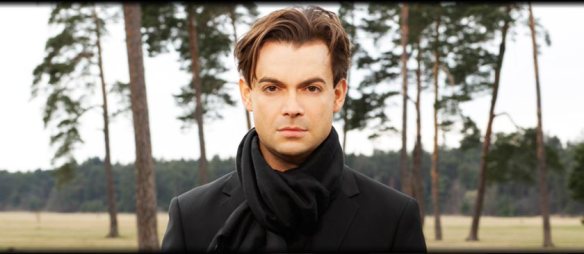
Benjamin Baker (violin, above), Daniel Lebhardt (piano), St James’s Church, Piccadilly, 18 January 2016

Reviewed by Ben Hogwood

Britten – Suite for violin and piano, Op.6 (1934-35)

Elgar – Sonata for violin and piano in E minor, Op.82 (1918)

Violinist Benjamin Baker and pianist Daniel Lebhardt are both promising musicians in their twenties, and here they performed an attractive pairing of the young Britten and the ageing Elgar. This was part of the Richard Carne Trust Series, a lunchtime concert given in the generously lit, spacious surrounds of St James’s Piccadilly, a fine Christopher Wren church.

Britten was a relatively serious child, and although the Suite for violin and piano is an early work, completed in his early twenties, it has the mark of a composer already sure of himself in form, melody and writing for the violin. Britten still has fun through a number of dance forms, though, and after a bold as brass introduction Baker and Lebhardt strode confidently through a March, well balanced and intuitively finding the flexibility in Britten’s rhythms.

This togetherness was even more apparent in a dramatic Moto perpetuo, a nervy piece of writing, but this fraught mood dissipated in the bell-like chords with which Lebhardt began the Lullaby. Finally the Waltz, a brazen but very enjoyable affair where the performers could perhaps have been more exuberant, but where they took some very tasteful liberties with the rhythm, as Britten instructs in the score.

Elgar’s Violin Sonata was a different story, darkly passionate in the intial outpouring of feeling in its first movement but contrasted with a ghostly quieter section that even on a cold January lunchtime sent a shiver down the spine. Elgar is fiercely lyrical in the outer movements of this work, and Baker did well to project this over an equally active piano part. The two found the grace of the Romance, where it felt as though they were dancers in hold, charming with slow steps but occasionally drifting apart.

Elgar’s determination returned in the finale, the tune consistently putting its head above that of the piano and achieving a well-won victory by the end. The two showed great understanding of the older man’s music, a fine interpretation that reminded me this piece was one of Nigel Kennedy’s earliest recordings. Baker and Lebhardt, then, have followed in illustrious footsteps!

Wigmore Mondays – Rachel Podger, Marcin Świątkiewicz and David Miller – Biber Mystery Sonatas

Rachel_Podger_photo
Photo (c) Jonas Sacks

Rachel Podger (violin), Marcin Świątkiewicz (harpsichord, organ), David Miller (theorbo) – Wigmore Hall, London, live on BBC Radio 3, 14 December 2015

Listening link (open in a new window):

http://www.bbc.co.uk/programmes/b06rwh78

on the iPlayer until 6 January 2016

Spotify

In case you cannot hear the broadcast, here is a Spotify playlist of some of the music in this concert. Rachel Podger has in fact recorded this music but it is not currently available for streaming – so here is a version led by violinist Andrew Manze:

If you particularly want to hear Rachel in action – along with excerpts from some of her other recordings for Channel Classics – this page on her website provides more audio

What’s the music?

Biber: Mystery Sonatas (c1674):

Sonata No. 1 in D minor ‘The Annunciation’ (6 minutes)

Sonata No. 3 in B minor ‘The Nativity’ (7 minutes)

Sonata No. 9 in A minor ‘Jesus Carries the Cross’ (8 minutes)

Sonata No. 10 in G minor ‘The Crucifixion’ (9 minutes)

Sonata No. 11 in G major ‘The Resurrection’ (9 minutes)

Passacaglia in G minor (8 minutes)

What about the music?

If you don’t know much about the music of Biber yet like what you have heard from the 17th century then you really are in for a treat.

Performance verdict

The programming of the Wigmore Hall’s Monday lunchtime series often gets deserved plaudits, but to have this set of sonatas on the last of the concerts before the Christmas break was an inspired choice. In Rachel Podger the sonatas have their ideal vehicle, for she is a charismatic performer who clearly just loves playing the violin. In Marcin Świątkiewicz and David Miller she had the ideal support, the two very sensitive with the levels of their accompaniment, supplying light and shade but also subtle virtuosity. Świątkiewicz moved effortlessly between a small organ and the harpsichord, mindful of the colour he was making with each, and when he held the long notes on the organ as a descriptive aid (for instance giving an idea of the echo in Jesus’ tomb) the purity of tone was striking. Miller was a very tasteful presence on theorbo, this fascinating instrument always great to watch live but making a lovely mellow sound too.

Yet most eyes were on Podger, who played this music on four different violins with really impressive command not just of the notes and their intonation, but also of the characterisation. We lived the story in a very profound way, the abject despair of the crucifixion and burial only too obvious – but in the same way the portrayal of the resurrection, where minor key darkness gives way to major key light – was a radiant moment, the wide open sound a joy to behold.

From there it was on to the solo Passacaglia, and here it was as though Podger was on her own in the room, completely lost in the four note sequence that obsessively repeats – but finding all the variations in tone colour, attack, vibrato and rhythm that make this music consistently interesting. In this way she capped a very fine concert.

What should I listen out for?

First of all make sure you listen to the Radio 3 announcement from the beginning, and Rachel’s own introduction at 9:57 – they make the ideal preface to the music you hear, and the four instruments she uses to play it. As for Biber’s music:

No.1 The Annunciation (violin normally tuned)

The first of the suites is based on the following bible verse: Luke 1: 26-33 In Nazareth, the angel Gabriel riding on a cloud tells the Virgin Mary she is to have a child.

2:02 – a long low note from the chamber organ starts the Praeludium of this suite, where the violin becomes increasingly animated. Soon this leads into an aria allegro (4:13), where after a quick introduction from the organ the violin takes the lead in a gentle dance. But soon the dance becomes more energetic as the violin spins out variations on the melody. Then the organ holds a long note (6:49) over which the violin ducks and dives – and where the theorbo is more audible. Here it is as though the prophecy is being made.

No.3 The Nativity

Luke 2: 6-20 Surrounded by farm animals, Mary shows Jesus to two shepherds. The angel presides.

14:05 – a solemn though reverent beginning to this sonata, where the harpsichord can be heard elaborating in the background. Then from 15:43 the chamber organ and theorbo can be heard in a mellow accompaniment to the relatively shrill violin. At 17:31 the triple time Courante begins, thought to be set in this way to convey the rocking movements of Jesus’ cradle. At 19:09 the music slows considerably, the organ now an extremely slow accompanist – and another thoughtful, reverent passage brings the Nativity vision to a close.

No 9 Jesus Carries the Cross

Luke 23: 26-32 Jesus falls and Simon the Cyrenian is forced to help by a Roman with a stick while a daughter of Jerusalem ululates.

22:59 – this is a much more obviously grief-stricken piece, a sonata of mourning depicting a woman wailing with grief. The slow introduction depicts this from the outset, and from 24:28 the music becomes twisted. Then the mood softens, the soft strumming of the theorbo again evident against the cool sound of the organ – before Podger again speeds up, dominating the exchanges. Finally an organ improvisation brings in something of a coda 29:30.

No 10 The Crucifixion

Luke 23: 33-46 Jesus dies before three female onlookers.

32:21 – a real tour de force of word painting here, as Biber conjures up visions of Christ’s crucifixion. He does this through the hammering of nails into the coffin (e.g.33:07 in the Praeludium from violin and harpsichord), and then, after a dance based aria and some lively variations, through a violent earthquake, with all three instruments generating stunning power (40:14). The theorbo offers pointed support too, and is especially audible at 36:56.

No 11 The Resurrection

Luke 24: 1-12 Jesus bursts from the sepulchre, the cross now on his flag, surprising the guard and his cowering accomplice.

43:24 – the violin has a very unusual tuning for this sonata, creating a ‘cross’ – wholly appropriate given the subject matter! It is here that the music becomes free of the shackles of the minor key. First there is a slow introduction, where the sonorous octaves on the organ represent the echoes of the tomb. Then there is a quotation of the plainsong hymn Surrexit Christus hodie (46:05) from the organ, and a series of variations on this theme. The closing Adagio (from 50:46) is soft and rather beautiful, with the violin double stopping (playing more than one note at once). The theorbo is also more prominent here.

Passacaglia (violin normally tuned)

A guardian angel guides a child by the hand.

54:13 – the Passacaglia is an extraordinary bit of writing for solo violin, based on a sequence of just four notes the violin plays at the beginning. A sequence of 64 variations on this unfolds, becoming ever more intense as it progresses (from 58:15 for instance) until a rapt finish at 1:02:30.

Further listening

Biber could be regarded as being a slightly earlier example of the Baroque period. Fast forward just a couple of decades and you have quite a lot of music that has either become associated with Christmas or is Christmas-themed – so this disc of seasonal concertos by The English Concert and Trevor Pinnock is a wholly appropriate next port of call:

Wigmore Mondays – Adrian Brendel and Aleksandar Maksar

brendel-madzar

Adrian Brendel (cello), Aleksandar Maksar (piano) – Wigmore Hall, London, live on BBC Radio 3, 7 December 2015

Listening link (open in a new window):

http://www.bbc.co.uk/programmes/b06r5dhh

on the iPlayer until 6 January 2016

Spotify

In case you cannot hear the broadcast, here is a Spotify playlist of some of the music in this concert. The Birtwistle is not on Spotify, and Adrian Brendel has not yet recorded either of the Debussy or Chopin Cello Sonatas, so alternative versions have been chosen:

What’s the music?

Debussy: Cello Sonata in D minor (1915) (11 minutes)

Birtwistle: Variations for cello and piano (2007) (6 minutes)

Chopin: Cello Sonata in G minor (1846) (31 minutes)

Every piece of music that Chopin published features the piano in some way. Most of his output is for piano solo but there are a couple of exceptions – two piano concertos and some works for piano and orchestra, the Polish Songs, the Piano Trio and this, Chopin’s only Cello Sonata.

It is a substantial piece, written late on in its composer’s career, and has a curious structure of four movements where the first is as long as the other three put together. It is a substantial piece of work, deeply felt in the slower music especially, but is also restless, the cello and piano playing closely together in melodies of unusual rhythm and contour. Chopin achieves the difficult task of honing his instincts for the piano to play as a solo instrument, balancing the two forces extremely well.

Debussy’s Cello Sonata is much shorter, a third of the length of the Chopin, but is equally concentrated in feeling. The work was to be the first in a series of six sonatas for different instrumental combinations from the composer, but sadly ill health determined he would not be able to get any further than three (the others are for violin and piano, and flute, viola and harp). The Cello Sonata is a sultry piece, particularly in the second movement Sérénade, which features plucking on the cello.

Bisecting these is one of Sir Harrison Birtwistle’s several pieces for cello and piano. The Variations are very closely linked to the Brendel family, and although they were commissioned by Adrian they take as their theme a piece written by Birtwistle for father Alfred. The theme is taken from another piece for the same combination, the Lied, and Birtwistle complemented that with this piece and several more to make a continuous sequence for cello, baritone and piano lasting just over half an hour.

Performance verdict

Adrian Brendel and Aleksandar Madzar gave highly accomplished performances of these three works, the result an extremely satisfying concert of contrasting musical language. The Debussy is a perennial favourite but sounded very fresh here, Brendel enjoying the almost complete freedom of the improvised second movement.

The Birtwistle, a gritty, concentrated piece, was very well done also, with characterisation of each of the short variations and some really vivid shades of colour from Brendel in particular.

The Chopin exploited the cellist’s singing tone beautifully, especially in the soaring second theme of the second movement. The duo stressed the uncertainty of much of this piece, and in particular the sizeable first movement, which here seemed to have just as many intriguing questions as it had answers. Brendel took everything in his stride technically, and the rapport and ensemble between the two performers – Madzar employing plenty of light and shade with the piano – was a real asset throughout.

What should I listen out for?

Debussy

2:04 – the first movement, a Prologue, begins with an opening statement from the piano, before the cello comes in expansively. The mood evokes to me a late summer evening. Debussy impresses with his economical use of form here, packing a lot of musical incident into a short movement before it finishing thoughtfully.

6:29 – the Sérénade is a nocturnal movement, and sounds like an improvisation, the plucked cello leading the piano in a stuttering series of musical gestures, showing off a more obvious Spanish influence. Gradually Debussy brings both instruments into line, and the cello uses the bow a lot more, building the tension and moving straight into…

9:50… the Finale, which starts with urgent piano and soaring cello before a vivacious theme makes itself known from the cello (10:08). This becomes the main focus of the movement, though the sultry mood of the Sérénade is not entirely forgotten.

Birtwistle

15:27 – the piece begins with a mysterious sound world on show, the cello playing two notes at once and the piano sounding very uncertain. The variations unfold in wildly differing moods, and without following the score it is relatively difficult to say where one ends and the next begins. After a tense beginning the piano stabs out two penetrating notes and then the music becomes faster – though the performers seem much more at odds. The end, when it comes, is slight.

Chopin

23:28 – the very substantial first movement (16 minutes) starts on the piano, with a solemn introduction. It doesn’t take long for Chopin to show off the pianist’s technique, but he is careful not to write a part that impinges on the cello once it appears with the theme. After a slow start the pace picks up a little, the mood intensifying – until Chopin works around to a repeat of the whole first section (from 28:42)

39:54 – a short scherzo that flits about without seeming to settle. The instruments are very closely linked in their musical discussion, both sharing the distinctive rhythm that Chopin gives to the main theme. The second theme () has a soaring quality very unusual to Chopin (in that he wrote so many melodies for the piano) and it has a penetrating beauty in this concert.

45:10 – a soft but warm-hearted slow movement, with a songful melody first aired on the cello but then repeated on piano. This is a surprisingly short movement, profound but giving the sonata a slightly lopsided form.

48:40 – the finale takes us back to the sonata’s ‘home’ key of G minor and finds an impressive urgency, with cello and piano working very closely together. Chopin employs a number of extremely catchy hooks but the form is relatively compressed…and soon the music moves into the major key and a thoroughly affirmative finish at 54:30.

Further listening

The Spotify playlist containing the music for this concert has been enhanced to include Chopin’s other large-scale chamber work, the Piano Trio. After this you can enjoy some music for cello and piano by a composer best known for his piano music, Franz Liszt – and played by the great Hungarian cellist Miklós Perényi: