Wigmore Mondays: Lucy Crowe & Joseph Middleton – English song

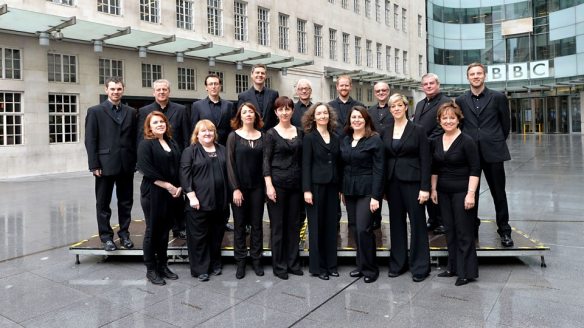
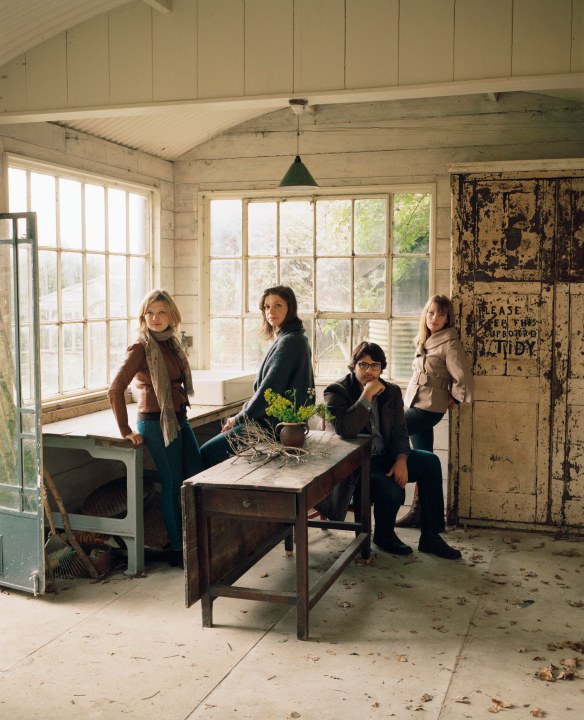
Lucy Crowe (soprano, above), Joseph Middleton (piano, below)

Purcell, realised Britten Lord, what is man? (A Divine Hymn) (1693) (1:17-6:36 on the broadcast link below); O solitude, my sweetest choice (1684-5) (6:40-12:00)
Weldon, realised Britten Alleluia (before 1702) (12:04-14:00)
Michael Head Over the rim of the moon (1918) (The ships of Arcady 15:20-18:15, Beloved 18:25, A blackbird singing 19:48-22:08, Nocturne 22:12-25:21)
Ireland The trellis (1920) (26:37-29:25); My true love hath my heart (1920) (29:33-31:10); When I am dead, my dearest (1924) (31:14-33:00); If there were dreams to sell (1918) (33:02-34:46); Earth’s call (34:54-39:38) (1918)
Walton 3 Façade Settings (1931-2) (Daphne (40:47-43:30; Through gilded trellises (43:36-47:16); Old Sir Faulk (47:17-49:08)

Wigmore Hall, London; Monday 24 September 2018

You can listen to the BBC Radio 3 broadcast by clicking here

Written by Ben Hogwood

On this evidence Lucy Crowe and Joseph Middleton are two of the finest exponents of English song around. This finely planned recital showed off the versatility in Crowe’s voice, as well as its clarity and pure emotion. Middleton also distinguished himself with some exceptional scene-setting and characterisation of his descriptive piano parts.

The solemn glory of Britten’s Purcell realisations provided an imposing start, although Crowe allowed the expansive setting of A Divine Hymn (from 1:17 on the broadcast) plenty of room to express its excitable joy, with a sparkling finish to boot. O solitude (6:40) was a more thoughtful interpretation and beautifully sung, while the twists and turns of John Weldon’s Alleluia (12:04) were skillfully negotiated. Britten’s expanded piano parts, his own informed response to Purcell’s melodies, were in safe hands thanks to Middleton.
There followed a rarity in the form of Michael Head’s short cycle Over the rim of the moon, from his late teenage years. The ships of Arcady (15:20) featured tolling bells in Middleton’s right hand, while a rapturous Beloved (18:25) gave up its soul. A blackbird singing (19:48) embraced the open air, with a sparkling first note from Crowe, while the cool Nocturne (22:12) sent a light shiver down the spine.

Crowe really came into her own in a sequence of five John Ireland songs. Ireland can be elusive in some interpretations, but not here. As soon as Middleton’s descriptive piano set the scene for The trellis (26:37) Crowe was in her element, using a poignant pause to illustrate ‘the whisper’d words between and silent kisses’. The breathless adoration of My true love hath my heart (29:33) was countered by the finality of When I am dead, my dearest (31:14), which brought a tear to the eye. If there were dreams to sell (33:02) offered a more upbeat outlook, before Earth’s call (34:54) took us right to the water, depicting the plover, cuckoo and stormy ploughland with exquisite detail, all blown by Middleton’s blustery breeze.

After these heights, the Walton Façade settings worked well, Crowe handling the tricky wordplay of Edith Sitwell impressively. Her sideways looks during Daphne (40:47) were brilliantly done, as were Middleton’s persuasive piano rhythms underpinning Through gilded trellises (43:36), where Crowe hit her top B flat with ease. Old Sir Faulk (47:17), with its bizarre lyrics, gave a nonsensical end.

The two encores were unforgettable. Crowe began with an unaccompanied version of She moved through the fair (50:23-53:18), which tugged urgently at the heartstrings, and ultimately brought a tear to the eye. So too did one of Britten’s finest folksong settings, The Salley Gardens (54:20-56:47), a pure and beautiful note on which to end.

Further listening

Lucy Crowe has not recorded any of the repertoire in this concert, but the playlist below gives leading interpretations of the songs she sang.

For further exploration of the songs of John Ireland, this album gives his complete output:

Wigmore Mondays: Trio Mediæval

Trio Mediæval [Anna Maria Friman (voice, hardanger fiddle), Linn Fuglseth (voice, melody chimes, shruti box), Jorunn Lovise Husan (voice, melody chimes)]

Anon (Gregorian chant) Salve Regina 1:48
Anon 13th-century English Salve mater Miscericordie 5:33; Salve virgo virginum 7:57-11:10
Trad. Norwegian Solbønn
Trad. Swedish Limu Limu Lima
Trad. Norwegian Lova line; Villemann og Magnhild
Trad. Swedish St. Örjan och draken; Om ödet skulle skicka mig; Jag haver ingen kärare
Anon (Gregorian chant) Benedicta es caelorum regina
Anon 14th-century English Benedicta es caelorum regina; Alma mater / Ante thorum;
Anon 13th-century English Dou way Robyn / Sancta Mater
Trad. Norwegian So ro liten tull; Sulla lulla
Trad. Swedish Du är den första

Wigmore Hall, London; Monday 17 September 2018

You can listen to the BBC Radio 3 broadcast by clicking here

Written by Ben Hogwood

This is a placeholder – review and guide coming soon.

Further listening

Wigmore Mondays: Ilker Arcayürek & Ammiel Bushakevitz – Schubert: The Path of Life

Ilker Arcayürek (tenor, above), Ammiel Bushakevitz (piano, below)

Schubert
Fischerweise D881 (1826) (2:21 – 5:12)
An Silvia D891 (1826) (5:21 – 8:06)
Der Wanderer an den Mond D870 (1826) (8:21 – 10:32)
Atys D585 (1817) (10:51 – 15:00)
Sei mir gegrüsst D741 (1821-22) (15:20 – 19:20)
Wehmut D772 (1822) 19:46 – 23:10)
Der Wanderer D493 (1816) (23:16 – 28:42)
Litanei auf das Fest aller Seelen D343 (1816) (28:47 – 32:20)
Einsamkeit D620 (1818-1822) (34:45 – 52:03)

Wigmore Hall, London; Monday 10 September 2018

You can listen to the BBC Radio 3 broadcast by clicking here

Written by Ben Hogwood

A fascinating anthology of Schubert songs from BBC Radio 3’s New Generation artist, tenor Ilker Arcayürek, and pianist Ammiel Bushakevitz. If you wanted an introduction to the composer’s approach to song in his mid-twenties – sadly towards the end of his short life – then you could hardly ask for better than this.

The performers include songs short and long, bright and downbeat, bringing to the table some of the contrasting moods Schubert uses in his songs, which are surely the crowning glory of his compositional output.

The concert begins with the steady passage of Fischerweise (Fisherman’s Song, 2:21 on the broadcast) – a bright song, full of purpose and with a piano part that burbles like the water. The fisherman’s ‘work gives him vigour’, proclaims von Schlechta’s poetry, and this song is a great way to set the scene.

Following that is An Silvia (5:21), written in the same year of 1826, nicely pointed in this performance with an effortless conversation between singer and piano, exchanging short musical figures. Right from the start of Der Wanderer an den Mond (8:21) a clear story is being told by piano and tenor, leading ultimately to happiness in the major key at the end.

Atys (10:51) is an earlier song and quite urgent, especially when the piano leans provocatively on the more chromatic notes. Meanwhile Sei mir gegrüsst (I greet you, 15:20) is a more languid affair that looks forward towards Schumann, with a highly distinctive and slightly awkward (but highly effective) vocal line.

Wehmut (Melancholy, 19:46) has a solemn piano introduction and ultimately gives way from the joys of spring to the cold regret of winter. In Der Wanderer (23:16) we hear hollow octaves from the piano for dramatic effect at 27:32, where the ‘ghostly breath that calls back to me’ sends shivers down the spine in Arcayürek’s delivery. Then Litanei auf das Fest aller Seelen (Litany for the Feast of All Souls, 28:47) explores a lovely major key contrast after the desolation of Der Wanderer’s end.

And so to Einsamkeit (34:45), the remarkable 18-minute song that Schubert expert Graham Johnson cites as the first example of his song cycle writing. Certainly it is a song of epic proportions, a kind of forebear of today’s suite-like progressive rock epics – but also of the song cycle as a whole, as employed not just by Schubert but by Schumann, Mahler and others. While Schubert traverses a wide range of moods and emotions there is still a telling shift at 45:32, where the poet proclaims ‘give me my fill of gloom’, before a dramatic recitative. After this tour de force both performers end in relative contentment given what has gone before.

Perhaps not surprisingly this concert ended with demands for an encore, given Ilker Arcayürek’s clear yet rounded delivery and the extremely responsive piano playing of Ammiel Bushakevitz. They responded with Wandrers Nachtlied II D768 (1822, from 53:35 – 56:13), a lovely bit of space after the tumult of Einsamkeit. It put the seal on a very fine recital indeed – a place to introduce yourself to the Schubert song if you haven’t already done so.

Further listening

Ilker Arcayürek has already recorded a disc of Schubert songs with Simon Leppner for the Champs Hill label, which can be heard on Spotify below:

Only one song from that release was included in this concert – the below playlist contains all the others in versions from leading Schubert interpreters:

BBC Proms: BBC Singers / Sakari Oramo – Songs of Farewell and Laura Mvula premiere

Proms at the Cadogan Hall: BBC Singers (above) / Sakari Oramo (below)

Bridge Music, when soft voices die (1907)
Vaughan Williams Rest (1902)
Holst Nunc dimittis (1915)
Laura Mvula Love Like A Lion (2018, world premiere)
Parry Songs of Farewell (1913-15)

Cadogan Hall, Monday 20 August 2018

You can listen to this Prom by clicking here The times given on this page refer to the starting times on the broadcast itself

Reviewed by Ben Hogwood

Over the last couple of decades the Monday lunchtime strand of the BBC Proms concerts have gone from strength to strength, and the 2018 season looks like being an especially good vintage. English song has fared particularly well, and on the heels of Dame Sarah Connolly and Joseph Middleton’s imaginative recital, here was a choral selection based around rest, sleep and departure.

To be more specific, the form of rest composers Bridge, Vaughan Williams, Holst and Parry had in mind was the Eternal form. Frank Bridge wrote Music when soft voices die (from 1:49 on the broadcast) as his entry for a magazine competition, Vaughan Williams set the text of Rest (6:33) as a deeply felt short song, while Gustav Holst’s setting of the Nunc Dimittis (10:49), made in 1915, was resurrected for publication by his daughter Imogen in 1979.

Pride of place, however, went to Sir Hubert Parry’s Songs of Farewell, one of the crowning glories of his output. Rarely performed as a cycle, this series of unaccompanied motets, completed late in the composer’s life and in the shadow of the First World War, marks some of Parry’s deepest thoughts on mortality. They are every bit as profound in today’s world as they would have been then, and an attentive audience in the Cadogan Hall evidently took plenty from this interpretation.

Sakari Oramo has experience as a choral conductor but this was his first outing with the BBC Singers. He led them in a direct, unfussy manner, shaping the phrases while recognising this experienced group already have the tools at their disposal to make a beautiful sound.

Parry constructed the cycle so that his part writing gains density as the songs unfold, moving from four parts through to eight by the final Lord, let me know thine end.
Oramo took us on that progression with a gradual increase of intensity, helped by purity of tone and unanimity of voice. My soul, there is a country (29:09) began as a lighter, thoughtful account, building in intensity, the parts moving closely together. I know my soul hath power to know all things (32:53) was notable as much for its expressive pauses between words, Oramo’s direction ensuring a tight-knit ensemble. Some of Parry’s musical phrases are of considerable length, but the BBC Singers took them in their stride.

The density grew, from five parts (the beautiful Never weather-beaten sail, 38:35) to six (There is an old belief, ) then seven (a hypnotic account of All round the earth’s imagined corners, 43:15) to ultimately eight (Lord, let me know mine end, 50:04). This was the apex of the performance, notable for its calm acceptance of the final days of life, and in the closing pages the BBC Singers portrayed Parry facing his ultimate departure with an incredibly moving dignity.

The whole concert was structured rather like the Parry cycle, beginning from the small but poignant songs from Vaughan Williams and Bridge. The BBC Singers were excellent, with beautiful phrasing, and a surprise was in store for the Holst. Often the Nunc Dimittis is a softly voiced counterpoint to the Magnificat, but this one grew from small beginnings to become a forceful statement, delivered with impressive surety.

And so to Laura Mvula’s three-part work Love Like A Lion (12:58), written to a commission by the BBC but charting rest and loss in a rather different way. The loss here was a relationship, causing intense pain in Like A Child but with acceptance given in I Will Nor Die (For Him) (20:30), with a penetrating solo from Helen Neeves (21:08) over a gently undulating accompaniment that took us to a special, faraway place. Free from restrictions, Love Like a Lion itself (23:46) revelled in its new freedom, as did Sakari Oramo – who knows Mvula well from their Birmingham days. Love Like A Lion showed her ease with choral writing, and was a deeply expressive voyage from darkness to light. Hopefully we will hear more from her very soon.

BBC Proms: Dame Sarah Connolly & Joseph Middleton – English Songs

Proms at the Cadogan Hall: Dame Sarah Connolly (mezzo-soprano, above), Joseph Middleton (piano, below)

Stanford A Soft Day Op.140/3 (from A Sheaf of Songs from Leinster) (1913) (from 7:15 on the broadcast)
Parry Weep you no more, sad fountains (from English Lyrics Set 4) (1896) (9:58)
Vaughan Williams Love-Sight (from The House of Life) (1903) (12:18)
Gurney Thou didst delight my eyes (1921) (16:53)
Somervell A Shropshire Lad – ‘Into my heart an air that kills’ (1904) (20:19)
Bridge Come to me in my dreams (1906) (22:45)
Howells Goddess of Night (1920)
Bridge Journey’s End (1925) (28:19)
Britten A Sweet Lullaby (36:34); Somnus (40:31) (both 1947, world premieres)
Holst Journey’s End (1929) (42:50)
Britten A Charm of Lullabies Op.41 (1947) (45:09, 47:22, 49:08, 51:06, 52:48)
Lisa Illean Sleeplessness … Sails (2018, world premiere) (57:31)
Mark-Anthony Turnage Farewell (2016, world premiere)

Cadogan Hall, Monday 6 August 2018

You can listen this Prom by clicking here The times given on this page refer to the starting times on the broadcast itself

Reviewed by Ben Hogwood. Photo of Sarah Connolly (c) Jan Capinski

11 composers and four world premieres in an hour. Not a recipe for sleep and respite, you might think, but Dame Sarah Connolly and Joseph Middleton constructed between them an enchanting tour of English song, ending up at some far-flung outposts.

For anyone new to the form this would have been the ideal introduction, especially as Dame Sarah was singing with wonderful clarity and diction. I hardly needed to glance at the texts, for her words and expressions, added to those of Middleton’s carefully and beautifully crafted piano parts, did the job perfectly. The structure of the recital was very satisfying too, with natural pauses at the end of a short group of songs for applause and the intake of breath – and, as the subject matter was sleep and dreams, it ensured nobody had fallen foul of the listening criteria in the hot conditions!

The two began in Ireland, presenting the beatific calm of Winifred LettsA Soft Day, as set by Stanford, with the ‘wind from the south’ that some of us in the hot Cadogan Hall would have been longing for! So too for the subject of Parry’s Weep you no more, sad fountains, with its flowing piano lines. This pair from the fathers of English song led to one of the ‘sons’ – Vaughan Williams, and a deeply felt Love-Sight from his song-cycle The House of Life – and Ivor Gurney, his moving Thou didst delight my eyes.

We moved on to Arthur Somervell, the brief but tenderly devastating Into my heart an air that kills (from A Shropshire Lad) and then Come to me in my dreams, an expressive, earlier example of Frank Bridge’s chromatic credentials. Bridge appeared later with the lovelorn Journey’s End, following Herbert Howells’ magical Goddess Of Night – where Connolly allowed the text plenty of room.

Britten’s interpretations of sleep and dreams range from the calm to the nightmarish, aspects that surfaced throughout his song-cycle A Charm of Lullabies, which was given with two extra songs intended for the cycle but left unused. Recently ‘repaired’ by Colin Matthews, A Sweet Lullaby and Somnus were receiving their world premieres and were interesting finds if not quite reaching the level of intensity in the cycle itself.

Britten starts his night with A Cradle Song, before Connolly’s Scots accent (she was born relatively close by in County Durham!) brought an extremely authentic voice to The Highland Balou. The fifth number, The Nurse’s Song, is structured like the Dirge from Britten’s earlier Serenade for tenor, horn and strings. It focused everyone in the hall on the vivid storytelling of Connolly’s voice, from which she moved through humour, intense scolding (scary, too!) and soft slumber. The music ranged wildly, Britten’s wandering piano writing recalling Shostakovich in A Cradle Song, while the clustered chords of the refrain in Sephestia’s Lullaby spoke vividly in a language Janáček would understand. Connolly’s characterisations were brilliant, the audience impatient to clap between numbers initially but held in rapt concentration at the end.

In between the Britten discoveries, Gustav Holst contributed a sparse but telling interpretation of Journey’s End, which Connolly again sang with deep expression, while Australian composer Lisa Illean gave us another world premiere, a farewell of her own in Sleeplessness … Sails. This was a very slow-moving piece where Connolly held admirable control, despite the music’s seeming reluctance to move on. Arguably more effective was Turnage’s Farewell, a profound statement which ended with the composer bounding on the platform, delighted at the interpretation. It would be lovely to hear more from him in song – and from this pair, too, who delivered a wonderful hour’s escapism to the land of nod!

You can hear Dame Sarah Connolly and Joseph Middleton’s new recital disc Come To Me In My Dreams, which features much of the music heard in this concert, on the Spotify link below: