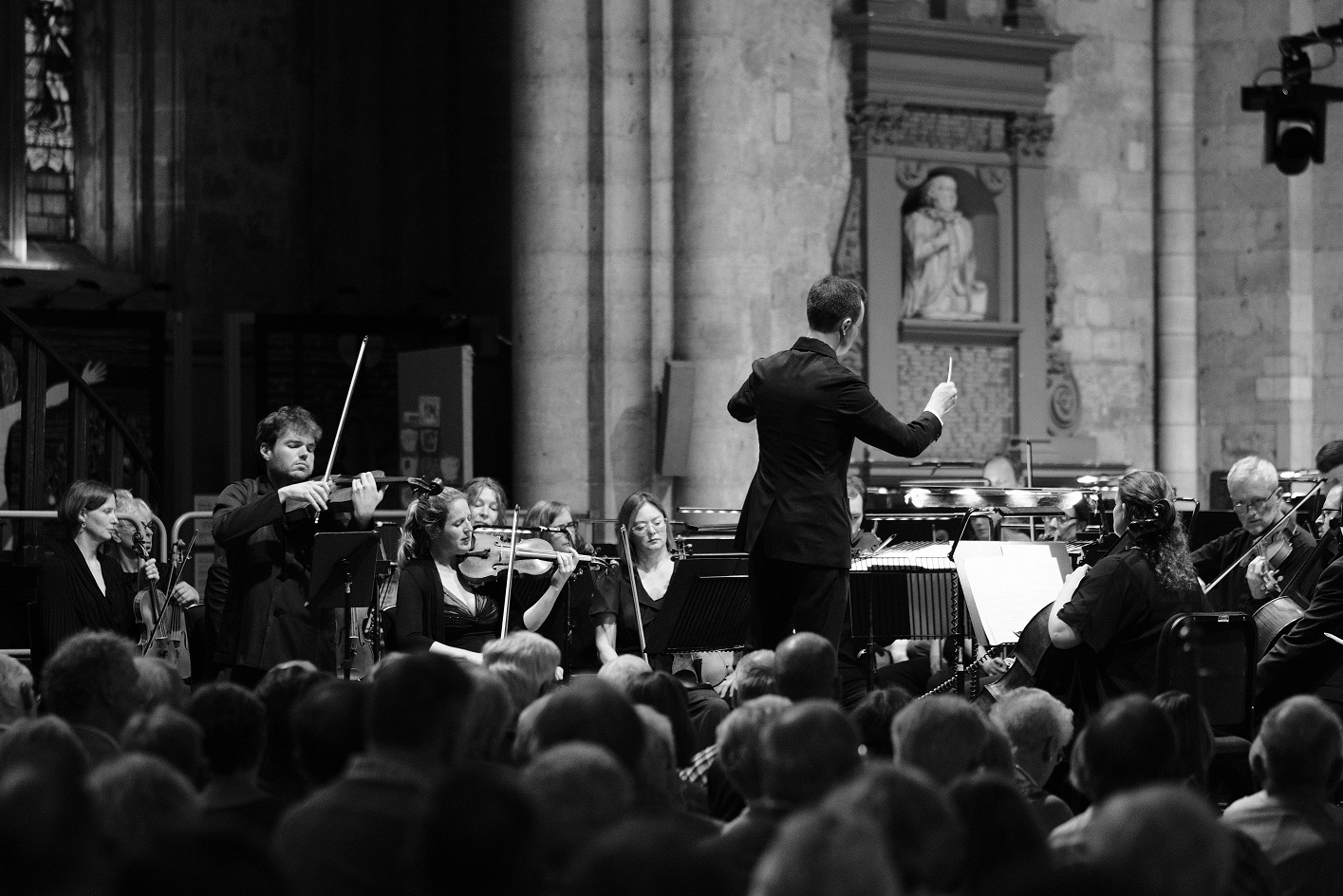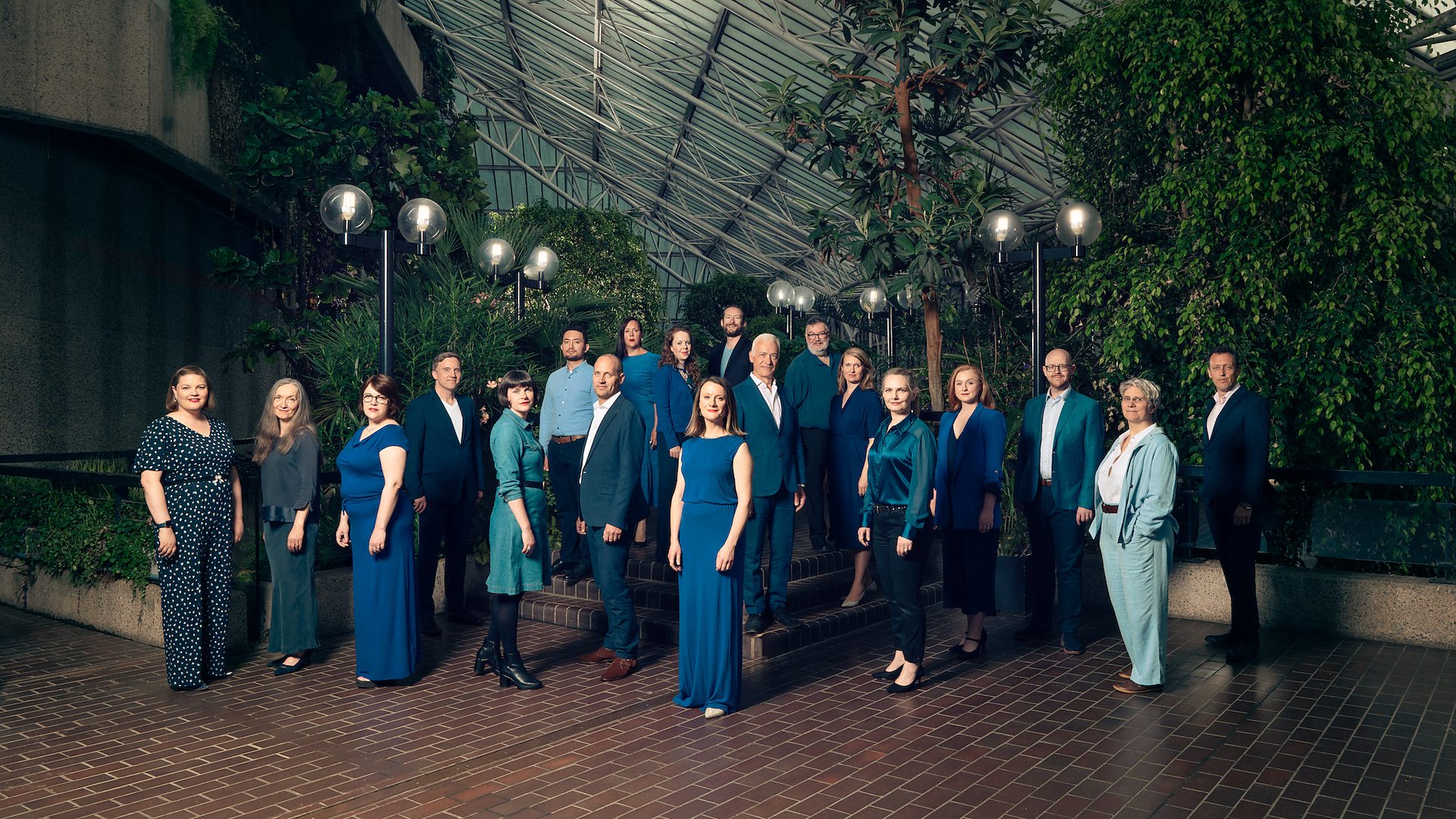
In concert – BBC Singers / Martyn Brabbins @ St Paul’s Knightsbridge – Holst, Britten, Garrard, Elgar & Pickard

BBC Singers, Elizabeth Bass (harp), Richard Pearce (piano), Andrew Barclay (percussion) / Martyn Brabbins

Holst Choral Hymns from the Rig Veda – Group 3, H90 (1910)
Britten The Ballad of Little Musgrave and Lady Barnard (1943)
Garrard Missa Brevis (2017-18)
Elgar Five Part-Songs from the Greek Anthology Op.45 (1902)
Pickard Elemental (2024-25) (BBC commission: World premiere)

St Paul’s, Knightsbridge, London
Friday 19 September 2025

Reviewed by Richard Whitehouse

The upsurge of interest in and performances by the BBC Singers in the wake of its intended demise shows little sign of abating, and there could be few vocal ensembles able to put on a programme as stylistically inclusive or as technically demanding as that heard this afternoon.

Nowhere more so than Elemental by John Pickard, its first performance occupying the second half. Never absent from the composer’s output, choral music came into own with the powerful Mass in Troubles Times (premiered nearby at St Peter’s, Eaton Square in 2019) and the present work can be heard as a continuation in terms of its underlying concept. A further collaboration with author and theologian Gavin D’Costa, its form is of a journey through the elements such as Pickard had favoured earlier in his output but here with its emphasis firmly on the spiritual arising out of human concerns. Whether individually or collectively, the writing for 18 voices could hardly be more varied and imaginative, while the obbligato roles for harp plus a single percussionist playing across the spectrum of instruments enhances these settings accordingly.

After the evocative Prologue with its Paracelsian take on living matter, Earth draws on the recollections of those in the Tham Luang Cave Rescue – notably teenagers of the Wild Boars football team – in music whose initial bravado gradually assumes a near metaphysical import. Fire integrates its Shakespeare quotations into consideration of this most transformative and cathartic of elements. Air centres on Bessie Coleman with her ambition, racially rather than personally motivated, to become the first professional pilot from African-American ancestry – her combative and ultimately ill-fated career depicted with often graphic immediacy. Water then illustrates the Biblical flood narrative from an oblique and even ambivalent perspective, before Epilogue returns to evocation of the numinous as it builds with a frisson of emotion.

Not that the first half was any mere preparation. Most intimate and alluring of four such sets, the third group of Holst’s Choral Hymns from the Rig Veda traverses the ethereal, the limpid, the hieratic then the questing in the company of female voices and harp. The former were no less attuned to the greater astringency of Sara Garrard’s Missa Brevis – its bracing inclusion of traditional Estonian music offset by the greater introspection elsewhere; these contrasted aspects finding at least a degree of release with the emotional immediacy of the Agnus Dei.

Heard in alternation, the male voices duly came into their own with Britten’s The Ballad of Little Musgrave and Lady Barnard – its folk melody (Matty Groves) stretched through this plangent wartime setting with piano of illicit love, innocent betrayal, desperate revenge and stark lament. Facets that barely feature in Elgar’s Five Part-Songs from the Greek Anthology yet these brief if characterful treatments of translations by Alma Strettell, no less typical than his major choral and orchestral works from this period, were dispatched here with due relish.

Whatever else, this showcase with substance was conducted with unfailing insight by Martyn Brabbins, whose prowess in choral repertoire needs hardly more reiterating than his advocacy of Pickard, and is absolutely worth hearing when broadcast by BBC Radio 3 this Wednesday.

You can hear the BBC Radio 3 broadcast on Wednesday 24 September by clicking here

For more information on the artists, click on the names: BBC Singers, Martyn Brabbins, Elizabeth Bass, Richard Pearce and Andrew Barclay, and composers John Pickard and Sara Garrard

Published post no.2,664 – Sunday 21 September 2025
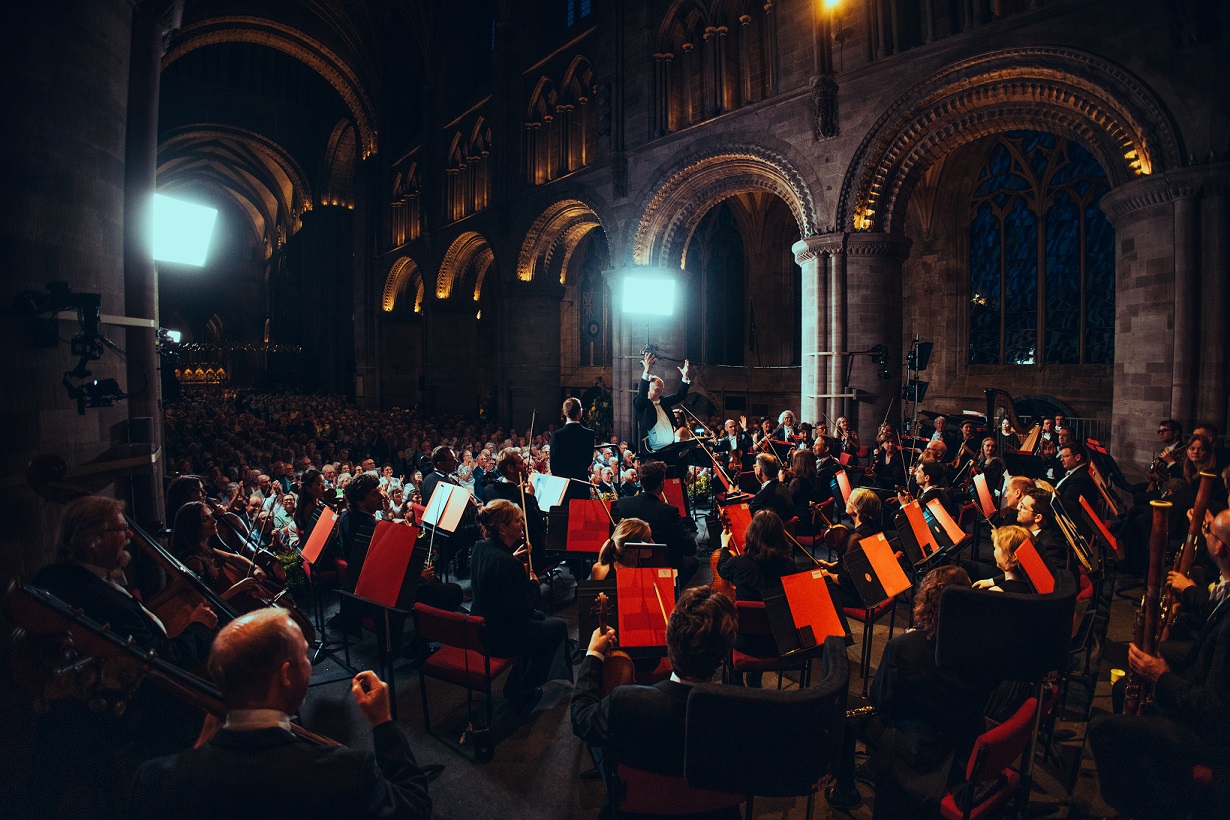
In concert – Three Choirs Festival: Three Choirs Festival Chorus, Philharmonia Orchestra / Adrian Partington – Howells Hymnus Paradisi & Bliss Mary of Magdala

Rebecca Hardwick (soprano), Dame Sarah Connolly (mezzo-soprano), Michael Bell (tenor), Malachy Frame (baritone), Three Choirs Festival Chorus, Philharmonia Orchestra / Adrian Partington

Howells Paradise Rondel (1925)
Bliss Mary of Magdala (1962)
Howells Hymnus Paradisi (1936-38)

Hereford Cathedral
Wednesday 30 July 2025

Reviewed by Richard Whitehouse Photos (c) Dale Hodgetts (Dame Sarah Connolly, Festival Chorus), James O’Driscoll (Hereford Cathedral, Rebecca Hardwick, Adrian Partington)

Interesting that all three works comprising this concert were premiered at the Three Choirs in Gloucester or Worcester but they were, for the most part, admirably suited to the less opulent while always spacious ambience of Hereford Cathedral in what was a welcome retrospective.

Upsurge of Arthur Bliss performances in this fiftieth anniversary of his death continued with Mary of Magdala, essentially a cantata albeit with an element of operatic scena in the intense characterization of its title-role. Compiled by Christopher Hassall (the last collaboration with Bliss before his untimely death), its text finds Mary approaching the sepulchre where Christ’s body has been placed after crucifixion only to find it gone – Christ having assumed the guise of a gardener who bestows his blessing upon this most maligned yet most loyal of his circle.

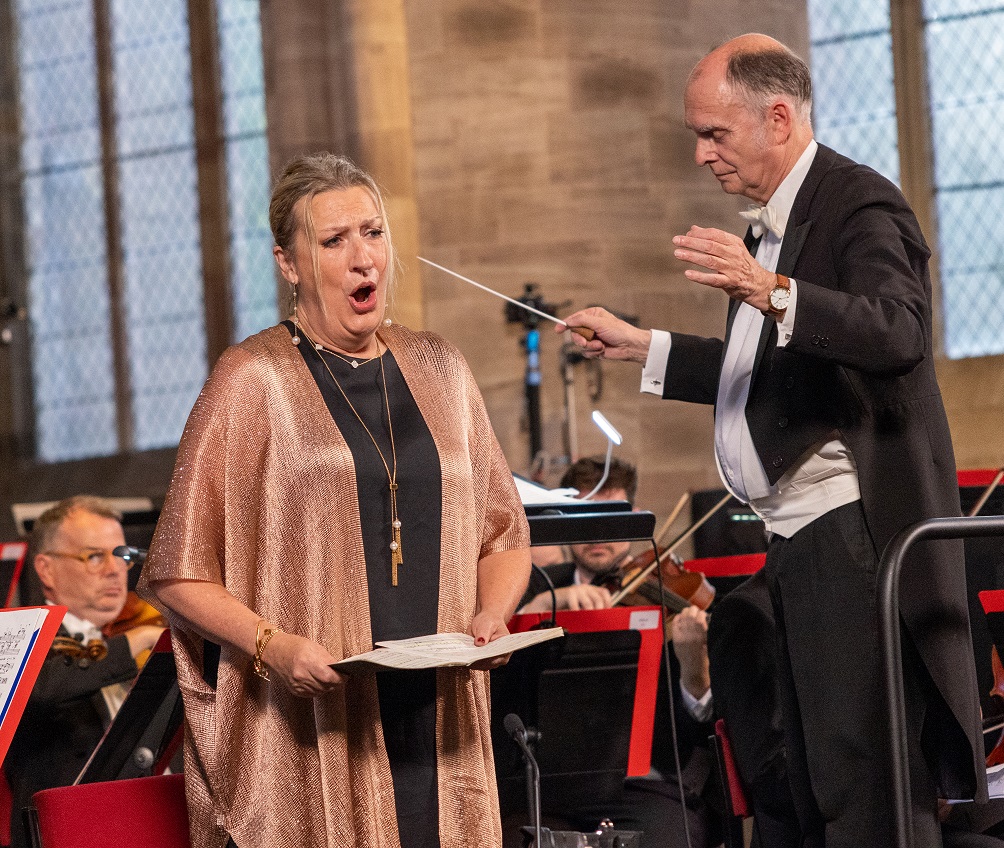
The main part was given by Dame Sarah Connolly (above) with her customary fervour and insight, not least in the final stages after recognition when the music exudes a radiant gentleness rarely, if ever, encountered in Bliss hitherto. Malachy Frame drew an understated strength from the brief yet crucial role of Christus, but excessively large choral numbers rather compromised the relative intimacy of the music. Not that it seriously undermined the conviction of a timely revival for what is one of the least known though inherently personal among the composer’s later works.

It stayed under-wraps for over a decade after completion, but Hymnus Paradisi has long been the best known of Herbert Howells’s larger pieces and something like a ‘sacred text’ in Three Choirs culture. Written after the death of the composer’s son, it is avowedly music within the English choral tradition; not least that Gerontius-like aura of a Preludio (actually written last) whose yearning theme pervades what follows. The Requiem aeternam further intensifies such introspection, and if a setting of Psalm 23 tends towards the discursive, even generalized, that of Psalm 121 has a rapture that builds on an effervescent Sanctus in what is the most arresting section. A ruminative setting from The Burial Service precedes the impulsiveness of that from Salisbury Diurnal, with the return of the Requiem aeternam bringing about a fatalistic repose.

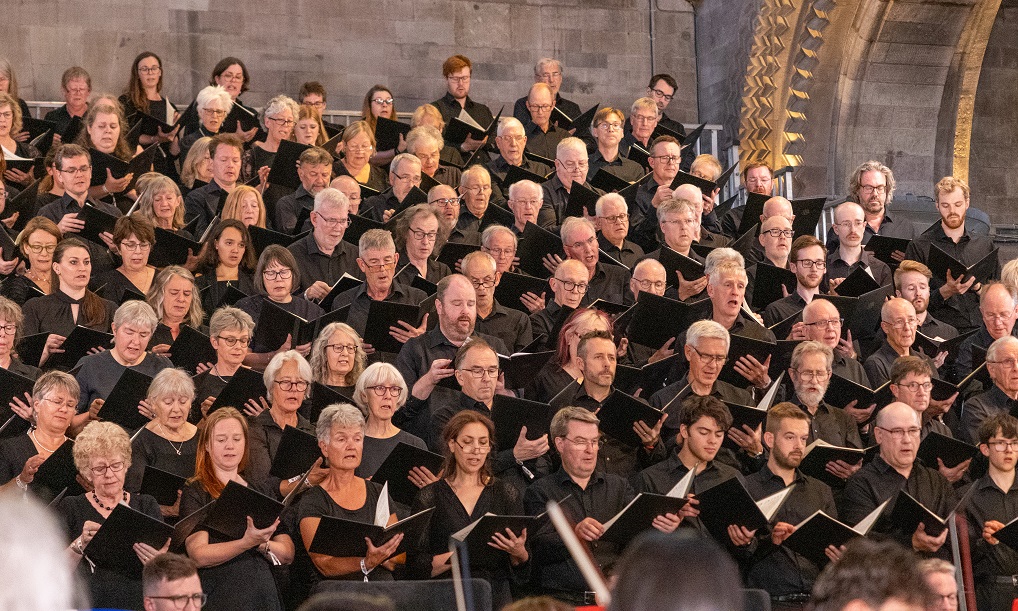
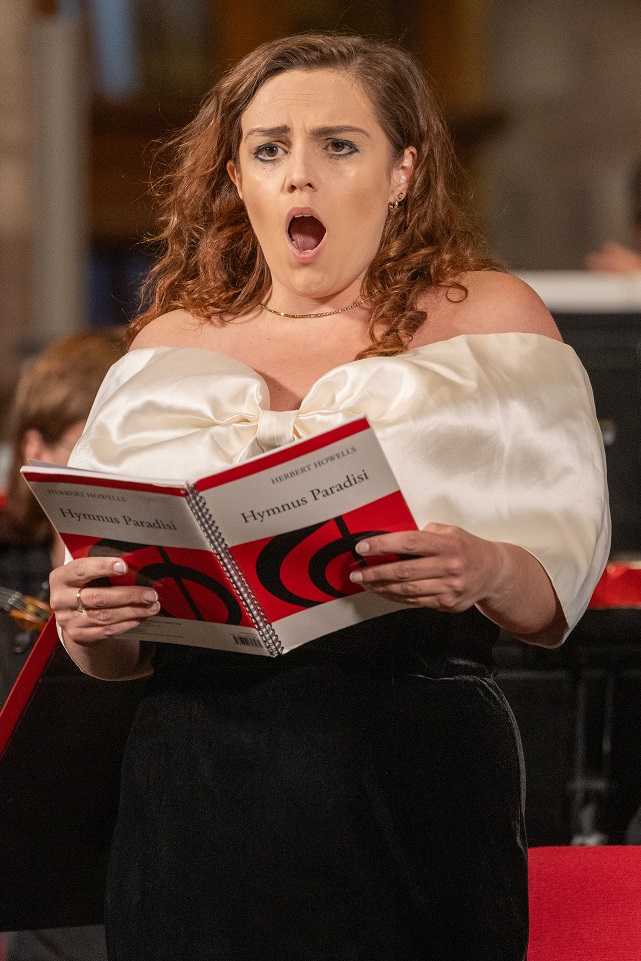
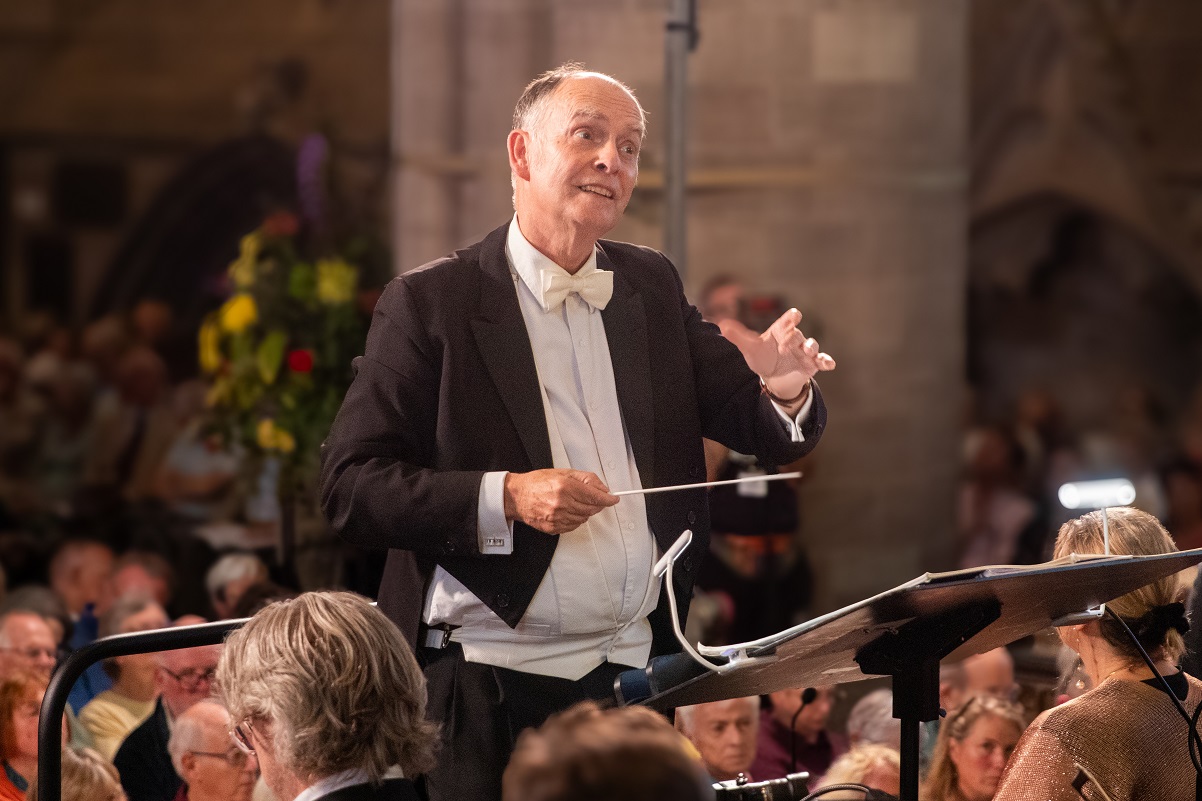
Something of a staple at these festivals it might be, Hymnus Paradisi is never an easy work to sustain in performance and tonight’s was a notable though not unqualified success. The vocal parts were well taken, Rebecca Hardwick’s occasional shrillness ostensibly a price to be paid for surmounting those often dense choral textures and Michael Bell making up for in accuracy what he lacked in personality. The sizable orchestral forces of the Philharmonia proved more than equal to the task, not just of balancing but in opening-out the expressive power of choral writing where the Three Choirs Festival Chorus was wholly in its element. Adrian Partington secured an interpretive focus that gained in conviction as the performance unfolded, making for an account which underlined the strengths yet also the weaknesses of this singular work.

It was the earlier and uninhibited Howells which ushered in proceedings. With its translucent orchestration and, at times, almost concertante-like piano part, Paradise Rondel makes for as irresistible a curtain-raiser as it no doubt was evoking that Cotswold hamlet of a century ago.

Published post no.2,615 – Sunday 3 August 2025

In concert – Ryedale Festival: Timothy Ridout, Orchestra of Opera North / Tom Fetherstonhaugh – Bliss: Viola Concerto first performance; Vaughan Williams, Coleridge-Taylor & Elgar

Timothy Ridout (viola), Orchestra of Opera North / Tom Fetherstonhaugh

Vaughan Williams The Wasps – Overture (1909)
Bliss (orch. Wilby) Viola Concerto, B68a (1933, orch. 2023)
Coleridge-Taylor Solemn Prelude in B minor, Op. 40 (1899)
Elgar Variations on an Original Theme, Op. 36 ‘Enigma’ (1898-99)

Ripon Cathedral
Saturday 19 July 2025

Reviewed by Richard Whitehouse Photos (c) Jonas Cradock

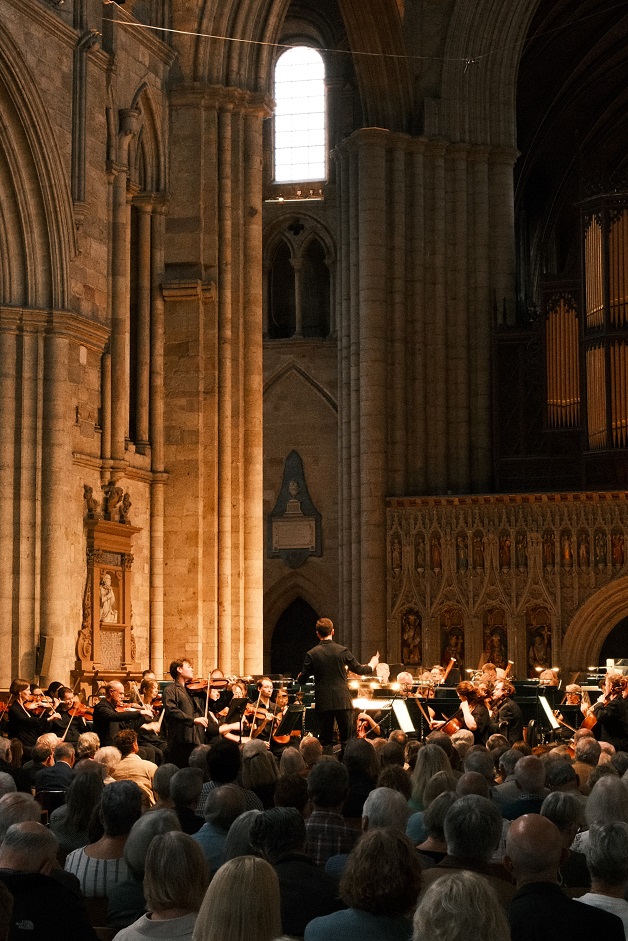
With a variety of activities throughout its region, the Ryedale Festival is now well established among the most wide-ranging of such events 45 years since its inauguration and this evening’s concert showcased the Orchestra of Opera North in the impressive setting of Ripon Cathedral.

The all-British programme centred on the first hearing for a Viola Concerto that Arthur Bliss had always intended to create out of his sonata for that instrument, but has only recently been carried out by Philip Wilby. A former professor of composition at Leeds University, Wilby is best known for his choral and organ music but as was duly confirmed, is an able orchestrator with a keen appreciation of Bliss’ idiom. Hence the successful launch of a piece that deserves to assume its place within the still-limited repertoire of concertante works for this instrument.

That it exists at all was no doubt through the prompting of Lionel Tertis, for whom Bliss wrote his Viola Sonata some 20 years after a single-movement Violin Sonata (never played publicly during his lifetime) as was his only other such duo. Formally it is among his most innovative pieces, the skewed sonata design of its initial Moderato exuding a restive and even impulsive eloquence as responded well to an orchestration which resembles more the intimacy of Bliss’ late Cello Concerto than the full-blooded fervour of his earlier such works for piano or violin.

The ensuing Andante is Bliss at his most personal – its darkly ruminative progress building to an anguished culmination made the more so in this context, before subsiding into the fugitive unease from which it had emerged. There follows a propulsive Molto allegro modelled on the rhythmic syncopation of the Furiant, a scherzo-cum-finale climaxing with a powerful cadenza here forcefully partnered by timpani. After which, the Coda poignantly surveys all that went before in a sustained Andante maestoso as brings about an apotheosis of plangent resignation.

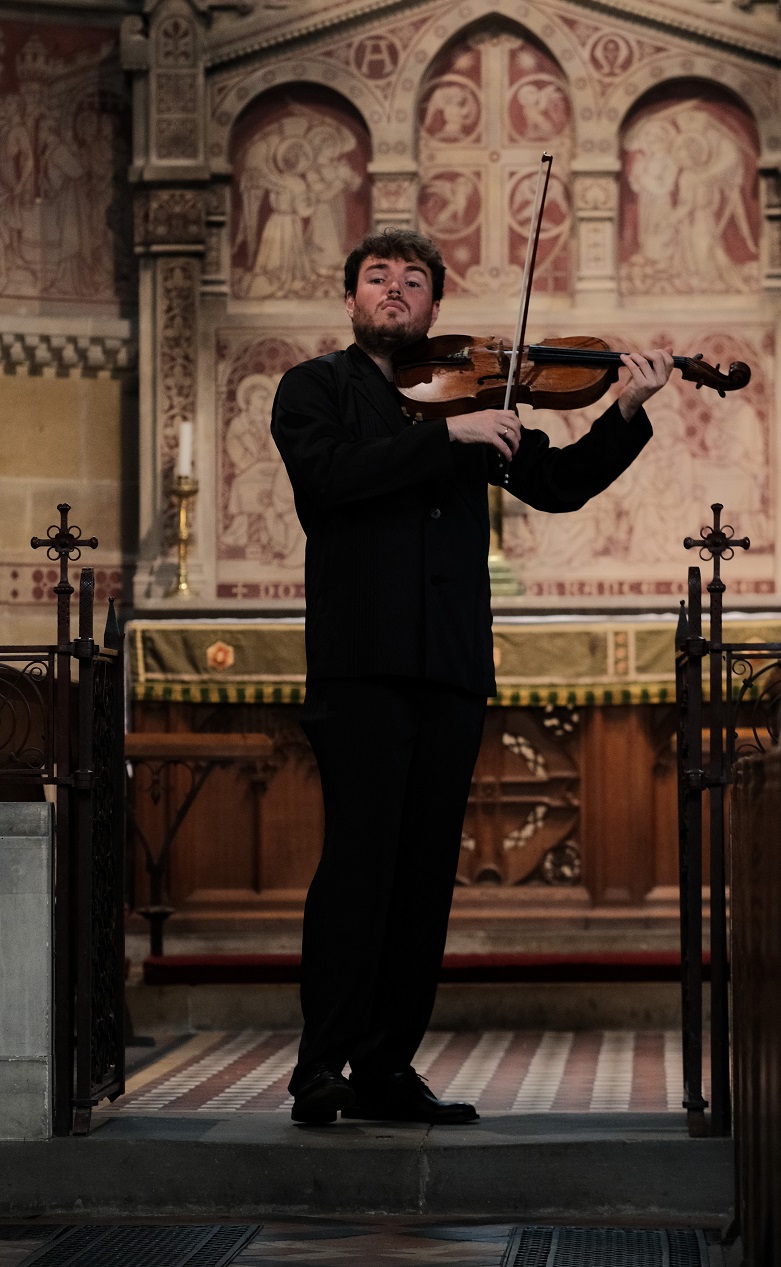
At around 27 minutes, Bliss’s Viola Concerto is equal in its scale as in its expressive reach to comparable works by Hindemith and Walton, so credit to Timothy Ridout (above, among the leading younger violists) that its essence was so tangibly conveyed. Nor was the OON found wanting under the assured direction of Tom Fetherstonhaugh, heard here in an ambience where detail lacked only the final degree of definition. Hopefully a recording will follow of what is likely to be the most important performance scheduled in this 50th anniversary-year of Bliss’ death.

The first half had begun in sparking fashion with the overture Vaughan Williams wrote as part of incidental music for a Cambridge University production of Aristophanes’ satire The Wasps, its incisiveness not precluding an open-hearted response to the ineffable melody at its centre.

A very different proposition duly launched the second half. Solemn Prelude is a characteristic statement by Samuel Coleridge-Taylor that did not merit the total neglect after its premiere at Worcester Cathedral; further hearings only made possible with the score’s belated relocation at the British Library so new parts could be made. Fusing Elgarian nobility with Brucknerian grandeur, any risk of portentousness was countered with an expressive immediacy abetted by Fetherstonhaugh’s flexible control over pace so that a welcome spontaneity came to the fore.

It certainly made an ideal entrée into the ‘Enigma’ Variations. Performances of Elgar’s earliest masterpiece now seem more frequent than ever, and tonight’s had much to commend it. Never fazed by the expansiveness of this acoustic, Fetherstonhaugh opted for mainly swift tempi as might easily have caused blurring in those faster variations had it not been for his scrupulous balance of detail. Elsewhere there was no lack of emotional input, not least during variations VIII-X with the wistfulness of ‘W.N.’ then deftness of ‘Dorabella’ framing a ‘Nimrod’ whose fervour was the greater for its relative urgency. Nor was the ‘E.D.U.’ finale lacking in panache as it brought the whole sequence to a conclusion of ringing affirmation, though it was maybe a pity that this building’s impressive organ could not have been utilized for the closing bars.

What was hardly in doubt was the response that this account received from the near-capacity audience, making one anticipate more such events at Ripon Cathedral in future editions of the Ryedale Festival, as it continues assiduously to promote the cultural life of North Yorkshire.

For more on the festival, visit the Ryedale Festival website, and click on the artist names to read more about violist Timothy Ridout, the Orchestra of Opera North and their conductor Tom Fetherstonhaugh. Meanwhile click to read more on the Arthur Bliss Society and the Samuel Coleridge-Taylor Foundation

Published post no.2,602 – Monday 21 July 2025

In concert – Gina Birch @ Rough Trade East

L-R Jenny Green, Gina Birch, Helen McCookerybook, Marie Merlet

Rough Trade East, London, 16 July 2025

by John Earls. Photo credits (c) John Earls

Gina Birch was a founding member of legendary post-punk band The Raincoats, but it took her until 2023 to release her first solo album. This concert at London’s Rough Trade East was to promote her just released and excellent second solo album Trouble.

“Many of these songs have never been played live before. So it’s an exciting moment for you and a very exciting and scary moment for us” says Birch as she takes the stage with her live band The Unreasonables (Jenny Green and Marie Merlet).

The opening Don’t Fight Your Friends provides a tentative start but pretty soon it’s clear this is going to be something special.

Happiness is a warm and welcoming second number before Birch tells us “now you’re going to wake up again” and launches into Causing Trouble Again, a stirring celebration and shout out (literally) to iconic feminists “and all the other trouble makers I’ve forgotten” that sees Birch playing a high neck bass line melody and some deft solo work from Green on electric guitar.

Doom Monger follows with some funky reggae riffs before the band are joined on stage by “very special guest” Helen McCookerybook who adds vocals to an affecting Hey Hey with its sparse drums and a powerful I Thought I’d Live Forever.

The set finishes with two songs from Birch’s first solo album. I Play My Bass Loud, with its Raincoats’ No One’s Little Girl undertones, sees all of the band playing basses in wonderful solidarity. Feminist Song is a terrific and potent closer to the show with Birch exclaiming:

“I’m a fighter, I’m a believer
I’m a mother, I’m a cleaner
I’m an artist and I’m yours”.

A wonderful evening and a demonstration of Gina Birch’s enduring power to inspire and bring joy.

John Earls is Director of Research at Unite the Union and posts at @johnearls.bsky.social on Bluesky and @john_earls on X. You can subscribe (free) to his Hanging Out a Window Substack column here: https://johnearls.substack.com/

Published post no.2,601 – Sunday 20 July 2025

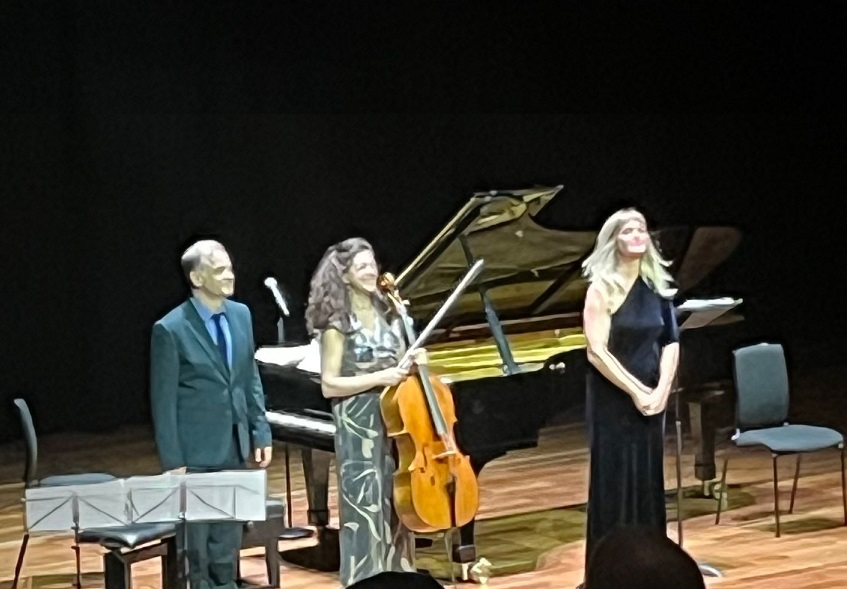
In concert – Ruby Hughes, Natalie Clein & Julius Drake: Schubert and Other Folksongs @ Queen Elizabeth Hall

Ruby Hughes (soprano), Natalie Clein (cello), Julius Drake (piano)

Schubert arr. Jones Der Hirt auf dem Felsen (The Shepherd on the Rock) D965 (1828)
Kodály Sonatina for cello & piano (1922)
Tavener Akhmatova Songs: Dante, Boris Pasternak, Dvustishie (Couplet) (1993)
Brahms 2 Songs Op.91 (1884)
Trad arr. Britten I wonder as I wander (1940-41), At the mid hour of night (Molly, my dear), How sweet the answer (The Wren) (both 1957)
Deborah Pritchard Storm Song (2017)
Janáček Pohádka (Fairy tale) (1910, revised 1923)
Ravel Kaddisch from 2 Mélodies hébraïques (1914)
Bloch From Jewish Life (1924)
Schubert Auf dem Strom (On the river) D943 (1828)
(Encore) Berlioz La Captive

Queen Elizabeth Hall, London, 27 June 2025

by John Earls. Photo credits (c) Philip Sharp (above), John Earls (below)

Two of the most affecting sections of Ruby Hughes’ excellent 2024 album with the Manchester Collective End of My Days are three of John Tavener’s Akhmatova Songs (Dante, Boris Pasternak and  Couplet) and Maurice Ravel’s Kaddish (from 2 Mélodies hébraïques).

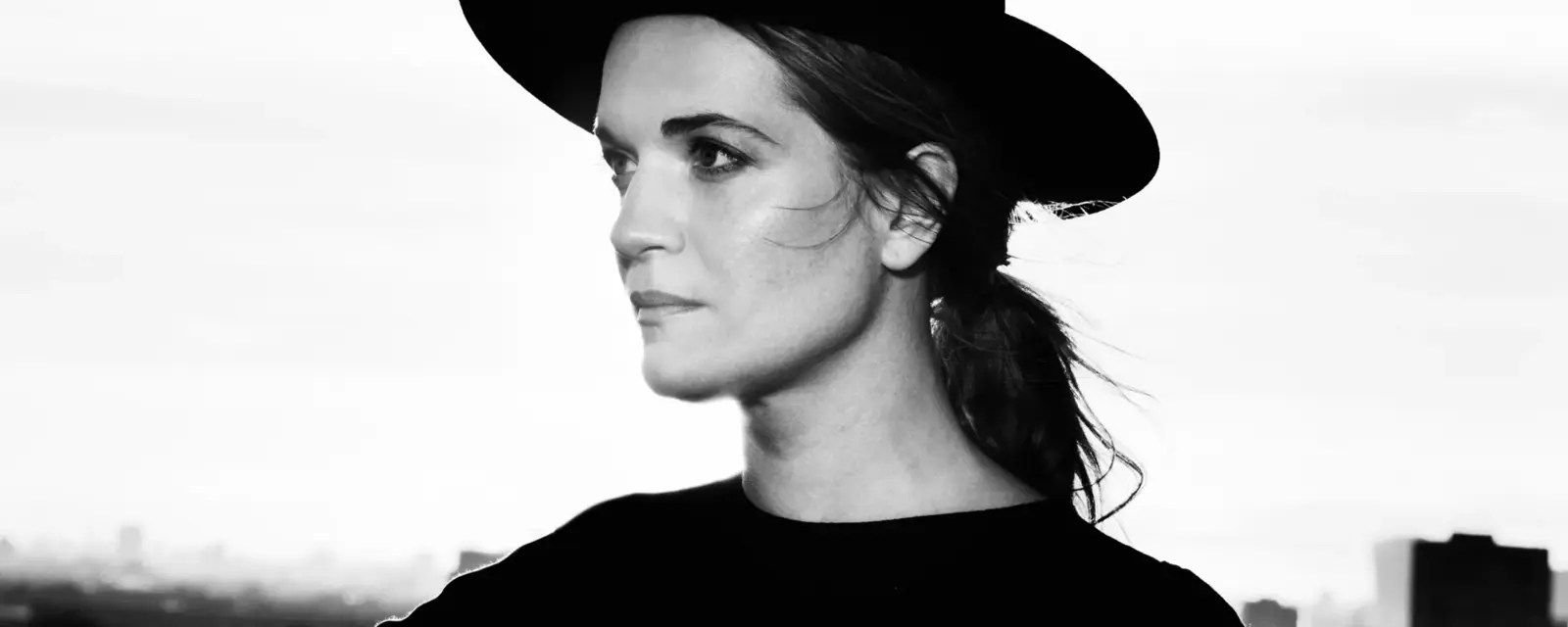
These also featured to dramatic effect in this fascinating concert programme of Schubert and Other Folksongs spanning two centuries, where Hughes was joined by Natalie Clein (cello) and Julius Drake (piano).

In this performance the Tavener song miniatures were performed for voice and cello and were at turns powerful, beautiful and urgent across their nine-minute duration. The prolonged silence from the audience afterwards was noticeable. Ravel’s lament-like Kaddish, this time for voice and (sparse) piano, was similarly respectfully performed and observed.

There were non-vocal pieces for cello and piano where Clein and Drake displayed what a well matched duo they are. Zoltán Kodály’s Sonatina was luminescent, Leoš Janáček’s Pohádka absorbing (not least the cello bowing and pizzicato) and Ernest Bloch’s From Jewish Life was both lovely and mournful.

But this was a concert where Ruby Hughes’ amazing voice was to the fore but often in an understated, but no less impactful way. The captivating trio of Benjamin Britten folksong arrangements with their minimal piano trills were a case in point.

The trio performances were also impressive in their delivery and range. Brahms2 Songs (Op.91) were both gorgeous, while Deborah Pritchard’s Storm Song (from 2017, the most recently written piece) was powerfully unnerving between its haunting start and end (the composer was in the audience to take a well deserved bow).

The concert was bookended by two songs written by Franz Schubert shortly before his death in 1828 at the age of just 31. As David Kettle remarks in his excellent programme notes, to call them simply songs is to do them a disservice. Der Hirt auf dem Felsen (The Shepherd on the rock), arranged by Peter Jones for voice, cello (replacing the clarinet) and piano, traversed a journey of yearning and joy that was both delicate and impassioned. The closing Auf dem Strom (On the river) saw Hughes capturing the drama convincingly throughout.

An encore of Berlioz’s La Captive concluded this concert that combined fascinating and thoughtful programming with performances of beautifully judged expression.

John Earls is Director of Research at Unite the Union and posts at @johnearls.bsky.social on Bluesky and @john_earls on X. You can subscribe (free) to his Hanging Out a Window Substack column here: https://johnearls.substack.com/

Published post no.2,579 – Sunday 29 June 2025