Switched On – Special Request: Vortex & Bedroom Tapes (Houndstooth)

What’s the story?

Paul Woolford, the man behind Special Request, is releasing just the four new albums this year. In his description they were ‘made in his underpants’, and represent a clear wish to make instinctive music that gets to the listener as quickly as possible. This no frills approach is all about making incisive dance music that cuts to the quick, losing none of its energy to post-production.

What’s the music like?

Woolford gets a thrilling blend of old and new in his music, and the refreshing lack of studio gloss keeps the music strong and vital. There is something here for house heads, drum and bass and techno lovers alike, for he has a very unique approach to beat making. Nothing is conventional, yet his rate for hitting the sweet spot is unerring.

The key element of his approach is a love for the use of riffs and sounds harking back to the late 1980s, with electronic dance music still in its infancy and full of thrills and spills

Vortex has the quicker cut and thrust of the two albums. Memory Lake cuts to the quick, getting its raw shots of adrenalin through a killer beat and hook. Ardkore Dolphin takes the same rhythmic cell and presents it in different, thrilling ways. Vortex 150 then typifies Woolford’s approach, with beats that strain at the leash and a primal intensity that reflects the need to dance while capturing the thrill of early hardcore discoveries. Fett is even quicker – 175 beats per minute to be precise – before a flurry of synths and rapid fire drums for A Gargantuan Melting Face Floating Effortlessly Through The Stratosphere. The brilliant title itself pays homage to The Orb, but the rhythms are about three times the speed!

The lo-fi Bedroom Tapes is a bit slower but has a wider sound perspective, impressing with its expansive structures. Panaflex Sunrise is an opening beauty, a singular loop channeling the spirit of early Aphex Twin releases with its softer beat. Despite not grabbing the listener by the scruff of the neck like he does on Vortex, Woolford still finds a fiercely singular voice. Xenopsin is the biggest track – nearly 12 minutes – but arguably the best too, spacing out time as the riffs turn over, backed by a solid four to the floor beat. Phosphorescence is also very fine, a beautifully hazy construction of techno that delivers power but has a softer heart.

Does it work?

Wholeheartedly. These are albums three and four under the Special Request moniker, and as with the first two Woolford packs an original punch in his music that can be breathtaking. In it he finds raw, untempered sounds, wiry melodies and beats that can’t take you anywhere else but the dancefloor.

There is something for everyone here, from the mottled sunrise moments of Bedroom Tapes to the out and out thrills of the Vortex faster tracks.

Are they recommended?

Both albums are unreservedly recommended – and with Offworld next up at the end of September, part three beckons for what will surely be a clean sweep of Special Request winners.

Stream

Buy

Switched On – Blanck Mass: Animated Violence Mild (Sacred Bones Records)

What’s the story?

The chances are that if you haven’t heard of Blanck Mass before, you will have heard his music. It is the solo project of Benjamin John Power, a founding member of the duo Fuck Buttons, purveyors of drone – and whose music featured heavily in Danny Boyle’s creation to mark the opening ceremony of the 2012 Olympics in London. This is Power’s fifth album under the alias.

What’s the music like?

High on adrenalin. When you first hear Animated Violence Mild the sheer force of the wall of sound could well take your breath away. There is so much white noise and percussion, with riffs thrown at the listener like blocks of concrete, that the feeling of overload early on.

Big, bold rhythms cut their way to the front of tracks like Death Drop, while House vs. House flirts with flash metal before panning out into huge textures, like the end credits on an incredibly bloody movie. There is a terrific release of energy here for sure, and tracks like Hush Money have plenty of thrills, but it soon becomes overwhelming. Power provides some very welcome respite with Creature / West Fuqua, cutting from the wall of distortion to the more exotic thrum of the harp.

This is a key moment on the album, as it keys up the brilliant and euphoric No Dice (above), another ‘end credits’ contender, before another thrash fest on the closing Wings Of Hate. To borrow a sporting adage, Power leaves nothing on the pitch in his quest for a big, big sound!

Does it all work?

Sporadically. There are many thrilling moments on this album but several of the tracks have such a massive wall of noise that they sweep through the listener like a sonic tsunami, leaving some of their best bits behind.

Is it recommended?

Yes but not to those of a nervous disposition! Nor would it be an immediate recommendation for newcomers to Power’s work. They might be better off beginning with 2015’s Dumb Flesh, and approaching this from a bit of a distance. Power makes spectacular music here, and could never be accused of being a shrinking violet, but Animated Violence Mild is the musical equivalent of too much caffeine!

Stream

Buy

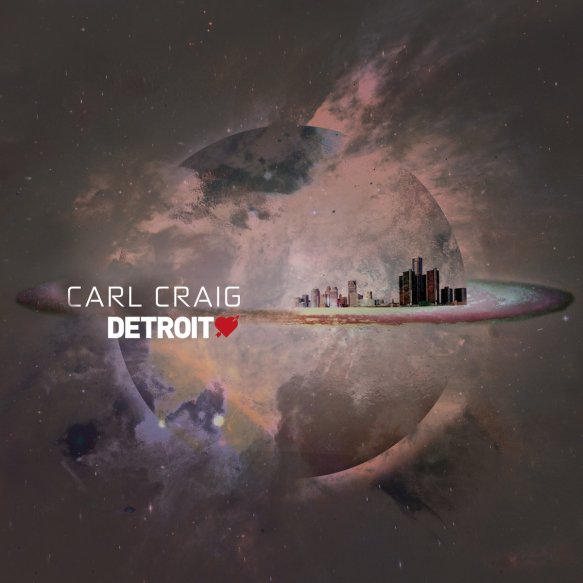
Switched On – Detroit Love 2 mixed by Carl Craig (Planet E / !K7)

Various Artists: Detroit Love 2 mixed by Carl Craig (Planet E / !K7)

What’s the story?

The collaborative series between Carl Craig’s Planet E label and !K7 moves onto its second instalment, bringing the main man to the fore for a 90 minute mix honouring the techno traditions of his home city. He follows Stacey Pullen’s excellent series opener from last year.

What’s the music like?

Craig sets the bar high with the orchestral sounds of Kevin Saunderson and Virus J, their ‘World Of Deep’ gathering the troops with a big old blast of chords. From there a quick tempo is established and the good tunes flow naturally, with Detroit techno royalty in evidence. ‘Rosalie’ from Green Velvet makes an early impact, the bass creeping upwards against the acidic top line.

Octave One’s ‘Rock My Soul’ hits a sweet groove, as does the probing bass line of Wajeed’s ‘Power In Numbers’. The gospel flavours of ‘Calling Out Your Name’ follow, Sophie Lloyd backed by Robert Hood under his Floorplan alias – a typically big, smiley number from him.

Craig continues at quite a nippy tempo through the sparkly edged ‘Do It All Night’ of DJ Minx, blending perfectly in with Claude VonStroke’s ‘My Love Check’ before it. More highlights include the driven dub version of Mr. G’s ‘Lights’, Mirko Loko and Stacey Pullen achieving a big block breakdown with ‘Formulaic Mode’, and Craig later moving on to the booming voice of the ‘Boss’ man, courtesy of Brain.

Towards the end we hear a cracking rarity, the electro old school sounds of Rhythim Is Rhythim’s ‘It Is What It Is’, before another vintage revival in Ectomorph’s ‘Satori’. This ends the dance action, Craig signing off with the gritty garage blues sound of The Dirtbombs’ ‘Alleys Of Your Mind’.

Does it all work?

Yes. This is one of Craig’s more flowing mixes, and while that means it doesn’t necessarily push the genre boundaries as willingly as he has in the past, it does deliver a rollicking good time from Michigan.

Is it recommended?

Definitely. Detroit Love is shaping up to be a collectible series, and there are still many producers capable of adding their own homage to America’s first city of techno.

Stream

Buy

On Record – Vanessa Wagner: Inland (InFiné)

What’s the story?

After her Statea collaboration with Murcof, Vanessa Wagner turns to solo piano for this substantial anthology of pieces with a minimalist slant. It is a broad selection, from the established coffee shop soundtracks of Michael Nyman through to longer pieces by Gavin Bryars, Hans Otte and Pēteris Vasks. Wagner brings together different approaches from either side of the Atlantic, and in doing brings up a half century of albums for French label InFiné.

What’s the music like?

The key to the success of this album is in the planning. By bringing together different approaches Wagner keeps the interest level high, from short but poignant pieces such as Moondog’s Für Fritz (Chaconne in A minor) to Otte’s Das Buch der Klänge, Pt. 2, which has a tonal base but ventures quite a long way harmonically, as its ripples get more pronounced. The pronounced statement at the end serves of a reminder of the influence of Janáček on this area of music.

There are two pieces from Bryce Dessner, with Ornament 3 especially animated, bringing suggestions of Sibelius. The Etude no.9 of Philip Glass drives forward obstinately, its kinetic energy bracing if slightly clinical, but this is complemented by the short but descriptive Railroad (Travel Song) from Meredith Monk. If Michael Nyman’s The Heart Asks Pleasure First inevitably conjures up visions of an Italian coffee chain in the early morning, it is still given extra freshness here, Wagner giving Nyman’s arpeggios a flowing sweep and a really nice sense of space.

Gavin BryarsRamble On Corona hits some deeper set emotions as it works out, reminiscent of the Spanish composer Mompou in its pairing of intimacy and space, while Nico Muhly’s Hudson Cycle has a lovely, lilting syncopation that rocks gently.

The best is saved for last, however, the Latvian composer Vasks really casting a spell with the stillness and poise of Baltâ ainava (White scenery), a cold excerpt from his substantial piano suite The Seasons, serving as one of those ‘last pieces before sleep’.

Does it all work?

Yes, very well indeed. Wagner has a very sympathetic ear for music that has plenty to offer, getting to the nub of its meditative qualities but bringing out its positive energy too. Each composer holds their own, the result an authoritative and accurate look at piano music in the 21st century, showing how it is possible to write with both simplicity and substance.

Is it recommended?

Yes, in all sorts of different musical directions! Recommended to fans approaching from the more ordered classical direction of Reich and Glass, but also to those coming in from the more electronic approaches of Nils Frahm and Murcof.

Stream

Buy

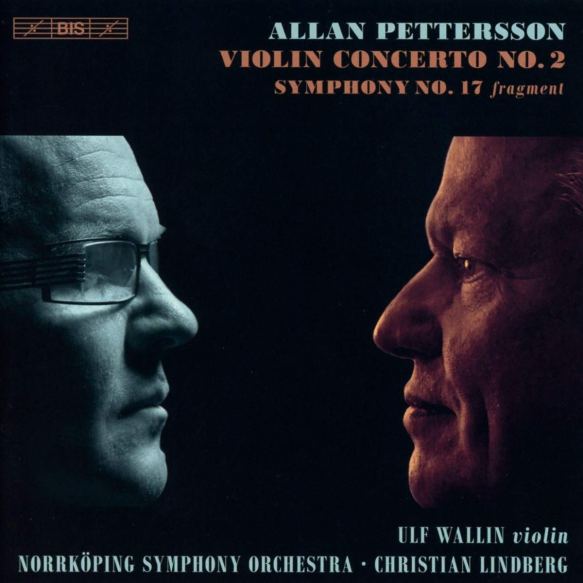
On record – Ulf Wallin, Norrköpping Symphony Orchestra / Christian Lindberg – Pettersson: Violin Concerto no.2 & Symphony no.17 (BIS)

Ulf Wallin (violin); Norrköpping Symphony Orchestra / Christian Lindberg

Pettersson
Violin Concerto no.2 (1977, rev. 1980)
Symphony no.17 (1980, ed. Brylka/Lindberg)

BIS BIS 2290SACD [61’06”]

Producers Martin Nagorni (Violin Concerto), Hans Kipfer (Symphony)
Engineers Fabian Frank (Violin Concerto), Stephan Reh (Symphony)

Recorded January 2017 (Symphony) and January 2018 (Violin Concerto) at Louis de Geer Concert Hall, Norrköpping

Written by Richard Whitehouse

What’s the story?

Christian Lindberg continues his traversal of Allan Pettersson’s symphonic output with the Second Violin Concerto, coupled with a first recording of all that the composer left of what was likely to be his Seventeenth Symphony in a performing version co-edited by Lindberg.

What’s the music like?

Coming in the wake of his volatile and combative Thirteenth Symphony, Pettersson’s Second Violin Concerto (following a Concerto for Violin and String Quartet of 28 years before) was commissioned then premiered by Ida Haendel, though it seems likely to have been conceived beforehand.

The taxing and almost continuous solo part often subsumed into the orchestra, so making it more a ‘symphony for violin and orchestra’, with an inverted virtuosity such as the composer made no attempt to temper. He did, though, overhaul the texture after the premiere in 1980, allowing the soloist more definition against the orchestra – its undivided violin part in particular – but without lessening the music’s intensity in any way. The outcome, it hardly needs to be added, is a violin concerto that is conceptually and emotionally unlike any other.

Although (here) playing for some 53 minutes, the single movement falls into several distinct sections which are duly followed on this disc. Thus, a lengthy ‘exposition’ proceeds from an impulsive first thematic group to its expressively more yielding successor that draws on the 14th from Pettersson’s war-time Barefoot Songs (‘The Lord walks in the meadow’), whose plaintive irony underlies much of what follows. An almost equally extensive ‘development’ is largely taken up with the opening themes, before a distilled ‘reprise’ of the second group then an extended ‘coda’ (marked Cantando) in which various motifs are freely combined on the way to a conclusion whose wistful poise became a feature of the next two symphonies – the music audibly intent on making peace with itself while admitting no false consolation.

The fill-up is the draft of what Pettersson presumably intended as his Seventeenth Symphony (but this is not so indicated on the manuscript), here given its first recording in a performing version edited by Markus Brylka and Christian Lindberg. Playing for almost seven minutes, its atmosphere of fraught anticipation rather looks back to the composer’s symphonies of the 1960s – albeit from the more equivocal perspective of his last years. The absence of further sketches makes its evolution impossible to guess, but what does exist is undeniably arresting.

Does it all work?

Yes. Ulf Wallin is a violinist of the first rank yet never self-conscious or self-regarding as a virtuoso and is accorded unstinting support from the Norrköping musicians, with Lindberg predictably authoritative in his direction. Ida Haendel’s 1980 account (Caprice) features the original orchestration and remains a compelling if undeniably historical document, whereas Isabelle van Keulen’s 1999 recording (CPO) makes a convincing case in more concerto-like terms. Those coming to the piece for the first time should certainly opt for this new account.

Is it recommended?

Very much so. The sound is well up to the high standard of previous releases from this series in clarity and spaciousness, and there are informative notes by Per-Henning Olsson. Just the choral Twelfth Symphony to come in what has been a rewarding and often revelatory cycle.

Stream

Buy

For more information on this release visit the BIS website