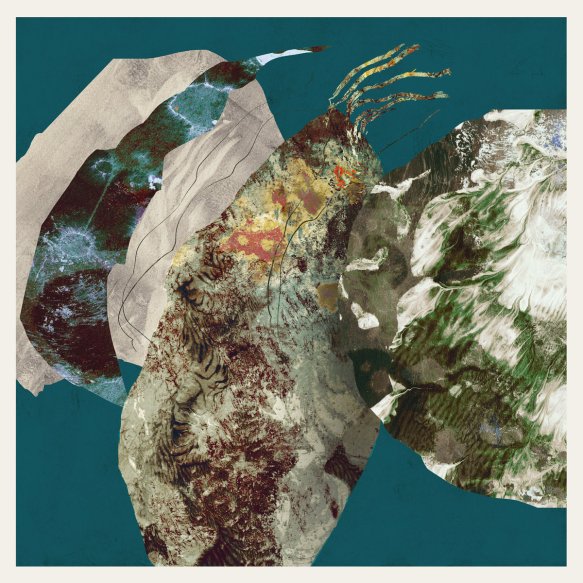
Switched On – Twinkle3: Minor Planets (Marionette)

reviewed by Ben Hogwood

What’s the story?

Minor Planets completes a trilogy spanning 15 years from Twinkle 3. The trio – Richard Scott, David Ross and Clive Bell – have a very open musical approach, which on this album allows influences from diverse sources such as Lee ‘Scratch’ Perry and Stockhausen to be taken in, via some sounds of the Far East evoked by Bell’s shakuhachi. The press release for Minor Planets tells a vivid story, promising ‘aleatoric analogue sequencing, chamber-like acoustic improvisation and dub treatments’…which ‘become distilled into a district and emotive narrative that takes us on an exilharating hyperspace cruise to the outer reaches.’

What’s the music like?

Fluid, instinctive and never less than intriguing. Minor Planets captures the sense of emptiness outer space portrays, but also the elements of strangeness, discovery and wonder. From the strange ticking and slightly acidic electronics of Opik 2099 to the mysterious Ziziyu 26946, the textures constantly evolve and the dubby beats provide both comfort and on occasion edginess. The shanachi sounds rather wonderful when used on Soma 2815 and on Kallope 22, taking the listener far away.

Does it all work?

Yes, it does, though headphones are recommended to get the best sonic perspective. Minor Planets does indeed take the listener far from home on its nine very different excursions.

Is it recommended?

Definitely. Those with a mind for ambient music should seek this out, especially if they like a bit of exploration and experimentation at the same time.

Stream & Buy

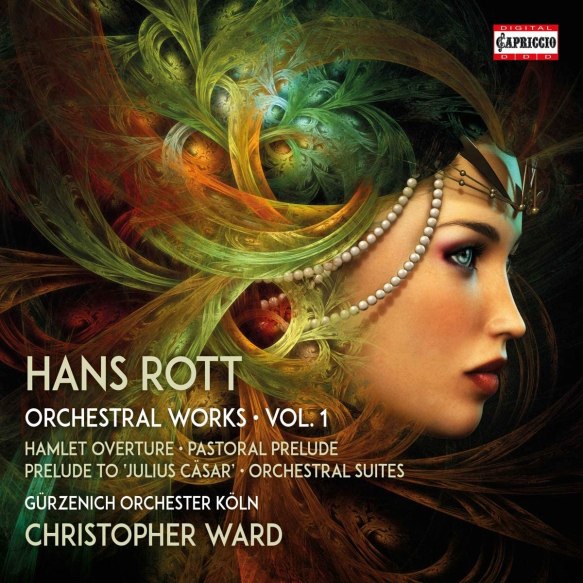
On record – Christopher Ward conducts Rott: Orchestral Works Vol.1 (Capriccio)

Gürzenich Orchester Köln / Christopher Ward

Rott
Overture to Hamlet (1876, compl. Schmidt)
Suite in E major (1878)
Prelude to Julius Cäsar (1877)
Prelude in E major (1876)
Suite in B flat major (1877)
Pastoral Prelude in F major (1877-80)

Capriccio C5408 [51’44”]

Producers Wolfram Nehls, Johannes Kernmayer
Engineer Thomas Bössl

Recorded 23-25 January 2020 at Studio Stolberger Strasse, Cologne

Written by Richard Whitehouse

What’s the story?

Capriccio issues the first in what is (presumably) a two-volume survey of orchestral music by Hans Rott (1858-84), gathering up the extant or realizable shorter pieces from his regrettably brief yet highly eventful composing career, in what are assured and idiomatic performances.

What’s the music like?

The one premiere recording is of the Hamlet Overture, its orchestration broken off after some 35 bars yet with the overall draft sufficiently advanced to enable this completion by Johannes Volker Schmidt. The manuscript’s designation Prelude suggests this as the introduction to an operatic or choral work, but the absence of more concrete information makes it uncertain how far this piece shadows events in Shakespeare’s drama. As a concert overture, it unfolds purposefully enough and much the same might be said of the Julius Cäsar Prelude, given its anxious pivoting between the majestic and the intimate; informed by a Wagnerian approach to harmony and sonority no doubt occasioned by Rott’s attending the first Bayreuth Festival.

Most of these other items were composition exercises while Rott was studying at the Vienna Conservatoire, with the concise Prelude in E evincing no mean emotional fervour. The brace of movements in each of the suites find the composer in more relaxed mood. Those of the E major feature a Prelude of eloquent restraint then a Finale whose rather greater variety of mood and dramatic culmination are altogether more prophetic. Those of the B flat feature a Scherzo whose capering motion and deft irony are rather more personable than a Finale that seems intent on building a fugal peroration, only to call time on its progress with an all too perfunctory closing cadence – as to suggest the composer was losing interest as he went on.

Last but emphatically not least, the Pastoral Prelude in F is by far the longest work and the clearest indicator of where Rott might have been headed during that fateful year of 1880. Its subtitle, A Prelude to Elsbeth, again suggests theatrical connotations that were most likely abandoned during the three years over which this piece took shape. The initial stages, with their avian evocations and horn calls, afford a distinctive take on late-Romantic archetypes, while the discursive yet never unfocussed progress towards a powerful apotheosis confirms its composer’s fugal proficiency. It may have had to wait 120 years for its first hearing but this, along with his Symphony, makes clear just what was lost with Rott’s untimely demise.

Does it all work?

Yes, though it needs to be stressed that nothing quite equals the vaunting if reckless ambition evident from the Symphony in E, the defining work (however unintentional) of Rott’s output. It would be fascinating to have heard Mahler’s attempts at orchestral music from this period, while Hugo Wolf’s early orchestral pieces exude rather greater individuality. What cannot be denied is the seriousness with which Rott applies himself, or the commitment with which the Gürzenich forces realize his intentions under the sympathetic guidance of Christopher Ward.

Is it recommended?

Indeed. These pieces have almost always appeared as fill-ups for Rott’s Symphony, making their collation here the more welcome. Excellent sound, decent annotations, and a release to be investigated in advance of the second instalment – already announced for early next year.

Listen & Buy

You can get more information on the disc at the Capriccio website, or purchase from Presto. Meanwhile for more information on Hans Rott, you can head to a dedicated website

On record – Eckart Runge plays Kapustin & Schnittke (Capriccio)

Eckart Runge (cello), Rundfunk-Sinfonieorchester Berlin / Frank Strobel

Kapustin
Cello Concerto no.1 Op.85 (1997)
Schnittke
Cello Concerto no.1 (1985/6)

Capriccio C5362 [69’52”]

Producer / Engineer  Wolfram Nehls Henri Thaon

Recorded 9-10 March 2018 (Kapustin), 30 September – 2 October 2019 at RBB Haus des Rundfunk, Berlin

Written by Richard Whitehouse

What’s the story?

Eckart Runge continues his distinctive – not to say idiosyncratic – recorded odyssey with this pertinent coupling of Russian cello concertos, written a decade apart by composers who were near contemporaries while pursuing radically different paths in terms of career and aesthetic.

What’s the music like?

His First Cello Concerto sees Nikolai Kapustin intent on opening-out his jazz-inflected idiom as centred on the piano over the previous two decades. With its stealthy emergence towards a ‘big band’ summons, the initial Allegro forges a flexible accommodation between soloist and orchestra – the former given its head in brief yet decisive passages, with the two engaging in animated and essentially good-natured banter elsewhere. Kapustin’s take on jazz is beholden to no time or place, but the central Largo evokes that of America’s immediate post-war era in its rhythmic clarity that belies a subdued and often taciturn lyrism; at length accelerating into the final Allegro which, with its incisive interplay and tensile bravura, finds this composer at his most characteristic. How surprising that, given the worldwide interest in Kapustin during his final quarter-century, this piece should have gone unheard until just two years before his death. Runge is audibly intent on making up for that neglect, bringing an impetus and elan to the music as should go some way towards establishing its presence in the modern repertoire.

At almost twice its length, Alfred Schnittke’s First Cello Concerto is evidently the weightier proposition as is proven with this last in a sequence of imposing concertante works – having been preceded by those for violin (No. 4), viola and choir. The initial Moderato unfolds as a soliloquy alternately heightened and threatened by orchestra, its essential pathos continually reasserting itself against the forces of negation. From the ashes of this ultimate confrontation, a Largo emerges fitfully before it takes on an eloquence by no means devoid of anxiety; this latter quality to the fore in an ensuing Allegro as impulsive as it is concentrated. The first of several debilitating strokes suffered soon after starting work on this piece radically altered its concept – the final Largo building in a crescendo of intensity to the radiant apotheosis, before winding down to a serenity whose closure is more real for having been so hard-won. A tough work to make cohere over its lengthy spans of mainly slow music, yet Runge undoubtedly has its measure through his sustaining of these emotional peaks and troughs with such conviction.

Does it all work?

Yes, albeit in terms of those stylistic goals the composers set themselves. Runge currently has no competition for the Kapustin, where his fusion of incisiveness and suavity will be a tough act to follow. His take on the Schnittke is more durable than most of its predecessors, though dedicate Natalia Gutman finds greater intensity in her first recording (Regis/Alto), while the late Alexander Ivashkin teases greater subtlety from more inward passages (Chandos). Frank Strobel with the Berlin Radio Symphony Orchestra offer alert and idiomatic support in both instances.

Is it recommended?

Indeed, not least in its underlining the diversity of music as came out of Russia during those ‘transitional’ years either side of the USSR’s demise. Informative notes by Christian Heindl and Runge, who will hopefully record the second concertos of both composers for this label.

Listen & Buy

You can get more information on the disc at the Capriccio website, or purchase from Presto. Meanwhile for more information on the artists, Eckart Runge can be found here and Frank Strobel here

On record – Matthew Schellhorn plays Howells: Piano Music Vol.1 (Naxos)

Matthew Schellhorn (piano) Herbert Howells Phantasy (1917) Harlequin Dancing (1918) My Lord Harewood’s Galliard (1949) Finzi: His Rest (1956) Summer Idyls (1911) Siciliana (1958) Pavane and Galliard (1964) Petrus Suite (1967-73) Naxos 8.571382 [65’52”] Producers Rachel Smith< Engineer Ben Connellan Recorded 19-21 August 2019 at The Menuhin Hall, Stoke D’Abernon Written by Richard Whitehouse What’s the story? Naxos continues its coverage of Herbert Howells with this initial instalment (presumably one more to follow) of his piano music, all pieces being previously unrecorded and authoritatively rendered by Matthew Schellhorn in what is a notable addition to the composer’s discography. What’s the music like? Long before his death (at the age of 90), Howells’s reputation rested firmly on his output of choral and organ works. Only quite recently has his considerable earlier output of orchestral and chamber music received serious re-evaluation, so revealing one whose distinct change of outlook in his early forties came about as much through cultural as personal reasons. Modest in scope and dimension, his piano music features no extended or career-defining works, yet its technical poise and always idiomatic feel for this instrument makes for a rewarding listen. The present selection interleaves miniatures and cyclical works in chronological order. As to the former, Phantasy finds the recently graduated composer assured in his handling of those impressionist aspects derived from Debussy and Ravel, while Harlequin Dreaming inhabits a world of Satie-esque whimsy and nonchalance as a reminder that Howells was then close friends with Bliss. Moving on to the Renaissance-inspired piano pieces of his later years, My Lord Harewood’s Galliard fuses its recherche manner with engaging harmonic astringency, whereas Finzi: His Rest is a pensively ambivalent in-memoriam to a younger colleague. The Siciliana is a languorous if non-indulgent take on the characteristic dance rhythm, while the Pavane and Galliard juxtaposes the confessional and combative with stark emotional acuity. The suites come from either end of Howells’s career, with all that implies for a half-century timespan. Summer Idyls [sic] formed a part of his portfolio for the Royal College of Music; its stylistic indebtedness to the mid- and late Romantics – not least Rachmaninov – would soon be left behind, but the appeal in these evocations of rural environs no doubt familiar from his childhood endures. Pick of the seven is the wistful rumination of ‘Near Midnight’, with the central ‘Minuet Sine Nomine’ similarly dominating the Petrus Suite in its limpid refinement. Otherwise, the seven pieces evince a sinewy counterpoint and tensile linearity    as are audibly a product of Howells’s late style, yet the origin of several in sketches made decades before confirms an overriding consistency of approach heightened by experience. Does it all work? Yes, allowing that Howells never sought to suffuse this music with the degree of emotional intensity reserved, at least in his maturity, for the larger choral works. Yet his quintessential expression is arguably to be found in those many shorter choral or organ pieces intended for liturgical purpose; in which case, the expressive focus and restraint of what is recorded here is its own justification. It could hardly have a more persuasive advocate than Schellhorn, who credits the late Stephen Cleobury for introducing him to the extent of Howells’s piano music. Is it recommended? Indeed. The closely unduly defined sound is ideal for piano music of this kind, and Jonathan Clinch’s annotations (along with a reminiscence by the pianist) are succinct and informative. The follow-up volume, mainly of better-known music, will doubtless prove just as rewarding. Listen & Buy
You can listen to clips from the recording and purchase, either in physical or digital form, at the Naxos website

On record – Christopher Lyndon-Gee conducts Silvestrov: Symphony no.7 (Naxos)

Inna Galatenko (soprano); Oleg Bezborodko (piano); Lithuanian National Symphony Orchestra / Christopher Lyndon-Gee

Valentin Silvestrov

Ode to a Nightingale (1983)
Cantata no.4 (2014)
Concertino for Piano and Small Orchestra (2015)
Moments of Poetry and Music (2003)
Symphony No. 7 (2003)

Naxos 8.574123 [73’06”]

Producers / Engineers  Vilius Keras, Aleksandra Keriené

Recorded 18-24 January 2019 at Lithuanian National Cultural Centre Recording Studio, Vilnius

Written by Richard Whitehouse

What’s the story?

Naxos makes a notable addition to the Valentin Silvestrov discography with this release of mainly recent works, mostly in first recordings, and all idiomatically realized by Lithuanian artists under the direction of conductor (and sometime composer) Christopher Lyndon-Gee.

What’s the music like?

Much the earliest piece, Ode to a Nightingale includes all the verses of Keats’s poem. A series of motifs constantly recurs and recombines such that this text is not so much set as projected via a rhetorical while flexible vocal line, heard against an instrumental texture dominated by a carillon that evokes the eponymous bird. Previously encountered in a chamber version, this is the first recording of the recently premiered orchestral original, and if larger forces extend rather than intensify its expressive scope, this is hardly to the detriment of the music overall.

Two decades on, and Cantata no.4 is an assembly of verse by Ukrainian poets (including the national author Taras Schevchenko), set in a manner that evidently recalls the salon intimacy of mid-19th century Russian songwriters. Most appealing is its Pastorale second movement, which duly re-emerges in expanded form as the corresponding movement in the Concertino written soon afterwards. Nominally more abstract, this latter piece charts a wider emotional terrain – the wryly ingratiating Pastorale framed by a Preliudium whose majesty rapidly dissipates, then a Serenade of wistful poise; none of these movements quite anticipates the Postliudium which brings about a closure of decidedly ominous ambivalence – a reminder that the seeming repose of Silvestrov’s later music is permeated by an introspective anxiety.

This is no less audible in Moments of Poetry and Music, a brief yet telling juxtaposition of verse by Paul Celan – to piano accompaniment – with a longer paraphrase where piano and orchestra open-out those salient motifs to a degree the more affecting for its understatement.

Which just leaves the Seventh Symphony – at barely 18 minutes, the shortest of Silvestrov’s maturity while eschewing both the underlying integration of the Fifth and plangent contrasts of the Sixth. Nor is it any less characteristic, unfolding as an unbroken span where episodes of relative tension and release interleave on the way to a coda of rapt evanescence. A pivotal cadenza from piano (rendered by Marija Grikevičiūté) is but the most significant appearance by an instrument whose concertante function tangibly enhances the speculative aura overall.

Does it all work?

Yes, providing one remembers the music from this composer’s maturity is less about ongoing evolution than incremental variation (the Eighth Symphony rather seems to indicate a stylistic shift in its priorities). Such pieces are best listened to individually, though the programme as assembled is persuasive in its follow-through; with Inna Galatenko eloquent during her vocal contributions and Oleg Bezborodko a pianist of no little finesse. Lyndon-Gee secures playing from the Lithuanian National Symphony as to indicate an orchestra punching above its status.

Is it recommended?

Indeed, and at its modest price this is an ideal introduction to the composer for those yet to be acquainted with his music. Conductor and orchestra will hopefully tackle more Silvestrov, not least the three symphonies (the Ninth pointedly entitled Ode to Joy) he has gone on to write.

Listen & Buy

You can listen to clips from the recording and purchase, either in physical or digital form, at the Naxos website