In concert – Elizaveta Ivanova, BBC Symphony Orchestra / Vinay Parmeswaran @ Maida Vale: Carlos Simon, Ibert Flute Concerto & Prokofiev Seventh Symphony

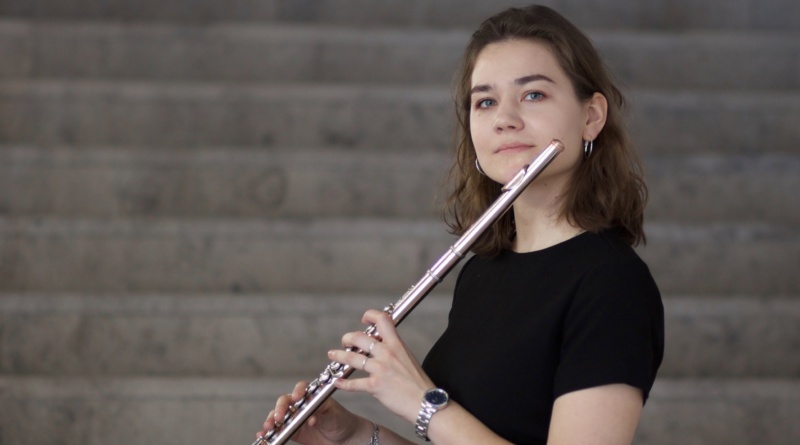
Elizaveta Ivanova (flute, below), BBC Symphony Orchestra / Vinay Parameswaran (above)

Carlos Simon Fate Now Conquers (2020)
Ibert Flute Concerto (1932-33)
Prokofiev Symphony no.7 in C# minor Op.131 (1952)

Studio 1, BBC Maida Vale Studios, London
Tuesday 4 February 2025 (2:30pm)

by Ben Hogwood Photo of Vinay Parameswaran (c) Roger Mastroianni, courtesy of The Cleveland Orchestra

For this concert linking seventh symphonies, the BBC Symphony Orchestra made their first public appearance with conductor Vinay Parmeswaran.

They began with music from Vienna via America, Carlos Simon effectively remixing the second movement of Beethoven’s Symphony no.7 and applying some fresh paint of his own. The piece was inspired by an entry Beethoven made into his journal in 1815, and takes its lead from “the beautifully fluid harmonic structure” of the symphony’s second movement, Simon composing “musical gestures that are representative of the unpredictable ways of fate”. Though Beethoven’s structure could still be glimpsed, it was viewed through music incorporating the language of Sibelius, Copland and John Adams to create a relatively familiar but ultimately thrilling orchestral vista. Simon’s development of the material was enjoyable to witness, though the sudden end felt underpowered in context. Nonetheless, here is a composer to investigate further.

Ibert’s Flute Concerto is one of the instrument’s calling cards from the 20th century, though is heard in concert rather less than it could be. Here it was performed by Elizaveta Ivanova, a flautist recently recruited to the BBC New Generation Artists programme and making her first appearance with the BBC Symphony Orchestra. She brought to the piece a welcome freshness, rising to the challenge of Ibert’s virtuoso solo part while including stylish phrasing and thoughtful dialogue with the orchestra. The graceful second movement Andante is the emotional centre of the concerto, and recalls the equivalent movement in Ravel’s Piano Concerto in G major in its beauty and softer-hearted sentiments. This was in vivid contrast to the outer movements, whose syncopations took the music closer to New York rather than Paris, Ibert’s cosmopolitan style enjoyed by the reduced BBC SO forces as much as by the athletic soloist. A fine performance, and a welcome revival for a composer whose colourful orchestral music and abundant melodies are a tonic.

Melodies, bittersweet or otherwise, are at the core of Prokofiev’s late Symphony no.7, written the year before his death. In a short interview section Parmeswaran implied the work was ‘softer’ than its predecessors, but there were no shrinking violets to be found as the second movement reached a juddering conclusion. Here Prokofiev’s attempts to write a competition winner, simultaneously pleasing Stalin, were affected by his own personal angst, for he was living in poverty at the time.

The weighty bass of the first movement and graceful cello theme of the third movement, marked Andante espressivo, were indicators of the emotional range of the symphony, but the biggest tune, heard from the full orchestra, was the second theme of the first movement, a soaring and winsome melody that returns to crown the final movement. Under Parmeswaran’s affectionate direction it was beautifully judged, though he was careful to ensure the final word in the symphony carried equal impact, the strange ticking of the percussion indicating the creeping passage of time. The symphony ended as it should, its smiling countenance compromised by a frown.

Listen

This concert was recorded for future broadcast on BBC Radio 3. A link will appear here when that becomes available.

Published post no.2,433 – Wednesday 5 February 2025

Arcana @ 10… Musical moments: Christopher Rouse’s Organ Concerto

Credit: Carolyn Cole/Los Angeles Times via Getty

As part of Arcana’s 10th birthday celebrations, we invited our readers to contribute with some of their ‘watershed’ musical moments from the last 10 years.

David Gutman writes:

This is a peculiar time for music and politics but perhaps it’s been that way for longer than we think.

Christopher Rouse, my favourite ‘living composer’, has been dead since 2019 and is rarely played in the UK but we’re continuing to discover ‘new’ works by him online and on disc. Rouse began as an academic evangelist for rock music as it was understood in the 1970s but took his ‘classical’ calling seriously enough to take an unfashionable stand: “I’m not going to talk about rock ‘n’ roll any more. It doesn’t need my help. It’s not that I no longer like that music, but I feel the wagons have been circled, and I’m going to stick with my high-falutin’, élitist, dead white European male brethren and, if necessary, go down fighting.”

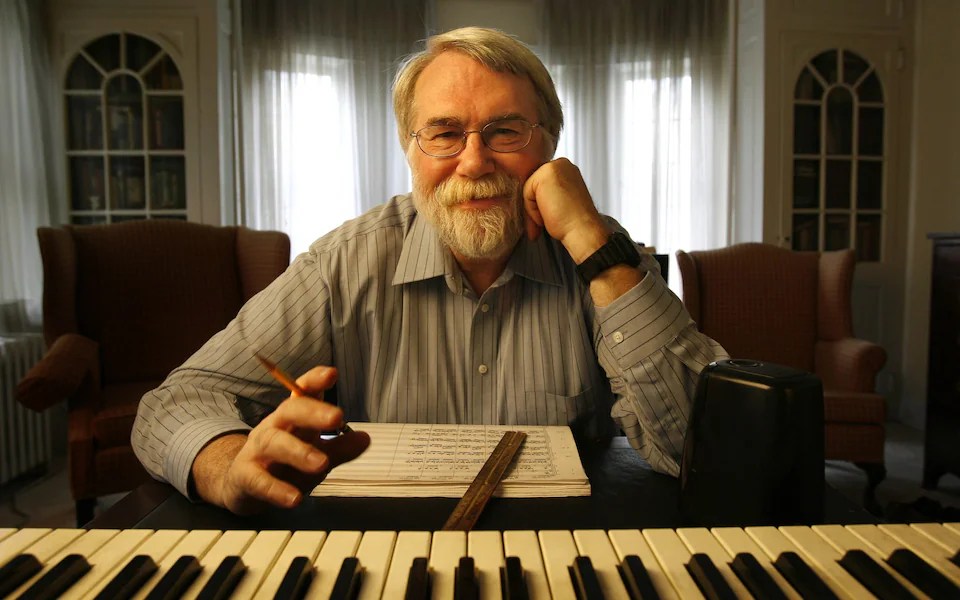
His Organ Concerto of 2014 appeared only last year in a Naxos collection of American Organ Concertos played by Paul Jacobs. The Rouse is the highlight, his usual wildly eclectic mix, only around 20-minutes in length and traditional in form but pugnacious in content, whether tonal or atonal. There is also drumming. Its central Lento, which hostile critics have already misheard as ‘sentimental’, is another of the composer’s heartfelt meditations on the nature and acceptance of grief. This matters as we age (this listener is 67 ½) while the finale’s return to consonance and affirmation despite noises off is not just for show. It moved me very much. Rouse wrote the piece ‘the old-fashioned way’ with pencil and paper, on a table.

You can listen to the whole piece on Tidal below – the Rouse is tracks 5 – 7:

Published post no.2,430 – Monday 3 February 2025

Roll out the bunting…Arcana is 10 years old today!

From Ben Hogwood, Arcana editor:

If you’ll forgive the indulgence…Happy Birthday to us!

Arcana is 10 years old today, a chance to celebrate a decade of sharing great music with our readers. I would like to thank you all for your encouragement and interaction with the site, to thank our guest writers – principally Richard Whitehouse and John Earls – for their excellent contributions and insights in recent years, and to thank my wife Sam Hogwood for her unerring support. This is an enterprise that run outside of working hours, so it is inevitably a balancing act where time is concerned!

As part of our birthday celebrations, we have invited readers to contribute with their ‘watershed’ musical moments from the last 10 years. I’m looking forward to sharing them with you over the next few days; there are some crackers! It’s not too late to share yours either, by contacting me on e-mail (editor@arcana.fm)

In the meantime, here is an appropriate piece of music to mark the occasion – while at the same time giving a clue to what is upcoming on Arcana in the coming months:

Image by Alexander Raths

Published post no.2,428 – Saturday 1 February 2025

On this day in 1905 – the world premiere of Schoenberg’s Pelleas und Melisande

by Ben Hogwood Picture by Richard Gerstl

On this day in 1905, the world premiere of Schoenberg’s orchestral piece Pelleas und Melisande took place, in Vienna’s Musikverein.

This is a remarkable piece, an example of Schoenberg’s ultra-intense style as he began to show signs of breaking with tonality. The story unfolds in an unbroken span of over 40 minutes, during which the large orchestra bathe in rich harmony and lush colouring on the part of the composer’s skilful instrumentation.

The piece can be heard here with the Frankfurt Radio Symphony Orchestra and David Markham:

Storms in music – Sibelius: Tapiola

by Ben Hogwood

With the UK braced for the arrival of Storm Éowyn today, it got me thinking of successful portrayals of storms in music.

The first piece that came to mind was Sibelius’s masterpiece Tapiola, a remarkable and vivid orchestral poem written late in his compositional career about Tapio, the spirit of the forest. Its depiction of a storm is like no other.

Listen here, in a particularly incendiary account from the Berliner Philharmoniker and Herbert von Karajan, keeping an ear out for the storm as it begins around the 16:50 mark:

Published post no.2,421 – Friday 24 January 2025