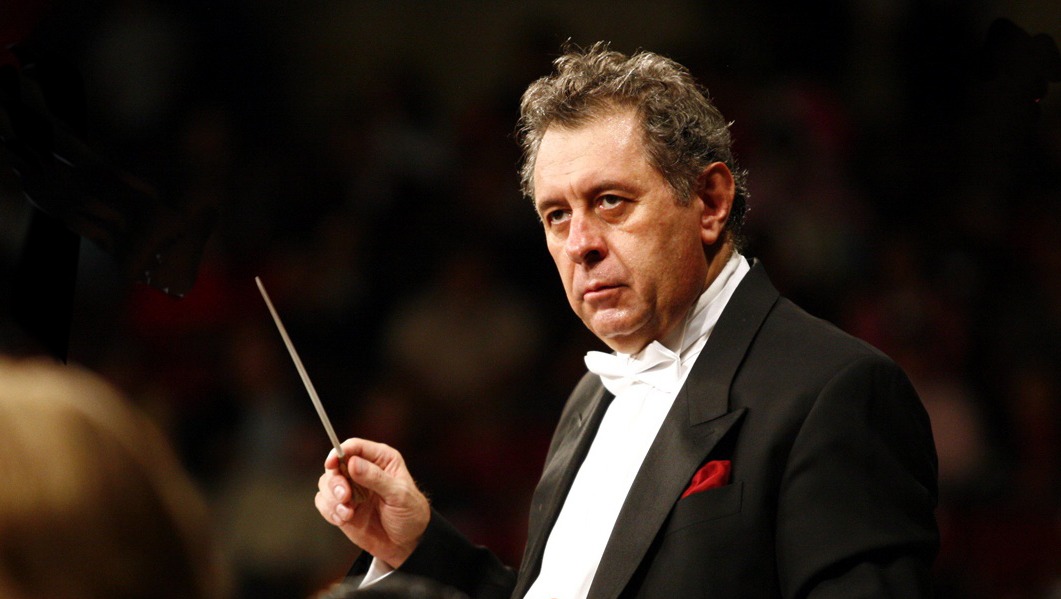
Yesterday we learned of the sad news of the death of Mexican conductor Enrique Bátiz. A flourishing pianist, Bátiz soon turned to conducting, and in 1971 was founder of the State of Mexico Symphony Orchestra. where he worked until 1983, at which point he became music director of the Mexico Philharmonic Orchestra. In 1984 he became principal guest conductor of the Royal Philharmonic Orchestra, a post he held for several years.
Below is a link to a Tidal playlist containing a number of his colourful orchestral recordings, including an important series devoted to Mexican classical music on ASV in the 1980s:
Today marks 50 years since the passing of Sir Arthur Bliss, one of the most important composers in recent British musical history.
The Arthur Bliss Society sum up his contribution as “one of the most important figures in British musical life from the early 1920s (when he was regarded as an enfant terrible) through to his later years and his tenure of the office of Master of the Queen’s Music from 1953, following Sir Arnold Bax”.
If you are a regular Arcana reader you will have read about recent performances of A Colour Symphony, one of his most popular orchestral works, and also a revival for his masterful Temporal Variations, recorded by the BBC Philharmonic Orchestra and John Wilson for later this anniversary year.
For now, here is a Tidal playlist taking excerpts from some of Bliss’s most important works, as well as including the two orchestral works noted above:
To read about further concerts in Bliss’s anniversary year, you can visit the Arthur Bliss Society website – where you will find more information about the pieces above.
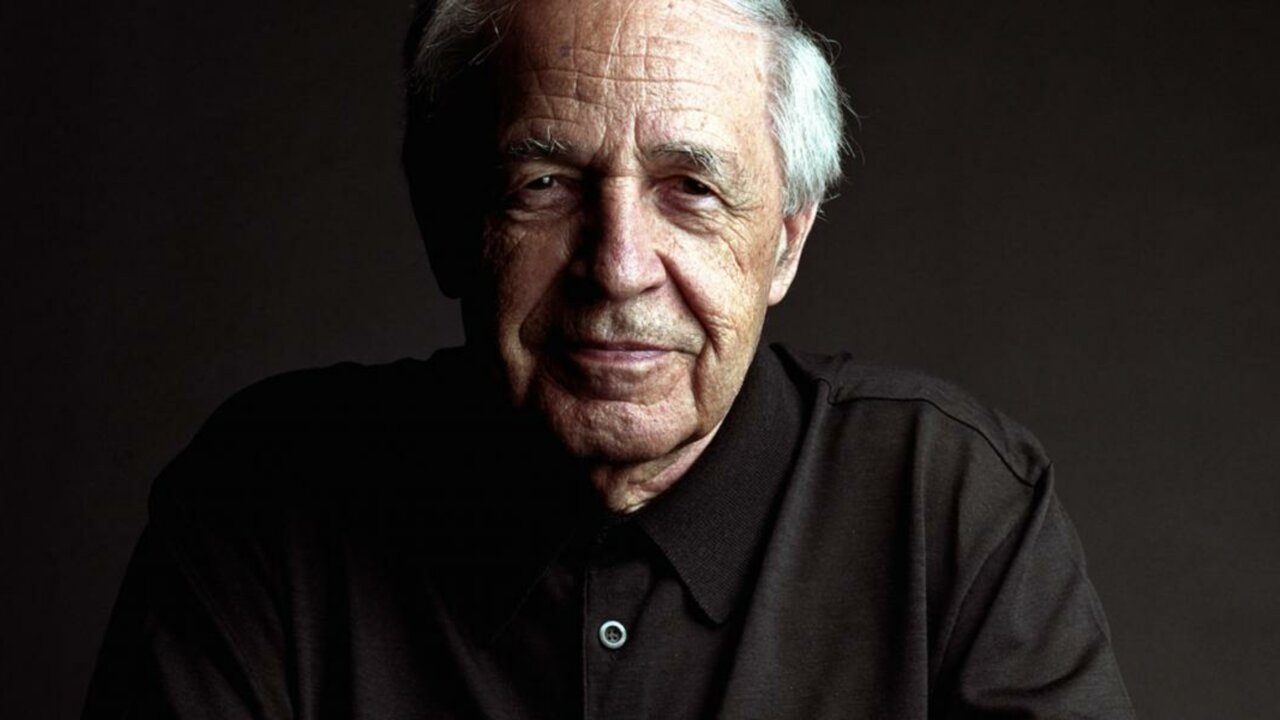
Today marks the centenary of the birth of composer and conductor Pierre Boulez, a towering figure in 20th century classical music.
There are so many recordings conducted by Boulez that I thought it best to share a playlist centred on memories of concerts I saw him conduct, largely from the 1990s and 2000s.
My first encounter with him was a rare appearance with the City of Birmingham Symphony Orchestra at the Royal Festival Hall. There he conducted Bartók’s Piano Concerto no.1 with customary clarity, soloist Krystian Zimerman delivering a memorable performance of percussive drive as he does here. On the second half of the concert was Stravinsky’s Petrushka, well-represented here by Boulez’s recording for DG in Cleveland.
Another South Bank visit in the 1990s brought an unusual appearance for Schoenberg’s monodrama Erwartung, sung memorably by soprano Jessye Norman. I remember vividly several visits to the Barbican to see Boulez conduct the London Symphony Orchestra in the 1990s, and one performance that particularly stands in the memory was that of Ravel’s Valses nobles et sentimentales, a colourful yet brisk performance that danced with a glint in its eye.
One other eyeopener, which I will never forget, was Boulez conducting Prokofiev’s Scythian Suite at the Barbican – a work he never recorded. Simultaneously on the bill was Szymanowski’s Violin Concerto no.1. Here was a composer Boulez seemingly re-evaluated later in his life, recording the concerto with violinist Christian Tetzlaff for DG.
From the recorded side I have included Maurizio Pollini’s pioneering account of Boulez’s own Piano Sonata no.2, a challenging piece that I must admit I have not yet conquered – but whose importance is clear.
To finish, my favourite Boulez recording, which finds him back in Cleveland conducting Debussy’s Nocturnes, a recording notable for its ideal pacing, beautiful colouring and immaculate rhythmic direction.
You can listen to this selection on Tidal by clicking on the playlist link below:
by Ben Hogwood photo (c) Peter Hundert Photography/Deutsche Grammophon
Last week we learned of the sad news that the great Russian composer Sofia Gubaidulina had died at the age of 93, in her home city of Hamburg.
Gubaidulina was a true original, a composer of intensely dramatic and often spiritual music that was both distinctive and innovative. A more detailed obituary has been penned by Gavin Dixon for Gramophone magazine. Rather than do a playlist in appreciation, I have chosen a couple of albums that help illustrate some of her musical achievements.
One of Gubaidulina’s biggest early successes was Offertorium, a concerto for violin and orchestra recorded by Gidon Kremer for Deutsche Grammophon back in 1988:
On a smaller scale, Gubaidulina wrote chamber music of striking originality, using unusual instrumental combinations to achieve rarefied colours. A good range of her writing can be found on a collection from the Lockenhaus festival, released on Philips Classics in 1992:
Her early works are equally intriguing, including a number of pieces for solo guitar:
Few composers have written for low instruments quite like Gubaidulina, as her Concerto for bassoon and low strings illustrates:
At the other end of the scale is her St. John Passion, a vast setting over 90 minutes completed in 2000 to mark the 250th anniversary of the birth of Johann Sebastian Bach:
Ambient music lies at the very core of InFiné. We’re devotees of the great Brian Eno, raised on the 4AD label, and nurtured on KLF’s pioneering Chill Out and Aphex Twin’s Selected Ambient Works on Warp. Ever-curious listeners, we soaked up the German vibrations of early Ash Ra Tempel before diving into the abyssal basslines of Moritz Von Oswald or the stark minimalism of Pole.
Later, we encountered other wizards around the globe: Murcof in Mexico, Loscil in Canada, Kaito in Japan, Biosphere in Scandinavia, and more recently Kmru in Kenya. This music forms a central thread in our catalog, sitting alongside more rhythm-driven electronic styles, innovative classical hybrids, and increasingly even pop. In Ambient, the role of sound is more vital than in any other genre! Each note needs ample space to resonate, and every piece immerses you in the pure essence of its sound. These tracks stretch time by using minimal resources to create a profound experience. Here, silence is part of the composition, offering a depth and richness unlike anything else.
What seems simple often takes hours in the studio to refine and place each note, adjusting the movement of a resonance like an architect shaping a structure. Everything must be perfectly calibrated, without artifice, like a zen garden where the tiniest imperfection disrupts the harmony. Ambient goes straight to the heart of music: emotion! Sound becomes a safe haven, a powerful instrument for resilience and introspection, bringing us together to face personal or collective challenges. Fueled by this conviction and countless hours of practice, InFiné developed its own “medicinal music” series. We’ve carefully selected audio potions from our catalog—often electronic, sometimes more organic or experimental—to guide you through beneficial emotional landscapes. InFiné Ambient is an invitation to travel without moving, a moment to reset our humanity in a world assaulted by outside turbulence.”



 Arcana.fm