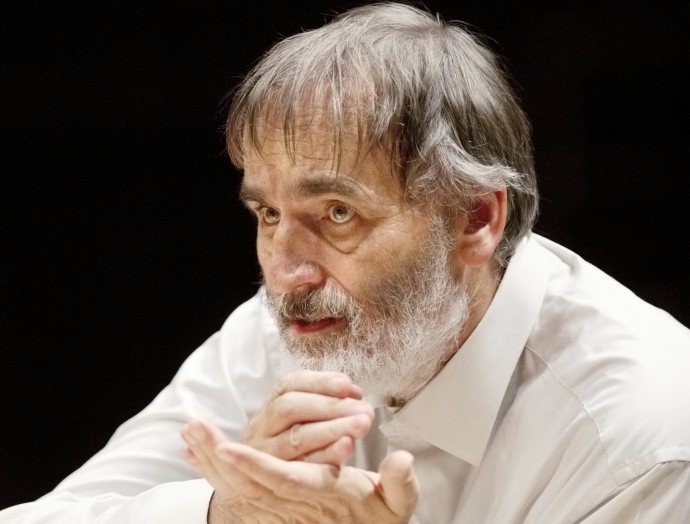
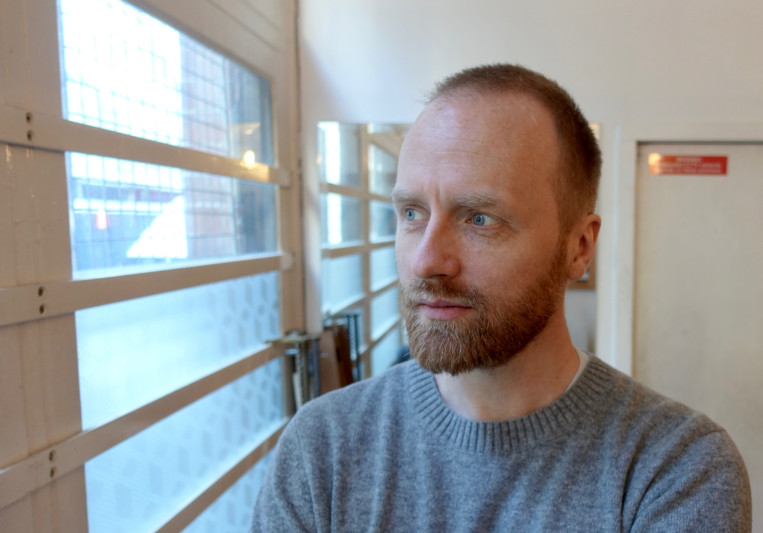
Talking Heads: Kevin Drew aka K.D.A.P.

Arcana has time with Kevin Drew, the Canadian musician best known as frontman for the band Broken Social Scene. This discussion, however, will focus on his new solo album Influences, recorded under the pseudonym K.D.A.P. (Kevin Drew A Picture). As we will find out, it was written in lockdown in England – more specifically in London and the Sussex village Slinfold.

Drew is an invigorating presence. “I guess you’re my first English interview!” he notes, “and you’re not far from the town where I was walking.” Today, however, he is in Toronto. “It’s a good town, but it’s expanding quickly. It’s not tun that well, with bad government and city planning. Things are starting to get on top of each other, but there is still is a great community and great restaurant scene. Art is secondary, but I think that’s how it is everywhere now. I always find it’s artists who fight for the ones that don’t have a voice. We have had such a situation here with encampments in the parks and the homeless, and there is no leadership of how to deal with that situation from our city council. A lot of people take it into their own hands to speak and fight for them, and it’s something that the city is trying to deal with right now.”

Listening to Influences is like seeing another side of Drew’s personality, a more intimate and private aspect. For its composition, he used a single app. “It happened through Endless”, he says, “and through being able to have the time that I did in your lovely country. One of the things that came to me was that I called it a ‘vessel’ record. I didn’t set out to do anything and instead of making anything with my piano or acoustic guitar I was injured for a year, and I was coming out of that. I had achieved what I wanted to musically, and rather than keep Broken Social Scene above water I thought ‘I’m just gonna disappear for a little bit’, as one should. I got into this app and realised I had a studio in my pocket. I started getting up early and walking through the woods, and I started figuring it out in ways it would work for me. I love the sounds and the accessibility, and then I love that it’s based on personal intuition and what you want to do. I sketched out all these things and when I came home I just took them to the studio. We started putting all this piano and acoustic guitar on, and I got my friend Evan Tighe to come in and drum. Charles Spearin came in and played bass lines I couldn’t play because I did them on my thumbs!”

Influences feels like a springtime album, with green shoots and positive energy. “The time of release is interesting, because it’s a year ago that I really started getting into it”, he says. “I think with everything you do, or I do, is about trying to create that spring atmosphere, that idea of growth. It’s also about opening something new, and walking through all this shit to get to the glory and the light, all the things that we all strive for as we keep continuing and creating.”

There is an abundance of melodic ideas on the album, with a patchwork approach to knit them together. “I’m a melody junkie!” he confesses, “and the aspect of being able to tell this tale was strong. You have to understand I haven’t done anything really on my own in seven years. I’ve had quite the life, quite the turnaround, and I’ve lost some people too, people that I love, which always makes you reflect. I’ve said before that I didn’t write this record, those who left me wrote this record. All the friends I’ve had in my life wrote this record, all my partners who have come and gone with this record. The records that I have listened to throughout my life wrote this record. We’re neurologically always consuming, whether we think we are or not. Our subconscious is running at full speed most of the time. Original thought is not something prominent in today’s day and age, and a lot of the times when it is, it just has to revolve around greed. I do still believe that what you are influenced by helps you build your identity and helps you find the melody that you love, and that you raised yourself on.”

In his twenties, Drew listened to a lot of music by Brian Eno, along with the early output of Warp Records. What was his listening before then? “My first record I bought was Supertramp, while my brother bought Blondie’s Parallel Lines The first records we received as gifts were Dirty Deeds Done Dirt Cheap by AC/DC and Sgt. Pepper’s Lonely Hearts Club Band by The Beatles. The first cassette I ever got was Men At Work, Business As Usual, my brother was Loverboy, the one with Workin’ For The Weekend on it (Get Lucky). Within that I was very fortunate. My brother got into the whole 1960s and 1970s music scene, while my parents were 1950s and 1960s all the way. It was everything from Linda Ronstadt and Chuck Berry to the Bee Gees and The Beatles, with James Brown and Nina Simone. I then cut my teeth getting into Prince, New Order, Jesus and Mary Chain and Sigue Sigue Sputnik. I always cited My Bloody Valentine as a game changer for me, then Dinosaur Jr and Jeff Buckley came in. Then it was Tortoise, Touch ‘n’ Go, Warp, Ninja Tune. Music was phenomenal in that time, unbelievable! It was innovative, and though it was coming through influences of jazz and DJs and samples and rap, and even rock, it was unreal. We used to walk out of record stores with stacks of CDs! We would go into Rotate This in Toronto.”

He narrows things down slightly. “My favourite bands are stuff like Dirty Three, Do Make Say Think. I love Stars Of The Lid, people like Julianna Barwick. I can just get lost in Jon Hopkins, and I’m a child of Four Tet and Caribou, I adore them. I always started in the instrumental world, and it’s nice to feel like I’ve come full circle. There is also something interesting about how you put out records these days and it’s all focused on your social media which I was never really, I didn’t keep up with that. It didn’t kind of work for me but I’m really trying things. You can’t force that shit, so you realise you’re just making records for your friends again.”

What took him to Slinfold to make the record? “Love, always. Love takes me everywhere. It’s a wonderful thing, isn’t it? It gives you so much opportunity and I’m such a believer in people, and I believe in, moment to moment as well. I just happened to be lucky enough to meet someone that helped me at a time where we were really good for each other and each other’s lives. I went down and hung with her and her family for a few months. I adore the English countryside, and I know that in about 10-15 years, if I’m still alive, I’m going to live there. I have those ghosts in my blood, it’s my heritage and I always feel at home. Last summer, with everything that was happening with the pandemic and the unknown, we all didn’t have an understanding of what was happening and what was going to happen. That’s a scary place for everyone to be feeling at once. Yeah. So it’s a case of finding your heroes and staying close to them.”

Did the pandemic inspire more intense composition? “I think one of the things that really made me attract myself to Endless was the aspect that the application is right here and it is allowing for another way to express. It’s not limited. We have a lot of issues with art in today’s day and age, but imagine if you could get this into schools and prisons and get this in their hands so people can communicate what this is here, inside of them. I remember when those apps came out with the cameras and all the photographers were shooting things like Super 8! I shot a video like that in Mexico City with a wonderful director Katina Medina Mora, and she used real Super 8. A year later, this thing comes out! It’s still about the individual, and what you bring and express to yourself with these things. I wanted to make it a point to talk about this app. I don’t have any stock in it, I was not getting paid by them, and that doesn’t matter to me. I’m not selling anything here, I’m telling you there’s another way for musicians or art programmes, trying to get kids to express themselves. Funding is getting cut all over the world, you know?”

The resultant music from the app is not lacking in emotion, and ties in with Drew’s earlier comments about loss and inspiration from friends. “Everything’s emotional – everything”, he says pointedly, “and political, and personal. I say this all the time. It’s an emotion, and a lot of people don’t want to deal with that. With social media, LinkedIn changed the dopamine game – it is totally different now. It rfeflects differently on who we are as people. I’m in my mid-40s, and happy to be here – and I don’t really give a fuck much anymore. When I do, I feel a bit embarrassed on a level of personal spiritual growth. But we are in this together, and I’m still finding stuff that gets me excited. Kudos to those who are still out there fighting, using melody as their sword. I just want to be on that train, and I believe that soundtracks are important for all of us. Yeah. You need a soundtrack to be your support system, while going through these times!”

For Drew, then, music is as fundamental as breathing. “I’ve always said to people to choose a mantra. I’ve been down, I’ve lost a decade of just trying to figure out and couldn’t quite get it. I’ve had great times, and bad times, and I was a great person and I wasn’t a great person, but in the grounding of moving on with your life, I’m also realising that so much of the struggle is the reflection of what we’ve been taught neurologically. I’m learning how much we’ve governed ourselves into a box, and how we judge our own selves and others if we’re not following the protocol of that box. The divide that we live in right now, it’s winning.”

“Wait a second”, he says. “I’m pretty sure John Carpenter did a movie based on what’s happening right now! Did we not read that? Nobody wins with a divide – each side ends up being a bully!” His tone lightens. “So, Influences – my instrumental record. My reaction to it all.”

There is humour in Influences too, not least the track titles – one of which is Explosive Lip Balm. There is much room for this in humour. “The great thing too was that I wasn’t singing. My parents don’t like it, and a few friends said that they can’t listen but it’s cool, I get it. I didn’t want to sing. There was a massive uprising happening, as there still is, but I certainly had no place to step up to the mic and sing about it. I had a lot of emotion, as I always do, so it was really easy for me to just chuck this all into a record. The coolest part too was going back to the studio called the Bathhouse here in Ontatio, and a gentleman named Niles Spencer who I’ve been working with since 2019. We’d not seen each other in a couple of years, and it did have that feeling like, “You’re coming home kid!” It did take us a while to figure out how to put everything together inside Pro Tools, and then I had all the songs designed in my head so then we had to place these loops in different parts. It was a lot, but we took four or five days to organise it all and it was just wonderful. We worked on the ‘first thought, best thought’ principle.”

The dynamic was very different to his band. “With Broken Social Scene records they take a while, because there’s a committee, and I love it. What I adore more than anything is doing stuff quickly. It’s the most honest way to react to what is happening around you with sound.”

Drew moves on to recount an incident with a cyclist that had an effect on Influences, and its last track Almost Victory (Keep End Going) “I was at the canal in Islington, on the towpath. First of all, why are there bikes on that?! I got into the flow of it, and was working on a beat, and this cyclist brushed by me. It knocked the beat into a different time signature, and I heard it and thought it was pretty nice! If you hear that track there are different types of pitches going on, and if you listen there is a little bit of a shrug.” Is it an example of how mistakes can work in pop music? “They call it jazz!” He laughs. “We don’t say it was a mistake but you’d better do it twice, so you say to people that was what I was doing.”

His connection with the English countryside is worth exploring further, given the natural wonders on his doorstep in Canada. “I love the Canadian countryside”, he says, “but I think it’s the history for me over there with England. I feel the shadows, you see the children and the war, you know. Two world wars. I never met my grandfathers, and even just walking along the train tracks in England where a lot of the young boys would go and get on these trains and not come home, we would ride our bikes along paths all summer. There was a stillness that I like in the aspect of history. As I get older, I have started thinking about just the education of where I came from. I love the Canadian countryside, a lot, but I just didn’t have the opportunity the last few years to be out in the Canadian countryside and Toronto is a sticky city in the summer. It’s patios with sandals and condos, sun visors, a lot of dudes with tattoos, great bodies, and these really decked out bikes going really fast without a helmet, and an awesome haircut. It gets to you after a while. so I really was blessed that I was able to stay out there, sit in the trees and be with the best kind of people. I had the understanding that life wasn’t perfect, but it was a moment. I miss it, but I’m so grateful that I have had it, and will have it again.”

His creative process has been instinctive throughout. “You’re gathering information that is going to interpret itself in a way that’s either like emotional or just very practical. I didn’t have any desire to make an album, until suddenly, the album was being made through me. People said how it was an opportunity for your dead friends – and most of them are musicians – to come down and play. I’ve always looked at it that way because I have sat in studios and said, “Who’s playing that, where did that melody come from?” There’s a part of me that finds comfort in the idea that my friends are coming back and jamming, so in the Bathhouse I allowed that space.” That’s all just a state of mind.”

Kevin is typically mischievous with his beliefs in family life. “I don’t have children, so I don’t have to deal with the questions about monsters, but I’m the uncle so it’s like, “There could be a monster on the bed, let me go check! It always shocked me that there wasn’t actually any unicorns, not even in Greenland. When people tell me Santa Claus is fake I say the Santa Claus that isn’t real is the one down the mall. Yes, he’s not coming down the chimney with your Sony PlayStation V, but he’s a real dude!”

Interview by Ben Hogwood

Influences, Kevin Drew’s solo album as K.D.A.P., is available now on Arts & Crafts Productions. You can hear the music through the Bandcamp embed below:

Talking Heads: Arandel

It is deepest summer, and Arcana is on an online call with Arandel, live from Burgundy. Taking the music of Johann Sebastian Bach as his inspiration, the anonymous French composer and producer has been discovering a wide range of material that has so far yielded two InBach albums. The second enjoys new perspectives offered in live performance of the first, and it presented the perfect opportunity for Arcana to step in and discuss.

We begin with introductions – especially the one Arandel had with the music of Bach. “I’m not sure, but it was some of the music my father used to play on this turntable when I was a kid. I remember being very impressed by the Toccata and Fugue in D minor, it used to be the soundtrack of the opening credits for a children’s cartoon called Il était une fois… l’homme (Once upon a time…man) My father used to play all kinds of music and Bach was one of those.”

His curiosity grew. “One of the things that attracted me to the music was that I was trying to figure out why it was so present in everyone’s mind. In today’s modern music there are glimpses and traces of Bach, more than any other classical or Baroque composers.” Inspiration took hold, but what was it about Bach that made Arandel realise he could use it for his own music? “It all started with a preposition from someone I worked with at the Paris Philharmonie. He asked me to think about something for a weekend dedicated to Bach, a Bach marathon. I had carte blanche for the end of the evening, and I had 45 minutes to do whatever I wanted on Bach. I had remixed Mozart once, but while I am very impressed with and have a lot of respect for classical music, I’m not a classically trained musician at all. I can’t read or write the music, so I look at classical music with very much respect but also a bit of distance.”

In spite of the lack of experience, Bach’s music took hold. “It was never a career plan of mine to venture into electronic classical music, but I thought it was a great opportunity to work on something different. I felt like there was enough material, diversity in Bach’s music for me to find something I could work on. I think it would have been very different with Mozart or Beethoven, but with Bach there is something that makes it possible to make it your own. From this position, I dived into Bach’s music, and I asked friends and colleagues to give me recommendations on Bach. That’s how I found a lot of material for the first InBach. Every scene has its own little story – I couldn’t answer how I made those tracks in general. One is with a particular instrument, another because of cooperation with another musician. It reflects the different tones of the album.”

One of the musicians collaborating with Arandel is cellist Gaspar Claus, who appears on three tracks on InBach Vol.2, including Fabula (above). “That was a long time ago,” he recalls, “Three years, I guess. It was great. We have known each other for over 10 years now but hadn’t really worked together other than a small jam one night in a small French town. I don’t normally do this kind of improvisation because I don’t feel comfortable, but with Gaspar it was easy to think about something, because he brings so much and frees you to bring something different. I remembered this night when I asked him to if he wanted to join the InBach project. At first it was with his trio, but they were not all available, so it became just Gaspar. At first, I wanted him to play the viola da gamba, and I asked him if he was up for playing an instrument he hadn’t played before. Of course he was, but we had little difficulties with the museum we approached, because of very strict rules about the consideration of the instruments. The rule was that you couldn’t have someone playing the viola da gamba if they were not a professional. In the end he played a historical cello, and they agreed to let us use a facsimile of an old viola da gamba. It was great, very natural.”

Arandel also worked with Myra Davies, who provides vocals on Doxa Notes, the first track on the album. “I was impressed by her in a way that I was almost scared, as I have a lot of admiration for her work. Talking to her was almost challenging, in some ways, because she’s so brilliant and clever! I wasn’t sure I could keep up with her but the level of conversations we had was really interesting, about metaphysics and the meaning of live.”

Are these the sort of discussions Bach’s music could fuel? “Maybe it’s because we had the same feeling about Bach’s music being timeless. The magic of his music could be inherited, and from century to century it will survive us all. That’s probably where the metaphysics came from. When we are not here anymore, where will Bach’s music be?”

Both InBach albums are likely to surprise with the scope of their approach and invention. Was it Bach himself who brought out this creativity? “Yes, of course! To me, it’s not really my music. It’s my take on Bach’s music, and I think it’s because of the way I approached it, which was like what I would do for a remix. It is about finding the find bits of the original piece and maintain something of the original, it has to float somewhere. You have to bring your own creativity or touch. It was a bit challenging at first, because Bach’s music is regarded by some as perfect and sacred. Some of the musicians I approached for the collaborations turned it down because they said, “No, Bach’s music is perfect.” They told me it would be very cocky of me to bring something to Bach’s music. I can understand their point, but I don’t agree! I can try to bring my light touch to it and still think that Bach’s music is great on its own. I’m not trying to make it better! I always say it was like being iconoclastic, and I wanted to do it with respect to what I hear in Bach’s music.”

With such a wide and varied range of responses to Bach in pop music, is it fair to say the best ones are those treating him with great respect, such as Wendy Carlos in Switched On Bach? “Yeah. It’s not easy music to listen to, with all the bleeps – I think it’s very inspiring, but for my own taste it is a little too close to the original, and at the same time a little too ‘bleepy’. After two or three tracks, it gets hard to listen to the whole album.”

Was it an emotional experience writing the two Bach albums? “For the second one, of course – there was the whole thing about the lockdowns, and my brother passed away while I was working on it. I’m not sure how it affects the way I produce though.” I asked as one of the most telling tracks is in fact the Capriccio, subtitled by Bach as ‘on the departure of a beloved brother’, “Agnès Gayraud, a French writer and philosopher, wrote a great book called Dialectic of Pop. She wrote the press release for the album, and we had a long talk about how she felt about the album. It was really the first time I could talk to someone about this subject because I was still very immersed in it. We talked a lot about God, and dramatic apparitions. The music of Bach to her was starting to get more haunting. She really had a point, and it resonated with me very deeply. I don’t know if it’s because I’m getting older – aren’t we all?! – but I feel like I’m becoming more haunted. People who are not here any more are at a place where you can go and look for them, you know where they are.” Is it true that Bach’s music can act as a link between the two worlds? “Yes, because it says something about eternity, and how things keep on enlightening us. Death is not an end in itself.”

Bach’s music continues to inspire, whether in reinterpretations like Arandel’s but also in new recordings from classical musicians. “There is something about the composer that still resonates, but I like that after two volumes I still don’t know why! I’ll probably never know, and that’s fine. I will keep on looking, but I don’t think I will make a third album. I will keep looking at Bach’s music though.”

In spite of the lack of classical training, Arandel agrees this can be a help rather than hindrance when talking of an original approach. “I don’t see things from this perspective, but how can it have any influence on the classical world?” I suggest that it can inspire different approaches to concerts and flexible audiences, who could be pleasantly surprised by electronic musicians and their approach to Bach. “I wouldn’t really know because I don’t have much feedback from the classical world. It was actually those reviews that were interesting. I like to read reviews, and when I read them, I learn about what I did. That’s why I liked your critique, I remember reading it and thinking it was very interesting.”

With no more Bach planned for now, is there other new music on the go? “At the moment I should be working on remixes, but it’s the middle of the holidays and my mind’s not exactly in music right now. I’m in the garden, working with tomatoes and potatoes. It’s different but it’s what I need! The next album is almost ready. It was actually ready before InBach, but this project happened in a very short period of time and the label decided that instead of moving on with my next album I should put it to one side and focus on InBach. I have made some tweaks and adjustments now I have worked on InBach. I feel it might change a few things about how I listen to my own music!”

For now, the man behind Arandel will remain anonymous. “When working on the promotion of InBach we discussed a lot with the label as to how I would have to adjust my communication because it was a different project, but I felt I said everything I could say while still being anonymous and not showing my face and not doing video interviews. For a while I felt that everything that could be said had been said, and I had to do something differently. I was reluctant and still am, to use my real name!”

Interview by Ben Hogwood

Both InBach and InBach Vol.2 are out now on InFiné, with a link to the Bandcamp site for the current album below:

Talking Heads: Sir James MacMillan

Music has had an important role to play in the celebration of Christmas for as long as we can remember. In spite of the enormous choice of repertoire available, however, new works continue to be created, the inspiration never waning – and the next premiere is less than a week away as we write.

It is a major work, too – Sir James MacMillan filling a whole concert with his Christmas Oratorio. Written in 2019, it had a European premiere in Amsterdam in January 2020, and was due for performance by the London Philharmonic Choir and Orchestra later the same year. For sadly predictable reasons that did not happen, but happily MacMillan is now ready for the UK premiere at the Royal Festival Hall.

Arcana hooked up with the composer via Zoom at his North Ayrshire home, to find out more – and began by asking him for the first experiences of Christmas music he could recall. “The magic of Christmas was the music for me I suppose, going back even to the days before I was involved in music. Hearing the carols at school, and the church, and the home, amongst families, with the piano being played, are all very early memories. I loved it at school especially, and then gradually we were ushered into actually singing and performing the music. I would be pressed into service eventually to accompany some of the carols in the class, and that sort of thing.”

Were there any particular pieces that made a strong impression? “The usual ones or the popular ones, but I always remember it was the Advent carols that got me really excited, as that was the indication that Christmas was coming. It was things like O Come, O Come Emmanuel, and a few other children’s carols. I was at a children’s Catholic school, and there was a lot of that kind of thing covered in the way that the school ran.”

Recalling the first piece of Christmas music he composed proves a little trickier. “I do remember as a teenager being asked to write a setting of one of the Isaiah texts for a singer. It was one of the teachers at the school, who sang it at a local Christmas concert. I would have been around 16 or 17, and I’ve lost the music for that. There isn’t a lot of Christmas music in the catalogue, as most composers get asked to write more music associated with Passiontide If anything. There is an issue perhaps that there isn’t enough Christmas music, as it’s not necessarily the kind of liturgical area that composers get drawn to, which is a pity because there’s a lot to be done! There’s a couple of little things in my catalogue written as a student, and Ex Cathedra asked me to write something a couple of years together which got me going.”

The Christmas Oratorio is a much larger piece – billed, like Bach, as a celebration of Christmas? “I think so. On the basis of what I’ve just said about the lack of Christmas music, my mind turned towards trying to fill the gap in a substantial way. In my discussions with the LPO in the early days, I had flagged up the idea that at some stage I would like to write a big Christmas piece. It had been in my mind for some time. I’ve written two passion settings already, and quite a lot of my music already relates to that point in the liturgical calendar, and it just seemed to be a big, empty space that needed to be filled. The LPO picked up on it and liked the idea, and they gave me carte blanche to produce a very substantial piece. It’s a full evening’s programme, in fact.”

The compositional process, as he recounts it, seems remarkably straightforward. “The next stage was what text do I set, what forces do I use, and it became clear that the chorus should be used quite substantially as well as the orchestra. Then I thought about soloists. Once those practical considerations were made and in place, the next question was what do I give to the different choral groups? The way it worked out was that I decided on a mixture of early English poetry, mostly given to the two soloists, liturgical texts in Latin associated with liturgy and scripture given to the chorus, largely, and then these orchestral interludes. All are inspired by the memories of Bach cantatas, and the sinfonias. A pattern emerged by starting and ending each half with a sinfonia, and using a palindromic structure, with arias for the soprano and baritone, choral items and a central tableau in each part to bring everybody together on a big gospel narrative, a New Testament text.”

At every point the composer had his eye on the bigger structure. “When I began to break it down and look at all the constituent parts, the question was how to build it up into a coherent structure, one that was replicated from part one to part two.” This multi-layered approach would seem to suit audience involvement. “When I did the performance in January, we went over to Amsterdam and did it live on Dutch radio. There was no audience, but I was able to prepare the piece and perform it knowing that there were people listening. I got a sense of how it was stitching together and how the different sections related to each other. I’m pleased with how the different movements complement each other, and how they go from Latin to English, from one aspect of the story to another, in very different ways. The instrumental commentaries stand back from the drama of the storytelling and allow a reflection of either serenity, joy or exultation.”

It might seem odd performing a Christmas work in January, but this proved surprisingly natural for MacMillan. “In essence it’s still part of the season”, he explains. “In Holland and Germany especially, they keep their Christmas trees up until early February. The key thing is to keep the decorations up to the Feast of the Presentation. In European terms there is still something of the Christmas character alive at that time, although we Brits have flat packed our decorations away! It was odd stepping back, but any excuse for live music making was happily received.”

MacMillan took an approach that was aware of what other composers have written for Christmastime, but one presence especially loomed large. “When I’m writing these big pieces, I’m certainly aware of antecedents and models established by great employers in the past. As far as the Passions were concerned when I was writing them it was very much the Bach passions that stuck in my mind, but sometimes it’s more of a hindrance than a help, and it’s trying to put all of that out of one’s mind. Nevertheless, the pattern was there, and the model was set in the Bach Christmas Oratorio, which was very much in my mind. Bach is an inescapable ghost, he hovers over all our shoulders. It certainly has been the case with me as I’ve written these big liturgical pieces.”

The composer has been writing more for choir of late, part of a general resurgence for choral music in the last few years. “That’s true. My background as a young musician was in instrumental music. I was a brass player, I played in brass bands as well as school and university orchestras. I did have some choral involvement as a teenager at high school, and that was that was a very important experience for me. I sang and conducted a lot of choral music as an undergraduate. There was something about a general thrust in modernism especially at that time – the 1970s and 1980s – which emphasised instrumental music over choral music, and certainly over vocal music. It’s probably because modernism valued that kind of extreme virtuosity that instrumentalists were able to achieve. When you look at the great modernists, composers of that time, even their vocal music looks and sounds instrumental, for instance the Berio Sequenza for voice.”

He continues. “Even the choral music of Webern and Schoenberg, going back into the early part of the 20th century, it’s very instrumentally crafted. I was exposed to early polyphony, and the Bach cantatas, and then more modern music that I regard as really important by British composers like Benjamin Britten. You see that there is a different way of imagining the choir and the kind of muscle memory of choral singing that has been kept alive in the British tradition. I grafted myself on to that. Britten was a great composer and there are these other great British composers that keep the choral tradition alive. It’s partly through the church experience and experience of the great English cathedrals in particular, but it’s also the local choral unions and choral societies.”

The tradition reaches well beyond professional singers. “The whole amateur way of working has kept the choral flame alive, and it is a very important part of the musical ecology of these islands. There is that love of choral music which is very deeply embedded into the amateur experience as. As that grew in me, I decided to start writing more and more choral music. And the other thing that has to be said, is that as a young composer in the 1970s in particular, I and many others didn’t see the rise of those fabulous English choral ensembles that have become much more prominent in recent years.”

He name-checks a few examples. “Those are The Sixteen, Tenebrae and Polyphony, The Marian Ensemble and other new groups that are making music of a very, very high standard, and increasingly, incrementally higher standards. This is a very exciting time, not just for British choral singing, but for those of us who value choral music. You’re beginning to see that these groups are commissioning and getting living composers to write for them, and they’re being programmed alongside early music, which makes sense. A brand new piece of 21st century music sits alongside music from the past, and all audiences seem to be at ease with that and seem to see it as a natural complement.”

It is an approach which, to your interviewer at least, makes the early music feel current while the new music gains a historical perspective, the two meeting in the middle. Talking of new music, and MacMillan’s work nurturing new composers, does he have any pointers for the next generation? “Yes. Very recently I’ve been involved in a mentoring process along with The Sixteen and Genesis Sixteen, set up by the Genesis Foundation and directed by Harry Christophers. I’ve worked with them the last seven or eight years now. The last tranche of three composers I met and worked with just a few weeks ago, and Genesis Sixteen brought the course up to Scotland for the first time. There was a Scottish composer, Lisa Robertson, who I have mentored before in choral music at the University of St. Andrews, and also in orchestral music. She’s an all-rounder in that sense, a very gifted young composer. There was an Irish composer, Eoghan Desmond, a very gifted composer, and Anna Semple was the third, a very fine composer too. We workshopped their music – three works in progress, but close to completion. Eventually The Sixteen will take on board the completed works, perform and record them.”

In the wake of the pandemic – be it ending or ongoing – has MacMillan’s approach to composition altered at all? “The only difference I’ve noticed is that I’ve got on with more music writing. Some of our projects were brought forward, because a lot of the other things I do were just obliterated, and I had no contact with universities or students. In a sense I was able to get back to the day job. I wouldn’t say I was more focused on inspired than usual, but I suppose I was given more space to think about the music in more detail. I have written a lot – some choral, some orchestral, some chamber music, which I’m writing just now.”

He continued working with ensembles to. “I did a couple of things with orchestras, because as you know, choirs were shut down. I got to work with the LPO on a mentoring course, but not to a live audience. We recorded the process of rehearsal and performance with several young composers, and I did a Radio 3 recording with the BBC Concert Orchestra. I did filmed concerts with the Scottish Chamber Orchestra, too, and I eventually got to conduct them with a live audience, which was wonderful. It’s just a great thrill to get back to the live concert.”

Does he get nervous before a premiere such as the Christmas Oratorio? “I can never tell before just how nervous I’ll be. Sometimes I’m placidly calm, other times, I’m really on edge, and there’s no single factor determining how I’m going to be.”

Turning back to the music, I ask if it is important with composition to express the importance of being Scottish, and MacMillan’s Catholic faith? “It’s part of my DNA in different ways, part of the given circumstances of who I am. When I was younger, I got involved with Scottish traditional music. I played and sung with folk bands, and I did feel at the time as if it was a kind of absorption process, deliberately trying to absorb the experience of what it was to perform Scottish traditional music with an eye on how it might transform itself into the music I was writing. I was aware that that was an ongoing process, but performing Scottish folk music was a very important experience that had a knock-on effect on some of the music that I made. I don’t do that anymore. Perhaps the experience of Scottish traditional music is much more kind of underground, subconscious rather than conscious.”

He takes more time to consider. “There is perhaps an analogy there with the religious thing. There were times in the past where I thought more consciously and more anxiously about what it meant to engage with religion in modern music, and now I don’t think about it as it’s become much more part of the natural pattern. It’s what I do, it’s who I am. I will write lots of pieces with settings of sacred text, but then I will turn my hand to something else that has nothing to do with text or directly theological considerations.”

Does that make for a stronger connection with the audience, music that is part of MacMillan himself rather than consciously signposted? “That would be good if it was the case! I feel I have a lot in common with my audiences regardless of whether they are Scottish or English, Brazilian or Russian!” You do tend to meet people who love music as much as I do, who will use almost quasi spiritual language to account for the impact of music on their lives. Those are sometimes deeply sceptical people when it comes to religious matters, but it’s an acknowledgement that there’s something about music which is bigger than who we are, and perhaps it does point to a spiritual dimension in the art form.”

Finally, a completely different subject – craft beer! James has been sampling some during lockdown, so does he have any tips to pass on to a likeminded enthusiast? “I wouldn’t say I’m an expert, I’m very much a dilettante, finding things as I go. I keep meeting people who know much more about it than I do. I did manage to get to the States during the summer and ended up in Vermont, where the local craft beers are just wonderful, if a whole lot stronger! After a few of them you’ve had an experience, put it that way!”

James MacMillan’s Christmas Oratorio will be performed at the Royal Festival Hall on Saturday 4 December at the Royal Festival Hall, and then again on Sunday 5 December at Saffron Hall. Sir Mark Elder will conduct the London Philharmonic Choir and Orchestra, with soloists Lucy Crowe (soprano) and Roderick Williams (baritone)

For ticket information, click here for the Royal Festival Hall and here for Saffron Hall. Meanwhile you can find a web guide to MacMillan’s choral music from his publisher, Boosey & Hawkes, here

Talking Heads: Domingo Hindoyan

The new Chief Conductor of the Royal Liverpool Philharmonic Orchestra talks to Arcana about his appointment, the importance of an orchestra in its community and what he hopes to bring to the city of Liverpool.

interview by Ben Hogwood

It is a tall order indeed, following Vasily Petrenko onto the conductor’s rostrum at Philharmonic Hall, Liverpool. Domingo Hindoyan is the man chosen to fill the sizeable shoes of the Royal Liverpool Philharmonic Orchestra’s chief conductor, and he has joined Arcana to chat about the opportunities that lie ahead for him and for one of Britain’s finest orchestras.

He brings with him a positive energy, channelled through the most sonorous of voices. He could easily be mistaken for a baritone singer on this evidence alone, but his perspective as a conductor is brought immediately to the front. We begin by talking about one of his first appointments with the orchestra, his first Prom at the Royal Albert Hall in September this year. On the program were Dvořák’s Cello Concerto, with Sheku Kanneh-Mason as soloist, a new piece from Grace-Evangeline Mason (The Imagined Forest), Richard StraussDon Juan and finally Hindemith’s Symphonic Metamorphosis of themes by Carl Maria von Weber.

The concert received extremely favourable reviews and was a great experience for the Venezuelan conductor himself. “It was a unique moment, a special moment in my career and in my musical life. It was my first concert as chief conductor, and the very special atmosphere of the Proms is unique around all the concert halls in the world.”

We talk about his decision to end with the Hindemith Symphonic Metamorphosis. “It is a great piece, and I had a lot of fun working on it, especially comparing it to what Weber wrote with the piano pieces. It is very, very clever, and shows perfectly all the facets of the orchestra, stressing a little bit on the brass section and the percussion. We have a fantastic set of bells, so we could use them in the second Turandot movement. We had a lot of fun. There was of course a link between all these pieces, with the 20th century composers, Strauss and Hindemith, but also an American connection between Hindemith and Dvořák. It is probably not obvious, but we’re talking about two composers who were influenced by the plantation music and by American music. Dvorak was the first one who really developed that to another level, and in the concerto, you don’t see as much as you can in the New World Symphony or the American string quartet, but you have in the second movement all the elements of American music. Hindemith was impressed later with some jazz moments we have in the second movement.”

He speaks very fondly of the Strauss, too. “Don Juan is a masterpiece, a showpiece for the orchestra. It’s a very difficult piece for orchestras, though today a little less as the technical level of the Royal Liverpool Philharmonic is very high. When you are technically free as the orchestra is, it is a piece that has thousands of colours, situations and emotions that we can explore. Every time I conduct it, I find new things you can do. That’s why it’s a masterpiece – all masterpieces have this characteristic.”

Hindoyan recalls his first visit to Liverpool. “It was not that long ago, in summer 2019. I conducted Beethoven’s Seventh Symphony, among other pieces of course. It’s not an easy piece to start a relationship with an orchestra, because every orchestra knows it very well, but I remember that immediately the chemistry was right. The energy was right too, so we could really rehearse in a natural way, as if we knew each other from a long time ago. The second time was also very special, because I could play some Latin American repertoire with a colleague of mine, Pacho Flores, a Venezuelan trumpet player. This was where I conducted Don Juan for the first time with the orchestra, and then I did Stravinsky’s The Firebird. Since the beginning the relationship has been very natural, with a great chemistry. So far it is going very well!”

On meeting an orchestra for the first time, how does a conductor gauge their strengths and common ground? “That’s a very interesting question, because that moment is probably the most important moment together with the concert. I was an orchestral musician, and if you ask a musician how it is when a conductor is with them for the first time, they will always tell you they know after one minute, as soon as they stand on the podium, they know if things will be OK or not. From the conductor’s point of view, it is also the same. From the first upbeat, and the first two or three minutes, you feel how it will go. You are not like a football trainer, where you are going to analyse the team against you with videos and so on. I don’t do this, and I have never met a colleague who does it. After five minutes you understand the strengths and the weaknesses, and then start working your way through with your ear and with your version of the music, the score you have in front of you. You try to achieve the sounds and version you want. Sometimes you don’t even need to talk, you can go with a gesture alone. It is a very interesting side of this job, the psychological contact with and between the musicians. It’s magic, and thanks to the scores and the genius of the composers!”

Domingo is conscious of the city’s fortunate position in having the Philharmonic Hall at their disposal, and when I suggest there is a buzz for classical music in the city, he agrees. “I also felt it! The city is lucky to have its own concert hall, and the orchestra is lucky to have a concert hall where many things happen, and where it is the cultural reference of the city. It is not only the concerts of the Philharmonic, but it is the pop concerts, the small ensembles, the music room – many, many activities. The daily life, after the pandemic, is that almost every day something is happening. These walls are used to beautiful vibrations of music, but one of the things that attracted me most to the orchestra was the community work they do, and how they want to expand to the community what’s happening in the concert hall. It is a symbiosis, from the stage to the community but also from the community to the stage. People get to know the faces of the musicians, the conductors, the guest conductors, and so the orchestra is the baby of the city.”

Hindoyan speaks from personal experience. “I am Venezuelan, and I grew up in Venezuela. I was part of El Sistema, a huge organisation of more than one million people. I studied violin and then conducting in Geneva. We had the idea with the Geneva Conservatory of founding an El Sistema project in Geneva. This year is ten years since we did it, and it’s working very well. It has brought music to some neighbourhoods that would not normally play music. There are two beautiful orchestras, one aged 10 to 16, for beginners – and it worked very well. This is motivation, and in that sense it feels like home to me, because it’s not exclusively about the orchestra. It is about everything, what’s happening with the choir, the kids, the young and contemporary music, pop music. I feel at home in that sense.”

Some adventurous concerts lie ahead for the Royal Liverpool Philharmonic Orchestra and their new conductor, including an interesting coupling of a new symphony – Roberto Sierra‘s Sixth Symphony – as a companion for Beethoven’s Ninth. “I first met Roberto when I had to do the European premiere of his Trumpet Concerto, and I enjoyed it enormously to analyse the score and see how talented, clean and transparently he can write his ideas. My heart was even more involved because I see he writes with elements of Latin American music, and I love it. When I first asked him, I said, “Roberto, I’m doing Beethoven’s Ninth in my first concert in Liverpool, and how many symphonies do you have?” “I have five”, he said. “That’s perfect – you should write the sixth and do as Beethoven did in his Sixth Symphony, a Pastoral” He didn’t name it as a Pastoral, but it is exactly that, a Caribbean Pastoral. It is all about the nature in the Caribbean area, and in Latin America. The first movement is about the cities, the urban craziness of Caracas or Mexico City. The second movement is the Caribbean nights, and then we have a scherzo with a shape of the perfect pastoral symphony. He took the example of Beethoven throughout!”

There is a reunion with Pacho Flores, the trumpeter giving the European premiere of the Concerto Venezolano by Paquito D’Rivera in November. “I think bringing some of the Caribbean to Liverpool in October is a very good idea. This is what I want to bring in general, to bring more of the Latin American repertoire to Liverpool. We have great composers in Argentina, Venezuela and Mexico, for instance. Many of them were students of Copland, and I really want to play them more here. In building a program I found it better to mix with other folkloric music. I decided to take the Bartók Concerto for Orchestra and couple them together. I think for the ear it is better, because you can compare, and you have some freshness. The Bartók Concerto, as we said with the Strauss, is a showpiece for the orchestra too.”

Are there plans afoot for new recordings with the orchestra? “We have some plans. My colleague Vasily has left a great legacy, he has been doing a fantastic job for 15 years. I will record my beloved pieces, those I feel comfortable with, and those I want to explore. I will introduce a lot of the Latin American repertoire and American repertoire that has not been played so often, without excluding anything of the traditional repertoire, that I love myself and I conduct very often too. It is a wide range of repertoire, and we have great plans.”

He reveals that he spoke briefly with Petrenko, his predecessor, before beginning the job. “We did have a short conversation, and we will have a longer one soon, but I am already on the job. Time for conductors is crazy! I had a nice message of welcome, and I was touched to see his last concert on demand. It was a difficult last year for him though because he couldn’t achieve his last season as he wanted. I could not do the transition as we wanted either, so our really first concert with full orchestra was last Sunday.”

Hindoyan is grateful to have a full programme stretching in front of him. “Of course. Every country had its own regulations. My first concert with an audience was last March, with a small audience for the Detroit Symphony. Then in April I had a bigger audience in Utah, but then in Europe we started with a small audience, and here in Liverpool last June I had a very warm audience for the last repertoire we did here. We did Ravel’s Le Tombeau de Couperin, Berlioz Symphonie Fantastique and Stravinsky Octet, and the trombone concerto by Dani Howard. We had the audience but now finally we have 80 people on stage, and the choir for the Beethoven in October. Finally, we can do music as we used to.”

There is a positive side to be found from the pandemic, however. “I always try! There were two positive things for me. First was the discovery of plenty of repertoire, which didn’t get played very often. Second, the exposure of the orchestras online, with recorded video, was very important, so that people had access to the concerts whenever they want. Social distancing was difficult, but on the other hand it has increased the attention of the players and the conductors. You have to make an extra effort to play together, which means when you start playing close again it is easier. It’s like going to the gym and you have to lift 30 kilos, but in fact you your goal was only 20, That is very light when you lift 30!”

One benefit of the online concerts is the chance for those further afield to see orchestras they would not normally see. “You can watch orchestras in Japan or South America, you can go on tour without travelling! Of course I believe there is nothing like live performance, the energy is never the same. When it is filmed you gain something, especially with opera, but in a symphonic concert there is nothing like the acoustic of the concert hall and the feeling of the sound coming to you directly.”

Domingo Hindoyan conducts the Royal Liverpool Philharmonic Orchestra in Roberto Sierra’s Symphony no.6 and Beethoven’s Ninth Symphony (the ‘Choral’) on Saturday 16 October in Liverpool’s Philharmonic Hall. For tickets, click here

For more information on the orchestra’s 2021-2022 season, including the concert with trumpeter Pacho Flores, head to the orchestra’s website here

Talking Heads: Dov Scheindlin, Orpheus Chamber Orchestra

dov-scheindlin

Interview with Ben Hogwood

It’s another hot, sunny morning in New York, and Arcana is talking with violist Dov Scheindlin, a member and former director of the Orpheus Chamber Orchestra. The orchestra celebrate their 50th anniversary this year, and to mark the occasion Deutsche Grammophon have just issued all the ensemble’s recording for the label on a 55-CD box set. Dov has graciously given part of his early morning to talk about his time with the orchestra and some of their philosophies. We begin – naturally – by asking how the relationship started.

“I’d been a fan of Orpheus for a long time, and was a fan long before I was lucky enough to start playing with the orchestra. In 1988 I entered the Juilliard School. As a present I got my very first CD player, and I got a CD with it! It was the Orpheus Chamber Orchestra performing Dvořák Serenades. I listened to that CD, over and over, and it remains one of my favourites. That was the first time I really got to know Orpheus. Then I got to see them in Carnegie Hall a few years later, and the live experience was totally transforming. I was really lucky because I was living in London for six years, and when I came back from there in 2004 I was lucky enough to begin playing with the orchestra. I knew some people in common, and they were generous enough to let me come in and sub, and gradually it became a permanent thing.”

He has vivid memories of his first concert with the orchestra. “Oh gosh, yeah – we did something fiendishly difficult, which was the John Adams Chamber Symphony. Without a conductor it’s extremely complicated, with 15 moving parts, and I think they threw me in the deep end! I played principal viola, which was amazing to me because I was playing with them for the very first time. I think the idea behind Orpheus of shared responsibility, and seeking leadership, it meant they were good about allowing people to step into big roles right away. One of the things they wanted to find out was how you would do in that situation. It was a great experience. We took it on tour to a number of places and then we played it in Carnegie Hall. It was great fun. I don’t remember what else was on the programme but the Chamber Symphony sticks out in my mind, an amazing experience.”

The Adams, presented in that concert as a ‘one part per player’ version of the Chamber Symphony for the first time, is typical of the orchestra’s adventurous approach. Scheindlin agrees. “One of the things about the small orchestra is that we love our repertoire, but it is a bit more constrained – we don’t play Rachmaninov symphonies or anything like that. We’re always looking for things to play, and we actively commissioned new pieces for a formation of our size. One of the things we also do is to look to the existing repertoire to see what could be done, convincingly, musically and tastefully for an orchestra of our size. That broadens the repertoire, and the Adams was an example of that. There are more examples coming up in our next season, and we think of ourselves as trying to broaden the mission of the chamber orchestra.”

Scheindlin had a great deal of experience of membership with string quartets, which stood him in good stead for joining the orchestra. “Absolutely. That was one of the things that made it a really good fit. Orpheus is not ‘leader-less’, it’s ‘leader-full’. I think they’re looking for everyone to contribute. Occasionally a great player comes in, but doesn’t have anything to say, or is just looking to follow the leader, and that doesn’t work out as well. We’re really looking for people who can contribute ideas, bring ideas to the table, and we bring them all together and make them larger than the sum of the parts. Playing in a quartet, and having that experience of being responsible for 25% at least of the interpretation, has been great training for being in Orpheus. It’s about knowing when to contribute, when to sit back. It’s one of those subtle dances, because everyone has hundreds of opinions about everything. You need to pick the right moment to make your mark, and not overplay your hand. I think that people with a chamber music background do very well at Orpheus for that reason.”

Scheindlin finds the viola section a particularly stimulating place to be, right in the middle of the musical action. “It’s one of the things I love about playing the viola. Aside from the warm sound, and the timbre of the instrument, it is the position in the middle of the ensemble. It really makes you sensitive to everything that’s going on in the music. You’re not like likely to get lost at one end or the other. That’s another thing that’s been great for Orpheus, is that everyone knows the score very thoroughly. As the violist you’re right in the middle of the score, and what you’re playing often doesn’t make sense without having the whole context, so you’re constantly aware of all the other parts. You’re not just playing your part, you’re playing the whole piece – it’s just that you’re only sounding your own part. As a violist I love that.

As well as the DG box set, the Orpheus Chamber Orchestra has accompanied Brad Mehldau on a recent Nonesuch release, Variations. The recording was made some time ago, but has fond memories for Dov. “That was really fun. We did a whole tour of Europe, and he was such a low key personality, we were all kind of in awe of him. He would just sit down and focused, and when we played we felt like it was brand new every time even though it was a classically written out sort of piece. Although there I remember there were there there’s a cadenza in there I think where he did something totally different at the time and we were just sort of sat there in amazement. But yeah, that was a great experience with Brad Mehldau. I think we did that tour about 10 years ago, so I’m so happy to see that recording has seen the light of day.

Fast forward to performing in the light of a pandemic, and we start to talk about the experience of playing live while wearing masks, as the Orpheus Chamber Orchestra did recently in their concert of Haydn’s Seven Last Words. Scheindlin admits that performances can be compromised. “It’s a somewhat disembodied experience. I’m so glad for the existence of the masks, and they make it possible for us to play together, those and now the vaccines, of course. I’m not against them, but they are definitely an impediment to direct communication. That said, you get over it and we do a lot of eye contact. I got used to looking for people’s eyes, though you do feel like you’re missing part of the picture also sometimes. If the mask isn’t positioned properly it can affect your own perception of your sound, but you get used to it. Certainly we’d much rather play with masks than not play with them.”

It was clearly a thrill to return to the live environment. “Absolutely. We hadn’t played together in about six months, and finally in September we did our first live, chamber music concert. It was Egmont. My very first concert was a chamber music concert in the courtyard of a church. They had drawn circles in chalk on the lawn, and everyone was able to bring their own lawn chair to sit in there, maybe 50 people in all. It was a beautiful late afternoon, and we started with the Sextet from Richard Strauss’s Capriccio. It is such a beautiful, nostalgic and reflective piece, and something about it was just a transcending moment. I just felt so grateful and realised I would never take the experience of playing a live performance for granted again. The pandemic has obviously not been a net plus for humanity, but if there’s one thing I take out of it it’s rededicating myself to the power of what we do.”

Scheindlin speaks candidly about his own experience of lockdown. “It was a challenge,” he says frankly. “I have two young children, aged nine and six. When the pandemic came their schools closed down and we were suddenly teachers and chefs and all kinds of things that we’ve never been before. That took a tremendous amount of our energy, particularly the first six months up until September when school reopened, which freed up a little more time. It was a tough period, but it was great to spend more time with the family. I’m used to playing so many concerts at night, and my wife is a violinist as well, so also plays a lot at night. Three or four nights a week we wouldn’t be putting the kids to bed, but now suddenly we’re putting them to bed all the time! That part was nice, but having to stand over their shoulder while they did remote learning wasn’t that great, I’ll confess. It took up a lot of our energy. I made it an iron law to practice an hour a day. That was about the most I could consistently muster. I had to have that hour as a moment of sanity, a moment of focus and purpose when we didn’t know when we would get back to playing. I practised Bach Suites every day.”

He vividly recounts the start of lockdown. “I remember three or four days into it I got very shaken. They were starting to cancel things – the next few weeks, the next month – and then it became “Oh sorry, we’ll see you in the fall”, and I was wondering when is it ever going to change? Fortunately, with distancing, masks and amazing vaccines which I think I certainly didn’t expect to work so quickly, we’ve been able to get back together. It’s miraculous.”

With those revelations came an awareness of the orchestra’s importance in the community. “When we started performing again, the audiences were so grateful. Everyone was grateful, it was almost like a religious experience. One of the great things we did when we couldn’t be together in person was play a series of concerts, which we called reflections, on Zoom for audiences in elder care homes, and for people with severe medical issues and dementia. It was a great way to stay in touch with our audiences, to see the joy on their faces when they were able to hear music, even if they weren’t physically there. We did those fairly regularly, one person, or I would play with my wife. That was a great experience during the shutdown. We strive to serve and represent our community, and we’ve missed everyone, and we’re trying to reconnect right now and looking forward to next year when we can go back to performing in the places that we usually do.” A chance to celebrate the orchestra’s 50th anniversary, too? “Yes – and a personal recovery from when I turned 50 too!”

In celebration of the Orpheus Chamber Orchestra’s 50 years, Deutsche Grammophon have released a box set of all the ensemble’s recordings on the label. From experience, when you think you’ve heard every recording another one pops up that DG sneaked out in the 1990s, especially. “There is such a repository of amazing repertoire”, says Dov. “I’ve been digging into it myself.” We talk about shared favourites, such as the disc of Respighi pieces including Trittico Botticelliano. “That’s a great, lesser-known bit of repertoire that’s just beautiful music and which hasn’t seen the light of day. I’m not actually on it because it was before my time but I love that recording and am proud we brought that repertoire back.”

Asked for a personal favourite, Dov is quick in his response. “We recently did a Mendelssohn CD with Jan Lisiecki playing both Mendelssohn piano concertos. I know the first one but had never heard the second, and they are charming pieces. He does an amazing job. We also did the Italian Symphony, which is on the box, and that’s a piece we come back to again and again. The first chord makes me think of Orpheus straight away, and it’s great that we have it on CD now. There are so many that are really wonderful – the Ives recordings, the Stravinsky. There is such a rich bunch of stuff, and I hope we get to continue making them and finding new repertoire to bring forward.”

The orchestra is famous for working without a conductor, and I ask Scheindlin what the secret behind their success might be. Is it because they are a team of leaders? “I think so. There is a certain verve that comes from everyone interpreting a piece in real time without an intermediary. We’re all directly connected to the score and to each other, and we don’t need to follow a human metronome. There are great and inspiring conductors, and when you get to a certain scale you need one, but I think what makes our music making so fresh and live is that we’re all leading all the time and playing our hearts out.”

The forthcoming season is packed with exciting concerts. “We’re really excited about our tour with Branford Marsalis,” he says. It was supposed to happen this past year but we’re really thrilled it could be rescheduled. We’re doing our sort of first concert of Cuban-style music, with Arturo Sandoval, which should be really great, and we also have a tour coming up in in Japan with Nobuyuki Tsujii who we’ve also recorded with. We’ll be taking the Chopin concertos to Japan, assuming that we can still get around the world by then. We’re so happy to be coming Carnegie Hall, which we haven’t been in for a year and a half now. January will hopefully be a triumphant return! We’re optimistic for the season.”

There is clearly a thirst in New York for the return of live music. “Everything was so quiet for a year, and suddenly I’m getting calls all the time to play something next week! Suddenly people are deciding it’s possible and feasible to have live music again. I know there are these variants out there, and obviously we’re watching that, but so far the situation in New York is good and coming to life.”

With the orchestra committed to new music, have they received extra numbers of commissions? “It’s been tough for composers, because it would never have occurred to great composers of the classical time to write anything without an idea of when it would be performed. We’re actively bringing in new pieces next year, and we are continuing commissioning and we’re planning to commission for our 50th season in 2022 to 2023. That’s part of our mission, and we’re looking forward to getting back to that.”

For more information on the Orpheus Chamber Orchestra, head to their website. To hear clips from the Complete Recordings on Deutsche Grammophon, head to the label website, where you can also purchase the set, on 55CDs or as a download.