Arcana at the Proms – Prom 18: Edward Gardner conducts the BBC Symphony Orchestra in Mahler and Britten

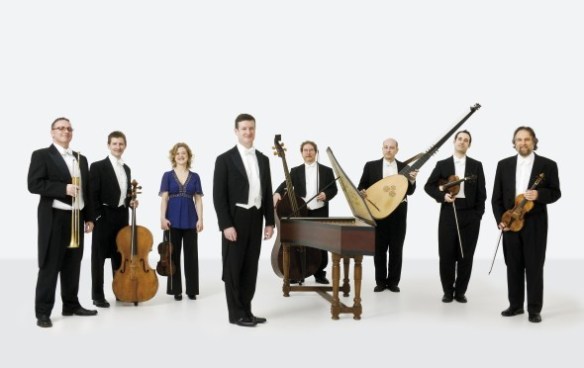
Prom 18: Stuart Skelton (tenor, above), Claudia Mahnke (mezzo-soprano), Leif Ove Andsnes (piano), BBC Symphony Orchestra / Edward Gardner (above)

Britten Piano Concerto Op.13 (1938)
Mahler Das Lied von der Erde (1908-1909)

Royal Albert Hall, Thursday 1 August 2019

Reviewed by Ben Hogwood
Photo credits Chris Christodoulou

You can watch this Prom on the BBC iPlayer here

Mahler’s Das Lied von der Erde (The Song of the Earth) received its Proms premiere in the year 1914, long before the huge upturn his music experienced in the 1960s. It is an example of Sir Henry Wood’s instinct for new music that it reached the Proms so soon, though the programme labelling of the piece as a ‘Henry Wood novelty’ does the work a massive disservice. A certain Benjamin Britten was on to it too, describing in 1937 the impact of its final set of poems, Der Abschied, and how it ‘passes over me like a tidal wave’.

Mahler was one of Britten’s foremost influences, specifically the Fourth Symphony, which you can hear at the Proms later in the season on Sunday 11 August. There is not much Britten this year, but what there was in this concert was brilliantly performed. The Piano Concerto has a youthful spring in its step, treating the instrument equally as a creator of percussion and melody, following in the traditions of Prokofiev and Shostakovich as it does so.

This performance showed it off in full. Leif Ove Andsnes (above), who has lived with the work for 25 years and performed it on his Proms debut in 1992, had its measure. Technically he was superb, leading from the front with an account of targeted bravura, never showing off for the sake of it and always keeping a melodic shape to even the most percussive of chord sequences. Edward Gardner and the BBC Symphony Orchestra offered solid support, if very occasionally falling behind the piano rhythmically – though that could also have been the Royal Albert Hall acoustic playing tricks. The strings were beautifully shaded in the quieter moments of the Impromptu, whose emotional depths hinted at a darker presence behind the technical feats – perhaps the presence of the Second World War, only a few years away.

Andsnes delivered an unexpected encore in the first movement of Mompou’s Suburbis, stylistically close to Ravel and Falla but still evoking its own individual nocturnal scene.

The Mahler followed the interval, lasting just over an hour – but given the quality of the performance the time passed in a flash. To date Edward Gardner’s encounters with Mahler have been relatively minimal, but the natural gravitas he gave to the orchestral writing in Das Lied von der Erde, not to mention the room made for the chamber-like instrumental solos, showed his instincts are ideally suited to the composer. The BBC Symphony Orchestra wind – fully deserving of their curtain call at the end – were on top form, as were the strings, their quiet thoughts during the final song in particular staying rooted in the memory.

Fine as the orchestral playing was, the two singers rightly shared the limelight. Stuart Skelton’s tenor was a thing of wonder, called into high register action at a daringly early stage in proceedings but delivering wholeheartedly from the off. His characterisation of the two drinking songs was spot on, the gestures and body language wholly at one with the words, giving him the creative licence to exaggerate a note or two. Here he had support from BBC Symphony Orchestra leader Igor Yuzefovich, and a suitably inebriated violin solo during Der Trunkene im Frühling (The Drunkard in Spring). Meanwhile in Von der Jugend (Of Youth) some nimble negotiation by Skelton of Mahler’s score gave the song an invigorating freshness. That he was able to project these natural and very human elements of phrasing without ever sounding contrived spoke volumes for the degree to which he has clearly inhabited this piece, as evidenced in his contribution to the Proms Twitter feed a few hours before.


Mezzo-soprano Claudia Mahnke (above) was equally assured in her delivery, the voice and its phrasing again completely comfortable with Mahler’s demands in Der Einsame im Herbst (The Lonely Soul in Autumn) and Von der Schönheit (Of Beauty) before, in the celebrated Der Abschied (The Farewell), time stood still and the music became a thing of wonder. These otherworldly contemplations felt as though they extended from the Arena floor of the Royal Albert Hall right up to the stars, far beyond the dome, and Mahnke’s rapt expression spoke of how she too was experiencing the same transporting effect. Gardner’s operatic instincts stood him in good stead, particularly in the recitative-like sections, where orchestral players held notes like baroque continuo staples, but the overall effect was in aid of the contemplation of life itself.

The rude interjection of a mobile phone did nothing to break the spell, for these two singers, and the 80 or so instrumental singers behind them, had created something very special together.

Prom 1 – BBC Singers, Symphony Chorus and Orchestra / Karina Canellakis – Janáček Glagolitic Mass, Dvořák & Zosha Di Castri


Prom 1: Asmik Grigorian (soprano), Jennifer Johnson (mezzo-soprano), Ladislav Elgr (tenor), Jan Martiník (bass), Peter Holder (organ), BBC Singers, BBC Symphony Chorus, BBC Symphony Orchestra / Karina Canellakis (above)

Di Castri Long Is the Journey, Short Is the Memory (2019) (BBC commission: World premiere)
Dvořák The Golden Spinning Wheel Op.109 (1896)
Janáček Glagolitic Mass (Final version, 1928)

Royal Albert Hall, Friday 19 July 2019

Reviewed by Richard Whitehouse

You can listen to this Prom on the BBC Sounds app here

In its including of a female conductor, a premiere alluding to the 50th anniversary of the first moon-landing and a Henry Wood ‘novelty’, the First Night of this year’s Proms encapsulated the season in almost all essentials while making for an engaging programme in its own right.

The premiere was that of Long Is the Journey, Short Is the Memory from Canadian composer Zosha Di Castri. Now in her early thirties, Di Castri has achieved recognition for the arresting timbres and textures of her music and there was no doubt as to the scintillating sonorities she drew from the orchestra in what, loosely defined, was a cantata where changing conceptions of the Moon were articulated through a text drawn centred on the musings of Chinese-British writer Xiaolu Guo alongside fragments by Sappho and Giacomo Leopardi. A pity, then, that the composer’s rather moribund word-setting and vagaries of the Albert Hall acoustic meant the emotional affect of this text went for relatively little, for all the orchestral component was often spellbinding in its evoking the immensity yet also intimacy of space above and beyond.

Certainly the BBC Singers projected its contribution with audible assurance, while the BBC Symphony Orchestra responded ably to the astute direction of Karina Canellakis both here and in a rare revival of Dvořák‘s symphonic poem The Golden Spinning Wheel. Third of his four late such pieces drawing on the folk-ballads of Jaromir Erben, this is usually heard in the abbreviated version prepared by Josef Suk but tonight brought the full-length original with Erben’s poem set line by line in an uncanny musical embodiment of the text. That said, its sheer repetition of motifs and themes can prove excessive and while Canellakis had the measure of the work’s evocative aspect, she was less successful when trying to infuse the sprawling structure with any cumulative impetus such that the rousing final peroration seemed all too long in arriving.

There could not be a piece less given to longeurs than Janáček‘s Glagolitic Mass, first heard in the UK almost nine decades ago but not at these concerts until 1972. Recent hearings have opted for the conjectural urtext whose sometimes reckless audacity its composer toned down before the premiere, but this evening reinstated the final version that Canellakis directed with verve and sensitivity, if lacking a degree of fervency which turns a fine performance into an indelible embodiment of that pantheist spirituality central to the music of Janáček’s maturity.

Not that there was much to fault in the singing, with Asmik Grigorian more than equal to the demanding tessitura of the soprano part and Ladislav Elgr hardly less attuned to the stentorian tenor role. Jennifer Johnson was a mezzo of no mean eloquence, while bass Jan Martiník was only marginally too impassive. Peter Holder duly put the Albert Hall organ through its paces in an incisive and ultimately thunderous organ solo – after which, it was hardly the BBCSO’s fault if the final Intrada sounded a little underwhelming as its rhythmic elan was undoubted.

Throughout this account, the contributions of both orchestra and BBC Symphony Chorus left little to be desired. Hard to believe the intricacies of Janacek’s writing were once put down to technical inadequacy. In that respect, as with space exploration, progress has been absolute.

Arcana at the opera: Libuše (first UK staging) – University College Opera @ Bloomsbury Theatre

Smetana Libuše

Libretto by Josef Wenzig, translated by Ervin Špindler. Sung in Czech with English surtitles

Libuše – Kirstin Sharpin (soprano)
Přemysl – Robert Davies (baritone)
Krasava – Eve Daniell (soprano)
Lutobor – John Mackenzie (baritone)
Chrudoš – James Quilligan (baritone)
St’áhlav – Ben Harding (tenor)
Radmilla – Ananya Samuel (mezzo-soprano)
Radovan – William Bennett (baritone)

Chorus and Orchestra of University College London / Charles Peebles

Cecilia Stinton (director),Holly Muir (designer), Alex Forey (lighting designer), Ester Rudhart (choreographer)

Bloomsbury Theatre, London

Monday 18 March 2019

Review by Richard Whitehouse

Back in its home venue following several years’ renovation and what could more appropriate for University College Opera than this first UK staging of Libuše, Smetana‘s ‘festival opera’ whose premiere the composer held back for almost a decade until the opening of Prague’s National Theatre in 1881? Indeed, other than a semi-staged presentation at the Edinburgh Festival two decades ago, this monument to national aspiration had never even been performed in the UK – hence making University College Opera’s production a further feather in the cap of this enterprising organisation.

An opera so centred on Czech legend was never likely to ‘translate’ easily in cultural terms. Cecilia Stinton‘s situating of it in a “futuristic City of London” is a plausible concept which rather misfires: the interplay between Medieval myth and post-modern setting rarely seems more than a hopeful compromise; in addition, the functional quality of Holly Muir‘s designs and Alex Forey’s effective if relatively unadventurous lighting tends to reinforced the static nature of Smetana’s music, though Ester Rudhart‘s choreography certainly enlivened the crowd scenes.

The cast, however, could hardly be faulted for insight or commitment. Kirstin Sharpin found imperiousness but also humanity in the title-role; a rounded and empathetic portrayal abetted by her vocal eloquence – not least in the prophecy of fraught yet glorious times ahead for the Czech nation that forms an apotheosis of truly Wagnerian grandeur. As her consort Přemysl, Robert Davies ably conveyed the wisdom and humanity of one whose idyllic rural existence (here made into an anarcho-socialist holiday camp) is unaffected by his sudden regal status.

As Krasava, Eve Daniell gave a magnetic assumption of one whose feminine guile provokes the initial crisis yet also eventually aids reconciliation through her strength of character. John Mackenzie brought real authority to Lutobor, with James Quilligan and Ben Harding equally inside their respectively anguished and bemused roles as the brothers Chrudoš and St’áhlav. Ananya Samuel conveyed the right degree of agitation as their put-upon sister Radmilla, and William Bennett made the most of his brief though strategic cameo as the envoy Radovan.

A further enhancement was the decision to sing this opera in Czech – which may have caused passing uncertainty for the UCL Symphony Chorus, though without detriment to their energy or zeal. A pity the UCL Symphony Orchestra’s playing was sometimes undermined by issues of intonation or ensemble – but this was, after all, the first night and any such failings should hopefully be ironed out over the remaining three performances. Charles Peebles conducted with a tangible conviction right across this opulent and sprawling canvas.

All in all, this was a flawed but capable and, certainly in vocal terms, distinguished rendering of an opera that is unlikely to receive further staging in the UK any time soon. Just over three decades after its memorable production of Smetana’s The Devil’s Wall, University College Opera has once again come to the aid of a composer whose contribution to mid-nineteenth century opera rarely receives its due. In vindicating the viability of Libuše as a theatrical and, above all, musical entity, it could not have launched this new phase of its existence more potently.

There are two more opportunities to see Libuše, on Friday 22 and Saturday 23 March. For more information head to the University College website

The only available recording of Libuše, conducted by František Jílek, can be heard on Spotify below:

Mark Hollis: An Appreciation

Mark Hollis (4.1.1955–25.2.2019): An Appreciation, from Richard Whitehouse

First, picture this: a 16-year-old in the seated area of Birmingham’s Odeon about to witness a band of white-suited men whose reputation as a second-tier Duran Duran was confirmed by the set of synth-based songs lapped up by teenagers too hormonally active to hear the music.

Then, picture this: a 19-year-old standing in London’s Hammersmith Odeon (as it then was) to witness an augmented band awash with jazz inferences and ‘world’ percussion (as it soon became) in a set that suggested a brave new world of possibilities opening-up for British pop.

Now, picture this: a 28-year-old listening through a self-inflicted haze at a flat somewhere in the vicinity of Elephant and Castle to the all too valedictory-sounding swansong album from this band which ignorance meant had gone unnoticed on its release almost four years earlier.

Just how Talk Talk effected these transitions was, of course, merely part of the fascination surrounding this band in general and front-man Mark Hollis in particular. Indeed, the present writer would not even have been at the Birmingham gig had he not been invited by a school-friend whose sister was too young to be taking advantage of her competition prize, while his attendance at the London gig came about after a chance hearing of that band’s third album – The Colour of Spring emerging as a diamond in the murky sea of 1980s British pop.

Not that Talk Talk was blameless in this latter respect, though Hollis had been an unwilling New Romantic from the outset. Listen to the sophomore single Talk Talk, as originally set down by his former band The Reaction, for a perfect instance of second-string Punk that was reformatted with minimal fuss (the demo acting as New Wave transition) into the song it became. From here to the reluctant modishness of The Party’s Over, then uneasy swerving between personal confession and impersonal hit-making of It’s My Life made what came after the more telling.

Just what Talk Talk might have gone to achieve as a live act will never be known, as Hollis’s refusal to countenance further performance after 1986 was but one aspect of a mind-set which saw him and assorted cohorts move ever further from pop towards what later became known as post-rock; not so much an aesthetic entity as an amorphous category dreamed up by itinerant musos. Rose-tinted memories aside, the release of Spirit of Eden in the late-summer of 1988 really did suggest a new phase comparable to those defined by Sgt Pepper or Low / Heroes.

Undoubtedly an album whose listeners divide equally into the ‘formed their own bands’ and ‘became music critics’ categories, Spirit Of Eden has now been over-hyped more than it was initially under-appreciated – as any read through the well-intentioned sentiments of the many Hollis tributes readily underlines. Its achievement, following on from those seminal albums in the decades before it, was to blur generic boundaries so that the music’s intrinsic sound became its own justification – hardly something that tallied with AOR interests at the end of the ’80s.

That things did not quite work-out as they should was hardly the fault of Hollis or his band, which by now resembled more a ‘broken consort’ whose output had almost to be extracted from sonic raw-material under testing studio conditions. What remained constant, here or on even more unequivocal follow-up Laughing Stock, was the quality (in all senses) of Hollis’s voice as it veered between tremulous croon and mumbled intimation; all the while providing focus and continuity in the context of music as skirted genres without being beholden to any.

That fifth and final album slipped out on a new (and equally uncomprehending) label exactly three years after its predecessor, demonstrably moving as far beyond it creatively as ‘Eden’ had beyond ‘Spring’. That said, all three albums represent the qualitative best of times which memory recalls as being more favourable to such music inasmuch as the overall ‘scene’ was less fragmented and demarcated than it became. A cursory look at UK chart placings for the latter two suggests unit-sales such as far more mainstream bands could only dream of today.

Not that these considerations would have worried Hollis, who duly disappeared from view only to re-emerge seven years on with his eponymous solo album; one whose economy yet never austerity of means and inwardly confiding manner have belatedly earned it accolades not so far removed from those bestowed on his former band’s later work, though its uniform beauty of content and exquisite flatness of production make for a less engrossing experience. Hollis was always at his best when being provocative, however obliquely that may have been.

It is worth remembering that even this album would likely never have come about had Hollis not had a contractual obligation to fulfil. His ensuing departure – rather, self-imposed exile – from the music industry ‘for family reasons’ has been much debated, but there is no reason to doubt its veracity. After all, his comments during that uncommonly revealing interview from 1991, to the effect he could never imagine not making music but increasingly felt no need to record let alone perform it, could hardly have been a more explicit statement of future intent.

What remained, other than the almost unbroken ‘silence from Wimbledon’, were six albums (together with a modicum of B-sides and sundry tracks) which constitute a legacy integral to any consideration of Western music from the latter half of last century. What this represents in creative terms has fitfully been evident over the decades since. What this says in any wider or more inclusive terms should remain relevant for as long as Western culture refrains from apologizing itself out of existence – which might come about rather sooner than anticipated.

Time, then, to remember Mark Hollis not for what he failed to achieve or had no intention of achieving, but for what he left to anyone for whom music is not only an end in-itself but also a means of understanding just what can be achieved when thought and expression are as one.

Arcana at the opera: Akhnaten @ ENO

Philip Glass Akhnaten

English National Opera, The Coliseum, London

Thursday 21 February 2019

Review by Ben Hogwood

Photo credits Jane Hobson

On its second run at the Coliseum, Phelim McDermott’s production of Philip Glass’s third opera Akhnaten looks set to be a sell-out hit this time around too.

That much is clear from the first declamation of Zachary James, the Scribe who provides commentary throughout the opera, describing the rise of the first ‘monotheist’ Pharoah of Egypt – that is, one who looks to believe in just one god.

Immediately the dust and shimmering heat of the Egyptian desert are rendered to the audience, not just through the stunning, scorched-earth stage design but through Glass’s orchestration, dispensing with violins in the orchestra for a leaner, drier sound.

The music is deceptive, and though it may on occasion lack development of its principle ideas it is emotionally substantial and deftly scored. Typically for Glass, the majority of the three acts are rooted in consonant harmonies, and are packed with arpeggiated figures that serve as their melodies. However that is not the full story, for over this base the composer manipulates urgent and sometimes troubling cross rhythms. These are often energetic figures set for the woodwind, and are musical statements that repeatedly ask questions of the plot that by and large are answered.

The ENO orchestra play superbly for Karen Kamensek, operating like the workings of a swan beneath the water line. Meanwhile up above on stage, the singers show superb control and poise, tackling the lengthy phrases with deceptive ease. They are compelling throughout, unwavering in pitch, and are married to arresting images and breathtaking colours. Skills ensemble Gandini Juggling provide mesmeric support, their notable feats of poise and balance given an expressive edge in line with the plot.

The king Akhnaten himself is sung by countertenor Anthony Roth Costanzo, who is a pure presence, his voice ringing out strongly to all corners of the Coliseum. It dovetails beautifully with the mezzo-soprano of his queen Nefertiti, sung by Katie Stevenson (below). Their slow moving duet in Act 2, where both singers sport vivid red trains, is a treat for the eyes and ears.

Indeed once the audience adjust to the pacing and development of an initially obscure plot, the opera becomes a study in thought. Rebecca Bottone, James Cleverton, Keel Watson and Colin Judson head a very strong supporting cast and sing superbly throughout, while the spoken declarations of Zachary James are especially good, adding real gravitas to the plot. The scenery frequently dazzles while the sun, lauded above all by the Egyptians, dominates proceedings from the back of the stage with reassuring stillness.

After 35 years, Akhnaten continues to provide a standout operatic experience, and dazzled newcomers and returning patrons alike on this occasion, a multi-dimensional treat for those lucky enough to attend. Phelim McDermott and above all Philip Glass have created an experience notable for its achievement in presenting an ancient civilization to the modern world, showing how the human spirit and instinct is essentially unchanged in all its time on earth, both for good and bad.
Go and see it while you have the chance.

There are three more opportunities to see Akhnaten at the Coliseum in London, on Thursday 28 February, Saturday 2 March and Thursday 7 March. For more information head to the ENO website

The only available recording of Akhnaten, made by the original cast and conducted by regular Glass collaborator Dennis Russell Davies, can be heard on Spotify below: