
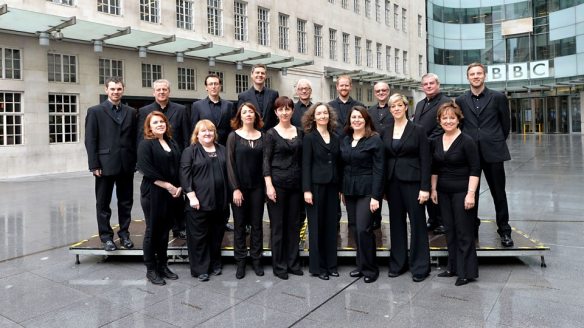
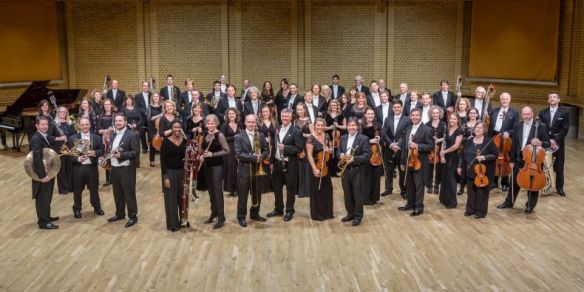
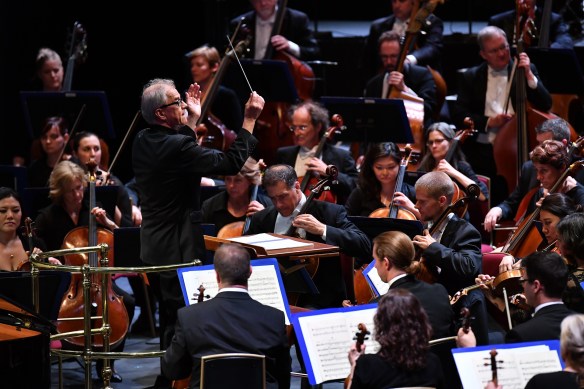
 Proms at the Cadogan Hall: BBC Singers (above) / Sakari Oramo (below)
Bridge Music, when soft voices die (1907)
Vaughan Williams Rest (1902)
Holst Nunc dimittis (1915)
Laura Mvula Love Like A Lion (2018, world premiere)
Parry Songs of Farewell (1913-15)
Cadogan Hall, Monday 20 August 2018
You can listen to this Prom by clicking here The times given on this page refer to the starting times on the broadcast itself
Reviewed by Ben Hogwood
Over the last couple of decades the Monday lunchtime strand of the BBC Proms concerts have gone from strength to strength, and the 2018 season looks like being an especially good vintage. English song has fared particularly well, and on the heels of Dame Sarah Connolly and Joseph Middleton’s imaginative recital, here was a choral selection based around rest, sleep and departure.
To be more specific, the form of rest composers Bridge, Vaughan Williams, Holst and Parry had in mind was the Eternal form. Frank Bridge wrote Music when soft voices die (from 1:49 on the broadcast) as his entry for a magazine competition, Vaughan Williams set the text of Rest (6:33) as a deeply felt short song, while Gustav Holst’s setting of the Nunc Dimittis (10:49), made in 1915, was resurrected for publication by his daughter Imogen in 1979.
Pride of place, however, went to Sir Hubert Parry’s Songs of Farewell, one of the crowning glories of his output. Rarely performed as a cycle, this series of unaccompanied motets, completed late in the composer’s life and in the shadow of the First World War, marks some of Parry’s deepest thoughts on mortality. They are every bit as profound in today’s world as they would have been then, and an attentive audience in the Cadogan Hall evidently took plenty from this interpretation.
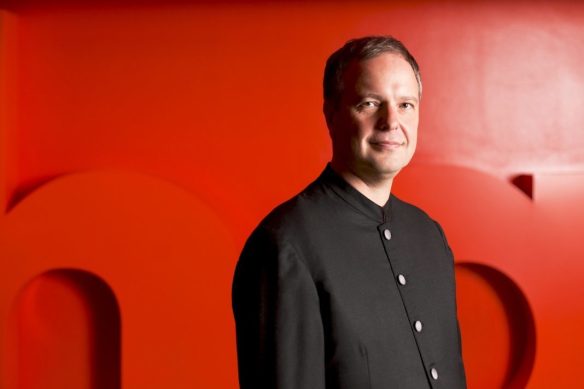 Sakari Oramo has experience as a choral conductor but this was his first outing with the BBC Singers. He led them in a direct, unfussy manner, shaping the phrases while recognising this experienced group already have the tools at their disposal to make a beautiful sound.
Parry constructed the cycle so that his part writing gains density as the songs unfold, moving from four parts through to eight by the final Lord, let me know thine end.
Oramo took us on that progression with a gradual increase of intensity, helped by purity of tone and unanimity of voice. My soul, there is a country (29:09) began as a lighter, thoughtful account, building in intensity, the parts moving closely together. I know my soul hath power to know all things (32:53) was notable as much for its expressive pauses between words, Oramo’s direction ensuring a tight-knit ensemble. Some of Parry’s musical phrases are of considerable length, but the BBC Singers took them in their stride.
The density grew, from five parts (the beautiful Never weather-beaten sail, 38:35) to six (There is an old belief, ) then seven (a hypnotic account of All round the earth’s imagined corners, 43:15) to ultimately eight (Lord, let me know mine end, 50:04). This was the apex of the performance, notable for its calm acceptance of the final days of life, and in the closing pages the BBC Singers portrayed Parry facing his ultimate departure with an incredibly moving dignity.
The whole concert was structured rather like the Parry cycle, beginning from the small but poignant songs from Vaughan Williams and Bridge. The BBC Singers were excellent, with beautiful phrasing, and a surprise was in store for the Holst. Often the Nunc Dimittis is a softly voiced counterpoint to the Magnificat, but this one grew from small beginnings to become a forceful statement, delivered with impressive surety.
And so to Laura Mvula’s three-part work Love Like A Lion (12:58), written to a commission by the BBC but charting rest and loss in a rather different way. The loss here was a relationship, causing intense pain in Like A Child but with acceptance given in I Will Nor Die (For Him) (20:30), with a penetrating solo from Helen Neeves (21:08) over a gently undulating accompaniment that took us to a special, faraway place. Free from restrictions, Love Like a Lion itself (23:46) revelled in its new freedom, as did Sakari Oramo – who knows Mvula well from their Birmingham days. Love Like A Lion showed her ease with choral writing, and was a deeply expressive voyage from darkness to light. Hopefully we will hear more from her very soon.
 Prom 44 Justina Gringytė (mezzo-soprano), CBSO Youth Chorus, CBSO Chorus, City of Birmingham Symphony Orchestra / Ludovic Morlot (above)

 Proms at the Cadogan Hall: Dame Sarah Connolly (mezzo-soprano, above), Joseph Middleton (piano, below)
 Proms 29 & 30: Soloists, Swedish Chamber Orchestra / Thomas Dausgaard

 Arcana.fm