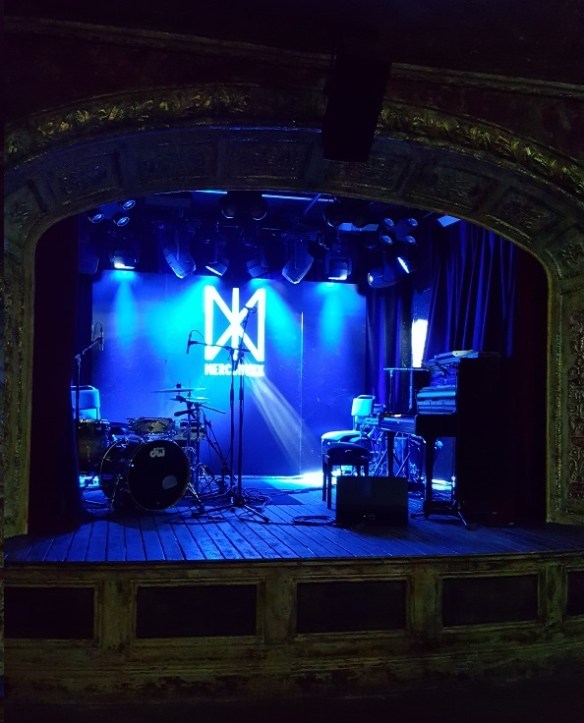
Mercury KX launch night, Omeara, 20 February 2017. Featuring Lambert, Solomon Grey and Sebastian Plano
Written by Ben Hogwood
The launch of a new record label is a rare thing indeed, especially when powered, as Mercury KX is, by a major company such as Universal.
So it was that the planets aligned with Mercury on a Monday night in South London. The Omeara club was the setting for the launch of a label which is set to become home for artists where classical and electronic music can meet and do business without any constraints. A bit like this website, we hope!
Inevitably people want to put a name on this form of music, and ‘post-classical’ was the term chosen during a spirited discussion between journalist Sean Adams and the label’s new acts Solomon Grey and Ólafur Arnalds. Yet the conclusion of the artists was that they wanted to avoid genre labels, enjoying the music for what it is.
Given the new signings for Mercury KX, that was easy. Firstly we enjoyed Lambert, a German duo adorned in tall and rather imposing Sardinian masks. Their stage dress heightened the dramatic impact already created by the rumbling of piano and percussion. The piano was opened up so we could see the workings and appreciate the mottled effect of the hammers, dampened in the quieter music and perfectly twinned with the blue light. When the music got faster, though, the percussive drive was irresistible.
Arnalds, whose distinctive music underpins each of the three series of Broadchurch, then gave interesting insights into his studio and methods of composition, ahead of the return of the drama on ITV next week. The confines of TV work can be stimulating for a composer, he said, a theme endorsed by label mates Solomon Grey. The duo have recently completed a score for the BBC drama The Last Post, due in the autumn. Their music uses field recordings and, in the brief episode we heard, has an appealing and almost psychedelic brightness in keeping with the video below.
Finally Sebastian Plano teamed up with the 12 Ensemble for a string-drenched meditation lasting around 20 minutes, led alternately by his soaring, song like cello playing and graceful piano. Plano had an appealing manner onstage, letting his music do the talking but allowing his cello to sing right at the top of its range, enjoying the beautiful harmonic progressions he had formed.
There was a real buzz around the club, and Mercury KX will no doubt be pleased at the reaction to their new artists and music. They are definitely on to something, for classical and electronic music are enjoying their collision course at the moment. Certainly the likes of Max Richter, Arnalds and Nils Frahm, to give just a few obvious examples, are writing emotive music of lasting beauty. The only potential downside is that a reliance on slow harmonies and the use of strings and piano will be brought forward at the expense of more distinctive melodies and rhythms.
It will be interesting to see if Mercury KX allow for these possibilities. They have banked some fine music already, and the label looks set to touch hearts and minds with its musical explorations in the coming years.
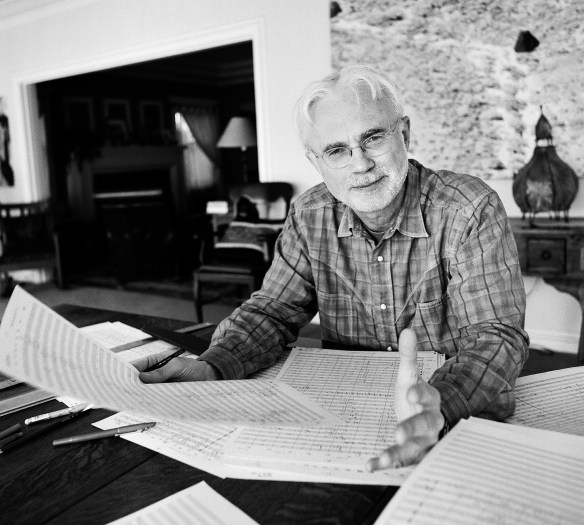
Those minimalists – they certainly have some staying power! The holy trinity of this much-loved form of music – Steve Reich, Philip Glass and John Adams – have notched up 230 years on the planet between them. Reich and Glass, both 80, have had their moment in the spotlight, so it’s now the turn of youngster Adams – a mere 70 years old today – to shine.
Like Steve Reich, he works in a style where the musical ideas get progressively developed, whereas Glass – in his later years at least – is much more repetitive. Like Glass, however, Adams has written more for the stage, completing several large-scale operas. He is also capable of scaling down, with string quartets and piano pieces also part of his output.
Here, then, are ten pieces of Adams, selected from personal experience in order of discovery, with the aim of getting the feet tapping and the mind racing!
Short Ride In A Fast Machine (1986)
Probably the best known of Adams’ pieces, this is a tour de force for orchestra – and apparently a nightmare to conduct in terms of getting the rhythms clear! Thrills and spills await…
El Dorado (1991)
This is the piece where the influence of Sibelius in John Adams’ music really shines through. El Dorado is one of his very best ‘through composed’ pieces – that is it relies much more on development than repetition. Both movements start mysteriously, with murmurings throughout the orchestra, but gradually generate an impressive power when moving towards their closing section, especially in the case of the second, Soledades.
To appreciate the full impact you definitely need to hear the whole piece.
Shaker Loops (1978)
Shaker Loops appeared in a definitive Philips recording from the San Francisco Symphony and Edo de Waart in 1986. It works equally well in its original scoring for seven string players, one per part. Once the shimmers – aka ‘Shakers’, start the mind is instantly transported.
John’s Book Of Alleged Dances (1994)
An attractive, slightly bluesy set of dances where it feels like Adams is having fun, together with the Kronos Quartet, who commissioned it.
Harmonium (1980)
Make sure the room is quiet and the neighbours have gone out. Turn the stereo right up, and lose yourself to the opening moments of Harmonium, where voices and instruments blend in to one.
This is a truly magical piece that demonstrates Adams’ ability to write for large vocal and orchestral forces:
Slonimsky’s Earbox (1996)
A terrific concert opener this, punchy and upbeat from the off – with plenty of percussive intent, not to mention the swirling harps and busy woodwind and string lines. One of Adam’s most energetic works, it is written in tribute to Nicolas Slonimsky, a composer and critic who had ‘wit and hyper-energetic activity’ – hence the mood of the piece!
Lollapalooza (1995)
Jazz plays an intriguing if sometimes understated part in Adams’ music, but in Lollapalooza braying brass and woodwind instruments and syncopations are much in evidence. The piece is actually based on the rhythm made by the word, ‘loll-a-pal-ooz-a’, and develops with rolling timpani:
Doctor Atomic (2005)
Never one to shy away from controversial topics, Adams wrote an opera based on the creation of the atomic bomb, and more specifically on its creator, J.Robert Oppenheimer. He also documented the effect on the workers and the region where the bomb was tested, Los Alamos.
The end of the first act includes an aria, Batter my heart, sung by Oppenheimer and setting the words of John Donne. It arrives on the eve of the text explosion. Adams said to New Yorker critic Alex Ross, “That music just sort of fluttered down and landed on my desk one day. Part of me said, ‘No, you can’t do that,’ and the other half said, ‘That’s it, go ahead and do it.’ Afterward, I realized the reason it was right. Naming the site after a John Donne sonnet was itself an archaic gesture. Oppenheimer was always referring back to ancient things, summing up his state through very dignified forms.”
It is worth reading this when you listen to the powerful music! Adams made a Symphony of the opera, attached to the Spotify playlist.
City Noir (2009)
“City Noir is a symphony inspired by the peculiar ambience and mood of Los Angeles ‘noir’ films, especially those produced in the late forties and early fifties”, writes Adams. “My music is an homage not necessarily to the film music of that period but rather to the overall aesthetic of the era. This symphony becomes the third in a triptych of orchestral works that have as their theme the California experience, its landscape and its culture.
The two previous are The Dharma at Big Sur (also commissioned by the Los Angeles Philharmonic) and El Dorado (commissioned by the San Francisco Symphony).”
Below is the third of its three movements, Boulevard Night powerful and surging:
El Nino (2001)
One of Adams’ most successful stage productions, El Nino is classed as an ‘opera-oratorio’ that tells the Christmas story. Once again Peter Sellers was the stage collaborator, including film and dance in the production. Here is an excerpt with the stellar cast, including Dawn Upshaw, Lorraine Hunt Lieberson and Willard White:
As part of Arcana’s celebration of the cello this year, here is BBC Young Musician 2016 Sheku Kanneh-Mason, playing Tom Hodge‘s new arrangement of Leonard Cohen‘s Hallelujah:
Sheku played the arrangement at last night’s BAFTA ceremony, marking the passing of so many from the film industry in 2016.
Decca have just released a new EP by their new cellist that contains two more reflective song arrangements, Fauré’s Après un rêve and Bloch’s Abodah
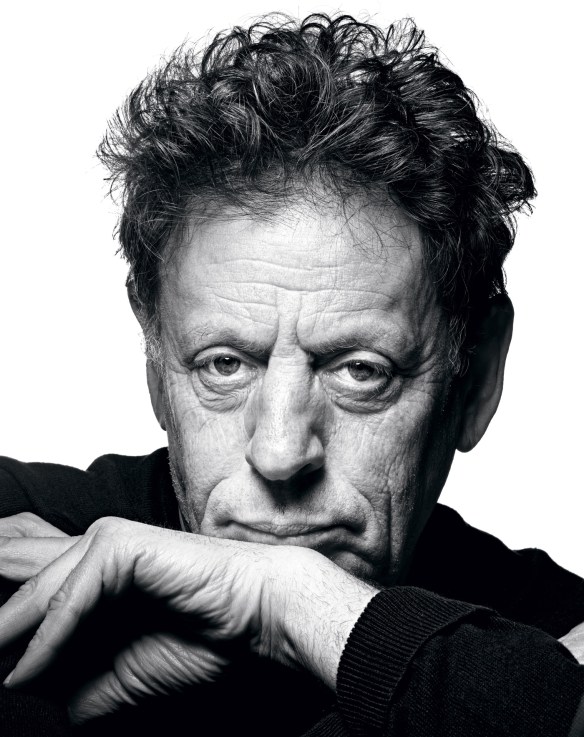
Today is the 80th birthday of one of the biggest composers of the ‘minimalist’ movement in music. Philip Glass, together with Steve Reich, Terry Riley and John Adams, has exerted considerable influence on today’s electronic music artists, and it’s easy to forget just how pioneering his works, the early ones in particular, still are.
Within classical music circles there is a large group of people who think Glass has got lucky, and that his music is little more than repeated arpeggios that don’t really go anywhere. From personal experience I can see why some of the material in the more recent works gets tarred with that particular brush, but I also think that if you look in the right parts of Glass’s massive compositional output there are many treasures to be found.
Steve Reich might be regarded as the more trendy composer, being referenced by pop acts as an influence with great regularity. Yet while he worked recently with Radiohead material in Radio Rewrite, giving him extra credibility, let’s not forget Glass completed three symphonies based on themes by David Bowie and Brian Eno.
Granted, Reich is probably more progressive in his musical thinking, and is certainly more economic with his musical material, but to assume his music is ‘better’ is to misunderstand Glass. There is definitely room for both! So to shout the corner of Reich’s former business partner – the two ran a removal business in the 1970s – here are my Ten Pieces of Glass, given in the order in which I discovered them:
Company (1983)
When I first heard the celebrated Kronos Quartet recording of this, Company – Glass’s String Quartet no.2 – it was the first time I had encountered the composer’s music. It had a lasting effect, for despite its incredible simplicity Company contains moving harmonic progressions and propulsive music that somehow serves as a soothing balm. All four movements are untitled, their only indication a metronome marking, but that only adds to the simplicity, and when the opening begins it is as though Glass has turned his attention back several centuries.
Dances nos.1-5 (1980)
When I first listened to this I remember my mother calling up the stairs to check my CD player wasn’t malfunctioning! Dance no.1 is a confrontational listen but in the best possible way, hurling joyful notes at its listener without ceasing. It is a strange but rather wonderful ritual:
Dance no.4, meanwhile, visits another world entirely, and once heard on the church organ is unlikely to be forgotten. The recording I have in mind is that by Christopher Bowers-Broadbent, recorded in great splendour by ECM, though the original from the composer himself is very fine too.
The arpeggios are pure Glass, but once the circular harmonic progression begins the listener is invited on a flight of fancy that gets ever more powerful as it moves on:
Powaqqatsi (1988)
In contrast the music Glass’s score for the film Powaqqatsi goes straight for the jugular as soon as it begins. Serra Pelada, the opening salvo, has a rush of saxophones and rocking children’s voices, a real thrill for the senses from start to finish:
Koyaanisqatsi (1983)
One of the film scores that got Glass his name as a composer for the big screen was his music for Francis Ford Coppola’s Koyaanisqatsi in 1983. The soundtrack is one of those ‘once heard, never forgotten’ moments, the slow-moving organ and subterranean bass voice combining to make a sonorous yet otherworldly sound.
Metamorphosis One from Solo Piano (1988)
This piece is simplicity itself – no doubt one of the reasons you’re just as likely to hear it in Café Nero as anywhere else. There are three very basic strands to the music – the stern opening chords, then an oscillating arpeggio, then a statement from the right hand that takes a slightly unexpected harmonic twist. It’s that twist that sets Glass apart and gives the music its uncertain air.
Early keyboard Music
Glass’s early work has absolutely no frills, as the titles prove. Music in Contrary Motion, Two Pages and Mad Rush – all contain music of the utmost simplicity, with notes running in sequence or against each other. And yet the energy conjured up here is remarkable, and as the pieces continue a trance can fall over the listener. Steffen Schleiermacher’s recordings of these are highly recommended, but in their absence here is an alternative arrangement of Two Pages (1968):
Symphony no.3 (1995)
The most concise of Glass’s eleven works in the form, the Third Symphony tones down the excesses of the Second to offer a piece for 19 stringed instruments that is a remarkable work of economy.
Different sides of the string orchestra talk to each other, exchanging ideas over an impressive dynamic range – the second movement could be lifted from a Shostakovich scherzo. It is, like Company, music that talks with the utmost simplicity to leave a lasting impression:
Satyagraha (1979)
Some time ago, English National Opera delivered a winning setting of Glass’s opera about Mahatma Gandhi. The crucial element in their success was the use of remarkable visual props to complement the colourful, trance-like music. Not only that, the staging confirmed that Glass’s music is so much more than Western classical – it searches out other customs, religions and cultures on its path.
Very little happens in the plot of Satyagraha but that’s not really the point, for as the music unfolds this becomes a surprisingly stirring statement and tribute to the work of Gandhi. Repetitious it may be, but again with each statement of his material Glass focuses the listener’s mind on only one thing.
Symphony no.7, ‘Toltec’ (2005)
Some of the classical world get a bit annoyed that Glass calls these works ‘symphonies’, as though they are not deserving of the title. Yet works like the Toltec symphony, performed at the BBC Proms back in 2009, prove that whatever label you put on it, this is a deeply meaningful and powerful piece of work. Glass’s ‘Choral’ symphony has music of grace and power that moves surprisingly close to the world of Bruckner in its tactful use of silence.
(not available on Spotify)
Escape from The Hours (2002)
This proves that Glass is not all boundless energy and fast-moving arpeggios. On the playlist, Amy Dickson’s soulful saxophone is the icing on the cake on this haunting piece of music – yet further proof that Glass can write film music with lasting appeal.
First of all, a very happy new year to you all. Hope 2017 has been good to you so far!
Here at Arcana we are dipping our toes back in the water after an extended break, gradually getting back into the swing of the day job – and planning some exciting things for the site in 2017. The idea is to use the enjoyment and power of music to bring some much-needed sunshine to the current climate. Not just us though – if there is anything you want to see after reading this, please get in touch (editor@arcana.fm), so we can be as inclusive as possible!
So far, with the site almost two years old, it is fair to say the focus has been too heavily on classical music. That might seem an odd thing to say, but it’s time Arcana went back to first principles and delivered on its promise of looking at the intersection between pop and classical, and how we can make the latter much more approachable.
With that in mind, we will be looking a lot more at music from composers who work well on both sides. Philip Glass is 80 this year, John Adams 70 – and a lot of artists and composers inspired by them are expected to be busy.
We will once again be taking friends to classical concerts for the first time, an idea trialed with great success at the 2016 BBC Proms, so if you’re interested in that then please let us know! The Wigmore Hall Monday lunchtime concerts will still be covered too – the only website to offer reviews of these hour-long treats.
We plan to honour the music of Emerson, Lake & Palmer, paying tribute to last year’s sadly departed Keith Emerson and Greg Lake as we look at their treatment of classical music.
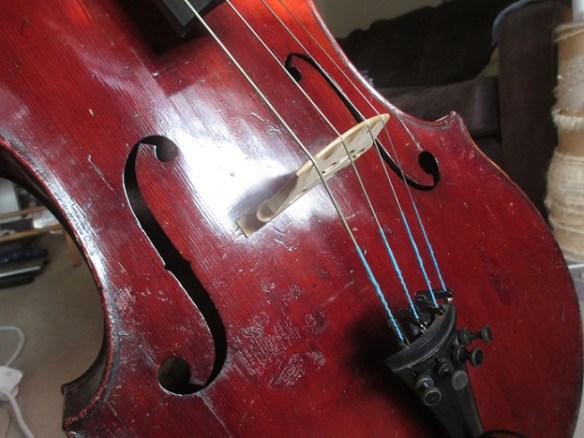
We will also celebrate the unrivalled career of cellist Mstislav Rostropovich, who would have been 90 this year, by taking an extended look at the pieces he commissioned from some of the greatest composers of the twentieth century, and celebrate his instrument, the cello.
Rostropovich singlehandedly changed the reputation of the instrument, and we’ll be looking at how he did that while also enjoying concerts such as the Kings Place cello festival.
As you’ll see then, plenty to get our teeth into as the New Year gets in to gear. Hope you enjoy the ride!

 Mercury KX launch night, Omeara, 20 February 2017. Featuring Lambert, Solomon Grey and Sebastian Plano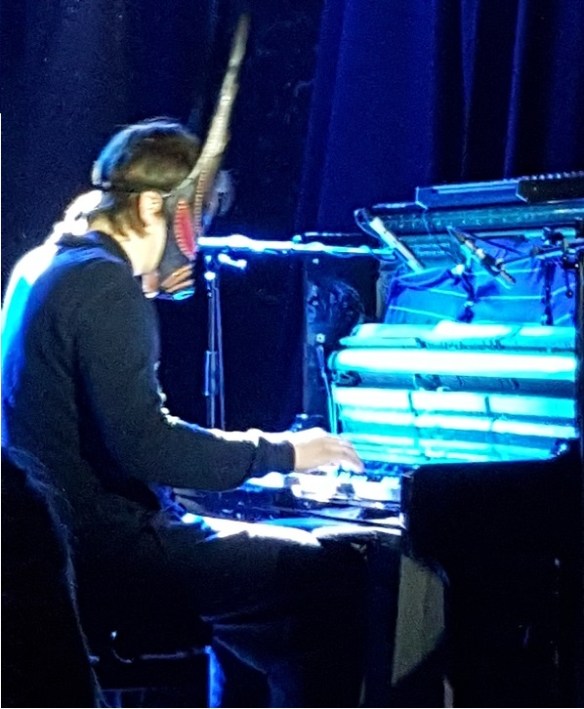

 First of all, a very happy new year to you all. Hope 2017 has been good to you so far!
 Arcana.fm