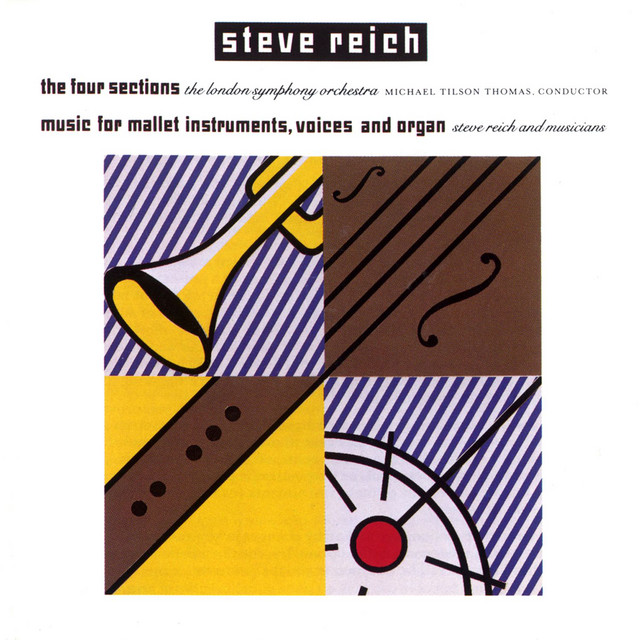
It is curious that minimalism – often a genre with a great deal of musical activity and kinetic energy – has provided some of the most ambient music in the modern canon. A prime example is the Music for Mallet Instruments, Voices and Organ of Steve Reich, whose music shimmers in the warm sun:
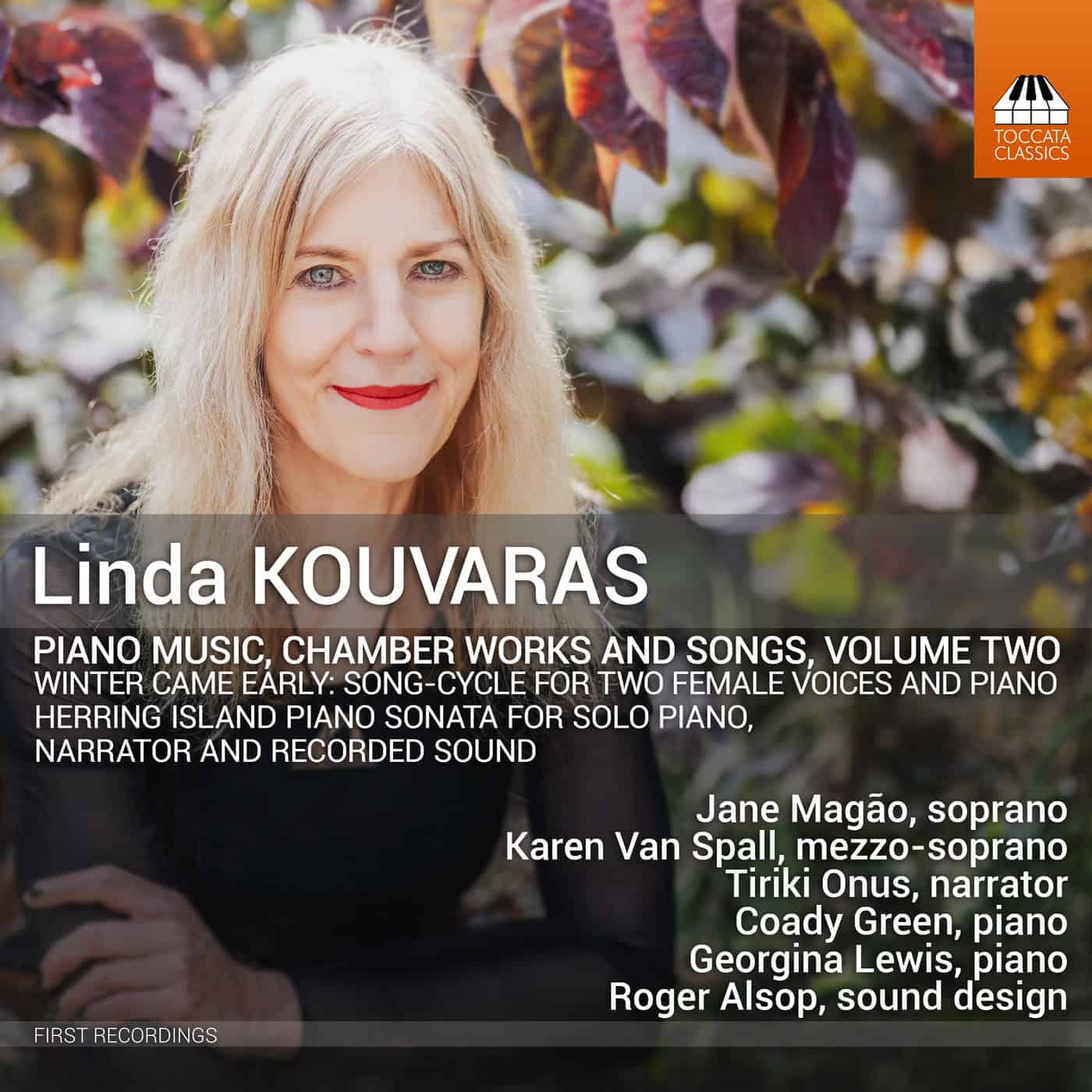
Tiriki Onus (narrator), Coady Green (piano), Roger Alsop (sound design) – Herring Island Piano Sonata; Jane Magão (soprano), Karen Van Spall (mezzo-soprano), Georgia Lewis (piano) – Winter Came Early
Linda Kouvaras Herring Island Piano Sonata Winter Came Early
Toccata Classics TOCC0734 [78’33”] English text included Producer / Engineer Haig Burnell
Recorded 16 & 24 November 2023 (Herring Island Piano Sonata), February 2024 (Winter Came Early)
Reviewed by Richard Whitehouse
What’s the story?
Toccata Classics issues the second volume in its ongoing survey of chamber and vocal works by Linda Kouvaras (b.1960), comprising two sizable pieces that examine those genres of the piano sonata and the song-cycle from unlikely while always thought-provoking perspectives.
What’s the music like?
A veteran of the New Wave scene from the early 1980s, Kouvaras studied in London and her native Melbourne where she has pursued her career as an academic and composer. Especially notable is her output for ensemble, with or without voices, which is currently being recorded by Toccata. Its second instalment demonstrates a keen sense of how to broaden and diversify genres that could all too easily be taken for granted as regards precedent then, in the process, making these relevant to the artistic and the cultural concerns of those having inspired them.
Inspired then dedicated to the physical and historical facets of an artificial islet in Melbourne, Herring Island Piano Sonata amalgamates an abstract entity with a text by N’arweet Carolyn Briggs and spoken by Tiriki Onus in the context of an environmental soundscape from Roger Alsop – though the piano component can also be performed independently (and can be heard here by selecting tracks 2, 3, 5 and 7). Musically it typifies Kouvaras’ predilection for modal harmonies and vibrant textures, allied to a determined if never excessive virtuosity. Just how far this three-way interplay comes together is for each listener to decide, though there can be no doubt as to the ambition of the whole. To which end, a visual (not necessarily illustrative) component might have helped with integrating these already interrelated aspects further still.
Written immediately before, Winter Came Early is a song-cycle to poems by Melbourne poet Catherine Lewis whose untimely death and her posthumous legacy is directly commemorated. The presence, indeed frequent concurrence, of two female voices represents a mother and her daughter – the latter being pianist Georgina Lewis who also contributes the central poem that gives the work its title – heard alternately and in dialogue, though this could be considered too much of a good thing given the overlap in vocal lines and consequent blurring of words such as makes it difficult (if not impossible) to discern what is being sung. Musically, the sequence alternates between knowledge of encroaching death and recollection of earlier but not always happier times, rounded off by an ‘Epilogue’ that sets the poet’s final love-note to her husband.
Does it all work?
For the most part. Kouvaras is evidently a composer with an inquiring mind and the means to realize her intentions, though the element of mixed media sometimes works to the detriment of her music by drawing attention away from its intrinsic content. All the performers provide contributions of unfailing sincerity, but there remains a feeling of sensory overload or merely reluctance to let this music speak on its own terms. Try those sonata tracks detailed above, or the final four tracks (11-14) of the song-cycle, to hear her music at its most communicative.
Is it recommended?
Yes, with these reservations in mind. Those who are unfamiliar with this composer would be best advised to start with the first volume in this survey (TOCC0729) with its works for solo piano or saxophone and piano that, in their different ways, find her music at its most potent.
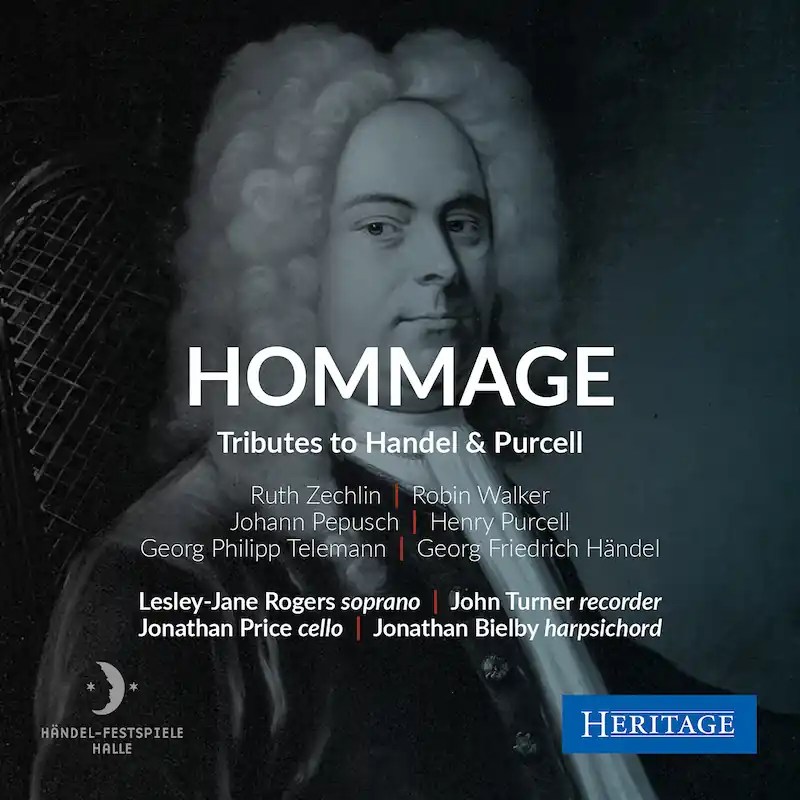
Lesley-Jane Rogers (soprano), John Turner (recorder), Jonathan Price (cello), Jonathan Bielby (harpsichord)
Ruth Zechlin Hommage á Henry Purcell (1997); Hommage á Handel (2004) Robin Walker Handel to his Soul (2006) Pepusch When Love’s Soft Passion (pub. 1720) Purcell The Blessed Virgin’s Expostulation, Z196; Oedipus, Z583 (1678) – Music for a while; The Indian Queen, Z630 (1695) – I attempt from love’s sickness to fly Telemann Cello Sonata in D major TWV41: D6 (pub. 1728-9) Handel Nel Dolce del’Oblio, HWV134 (1709)
Heritage Records HTGCD118 [73’06”] Texts and translations included Remastering Engineer Paul Arden-Taylor
Live performance on 14 June 2006 at Händel-Haus, Halle an der Saale
Reviewed by Richard Whitehouse
What’s the story?
Heritage releases what was actually a live performance, given at the original ‘Handel House’ in the composer’s hometown of Halle while featuring an imaginative miscellany of Baroque and Contemporary works, all expertly realized by soprano, recorder, cello and harpsichord.
What’s the music like?
The sub-title says it all – tributes to Handel and Purcell that range from pieces by both these composers to works which wear their ‘hommage’ credentials not a little obliquely. Purcell is heard in evergreen extracts from his incidental music to Oedipus and semi-opera The Indian Queen elegantly sung by Lesley-Jane Rogers, who renders the interplay of recitative and aria in The Blessed Virgin’s Expostulation with real eloquence. Handel rounds off this programme with Nel Dolce del’Oblio (In the Sweetness of Oblivion), one of several Italian cantatas that helped establish his reputation prior to his arrival in England. Again, a fine performance that respects this music’s expressive deftness and understatement though without making it seem trite or lightweight; failings which are not so uncommon in latter-day accounts of this music.
Also featured is a cello sonata drawn from Telemann’s collection Der Getreue Musikmeister (The Faithful Music-Master), its simple alternation of Largo and Allegro movements belying the piece’s overall motivic subtlety. Interest naturally attaches to the cantata When Love’s Soft Passion by Johann Pepusch, remembered for his musical contribution to The Beggar’s Opera by John Gay (and lesser-known sequel Polly) but who wrote extensively for various genres – among them the secular cantata, hence the poise and sensuous appeal of the present example.
Two of the contemporary works are by Ruth Zechlin (1926-2007), among the most prominent composers in what was East Germany, whose expertise as harpsichordist or organist informed her own works. Hommage á Henry Purcell juxtaposes recorder and harpsichord with pointed humour redolent of Mauricio Kagel, whereas Hommage á Handel comprises settings of three Shakespeare sonnets (Nos. 36, 78 and 46) with their music derived from three Handel arias to verses by Barthold Brockes. Even more engrossing is Handel to his Soul, a cantata setting his own text by Robin Walker (b.1953) who, known primarily for some seismic orchestral works (Toccata Classics TOCC0283), brings comparable insight to this thought-provoking trialogue between the composer, his soul and the goddess Proserpina – its music being witty and ironic.
Does it all work?
Yes, not least as collated into a programme which elides nimbly if meaningfully between the musical past and present. All credit to the musicians that these performances are so idiomatic across the board, thereby bringing works separated by over three centuries into enlightening accord. Whether the present release is taken from a radio broadcast or an archive recording, its sound lacks nothing in spaciousness or focus; enabling Rogers’s excellent annunciation to come through unimpeded. An occasion which was decidedly making available commercially.
Is it recommended?
It is. The booklet has decent notes and full texts (if not all English translations) – making for a worthy tribute to Percy M. Young (1912-2004), renowned music scholar and soccer historian, in whose memory this concert was sponsored by the British Professional Football Association.
Naresh Sohal Aalaykhyam Ia; Chiaroscuro Ib; Kavita Ic; Surya (all 1970)d; Hexade; Night’s Poet (both 1971)f; Aalaykhyam II (1972)g; Poems of Tagore II (1976)h; Inscape (1979)I; The Unsung Song (1993)j; Foray (2006)k
Heritage Records HTGCD122-3 [2 discs, 151’36”] English texts included Remastering Engineer Paul Arden-Taylor
Live performances and broadcasts (London unless stated): d20 April 1971, St John’s Smith Square e13 July 1971, Goldsmiths College; c1 February 1972, Queen’s College, Birmingham; g 1 May 1973 and a 25 September 1974, Queen Elizabeth Hall, b 5 January 1977, BBC Studios, Manchester; h 22 August 1977, Purcell Room; f 8 February 1978, Wigmore Hall; i 18 November 1979, The Round House; j 28 November 1993, Du Maurier Theatre, Toronto; k 16 June 2006, Wilton’s Music Hall
Reviewed by Richard Whitehouse
What’s the story?
Heritage continues the extensive series of archival recordings of Naresh Sohal (1939-2018) with this double album featuring vocal and instrumental works, most heard in their premiere performances by a roster of artists synonymous with contemporary music during this period.
What’s the music like?
Although previous issues on this label have tended to focus on those large-scale pieces which established or consolidated Sohal’s reputation, his output abounds in works with more modest dimensions or forces. This release collates various of these in parallel vocal and instrumental sequences as amount to a representative overview of their composer’s career. These underline the continual evolution of his idiom, whatever its stylistic changes, while also making the case – if such were needed – for their revival in what has now become a very different music scene.
To a poem from Tagore’s The Gardner (set a half-century before by Zemlinsky as the opening movement of his LyricSymphony), Kavita I allows Sohal’s aural imagination free-rein with its fraught instrumental movements leading into the eloquent vocal setting. Surya sets texts from the Shakuntalam and Rig Veda in music dense and evocative, charged and incantatory. Night’s Poet draws on Tagore’s The Fugitive as it veers from the speculative to the ecstatic before an alluring close; Poems of Tagore II also draws on that collection in sensuous music with cello as much a vocal element as the two mezzos. Inscape has recourse to Tagore’s Lover’s Gifts in its hieratic aura with fastidiously variegated choral textures, then The Unsung Song draws on Tagore’s Gitanjali in an ethereal exploration of the beyond necessarily remaining unresolved.
As to the instrumental selection, Aalaykhyam I proceeds in starkly contrasted episodes and a disjunction eschewed in Aalaykhyam II with its subtle but never anodyne evolution of motifs that evoke a more inviting ‘abode’. Coming between these chronologically, Hexad favours a methodical yet cumulative unfolding across six movements such that the furtive anticipation of the first meets the assertive fulfilment of the sixth; while Chiaroscuro I turns brass quintet into a succession of overlapping, often conflicting gestures that merge into a vibrant if short-lived recessional. From here to Foray is to jump ahead some 35 years with music of greater expressive focus, distilled into an Adagio then Allegro as might equate to ‘song’ and ‘dance’ were it not for a shifting of ideas and moods across what amounts to a most unlikely diptych.
Does it all work?
Pretty much throughout. Part of the fascination with Sohal’s output are the ways he tackles – and almost always solves – different considerations in successive works, taking the solutions through to the next project so that a consistency of method becomes evident alongside those of form or expression. The performances lack for little in conviction and have been expertly remastered to make them sound more than adequate. More than this, however, it extends the discography of musicians whose contributions to the cause of new music cannot be gainsaid.
Is it recommended?
Indeed it is. The booklet features insightful (if occasionally contentious) notes on each piece by Utsyo Chakraborty along with a detailed biographical overview by Janet Swinney. What has already proved an invaluable series hopefully has several further instalments still to run.
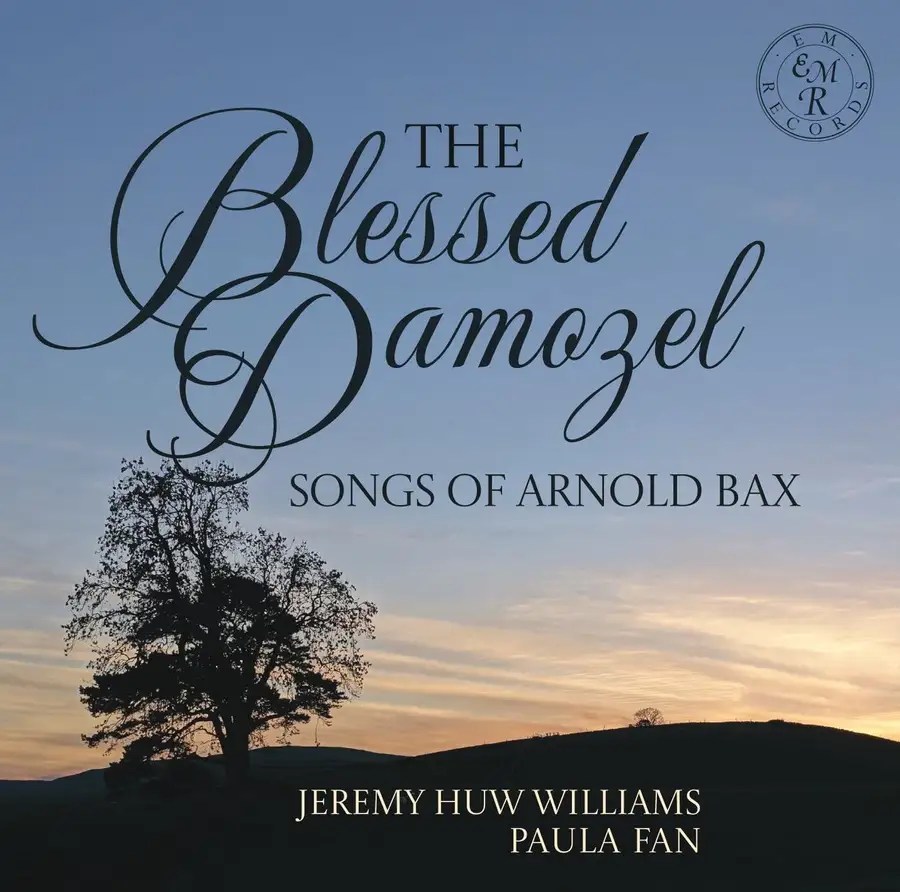
Jeremy Huw Williams (baritone); Paula Fan (piano) with Theodore Buchholz (cello, Folk Tale)
Sir Arnold Bax The Blessed Damozel (1906); A Milking Sian; The White Peace (both 1907); Shieling Song (1908); To Eire (1910); Roundel (1914); Parting (1916); Far in a Western Brookland; Folk-Tale; Jack and Jone; When I was One-and-Twenty (all 1918); The Market Girl; Rann of Exile; Rann of Wandering (all 1922); I Heard a Soldier (1924); In the Morning; On the Bridge (both 1926); Watching the Needleboats at San Sabba (1931)
EM Records EMRCD086 [84’55”] English texts included Producer Jeremy Huw Williams Engineer Wiley Ross
Recorded 11-13 April, 6 May 2022 at Jeffrey Haskell Recording Studio, University of Arizona
As is relatively well known, the writing of songs was a preoccupation of Bax earlier on in his composing which had all but ceased by the mid-1920s. Unlike their earlier release, Williams and Fan here focus on songs previously recorded (some of them several times) though it does include a major first recording along with Folk-Tale from the last year of the First World War. Theodore Buchholz does justice to the dramatic climax which emerges out of this latter piece’s sombre rumination, thus making the subtitle ‘Conte populaire’ more than a little tendentious.
That first recording is The Blessed Damozel – not a song or even a scena, but a melodrama or, as Bax described it, ‘‘musical illustration’’ for reciter and piano of the famous poem by Dante Gabriel Rossetti. Melodramas were a frequent occurrence during those early years of the 20th century, though this is its composer’s single example and even that was likely intended as the blueprint for a work with orchestra that failed to materialize. As it stands, the combination of measured yet rarely uneventful speech and piano writing as responds to the text as if ‘caught on the wing’ results in a curiosity well worth hearing. The present account holds the attention and, given the absence of any orchestration, there seems little need for any further recording. Those who are partial to Rossetti should find Debussy’s earlier cantata to be more substantial.
A glance at the listing above confirms the 16 items featured here range widely across the two decades when Bax’s song-writing was in fullest flow. It is not over-much of a generalization to suggest those written up to and including the ‘Great War’ are art-songs in a direct lineage from the composer’s French or German forbears, and those that came afterward are ‘popular’ songs or – as in with Jack and Jone – arrangements of traditional songs written at the behest of specific performers. The (surprisingly?) skittish setting of Thomas Hardy’s On the Bridge was followed with just two songs – Watching the Needleboats at San Sabba forming part of a James Joyce anthology, masterminded by Arthur Bliss, which failed to benefit this author financially. Orchestral and chamber works were predominant in Bax’s catalogue henceforth.
Does it all work?
It should have done. Those having heard his previous Bax release will know of Jeremy Huw Williams as a devoted Baxian whose occasional misjudgement of expressive nuance is more than compensated for with thoughtfulness and insight. Unfortunately, the highly reverberant sound is inappropriate – to the extent those songs (tracks 5, 13 and 14) whose texts could not be reprinted for copyright reasons are frequently inaudible as recorded. Neither Paula Fan’s forthright pianism nor Theodore Buchholz’s burnished cello playing come through unscathed.
Is it recommended?
It should have been. The booklet is well up to EMR’s customary standards, with its detailed biographical overview by Graham Parlett and notes on each of the songs by Lewis Foreman. Paula Fan’s untimely death, in 2023, should have made this release a more fitting memorial.