Today is Mothering Sunday in the UK – and here is a playlist celebrating mothers.
We begin with a touching suite for piano by Josef Suk. About Mother is dedicated not to his own mother but for his children about their mother, his wife Otilie Dvořák. Then we continue with a famous song from Suk’s father-in-law, Antonin Dvořák, Songs My Mother Taught Me.
Taking the theme a little loosely we move on to Ravel, and his delectable ballet Ma mère l’oye (Mother Goose) – evidence of the French composer’s beautiful writing for orchestra.
Finally something of an English rarity, Cecilia McDowall setting the Magnificat (the song of Mary, Mother of God) for chorus and orchestra. It is a striking piece with which to end.
I hope you enjoy!
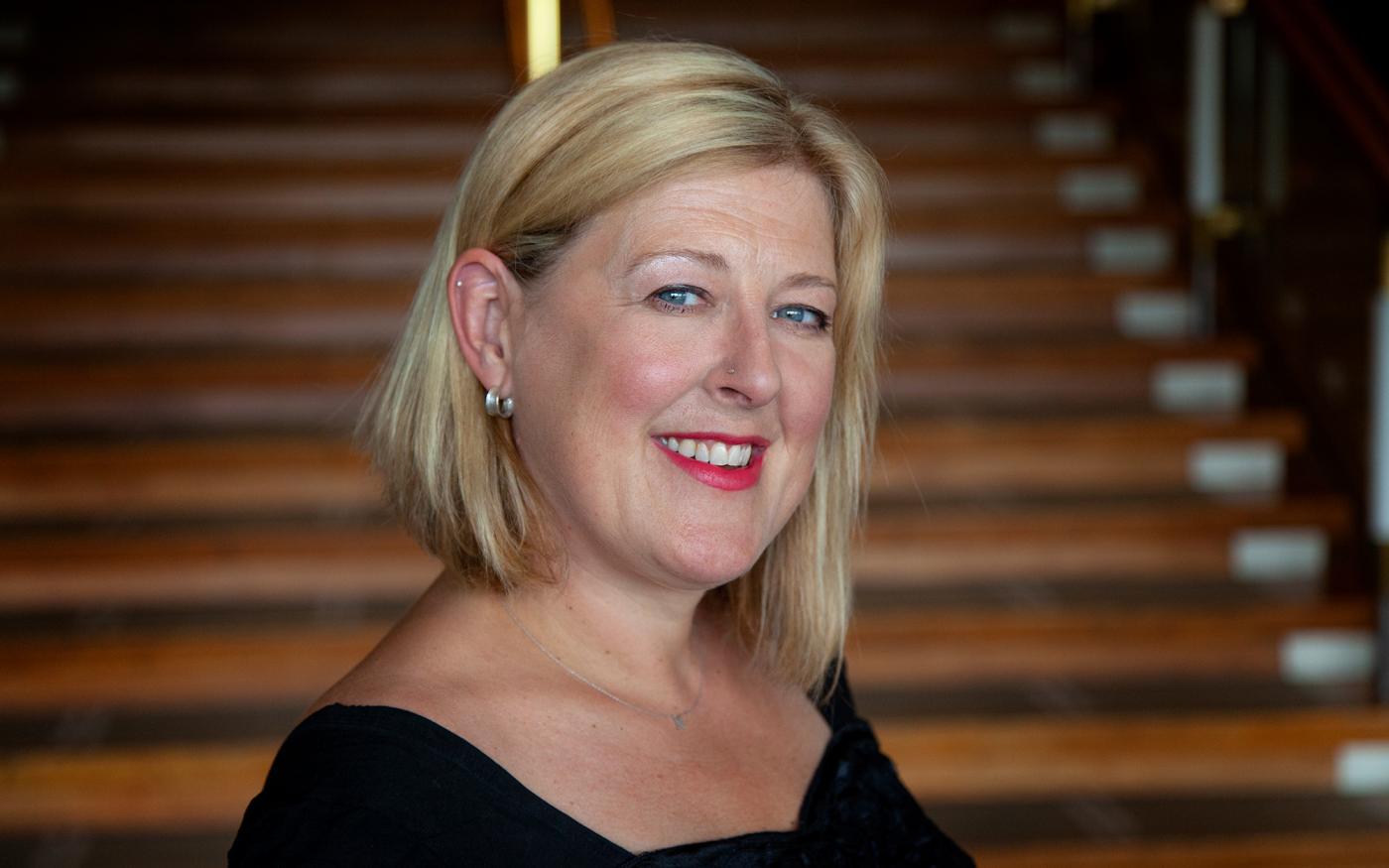
This playlist is dedicated to the memory of my aunt, Angela – who passed away on Thursday. It is also posted in mind of her sister – my own mother Coralie (above), whose musical influence on my own life I celebrated on Arcana here.
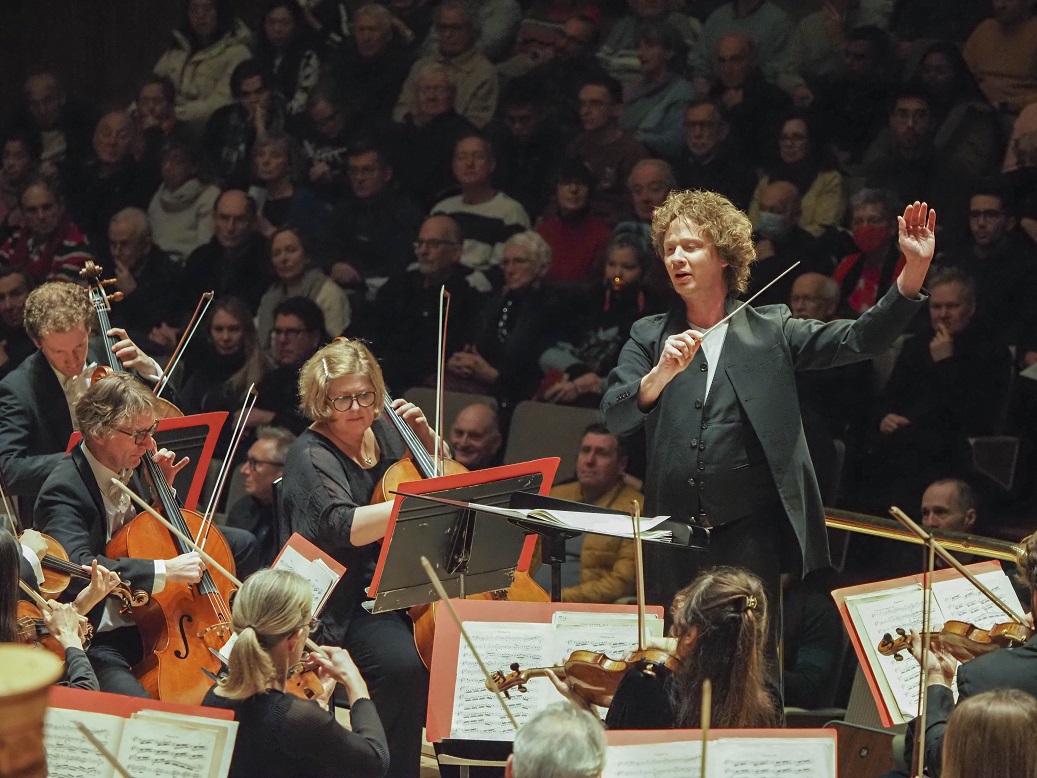
Frank Dupree (piano, above), Philharmonia Orchestra / Santtu-Matias Rouvali (below)
Glinka Capriccio brillante (Spanish Overture no.1 ‘Jota Aragonese’) (1845) Kapustin Piano Concerto no.5 Op.72 (1993) Borodin Symphony no.2 in B minor (1869 – 1876) Rimsky-Korsakov Capriccio Espagnol Op.34 (1887)
Royal Festival Hall, London Thursday 7 March 2024 (7.30pm)
Reviewed by Ben Hogwood Pictures (c) Raphael Steckelbach (Frank Dupree), Sisi Burn (Santtu-Matias Rouvali)
After this orchestral spectacular, I can confidently say that the Royal Festival Hall is free of cobwebs!
This most appealing program from the Philharmonia Orchestra was a cosmopolitan collection of works with roots in Russia, in the symphonic tradition (Borodin), delivering postcards from Spain (Glinka and Rimsky-Korsakov) or bringing in music from even further across the Atlantic (Kapustin).
The work with the farthest reach took top billing, thanks to the advocacy and breathtaking pianism of Frank Dupree. Making his debut with the Philharmonia, the soloist seized the opportunity to share his love of the music of Nikolai Kapustin, a composer he has championed on record in the past three years.
To call Kapustin ‘eclectic’ would be an understatement, but the label fits his unusual gift for looking outwards from classical music to jazz, boogie-woogie, Latin and even rock. To his credit none of those stylistic references sound hackneyed, and although the single-movement Piano Concerto no.5 is written out on paper it has a fresh, improvisatory quality that Dupree and the Philharmonia fair lifted off the page.
There were fun and games in this performance, harnessing elements of Gershwin, Milhaud and Shostakovich’s jazz writing, but ultimately channelling a style all of Kapustin’s own. Dupree shared the many musical jokes with the audience, while the Philharmonia percussion section – drum kit, bongos, castanets, everything but the kitchen sink! – was on hot form, Santtu-Matias Rouvali conducting with relish. The slow music explored more tender asides, evoking Harlem nights or even poolside in a hotter climate, while the fast music found Dupree exhibiting deceptive virtuosity as he navigated riffs and syncopations aplenty.
Even this wasn’t quite the highpoint, for there followed a high-spirited encore, Dupree leaning into the piano to thrum the strings in an atmospheric introduction to rhythmic high jinks, the percussion section – including Rouvali – out front to joust playfully with the soloist. It brought the house down.
With such a crowd-pleasing concerto, it was to the Philharmonia and Rouvali’s enormous credit that the rest of the program did not suffer, thanks to sparkling performances of music by three of the ‘mighty handful’ from late 19th century Russia.
Glinka’s clever interpolation of Spanish themes into his own Romantic language was brilliantly conveyed, a colourful account where Rouvali’s tempo had just the right ebb and flow. It is easy to forget this music is as old as 1845, and while the influences of Berlioz and Mendelssohn were still relatively fresh there was plenty of swagger in the dancing rhythms, the percussion again enhancing the brassy swagger of the closing pages.
Rimsky-Korsakov’s Capriccio Espagnol was even more successful, a treasure chest of melodies opened with evident enthusiasm by Rouvali, whose rapid tempo changes did occasionally leave the string section needing to make up ground. Cadenzas for violin (orchestra leader Zsolt-Tihamér Visontay), flute (Samuel Coles), clarinet (Mark van de Wiel) and harp (Heidi Krutzen) were superbly executed, Rimsky’s mini ‘concerto for orchestra’ revealed in glorious technicolour.
Rimsky wrote the Capriccio while orchestrating his friend Borodin’s opera Prince Igor – and it was his own Symphony no.2 that was in theory the most ‘sober’ of the night’s four works. We reckoned without a powerful performance from Rouvali and his charges, however, making the most of a work bursting with melodic ideas that should be heard much more often in the concert hall. The first of these ideas sets the tone for the symphony, a stern utterance with strings digging in and brass solemnly intoning their thoughts. Once heard the melody sticks in the listener’s mind, dominating the first movement where symphonic arguments were tautly exchanged.
There was room for lightness, however, in the quickfire scherzo and jubilant finale. These movements were bisected by an emotive third movement of deeper Russian origin, its theme lovingly delivered by cellos but finding plangent brass (the wonderful horn section led by Ben Hulme) and superb woodwind solos to complement. Rouvali relished the chance to dust off this relative symphonic outcast as part of a thrilling, memorable concert. The smiles on the faces of the Royal Festival Hall concertgoers as they filed into the open air said it all.
Mark van de Wiel (clarinet, above), Zsolt-Tihamér Visontay (violin), Karen Stephenson (cello), Tom Poster (piano)
Messiaen Quatuor pour le fin du temps (Quartet for the End of Time) (1941)
Royal Festival Hall, London Thursday 7 March 2024 (6pm)
Reviewed by Ben Hogwood Pictures (c) Guy Wigmore (Mark van de Wiel, Zsolt-Tihamér Visontay), Marina Vidor (Karen Stephenson), Elena Urioste (Tom Poster)
The Philharmonia Orchestra’s long-running Music of Today series continued with an opportunity to experience Olivier Messiaen’s 1941 masterpiece. Given its first performance in a German prisoner-of-war camp (in what is now Zgorzelec, Poland), the Quatuor pour la fin du temps – Quartet for the End of Time – was very much a product of circumstances.
The composer, in one of his rare forays into chamber music, had just three instruments available to him, plus himself at the piano. He thrived on the restrictions, using the New Testament book of Revelation as his stimulus to create an eight-movement piece that if anything has grown in stature and relevance with every passing year.
Tonight’s venue may have been a great deal more spacious than the cramped conditions of the premiere, but the quartet here lacked nothing in close-up intimacy, the sizeable audience leaning forward in their seats to engage with the music. Initially it was the piano of Tom Poster (below) that provided a strong foundation, his spacious chords catching the chill of the dawn air in Liturgie de cristal as the other three instruments circled with attractive birdsong, the music awakening softly.
The Vocalise, pour l’Ange qui annonce la fin du temps (Vocalise, for the Angel who announces the end of time) provided a firm reality check, though here too its dramatic lines were clear and spacious rather than combative, the players continuing to find an inner serenity through Messiaen’s writing. Violinist Zsolt-Tihamér Visontay and cellist Karen Stephenson thrived on these long melodic phrases, derived from plainchant.
The emotive centre of this performance was undoubtedly the solo for clarinet, Abîme des oiseaux (Abyss of birds), an incredibly moving soliloquy played with exceptional technique by Mark van de Wiel. Some of the notes started with barely audible attack while others were at the outer limits of his volume in a performance of incredible poise and control. Standing while the other musicians sat, he also let the silences between notes speak as loudly as the phrases themselves, so that even the persistent coughing of the audience was rendered into silence.
The delicate Intermède broughout out the dance elements of Messiaen’s writing, before Stephenson (above) and Poster gave a thoughtful, meditative Louange à l’Éternité de Jésus (Praise to the eternity of Jesus), beautifully played and appropriately reverent. This ensured a vivid contrast with the following Danse de la fureur, pour les sept trompettes (Dance of fury, for the seven trumpets), where the four instruments played their angular melodies with commendable precision.
Fouillis d’arcs-en-ciel, pour l’Ange qui annonce la fin du temps (Tangle of rainbows, for the Angel who announces the end of time) found Visontay (below) to the fore in the audio balance, van de Wiel slightly backward in the mix, before Visontay and Poster led us to the end itself with a radiant Louange à l’Immortalité de Jésus (Praise to the immortality of Jesus). This remarkable piece of music continues to carry a strong impact, and as the two instruments strained at the edge of audibility, Visontay reaching the highest pitch, the sense of arrival was all-consuming.
They put the seal on a memorable performance, one of the more emotive ‘rush hour’ concerts you could wish to hear, and one whose impact was felt far beyond that evening’s orchestral concert.
You can listen to a recording of Quatuor pour le fin du temps below, with Mark van de Wiel and Zsolt-Tihamér Visontay joined by cellist Mats Lidström and pianist Min-Jung Kym on the Psalmus label:
Meanwhile you can find more information on further concerts at the Philharmonia website
Aidan Baker’s principal currency in music is the electric guitar, but in reality he is a multi-instrumentalist, able to use the guitar along with electronic manipulation, and in a way that moves easily between musical forms.
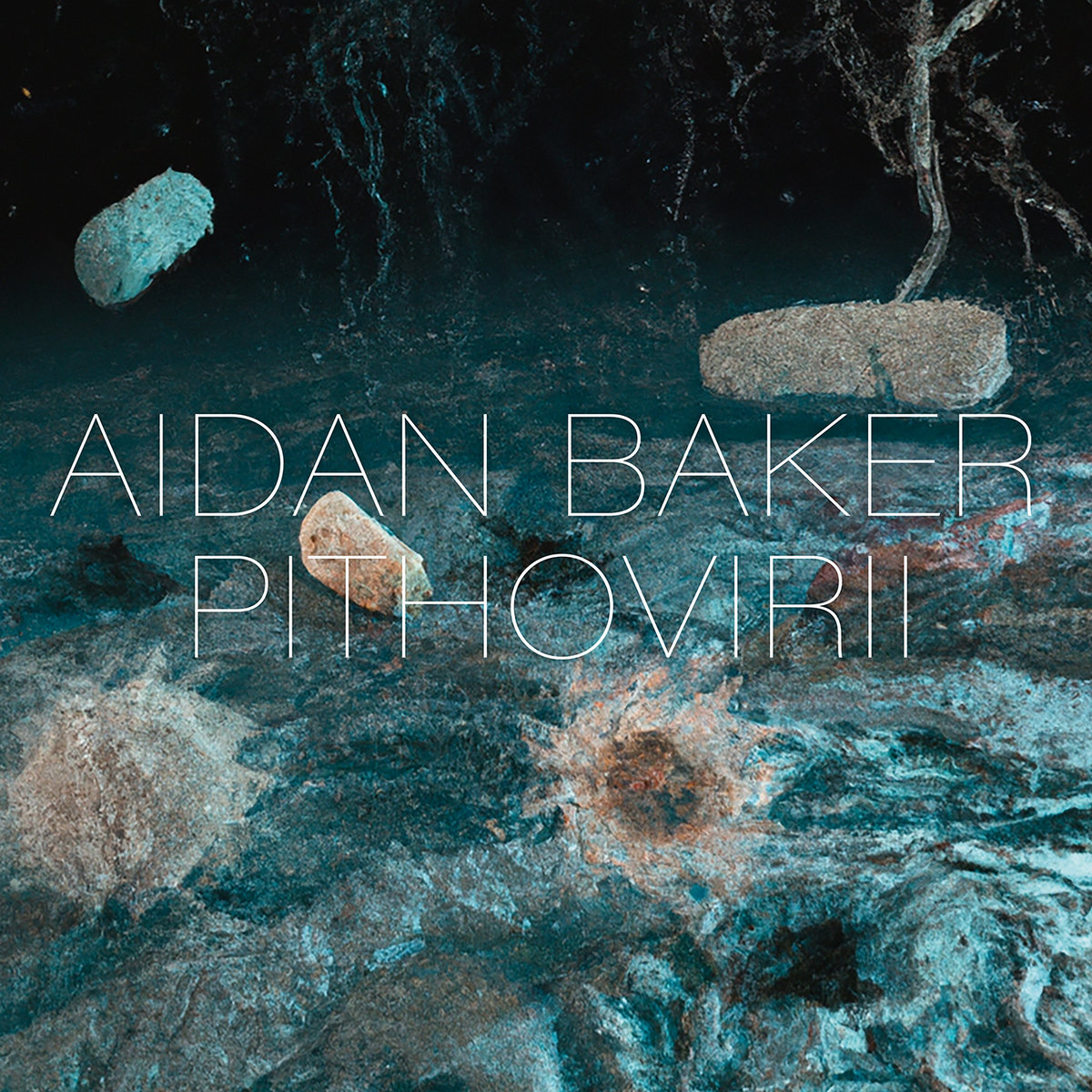
Pithovirii, the Canadian composer’s first release on the Glacial Movements label, takes its inspiration from Vladimir Sorokin’s novel Ice Trilogy. This led Baker down a rabbit hole, reading about the destructive Tunguska meteor that fell on Siberia in 1908, flattening an estimated 80 million trees, and then more reading about truly ancient viruses found in glacier ice – known as ‘pithovirii’.
Using his electric guitar with effects pedals, Baker has attempted a musical depiction to convey the idea of glacial density, and “stasis within which lurk potentially malevolent microbiome”.
What’s the music like?
Baker certainly catches the almost complete stasis of a glacier in the two long-form tracks that make up Pithovirii. There is an ominous feel to Sibericum, a kind of omnipresent threat that hovers over the music. As it slowly evolves the dark colours of Baker’s vision come in to view, dense clouds of sound working in slow-moving waves that wash over the listener. This is certainly musical ambience, and is meditative to a degree, but it is also quite oppressive in the way it takes over the sonic spectrum, working as a very gradual crescendo.
Massiliensis is named after a mysterious form of bacteria that appears to still be under exploration. The light ‘hiss’ that Baker has around the edge of the sound is both ambient and disarming, as a long unison note makes itself known, slightly metallic in texture – and the hiss becomes a thick, woolly drone of sound. As the track unfolds the sonics combine to make the audio equivalent of hearing a massive church organ from the far end of the building, sustaining a long note whose overtones work in and out of consciousness – and gradually change and even modulate over time, taking over most of the aural spectrum. The thick outer coating to the music remains, fed through Baker’s electronic prism.
Does it all work?
It does, with a couple of caveats. The obvious criticism to level at Baker’s work would be that there is not a lot going on – but that is the whole point. To fully experience and appreciate these big blocks of sound the listener needs to be somewhere quiet, with all frequencies available.
Is it recommended?
Yes. Baker is a natural fit for Glacial Movements (in title alone!) but he has written two extremely evocative pieces here. Together they make a whole that somehow captures the state of the remote ice regions of our planet in this day and age.
Listen & Buy
Pithovirii is released tomorrow, Friday 8 March – at which point you will be able to hear it in full here:
A shadow hangs over the release of this compilation, the second in Compost’s exploration of Kraut. It was compiled by Fred und Luna, the muses of musician, author and photo/film maker Rainer Buchmüller – who calls his music either Elektrokraut or Krautelektro.
Very sadly Buchmüller passed away on February 8th 2024, and Compost issued this tribute: “We are deeply saddened that we lost a very close friend, a true creative musician, artist, poet, soulmate and beloved human being with a great sense of humour. Rainer Buchmüller aka Fred und Luna died after a long carcinosis. Our thoughts and prayers in these days of mourning are with his wife and family. Rainer Buchmüller aka Fred und Luna has made several albums, first one on Frank Wiedemann’s Bigamo label, then three albums plus several Maxi – Singles and 7 inches on Compost Records and Elaste Records. Rainer had several alter egos, too. Under his Fred und Luna moniker he recently compiled the highly acclaimed “Future Sounds Of Kraut” compilation series for Compost. Rainer also wrote circa 120 poems in the vein of Ernst Jandl, Dada, Kurt Schwitters. Rainer, we love you! R.I.P.”
What’s the music like?
Buchmüller has left us an extremely enjoyable compilation, framed by his own Intro and Outro, and featuring the Kraftwerk-influenced electronica of Monotonikum from 2016 in the middle. The tone is friendly, the intro asking, “Future sounds of Kraut…what’s it all about?” before moving into Sankt Otten’s warm-hearted Angekommen In Der Letzten Reihe.
There are some notable contributions from Roman Flügel, whose Rules is a typically intricate mix of riffs and creative drum work, and Thomas Fehlmann, the spacey Permanent Touch. Other highlights include the glittery electro of Ghost Power’s Vertical Section, the colourful swirls of Gilgamesh Mata Hari Duo’s Johan, and the bossa beat that backs a brooding soundscape in I:Cube’s Basso. Lucas Croon’s Krautwickel has a really strong forward drive and shuffling drum track, a classic piece of Krautrock, while Sordid Sound System’s It’s About Time bounces around the stereo picture, a low-slung groove.
Does it all work?
Almost all – the only possible exception being Minami Deutsch’s Your Pulse, whose breathing can be off-putting and will likely divide opinion.
Is it recommended?
It is, enthusiastically. Future Sounds of Kraut Vol.2 is packed with good music, and its release is the best possible way to honour Buchmüller in the sad news of his passing.







 Arcana.fm