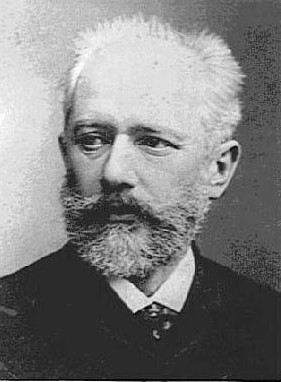
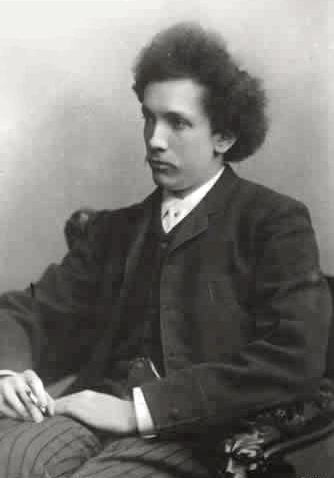
by Ben Hogwood. Image by Charles Reutlinger, used courtesy of Wikipedia
On this day 150 years ago, the first performance took place of Tchaikovsky’s Symphony no.3 in D major, his Op.29, took place with the Moscow Symphony Orchestra conducted by Nikolai Rubinstein. The work carries the unofficial nickname Polish, on account of the Polonaise composed for its fifth and final movement.
The Third is almost certainly the least performed of Tchaikovsky’s symphonies, yet it is increasingly winning a place in the hearts of the composer’s fans. Listen below and you will see why, for the piece has an abundance of melodic charm and character:
Published post no.2,724 – Wednesday 19 November 2025
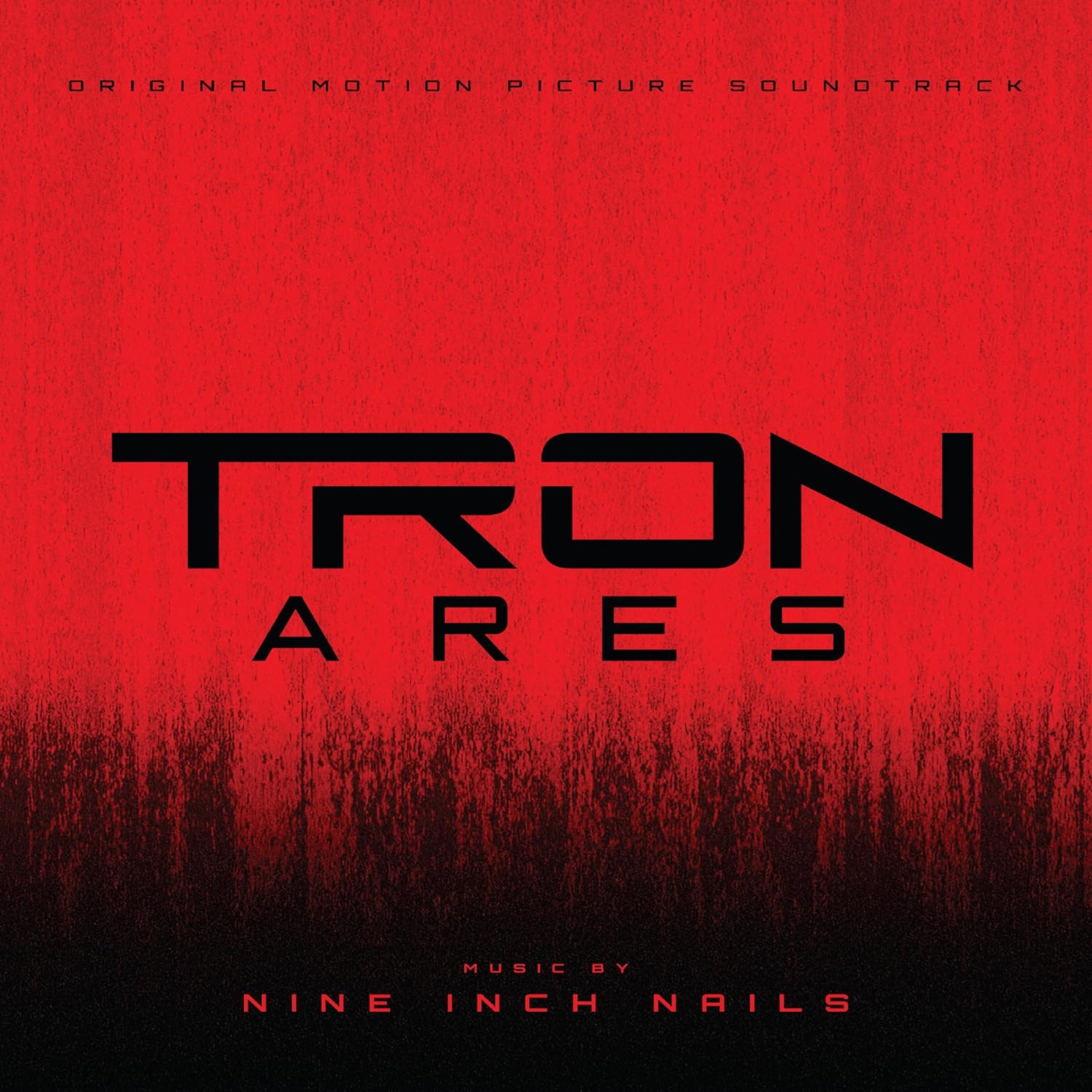
Anyone interested in the history of electronic music will know that being asked to score a TRON film is a rare badge of honour.
The previous two iterations in the series have been blessed with distinctive and influential series, from the Wendy Carlos original in 1982 or the Daft Punk soundtrack for 2010’s TRON: Legacy. The importance of the commission is shown in the fact that Trent Reznor and Atticus Ross have switched from their own ‘proper name’ branding to assume the familiar mantle of Nine Inch Nails, meaning TRON: Ares takes on extra significance.
As well as involving Reznor and Ross, Boys Noize and Hudson Mohawke add support as part of a high calibre production cast.
What’s the music like?
Both dated and futuristic, the TRON: Ares score is respectful to the past films in the series as well as being appropriately forward in its aims. The brooding synths throb and pulse in claustrophobic fashion, setting scenes of futuristic dread or an uneasy, present day calm.
At times it feels as though Nine Inch Nails are bringing forward the late 1990s’ penchant for dance-rock, with songs that Crystal Method or even Moby in his brief metal phase might have considered.
And yet the work through this substantial album tends to be more subtle, moving from ambient reflections of near emptiness (Echoes) to juggernauts with rousing choruses (As Alive As You Need Me To Be). On the way we get nods to the graceful synthesizers of Carlos in the original; also the dramatic, pumped-up orchestrations that Daft Punk used to such good effect in Legacy.
Does it all work?
Largely. On occasion the vocal gestures are too obvious yet surely fit the characterisation in the film. Otherwise the score reaches all the parts on headphones.
Is it recommended?
Yes, with conviction. Trent Reznor and Atticus Ross are seasoned film scorers, but don’t fall into the trap of recycling their ideas. TRON: Ares sounds every bit as futuristic as you would like, and its often-euphoric workings carry conviction in their full-bodied beats and bass. Even if you don’t see the film, make sure you hear the soundtrack.
published by Ben Hogwood from the original press release
This winter, the City of Birmingham Symphony Orchestra will illuminate Birmingham’s Symphony Hall with Bringing the Light – a remarkable celebration of music, culture and community, featuring three brand-new pieces by Roxanna Panufnik, Joan Armatrading and Cassie Kinoshi alongside A.R. Rahman’s Slumdog Millionaire Suite arranged by Matt Dunkley.
Taking place on Sunday 7 December at 5pm, this uplifting afternoon of music and storytelling harnesses the full strength of the CBSO, the CBSO Chorus, CBSO Youth and Children’s Choruses, alongside presenter Satnam Rana, conductor Michael Seal and sitar soloist Akash Parekar. The programme blends orchestral and choral brilliance, contemporary composition and global influences, promising an unforgettable celebration of togetherness and creativity.
Emma Stenning, Chief Executive of the CBSOsaid: “This concert shines a light on Birmingham’s extraordinary diversity and creativity. ‘Bringing the Light’ will fill Symphony Hall with music that uplifts, connects and inspires – a true celebration of what makes this city so special. After a year that has been characterised by so much division and polarisation, this concert will do a great deal to remind us of what we as people all have in common – and the power of music as a force to unite us all.
“At the CBSO, we’re passionate about creating experiences that feel both rooted in our home city and open to the world. This concert brings together voices from different traditions, faiths and generations to reflect the vibrancy of Birmingham today.”
At the heart of the concert isAurora a new work by composer Roxanna Panufnik and writer and librettist Jessica Duchen, co-commissioned by the CBSO, Royal Choral Society and the Arktisk Filharmoni. It is a powerful piece that explores the power of light as a universal symbol of hope, connection and unity – drawing inspiration from festivals of light from around the world. Developed in close collaboration with 14 UK faith leaders and devotional musicians, the text of each movement represents a different faith: Christian Christmas; Muslim Milad un Nabi; Sikh, Jain and Hindu Diwali; Jewish Hanukkah; Tibetan Buddhist Gaden Ngamchoe and ending with a beautiful, musical depiction of the Aurora Borealis for those of all faiths and none.
Roxanna Panufnik said: “When we hear about different faiths in the media it’s too often about conflict between them and very rarely about their respective beauty and the common themes we all share. We have planned this work over the past 10 years, and it has been hugely inspirational collaborating with our phenomenal consultants: 14 UK Faith leaders and their respective devotional musicians. The CBSO is perfectly placed, in a city with a fabulous and dynamic diversity of cultures and faiths, to premiere this work. Our 270 singers will be of multiple ages and faiths – so will, we hope, our audience. This is a piece for EVERYONE.”
Jessica Duchen adds: “The overarching image of Aurora: Faith in Harmony is the Northern Lights, a miracle of nature that can inspire the kind of awe in us all that some people find in faith. Embracing the secular community alongside a range of world faiths that have festivals of light in the depths of winter, the piece celebrates the virtually universal human longing for light in darkness, which we hope can help to bring people of all cultures together. It has been an incredible journey for us both – and Roxanna has excelled herself in writing music of extraordinary beauty.”
The performance opens with a world premiere of Homeland by singer-songwriter Joan Armatrading CBE– which she describes as her “love letter” to Birmingham.
Joan Armatrading comments: “Homeland is a piece that highlights the city of Birmingham and its people, reflecting their strong sense of community, resilience and warmth. It is a tribute to a place to which I am bonded, and one I will always hold with affection and pride. Through both words and music, the piece weaves together the sounds, energy, and rhythms of the city while reaching out into its vast surrounding countryside. This is Birmingham not simply as a backdrop, but as a living, breathing presence – an often-underrated landscape where industry and nature exist side by side in quiet beauty.”
The concert also includes a new commission by Mercury Prize-nominated and Ivors Academy Award-winning composer and saxophonist Cassie Kinoshi with lyrics by poet Lydia Luke.
Cassie Kinoshi said: “I was in the state of mind to stay centres on how nature grounds and steadies us within the constant movement of city life. It captures the ways young people find calm and connection in fleeting everyday moments; rain against a bus window; flowers at a market stall; or the scent of trees through an open window; and celebrates the beauty of finding stillness amid the noise. Created with input from the Southwark Playhouse Youth Company, the piece offers a portrait of the city through young people’s eyes: a place where nature and metropolitan life coexist. It is about recognising how these small, tender moments can bring comfort, belonging, and a sense of balance in an increasingly hectic world. Rather than portraying nature as something distant or idealised, the piece treats it as part of daily life: a source of connection to oneself, and a reminder that even in the most built-up places, the natural world remains ever-present.”
The CBSO acknowledges the generous gift from Frances and Barry Kirkham, whose support helped make Aurora and i was in the state of mind to stay possible.
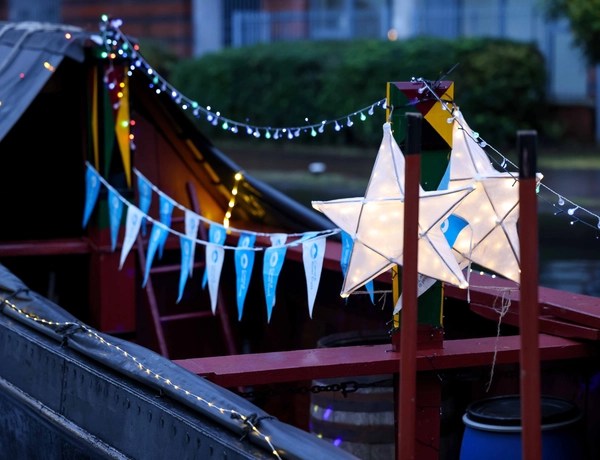
Leading up to the performance, there will be lantern-making workshops in partnership with the Canal and River Trust and Crafting Community. As well as a beautiful lantern walk along Birmingham’s canals, accompanied by narrowboats decorated by light artist Sophie Handy and featuring local musicians, which begins at Roundhouse Birmingham and ends at the ICC with a performance by the CBSO’s community choir SO Vocal.
Audiences are warmly invited to this vibrant celebration of culture and light which unites communities from across the city and beyond to share a moment of joy, hope and reflection.
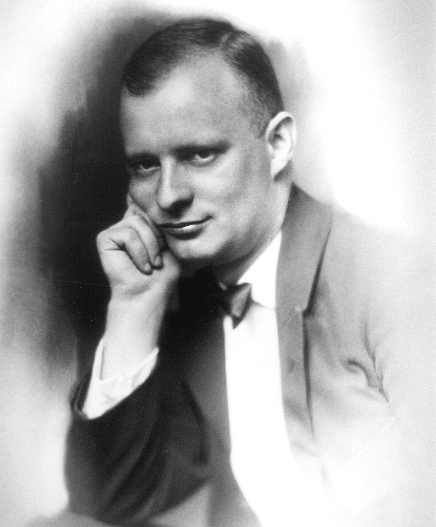
published by Ben Hogwood. Photo of Hindemith in 1923 courtesy of the Hindemith-Institut als Rechteinhaber / Wikipedia
Two days ago we marked 90 years since the world premiere of Paul Hindemith‘s three-movement concerto for viola and orchestra, Der Schwanendreher (The Swan Turner). Now Arcana mark 130 years to the day since the birth of the composer himself. Back in 2013 I penned an appreciation of his music for the blog I was running – and would like to recycle it here:
“Hindemith’s absence from the concert hall is frequently baffling, because only a small proportion of his works fulfil the dull, academic caricature that insists on following him around. It is true that there are some pieces that are dry and more difficult to get on with, but doesn’t every composer have their weaker moments? For each of those there is one that sparkles with wit, invention and originality.
With this in mind, I wanted to share why Hindemith is one of my favourite composers, to explore on the surface some new recordings and to suggest some works it would be good to know better.
Hindemith’s orchestral output, for starters, is full of colourful scores. The most played of these tend to be the symphony constructed from his opera Mathis der Maler, the ballet Nobilissima Visione, the Symphonic Metamorphoses on themes of Weber and the Konzertmusik for strings and brass.
Three of these can be heard together on a fine disc from the BBC Scottish Symphony Orchestra and Martyn Brabbins, released on Hyperion. The strings and brass shine on the latter piece, whose bold writing really blows away the cobwebs. In Brabbins’ hands the Mathis der Maler Symphony is shown off as the masterpiece it is, with broad melodies that often have a softer centre, as well as powerful orchestral tuttis that have an enchanted air, thanks to Hindemith’s frequently inventive orchestration. Finally the Symphonic Metamorphoses on themes of Weber are great fun, energetic and witty.
Nobilissima Visione is my personal Hindemith choice. In the suite it has a March and Pastorale of silvery beauty, and a noble Passacaglia that builds to a powerful and blazing conclusion. This is quintessential Hindemith, with a theme that moves in directions often contrary to the listener’s expectations while somehow making complete sense.
By way of contrast I would recommend the Piano Concerto, The Four Temperaments, a theme and four variations for piano and strings that finds Hindemith at his most mischievous but also has revealing and intimate asides. It bursts with melodic content, and its combination of humour and poignancy would make it an ideal concert piece. While that is sadly not likely to happen soon there are a number of good recordings – one of which was recently released by ECM, with Anna Gourari and the Orchestra della Svizzera Italiana conducted by Markus Poschner
Hindemith wrote for such colourful characters as Benny Goodman and Dennis Brain. His Concerto for clarinet and orchestra is a charming piece with a beautifully written solo part, while the Horn Concerto, a challenging work technically, is also extremely rewarding.
Hindemith wrote a lot of music, which is possibly part of the problem in getting it recognised though he showed what an extraordinarily resourceful composer he was by writing sonatas for tuba, trombone and cor anglais among others. My first encounter with him was through three short but surprisingly baleful pieces for cello and piano, the Three Easy Pieces – the first of which was a Grade 3 piece.
Finally another aspect of Hindemith’s output that should be noted is his vocal music, and there is an excellent disc from the Hänssler label of his Mass and Six Chansons. The Mass in particular is a substantial piece, difficult to sing but rewarding to listen to in a recording as open as this.
I would urge you, then, to discover the music of a composer whose greatness has often been lauded in the same breath as Stravinsky, Schoenberg and Bartók, but whose music no longer enjoys anything like their profile. I wager you won’t be disappointed!
by Ben Hogwood. Image unattributed, used courtesy of Wikipedia
On this day in 1895, the first performance took place of a much-loved work by Richard Strauss. Till Eulenspiegels lustige Streiche (Till Eulenspiegel’s Merry Pranks) was published as the composer’s Op.28, and is a portrait of the German peasant.
Strauss’s melodic invention and canny orchestration make this piece a treat, with genuine wit and musical humour that works a treat when given a good performance. You can watch a live performance below, with the London Symphony Orchestra & François-Xavier Roth:
Published post no.2,719 – Saturday 14 November 2025

 Arcana.fm