I thought I would offer a quick, spoiler-free blog on the use of classical music in Netflix’s most-successful drama ever, Squid Game. The Korean morality tale has been a huge hit through the originality of its storylines, the quality of its acting, and the jaw-dropping directness of its violent game and fight scenes.
What has probably passed under the radar is its frequent use of classical music. To start with it is piped to the game players by as they try to rest / avoid death between the games, and as they prepare for another tension-laden stint in the games room. Soon it becomes front and centre of the action itself. There are three main pieces used:
HaydnTrumpet Concerto in E flat major, 3rd movement
This is heard in the first episode, when the players gain consciousness of the new setting they find themselves in:
TchaikovskyWaltz from Serenade for Strings in C major
This is doubtless meant to be a calming presence in the background while the players begin their formative friendships / relationships / grudges. It proves to be a deceptively graceful backdrop:
Johann Strauss IIOn The Beautiful Blue Danube
The clincher. This has been used in many a film of course, and even in The Simpsons (when Homer eats potato chips in space!) but here it takes on an unexpectedly sinister air. Occasionally it can be triumphant – towards the end of a game for instance – but its first appearance is the lasting one, from the terrifying first game, where the players realise just how high the stakes are going to be:
It is intriguing how the producers of Squid Game keep classical music in reserve for these moments, and use specially commissioned music from Jung Jae-il to describe scenes and events elsewhere in the drama. In doing this they create very different and effective backdrops that only add to the tension in a thoroughly gripping series!
Lyadov Two Choruses from the Final Scene of Schiller’s ‘Die Braut von Messina’, Op. 28 (1878) Glorification for Valdimir Stasov (1894) Slava, Op. 47 (1899) 10 Russian Folksongs (1899) Glorification for Vladimir Stasov (1899) Farewell Song of the Schoolgirls from the Empress Maria Institute, Op. 50 (1900) ‘Drip, Ek’ Fugato (1900) Glory to Nikolai Andreevich Rimsky-Korsakov (1901) Hymn to Anton Rubinstein, Op. 54 (1902) Five Russian Folksongs (1902) Chorus from Cantata in Memory of Mark Antokolsky (1902) Music to Maurice Maeterlinck’s ‘Soeur Béatrice’, Op. 60 (1906) 15 Russian Folksongs (1908) – Nos. 3, 9, 10 and 14 10 Settings from the Obikhod, Op. 61 (1909) – Nos. 7 and 10 The Hourly Prayer of St Joasaph Gorlenko (1910) Three Russian Folksongs (1912) Glory to Evgeniya Ivanovna Zbrueva (1913)
Academy of Russian Music Chamber Choir / Ivan Nikiforchin
Toccata Classics TOCC0614 [66’46”] Russian (Cyrilic) texts and English translations / summaries
Producer / Engineer Ilya Dontsov
Recorded 5 November – 22 December 2020 at Concert Hall of Academy of Choral Arts, Moscow
Written by Richard Whitehouse
What’s the story?
Toccata Classics continues its intensive exploration of music’s (mainly) worthwhile byways with this anthology of choral music from Anatoly Lyadov (1855-1914), enticingly sung in a sympathetic ambience – with all but two of the 39 pieces featured here being first recordings.
What’s the music like?
The irony that Lyadov is today most remembered for what he did not compose (the score of Diaghilev’s ballet The Firebird, for which he might not actually have been commissioned in any case) should not detract from the sizable corpus of piano music or limited but even more distinctive output of orchestral pieces which duly confirm a miniaturist of rare fastidiousness. Such quality is hardly less apparent in his acapella choral music, most of it featured here and which falls into three distinct categories such as are helpfully presented in generic sequence.
The first three tracks represent Lyadov’s ‘Original Religious Chants’ and find the composer enriching a genre that, almost by definition, went essentially unaltered over the two centuries from Bortnyansky to Gretchaninov. If his contributions lack the expressive fervour that later exponents – notably Rachmaninov – attained, the clarity of his writing and suppleness of his phrasing evince no little mastery and make these pieces as grateful to sing as they are to hear. Sung in English, they would hardly seem out of place within the context of domestic services.
The next 22 tracks survey most of Lyadov’s ‘Arrangements of Russian Folksongs’ which fall into two main categories – choral songs that are mainly slow and introspective, with spiritual or lamentational connotations; and choral dances as are mainly swift and demonstrative, with earthly or celebratory overtones. Again, later composers – notably Stravinsky in this instance – found a new level of harmonic astringency and rhythmic flexibility in such music, which is not to deny those qualities of pathos and charm this composer draws from his arrangements.
The closing 14 tracks comprise Lyadov’s ‘Complete Original Choral Works’ which prove a motley assortment – from choruses for theatrical productions, via homages to distinguished musical personages with a commemorative (not always memorial) function, to pieces of an occasional nature. Those the composer published indicate what he felt worth disseminating, with Op. 50 belying its rather cumbersome title for music whose wistful eloquence amounts to just under four minutes of understated bliss and the undoubted highlight of this collection.
Does it all work?
Yes, in that Lyadov clearly had an innate understanding of what was required when writing for unaccompanied voices. Those who are looking for emotional expansiveness or rhythmic invention will be disappointed, though such an approach was as far removed from Lyadov’s thinking within the choral medium as in those pieces for orchestra or piano. Rather, he opts for an intimacy and poise such as are effortlessly conveyed in these stylish renderings by the Academy of Russian Music Chamber Choir under the assured direction of Ivan Nikiforchin.
Is it recommended?
Indeed. The clear if atmospheric acoustic provides an ideal ambience for these performances, with insightful notes by Igor Prokhorov who also provides English summaries for each of the folksongs. Those already familiar with Lyadov’s orchestral and piano music need not hesitate.
Listen
Buy
You can discover more about this release at the Toccata Classics website, where you can also purchase the recording.
Today marks 150 years since the birth of the Russian composer Alexander Scriabin, one of the most colourful characters in 20th century music – and one of the most original thinkers too.
A lot of that thinking went beyond his music to embrace the universe itself, culminating in the unfinished Mysterium project. This hugely ambitious concept was to be performed in the Himalayas and followed by the end of the world.
That gives an indication of the scope of the composer’s thinking, and you can trace that in his music too, which moves from Chopin-influenced piano works to increasingly complex and dense music, notable for its rich harmony and unusual rhythms. As Scriabin’s music progressed so did his fascination with colour and in particular synaesthesia, which became a primary stimulation for him in his writing.
Arcana intends to look at his work in more detail this year, particularly the ten piano sonatas which stand as a fascinating and innovative cycle of work. For now, though, you can enjoy Prometheus: The Poem Of Fire. Depending on your viewpoint, this tone poem, set in the composer’s favourite key of F sharp major, could be Scriabin’s Symphony no.5, or a second piano concerto. Either way it is an exotic, unbroken piece of music lasting nearly 25 minutes, rich in colour and certainly rewarding repeated listening!
In February 2010 Anna Gawboy, a Scriabin scholar and doctoral candidate at the Yale School of Music, attempted to realize the composer’s ultimate wish of a colour keyboard which would perform the work. She worked towards this with conductor Toshiyuki Shimada, the Yale Symphony Orchestra and the lighting designer Justin Townsend.
You can watch the lead-up to the concert and the performance itself on the documentary below:
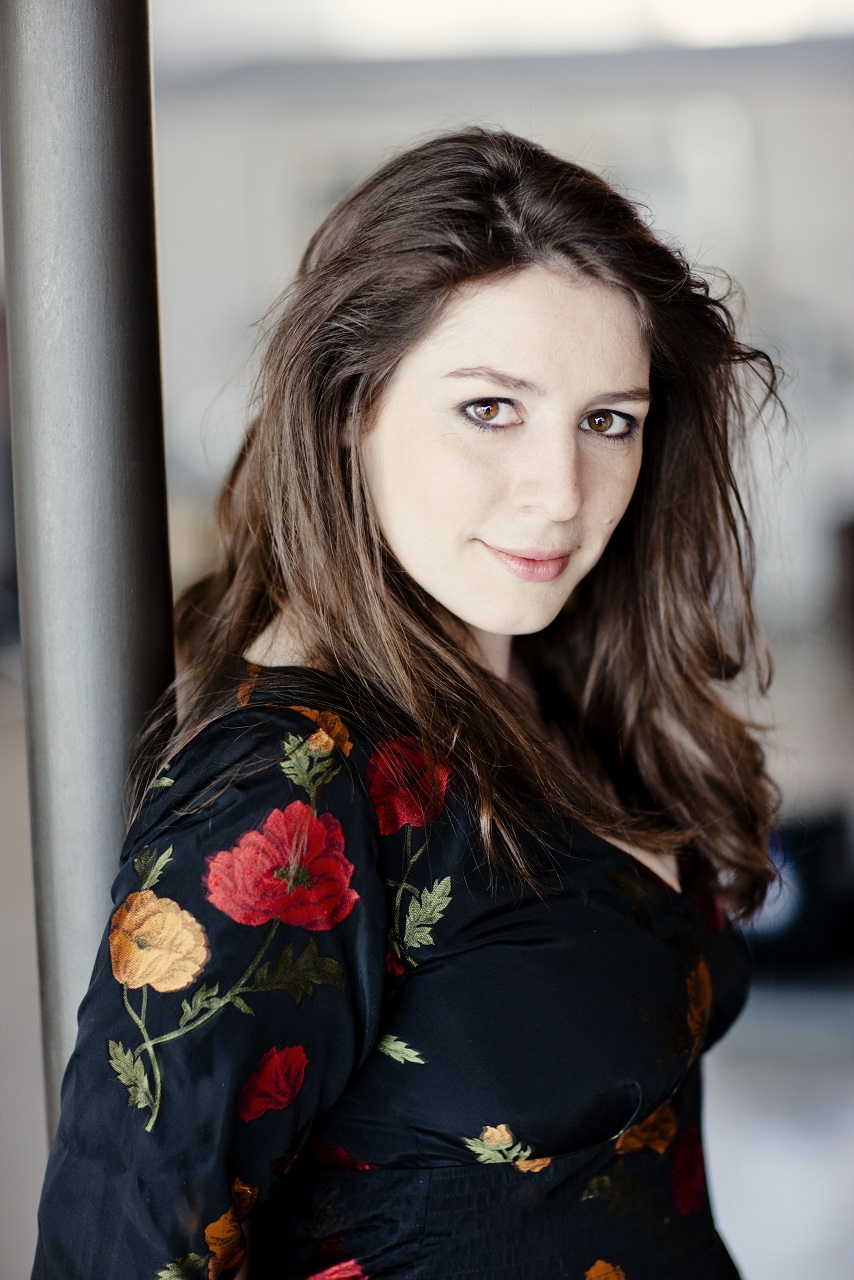
Elizabeth Watts (soprano, above), Julius Drake (piano, below)
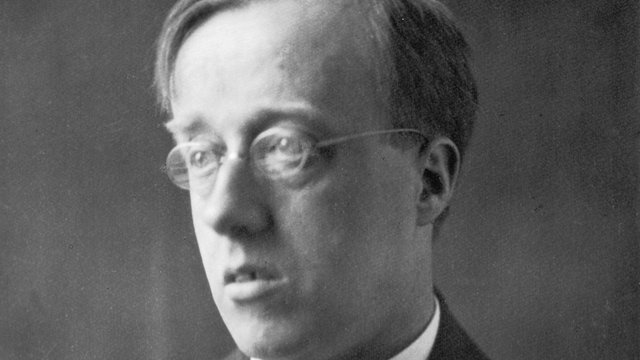
Gustav Holst Calm is the morn Op. 16 No. 1 (1903-4), Persephone Op. 48 No. 1, Betelgeuse Op. 48 No. 12 (1929), The heart worships (1907), The Floral Bandit Op. 48 No. 6 (1929) Imogen Holst Weathers (1926), 4 Songs from Tottel’s Miscellany: Shall I thus ever long, As lawrell leaves (1944), 10 Appalachian Folk Songs: My dearest dear, The brisk young lover, I must and I will get married (1938, world première performances) Gustav Holst Hymns from the Rig Veda Op. 24 (1907-08)
Wigmore Hall, London, 3 January 2022
reviewed by Ben Hogwood from the online broadcast. Artist photos (c) Marco Borggreve
The songs of Gustav Holst have largely eluded British performers and concert audiences over the years, and a quick scan over retail sites reveals just the one recording in the last decade. The songs of Imogen Holst, meanwhile, are even more scarce, so it was doubly welcome that this imaginative recital from soprano Elizabeth Watts and pianist Julius Drake chose to pair works by father and daughter.
Holst senior was a composer capable of finding unusual stillness in music, as the Venus and Neptune movements from his orchestral suite The Planets testify. That talent extended to his songs, and we heard several examples where the composer took his time to set the scene, helped in extremely sympathetic performances from Watts and Drake.
Calm is the morn, a Tennyson setting, found a deep peace tinged with sorrow, though the high notes floated effortlessly by Watts were rather special. These contrasted vividly with the stately Betelgeuse, low in the range while contemplating the end of life – just as Neptune explored the boundaries of the living and the dead at the edge of the solar system. In theory Betelgeuse, with text by Holst’s good friend, the poet Humbert Wolfe, should be more effective with a male voice but Watts found the mysterious depths too. Drake’s tolling chords were the ideal foil, and indeed the pianist proved sensitive to every slight nuance in his scene setting, particularly the slow chorale figure of The heart worships. This was another setting that took its time but was all the more moving for it, with the soprano’s low range well controlled. The Floral Bandit, another Wolfe setting, flitted between quick piano figurations and a restless, high contour from the voice, deliberately uncertain in its direction. Meanwhile Watts’ fretful tones caught the urgency given to Persephone.
Holst was always a keen melodist, a quality that runs through Imogen’s music too. As her father did, she had a keen interest in folk melodies both from this country and further afield, and it was fascinating to compare Watts and Drake’s Anglo-American selection, sourced with help from the Benjamin Britten archive at the Red House, with the songs digitised for performance here.
Imogen’s writing celebrated the open air, its melodies often reaching for the sky. The first song Weathers revelled in its freedom, with a lovely pointed piano part to offset the folksy tune. Drake then enjoyed the trippy syncopations from the piano, combining with a bright soprano line for Shall I thus ever long, Watts keeping clarity in the quick moving words. The slightly elusive As lawrell leaves was next, before the three Appalachian folk settings, collected by Cecil Sharp, exhibited a powerful yearning quality. My Dearest dear kept the folk melody true but turned the melody beautifully. The brisk young lover could almost have been Gustav Holst himself, though Imogen’s piano parts felt more directly connected to the melody. There was an unexpectedly devastating beauty to the simple, sad, final verse, before I must and will get married took a lighter approach.
A rare performance of the complete set of Gustav Holst’s Hymns from the Rig Veda followed. It is remarkable to think these works were published in 1908, for they still sound forward looking today, written as they were after the composer made his own translations of the sacred texts.
Holst’s advanced harmonic thinking was distilled by Drake, while Watts took the longer and more complex melodic phrasing in her stride. The accumulating brightness of Ushas (Dawn) gave way to a stern Varuna I (Sky), where confession of sin was made and ultimately quashed. The sudden movements of Maruts (Stormclouds) came as something of a shock, with the flashing of sword blades, before Indra (God Of Storm and Battle) assumed a regal air with grand chords and a bold melody, strong as an ox under Watts’ delivery. Really impressive power from both in this song. Varuna II explored mysterious and ultimately deathly waters, the listener almost losing a harmonic centre, before Song of the Frogs charmed with its burbling activity. Vac (Speech) gave us another slow and concentrated song, while Creation was even more compelling with its haunting, mostly unaccompanied writing. Finally the wandering piano line for Faith found the soprano ‘rising in silent worship’.
This remarkable set of songs are not only harmonically adventurous but have words that are prescient for today’s climate and particularly the management of the Earth on which we live. Little did Holst know the way in which his work would be thought provoking nearly 115 years on. Watts recognised this, lending a lighter touch to her encore which was Imogen’s arrangement of Henry Carey‘s The Beau’s Lament, brightly sung.
This was a special concert, one of a kind – and a mention should be made for the quality of Wigmore Hall’s camera work, sensitive to both text and performers. Copyright restrictions may prevent them from doing so, but it would be wonderful to see Watts and Drake present this programme in recorded form, for they illuminated aspects of the Holst dynasty rarely glimpsed in the concert hall. Do watch it if you can.
Watch and listen
Sadly the Imogen Holst songs are not yet available in recorded form, but you can the selection from her father Gustav on the Spotify playlist below:
Various works (see DG link below for full repertoire details)
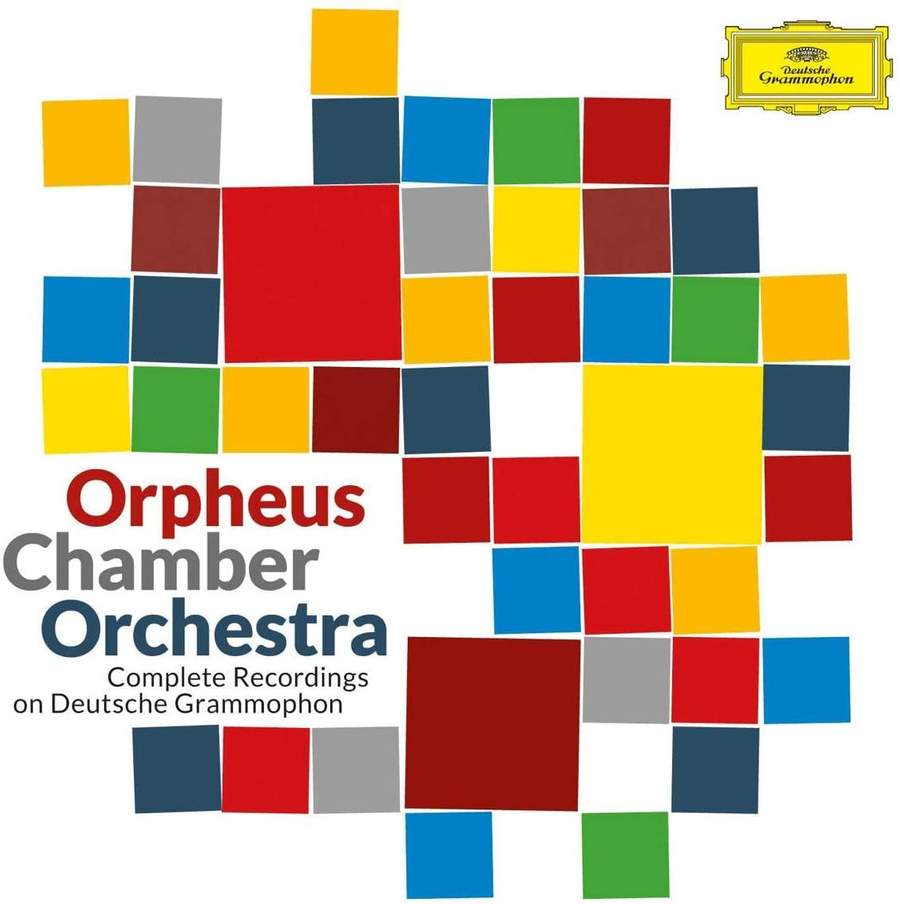
Deutsche Grammophon 4839948 (55 CDs)
Written by Ben Hogwood
What’s the story?
This box set tells the story of the Orpheus Chamber Orchestra – soon to celebrate their 50th anniversary – and the recordings they have made to date for Deutsche Grammophon. Formed in 1972, the conductor-less ensemble from New York have amassed an impressive body of work, spanning repertoire from Handel and Vivaldi to Schoenberg and William Bolcom, examined here across 55 CDs.
The group have enjoyed a fruitful relationship with DG, undertaking several projects. Among these are the Mozart wind concertos, with principals from the orchestra employed as soloists, and a clutch of hand-picked Haydn symphonies. Jed Distler’s booklet introduction, meanwhile, reveals a remarkable agreement which saw them commit the SchoenbergChamber Symphonies and Verklarte Nacht to disc in 1989, in return for a version of Vivaldi’s Four Seasons four years later.
Also included in this set is a previously unavailable account of Mendelssohn’s Italian Symphony, a live recording from Warsaw in 2018.
What’s the music like?
Orpheus Chamber Orchestra records are known for their crisp ensemble and energetic, engaging performances, but also for their poise. While their approach to Baroque music might not appeal to historical purists, nobody can deny the enthusiasm they bring to the Handel Concerti Grossi Op.6, nor their vibrant collection of Vivaldi Cello Concertos with regular collaborator Mischa Maisky, or the Flute Concertos with Patrick Gallois.
Their Mozart is particularly enjoyable, the wind concertos blossoming under the ‘home’ soloists, who have the advantage of an immediate musical rapport with their accompanists. The Sinfonia Concertante, with soloists Todd Phillips (violin) and Maureen Gallagher (viola), is especially good, while horn players William Purvis and David Jolley, clarinettist Charles Neidich, flautist Susan Palma-Nidel, oboist Randall Wolfgang and bassoonist Frank Morelli also excel. The Flute and Harp Concerto, with harpist Nancy Allen, is sublime, while a generous selection of the wind Serenades and string Divertimenti are delightful.
The Haydn symphonies fare particularly well, too, and often have an irresistible zest. The account of the Symphony no.80 in D minor is notable in this respect, but there is restraint and darker feeling in the Symphony no.49 in F minor, ‘La Passione’, its introduction taken at a daringly slow tempo. Meanwhile the disc of Rossini overtures still defies gravity in the absence of a conductor, a remarkable achievement!
The inclusion of Mendelssohn’s Italian symphony boosts an already excellent account of the two piano concertos, with Jan Lisiecki. It is fresh faced and buoyant in the outer movements, with a balletic poise for the inner two. Meanwhile their account of Beethoven’s The Creatures of Prometheus has plenty of spring in its step, as does a wonderful disc devoted to music for strings by Grieg and Tchaikovksy. The DvořákSerenades, too, fare particularly well, and there are two thoroughly engaging discs devoted to the music of Copland and Ives.
Best of all are the orchestra’s Stravinsky and Schoenberg recordings. The Stravinsky selection has excellent accounts of the ballets Pulcinella (the suite) and Orpheus, but equally valuable are the shorter pieces, where the composer’s gruff humour is caught to rhythmic perfection. The performance of Dumbarton Oaks could hardly be bettered. The Schoenberg has some eye-watering virtuosity in the Chamber Symphony no.1, an ideal way in for doubters of the composer – as is a translucent Chamber Symphony no.2 and a velvet-textured Verklarte Nacht.
Finally a mention for the orchestra’s Respighi, a colourful and moving trio of pieces comprising The Birds, a selection of the Ancient Airs and Dances and a particularly vivid account of the Trittico Botticelliano, showing off the composer’s colourful orchestration but also his deeply felt treatment of long-treasured melodies.
Does it all work?
Largely. One could argue that the disc of French orchestral music is a touch too glossy, or that the recordings of Bartók, Kodály and Suk do not quite have the authority a central European ensemble might bring to them. Even with those reservations, however, they are so well played that there is so much to enjoy, the slow movement of the Bartók Divertimento a particularly chilly example.
Is it recommended?
Unreservedly. This is a superb collection from an orchestra who are essentially a single instrument themselves, so together are their interpretations and their virtuosity. Their recording legacy for DG is unlike any other, and it is to be hoped it will blossom still further over – who knows? – maybe the next 50 years. This is a remarkably solid platform on which to build.
Listen and Buy
You can listen to clips and purchase this disc from the Presto website.
Reading
You can read Arcana’s interview with Orpheus Chamber Orchestra violist Dov Scheindlinhere, and listen to a playlist picking out Ben Hogwood’s personal favourites here.