Let’s Dance – Defected presents House Masters: Todd Edwards (Defected)

house_masters_todd_edwards_4000x4000

Various ArtistsDefected presents House Masters: Todd Edwards (Defected)

reviewed by Ben Hogwood

What’s the story?

The time is ripe for a Todd Edwards retrospective. The much-loved producer, credited as one of the founding fathers of late-90s garage, UK style, has always had a distinctive way of working his beats. With clipped percussion, cleverly-used samples, good humour and a large dose of soul, he has been a go-to man for remix and production for nigh on 30 years. Daft Punk have credited his influence, and worked with him on two albums, while a whole host of chart bothering artists, among them Moloko, Robin S, Wildchild and Wretch 32, have gone his way for a remix.

Recently Defected have taken Edwards under their wing, restoring hundreds of previously unavailable productions to the catalogue, and this double album provides a useful retrospective and a reminder of what might be in store for the collector.

What’s the music like?

Brilliant. You don’t get to be dance music royalty without making good music – and there’s no doubt Edwards makes great music for good times. His fluid grooves are sliced and diced, the clipped percussion sounds putting a skip in each beat.  The approach is largely soulful, and on grooves like God Will Be There and the landmark Edwards production Saved My Life, more than a bit spiritual.

Defected have divided the collection in two, with a set of full length original productions complemented by some excellent examples from the remix collection.  The original productions are equally represented by past and present, with You’re Sorry one of his best recent songs, and the Sinden collaboration Deeper working really well on the vocal front. All I Need is more percussive, while Dancing For Heaven is a buoyant treat and Fly Away is super cool. The Daft Punk association is well represented, with the charmer Face To Face bringing out the best in both sides, and Fragments Of Time, from the Random Access Memories album, a great track for top-down driving.

There is a smoother version of St Germain’s Alabama Blues, with a warm guitar and organ but not quite the heat soaked charm of the earlier version. Indo’s R U Sleeping fares really well, as does Moloko’s Pure Pleasure Seeker – while Zoot Woman’s Taken It All gets a shiny remix.

Does it all work?

Yes. Edwards has an effortlessly cool style and it runs throughout this collection, moving between house and garage with great ease. He always gives the vocal plenty of room, but still packs the production with all kinds of riffs, beats and soundbites, keeping the dancefloor moving at all times.

Is it recommended?

It is – but be warned, listening to this might take you down a Todd Edwards rabbit hole. With so many productions remastered and now available through Defected, it would be churlish to stop here!

Stream

Buy

You can buy David Penn’s House Masters compilation from the Defected website here
Switched On: Stone Giants: West Coast Love Stories (Nomark)

stone-giants

reviewed by Ben Hogwood

What’s the story?

Stone Giants is a new alias for Amon Tobin, the prolific Brazilian producer. It represents a new and slightly surprising side to his musical personality, exploring the connection between his own voice and his electronic music.

In his own words, West Coast Love Stories is ‘the weathered account of a fair run with romantic experiences. Things I wouldn’t trade for any number of more sober affairs’.

What’s the music like?

Deeply felt and pleasingly elusive. There are a number of influences at play here, including shoegaze and post rock, together with his own long standing ability to paint a scene with just a few notes.

Tobin’s voice doesn’t tend to go beyond a murmur but he still uses it expressively. With the descriptive Stinson Beach he combines woozy vocals with a slightly wavering pitch on the electronics to good effect, creating an air of mystery. The multilayered vocal and shimmering textures of the title track work really well, while the musical language of Best Be Sure, with dreamy vocals from Figueroa, has a hint of the African desert about its principal riff.

Tobin brings elegance to A Year To The Day, whose riff spins a web of intrigue. The Girl With The Great Ideas (That I Steal) has a similarly enchanting air, with some clever play on perspective and panning.

Does it all work?

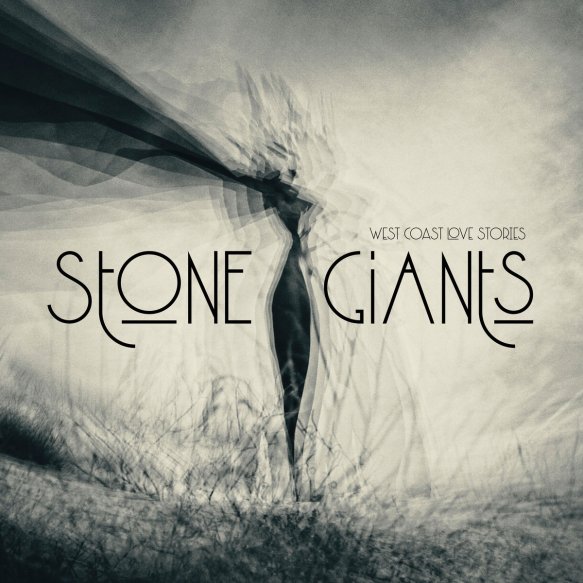
Yes – Tobin sets the fuzzy scene early on and it permeates the like a heat haze. The unfocused elements of his work put the album in a dreamlike state, and the lack of bass keeps it floating in mid air. A word, too, for the cover photography by Jr Korpa – as good a match of music and image as you could wish to see.

Is it recommended?

Yes. Stone Giants is another string to Amon Tobin’s already impressive bow, revealing another side of his personality – and the romantic, lovelorn side suits him.

Stream

Buy

Listening to Beethoven #171 – String Quintet in C major Op.29

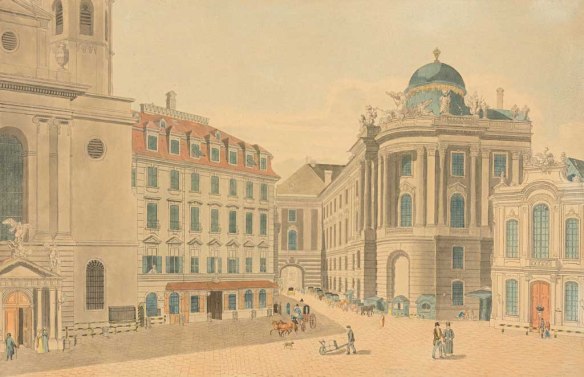
Carl_Schütz_Wien_Michaelerplatz

Der Michaelerplatz, die Kirche, die KK Reitschule und das KK National Theater, Wien, by Carl Schütz (late 18th century)

String Quintet in C major Op.29 (1801, Beethoven aged 30)

Dedication Count Moritz Fries
Duration 33′

1. Allegro moderato
2. Adagio molto espressivo
3. Scherzo: Allegro – Trio
4. Presto – Andante con moto e scherzoso – Tempo I

Listen

written by Ben Hogwood

Background and Critical Reception

Beethoven’s only original String Quintet was commissioned by Count Moritz Fries, and was completed towards the end of 1801. It gained immediate respect, with brother Carl describing it as ‘one of Beethoven’s most excellent’, placing it above the other works he was promoting, the Second Symphony and Third Piano Concerto.

Richard Wigmore is similarly convinced, declaring the quintet to be ‘the final phase of his so-called ‘first period’. This strangely neglected masterpiece is Janus-headed, at once retrospective and prophetic’. Special praise is reserved for the second movement, where Beethoven ‘never wrote a more voluptuously Mozartian slow movement than the Adagio molto espressivo. On the other hand, the tranquil expansiveness and harmonic breadth of the quintet’s first movement prefigure later masterpieces like the first Razumovsky string quartet and the Archduke trio.’

Jan Swafford also holds the quintet in high regard, describing it as ‘a warmly songful work that for all its lightness of spirit has a singular voice and some startling experiments – it amounts to a covertly radical outing’.

The finale has been nicknamed ‘The Storm’ in German speaking countries, due to its ‘tremolo shiver plus falling swoops in the violins’. ‘Twice in the course of the finale’, says Swafford, ‘a new piece of music turns up like an unknown guest at a wedding: a jaunty minuettish tune marked ‘Andante con moto e scherzoso’, the last word indicating ‘jokingly’.’

Thoughts

The String Quintet is indeed a very impressive and mature piece, and as commentators have noted it bears very little resemblance to the works of Mozart for the same instrumental combination. There is a lot going on in the course of its 33 minutes, and the listener is continually engaged and often impressed by the speed of Beethoven’s thoughts.

The first movement unfolds very naturally, with a flowing melody that expands into a substantial structure. The second theme is shared around all the parts and works its way into a lot of the musical arguments.

The beautiful slow movement has a passionate heart, glimpsed especially towards the end with a fiery episode in the minor key. Indeed during his development of the main material Beethoven moves to some very distant tonal areas, the piece losing sight of its centre ground for a while as though having taken a wrong turn. The return to the main theme features pizzicato – increasingly a part of Beethoven’s writing – and some rich, quasi-orchestral textures.

After two lengthy, quite dense movements a quick Scherzo is just the ticket, and this one knows where it wants to go – but has time to show off some witty musical dialogue. The last movement does indeed have a stormy façade, showing how Beethoven is increasingly bringing drama into his chamber music. The tremolos assigned to the strings as part of the ‘storm sequence’ create a few chills, while Beethoven’s part writing is impeccably worked out – and the big surprise, where the minuet-like music appears, is brilliantly stage-managed.

Recordings used and Spotify links

Nash Ensemble [Marianne Thorsen, Malin Broman (violins), Lawrence Power, Philip Dukes (violas), Paul Watkins (cello)] (Hyperion)
Endellion String Quartet, David Adams (viola) (Warner Classics)
Fine Arts Quartet, Gil Sharon (viola) (Naxos)
Academy of St. Martin-in-the-Fields Chamber Ensemble [Kenneth Sillito, Malcolm Latchem (violins), Robert Smissen, Stephen Tees (violas), Stephen Orton (cello)] (Chandos, 1998)
Academy of St. Martin-in-the-Fields Chamber Ensemble [Kenneth Sillito, Malcolm Latchem (violins), Robert Smissen, Stephen Tees (violas), Stephen Orton (cello)] (Philips, 1991)
WDR Symphony Orchestra Cologne Chamber Players (Alpha)
Amadeus String Quartet, Cecil Aronowitz (Deutsche Grammophon)

There is a very impressive set of recordings of Beethoven’s String Quintet – and the listener cannot really go wrong with any of the above, from a classic and slightly luxurious Amadeus Quartet recording on Deutsche Grammophon to the most recent version, from the WDR Symphony Orchestra Cologne Chamber Players on Alpha, released in 2020.

Arguably the pick of the recordings comes from the Nash Ensemble, coupled with the Op.4 quintet.

The Nash Ensemble version on Hyperion can be heard here

You can chart the Arcana Beethoven playlist as it grows, with one recommended version of each piece we listen to. Catch up here!

Also written in 1801 Wranitzky 3 String Quintets Op.8

Next up tbc

Online concert review – Lars Vogt, Estonian Festival Orchestra / Paavo Järvi @ Pärnu Festival – Mozart & Tubin

paavo-jarvi

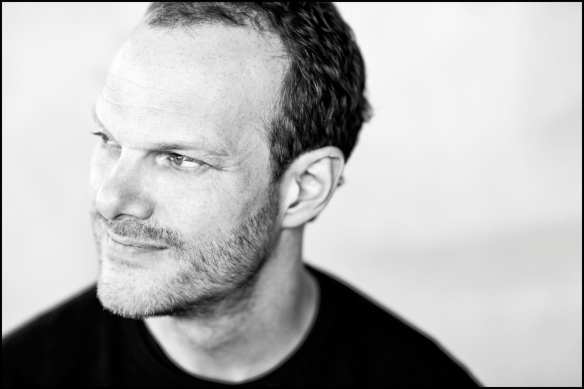
Lars Vogt (piano), Estonian Festival Orchestra / Paavo Järvi (above)

Mozart Piano Concerto no.24 in C minor K491 (1786)
Tubin Music for strings (1963); Suite from The Goblin (Kratt, 1961)

Pärnu Concert Hall, Estonia
Wednesday 14 July 2021, available online

Written by Ben Hogwood
Picture of Lars Vogt (c) Giorgia Bertazzi

This attractive concert was one of the calling cards for the Pärnu Festival, an annual event marking the end of its first decade in the Southern Estonia city. Its patron, conductor Paavo Järvi, was conducting his ‘home’ orchestra, the Estonian Festival Orchestra, inspired by Lucerne’s festival orchestra, in a nicely devised program of Mozart and the seldom-heard composer Eduard Tubin.

To begin with, Järvi and the orchestra were joined by pianist Lars Vogt in one of Mozart’s stormier utterances, the Piano Concerto no.24 in C minor. Vogt has been an inspiration in his career but particularly of late, documenting his battle with cancer in an admirably forthright fashion. Part of his therapy is to play music, to the extent of playing on an upright piano during his chemotherapy sessions, and also to take every chance offered to him to playing music live.

This only heightened the admiration and enjoyment for his performance here, as with heartfelt playing Vogt got right to the centre of this most dramatic of Mozart’s concertos. Järvi followed his lead and was helped by some very fine wind playing, particularly in the slow movement. The first movement had a great deal of Sturm und Drang, the angular contours of the main theme ideally phrased. Vogt’s solo episodes were impeccably delivered but always had an ear towards the orchestra, where the strings gave incisive commentary. The final Allegretto allowed a bit more room for playful exchange, and there was a wonderful shaft of sunlight as the music turned from minor to major key, sensitively engineered by the conductor. As a suitable ⁹encore, Vogt chose Brahms’ Intermezzo in A major Op.118/2, watched appreciatively from the sidelines by Järvi.

Lars-Portrait-3-©-Giorgia-Bertazzi

Eduard Tubin‘s Music for Strings was an intriguing choice just after the interval, representing a desire for the festival to showcase the music of Estonia itself. Tubin, who died in 1982, is still under-represented on the stage, but this was the ideal platform from which to appreciate it. Music for Strings is a slightly elusive but compelling piece, resilient and attractively scored. It brings an economical and slightly classical approach, but with forward looking harmonic language. When the bass strings dug in during the passacaglia first movement the furrowed brow of Shostakovich could be glimpsed, yet the upper reaches of the violins felt as though the music was reaching further north. The second movement was more mysterious and questioning, while the finale, an Adagio, featured excellent solo violin playing from the unnamed Estonian Festival Orchestra concertmaster.

The program finished with a suite from Tubin’s 1943 ballet Kratt (The Goblin). Composition for the whole work began in 1938, making use of melodies from the Estonian Folklore Archive in Tartu. Although the Russian occupation of Estonia in 1940 forbade modern music, Kratt passed the sensors on account of its use of traditional themes, and not the way in which they were treated – which has reminiscences of Stravinsky and Prokofiev. Tubin constructed the shorter suite in 1961, to a commission from the Royal Stockholm Philharmonic Orchestra.

The ballet is based around a peasant who builds a magical figure (Kratt) in order to make him rich – but to do this he has to give three drops of blood to the devil. Perhaps not surprisingly the story does not run smoothly, with the peasant – and his soul – meeting a grisly end at the hands of the goblin. Yet the side plot of a love affair on the farm where the peasant lives brings more light hearted material.

Tubin’s music is ideal concert fayre, tuneful and with lively orchestration. Järvi ensured the syncopations of the dance numbers were sharply rendered, bringing through Tubin’s imaginative writing for wind and brass in particular. The final dance scene was the most captivating, with a soulful cor anglais solo leading into the driven rhythms of the Dance of the Exorcists, featuring the added punch of the orchestral piano. The Goat and The Cock were sharply characterised, bringing reminders of Mussorgsky’s Pictures At An Exhibition, before snarling brass punctuating the outgoing Dance Of The Northern Lights, a more rustic affair. The brass themselves were completely on point, especially in the final statement, warmly received by the audience.

This was a most enjoyable concert, confirming the warm atmosphere in which this festival operates. It is clear Paavo Järvi and friends are building something special here, and it is to be hoped when restrictions are finally lifted that the chance will arise to experience it in person.

You can watch the concert on the festival’s dedicated TV channel here

Lars Vogt talks about his music making after his cancer diagnosis in February and his ongoing treatment with Kate Molleson on BBC Radio 3’s Music Matters, available on BBC Sounds

For more information on the Pärnu Festival you can visit their website

On Record – Daniel Wylie’s Cosmic Rough Riders: Atoms and Energy (Last Night From Glasgow)

daniel-wylie

reviewed by Ben Hogwood

What’s the story?

Daniel Wylie has had a long and distinguished career in songwriting, whether with his band, Cosmic Rough Riders, or as a solo artist. Throughout he has stayed true to a classic approach with plenty of room for influences from the 1960s onwards, but with room too for originality of thought in both music and lyrics.

Atoms And Energy is confirmation that the fire still burns brightly. Recorded in Glasgow’s La Chunky Studios in 2019, the album is headed by Wylie but includes contributions from Neil Sturgeon (acoustic guitars), Stu Kidd (percussion) and Johnny Smillie (electric guitars and arrangements), who also engineered the album

What’s the music like?

A mark of Wylie’s career has been his consistency. Even when he returned from the relative wilderness in 2004 to start his solo career with Ramshackle Beauty, the songs confirmed his quality threshold had not dimmed a bit – and the same is true now. If anything, life experience and the discipline of writing songs on an almost daily basis has fed into the music for Atoms And Energy, taking it right up there among the best work Wylie has yet produced.

The lyrics can always be clearly heard – a property often underrated in songs! – and they are notable for their frank and occasionally uncomfortable take on life, warts and all, especially on songs like God Is Nowhere. A melodic approach is sustained throughout, and after several hearings the listener will have several of these songs firmly embedded in the brain.

The lyrics are key to understanding where Wylie is at. A good deal of the memory bank is used as the songwriter harks back to childhood days, but he does so from the context of adulthood and particularly in the wake of his mother’s death. A Memory brings these reminiscences to life with great clarity, while the breezy Heaven’s Waiting Room hangs on to treasured memories while asking the pertinent question ‘why does everybody leave?’ Red Sunset (Green Eyes) is a whimsical number, and although Wylie is ‘feeling sad about my plight’, the outlook – musically at least – is positive.

Many of Wylie’s songs are bittersweet or have darker shades around the edges. The Bruises And The Blood is one such song, a thoughtful opener, while Ruth The Truth ups the ante on the guitar sound, a punchy number where ‘I caught her lying again’.

His wife remains the chief muse, and she appears to be the obvious inspiration for songs like Our Love Will Never Die, an unabashed and tender ode to a long relationship. Saddle Up The Horses comes from a similar emotional place, the album closer doffing its cap to Neil Young along the way.

Arguably the most striking of the nine here, however, is Listen To The Sound Of The Rain, a shimmering beauty that could have been written and imported from the late 1960s. Its dappled psychedelia stretches far in Wylie’s hands, the vocals beautifully poised as he sings of ‘a world full of wonder’, the guitar sound dancing on the musical horizon.

Does it all work?

Yes. Anyone familiar with Wylie’s previous work will know what to expect here – but with part of that expectation comes the knowledge that the songs won’t be routine and won’t be presented without emotive input or instrumental dexterity. The guitar playing is a strong feature of the record, and the lovely shimmering textures are a possible reflection of the cloud-strewn skies under which they were written.

Is it recommended?

Wholeheartedly. Daniel Wylie continues to write moving songs with hooks that take gradual root in the listener’s mind and then prove very difficult to dislodge. Atoms and Energy offers more of the same – but with even greater conviction and quality. 

Stream

Buy

You can purchase Atoms and Energy from the Last Night From Glasgow website