Parish Alvars Romance in F (1842) Lewis Four Anticke Dances (2015) Rutter Dancing Day – Interlude (1974) Britten A Ceremony of Carols – Interlude (1942) Adie Festive Fantasy (2018) Thomas Cambria (1863) Parry Freundschaftslieder (1872) Various A Christmas Garland (2020) [World Premiere Performance]
St. Mary’s Church, Horsham, 17 December 2020
Reviewed by Richard Whitehouse
Christmas events have inevitably been few and far between this season, thereby making these concerts by the English Music Festival especially welcome – the more so given that St Mary’s Horsham proved to be an ideal location for music-making of such intimacy and inwardness.
A tale of two contrasted halves saw the first devoted to music for the harp – opening with the doyen of 19th-century practitioners, Elias Parish Alvars, whose Romance eloquently spanned the gamut of possibilities from winsome introspection to dextrous virtuosity. Paul Lewis has done much to enrich the modern repertoire, his Four Anticke Dances evoking various dance-measures of the late Renaissance and early Baroque eras through melodies entirely original yet wholly avoiding pastiche. Two interludes from well-known larger collections followed, the ethereal remoteness of that from John Rutter’s Dancing Day contrasting with the delicate playfulness of that from Britten’s A Ceremony of Carols, then Harriet Adie’s Festive Fantasy combined 12 carols in various moods and styles for what is a gift to this instrument. Heather Wrighton rendered this and all those preceding pieces with unfailing assurance; joining with Duncan Honeybourne for Cambria by John Thomas, whose pioneering work in dissemination of Welsh music amply demonstrated in elaborate arrangements of three traditional melodies.
The second half commenced with Freundschaftslieder, four (from a likely total of six) pieces in which the young Parry confirmed growing assurance as a composer. If not overly cohesive, these make for a diverting sequence – whether in the harmonic and rhythmic ambivalence of a Nocturne in G minor, listless agitation of an Allegro in C minor, speculative unfolding of a Ballade in D minor, or confiding wistfulness of an Andante in E major whose subtitle The Confidence of Love underlines Parry’s adherence to an earlier era of musical Romanticism.
Rupert Marshall-Luck rendered these pieces with no mean virtuosity; then he, Honeybourne and narrator Em Marshall-Luck came together for the first hearing of A Christmas Garland – an anthology centred upon the theme of Christmas. It opened with John Pickard’s idiomatic arrangement of his choral piece O Magnum Mysterium, continuing with Richard Pantcheff’s luminous setting of Rilke’s The Annunciation to Mary then restrained fervency of Graham Keitch’s Intrada; prior to Cecilia McDowell’s ruminative take on Christina Rosetti’s Before the paling of Stars. EMF regular Richard Blackford contributed the atmospheric piano piece Christmas Dawn, leading to the elegiac tones of Paul Lewis’s setting of his poem Will There be Snow? and Paul Carr’s appealing take on Rosetti’s evergreen In the Bleak Midwinter. The piano miniatures of Roderick Williams’s Winterscapes provided a pertinent interlude before David Matthews’s entrancing (if unfinished?) setting of Anne Brontë’s Music on Christmas Morning, then James MacMillan’s paraphrase on his setting of John Donne’s poem Nativity.
Paul Lewis re-emerged with an elegant song-and-dance Christmas Twosome in the guise of Fireside Carol and Christmas Waltz, then came Thomas Hewitt Jones’s Sleigh ride with a tired reindeer: as humorous yet speculative a conclusion as one written in 2020 needed to be.
Dyson
Concerto Leggiero (1951)*
The Open Window (1919)
Primrose Mount (1928)
Bach’s Birthday (1929)
Untitled Piano Piece (1890)
Six Lyrics (1920)
My Birthday (1924)
Twelve Easy Pieces (1952)
Prelude and Ballet (1925)
Epigrams (1920)
Three Wartime Epigrams (1920)
Four Twilight Preludes (1920)
Somm Recordings SOMMCD0622-2 [101’58”] Producer Siva Oke Engineer Paul Arden-Taylor
Recorded 17-18 January 2020 The Menuhin Hall, Stoke d’Abernon, UK
Reviewed by Ben Hogwood
What’s the story?
As the cover suggests, this double album gives us the complete music for piano of Sir George Dyson, including five world premiere recordings ranging from the first piece the composer wrote at the age of seven to a two-piano version of Concerto Leggero, a substantial three-movement work for piano and orchestra completed in 1951.
Paul Spicer, the composer’s biographer, contributes a wonderful booklet note telling the story of Dyson’s life and highlighting the importance of the house piano, brought by Dyson’s parents to encourage his obvious gift for musical in the midst of an impoverished upbringing. It is rather moving to read of the composer’s progression through these years, the piano by his side at every turn.
What’s the music like?
The album is beautifully programmed, taking the biggest piece first. The Concerto Leggiero has many harmonic sleights and twists and turns, especially through its first movement, to which Simon Callaghan and Clíodna Shanahan are alive. This is in complete contrast to the early Dyson piano pieces, which are little nuggets you might expect to encounter in early piano learning – but which have an emotional substance ensuring they last well beyond that sphere.
The Open Window itself is charming, with a softly undulating Field and Wood the first of its eight short movements. Dyson’s descriptions are often little picture postcards, such as the restless description of Swallows, but they frequently have an emotive core, found most poignantly in the closing Evensong. In the same way this short suite was written for young pianists to develop their prowess, the Six Lyrics offer the same opportunity through their melodic cells.
Dyson’s very first Untitled Piano Piece is also included, the seven-year old composer offering a bold attempt lasting just under a minute. At the other end of the scale the Epigrams are slightly shady but intense pockets of emotion, each one somehow finding the uncertainty of post-First World War Britain. The Four Twilight Preludes are disarmingly simple, too, elusive portraits that hang in the air and on occasion call Debussy’s music for children to mind. These small but meaningful pieces show the composer’s ability to bring emotion from what on the outside appears to be simple material.
Bach’s Birthday, meanwhile, shows the composer’s skill at working tight compositional procedures into his music. He uses fugues here in music of remarkable density and expression.
Does it all work?
Yes – because Simon Callaghan proves a very sympathetic interpreter, and the programming gives exactly the right balance of light and shade. Given with affection, it is a charming set of music that works as a pleasant background but is more substantial when listened to closely. Dyson is a composer who, in these piano pieces, packs a lot of meaning into short duration. The experience becomes even more rewarding when enjoyed with Paul Spicer’s commentary.
Is it recommended?
Yes. The Open Window fills a notable gap in the British piano music archive, and its support from the Sir George Dyson Trust has secured the completion of an important release. It tells us much more about a composer revered primarily for his choral and orchestral music, illustrating the intimacy he could find in his work. It also serves as a timely reminder of the rich tradition of keyboard music on these shores throughout the 20th century.
For further information on this release, visit the Somm Recordingswebsite
This may be Luke Abbott’s first album in six years, but as regular followers of the Norfolk-based musician will know, he has been extremely busy in that time, forming the widely acclaimed Szun Waves with Jack Wyllie and Laurence Pike.
For this album Abbott changed his recording habits, decamping to friend and Border Community head James Holden’s London studio for the sessions. He sat in the centre of the studio with eight speakers around, but had an additional receiver in the corridor to catch passing sounds on the industrial estate where the studio is located.
What’s the music like?
Richly rewarding. As listeners to previous long players Holkham Drones and Wysing Forest will know, Abbott has a deep knowledge of synthesizers and orchestrating their sounds, and that skill runs throughout Translate to extremely good effect. Kagen Sound – a track celebrating the puzzle box – is a really strong start, a majestic track with some wonderful analogue tones.
Earthship feels like the workings of a great big machine lumbering into action, while the way the melodic lines intertwine on Our Scene is really clever. The mellow Roses may be brief but it shows how Abbott can harness the different tones of his instruments, coming as it does after the ripple effects of Ames Window, a really substantial piece of work.
To his immense credit Abbott puts a great deal into his rhythm section, very rarely using a basic four to the floor pattern and often using, in tracks like Living Dust, intriguing syncopations that lean the main beats anywhere he chooses. Finally Luna and August Prism close out the album in kaleidoscopic colour.
Does it all work?
Yes. Abbott is meticulous with his planning and quality control, and the production with James Holden has led to a nice air of spontaneity in his work. The sounds are to die for as well.
Is it recommended?
Yes. A study in instrumental colour and rhythmic intrigue, Translate is an album that handsomely repays repeated listening.
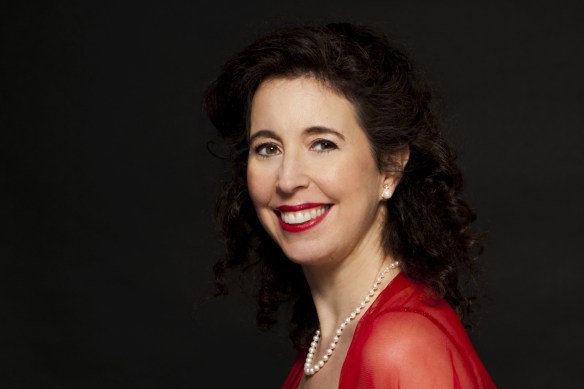
When Arcana spoke with Angela Hewitt, we were just a few weeks into lockdown. Since then, she has been able to complete her recorded cycle of all 32 Beethoven Piano Sonatas for Hyperion, concluding with two of the titans – the Hammerklavier, Op.106, and the final sonata, Op.111, both of which are due for release next year. She gave generously of her time so that we could discuss Beethoven’s works for piano.
For her recordings, Angela wrote all the notes accompanying the sonatas. “I put a lot of time and effort into those”, she says. “I enjoy it, and it’s important for me to know all those things, and there are so many interesting details. I try to make them notes that everyone can read, so that they’re not too technical. With so many notes that you read they can be boring, and you have no idea what people are talking about. I like to situate it within the life of the composer, what’s going on and how the music relates to it.”
The Hyperion cycle was carefully planned, placing a well-known sonata such as the Moonlight alongside others equally deserving, to give them more exposure. “I did that for two reasons”, she says. “One was because I thought it was more interesting than doing the groups together, like the three Op.10s or the three Op.31s and the last three, like everybody else has done, and because when I started the project there were some sonatas I had to learn. In the earlier records I put the ones I had played a lot, in my youth or up until then anyway. That’s partly why it worked out that way, but each record makes for a very interesting recital.”
When recording a new set of sonatas, does the pianist have to some extent ignore the recorded history around the pieces, and go with what they feel themselves musically? “Yes – very, very, very much so!” she says emphatically. “Especially with the famous sonatas but also with the others, there is so much taken for granted ‘because that’s how it goes’. When you look at the score it’s not at all how it goes, and not at all what Beethoven wrote. There are so many examples you could take, but one that comes to mind is the beginning of Op.10/3, with absolutely no crescendo before you get up to the ‘A’. That’s just one tiny thing, you really have to look at the score. I really enjoyed that aspect of it, and I am also determined to learn the Hammerklavier without going to listen to how every Tom, Dick or Harry plays it, because actually I don’t know the piece that well. It will be rather exciting to learn such a piece just looking at the score and learning it from what Beethoven left us.”
She was influenced in this way of thinking by other performances she had seen. “When I heard the early music people like Roger Norrington, and his Beethoven cycle back in 1987-88 at the Queen Elizabeth Hall, I remember all those concerts vividly to this day. It completely changed my way of looking at Beethoven. Up until then of course I enjoyed it, but I didn’t quite get it. You hear a lot of the interpretations, and I was living in France up until 1985, and people used to say ‘Oh, C’est Olympien’ – it’s Olympian when anybody played it, you know, and I just thought it was incredibly boring!”
The orchestral concerts turned Hewitt’s thinking around. “I never really got it, but then I heard Norrington and John Eliot Gardiner do it and I thought ‘Wow, that’s what it’s about!’, with the excitement in it and not dragging those slow tempos. It was just an eyeopener and I remember going home after those concerts, going to the Beethoven sonatas that I already played, and applying that and thinking, ‘Now I realise what I have to do here. Not just with Beethoven but Mozart as well, but Beethoven especially. That was a huge stimulus to me and one where I took the best of what I heard and applied it to how I felt. It really gave me a different way of looking at them.”
I share my own experiences of ‘getting’ a composer, which can often begin with a quest to try and understand the music, waiting for the penny to drop. “I also think it’s very important when you approach Beethoven to go from Baroque training rather than when you go back to him from being a Romantic pianist specialising in Chopin, Liszt or Rachmaninov. That’s totally the wrong direction. When you look at his music as coming out of the Baroque and early Classical it completely makes sense. You have all the training in counterpoint and harmony, and his own love of Bach, having played The Well Tempered Clavier. When you look at his music horizontally like that and clean it up, you pay attention to articulation and get the fingering to match that. Beethoven was the first to use the pedal, and use it to great effect, but not just to apply it systematically. If you get that right it really makes a big difference.”
We agree about the importance of silence in Beethoven’s music, too. “You hear that in Op.7, in that slow movement – that’s one of the best examples of how expressive a silence could be. My music teacher said he was very good at that, and used to circle the rests on the score as expressive, you know? That’s something that is very hard to teach, because either a student feels it or they don’t, really. You can fill that silence with expression but it’s not an easy thing to do unless you feel it. Beethoven was a master of that, and yes, that Op.7 is a beautiful example.”
She notes the physical demands of playing Beethoven’s music. “After Bach I find him the most demanding of composers. People might say that Beethoven wrote stuff that is a lot more technically demanding than Bach, but in Bach you cannot cheat and it demands so much musical intelligence. You have to put everything in there yourself, you know. Bach is the hardest to bring off really well I think, but the problem with Beethoven is that the more you give to it the more you get back, the more you see what’s there and the more difficult it becomes, in a way! It’s quite easy to bash your way through the Pathétique sonata, but if you really want to play it well then that takes an incredible amount of work.”
Hewitt often pairs the two composers in concert. “Often, I will give Bach / Beethoven recitals, with a substantial Bach partita or suite in each half along with a Beethoven sonata. Those are always incredibly exhausting and demanding programmes, probably much more than people realise. I worked hard at the Beethoven Waldstein sonata and came to it quite late, because when I was young, I couldn’t stand everybody banging away at it, it just sounded so dreadful! When I got to it just a few years ago I could see what was in it and really enjoyed playing it. I don’t think it’s his greatest sonata but it is a wonderful performance piece when you can bring it off. If you look at every detail in it then it and want to play it well it is very difficult. I do find he is extremely demanding on the interpretative level but on many levels, not just technically to manage the notes which is often hard enough, but to make sense of it and find the right mood and colour.”
Does she get the sense of the enormous amount of Beethoven’s personality is in the music? “Of course. It’s totally different from Bach. Of course Bach’s personality is there, and there is great joy in his sense of the dance which is in every note he wrote. Beethoven really, when you play all the sonatas you realise what a personal document it is, what a personal confession. They tell of his whole life, because they start in his early years and go almost right to the end. What I wanted to say about that too is that the more you open up yourself playing Beethoven, and I almost mean physically when you’re playing, you have to think that you’re opening up your body and letting it in. The more you do that the more you see the incredible immensity of what he was saying, and also I think the diversity. He wrote music of such great tenderness too. We think of Beethoven as being ‘crash bang wallop’ most of the time, which he is at times, and you take something like the Emperor concerto where he is both. You take the piano writing after those opening flourishes, it’s marked dolce – which is gentle – which a lot of people don’t really do. A lot of that concerto is marked pianissimo as well, even in the brilliant movements. He had an immense tenderness, and the opening of the fourth concerto is an obvious example. Sometimes I think that’s lacking in interpretation.”
We share a great love of the three sonatas Op.31. “They are all fantastic, aren’t they? I learnt the Op.31/3 first, and recorded it some time ago, in about 1988. It’s a wonderful piece, the Hunt. I must play that piece again, once I’ve learned the Hammerklavier I will go back and play the ones I haven’t played for a while. Then there is the Tempest, which I left until the year before I recorded it. I adore that piece, it is one of my favourites to perform, and the slow movement is so gorgeous. It’s unique among the sonatas, it is very declamatory, and it speaks in a different way to the others. Who knows about the title, but it does have something very special about it. Then the G major, which I never understood when I was young. I looked at this thing and thought, ‘What the hell is that’, you know?! Then after doing some work now I understand it. A musician friend asked me the other day to learn that slow movement again, so I could play it again. It’s very operatic and very, very difficult to do. It has to be very poised, and you have to be the orchestra too! That’s another thing in Beethoven – that you have to be not just the pianist but a really good conductor and orchestra too, because so much of this music you can hear the orchestra in it. I tell students that in masterclasses, I get them to play and then conduct, to sort out the timing. You have to be a pianist, a conductor, a singer, an orchestral player even!”
Hewitt has also recorded the sonatas for piano and cello, with Daniel Müller-Schott as her partner. “They are fantastic pieces too. The A major, Op.69, I played when I was living in Paris in my early twenties, with chums at the conservatoire. It is the most wonderful piece. I’m making my way through the violin sonatas as well; I’ve done four or five. I want to finish those eventually; I think it’s good for pianists to know those works as well.”
Of the Beethoven works that don’t feature the piano, Hewitt has her favourites. “The symphonies I adore, they are all fantastic. The Second Symphony has always been a favourite. There is some surprising stuff in the songs. I’ve done many of them, in the last year at my festival, and accompanied Anne Sofie von Otter and Anu Komsi. There is some amazing stuff in the songs. I found out the other day when I was writing the booklet notes for my variations disc on Hyperion that there are some 150 folksong arrangements, even Auld Lang Syne! I didn’t realise that.”
Her disc of the Variations was released on Hyperion in September, and she is keen to expand on the pieces. “Everyone talks about the Diabelli Variations, but the Eroica Variations has been one of my big pieces since 1990, when I first played it at the Beethoven festival in San Francisco. I also did the Piano Concerto no.4 with Sir Roger Norrington that year. The Eroica Variations are on the new disc, and there are some of the variations that are very amusing, too. I did the God Save The King and Rule Britannia ones as well, which were a hoot, and I did two Paisiello ones which were easy but charming, pieces that pianists can really work on and improve their way of playing. I also did the beautiful Variations in F major Op.34 which I did as a teenager. It’s great to capture the character of each variation and then to make a whole out of it. It’s a very important work and shouldn’t be put aside as a piece of lesser importance. It’s important to know how to play the variation sets well.”
The C minor variations, from my own concert experience, can be eye-popping too. “They are terrific really, and of course it’s a Baroque theme, with a chaconne rhythm and everything. When Beethoven heard them live, he said, ‘Who wrote that?’, and someone said, ‘You did!’, and he said, ‘What an ass I was in those days’, or something like that! It’s a terrific piece and makes a great impression. What an imagination he had, and what a sense of overall architecture. That is a really important thing when you are playing Beethoven, you need this sense of overall architecture, of where you’re going. It’s not enough just to play the notes well, you have to make a shape out of the whole thing. You see that especially in the later sonatas but also in the early ones. It was an interesting experience for me learning the Op.111 sonata last year. Like the Waldstein sonata it was a piece I had heard a lot in competitions as a kid, and I thought I never wanted to play it. Now of course I have had incredibly moving experiences playing it. I’ve only played it twice live, once as part of my festival in the beautiful church in Perugia. In something like the second movement variations you really have to find an overall shape, and in Op.109 too, which is very difficult to bring off. I found that very hard.”
She learned the shorter Bagatelles much earlier in life, “when I was a kid, at my first recital when I was nine! There is a Rondo in G major too which I used to play, but I haven’t played them for many years. The concertos of course I have played, and the Triple Concerto too. I have conducted nos.2 and 4 from the keyboard, with the Britten Sinfonia, which was wonderful – to get it just exactly how you wanted it. I’d like at some point to do the others like that. If you do have an extraordinary conductor that’s wonderful, but there are some things in the Emperor concerto where you would like some extra elasticity sometimes, and that isn’t really possible unless you’re conducting it yourself.”
Her interpretations usually draw positive reactions. “Orchestras have played those pieces so much that they are so familiar with them, and if you put in something different, really looking at the score and what is there, then you notice a point at which they sit up and think. I think it’s still possible to get incredible excitement out of playing a piece that is so well known from the musicians themselves.”
Away from Beethoven, Hewitt has an unexpected connection with Manfred Mann, who she met while travelling. “I was going up to Helsingborg to play the Goldberg Variations in a festival”, she begins, “so I flew to Copenhagen. I got on the train to Helsingborg and it was the rush hour. I had to run to get on the train and found the first-class compartment, and there was just one seat left. I got on just as they were closing the doors, and shoved myself into the seat and collapsed, you know. I noticed there was a man sitting across from me with this rather eccentric looking hat on, and he looked a bit eccentric. I thought he looked harmless! So, I pulled my laptop out and started typing away, and then at Malmo everybody got off except for a few of us. He stayed on, and he asked if the train was going on. I moved over to the table adjacent to us because there was more room, and I took a phone call. Then, at one point, I can’t remember how we started talking, but his opening line was, ‘Do you always work on your laptop with such good posture?!’”
She laughs. “Well, I used to be a dancer, so we got on to how I play piano, and he said, ‘I play a bit of keyboard’, and then he started asking me questions about fingering, if you’re playing an E flat major scale very quickly what would be your best fingering to jump up and back. So, then I guess I said I was going up to play the Goldberg Variations, and he said he listened to the Art of Fugue all the time and has an LP of it. Then he said, ‘Are you travelling all alone?’ I had to go to a hotel in Helsingborg, but it was close enough so that I didn’t need to walk, and I said, ‘Do you know which direction I should go?’ He said, ‘I’ll take you there’. He couldn’t believe I was travelling all alone with all my luggage. We said goodbye, and then the next day I went out to practice, and when I came back into the hotel, there he was in the hotel lobby! He was handing me a letter, which I read, and then through the letter he put his real name, which is Manfred. Through the letter I realised who he was, and there was an e-mail address, so I wrote to him and said ‘You should have told me! Anyway, I’m going to practice the Goldberg tonight, in a hall, if you’d like to come, I’ll play it for you. He and his friend couldn’t get a ticket as it was sold out, which was why he had written to me. I gave him a private performance of the Goldberg Variations, which blew him away, and at the end he said. ‘I used to think I was a keyboard player!’ He has written to me several times since then.”
Perhaps inevitably, talk turns to the dreadful mishap Hewitt suffered back in February, when her beloved Fazioli piano was dropped during a house move. She appears to have dealt with this incident with the same poise with which she walks out onto the stage at the beginning of her concerts. “As I wrote somewhere, I had three nightmare days where the press of the whole world was after me. it was absolutely incredible – I couldn’t believe it. I put something on Facebook because I had to put something about my plans and made sure I had written it really well so that if it was reused, I didn’t mind if the whole world saw. Then the next day the Guardian was phoning my agency and trying to find out who the firm was. There were only 4-5 people who knew who the moving firm was, and that’s been their whole life – I didn’t want to shame them, because it was a very unfortunate accident. It just ballooned, it was the top story under the Coronavirus – and then CNN called! I was marooned in Italy which was a good thing because it was isolated, so I couldn’t go into a studio. I had no peace for three days; I was completely exhausted! I couldn’t go speaking about it on television though, I didn’t want to say anything else. It was really a lesson in how the media works these days, and how careful you have to be with what gets out there. On the other side however, you could say it was terrific publicity which you couldn’t buy! In the early days I was walking around, and people stopped me and said they were so sorry about my piano. The press loves a story, that’s for sure, but I’m still so glad I didn’t give any of those interviews. I think a lot of people would, just to be on CNN – but one has to preserve one’s dignity, you know what I mean!”
You can listen to excerpts from Angela Hewitt’s Beethoven discs on the Hyperion websitehere – and for more information on the pianist herself visit her websitehere
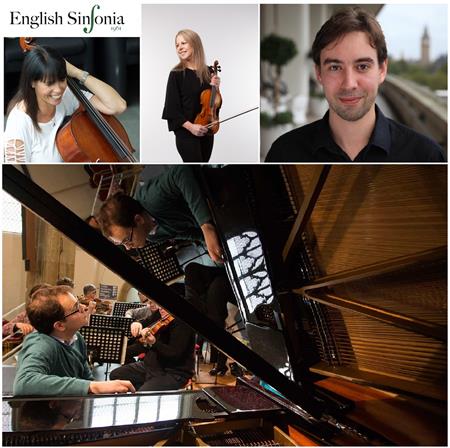
Members of the English Sinfonia: Janice Graham (violin), Nick Bootiman (viola), Julia Graham (cello) Chris Hopkins (piano)
Vaughan Williams The Lark Ascending (1914) Bridge Miniatures – Book 2, H88 (1910) Coleridge-Taylor Piano Trio in E minor (1893) Holst String Trio in G minor (1894) Bax Piano Quartet in One Movement (1922)
St. John’s, Smith Square, London, 15 December 2020 (lunchtime)
Reviewed by Richard Whitehouse
Celebrating its 60th anniversary next year, the English Sinfonia will be remembered by older listeners for those valuable recordings of British music with Neville Dilkes (not least the first modern account of Moeran’s Symphony). Its current incarnation as ensemble-cum-chamber orchestra enables it to tackle a wide repertoire, and even though only the core personnel was featured in this afternoon’s concert, the works that were chosen offered a more than plausible overview of British chamber music composed across the late 19th and early 20th centuries.
Easy to forget that, long before his music assumed a more radical mindset, Frank Bridge was a composer of lighter fare. Hence those three sets of Miniatures for piano trio – classy salon music of which the second set moves from a soulful while never cloying Romance, via an infectious and decidedly scherzo-like Intermezzo, to a Saltarello with more than a hint of menace in its hectic dash. By comparison, the Piano Trio of Samuel Coleridge-Taylor tries a little too hard to impress. If this early piece is hardly the equal of such as the later Clarinet Quintet, its three compact movements are never less than eventful – whether in the vehement Allegro with its portentous opening, a Scherzo whose unremitting energy brings little respite, or Finale whose distinctive furiant rhythm sees the whole work through to a forthright close.
Unlike the above, Holst composed relatively few chamber pieces in his maturity. While his String Trio evinces little sense of what he went on to achieve, this does not lack for incident. Idiosyncratic, too, in that its compact and forthright opening movement is followed by one which, over twice as long, integrates a slow movement, scherzo and finale that add up to an unlikely if cohesive whole; the fugal intricacies of that final section a stern test of ensemble such as the present players despatched with evident resolve. Appreciably more characteristic is the Piano Quartet by Bax – its tensile single movement packing a wide range of ideas and moods into little more than 10 minutes; and following an essentially conflicted to triumphal trajectory recalling that of the combative First Symphony which immediately preceded it.
Opening this afternoon’s programme, Janice Graham gave an affecting account of The Lark Ascending in the version for violin and piano first heard in public exactly 100 years ago. Now the orchestral version has become ubiquitous, this chamber guise can feel almost a reduction, yet the lucidity of its formal layout becomes even more explicit, and the understated poise of its piano part – as rendered by Chris Hopkins – belies any doubts as to Vaughan Williams’s limitations when writing for the instrument. An eloquent start to an enterprising programme.



 Arcana.fm