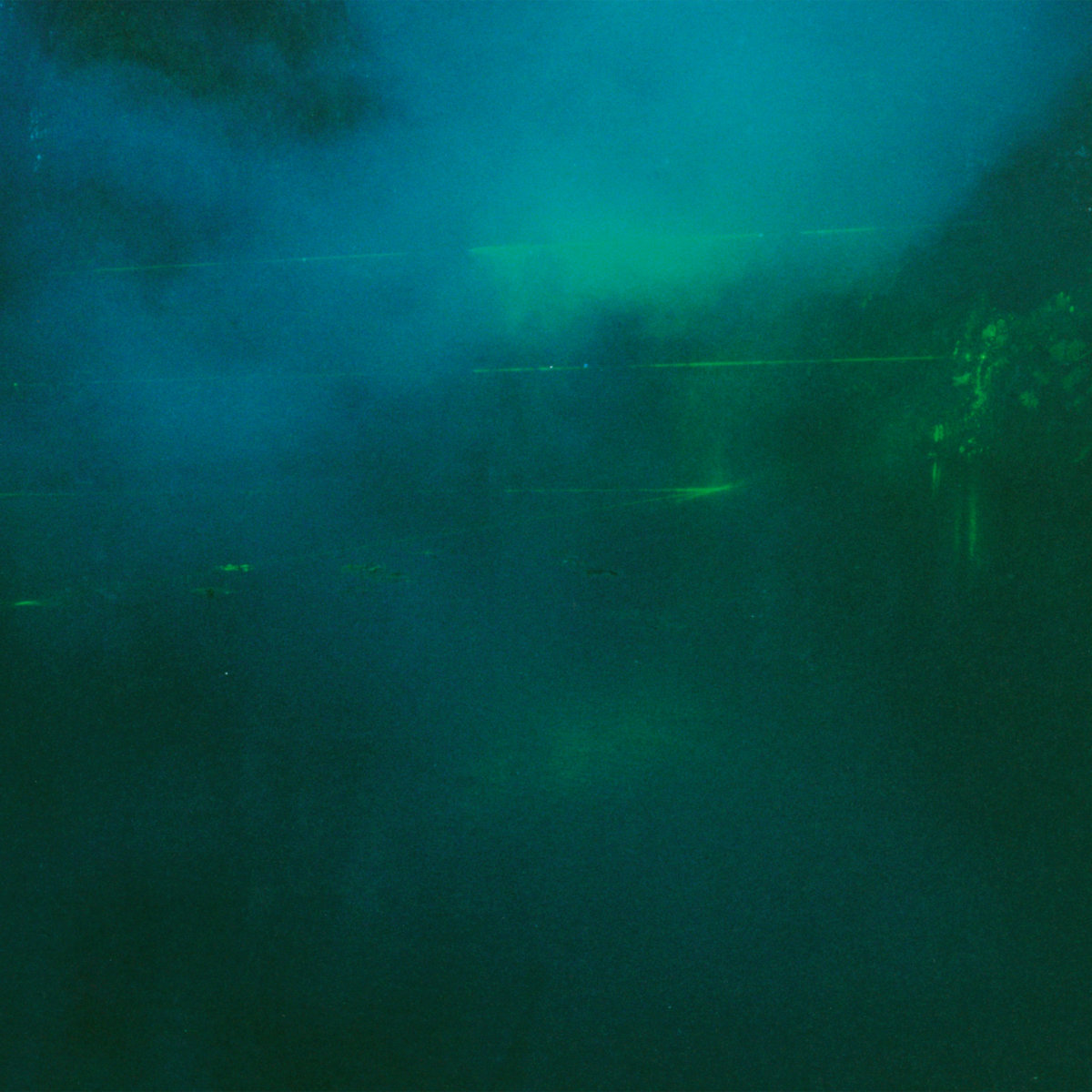
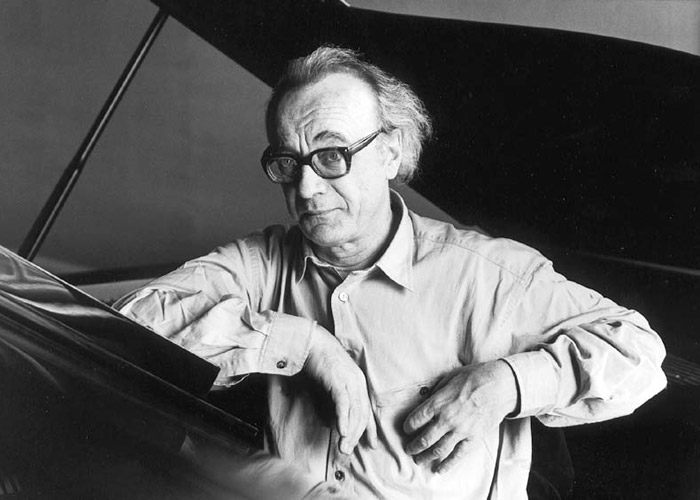
Nonesuch Records releases pianist and composer Brad Mehldau’s Ride into the Sun – a songbook record of music by the late singer, songwriter, and guitarist Elliott Smith – on 29 August.
Featured musicians include singer/guitarist Daniel Rossen (Grizzly Bear); singer/mandolinist Chris Thile (Punch Brothers, Nickel Creek); bassists Felix Moseholm (Brad Mehldau Trio, Samara Joy) and John Davis (who also engineered and mixed the album); drummer Matt Chamberlain (Fiona Apple, Tori Amos, Randy Newman); and a chamber orchestra led by Dan Coleman, who also conducted on Mehldau’s 2010 album Highway Rider.
Two album tracks, Tomorrow Tomorrow and Better Be Quiet Now, are available and can be watched below, together with an in-the-studio video of the musicians recording, directed by Matthew Edginton:
London-based, Australian-born producer, songwriter and DJ, HAAi (aka Teneil Throssell) has announced details of her highly-anticipated new studio album – HUMANiSE – out on 10 October 2025 via Mute on limited edition clear double gatefold vinyl and limited edition CD in eco card packaging.
You can watch the video for Satellite featuring Jon Hopkins, lead vocals by Obi Franky, plus ILĀ and TRANS VOICES, a crescendo of celestial glitch-pop that references early Kompakt records, 90s rave and 2-step, below. The accompanying visualiser is by Dobermann Ltd, who Teneil has been working closely with on the artwork.
Teneil goes on to say, “Satellite encapsulates everything HUMANiSE stands for: the importance of your people and the unique humaneness we offer one another in a rapidly changing world. I feel so lucky to have shared this track with Jon and Obi, ILĀ and TRANS VOICES.
This album is for my trans and queer family and our allies, to say thank you for lighting up every space you’re in. I will always be in your army.”
Talking about the track, Obi Franky explains, “Inspired by my father’s passing, I decided to write a message that I believe we share for each other. And this can apply to various situations for so many people including those that live far away from each other. Sometimes being reminded someone’s energy is there is enough to keep you going. We are all satellites and have the power to create a sense of unity, the power to receive and give what ultimately a human wants – love.’
HUMANiSE stands as an immense evolution from the debut, Baby, We’re Ascending, and arrives at a prolific time for the artist. Her BBC Radio 6 Music A-listed track, ‘Can’t Stand To Lose’ was reworked by HAAi and Tom VR and soundtracked a groundbreaking visual which premiered on the Outernet’s digital exhibition space for Women’s History Month. That was followed soon after by a collaboration with KAM-BU, Shapeshift, and recent (and forthcoming) DJ appearances that include Coachella, Movement, Glastonbury and helming her community-focussed night in London, UNiSON.
In all of her work, Teneil has always sought to conquer new frontiers in electronic music, and on the new album, she’s drilling deeper into the grid. HUMANiSE reckons with what it is to be human in an increasingly digital world, as AI threatens to eclipse everything and our screens separate us from each other. The result is an ambitious and thrilling epic: embodying a sonic step up, exploring the sweet spot between machine-led dystopia and emotion-filled utopia.
“Throughout the album, I kept thinking about a machine with a human heart,” she says. Where previously she’s been hidden by a laptop, or obscured behind the decks, more recently she was, “inspired to return to my songwriting roots and use my voice more in my own music.” “Throughout the album, I kept thinking about a machine with a human heart,” she says. Vocals are front and centre, stunningly delicate and giving a newfound dimension to her kinetic productions. “It took a long time to get there, it’s such a vulnerable thing to do,” she continues, “but for this album, it was important for me to allow this ‘human heart’ to be front and centre.”
The human heart has another focus on the album: unity and community. HAAi explains, “Even though HUMANiSE is about how the world is starting to change beyond our control, it’s important to keep a sense of togetherness and hope.” These ideas of community and a sense of belonging is of utmost importance, and she has returned to work with friends including Jon Hopkins, Alexis Taylor from Hot Chip, singer Obi Franky and rapper KAM-BU, artist Kaiden Ford, as well as poet James Massiah, who guests on All That Falls Apart, and two choirs: TRANS VOICES with choir leader ILĀ and a gospel choir led by Wendi Rose. But this is no clique, the community she surrounds herself with is inclusive, with ample space for the listener on a journey where you are suspended in dreamlike euphoria, drawing the most human part of you to the surface – the part where nothing matters more than family, friends, and togetherness.
HUMANiSE is out on 10 October 2025 via Mute on limited edition clear double gatefold vinyl and limited edition CD in eco card packaging. You can pre-order here
Hannah Kendall shouting forever into the receiver Cassie Kinoshi [untitled] Pierre Boulez Sur Incises
Barbican Hall, London, 27 May 2025
by John Earls. Photo credits (c) John Earls
Billed as part of the Boulez 100 series* to celebrate what would have been Pierre Boulez’s 100th birthday year, it was exciting to see a concert by Ensemble intercontemporain, the group the great iconoclast founded in France in 1976 (I can’t help but also tell you that this was with the support of the then French Secretary of State for Culture).
Recognising Boulez’s championing of new voices, the programme combined a classic Boulez piece with new works by two younger generation British composers. First up was Hannah Kendall’s shouting forever into the receiver. The title comes from Ocean Vuong’s novel On Earth We’re Briefly Gorgeous and refers to the description of a tiny plastic toy soldier yelling into its handheld radio transceiver. In this piece, spoken extracts, initially from the Book of Revelation and then verses from Ezekiel, are passed back and forth between two performers using walkie-talkie radios and sat on opposite sides of the stage. This is combined with arresting musical accompaniment including pre-programmed music boxes playing familiar works such as Beethoven’s Ode to Joy, dampened piano and a contemplative harmonica chorale. It was a fascinating opening 15 minutes.
Second on the programme was the world premiere of composer, arranger and saxophonist Cassie Kinoshi’s [UNTITLED]. Inspired by Boscoe Holder, the Trinidadian artist, dancer, choreographer and musician it “pays tribute not only to historic Caribbean artforms…but also to the continued evolution of these forms in modern diasporic contexts”. This is reflected in this multi-disciplinary piece combining music, choreography, improvisation, technology and visual art “embracing the kind of fluid creativity that Boscoe Holder explored throughout his lifetime”.
At the very start choreographer and dancer tyroneisaacstuart circles the stage before literally passing on the baton to conductor Nicolò Umberto Foron (currently Assistant Conductor of the London Symphony Orchestra). Throughout the evening Foron’s angular gestures complemented the music perfectly. Something of a dance in itself.
tyroneisaacstuart’s own dancing involved spins, weaving through sections of the orchestra, running on the spot and at one point appearing to hit a forcefield during a dramatic build-up of repetitive beats. Rhythm featured strongly throughout the piece including beats from NikNak on turntables (Nathan England-Jones provided electronics technical support) and we were frequently never far from an albeit eclectic dancefloor.
The dancer was all dressed in white contrasting with the fiery red visuals (by Julien Creuzet) on a large screen featuring the slower movements of blurred figures. Kinoshi’s intention is that the “on-stage presence invites the audience to not only hear but to see rhythm”. I don’t know whether when the orchestra, dancer and visuals are on stage together it makes it difficult to focus properly, but at times it felt a bit too busy. That said it is a stimulating and brave piece.
After the interval, nine members of the Ensemble performed Pierre Boulez’s Sur Incises (1996-1998) for three pianos, three harps and three percussion parts (including vibraphone, marimba, glockenspiel, steel drums, and tubular bells).
The stage setting alone with the instrumentalists set some distance apart (a bit like Covid times) with the harps centre stage was striking. It’s quite a sonic experience too. Heavy percussion and lustrous harmonies combine in an ebb and flow of crashes and trills that both comfort and have a sense of foreboding. Boulez’s music has a reputation for being difficult, but when played like this it is utterly captivating.
John Earls is Director of Research at Unite the Union. He posts on Bluesky and tweets / updates his ‘X’ content at @john_earls
*It was a bit strange, not to say disappointing, that the concert programme labelled this as part of the Boulez 100 series but contained nothing on Boulez himself or the piece of his being performed. The notes on the other two pieces, written by the composers themselves, were, not least for this reviewer, very useful.
The prolific Munich group Web Web here notch up their sixth album in seven years, described on their Bandcamp pages as “more psychedelic, sometimes more krauty than before”.
This time the group comprise Roberto Di Gioia (Rhodes, Fender Precision Bass, Moog, Mellotron, percussion), Christian von Kaphengst (Fender Precision Bass, Rhodes), Peter Gall (drums, percussion, Fender Rhodes) and Tony Lakatos (tenor saxophone, flute), with the core members often switching between instruments.
Web Web were joined by a guest for the recording, guitarist JJ Whitefield, while Michael Reinboth, the Compost founder, is executive producer.
What’s the music like?
The psychedelic elements are quickly evident in the lovely, grainy sound of Apotheosis, where Whitefield’s distorted guitar asserts its presence. The contrast with The Madness of Ajax is a marked one, as Lakatos’ flute comes to the fore.
The organ-led Mysia travels through time, with murky distortion, while there is a wonderful version of Moondog’s Bird’s Lament, a spontaneous suggestion from Reinboth that features a rather beautiful sax solo from Lakatos.
There is indeed a healthy infusion of space jazz and Krautrock, found especially on tracks like Nyx, where a heady keyboard line is spun out over reverberant drum track and appealing weirdness in the middle ground.
Does it all work?
It does indeed, for the players pack a lot into a short space of time. None of the tracks outstay their welcome, the result being focused playing that creates really appealing moods and melodies.
Is it recommended?
It is. Plexus Plexus feels like a time capsule, recorded recently but beaming some of the best bits of the 1970s in through its sessions.
For fans of… Jazzanova, Mr. Scruff, Tosca, Boozoo Bajou, Four Hero
Members of Klangforum Wien ([Annette Bik and Judith Fliedl (violins), Paul Beckett (viola), Andreas Lindenbaum (cello)]
Long synonymous with the Valley of the Temples, among the glories of Classical civilization, Agrigento is a city of the present and not least with Teatro dell’Efebo – a venue appropriate to a programme such as Symposion, presented by Klangforum Wien as part of Agrigento 2025.
According to Klangforum’s website, ‘‘The Symposion project takes up the theme of cultural intoxication which goes back to antiquity. This ancient social practice has inspired an evening with music of our time, perceived in the slowly changing conditions of collective and relaxed inebriation…’’. The actual programme was highly wide-ranging as to content and aesthetic (a full listing can be accessed via the link below), taking in pieces by European composers from the mid- or later twentieth century and concluding with Terry Riley’s (over?) influential In C.
Before that, however, came a second hearing (following its premiere in Salzburg last January by the Oesterreichisches Ensemble für Neue Musik) of the String Quartet by Jorge E. López. Written during the winter of 2022-23, this piece follows on from his radiophonic composition Im Innersten: János Bolyai stirbt (previously reviewed on Arcana) while drawing on elements from his Fifth Symphony which, completed in 2023 after a five-year gestation, still awaits its first performance. Each of the Quartet’s two movements duly picks up on elements from either of those in the larger work, though this is not a case of reworking or even paraphrasing earlier material but rather the oblique evoking of it in terms of that creative application of Surrealism which has proved a mainstay of López’s compositional ethos throughout the past half century.
The first movement is prefaced by the title ‘‘Wie man wird, was man is’’ (How one becomes, what one is), which the composer feels appropriate for music that pivots constantly and with increasing desperation between rhetorical aggression and a wrenching eloquence – its motivic elements altering constantly though with a tangible sense of evolution as dynamic as it seems unpredictable. Towards its close this process mutates into a more sustained expression which might have become a ‘slow movement’, had it not opted to close in a becalmed ambivalence.
Barely a third of its predecessor’s length, the second movement is prefaced by the title ‘‘Was denach kommt’’ (What then follows) and picks up on a lengthy fugato such as rounds off the corresponding movement of the composer’s Fifth Symphony. Its musical subject is none other than the nursery rhyme Three Blind Mice – source for orchestral works by Joseph Holbrooke and Havergal Brian – which here unfolds erratically while never haphazardly across the four instruments and on to an unequivocal conclusion the more affecting through its very inanity.
This account from the members of Klangforum Wien was as impressive as it was committed, evidently subtler and more sombre than that by OENM in Salzburg but with an undeniable grasp of the oblique yet always vital logic which is a hallmark of López’s music in ensuring its fascination and overall conviction. One hopes more performances will follow (the highly regarded Chaos Quartet of Vienna has expressed interest) and that the composer, who has recently finished his Variations for Orchestra, will embark on a successor before too long.