Britten Sinfonia at Lunch – Reinventing the piano trio

britten-sinfonia

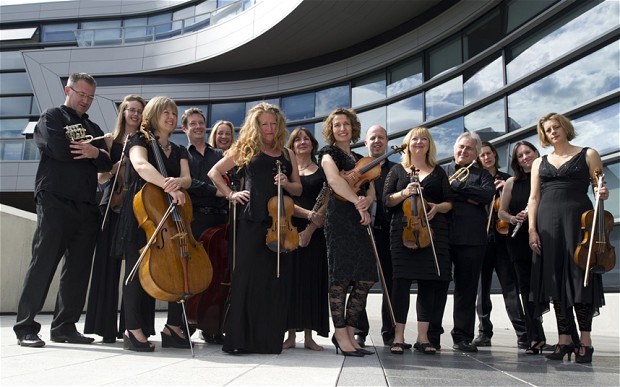
Britten Sinfonia at Lunch – Wigmore Hall, 4 March 2015.

If chamber music is not your forte, then I cannot imagine a better way into it than by the Britten Sinfonia’s ‘At Lunch’ concert series, held in London, Cambridge and Norwich.

Each program explores works written for a particular instrumental combination, but always includes a world premiere from a living composer. The informal atmosphere is both performer and audience friendly, and as a diversion from work or a pause in the middle of the day, the experience is ideal.

This second concert of the 2015 season chose to look at the piano trio, a misleading label since the standard combination of instruments for the trio is piano, violin and cello. Yet, as the program observed, the form is less often used by contemporary composers, and has a heritage of works running from Haydn in the mid-18th century through to 20th century composers such as Shostakovich, who featured here.

What the Britten Sinfonia did really well was to present possible solutions to the form, which here included adding percussion. To begin we heard Lou Harrison’s Varied Trio, for violin, piano and percussion. Harrison, an American composer who lived from 1917-2003, took as his inspiration the music of a number of different countries including China and Indonesia, and his original approach here included a set of rice bowls played with chopsticks. The resultant sounds were often soothing and rather wonderful, drifting as though on the breeze from percussionist Owen Gunnell, but with pianist Huw Watkins also reaching around inside the instrument to produce some unusual sounds. Completing the trio was violinist Thomas Gould, whose sweetly toned Elegy formed the third of the Varied Trio’s five movements and made it the emotional centre.

The new piece was from 22-year old composer Joey Roukens, who described his Lost in a surreal trip as ‘a psychedelic, kaleidoscopic 12-minute piece’. It was vividly coloured and brilliantly realised by the players, adding cellist Caroline Dearnley to their number. Early on the music cast spells of dappled light through harmonics on the strings and intriguing percussion sounds, but then a more mechanical energy took hold as though we were being transported by train to a place without a firm surface. With bags of reverberation and some enchanting sounds from the marimbas, this piece was consistently inventive and will be well worth hearing.

From the conventional piano trio legacy came one of its finest works in the 20th century, the Piano Trio no.2 by Shostakovich. This concentrated wartime work from 1944 is packed full of anguish, marking the death of the composer’s close friend Ivan Sollertinsky but also expressing outright anger at conflict and war. Gould, Dearnley and Watkins had no need for percussion here, not with the rhythmic profile Shostakovich establishes, but theirs was a keenly felt performance that left the listener in no doubt of the composer’s feelings and concerns.

A Spotify playlist containing the Varied trio and the Shostakovich Piano Trio no.2 can be accessed here:

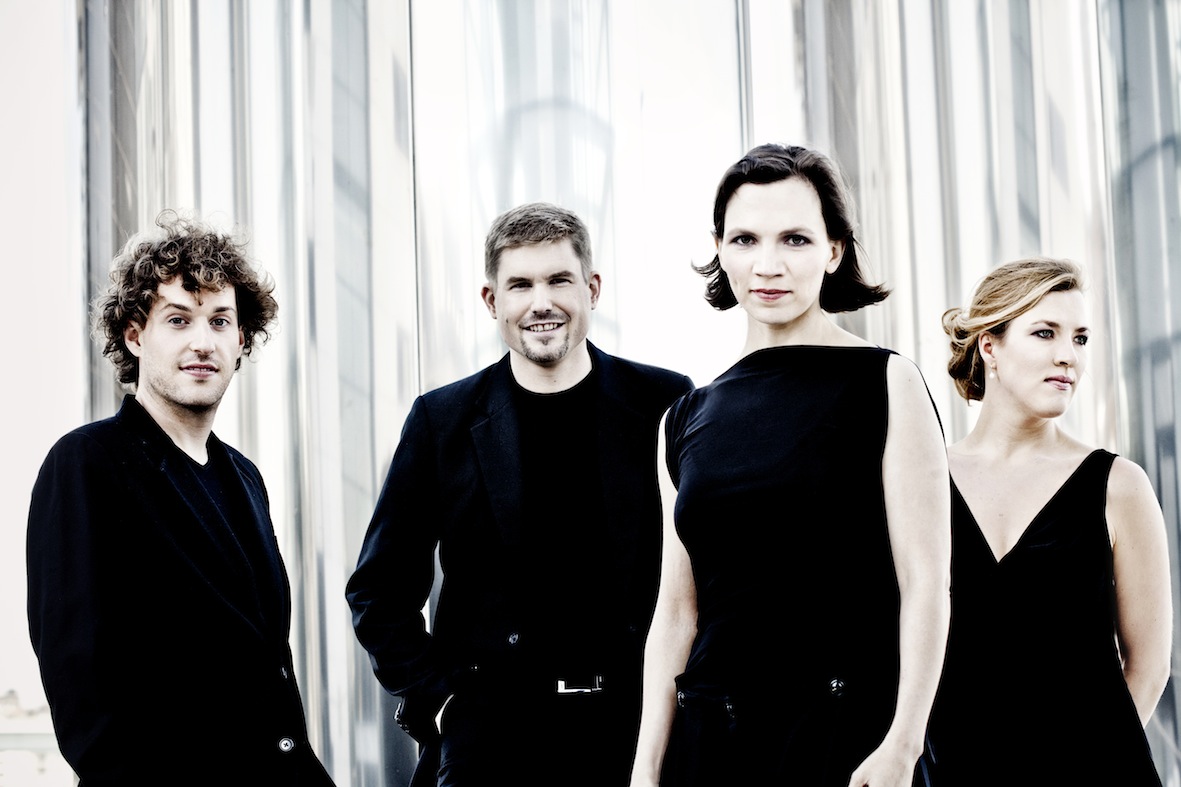
Signum Quartet – Late Beethoven

The Signum Quartet take on Beethoven’s massive B flat major string quartet Op.130, complete with Grosse Fuge

signum-quartet

Louis Schwizgebel – Wigmore Hall, live on BBC Radio 3, 23 February 2015

Listening link (opens in a new window):

http://www.bbc.co.uk/programmes/b053zy7y

on the iPlayer until 31 March

Spotify:

For those unable to hear the broadcast I have put together a Spotify playlist. The Signum Quartet have not recorded this repertoire, so I have chosen an alternative version by the Artemis Quartet:

What’s the music?

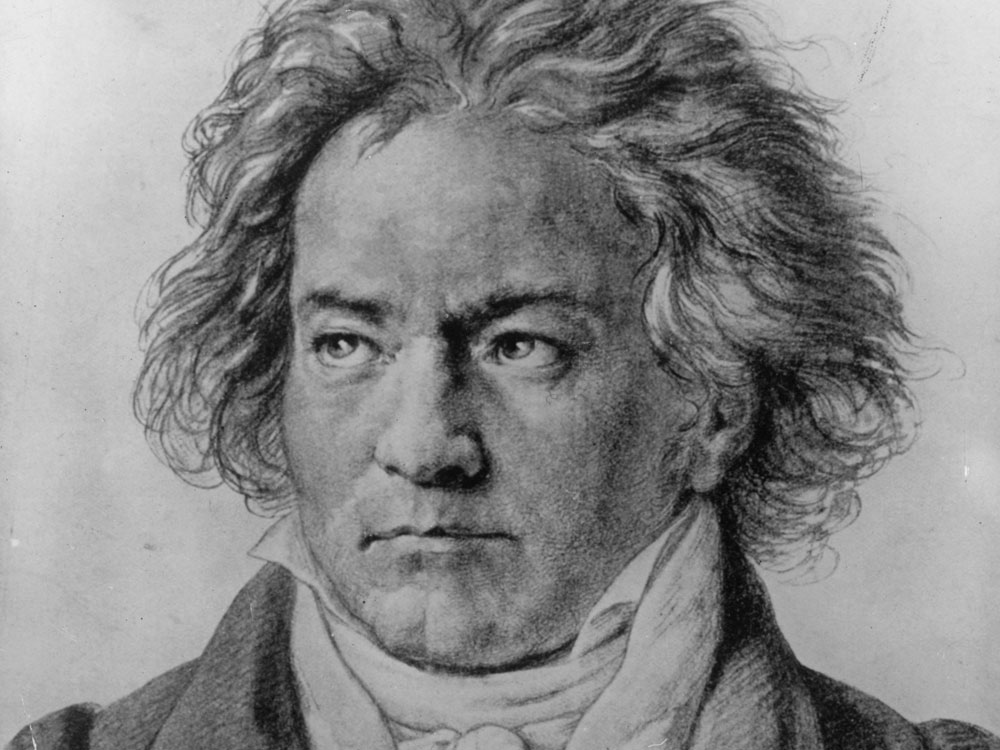
beethoven
Beethoven – String Quartet in B flat major, Op.130 – including Grosse Fuge (1825) (47 minutes)

What about the music?

If this is your first venture into listening to a Beethoven string quartet, then prepare to be overwhelmed! I mean that in the best possible way, because this is one of Beethoven’s very biggest works, especially when performed with the massive final movement Grosse Fuge at the end.

Even now, nearly 200 years on from when he wrote them, Beethoven’s late string quartets are forward-looking works of wonder. This B flat quartet, one of five such works published towards the end of the composer’s life, is a remarkable work that still gets musicologists hot under the collar with debate, especially when the Grosse Fuge is taken into account.

Beethoven wrote the quartet in 1825 for Prince Nikolai Galitzin of Russia, an amateur cellist. His publisher suggested a slighter finish than the Grosse Fuge, and Beethoven obliged with a shorter and more amicable substitute. This was because the great finale was so substantial and so unusual in its musical language that it inflated the work to a daunting 50 minutes, out of the range of audiences and players alike, and presented them with an incredibly challenging finish. Today’s audiences are different, of course (not necessarily better!) and often warm to the thrill of a work that has not just this at the end, but also the tiny second movement Presto, a helter-skelter piece of music that is done in just over two minutes, and the heart-melting Cavatina, the fifth movement.

This part of string quartet has been sent into space, a recording from the Budapest String Quartet part of a record loaded onto both Voyager space probes. So any alien that happens to possess a record player will be able to hear the Cavatina, presumably as their first experience of Beethoven!

Performance verdict

The Signum Quartet give a keenly thought performance here, though I did wonder on occasion if they could have played a little closer to the edge, sacrificing a little control for out-and-out roughness, so as to catch Beethoven’s invention and daring.

That said there are many fine things here – the Cavatina especially, lovingly played as though it is the slow movement of an early 20th century symphony. The third movement is lovely too, given an affectionate reading. The Grosse Fuge is very clearly played, but arguably needs more rough-hewn passion. That said, nobody attending the Wigmore Hall on this occasion would have been disappointed with the standard of performance!

What should I listen out for?

First movement (marked Adagio, ma non troppo – Allegro (Slow but not too much – fast))

3:24 – a softly voiced slow introduction leads to a stop-start fast movement from 4:24, with some excitable faster passages contrasted by pauses for thought. The music is often busy, Beethoven passing ideas between instruments. The first section is repeated at 7:16.

9:40 – the music alights in the remote key of D flat major, led by the chromatic line of the cello. This is not what is supposed to happen, but Beethoven was never one to follow rules. It sounds so inevitable here!

Second movement (marked Presto (very quick))

16:41 – this is one of Beethoven’s ultra-quick, no-nonsense pieces. A bit too much ‘forward and back’ in this performance, the movement doesn’t quite feel fully formed. There is a remarkable series of motifs from the first violin (beginning at 17:54) which could easily have been written by a composer one hundred years later, so striking is its musical language.

Third movement (Andante con moto, ma non troppo. Poco scherzoso) (At a walking pace, not too fast, with humour)

18:58 – a calmer atmosphere for this movement, with a steadier foundation.

Fourth movement (Alla danza tedesca. Allegro assai)(German dance. Faster)

25:56 – music of grace and poise for the fourth movement, its triple time used by Beethoven as a stately Minuet.

Fifth movement (Cavatina)(a short and simple song)

29:28 – the Cavatina, Beethoven said, moved him more than any other single piece of his own music. It is played here with a reverential hush, and as the concert note from Paul Griffiths says, the music approaches the Romanticism of Mahler in the depth and richness of its harmonic workings. It is beautifully and tenderly played here.

33:04 – the Cavatina moves into a more thoughtful section, the first violin seemingly talking to itself while the other three chug sympathetically in accompaniment. Beethoven quickly moves back from this to the home key, however.

Sixth movement (Grosse Fuge)(Grand fugue)

35:58 – music of remarkable tension and bite to begin the massive Grosse fuge, which starts with an angular introduction from the whole quartet before we hear the music for the fugue itself (36:47). After the serenity of the Cavatina the sheer drama of this music is remarkable.

What is also remarkable is that Beethoven is executing all manner of clever musical tricks, all relating to the main theme and different variants / transcriptions of it – but as a listener you don’t necessarily need to note that, and can appreciate the unfolding drama with the string players pushed to the limit, both technically and emotionally. Towards the end it really feels as though the music is breaking up under its own weight and strain, before Beethoven brings it together to force an ending of togetherness and ultimately conviction.

Want to hear more?

How about some more Beethoven…that isn’t quite so much of an intense experience for the brain?

It can be possible…so here are the Artemis Quartet again in three more Beethoven String Quartets – two early and one very late. The early ones, two of the set of six that were published as the composer’s Op.18, are full of good natured humour and energy, while Beethoven’s last published quartet, Op.135, is also a lighter piece of work. Here they are:

For more concerts click here

The Borrowers – The Orb: Little Fluffy Clouds


What tune does it use?

The third section of Steve Reich’s Electric Counterpoint.

Ask any electronic musician worth their salt who their greatest influences are and the chances are it won’t be long before they come round to mentioning Steve Reich – which our interview with John Tejada has already confirmed!

Reich’s talent for taking pop-friendly melodies and looping them almost to breaking point (a technique often labelled as minimalism) has been one of the single biggest influences on electronic music up to this point, especially in techno, which often uses similar principles of repetition and expansion.

How does it work?

The Orb use a direct sample of the first recording of Reich’s Electronic Counterpoint, a piece written for guitarist Pat Metheny in 1987. He recorded it by setting down seven channels of guitar loops and two of bass guitar, before playing along as a tenth ‘person’. Yet The Orb place this music in context with a beautiful dub bass line and a host of ambient sound effects, most notably a clip of an interview with Rickie Lee Jones. The section of music they lift from Reich comes from the third section of Electric Counterpoint:

The Orb sample it directly here, as the beginning of their ‘chorus’:

and again nearly a minute later:

Here is the whole of the third section from Reich and Metheny, sat in the same key of A major:


What else is new?

Little Fluffy Clouds came to symbolize a lot of what was right about the so-called ‘ambient house’ style of the early 1990s, which acted as a springboard for Aphex Twin and a number of today’s leading electronic producers. Reich himself got involved later on, commissioning a remix album from such electronic luminaries as Coldcut, DJ Spooky and Four Tet. Here’s a remix of a section of Reich’s masterpiece Drumming by Mantronik:

The cross-over between Reich and techno goes back a long way too – and one intriguing spot is that Japanese producer Ken Ishii – now a widely respected techno artist – played cello on the first recording of Music for 18 Musicians, made for ECM in 1978. Now if you haven’t heard that particular piece, I suggest you stop what you’re doing right now and watch this!

Or you can go some way to sharing one of the great live experiences in music in this live performance:

Likewise if this is your first encounter with the music of The Orb, I should direct you towards their Top of the Pops performance of the wonderful, peerless Blue Room, heard in edit form below. Definitely the first band to play chess on the program!

A New World in old clothes

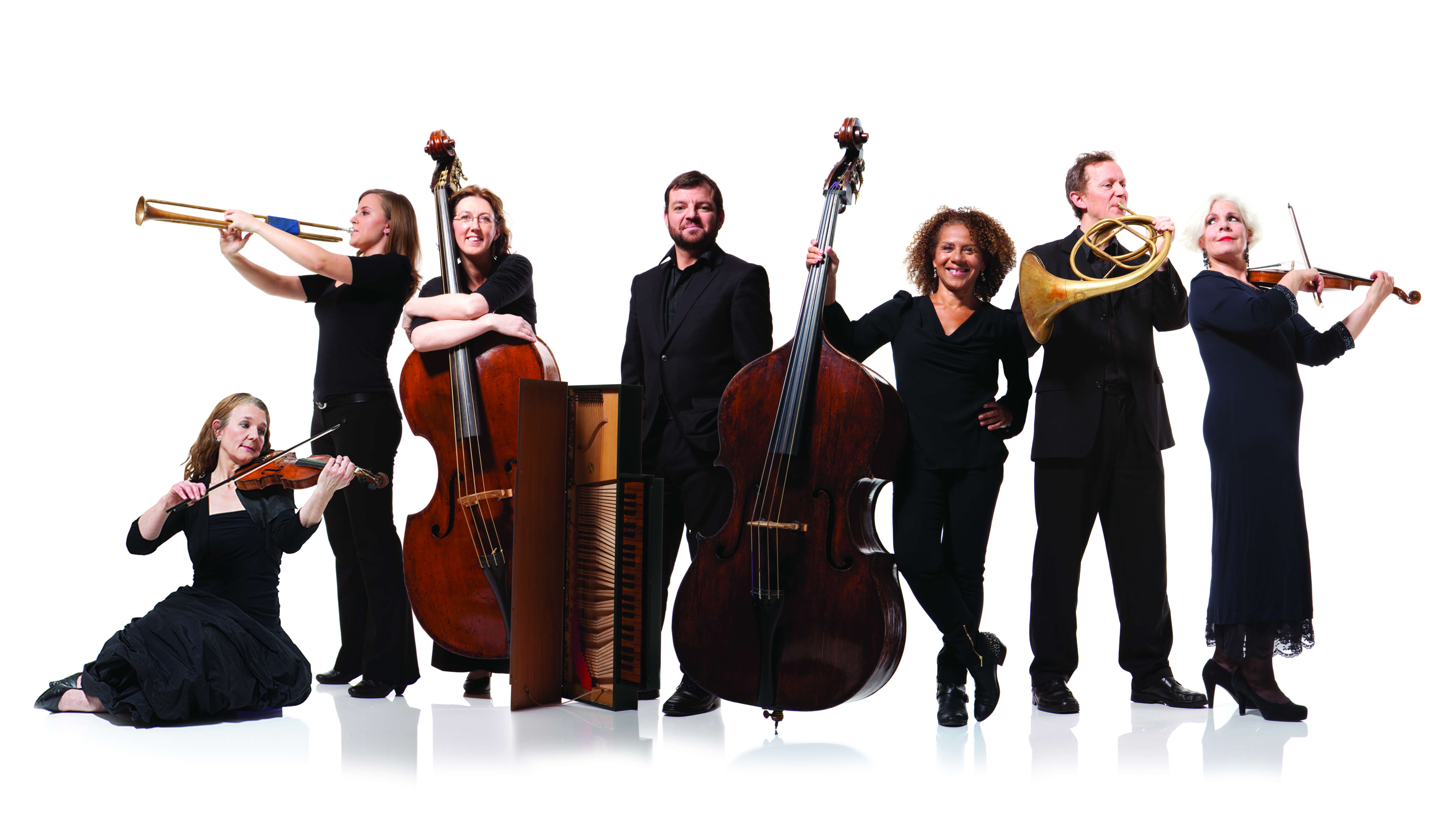
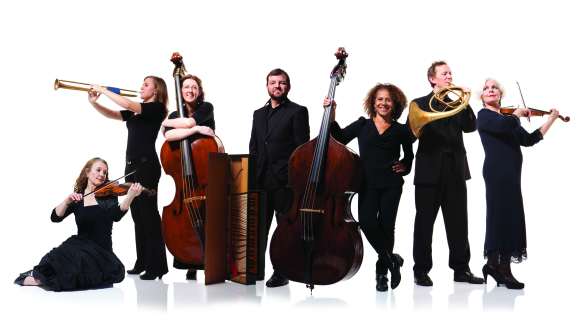
A New World in old clothes – The Orchestra of the Age of Enlightenment, conducted by Adam Fischer, bring new life to Dvořák’s New World symphony, with Brahms’ Violin Concerto from Viktoria Mullova
oae
Viktoria Mullova (violin), Orchestra of the Age of Enlightenment / Adam Fischer – The Anvil, Basingstoke, live on BBC Radio 3, 26 February 2015

Listening link (opens in a new window):

http://www.bbc.co.uk/programmes/b0535tzx

on the iPlayer until 28 March

Spotify

For those unable to hear the broadcast, here is a Spotify link to the same program – with Viktoria Mullova’s recording of the Brahms included.

What’s the music?

Smetana: The Bartered Bride Overture (1865) (7 minutes)

Brahms: Violin Concerto (1878) (39 minutes)

Dvořák: Symphony no.9 (From the New World) (1893) (45 minutes)

What about the music?
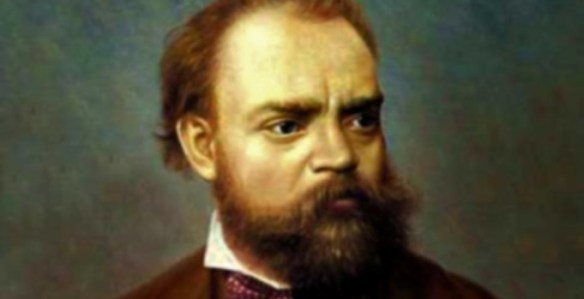
dvorakThe composer Antonin Dvořák

This is a ‘period instrument performance’ – that is, played on instruments either from the time the music was written or before – and performed in a style audiences of the day might have witnessed. It is relatively rare for the Orchestra of the Age of Enlightenment to venture this far forward in time, for their instruments tend to be more geared towards the performance of music between 1700 and 1850.

They begin with a popular overture, a crowd pleaser – the curtain raiser for Bedřich Smetana’s comic opera The Bartered Bride. The work is something of a Czech institution, full of Smetana’s interpretations of Czech dances such as the polka and furiant. As BBC Radio 3 presenter Martin Handley says, Smetana became ‘the father of Czech nationalism’ through his patriotic and uplifting set of works for orchestra, Ma vlast (My Country), completed in 1879.

Dvořák was a Czech composer, but the action in the New World symphony takes place far from home. Always one to fill his music with good tunes, the composer turned to American heritage for a lot of his source material, declaring in the New York Herald that “In the negro melodies of America I discover all that is needed for a great and noble school of music“. Dvořák was homesick at the time, and the melancholy tinge to some of his tunes reflects that.

The symphony was commissioned by the New York Philharmonic and given its first performance in Carnegie Hall in 1893, and has been extremely popular ever since. In recent years themes from it have frequently been heard on TV, most famously when the tune of the second movement Largo was used in a Hovis advert.

In between these Bohemian classics is music by Brahms, his Violin Concerto – which, at the time of composition, was one of the biggest such works around. It was written for the Hungarian virtuoso Joseph Joachim, a composer himself – and he had considerable input into the piece, having also commissioned a concerto from Dvořák. When receiving the parts for the first time Joachim remarked on the symphonic design of the concerto, and on how difficult it was to play – even for him!

The first movement is a big unit in itself, lasting longer than the second and third put together but gripping the listener as a closely fought dialogue between violin and orchestra, both seemingly on equal terms. The third movement finale is based on a gypsy tune, and caught the eye of Paul Thomas Anderson, who chose it for the closing credits of his film There Will Be Blood.

Performance verdict

Having emphatically blown away the cobwebs with a vigorous account of the Smetana overture, the Orchestra of the Age of Enlightenment get their teeth into Brahms.

The Violin Concerto benefits from their slightly smaller numbers, and thanks to Fischer’s conducting we can really hear all the inner workings of the orchestral introduction. The pace is relatively slow at this point, but picks up when the violin enters. Mullova’s tone is lovely, though just occasionally in the first movement she is a little ‘under’ the note of the orchestra – which, given the performance is on period instruments, could even be due to the heat in the venue.

The rustic finale has plenty of swagger, enthusiastically led by Mullova, while the slow movement – which seems to go quickly here – is beautifully rendered.

For the Dvořák the lean textures of the orchestra bring out the beauty of his melodies, and also the strong sense of longing the composer felt from New York for his home. The spiritual melodies help him to express this, but Fischer also keeps the spirit of dance to the fore.

What should I listen out for?

Smetana

2:24 – a brisk and breezy introduction from the orchestra. Soon the violins take up a rushing theme, as do the violas (3:08) and then the cellos and basses. As with much of Smetana’s fast music he generates terrific energy.

Later there is a gentler passage for the woodwind, with a more ‘reedy’ sound than a modern symphony orchestra would provide. This is rudely interrupted by the drums.

The music dips and then comes back with a terrific crescendo, where it feels like the players are standing on tiptoe.

Brahms

12:08 – a smooth, ‘legato’ start to the first movement, marked Allegro non troppo (fast but not too fast). This is the beginning of a long orchestral introduction. It is a long time before we hear the violin

14:22 – a sudden injection of power from the strings, a moment of real drama in this music that prepares the way for the entry of the violin 20 seconds later.

20:08 – the violin now takes up the energetic music the strings had earlier, and this is taken up by the full orchestra. There follows a lovely unison melody at 21:27.

24:25 – the culmination of the movement, violin soaring above the orchestra.

27:45 – deep unease in the violin part as Brahms writes some very uncertain double stopping for the instrument, with mysterious lower strings, until the injection of power happens again at 28:02. This leads through to…

29:13 – the start of the cadenza, a showy section for violin alone. This is a pivotal part in any performance of the Brahms, as a large number of cadenzas from different composers are available – or the soloist can perform their own. I suspect this one is by Joseph Joachim. The orchestra return at 32:07 and the mood has changed to one of calm reflection – which builds to an affirmative finish at 33:40 – at over twenty minutes, a first movement of impressive size!

34:50 – the start of the slow second movement, marked Adagio (slow). Soothing horns and woodwind set a scene of calm. If the music ever sounds out of tune, this is because the brass have a ‘temperament’ that can be slightly out of kilter on certain notes. If anything it makes the music more authentic! The violin comes in at 36:49 with a sweetly toned melody.

42:34 – a wonderful gypsy tune to begin the finale, which sounds full of the open air. This performance brings out the dance, and Mullova takes the lead effortlessly. Lovely woodwind trills at 43:11 too. The catchy tune appears on a number of occasions, structured by Brahms as a ‘Rondo’, running through to the end at 50:30.

Dvořák

1:16:19 – a solemn introduction on lower strings, then woodwind, before the full orchestra interrupt suddenly. Gradually the tension builds before a statement of the main theme of this movement from the horn (1:18:08)

1:18:38 – full brass on the theme, then the texture drops to 1:19:09 and a dance-like melody.

1:20:17 – another tune from the flute, slightly mournful this time, but then given more power by the brass (1:20:44), at which point the horn returns to the tune from the opening.

1:25:19 – the recap of the symphony’s themes so far begins with the horn once again, then the introverted flute tune (1:26:01), then moving seamlessly to the slighty mournful flute tune (1:27:01) – again heard with much greater power a few moments later. There is then a tautly argued close.

1:29:26 – the famous second movement Largo begins, with its homesick melody first heard on the cor anglais at 1:30:07. This is wonderfully controlled by the OAE’s Gonzalo X. Ruiz.

1:32:09 – a more involved section starts with the strings gradually moving the music on by way of a variation on the main theme. Beautifully hushed in this performance. Then the cor anglais returns at 1:33:01.

1:34:02 – the music switches key from major to minor and a darker shadow emerges, but at 1:37:10 this is emphatically put to rights by the woodwind – and then we hear a reference to the first movement in the loudest part of the Largo.

1:38:03 – the tune returns, again on the cor anglais – and then we get the solemn music of the brass introduction, now closing a rather special reverie.

1:41:48 – the third movement (a Scherzo) begins, with spiky fragments from flute and clarinet, taken up by the violins at 1:42:17 and debated by the whole orchestra. This section is repeated.

1:43:23 – another winsome melody from Dvorak, begun by the woodwinds, before the music works its way back round to the mood of the opening.

1:44:46 – this symphony has its mysterious moments, and here is another from the cellos and basses – before yet another catchy melody begins in the woodwinds at 1:45:07. This works around to another statement of the main tune (1:47:10). The orchestral sound is still wide open, as though standing on the prairie. We hear all the tunes again, then the horn brings in another reference from the symphony’s first movement at 1:49:08.

1:49:53 – a terrific sense of expectation with the introduction to the final movement here, justified by the theme that appears on the brass at 1:50:10. This is music of great resilience. Then at 1:51:05 an equally thrilling and persuasive dance tune appears. Yet another big and resilient tune appears at 1:52:31.

1:55:31 – at this point Dvorak brings back the main theme from the symphony’s first movement, now in defiant guise, with extra input from the brass. This theme effectively ‘resets’ the symphony, the feeling now of greater resolution – even when Dvorak skilfully combines two themes at 1:58:35 and we hear some pretty discordant music. The music subsides until…

1:59:57 – the coda of the symphony, with a solemn utterance of its first theme, then proclaimed by the orchestra to an ultimately winning finish over rolling timpani, ending at 2:01:10.

Want to hear more?

How about some dances? All three composers wrote dances for orchestra, so here is a playlist combining two other dances from Smetana’s The Bartered Bride, some Hungarian Dances by Brahms and finally some of Dvořák’s winsome Slavonic Dances with Adam Fischer. As another bonus, dropped into the middle is Dvořák’s own Violin Concerto, written for Joachim and played here by Julia Fischer:

For more concerts click here

BBT – Wednesdays at Wilton’s

bbt-wednesdays-at-wiltons

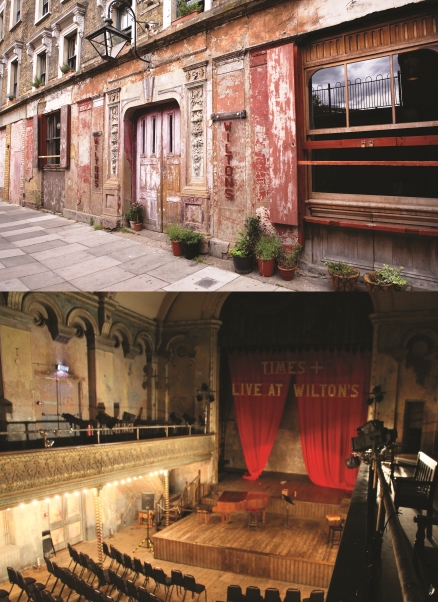
(Wilton’s front door photo James Perry; Wilton’s interior photo Mike Twigg)

The Borletti-Buitoni Trust and a new residency at one of London’s buried treasures

A week ago, Wilton’s Music Hall was home to an intimate Duran Duran charity gig. This week the grand old venue, one of East London’s little-known charms, looked down on young classical musicians starting out, recipients of a fellowship from the Borletti-Buitoni Trust given their chance to shine.

The hall is a wonderful performing space, a former 18th century ale house converted to a music room and concert hall, and now in the throes of a renovation that looks set to preserve its character while offering new, vibrant performance opportunities. The hall itself, with a high roof and balcony supported by what looks like parts from an old pile-driver, has acoustic properties ideal for piano or guitar – which was illustrated in an hour-long concert to launch the BBT‘s Wednesday’s at Wilton’s series.

Composer-pianist Kate Whitley made a strong impression – and as co-founder and artistic director of Multi-Story, which gave a performance of Stravinsky’s The Rite of Spring in a disused car park in Peckham, she is clearly an imaginative force. Whitley writes direct, unflinching music that can hit you between the eyes (two of her 5 Piano Pieces, for instance) or expose a melting heart (the song This is my love poem for you, from the poetry of Sabrina Mahfouz).

Her Three pieces for violin and piano, meanwhile, stood next to an equivalent set by the György Kurtág – a brave move that, it not entirely successful, illustrated the grand old Hungarian composer and his extraordinary musical compression, writing in one note what others could hardly manage with one hundred!

Performers and audience are treated as equals on these nights, and it was helpful that Whitley gave good context and musical examples to her pieces beforehand. We also had a sneak preview of the second concert in the series from guitarist Sean Shibe, who took on the tragic tale of Spanish composer Antonio José, executed by firing squad in his early thirties. Shibe played two movements, a winsome Pavane Triste and vigorous Finale from his Sonata for Guitar.

With concertgoers, performers and building ideally matched, this looks like the start of a meaningful friendship in East London – and you would be firmly advised to take the chance to see the musicians of the future in such a friendly and inspiring environment.