On Record – Arnold Cooke: Complete String Quartets, Volume One (The Bridge Quartet) (Toccata Classics)

Arnold Cooke
String Quartet no.1 (1933)
String Quartet no.3 (1967)
String Quartet no.5 (1978)

Bridge Quartet [Colin Twigg, Catherine Schofield (violins), Michael Schofield (viola), Lucy Wilding (cello)]

Toccata Classics TOCC0696 [56’05”]
Producer and Engineer Michael Ponder

Recorded 21-22 November 2022, 5-6 March 2023, All Saints’ Church, Thornham

Reviewed by Richard Whitehouse

What’s the story?

Toccata Classics continues its coverage of Arnold Cooke (his organ music is on TOCC0659) with this first volume of his string quartets, performed by The Bridge Quartet and confirming him as a skilful practitioner of a genre such as found favour with many composers of his era.

What’s the music like?

Premiered by the Griller Quartet in March 1935, the First Quartet gained the praise of no less than Havergal Brian and helped to establish Cooke’s wider reputation. Completed a year after his return from study in Berlin, this undeniably shows the influence of Hindemith but offsets it with a lyrical poise as to suggest lessons well learned from an earlier generation of British composers. Although cast in four movements, the opening Lento is a fugue whose emotional austerity never seems unduly severe – with the ensuing Vivace and Allegretto a scherzo then intermezzo of respective impetus and suavity. The final Presto rounds off proceedings with a keen yet never wanton energy that sets the seal on a substantial and approachable work; one which should not have had to wait 84 years until its revival by the present ensemble in 2022.

First given by the English Quartet in May 1968, the Third Quartet is contemporaneous with Cooke’s Third Symphony – whose coupling on Lyrita with a suite from his ballet Jabez and the Devil doubtless introduced many to this composer. Here one senses the presence, rather than influence as such, of Bartók – specifically his Sixth Quartet, the underlying rhythm of whose Marcia informs the initial Allegro of this work, and whose recurrent Mesto theme proves hardly less pervasive in an Andante which none the less emerges as one of Cooke’s most thoughtful and revealing statements. The brief scherzo exudes a driving impetus that carries over into a final Allegro that, in its ongoing vivacity and affirmative close, confirms this as the most likely of these quartets to find its place in the repertoire of the 20th century.

By the time his Fifth Quartet received its premiere in March 1979, Cooke had evidently been eclipsed by a younger generation though there is nothing overtly reactionary about this piece. Unfolding as a single movement, it has three clearly defined sections (as on this recording) -thus, a tense if ambivalent Moderato leads into an Allegro which adeptly elides scherzo and slow movement with no loss of ongoing momentum, then a Presto whose sheer brevity does not preclude allusions to earlier ideas as it steers this compact work to a decisive conclusion.

Does it all work?

Pretty much. Cooke might never have had an overtly distinctive or even personal idiom, but his music has a technical rigour and a feel for communication as makes listening rarely less than pleasurable. It helps when, in the Bridge Quartet, it has exponents so well versed in the lineage of British quartet writing – not least the composer who provided this ensemble’s name – and as attentive to the wealth of contrapuntal invention as to the greater design with each of these pieces. Hopefully other such groups will be encouraged to include them in their recitals.

Is it recommended?

Indeed so. The recording has a focus and perspective which is ideal for such music, and there are succinctly informative annotations by Peter Marchbank. Hopefully the follow-up volume, featuring the Second and Fourth Quartets, will be appearing from this source before too long.

Listen & Buy

For purchase options, you can visit the Toccata Classics website. Click on the names to read more about The Bridge Quartet and composer Arnold Cooke.

Published post no.2,497 – Monday 7 April 2025
In concert – Alina Ibragimova, CBSO / Dinis Sousa: Sibelius, Dvořák & Arvo Pärt

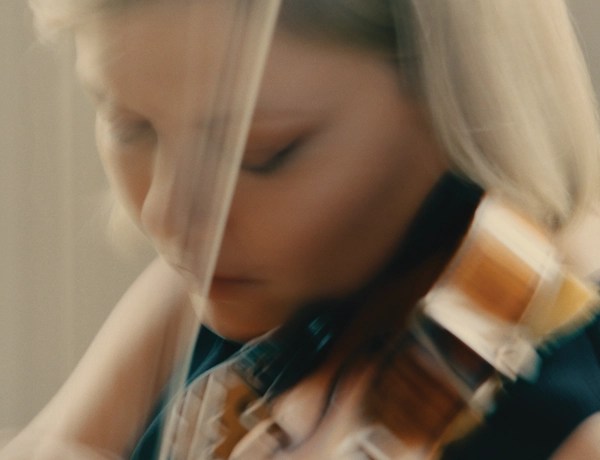
Alina Ibragimova (violin, above), City of Birmingham Symphony Orchestra / Dinis Sousa (below)

Pärt Our Garden (1959, rev. 2003)
Sibelius Violin Concerto in D minor Op.47 (1903-04, rev. 1905)
Dvořák Symphony no.8 in G major Op.88/B163 (1889)

Symphony Hall, Birmingham
Thursday 3 April 2025

Reviewed by Richard Whitehouse Picture of Alina Ibragimova (c) Joss McKinley; Dinis Sousa (c)

In what was an auspicious first appearance with the City of Birmingham Symphony Orchestra, Dinis Sousa presided over an appealing programme that featured repertoire staples by Sibelius and Dvořák alongside welcome revival of an uncharacteristic early choral piece by Arvo Pärt.

Uncharacteristic but highly enjoyable, Our Garden seems relatively untypical of the Estonian composer even in his mid-twenties – its winning an award at a Soviet-sponsored competition in 1962 bringing plaudits at a time when Pärt’s was very much an ‘unofficial’ presence on the new-music scene. Six decades on this can be enjoyed simply for what it is – an unpretentious celebration of youthful endeavour whose unaffected setting of four not overly polemical texts is as cohesive as it is sincere. Certainly, the CBSO Youth Chorus did justice to writing whose rhythmic unison was offset with some deft harmonic twists and enhanced by the resourceful contribution of a sizable orchestra. An obvious candidate for inclusion in music quizzes, Our Garden is never less than effective on its own terms and made for an attractive curtain-raiser.

Geographical proximity aside, there was little connection between Pärt’s cantata or Sibelius’s Violin Concerto, and while a performance of the latter rarely fails to impress it rarely catches fire as it did here. Alina Ibragimova has given some memorable performances in Birmingham over recent seasons, but this account got to the heart of a piece that, for all its indebtedness to Romantic-era virtuosity, is no less original in form or content than its composer’s symphonies and tone poems of this period. Most notable were Ibragimova’s fusing of the first movement’s central cadenza with developmental impetus, her building of cumulative momentum over the course of the Adagio or a final Allegro which, though this may all but have eschewed the ‘ma non tanto’ marking, exuded a drive and panache maintained through to the scintillating close.

A first-rate accompanist, Sousa (above) brought out much of interest from the orchestral texture – not least its writing for low woodwind and horns which frequently underpins the soloist in a way that could only be Sibelius. Such attention to detail was equally evident in his performance of Dvořák’s Eighth Symphony – music easy to take for granted in its warmth and affability, yet whose opening Allegro is a masterclass in formal innovation as benefitted from the incisive if never overdriven energy Sousa brought to this movement as a whole and its coda in particular.

Even finer was the Adagio, its pathos shot through with an ominous import which came to the surface at its brief if forceful climaxes and so confirmed this as music of rare eloquence. The intermezzo’s twin themes unfolded with an ideal lilt that made its boisterous pay-off the more fitting, while the finale made the most of Dvořák’s putting his trenchant folk-dance through a set of variations whose rapidly growing excitement could always be sensed even as the music subsided towards virtual stasis, from where the peroration made for a truly uproarious QED.

Those expecting Finlandia at the start of the second half (as indicated in this season’s guide) were disappointed, but Sousa did offer the second (in G) of Dvořák’s Legends as an apposite encore – its fluid interplay of poise and humour the ideal way to end this memorable concert.

For details on the 2024-25 season A Season of Joy, head to the City of Birmingham Symphony Orchestra website. Click on the names to read more about conductor Dinis Sousa, violinist Alina Ibragimova and the CBSO Youth Chorus

Published post no.2,496 – Sunday 6 April 2025

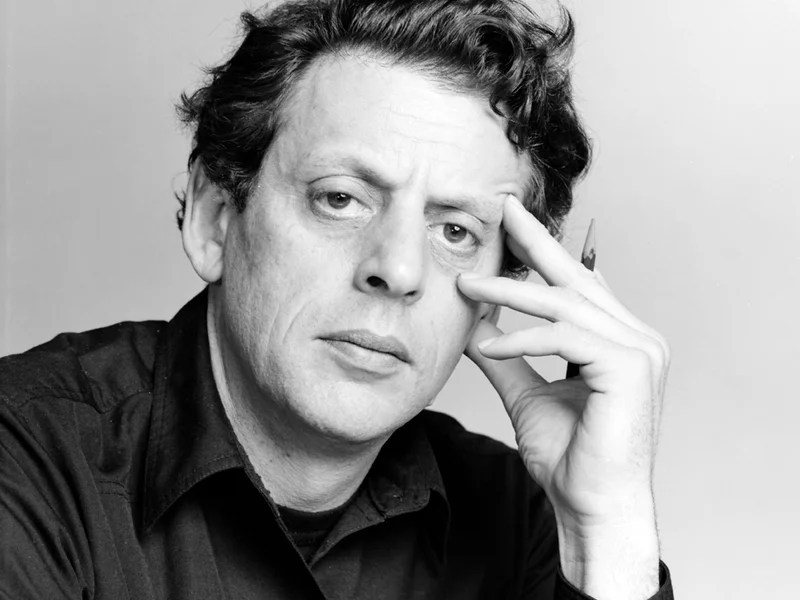
On this day – the world premiere of the Violin Concerto no.1 by Philip Glass

by Ben Hogwood picture (c) Jack Mitchell/Getty Images

On this day in 1987 the premiere of Philip GlassViolin Concerto no.1 took place, played by Paul Zukofsky and with the American Composers Orchestra under Dennis Russell Davies.

The piece has established itself as one of Glass’s most popular works in concert, and can be heard below in its first recording, made by Gidon Kremer for Deutsche Grammophon:

Published post no.2,495 – Saturday 5 April 2025

On Record – Myaskovsky: Vocal Works Vol. 2 (Ilya Kuzmin, Dzambolat Dulaev & Olga Solovieva) (Toccata Classics)

Myaskovsky
Six Poems of Alexander Blok Op. 20 (1920)
At the Decline of Day: Three Sketches to Words by Fyodor Tyutchev Op.21 (1922)
Three Sketches Op.45 (1938)
From the Lyric Poetry of Stepan Shchipachyov Op. 52 (1940) Songs of Many Years Op.87 (1901-1936, rev. 1950) – nos.1, 6, 7 & 10
Two Songs of Polar Explorers (1939)

Ilya Kuzmin (baritone, Op.20, Op.45), Dzambolat Dulaev (baritone, all other songs), Olga Solovieva (piano)

Toccata Classics TOCC0667 [62’44”] Russian (Cyrillic) texts and English translations included
Producer and Engineer Ilya Dontsov

Recorded 2018-2022

Reviewed by Richard Whitehouse

What’s the story?

Toccata Classics continues its estimable coverage of the songs by Nikolay Myaskovsky with a second volume devoted to those for baritone which, in term of its performances, sound and annotations, is no less successful as a demonstration of the composer’s prowess in this genre.

What’s the music like?

Myaskovsky composed some 120 songs, with roughly half written early in his career before the symphony was central to his thinking. The first two collections here emerged between his Fifth and Sixth Symphonies, a traumatic time personally and culturally with civil war having engulfed the Soviet Union. Hence that darkly fatalistic aura which pervades the Six Poems of Alexander Blok, its texts drawn from this poet’s early maturity at the tune of the 20th century and framed by two of Myaskovsky’s finest songs: the bittersweet A full moon has risen over the meadow and the speculative In the silent night. Written soon afterwards, At the Decline of Day features three ‘sketches’ after Fyodor Tyutchev whose brevity only accentuates their expressive acuity – notably the central setting ‘Your friendly voice prompts no living spark’.

Over a decade on and Three Sketches finds Myaskovsky tackling poetry with whose Socialist Realism he could have had little empathy, though his setting of Lev Kvitko’s A Conversation evinces a wistful poise hardly warranted by the text. This quality is more gainfully employed in From the Lyric Poetry of Stepan Shchipachyov, not least for the way the composer invests often wantonly propagandist texts with that sense of imaginative wonder that may have been their desired intention all along – as is evident from such as Mount Elbrus and the Aeroplane. Although published as Myaskovsky’s last opus, Songs of Many Years collates 15 songs which had been written often many years before. Of the four heard here, Thus yearns the soul finds the 20-year-old setting Aleksey Koľtsov’s text with due awareness of its aspirational ardency, while the baleful Sonnet of Michelangelo makes pertinent comparison with Shostakovich’s version 65 years on. The first two from Four Songs of Polar Explorers offer a distinctive take on the ‘mass song’, of which the rousing Song of the Polar Sailors audibly fulfils its remit.

Does it all work?

Yes, providing one accepts that Myaskovsky was not a composer of songs given to extremes of emotion or flights of fancy in those texts he chose to set. Such a tendency to introspection could easily have been over-emphasized through allotting this selection solely to the baritone register, and it is a tribute to Ilya Kuzmin and Dzambolat Dulaev that any risk of expressive uniformity is wholly avoided – the former as unforced in his eloquence as the latter renders his often more impersonal settings with a light and flexible touch. Both singers here benefit from Olga Solovieva’s perceptive accompaniment, confirming her once again as a pianist of no little finesse. The texts and translations for all of these 28 songs have been included, and though some may regret the absence of transliterations, they can mostly be accessed online.

Is it recommended?

Very much so, and not least as Patrick Zuk’s booklet note sets the scene so thoroughly yet evocatively. Warmly recommended and, with just over a third of Myaskovsky’s songs now recorded, this is hopefully a series that Toccata will be able to see through to its completion.

Listen & Buy

For purchase options, you can visit the Toccata Classics website. For information on the performers, click on the names to read more about Ilya Kuzmin, Dzambolat Dulaev and Olga Solovieva – and composer Nikolay Myaskovsky

Published post no.2,493 – Thursday 3 April 2025

Switched On – Various Artists: Ambientale: compiled by Charles Bals (Bureau B)

by Ben Hogwood

What’s the story?

Bureau B describe this compilation, put together by Charles Bals, as “a journey into otherworldly sounds from the years 1983 – 2000”, a journey that takes in a wide range of artists and musical styles. From Patrick Ryder’s notes, “Ambientale sees Charles leave the human world behind, exploring all the world’s wilderness on the scale of an IMAX epic. Rainforest, savanna, seascape and sand dune blur into one under digital manipulation, questioning the balance of nature and technology and wondering whether AI might discover the blueprint of all life and all planets. There’s also a little room on the mood board for the striking underwater cinematography and lush soundtrack of Luc Besson’s The Big Blue, a film he first saw in 1987 at an open-air theatre in the same Southern French resort that inspired ‘Club Meduse’.

What’s the music like?

Bals has chosen a wide variety of music in all shapes and sizes, but one thing that runs consistently through this compilation is its ability to paint a picture.

There are some striking sounds and vivid pictures here. Akira Mitake‘s duo, Yasha and Modernism, are memorable, typifying the weird and wonderful feel this compilation gives. Greece Ambientale, by Individual Sensitivity, has a cosmopolitan feel, like some of Jean-Michel Jarre’s far out ventures. Steve Shenan‘s evocative Evening In The Sahara has shady detective score overtones, underlaid by a lovely heat haze. The one that sticks in the memory most, however, is the nocturnal, saxophone-led Velvet Blue Circles, mournful yet uplifting like the soundtrack to a David Lynch film.

Does it all work?

Pretty much. The variety here is considerable – so there is a chance that there will be one or two tracks that don’t immediately appeal. Conversely, there will be new discoveries and sounds to enjoy, which is the joy of encountering a compilation like this.

Is it recommended?

It is – for music that’s easy on the ear but also rather different, Ambientale is a really good eye-opener. It will doubtless introduce you to some new names to chase up.

Listen / Buy

For streaming and purchase details, visit the Boomkat website

Published post no.2,493 – Thursday 3 April 2025